Preferences
Privacy is important to us, so you have the option of disabling certain types of storage that may not be necessary for the basic functioning of the website. Blocking categories may impact your experience on the website. More information

Privacy is important to us, so you have the option of disabling certain types of storage that may not be necessary for the basic functioning of the website. Blocking categories may impact your experience on the website. More information

Topical authority: establish expertise in a niche. Learn how deep, interconnected content signals expertise to Google and ranks for high-value keywords.







Tools


Summary
Topical authority is a cluster of authoritative, interconnected articles that signal to Google your expertise in a specific subject, boosting keyword rankings and organic traffic.
Want to go further? Ask
Topical authority means becoming Google's trusted expert in a narrowly defined area. Instead of writing scattered articles on random topics, you create a hub of interconnected, semantically rich content that proves deep subject matter knowledge. Google's algorithms reward this focused expertise with higher positions for keywords within your topic cluster. The strategy works because it mirrors how human experts organize knowledge: comprehensively, interconnectedly, and across multiple depths of understanding.
Brands that build topical authority typically see dramatic improvements in organic visibility within 6 to 12 months. The signal is even more powerful when combined with entity-based SEO tactics and consistent internal linking. In 2026, topical authority remains one of the most effective long-term SEO strategies for competitive markets, especially when paired with geographic expansion strategies.
Topical authority is the degree to which an entire site or content section demonstrates deep expertise in a particular subject area. Google measures this by analyzing the semantic relationships between articles, the breadth and depth of coverage, the quality of internal linking patterns, and the consistency of entity mentions. A site with high topical authority for "solar panel installation" might have 30+ interconnected articles covering solar panel types, inverter technology, permitting regulations, financing options, maintenance protocols, and regional installation variations.
Topical authority is not about keyword stuffing or writing the most articles fastest. It is about creating a cohesive, interconnected knowledge base that answers questions at multiple levels of depth and sophistication. A single article on "What is topical authority" carries minimal weight. But a cluster of articles covering topic models, semantic relevance, internal linking strategies, case studies, and practical implementations signals true expertise to Google's ranking algorithm and to human visitors alike.
Google's indexing and ranking systems analyze not just individual pages but also the relationships and patterns between pages. When Googlebot crawls a site with deep topical clustering, it recognizes that the author understands the subject beyond surface level. This semantic depth is a key ranking signal that influences positions for competitive keywords.
Sites with proven topical authority rank higher for competitive keywords because they exhibit E-E-A-T (Experience, Expertise, Authoritativeness, Trustworthiness). Google's Search Rater Guidelines describe the kind of expertise and trustworthiness that comprehensive, interconnected topical coverage demonstrates. A brand that creates detailed guides on every aspect of solar installation will outrank a competitor with five surface-level articles on the same topic, assuming all other ranking factors are equal.
The foundation of topical authority is a pillar page and supporting cluster articles. The pillar is a comprehensive 2,000 to 3,000 word overview of the entire topic area. Cluster articles dive deeper into specific subtopics, all linking back to the pillar and cross-linking to each other with contextual anchor text.
For example, a "Solar Panel Installation" pillar might link to cluster articles on "Types of Solar Panels," "Solar System Sizing Calculations," "Permitting and HOA Rules," "Tax Credits and Incentives," "Maintenance and Troubleshooting," and "Regional Grid Interconnection." Each cluster article also links back to the pillar and to adjacent cluster articles. This creates a semantic web that reinforces topical relevance for the entire section and signals to Google's crawlers that this is a specialized knowledge base.
Internal linking within clusters should use semantically rich anchor text. Instead of "click here," use "learn about solar panel types" or "explore financing options." This teaches Google's algorithm the exact relationship between pages and strengthens the authority signal across your content cluster.
Google evaluates topical authority on two dimensions: depth and breadth. Depth means covering each subtopic thoroughly, answering questions at beginner, intermediate, and expert levels. Breadth means covering all major subtopics within the topic area. Research from web.dev shows that comprehensive topical coverage improves click-through rates and time on site, two signals Google uses to validate ranking decisions.
A solar company should cover depth (basic panel technology, advanced inverter designs, battery storage systems) and breadth (residential installations, commercial systems, grid-tie configurations, off-grid setups). Missing major subtopics signals incomplete expertise. Similarly, articles that skim the surface without providing detailed examples, data tables, comparisons, or troubleshooting fail to build authority. Google expects expert-level content from sites claiming topical authority in competitive niches.
Strategic internal linking is the connective tissue of topical authority. Every article in your cluster should link to 3 to 8 related articles, with contextual anchor text that reinforces semantic relationships. These are not isolated posts. They form a tight, interconnected web of mutual reinforcement that signals to Google's crawlers that this is a deliberate, expert knowledge base.
Tools and audits can reveal weak linking patterns. If an article is only linked to once (or not at all), it is orphaned and contributes little to the authority cluster. The best clusters have multiple entry points and several paths through the content network. This is how Google's crawlers understand that you are a comprehensive authority, not just a random publisher with a few related posts. Links should use natural language and contextual relevance, not forced keyword insertion.
Topical authority is even more powerful when combined with local SEO. A solar company can build topical authority on "solar installation" globally while also creating location-specific cluster articles on "solar panels in California," "solar incentives in Arizona," "solar installation process in Texas," and "residential solar costs by state." This dual approach captures both broad, high-volume keywords and location-specific search intent simultaneously.
Our platform, Sorank, automates this using location-based keyword research. You identify high-authority topics, then cluster them by geography and subtopic. The algorithm recommends internal linking patterns and surfaces content gaps. This accelerates the build-out from months to weeks while ensuring every new article strengthens your topical authority cluster.
Most publishers fail to build topical authority because they treat content creation as a volume game. They publish 200 articles across random topics instead of 50 tightly clustered articles on one expert topic. This dilutes authority signals across too many subjects and confuses Google about what your site is actually about. Google rewards focus and specialization.
Another mistake is poor internal linking discipline. Articles exist but are not interconnected with semantic anchor text. Pillar pages are never updated when new cluster articles are published. Topics have gaps: you cover panels but not installation; you explain inverters but not grid interconnection; you discuss costs but not financing. Google sees a scattered, incomplete knowledge base, not a true authority in the subject matter.
Topical authority is not a static achievement. It requires continuous expansion and refinement. Start with a pillar plus 10 to 15 cluster articles. Monitor rankings for your primary keywords using Google Search Console. Identify content gaps in search results and create new cluster articles to fill them. A gap analysis typically reveals 15 to 30 unexplored keyword opportunities per topic cluster.
Track topical visibility using rank tracking tools. As your cluster grows and linking tightens, you should see progressive rank improvements for head-term and long-tail keywords within your topic. Within 6 months of consistent cluster expansion, most publishers see 30 to 50 percent increases in organic search traffic from their primary topic area. Within 12 months, the best-executed clusters see 100 percent or greater traffic increases.
General SEO is broad: optimize title tags, improve page speed, build backlinks across your entire domain. Topical authority is focused: dominate one subject area so thoroughly that Google has no choice but to rank you first for relevant keywords. Both matter, but topical authority is the premium strategy for competitive keywords and for brands that want predictable, long-term organic growth without constant new link acquisition.
A narrowly focused niche site with topical authority will often outrank a large, generic site with high domain authority but weak topical focus. This is why startups and newcomers can compete effectively against established brands. You choose a niche, build unshakeable topical authority, and lock in search visibility before the big players notice. This strategy favors quality over scale and specialization over generalization.
Start by selecting your core topic and creating a pillar page. Write 2,500 to 3,000 words that comprehensively cover the topic at a mid-level depth. Then identify 10 to 15 subtopics and create cluster articles. Each cluster article should be 1,500 to 2,000 words and should link to the pillar and 3 to 4 other cluster articles using semantic anchor text. Update the pillar to link to all new cluster articles. This creates the foundational authority cluster within 4 to 8 weeks.
In weeks 9 to 12, audit search results for your target keywords and identify remaining gaps. Create 5 to 10 additional cluster articles targeting these gaps. Ensure they link internally and are discoverable from the pillar. By day 90, you should have 15 to 25 interconnected articles that cover your topic comprehensively. Search visibility improvements typically begin appearing in Google Search Console within this timeframe.
Topical authority is the systematic development of deep, interconnected expertise in a specific subject. It signals to Google that you are the canonical expert and should rank for all keywords within that topic cluster. Building topical authority takes discipline and planning, but the payoff is predictable, sustainable organic growth and reduced dependence on external link acquisition.
Start with a pillar page and 10 cluster articles. Interlink them strategically with semantic anchor text. Identify and fill content gaps. Scale incrementally. Within a year, you should see 2x to 3x increases in organic traffic from your topic area. Combine your topical authority strategy with Google's official developer guidance and Search Rater Guidelines to ensure your clusters meet all quality standards. To accelerate this process and identify the highest-impact content gaps, try Sorank's location-based content planner. It automates the discovery of topical clusters and linking patterns so you can focus on writing exceptional content.
Sources

Domain authority measures the overall power of a website across all topics. Topical authority measures expertise in a specific subject. You can have high domain authority but weak topical authority in a narrow niche. Google increasingly values topical authority because it reflects real specialization and deep knowledge.
There is no magic number, but typically 20 to 50 interconnected articles establish foundational authority. The quality of internal linking, semantic depth, and topical diversity matter more than raw count. A tightly clustered 15 articles with strong linking can outrank 100 scattered posts on different topics.
Yes. Local SEO benefits from topical authority in your geographic market. If you combine deep topical expertise with local entity signals (Google Business Profile, local citations), you improve rank positions for local keywords. Topical authority signals expertise; local signals signal relevance to a location.
THEY TRIED SORANK BEFORE YOU
 “I tested Sorank on a real client site and it's insane. It does everything an agency would bill you $1500 a month for. It's going into production on that client now.”
 Guillaume Guersanguersanguillaume.com“We are an Ads agency and we wanted to get our SEO back on track once and for all. Sorank gave us a clear view of our site, helped us prioritize optimizations, and properly structure our content. The tool is easy to use, well designed for a team, and very practical for centralizing tracking without having to juggle multiple platforms. A very solid foundation to start fresh with our SEO.”
 Gaspard MadouiAds Agency
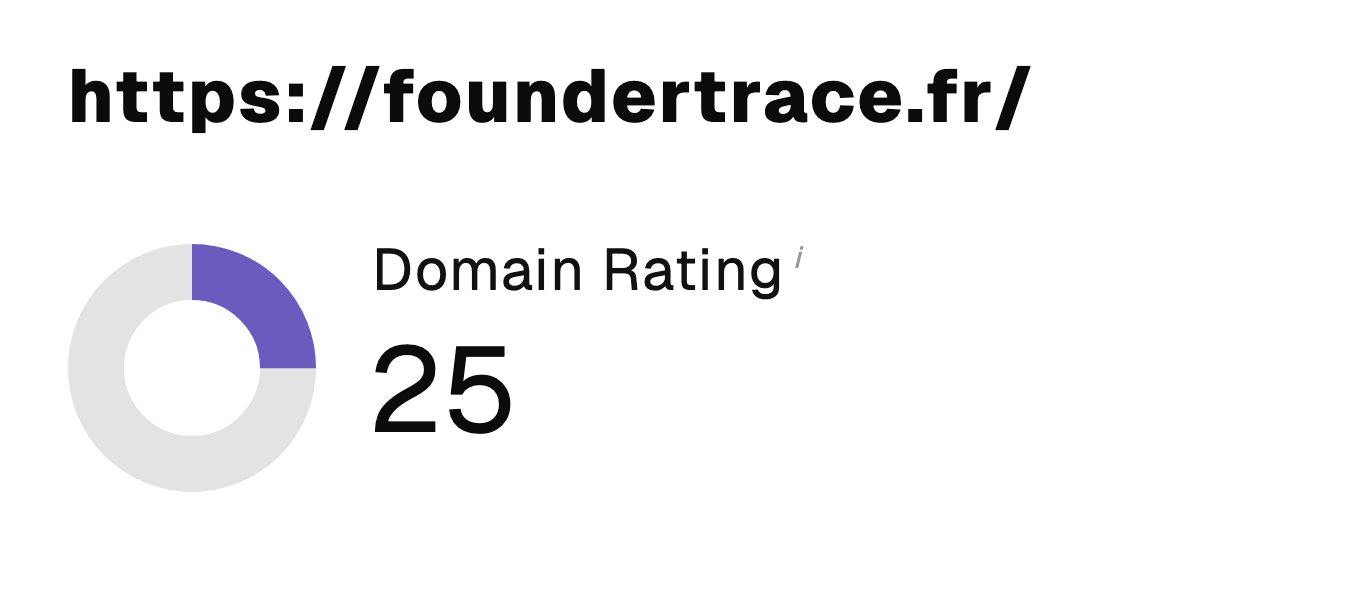 “I just let the Sorank software do its thing, and now my DR is 25 and my page is ranking higher.”
 Lucas Flandrefoundertrace.fr“I specialized in GEO thanks to Sorank. The GEO Leaderboard allows me to show my clients their position vs competitors on ChatGPT. It’s a real commercial differentiator.”
 MélanieSEO Freelance“Great service, works well for our website and helps us understand how to improve it to rank better on Google and elsewhere. Congrats, keep going, I recommend it.”
 Hugo T.E-commerce merchant