Preferences
Privacy is important to us, so you have the option of disabling certain types of storage that may not be necessary for the basic functioning of the website. Blocking categories may impact your experience on the website. More information

Privacy is important to us, so you have the option of disabling certain types of storage that may not be necessary for the basic functioning of the website. Blocking categories may impact your experience on the website. More information

E-E-A-T explained: Experience, Expertise, Authoritativeness, Trustworthiness. How Google evaluates content quality and ranks it higher.







Tools


Summary
E-E-A-T (Experience, Expertise, Authoritativeness, Trustworthiness) is Google's framework for evaluating content quality. Strong E-E-A-T signals improve rankings, especially for competitive and health-related topics.
Want to go further? Ask
E-E-A-T is Google's quality evaluation framework outlined in the Search Rater Guidelines. It measures four dimensions: Experience (has the author done what they are writing about?), Expertise (does the author have relevant knowledge and credentials?), Authoritativeness (is the author recognized as an expert?), and Trustworthiness (is the content accurate, transparent, and reliable?). Content with strong E-E-A-T ranks higher, especially for competitive keywords and health-related topics.
Google's algorithms do not explicitly measure E-E-A-T as a single number. Instead, they infer E-E-A-T quality through proxy signals: backlinks (indicate recognition), brand mentions (indicate authority), structured author data (indicate expertise), user engagement metrics (indicate usefulness and trustworthiness), and content freshness (indicate active maintenance). Building E-E-A-T is about creating signals across all these dimensions simultaneously.
Experience means the author has actually done what they are writing about. A guide on "solar panel installation" written by a solar technician with 10 years of field experience ranks higher than one written by a journalist. A guide on "starting a business" written by an entrepreneur who started three businesses ranks higher than one by an MBA student. Google's algorithms identify experience signals through: case studies showing before-and-after results, detailed examples and procedures, documented outcomes, author bios mentioning relevant work history, and first-person explanations of real challenges encountered.
Building experience signals requires either having real experience yourself or collaborating with experts who do. If you lack direct experience, interview practitioners, feature their stories, and cite their methods. If you have experience, document it: share case studies, client examples, lessons learned. This transforms your expertise from theoretical to practical, which Google strongly prefers.
Expertise means deep knowledge of the subject. A solar company employing electrical engineers has expertise in technical systems. A financial advisor with CFP certification has expertise in financial planning. Google identifies expertise signals through: credentials (degrees, certifications, licenses), published research or whitepapers, speaking engagements at industry events, media appearances, professional affiliations, and article depth and accuracy. For YMYL topics especially, credentials are essential.
Build expertise by: obtaining relevant certifications or degrees, publishing original research, speaking at industry events, writing for authoritative publications, and becoming an active member of industry organizations. Document and display these credentials prominently. Include a detailed author bio that lists qualifications. Use schema.org markup to explicitly declare expertise credentials to Google's algorithms.
Authoritativeness means being recognized by others as an expert. A solar company mentioned in five major industry publications is more authoritative than a competitor with no mentions. Google's ranking systems infer authority from: third-party citations in major publications, backlinks from authority domains, mentions in news coverage, award recognition, client or customer testimonials, and consistent online presence (active social accounts, regular content publishing).
Build authoritativeness by: creating press-worthy announcements and engaging digital PR, developing original research that gets cited, engaging with media and journalists, seeking awards and recognition in your industry, and encouraging customer testimonials. Authority is conferred by others, not claimed. The more third-party recognition you earn, the stronger your authority signal.
Trustworthiness is whether users and algorithms can rely on your content. Trust signals include: clear author attribution with verifiable credentials, transparent ownership (company registration, leadership team), accurate, well-sourced content, updated information (freshly published content and maintained resources), privacy policy and clear data handling, easy contact information, and positive user reviews. A website with no clear contact info, no author names, and no privacy policy signals low trustworthiness.
Build trust by being radically transparent. Display author names and credentials prominently. Link to author profiles or LinkedIn. Include client testimonials and case study results. Maintain clear, easy-to-find contact information. Publish a privacy policy and terms of service. Update old content to reflect current information. Use schema.org author markup to explicitly declare authorship. All these signals compound to demonstrate that your site is reliable and trustworthy.
Your Money or Your Life (YMYL) topics include health, medicine, finance, legal, safety, and product information. Misinformation in these areas can directly harm people. Google applies stricter E-E-A-T standards to YMYL content. Health articles must be written or reviewed by medical professionals. Financial advice must come from certified advisors. Legal information should be reviewed by licensed attorneys. If your topic is YMYL, ensure all authors have relevant qualifications and that content is reviewed by appropriate professionals.
Google's ranking systems are calibrated to prioritize high E-E-A-T for YMYL topics. Rank position for "can I take ibuprofen with aspirin?" will favor content from medical doctors or established medical institutions. General web publishers rarely rank for sensitive health queries because they lack sufficient E-E-A-T. If you operate in YMYL, acknowledge this constraint and build credentials accordingly.
E-E-A-T closely correlates with content depth and comprehensiveness. A 500-word article on "solar panel installation" provides minimal E-E-A-T signals. A 3,000-word guide with step-by-step instructions, equipment specs, diagrams, and safety considerations demonstrates expertise and experience. Content depth is one of the strongest E-E-A-T signals because it proves the author understands the subject thoroughly. Superficial content rarely demonstrates expertise or trustworthiness.
Comprehensive content also benefits from multiple E-E-A-T signals in one piece. A 3,000-word guide by a certified technician includes author expertise (credentials), experience (detailed procedures), and trustworthiness (clear, accurate, well-sourced). Invest in depth. Articles under 1,500 words rarely generate strong E-E-A-T signals. Target 2,000 to 3,000 words for competitive topics, with multiple expert perspectives and cited sources.
E-E-A-T is not built overnight. It requires sustained effort across multiple dimensions. Start by establishing foundational expertise: credentials, relevant experience, initial published work. Then build external recognition: pursue media coverage, earn backlinks, develop partnerships with recognized brands. Finally, maintain and amplify: keep content updated, respond to user feedback, publish consistently, build community engagement. Over 12 to 24 months, consistent effort compounds into strong E-E-A-T signals across all four dimensions.
Set quarterly E-E-A-T goals: "Earn 5 media mentions," "publish 12 in-depth guides," "achieve 20 high-quality backlinks," "build a 10,000-person social audience." Track progress and refine your strategy. Websites with improving E-E-A-T signals see corresponding rank improvements over 6 to 12 months. The effect compounds: once you establish authority in a topic, ranking for adjacent keywords becomes easier.
E-E-A-T is communicated not just through content substance but through content formatting and presentation. Expertise signals through: author bylines with credentials and photos, detailed author bios with relevant experience, author social proof (LinkedIn recommendations, Twitter following, publication history). Authoritativeness shows through: case studies with measurable results, client testimonials with names and photos, media logos showing where you have been featured, awards and certifications prominently displayed.
Trustworthiness appears in: clear privacy policy and terms of service, visible contact information and response times, customer reviews with verified badges, transparency about affiliate relationships or sponsorships, SSL certificate ensuring secure browsing. Content presentation and trust signals are increasingly part of ranking algorithms. A page with identical content but poor presentation (no author, no reviews, hidden contact info) ranks lower than a page with rich trust signals. Invest in presentation as much as content quality.
Use structured data (schema.org markup) to explicitly declare E-E-A-T signals. Mark up authors with schema.org Person (linked from the author property of your Article), credentials with EducationalOccupationalCredential, and reviews with Review, and add sameAs links to the official profiles of your people and your Organization. Rich snippets displaying stars, credentials, and author names improve click-through rates by 5 to 20 percent while signaling trustworthiness to Google's algorithms. Google's article schema documentation provides specific guidance on markup for news and article content.
Sites with strong E-E-A-T signals tend to build domain authority faster than sites with weak signals. High-authority domains earn backlinks because they are recognized as expertise sources. High-expertise content gets shared, linked, and cited more frequently. Over time, strong E-E-A-T compounds into higher domain authority, which then makes ranking easier for all content on the site.
Google's Search Rater Guidelines emphasize that E-E-A-T evaluation happens at both page level and site level. A site with many expert, authoritative, trustworthy pages builds overall site authority. Even new pages on high-E-E-A-T sites rank faster and higher than pages on low-E-E-A-T sites, all else equal. Invest in E-E-A-T as a long-term competitive advantage, not just a short-term ranking tactic.
E-E-A-T is Google's framework for evaluating content quality across four dimensions: Experience, Expertise, Authoritativeness, and Trustworthiness. Building strong E-E-A-T signals improves your keyword rankings, especially for competitive and sensitive topics. Document your experience through case studies and examples. Demonstrate expertise via credentials and deep knowledge. Build authority through third-party recognition and media coverage. Establish trust through transparency and accuracy. Combined with topical authority and quality backlinks, strong E-E-A-T creates a competitive moat that competitors struggle to replicate.
For help auditing and improving your E-E-A-T signals, use Sorank's comprehensive SEO audit tools. Identify E-E-A-T gaps in your content compared to competitors, then systematically build the credentials, content depth, and recognition required to dominate your niche. Google's guidelines emphasize E-E-A-T as foundational for all content, especially in competitive and health-related spaces. Prioritize E-E-A-T development as a core strategy, not an afterthought.
Sources

Demonstrate expertise by citing credentials, sharing original research, and explaining concepts thoroughly. Show experience by including case studies, real-world examples, and documented outcomes. Build authoritativeness through press coverage, third-party citations, and backlinks from trusted sources. Establish trustworthiness via transparent contact info, privacy policies, author bios, and user reviews. Combine all four pillars: an article written by a verified expert with a track record of successful projects, cited by major publications, with clear authorship and contact information demonstrates strong E-E-A-T.
E-E-A-T is not a direct ranking factor you can see in algorithms, but it influences all major ranking factors. Content with strong E-E-A-T signals (backlinks, citations, expertise markers) tends to rank higher. Content with weak signals tends to rank lower. Google's algorithms reward E-E-A-T implicitly through ranking factors like link signals, content freshness, topical authority, and user engagement. In practice, building strong E-E-A-T improves your rankings across the board.
Yes. Your Money or Your Life (YMYL) topics (health, finance, legal, safety) require higher E-E-A-T because misinformation can harm people. Health content must be written by medical professionals or reviewed by them. Financial content must be accurate and sourced. Legal content must be reviewed by attorneys. General information topics require moderate E-E-A-T. YMYL topics require exceptional E-E-A-T. Understand your topic's risk level and build E-E-A-T accordingly.
THEY TRIED SORANK BEFORE YOU
 “I tested Sorank on a real client site and it's insane. It does everything an agency would bill you $1500 a month for. It's going into production on that client now.”
 Guillaume Guersanguersanguillaume.com“We are an Ads agency and we wanted to get our SEO back on track once and for all. Sorank gave us a clear view of our site, helped us prioritize optimizations, and properly structure our content. The tool is easy to use, well designed for a team, and very practical for centralizing tracking without having to juggle multiple platforms. A very solid foundation to start fresh with our SEO.”
 Gaspard MadouiAds Agency
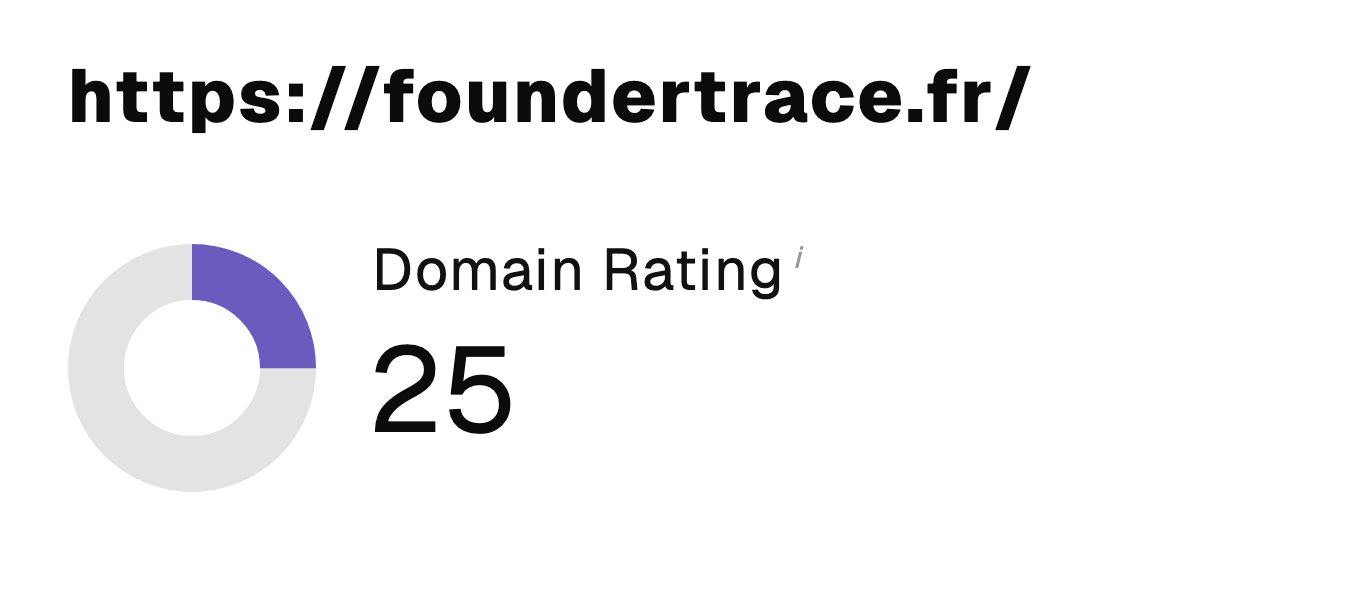 “I just let the Sorank software do its thing, and now my DR is 25 and my page is ranking higher.”
 Lucas Flandrefoundertrace.fr“I specialized in GEO thanks to Sorank. The GEO Leaderboard allows me to show my clients their position vs competitors on ChatGPT. It’s a real commercial differentiator.”
 MélanieSEO Freelance“Great service, works well for our website and helps us understand how to improve it to rank better on Google and elsewhere. Congrats, keep going, I recommend it.”
 Hugo T.E-commerce merchant