Preferences
Privacy is important to us, so you have the option of disabling certain types of storage that may not be necessary for the basic functioning of the website. Blocking categories may impact your experience on the website. More information

Privacy is important to us, so you have the option of disabling certain types of storage that may not be necessary for the basic functioning of the website. Blocking categories may impact your experience on the website. More information

Entity-based SEO uses structured data to establish your topical authority. Learn how to optimize your content for AI systems through entity definitions and knowledge graphs.







Tools


Summary
Entity-based SEO optimizes for AI by defining entities clearly and establishing topical relationships. AI systems prioritize sites with clear entity authority and semantic structure.
Want to go further? Ask
For decades, SEO was about keywords. Today, entity-based SEO is becoming equally important, especially for AI search. An entity is a specific thing: a person (Steve Jobs), an organization (Apple Inc.), a product (iPhone), or a concept (machine learning). AI systems like ChatGPT and Gemini understand the world through entities and their relationships. When you clearly define entities on your site and establish what you know about them, AI systems recognize you as an authority on those entities, leading to more citations and better AI rankings.
Knowledge graphs are the foundation of modern AI understanding. Google's Knowledge Graph powers knowledge panels and other entity-based features. ChatGPT, Claude, and Gemini use similar entity-based understanding. When you optimize for entities using schema.org markup and structured content, you're optimizing for how AI systems actually think about knowledge.
An entity is a distinct, identifiable thing. Person entities include Steve Jobs, Sheryl Sandberg, or your favorite author. Organization entities include Google, Apple, Sorank, and your company. Product entities include iPhones, Teslas, and SaaS tools. Concept entities include Machine Learning, Blockchain, and Web Design. Every entity has properties (what you know about it) and relationships (how it connects to other entities).
Entity authority is the degree to which AI systems recognize you as an authority on a specific entity. If you publish 50 articles on Machine Learning that deeply cover neural networks, supervised learning, model evaluation, and applications, AI systems recognize you as an authority on the Machine Learning entity. That entity authority translates into more frequent citations on machine-learning queries, even if your individual articles don't rank well for specific keywords.
The shift from keyword authority to entity authority is profound. With keyword-focused SEO, you might rank well for one keyword but not others. With entity-based SEO, you establish broad authority over an entity. That authority cascades across many related queries.
Schema.org is a shared vocabulary for structured data. When you mark up your content with schema.org, you tell search engines and AI systems which entities your content is about and what properties those entities have. The most important schemas for entity authority are:
Organization schema: Mark up your company, including name, description, founding date, team members, and locations. That establishes your organization as an entity AI systems can recognize and understand.
Person schema: Mark up team members, including name, role, expertise, and connections. That establishes key people as entities related to your organization.
Article schema: Mark up your articles with publication date, author, topic, and keywords. That helps AI systems understand what each article is about.
DefinedTerm schema: For broader concepts, mark up definitions and properties. If you're explaining "machine learning," mark up the definition and key properties. Google's structured data documentation provides detailed markup examples.
Topic clusters establish entity relationships. If you're building authority on "Machine Learning" (the main entity), build content on related entities: Neural Networks, Supervised Learning, Unsupervised Learning, Deep Learning, Training Data, Model Evaluation. Link these articles together. Use schema markup to establish relationships between entities.
When you build this interconnected web of content, you build a semantic structure that AI systems understand. Instead of seeing 20 disconnected articles, AI sees a coherent knowledge structure centered on Machine Learning. That structure signals entity authority more powerfully than scattered content.
The more comprehensive and interconnected your entity coverage, the stronger your entity authority. A site with 5 articles on Machine Learning has minimal entity authority. A site with 50 articles covering every aspect of ML comprehensively has strong entity authority. That concentrated authority leads to consistent citations across machine-learning queries.
Entities have properties. Machine Learning has properties like "what it is" (a field of AI), "how it works" (algorithms learn from data), "applications" (recommendations, computer vision), and "key concepts" (supervised learning, neural networks). Define these properties explicitly in your content and markup.
Additionally, define relationships between entities. Machine Learning relates to Neural Networks, Artificial Intelligence, Data Science, Statistics, and Computer Science. Your content should reflect those relationships. When you link from your machine-learning articles to articles on related entities, you establish semantic relationships that AI systems recognize.
Use schema.org properties such as about, mentions, and sameAs to define these connections explicitly. The more clearly you establish relationships, the better AI systems understand your topical structure.
Entities can be ambiguous. "Apple" could mean the company, the fruit, or Apple Records. Entity-based SEO requires disambiguation. When you write about Apple Inc., mark it up clearly with Organization schema, specify that it's the technology company, and mention its founding date, headquarters, and products. That disambiguation helps AI systems understand exactly which entity you're discussing.
Disambiguation is especially important if you discuss multiple entities with the same name. If you discuss both "Python" (the snake) and "Python" (the programming language), mark them up separately with clear schema so AI systems don't conflate them. Clear entity distinction improves both human readability and AI understanding.
Traditional domain authority (DA), built through backlinks and topical consistency, is still important for entity authority. AI systems consider your overall site authority when evaluating your entity authority. A site with strong domain authority is more likely to be recognized as an authority on entities than a new site without an authority history.
That means entity-based SEO builds on traditional SEO foundations. Acquire backlinks. Establish domain authority. Then layer entity-based optimization on top. Sites that combine strong domain authority with clear entity structure will dominate entity-based rankings.
AI systems also recognize author entities. If you're an author with deep expertise on a topic, establish your author entity authority. Build a comprehensive author profile. Mark up your author profile with Person schema and establish your expertise. Link your articles to your author profile. Over time, AI systems recognize you as a specialist author on specific topics.
That's particularly valuable for thought leaders and independent creators. Instead of building organizational authority, you build personal authority. An article on machine learning written by a recognized ML expert will be cited more frequently than the same article by an unknown author. Invest in establishing your author entity if you're creating independent content. News and content sites benefit from clear author attribution, and the same principle extends to every content creator.
Instead of planning content around keywords, plan around entities. Identify your core entities. For each, build comprehensive content covering every important aspect. If you're an analytics SaaS company, your core entities might be Analytics, Data Visualization, Dashboards, KPIs, Metrics, and Event Tracking. Build pillar guides for each. Build cluster content for sub-topics. Link them together. Mark up relationships with schema.
That entity-focused planning produces stronger AI recognition of your expertise than keyword-focused planning. AI systems see a comprehensive, interconnected knowledge structure. They recognize you as an authority. They cite you frequently.
As your field evolves, update your entity definitions. If your industry introduces new concepts related to your core entities, build content and update your knowledge structure. Keep your entity relationships current. If new tools, frameworks, or methodologies emerge in your domain, integrate them into your entity structure.
Entity-based freshness is about keeping your knowledge structure current and comprehensive. When you do, AI systems see you as a current authority, not an outdated specialist. That freshness signal increases citation likelihood for current queries.
Track AI citations for your core entities. Which entities are you cited on most often? Which entity-related queries drive your traffic from AI sources? These metrics surface your real entity authority as recognized by AI systems. Focus effort on strengthening entities where AI already trusts you.
Additionally, monitor your entity visibility in knowledge graphs and rich results. If your organization shows up in Google's Knowledge Graph with key properties and relationships correctly defined, you're on the right path. The more visible your entities are inside AI systems, the more citations you receive.
Entity-based SEO is the future of search optimization. As AI systems become the dominant discovery mechanism, entity understanding becomes the primary ranking factor. Sites that invest in entity optimization now will be well-positioned to capture AI-driven traffic as adoption accelerates. This isn't a short-term tactic; it's a fundamental shift in how content is organized and discovered.
Entity-based SEO is optimizing for how AI systems understand knowledge: through clear entity definitions, properties, and relationships. Instead of targeting keywords, you establish authority on specific entities. Start by identifying your core entities. Build comprehensive content covering each entity and its properties. Mark up your content with schema.org to clarify entity definitions and relationships. Build topic clusters that establish semantic structure. Over time, AI systems will recognize your entity authority and cite you consistently. That entity authority becomes a moat: competitors can't easily challenge your authority once you've established comprehensive coverage. Use Sorank to track your entity authority and AI search performance across every major AI system.
Sources

Entity-based SEO is optimizing your content by defining entities (people, organizations, products, concepts) clearly and establishing relationships between them. Instead of optimizing for keywords, you optimize for entities and what those entities are known for. AI systems use entity recognition to understand content. When you clearly define entities on your site, AI systems recognize you as an authority on those entities. That leads to higher citation rates and better AI rankings. Google's Knowledge Graph is built on entity understanding; AI systems like ChatGPT and Gemini use similar approaches.
Define your core entities clearly using schema.org markup. If you're a SaaS company, mark up your organization with Organization schema. Mark up key team members with Person schema. Mark up your products with Product schema. Build comprehensive content around every entity. If you're building authority on Python programming, write extensively about Python, use schema.org properties such as about and sameAs to tie your articles to the Python entity, and link related articles about Python concepts. Over time, AI systems will recognize you as a Python authority. Concentrated entity authority increases your citations on Python-related queries.
No, they work together. Keyword research identifies valuable topics. Entity-based SEO organizes those topics into a coherent knowledge structure. If you discover that 'machine learning' is a valuable topic, entity-based SEO helps you establish yourself as an authority on Machine Learning (the entity) by building content about related entities (neural networks, supervised learning, training data) and marking up the relationships. The end result is stronger AI recognition of your expertise than keyword optimization alone.
THEY TRIED SORANK BEFORE YOU
 “I tested Sorank on a real client site and it's insane. It does everything an agency would bill you $1500 a month for. It's going into production on that client now.”
 Guillaume Guersanguersanguillaume.com“We are an Ads agency and we wanted to get our SEO back on track once and for all. Sorank gave us a clear view of our site, helped us prioritize optimizations, and properly structure our content. The tool is easy to use, well designed for a team, and very practical for centralizing tracking without having to juggle multiple platforms. A very solid foundation to start fresh with our SEO.”
 Gaspard MadouiAds Agency
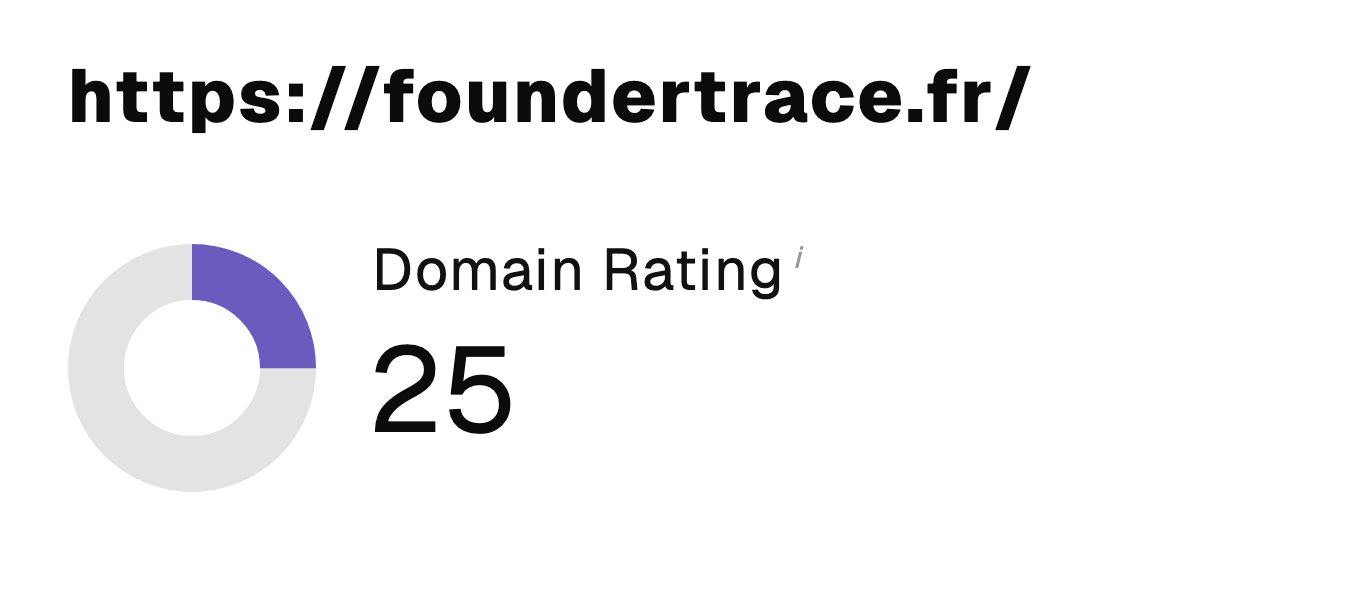 “I just let the Sorank software do its thing, and now my DR is 25 and my page is ranking higher.”
 Lucas Flandrefoundertrace.fr“I specialized in GEO thanks to Sorank. The GEO Leaderboard allows me to show my clients their position vs competitors on ChatGPT. It’s a real commercial differentiator.”
 MélanieSEO Freelance“Great service, works well for our website and helps us understand how to improve it to rank better on Google and elsewhere. Congrats, keep going, I recommend it.”
 Hugo T.E-commerce merchant