Preferences
Privacy is important to us, so you have the option of disabling certain types of storage that may not be necessary for the basic functioning of the website. Blocking categories may impact your experience on the website. More information

Privacy is important to us, so you have the option of disabling certain types of storage that may not be necessary for the basic functioning of the website. Blocking categories may impact your experience on the website. More information

AEO (AI Optimization) replaces keyword-focused SEO. Learn how to optimize for AI search and get cited by ChatGPT, Claude, Perplexity, and Gemini.






Tools


Summary
AEO (AI Optimization) shifts SEO from keyword rankings to AI citations. Optimize for comprehensive answers, entity authority, and topical clusters instead of exact-match keywords.
Want to go further? Ask
For twenty years, SEO meant ranking for keywords. You'd research a keyword, write an article targeting that keyword, build backlinks, and watch your ranking climb. The entire discipline revolved around the keyword, how to find high-intent ones, how to target them without overstuffing, how to measure keyword rankings. This model worked because Google ranked pages by keyword relevance and authority.
AEO (AI Optimization) shifts the paradigm. Instead of optimizing for keywords, you optimize for AI answers. When a user asks ChatGPT or Perplexity a question, those engines synthesize an answer from multiple sources. Your goal is no longer to rank number one for a keyword; it's to be cited as a source by the AI assistant. This requires a completely different optimization strategy.
Traditional keyword-focused SEO assumes users type a query into a search box and scan the ranked results. Keywords are the bridge between query and content. You target "blue widget pricing" and your page shows up for that exact phrase.
AI search breaks this model. When a user asks ChatGPT "What is the cheapest blue widget?", the AI doesn't rank pages by keyword match. Instead, it reads multiple pages about blue widgets, extracts price data, synthesizes an answer, and cites the sources it found most useful. There's no keyword ranking; there's only synthesis and citation. Your content isn't competing for a position on a SERP. It's competing to be the most useful source the AI assistant reads.
This shift changes what you optimize for. Keyword density becomes irrelevant. Exact-match keyword placement becomes pointless. What matters is answering the user's question so thoroughly and clearly that the AI assistant chooses to cite you. AI assistants like Claude prioritize depth, accuracy, and clarity because those are the signals of a good source to synthesize from.
The AIs don't read like humans. They don't skim headings and jump to conclusions. They parse the entire page structure, extract entities and facts, and score content based on coherence, topical relevance, and source quality. Large language models like those from Google DeepMind evaluate whether your content is consistent, well-sourced, and authoritative.
An AI assistant might ask itself: "Does this author define all their key terms? Do they cite other reputable sources? Is there evidence of deep research? Are claims supported by data?" If the answer is yes across the board, the AI is more likely to cite you. If your content has vague passages, unsupported claims, or contradicts itself, the AI will deprioritize it even if it ranks well in Google.
This means your writing style, structure, and sourcing matter more than ever. Clarity and precision are not just nice-to-haves; they're requirements. If you use ambiguous language, an AI assistant will either misinterpret your point or skip you entirely.
Topical authority is the depth of knowledge you demonstrate across related topics. In traditional SEO, topical authority was a ranking factor that Google's algorithm valued. In AEO, it's critical because the AIs need to trust that you're an expert before they cite you.
If you write one article on "machine learning basics", an AI assistant might cite you. But if you've written twenty articles on machine learning, neural networks, training data, overfitting, and generalization, the AI assistant sees you as an authority on the topic and is much more likely to cite multiple pages from your site.
Building topical authority means creating content clusters. Pick a pillar topic like "Machine Learning" and write comprehensive content on subtopics: "Neural Networks," "Training and Testing," "Supervised vs Unsupervised Learning," "Overfitting," "Hyperparameter Tuning." Link these pages together internally. Use schema.org markup to define relationships between topics. This creates a knowledge structure that the AIs recognize and reward with citations.
An entity is a person, place, organization, product, or concept with a distinct identity. In AI, entities are the building blocks of understanding. When you write about "Apple," the AI needs to know whether you mean the company, the fruit, or the record label. You resolve this ambiguity through entity definition and structured data.
Google's structured data documentation explains how to mark up entities with schema.org vocabularies. Use the Organization schema to define your company. Use the Person schema to define key team members. Use the Product schema to define what you sell. Use the Article schema to define what each article covers.
When you mark up entities clearly, the AIs can extract and understand your content more precisely. Instead of guessing what you mean by "Apple," the AI reads your schema markup and knows exactly which entity you're discussing. This precision increases citation likelihood because the AI can confidently reference your content without ambiguity.
The AIs favor content that directly answers questions. Start with a summary or definition. Don't bury the answer in paragraphs of introduction. Instead, answer the main question in the first paragraph, then provide supporting detail and examples.
Use clear heading hierarchies. An AI assistant parses your heading structure to understand content organization. If you use <h2> for main sections and <h3> for subsections, the AI can quickly navigate your content and extract relevant sections to synthesize into an answer.
Include examples, data, and comparisons. The AIs favor content backed by evidence. If you claim "A is better than B," support it with a comparison, study, or benchmark. If you provide statistics, cite the source. This evidence-based writing style not only improves citation likelihood but also makes your content more trustworthy to human readers.
The AIs read the citations in your articles. If you cite reputable sources, you signal that you've researched thoroughly. If you only cite yourself or low-authority sources, you look less credible. Strategic citation is part of AEO strategy.
Cite Google's official resources, academic papers, government data, and industry reports. Link to Wikipedia for entity definitions. Link to schema.org for structured data specs. When you cite the best sources, you position yourself in a web of authority, and the AIs trust you more.
Importantly, cite other high-quality content in your own vertical. If you write about SaaS pricing, cite Gartner reports, analyst overviews, and peer benchmarks. This shows you understand the landscape and you're not trying to position yourself as the only authority. The AIs prefer sources that acknowledge context and competing perspectives.
The AIs are trained on large datasets with knowledge cutoff dates. When they encounter outdated content, they often deprioritize it. Keep your content current. Add publication dates and update timestamps. When facts change, revise your articles. When new data emerges, integrate it.
Set up a content audit schedule. Every quarter, review your top-performing articles (those cited most often by AI) and verify their accuracy. If numbers have changed, update them. If new research contradicts your claims, revise your article to reflect the latest evidence. This maintenance effort signals to AI that your content is trustworthy and current.
AEO and SEO are not competitors; they're complementary. Strong SEO content (deep, authoritative, well-linked) often performs well in AI. But AEO adds layers that pure SEO doesn't require. You can rank well in Google without schema markup. You can't be reliably cited by AI without it. You can rank for a keyword without addressing related topics. You can't build topical authority that way.
The most successful strategy is to do both. Research keywords to understand what your audience cares about. Use that research to build topical clusters. Optimize each page for clarity and completeness, not keyword density. Add schema markup. Build internal links. Measure both traditional rankings and AI citations. Iterate based on what drives the most valuable traffic.
Traditional SEO metrics are rankings, clicks, and impressions. AEO metrics are citations, referral traffic from AI sources, and share of voice. How often does ChatGPT cite you on queries related to your topic? How many visitors come from Perplexity? Are you cited more often than competitors? AI mention tracking tools automate these measurements.
Start tracking your AI citations today. You'll likely find that a small number of articles drive the majority of AI mentions. Double down on those topics. Expand your topical clusters around high-citation content. Build authority in the areas where the AIs already trust you.
AEO (AI Optimization) marks the shift from keyword-focused SEO to AI-answer optimization. Instead of ranking for keywords, you optimize to be cited by AI. This requires topical authority, clear entity definition, structured data, and high-quality sourcing. The good news: strong content that wins in AI also tends to win in Google search. Start by identifying your core topics, building comprehensive content clusters, adding schema markup, and measuring AI citations. Over time, you'll build the topical authority and source credibility that the AIs value. Discover how Sorank tracks and optimizes for both SEO and AEO.
Sources

Traditional SEO optimizes content to rank for specific keywords in Google search results. AEO (AI Optimization) optimizes content to be cited by AI assistants like ChatGPT and Perplexity. Instead of targeting exact-match keywords, AEO prioritizes natural language answers, entity clarity, topical authority, and factual accuracy. SEO still matters for rankings, but AEO determines whether an AI assistant chooses your source over competitors when answering a user query.
Optimize for comprehensiveness, clarity, entity definition, and source authority. Answer the user's question completely in the first few paragraphs. Define key terms precisely. Use schema markup to establish what you're an expert in. Build topical clusters so AI systems see you as authoritative across related topics. Include citations to other reputable sources, which signals to AI that you've done your research. Finally, keep your content factually accurate and up-to-date, since the AIs can easily detect and deprioritize misinformation.
Yes, keyword research still informs what topics matter to your audience. But instead of optimizing a single page for a single keyword, use keyword research to identify topic clusters. If you're in SaaS, keyword research might reveal that users search for 'API authentication', 'OAuth 2.0', and 'JWT tokens'. Rather than writing separate pages for each keyword, write one comprehensive guide on API authentication that covers OAuth, JWT, and related concepts. This approach wins in both Google search and the AIs.
THEY TRIED SORANK BEFORE YOU
 “I tested Sorank on a real client site and it's insane. It does everything an agency would bill you $1500 a month for. It's going into production on that client now.”
 Guillaume Guersanguersanguillaume.com“We are an Ads agency and we wanted to get our SEO back on track once and for all. Sorank gave us a clear view of our site, helped us prioritize optimizations, and properly structure our content. The tool is easy to use, well designed for a team, and very practical for centralizing tracking without having to juggle multiple platforms. A very solid foundation to start fresh with our SEO.”
 Gaspard MadouiAds Agency
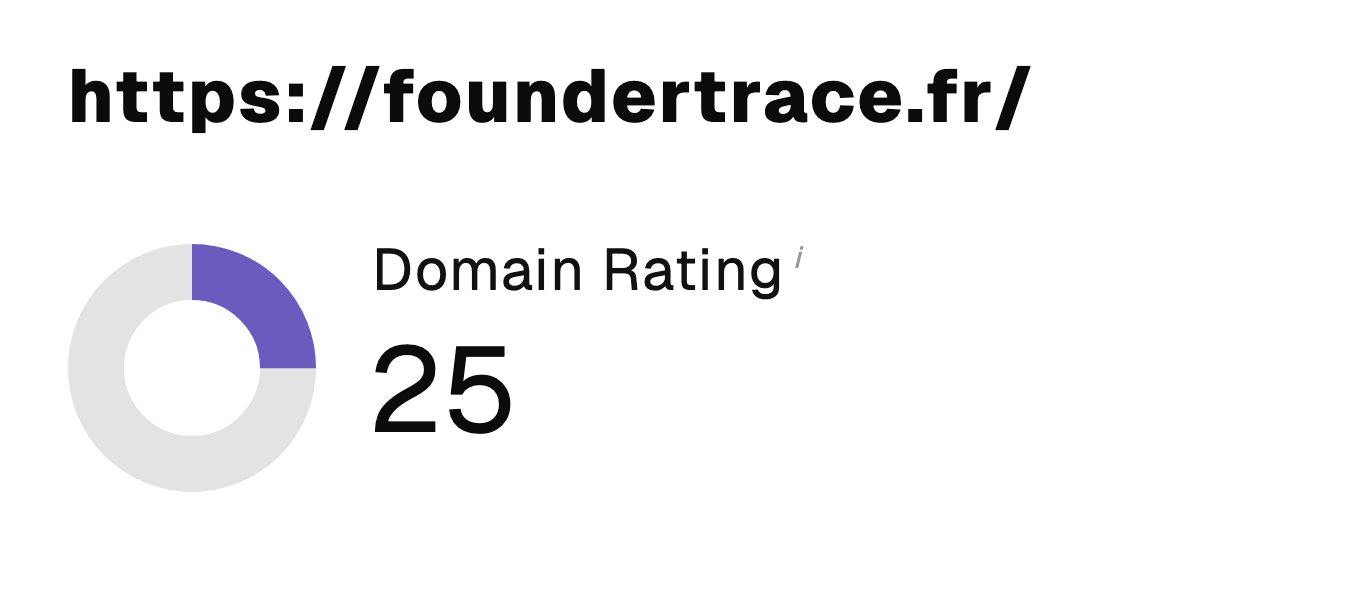 “I just let the Sorank software do its thing, and now my DR is 25 and my page is ranking higher.”
 Lucas Flandrefoundertrace.fr“I specialized in GEO thanks to Sorank. The GEO Leaderboard allows me to show my clients their position vs competitors on ChatGPT. It’s a real commercial differentiator.”
 MélanieSEO Freelance“Great service, works well for our website and helps us understand how to improve it to rank better on Google and elsewhere. Congrats, keep going, I recommend it.”
 Hugo T.E-commerce merchant