Preferences
Privacy is important to us, so you have the option of disabling certain types of storage that may not be necessary for the basic functioning of the website. Blocking categories may impact your experience on the website. More information
Privacy is important to us, so you have the option of disabling certain types of storage that may not be necessary for the basic functioning of the website. Blocking categories may impact your experience on the website. More information

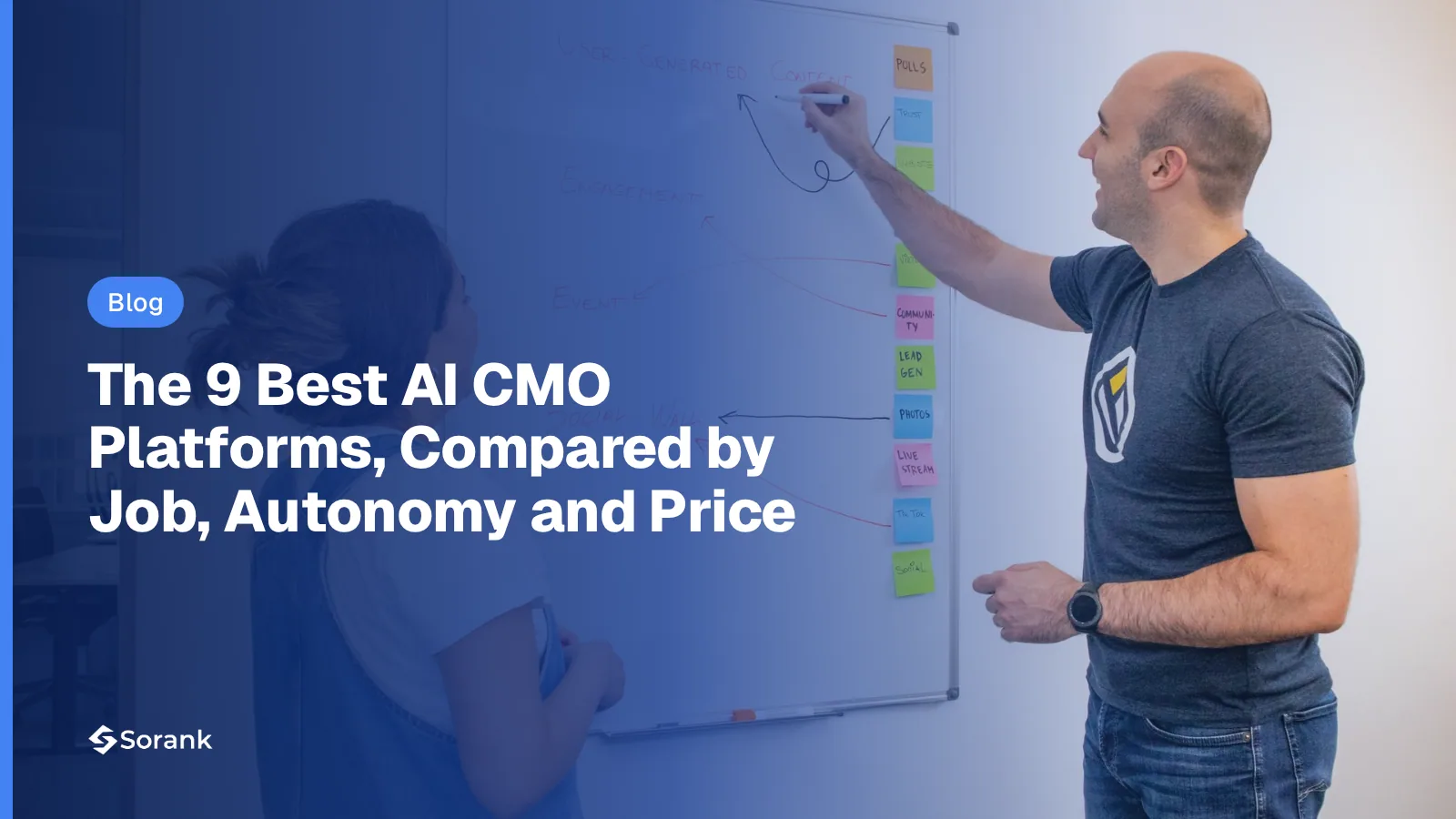
Compare the 9 best AI CMO platforms: what each one automates, who it suits, published prices, a scoring method and the mistakes to avoid before you buy.
In short
An AI CMO platform is software whose AI agents plan, launch and optimize marketing work, not just suggest it. The best choice depends on the channel you need run: Sorank for organic growth on Google and in AI answers, HubSpot or Salesforce for CRM-led marketing, Klaviyo, Braze or MoEngage for lifecycle messages, Madgicx or Albert for paid media, Northbeam for measurement.
Want to go further? Ask
Quick quiz
How should you use AI in your marketing?
Sorank matches your answers


Test it for 3 days on your own site and see where you stand on Google, ChatGPT and the other AIs.
Start 3-day free trial3 days free, then stop whenever you want. 90-day results guarantee, conditions apply.
No single product does everything a chief marketing officer does. Every vendor in this category automates one or two parts of the job very well and leaves the rest to you. This ranking says which part each one covers, what it costs according to its own pricing page, and where it stops. Prices and features were checked on each official site on November 26, 2026.
Transparency
Sorank is our own software. It is ranked first for the job it does on autopilot: organic acquisition from Google and AI answers. Every other entry is described only from what its vendor publishes, and we link to the page we read so you can check it yourself.
The short answer: pick the platform that runs your biggest channel, then add a measurement layer. The table below compares all nine on who they suit, what they do best and the lowest price their vendor publishes.
| Platform | Best for | Main strength | Starting price (published) |
|---|---|---|---|
| 1. Sorank | SMEs, e-commerce, SaaS and agencies that want organic growth | Writes and publishes articles, earns backlinks, tracks AI mentions on autopilot | $49/month per site, billed yearly |
| 2. HubSpot Marketing Hub | Companies that run marketing and sales in one CRM | AI agents that work on your CRM data | Free plan; Professional from $800/month |
| 3. Salesforce Agentforce Marketing | Large B2B and B2C teams on Salesforce | Campaign Agent that builds campaigns from goals and guardrails | $1500 per org per month, billed yearly |
| 4. Klaviyo | E-commerce brands | Email and SMS with the Composer marketing agent | Free plan; Email from $20/month |
| 5. Braze | Consumer apps and large B2C brands | AI decisioning per customer across messaging channels | Not published |
| 6. MoEngage | Consumer brands with app and web audiences | Merlin AI agents and 16+ channels | Not published |
| 7. Madgicx | Advertisers on Facebook and Instagram | AI Marketer that audits ads and prepares actions | $45/month (monthly) for ad spend under $1K |
| 8. Albert | Advertisers running several paid channels | Self-optimizing campaigns across ad platforms | Not published |
| 9. Northbeam | E-commerce brands with large ad budgets | Multi-touch attribution and media mix modeling | $1500/month (Starter) |
An AI CMO platform is marketing software in which AI agents take decisions and carry out tasks toward a goal you set: publish, send, bid, test, report. That is the difference with classic marketing automation, which only runs the rules a person wrote. Our glossary entry on autonomous marketing explains the line in detail: if a person wrote the rule, it is automation; if the system picks the next action from live results, it is autonomous.
Marketing automation vs AI CMO platform
Budgets are not growing, so the work has to. In the Gartner 2025 CMO Spend Survey, reported by Constantine von Hoffman for MarTech on May 12, 2025, marketing budgets flat-lined at 7.7% of company revenue, 59% of CMOs said they lacked the budget to execute their strategy, and 39% planned to reduce headcount by relying more on productivity gains from AI. The same survey found that 22% of CMOs already use generative AI to rely less on outside agencies for creative and strategy work.
What CMOs told Gartner in 2025
Source: Gartner 2025 CMO Spend Survey (402 marketing leaders), reported by MarTech, May 2025
We excluded tools that only write text on request, because they do not act on a channel, and products whose official site we could not reach on the day of the check.

Each entry follows the same order: what it is, who it is for, strengths, one honest limit and the price read on the official site on November 26, 2026. The rank reflects how much of a marketing job the platform completes on its own, for the reader who wants an AI to run a channel rather than assist on it.
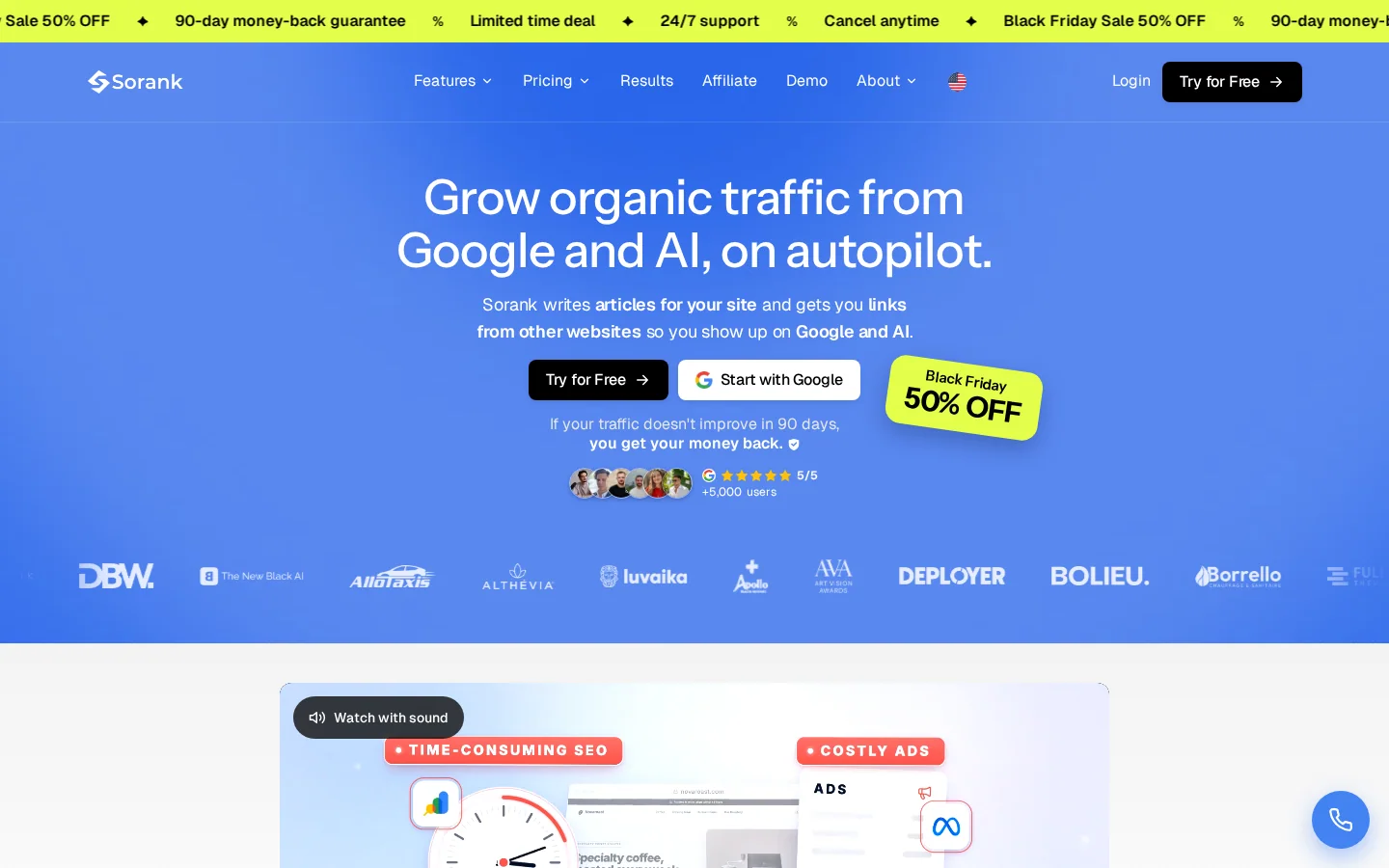
What it is. Sorank runs organic acquisition on autopilot: it finds what your customers search for on Google and ask AI models, writes and publishes optimized articles on your site, gets you links from other websites, checks what ChatGPT, Claude and Gemini say about your brand, fixes your site's technical problems and sends a monthly performance report. Of the platforms in this list, it is the one that takes a channel from research to published result without a person in the loop.
Who it is for. Small and mid-sized businesses, e-commerce stores, SaaS companies, franchises and agencies that want traffic and AI visibility without hiring a content team. The Sorank setup for marketing teams adds seats for colleagues: 3 on Essential, 7 on Pro, unlimited on Business.
Strengths.
Scope. Sorank is built for the organic channel: Google and AI answers. It sits next to your ad and email tools and feeds them with traffic; it does not buy media or send newsletters.
Price. From $49 per month per website on yearly billing, with a 3-day free trial and a 90-day guarantee: if your traffic does not improve, you get your money back (sorank.com, November 26, 2026).
 HubSpot Marketing Hub (Breeze and Agent Hub)
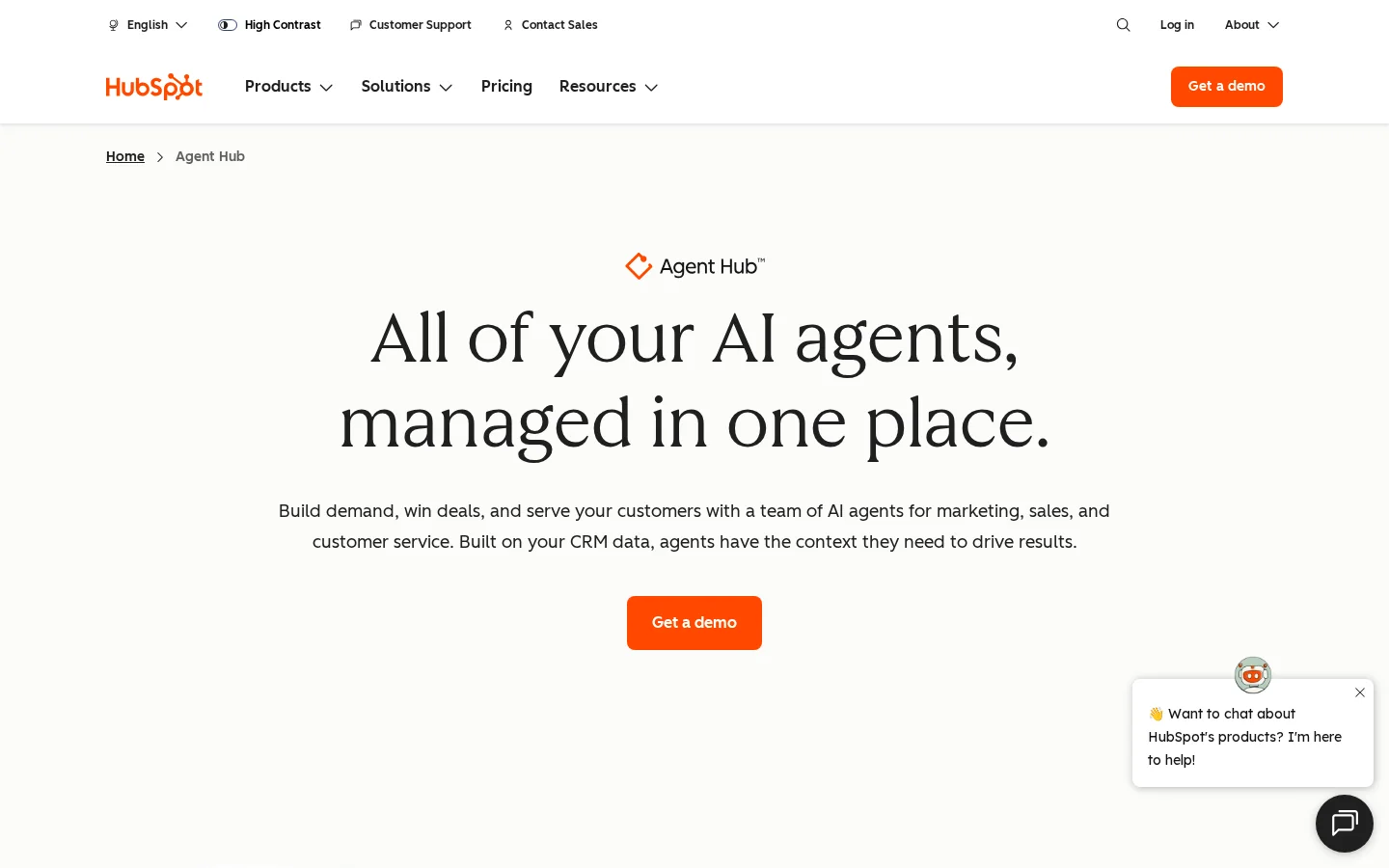
What it is. HubSpot's marketing software inside its CRM, now with an Agent Hub reached from Breeze Assistant. The agents include a Content Agent for blog posts, social content and landing pages, a Campaign Agent that turns one goal into a multi-channel campaign, a Nurture Agent that sends each lead a personalized email, a Prospecting Agent, a Customer Agent and an Agent Builder for custom agents.
Who it is for. B2B and B2C companies that already run, or want to run, marketing, sales and service from one CRM.
Strengths. The agents read your contacts, deals, emails and calls, so their output is tied to real customer history. Agent Hub is included in Starter, Professional and Enterprise editions.
Limit. The value depends on putting your data in HubSpot. Agents and many AI features consume HubSpot Credits, bought at $0.010 each or pay as you go, which makes the monthly bill less predictable. Some agents were still labeled beta on the pricing page.
Price. According to the Marketing Hub pricing page (November 26, 2026): a free plan for up to 2 users; Professional shown from $800 per month with 3 core seats and 3000 credits, plus a required $3000 onboarding fee; Enterprise from $3600 per month plus $7000 onboarding.
 Salesforce Agentforce Marketing

What it is. Agentforce Marketing, sold as Marketing Cloud Next, is Salesforce's marketing platform built around autonomous agents. You set goals and guardrails, and the Campaign Agent generates content for each channel, builds campaigns from brand guidelines and adjusts sends from customer intent signals. Agents also build segments in real time and run two-way conversations across email, SMS, web and paid ads.
Who it is for. Mid-sized and large organizations, B2B or B2C, whose sales and service already live in Salesforce.
Strengths. The deepest connection between marketing agents and sales, service and commerce data on this list, and paid media optimization in the higher editions.
Limit. The entry price is high and the most advanced agents (paid media optimization, personalization decisioning) sit in add-ons from $8000 to $15000 per org per month. Salesforce itself says exact pricing is confirmed with an account representative.
Price. Growth Edition from $1500 per org per month, Advanced Edition (agentic campaigns) from $3250 per org per month, both billed annually (Salesforce marketing pricing, November 26, 2026).
 Klaviyo
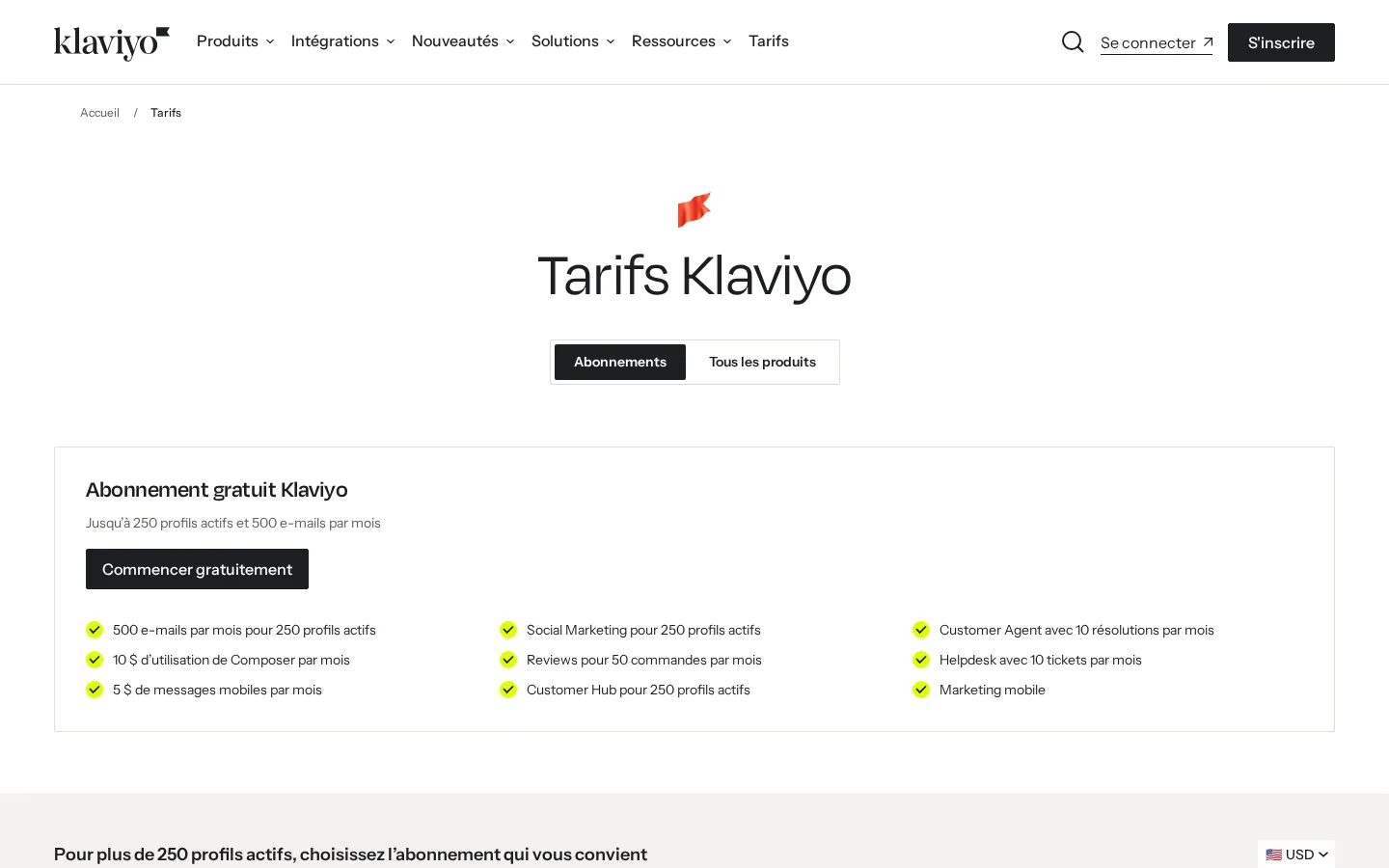
What it is. An email, SMS and customer platform for online stores. Its Composer agent builds campaigns, audits flows and suggests sales opportunities from your store data and connected tools. A Customer Agent answers shoppers, and Klaviyo AI runs across the platform.
Who it is for. E-commerce brands whose revenue depends on repeat purchases.
Strengths. Store data (orders, browsing, products) feeds every message, and you can start for free to test the agents on real customers.
Limit. It covers lifecycle messages to people already in your list. New-customer acquisition (search, ads, AI answers) needs another platform. Composer usage is metered beyond the small amount included on each plan.
Price. Free up to 250 active profiles and 500 emails a month, with $10 of Composer usage; Email plan from $20 per month for 500 profiles and 5000 emails; Marketing plan from $25 per month; custom pricing above 150000 profiles (Klaviyo pricing, November 26, 2026).
 Braze
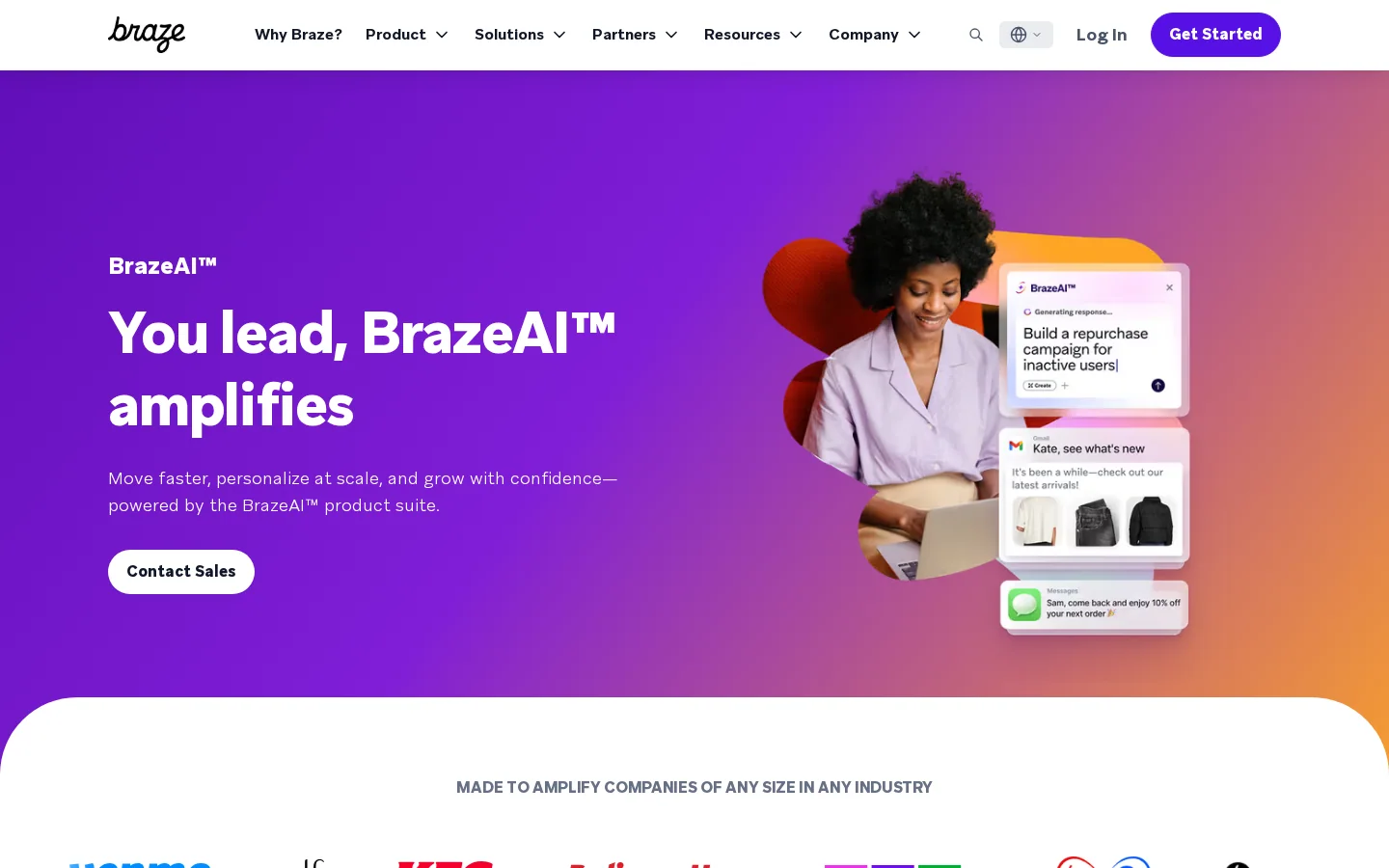
What it is. A customer engagement platform for email, mobile app, web, SMS, RCS and WhatsApp. Its BrazeAI layer includes Operator, which builds on-brand content, campaigns and journeys from a plain-language request, decisioning agents that learn the best option for each customer, and Decisioning Studio for one-to-one offers aimed at profit or lifetime value.
Who it is for. Consumer apps and large B2C brands with millions of active users and a data team.
Strengths. Testing of content, offers, channel, timing and frequency per customer without classic A/B tests, on a platform built for very large audiences.
Limit. Braze states it does not offer a free plan; price is quoted per contract and scales with monthly active users, plus a pool of Action Credits shared by channels and some AI features.
Price. Not published: four editions (Go, Select, Pro, Enterprise), quote on request (Braze pricing page, November 26, 2026).
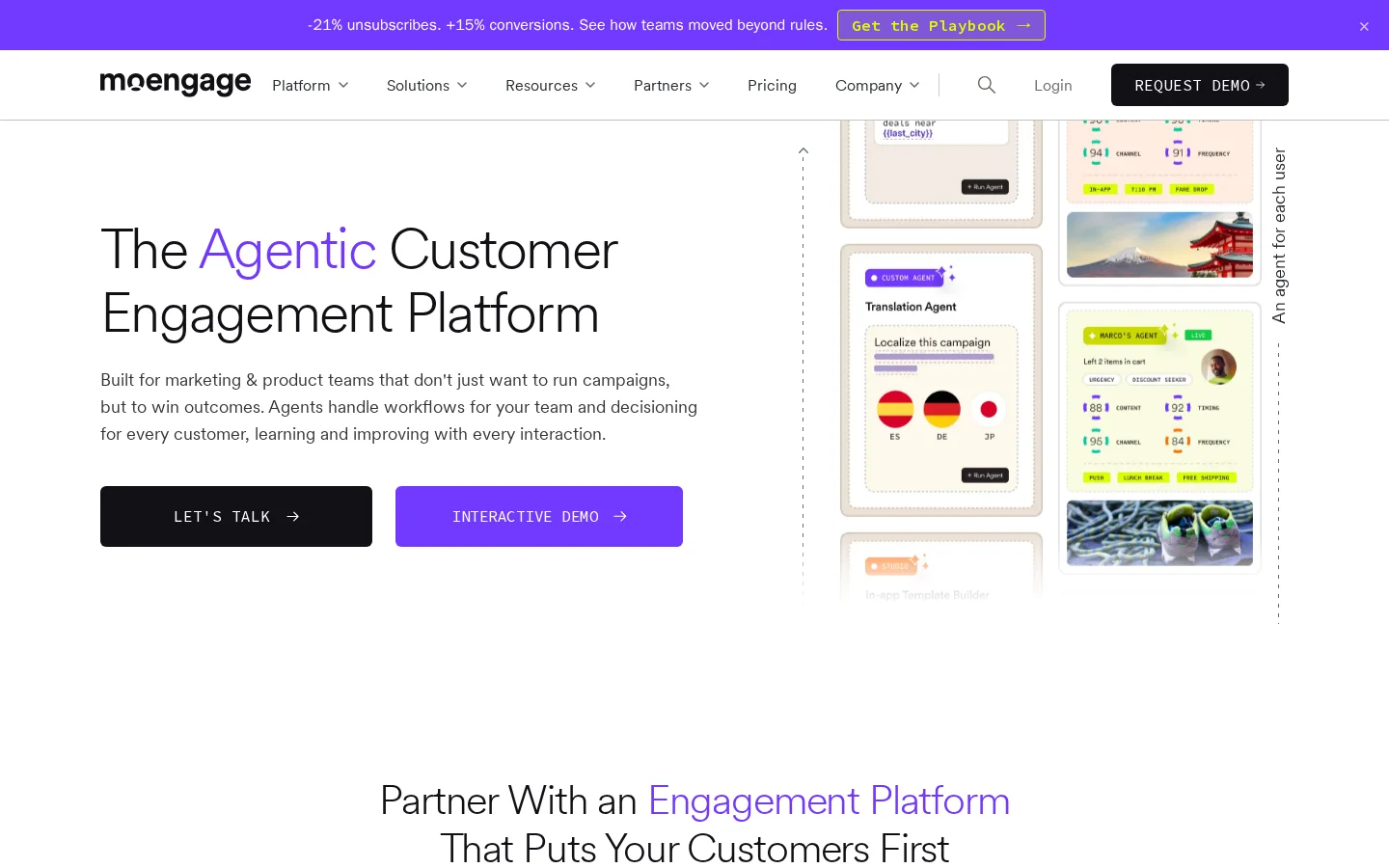
What it is. An agentic customer engagement platform for marketing and product teams. Merlin AI Native Agents handle copy, creative, translation, templates and brief-to-campaign work; Custom Agents let you build long workflows on your own logic; AI decisioning chooses offers and messages per customer across 16+ channels, including paid media.
Who it is for. Consumer brands in retail, finance, travel and media with app and web audiences, including teams that keep their data in a cloud warehouse.
Strengths. Warehouse-native activation, a marketplace of 300+ integrations and a broad set of channels in one place.
Limit. On the pricing page, Merlin AI agents are listed as add-ons, so the agent layer is an extra on top of the core plan.
Price. Not published: Growth and Enterprise plans, billed on monthly tracked users (MoEngage pricing, November 26, 2026).
What it is. An ad platform for Facebook and Instagram whose AI Marketer acts as an AI media buyer. It audits your Meta ad account around the clock, flags wasted spend and ads worth scaling, then prepares the ads and audiences for each recommendation.
Who it is for. Advertisers whose paid growth runs mainly on Facebook and Instagram.
Strengths. You choose the autonomy level: autonomous execution, or a workflow where you review each prepared action and click Launch. Pricing is public and scales with ad spend.
Limit. Its focus is Meta ads. Search ads, organic search and email stay outside.
Price. From $45 per month billed monthly, or $32 per month billed annually, for ad spend under $1K; a 7-day free trial (Madgicx pricing, November 26, 2026).
What it is. Albert is an autonomous AI for paid media. It designs and manages self-optimizing campaigns across ad platforms (its site shows Google, Bing, Facebook, Instagram, YouTube, TikTok and DV360) and shifts spend as audience segments perform differently.
Who it is for. Advertisers in retail, consumer goods, finance and insurance that spend across several ad networks at once.
Strengths. Cross-channel budget allocation by the machine, and implementation inside your existing ad accounts.
Limit. The site does not detail how much human oversight is built in, so ask for the approval workflow during the demo.
Price. Not published: the pricing page offers a custom plan based on your yearly ad budget (albert.ai, November 26, 2026).
What it is. A measurement platform with first-party multi-touch attribution, view-through attribution, optional incrementality testing and MMM+ media mix modeling. Apex sends custom attribution signals back to ad platforms to tune their delivery, and every plan includes an MCP server so an AI model can query your data.
Who it is for. E-commerce brands with significant ad budgets that need to know which spend drives sales.
Strengths. It gives the other agents on this list something they lack: an independent read on what each channel returns.
Limit. It measures and advises; budget moves stay with you or with your ad tools. No free trial is mentioned on the pricing page.
Price. Starter from $1500 per month for brands spending under $1.5M a year on ads, Professional from $3500 per month, Growth and Enterprise on quote (Northbeam pricing, November 26, 2026).
Most companies need two or three platforms, not one: one that brings new people in, one that turns them into repeat buyers, and one that measures. The right combination depends on your business model and budget more than on feature lists. Our guide to the layers of an AI marketing stack shows how data should flow between them.
| Company profile | Acquisition | Conversion and retention | Measurement |
|---|---|---|---|
| Local business or small service company | Sorank | HubSpot free plan | Search Console, Google Analytics and Sorank dashboard |
| Shopify store under $1M revenue | Sorank, Madgicx | Klaviyo | Klaviyo and Madgicx reports |
| E-commerce brand with heavy ad spend | Sorank, Albert or Madgicx | Klaviyo or Braze | Northbeam |
| B2B SaaS | Sorank | HubSpot Marketing Hub | HubSpot attribution, AI mention tracking |
| Enterprise B2B or B2C on Salesforce | Sorank, Albert | Agentforce Marketing | Salesforce Marketing Intelligence |
| Consumer app | Sorank, paid social | Braze or MoEngage | Product analytics plus an attribution tool |
Lifecycle and ad platforms only work on people who already found you or who you pay to reach. More and more buyers now ask ChatGPT, Claude or Gemini for a shortlist before they visit any site. If your brand is not cited there, no email agent or bidding agent will fix it. That is the gap an organic autopilot fills, and why it sits in the acquisition column of every row above.
Tip
Before you buy anything, measure where you stand in AI answers today. The free AI share of voice calculator compares how often AI models mention your brand against your competitors, so you have a baseline to judge any platform against.
Start from the job that costs you the most, not from the demo that impressed you most. The method below takes about two weeks of evaluation and a 90-day pilot.
Choosing an AI CMO platform in 6 steps
"Grow organic sign-ups from Google and AI answers" leads to a different shortlist than "raise repeat purchase rate" or "lower cost per acquisition on Meta". If you cannot write the sentence, the problem is strategy, not software; start with a marketing budget split by channel and see which line is underfunded.
Give each criterion a weight that reflects your job, score each vendor from 1 to 5, and multiply. A spreadsheet formula keeps the comparison honest when three people sat in three different demos.
Weighted score = (Execution x 0.30) + (Controls x 0.20) + (Channel fit x 0.20)
               + (Measurement x 0.15) + (Total cost x 0.15)

Google Sheets, scores in B2:F2, weights in B1:F1:
=SUMPRODUCT(B1:F1, B2:F2)
For "Total cost", score the full year: subscription, onboarding fee, credits or usage, extra seats, and the hours your team spends reviewing output. HubSpot's required onboarding fee or Braze's Action Credits change the ranking more than a $50 difference in the monthly price.
Every serious platform on this list offers some form of approval: drafts in your CMS, a review-then-launch flow, goals and guardrails. Use them. Write the rules down in a format your team and the vendor can both read.
{
  "agent": "organic-content",
  "goal": "grow non-brand clicks from Google and AI answers",
  "may_do_alone": ["publish articles on /blog/", "add internal links", "fix missing alt text"],
  "needs_approval": ["pages about pricing", "claims with numbers", "new categories"],
  "never": ["edit legal pages", "mention competitors by name", "change product prices"],
  "review": "weekly sample of 5 outputs, owner: content lead",
  "kill_switch": "pause publishing if non-brand clicks drop 20% over 14 days"
}Measure the four weeks before the pilot: clicks and impressions in Search Console, sessions and conversions in Analytics, AI mentions on a fixed list of questions, and cost per result for paid channels. Then let the agent run 90 days. Organic search usually needs two to four months to show its effect, so judge an organic pilot on leading signals (pages indexed, impressions, first AI mentions) before you judge it on revenue. The combined Google and AI dashboard in Sorank puts these signals in one view.
Before you sign
The published starting price is rarely what you pay. Budget the full year with four lines: subscription, one-off fees, usage, and people. Paid media also eats most of what is left: the Gartner survey reported by MarTech puts it at 30.6% of marketing budgets, so every dollar a platform takes has to come from somewhere visible.
Marketing budgets in 2025
Source: Gartner 2025 CMO Spend Survey, reported by MarTech, May 12, 2025
| Cost line | Examples from the vendors in this list | How to estimate it |
|---|---|---|
| Subscription | Per site (Sorank), per org (Salesforce), per seat and plan (HubSpot), per ad spend tier (Madgicx), per data volume (Northbeam) | Use the tier you will reach in month 6, not the one you start on |
| One-off fees | HubSpot onboarding of $3000 on Professional and $7000 on Enterprise | Ask for it in writing before the demo ends |
| Usage | HubSpot Credits, Braze Action Credits, Klaviyo Composer usage | Ask the vendor for the median usage of a customer your size |
| People | Review of AI output, guardrail updates, reporting | Hours per week multiplied by a loaded hourly cost |
Compare the total with what the job costs today: freelancer invoices, agency retainers, the hours of your own team. That is the number the AI CMO platform has to beat, and the only one your CFO will look at.
Most failed rollouts come from the buying process, not from the software. Here are the six mistakes we see most often, how to spot each one and how to fix it.
A failed rollout vs a good one
What it is: buying an "AI CMO" and assuming strategy, positioning and budget decisions come with it. How to spot it: nobody owns the goals the agent works toward, and results are judged on activity (posts, emails sent) rather than outcomes. How to fix it: keep a person accountable for the goal and the guardrails; give the platform the execution.
What it is: choosing the vendor with the longest channel list. How to spot it: after three months, most channels are switched on but none has finished work without manual help. How to fix it: score execution depth first. A platform that completes one channel end to end beats one that drafts for ten.
What it is: comparing monthly list prices when agents are billed in credits or usage. How to spot it: the second invoice is higher than the first with no change in plan. How to fix it: ask for the median credit consumption of a customer your size, set a spending cap, and include usage in the weighted score.
What it is: switching the agent on before recording where you stand. How to spot it: at the review meeting, the only evidence is the vendor's own dashboard. How to fix it: export four weeks of Search Console, Analytics, ad platform and CRM data before day one, and keep the same date ranges for the review. Our guide on marketing attribution and AI traffic explains how to credit visits that come from AI answers.
What it is: full autonomy from day one, with no written rules. How to spot it: off-brand claims, numbers nobody can source, offers sent to the wrong segment. How to fix it: start in approval mode, write the "may do alone / needs approval / never" list, sample outputs every week, then widen autonomy as the error rate drops.
What it is: building a stack for email, ads and CRM while buyers ask ChatGPT, Claude or Gemini which vendor to choose. How to spot it: ask those models the five questions your buyers ask; if competitors are named and you are not, you have the gap. How to fix it: publish sourced, useful pages that answer those questions, earn mentions on other sites, and track a fixed list of prompts every month. The free AI visibility score calculator gives you a first measure in minutes.
The direction is clear in what vendors shipped this year: from assistants that draft to agents that act under rules. Salesforce sells goals and guardrails, Madgicx lets you pick autonomous or human-approved execution, HubSpot and MoEngage let you build custom agents, and Northbeam exposes data to AI models through MCP. The same shift is described in our glossary entry on agentic marketing, where AI agents both run marketing and receive it.
The CMO moves from managing production to managing a portfolio of agents: setting goals, writing guardrails, checking evidence and reallocating budget between them. The skills that gain value are the ones agents cannot supply: a clear positioning, proof customers trust, and the judgment to stop an agent that hits its number the wrong way.
Your buyers use the same AI models. A growing part of the shortlist is formed before anyone visits a website, inside an AI answer. Brands that publish clear, sourced content and earn mentions on other sites get named; the others become invisible at the moment of choice, whatever their email or ad agents do afterward.
Choose by job. If organic growth from Google and AI answers is your priority, or your stack has no acquisition layer yet, start with Sorank: it researches, writes, publishes, earns links and tracks your AI mentions on autopilot, from $49 per month per site with a 3-day free trial. If your company lives in a CRM, add HubSpot Marketing Hub (small and mid-sized teams) or Salesforce Agentforce Marketing (large organizations). For lifecycle messages, Klaviyo suits e-commerce, Braze and MoEngage suit large consumer brands. For paid media, Madgicx covers Meta and Albert covers several ad networks. Add Northbeam once ad spend is large enough that attribution decides budget.
Whatever you pick, do three things today: write the job in one sentence, export your four-week baseline, and ask the AI models your buyers use who they recommend in your category. For a broader view of tools by task, see our comparison of the best AI marketing tools by job.
This ranking reflects my own experience and opinion as an SEO expert with more than 7 years in the field. It is based on verified facts, but the order itself is my personal view.
An AI CMO platform is marketing software whose AI agents plan, launch and optimize work toward a goal you set, such as publishing articles, sending campaigns or adjusting ad budgets. Unlike classic marketing automation, it does not only run rules a person wrote: it picks the next action from the results it measures, within the guardrails you define.
No. These platforms take over execution on one or two channels, but strategy, positioning, budget allocation and the final judgment on results still need a person. The best setups keep a human accountable for goals and guardrails, and let the agents do the production and testing.
Published starting prices range from free plans (HubSpot, Klaviyo) and $45 a month (Madgicx) to $1500 per month and more (Salesforce, Northbeam), while Braze, MoEngage and Albert quote on request. Budget the full year: subscription, onboarding fees, usage credits and the time your team spends reviewing output.
We analyse your competitors, your website and your AI visibility to create a tailored content plan for free.
 Website Value Calculator
 Website Accessibility Checker
 Google Analytics Checker
 Duplicate Content Checker
 Mobile-Friendly Test
 Website Speed Test
 Subdomain Finder
 Domain Age Checker
 CMS Detector
 Googlebot Simulator
 Nofollow Link Checker
 Meta Tag Checker
 Keyword Cannibalization Checker
 Keyword Intent Checker
 Keyword Extractor
 Google Ads Cost Calculator
 CPC Calculator
 Local Citation Finder
 Reddit Threads Finder
 Disavow File Generator
 Redirect Generator
 Canonical Tag Generator
 Passive Voice Checker
 Google Location Changer
 Google Review Calculator
 Google Review Link Generator
 Keyword Combiner
 Podcast Show Notes Generator
 AI Content Rewriter
 AI Text Humanizer
 ChatGPT Prompt Generator
 Twitter Thread Generator
 Tweet Generator
 Landing Page Copy Generator
 Google Ads Copy Generator
 Pinterest Pin Description Generator
 Anchor Text Generator
 Social Media Post Generator
 LinkedIn Post Generator
 Free AI Writer
 Review Response Generator
 LSI Keyword Generator
 YouTube Video Ideas Generator
 YouTube Tag Generator
 YouTube Description Generator
 Product Description Generator
 CTA Generator
 Blog Introduction Generator
 Conclusion Generator
 Hook Generator
 AI Content Brief Generator
 FAQ Schema Generator
 AI Blog Post Ideas Generator
 Structured Data Validator (Schema Validator)
 Alt Text Checker
 Internal Link Analyzer
 Backlink Challenge
 AI Meta Description Generator
 AI Blog Title Generator
 Google Indexability Checker
 AI Blog Outline Generator
 UTM Link Builder
 Keyword Clustering Tool
 Canonical Tag Checker
 XML Sitemap Generator
 Broken Link Checker
 AI SEO Title Generator
 Headline Analyzer
 SERP Preview Tool
 Redirect Checker
 Hreflang Tag Generator
 Heading Structure Analyzer
 HTTP Headers Checker
 Favicon Extractor
 SERP CTR Calculator
 SEO vs Paid Search Savings Calculator
 SEO Share of Voice Calculator
 SEO ROI Calculator
 SEO Traffic and Revenue Forecast Calculator
 SEO Budget Calculator
 SEO Break-Even Calculator
 SaaS SEO ROI Calculator
 ROAS Calculator
 Reading Time Calculator
 Ranking Gain Simulator
 Organic Traffic Value Calculator
 Organic Traffic Estimator and Website Traffic Checker
 LTV to CAC Ratio Calculator
 Local SEO ROI Calculator
 Link Building Cost Calculator
 Keyword Value Calculator
 Keyword Opportunity Score Calculator
 Keyword Density Calculator
 GEO ROI Calculator
 GEO Content Investment Calculator
 Ecommerce SEO ROI Calculator
 Customer Lifetime Value Calculator
 Customer Acquisition Cost Calculator
 CTR Calculator
 Cost Per Article Calculator
 Conversion Rate Calculator
 Content Marketing ROI Calculator
 ChatGPT Referral Traffic Estimator
 Bounce Rate Calculator
 Backlink ROI Calculator
 AI Visibility Score Calculator
 AI Traffic Value Calculator
 AI Share of Voice Calculator
 Cost of AI Invisibility Calculator
 AI Citation Rate Calculator
 llms.txt Validator
 AI Overview Checker and AI Overviews Rank Checker
 Robots.txt Checker
 AI SEO Audit
 LLM Readability Checker
 SearchGPT Readiness Checker
 Structured Data LLM Audit
 Website Crawlability AI Audit
 Why ChatGPT Is Not Recommending My Website
 Gemini Ranking Tool
 Perplexity Ranking Checker
 LLM Citation Checker
 Answer Engine Optimization Audit
 GEO Audit
 AI Search Visibility Test
 ChatGPT Visibility Checker
 llms.txt Generator
 URL Extractor
 Webpage to Markdown
 Sitemap Checker
 SERP Volatility Sensor
 Page Size Checker
 Word Counter
 Slug Generator
 Schema Generator
 Robots Generator
 OG Preview
 Meta Tags Generator
 Image Compressor
 Favicon Generator
 On-Page SEO Audit: SEO Checker and SEO Analyzer
 Backlink Analysis Tool
 Keyword Research Tool
 Domain Authority Checker
 “I tested Sorank on a real client site and it's insane. It does everything an agency would bill you $1500 a month for. It's going into production on that client now.”

 Guillaume Guersanguersanguillaume.com“We are an Ads agency and we wanted to get our SEO back on track once and for all. Sorank gave us a clear view of our site, helped us prioritize optimizations, and properly structure our content. The tool is easy to use, well designed for a team, and very practical for centralizing tracking without having to juggle multiple platforms. A very solid foundation to start fresh with our SEO.”
 Gaspard MadouiAds Agency
 “I just let the Sorank software do its thing, and now my DR is 25 and my page is ranking higher.”
 Lucas Flandrefoundertrace.fr“I specialized in GEO thanks to Sorank. The GEO Leaderboard allows me to show my clients their position vs competitors on ChatGPT. It’s a real commercial differentiator.”
 MélanieSEO Freelance“Great service, works well for our website and helps us understand how to improve it to rank better on Google and elsewhere. Congrats, keep going, I recommend it.”
 Hugo T.E-commerce merchant