Preferences
Privacy is important to us, so you have the option of disabling certain types of storage that may not be necessary for the basic functioning of the website. Blocking categories may impact your experience on the website. More information
Privacy is important to us, so you have the option of disabling certain types of storage that may not be necessary for the basic functioning of the website. Blocking categories may impact your experience on the website. More information

10 real social media ads from Sephora, Nature Spell, Rippling and more, with the published results, why each worked and the step-by-step method to copy them.
In short
The best social media ads examples are real campaigns whose results the platform itself published: Sephora and LANEIGE on Instagram and Facebook, Nature Spell, CREA Jewelry, Thank You Lab and Starbucks on TikTok, Rippling and Snowflake on LinkedIn, Søstrene Grene on Pinterest and Gucci on Snapchat. Most of them win with a human voice (creator, customer or employee), not a polished brand message.
Want to go further? Ask
Quick quiz
Which social network should you focus on?
Sorank matches your answers


Test it for 3 days on your own site and see where you stand on Google, ChatGPT and the other AIs.
Start 3-day free trial3 days free, then stop whenever you want. 90-day results guarantee, conditions apply.
Most lists of social ads show a screenshot and a guess about why it worked. This one only keeps ads with a published case study, so you can see the format, the targeting, the test and the numbers. Every figure below comes from the official success story page of Meta, TikTok, LinkedIn, Pinterest or Snap, read on 27 November 2026. For each example you get what the ad was, who it suits, what made it work, an honest limit and the lesson you can copy this week.
The table gives the short version: the network, the format, who the example is useful for and the headline result. None of these brands published its budget, so the "Budget" column says so instead of guessing.
| # | Brand and network | Format | Best for | Published result | Budget |
|---|---|---|---|---|---|
| 1 | Sephora US (Instagram) | Creator partnership ads + Advantage+ catalog ads | Retailers with stores and a product catalog | 1.56x incremental omnichannel ROAS | Not published |
| 2 | Nature Spell (TikTok) | Spark Ads from reviewers and affiliates, TikTok Shop | Ecommerce brands with UGC | 16.5x ROAS, £1.11 CPA | Not published |
| 3 | Rippling (LinkedIn) | Thought Leader Ads from customers and creators | B2B SaaS selling to executives | 5.8x ROI on total campaign investment | Not published |
| 4 | LANEIGE (Facebook and Instagram) | Photo, video and partnership ads | Product launches that need awareness | +28 points ad recall | Not published |
| 5 | CREA Jewelry (TikTok) | Spark Ads boosting best organic videos | Small shops with a few organic hits | +44% conversion rate vs in-feed ads | Not published |
| 6 | Snowflake (LinkedIn) | Thought Leader Ad from an employee | Events, webinars, developer audiences | 21.2% CTR on retargeting | Not published |
| 7 | Thank You Lab (TikTok) | In-house educational Spark Ads | Expert brands without a creator budget | €6 CPA, 6.5 ROAS | Not published |
| 8 | Søstrene Grene (Pinterest) | Catalog Sales ads + lead ads | Multi-country retailers before peak season | +22% incremental checkout conversions | Not published |
| 9 | Starbucks (TikTok) | Spark Ads on creator recipe videos | Brands with a fan community | 11.5M impressions, 31500 new followers | Not published |
| 10 | Gucci (Snapchat) | Sponsored AI Lens | Fashion and beauty brands, young audiences | No figure published | Not published |
Four results worth remembering
Sources: TikTok for Business, LinkedIn Marketing Solutions and Pinterest Business success stories, read 27 November 2026
A word on reading these numbers. They are case studies published by the platforms, so they are selected because they went well. Several of them come from proper tests (conversion lift, brand lift, A/B tests against a control), which makes them more solid than a "we doubled sales" quote. We point out the method for each one, because a 16.5x ROAS in platform reporting and a 1.56x incremental ROAS in a lift test do not measure the same thing.
The order follows what you can learn from each ad and how solid the proof is: tested and measured campaigns first, then strong creative ideas with lighter proof. For each one you get the ad, who it suits, its strengths, one honest limit and the lesson to copy.
Sephora US wanted more incremental sales across its website, app and stores. The campaign, called "That Sephora Feeling", tried to capture the joy of walking into a Sephora store. Meta's AI insights pointed to four content themes: exploration, play, instant gratification and "girl therapy". Sephora then filmed three beauty creators and one creator who works with AI at its flagship New York store, testing products and having fun.
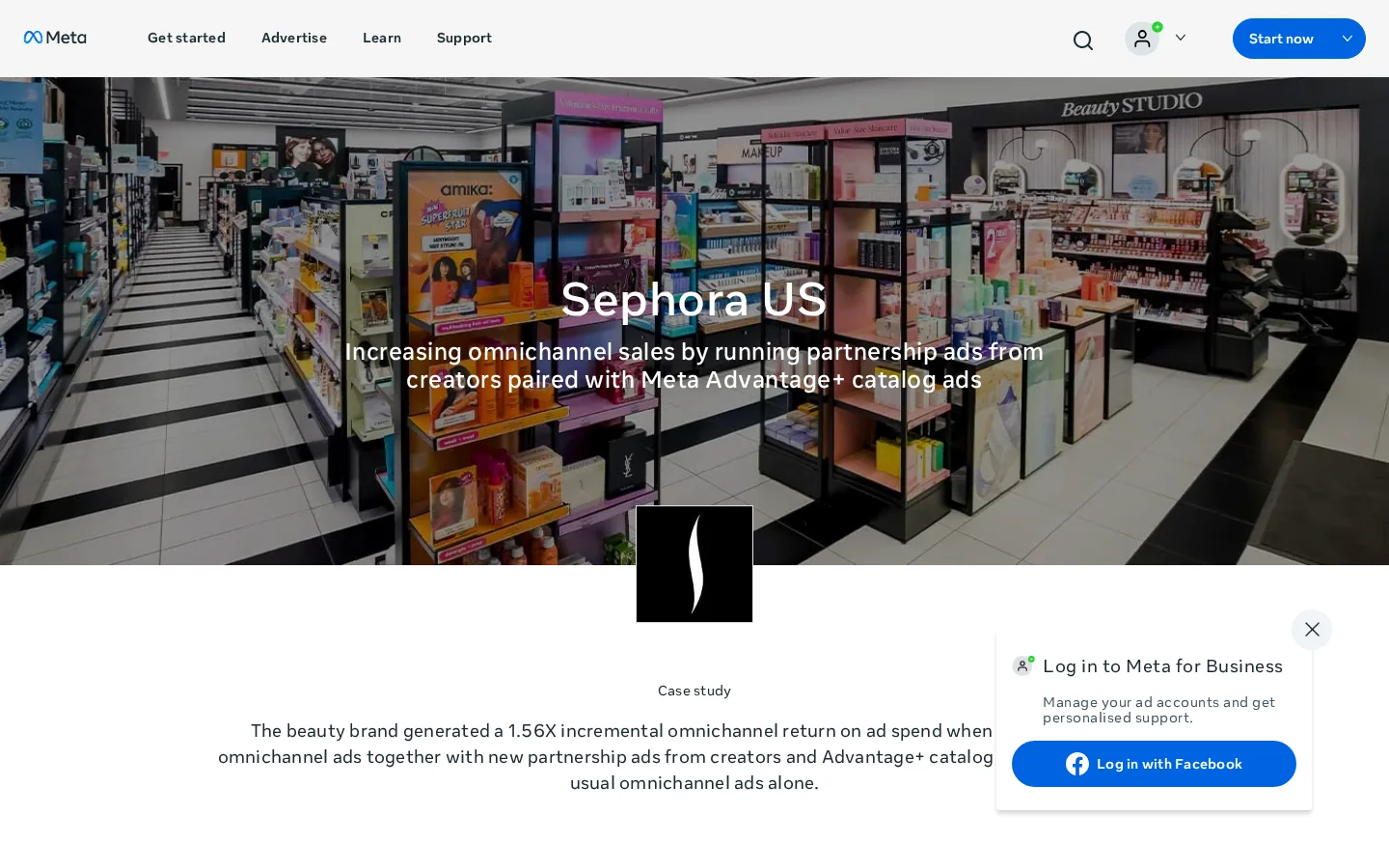
The creator videos ran as partnership ads (the ad shows the creator's handle, not only the brand's) paired with Advantage+ catalog ads, which pull shoppable product images from Sephora's catalog. The audience was US adults aged 18 and over on Instagram Feed, Stories and Reels, with Advantage+ audience letting the algorithm find new shoppers. According to Meta's Sephora US case study, a multi-cell conversion lift test from 19 August to 15 September 2025 compared the usual omnichannel ads alone with the usual ads plus partnership and catalog ads. The second cell delivered 1.56x incremental omnichannel return on ad spend, 1.04x return on ad spend for in-store purchases and 3% higher incremental reach.
Lesson to copy: do not choose between "brand video" and "product ad". Put a person in front and the catalog behind, then measure the pair against your usual ads with a lift test.
 Nature Spell: reviewers and affiliates turned into ads
Nature Spell is a UK haircare and skincare brand founded in 2009 in North London by two sisters and two brothers. Its goal on TikTok was to grow TikTok Shop sales, reach new audiences and build a community around its values. The ads were Spark Ads, the TikTok format that turns an existing organic post (yours or another creator's) into an ad. The posts came from product reviewers and non-paid affiliates, so the creative was user-generated from the start.
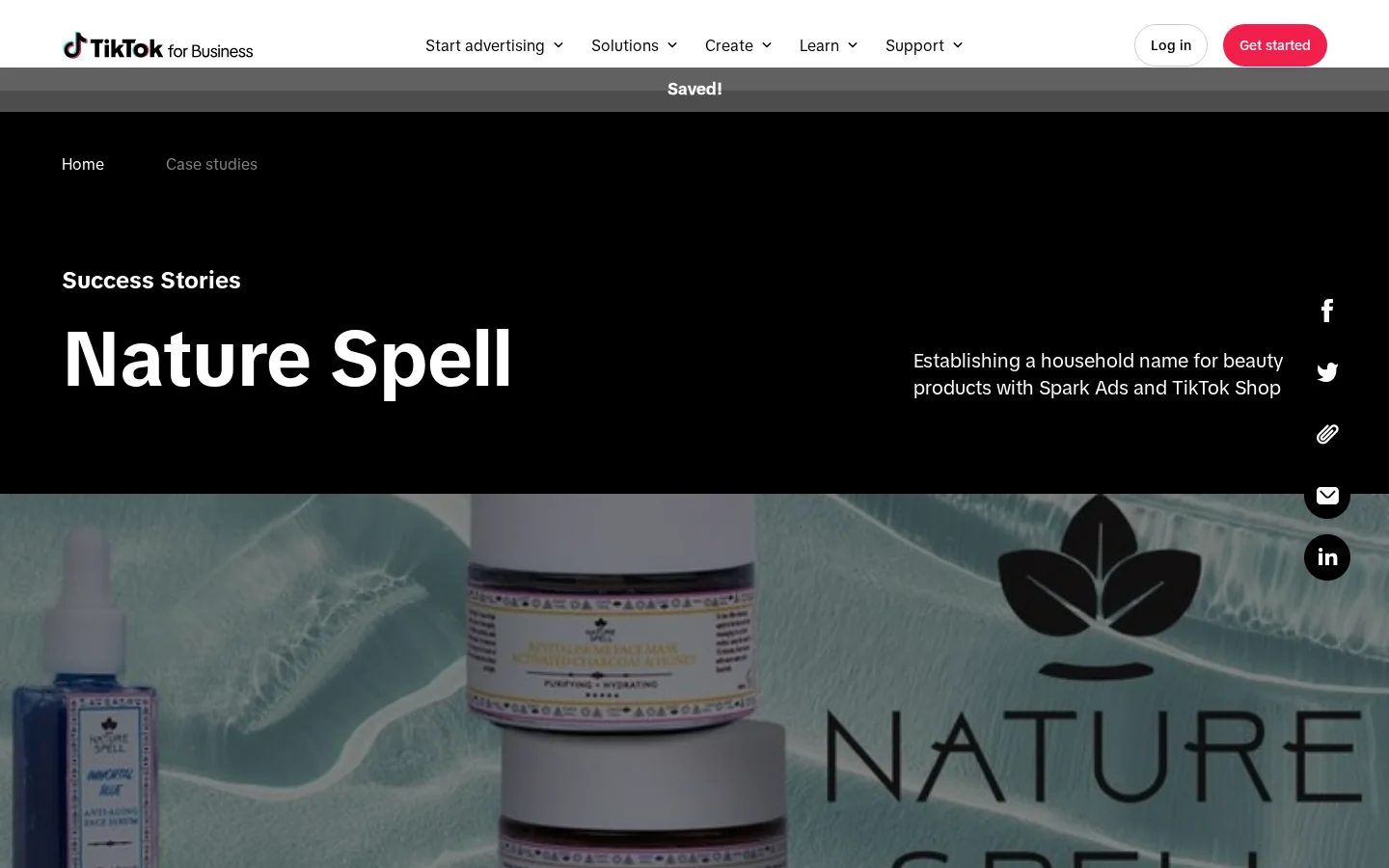
The campaign split content by job: educational and inspirational videos for awareness, videos about the brand's mission and value proposition for conversion. Some ads did not even mention the products and relied on music, and still had high engagement. Several ad sets aimed at people who value effective, clean and ethically produced beauty products, and everyone who watched a new video was retargeted. A TikTok account manager reviewed setup and optimization every week. TikTok's Nature Spell success story reports a 16.5x ROAS against a 7x goal, a £1.11 cost per acquisition, 779238 views, a 24.32% purchase rate and 1 million orders through TikTok Shop within 12 months of the brand's arrival on the platform.
Lesson to copy: before you shoot a single ad, list the reviews and affiliate videos that already exist about your product and ask their authors for a Spark Ads code. Read our guide to user-generated content and how to use it for the rights side.
 Rippling: 300 customers talking instead of the brand
Rippling, a workforce management software company, was launching Rippling AI into a market tired of AI claims. Instead of saying "we are AI-first" in its own name, it asked existing customers to share their experience. More than 300 customers posted about Rippling AI on LinkedIn, and Rippling paid to amplify the best-performing posts as Thought Leader Ads, the LinkedIn format that promotes a post from a person's profile rather than the company page. It also worked with LinkedIn creators who had engaged C-suite audiences, found through Whalar.
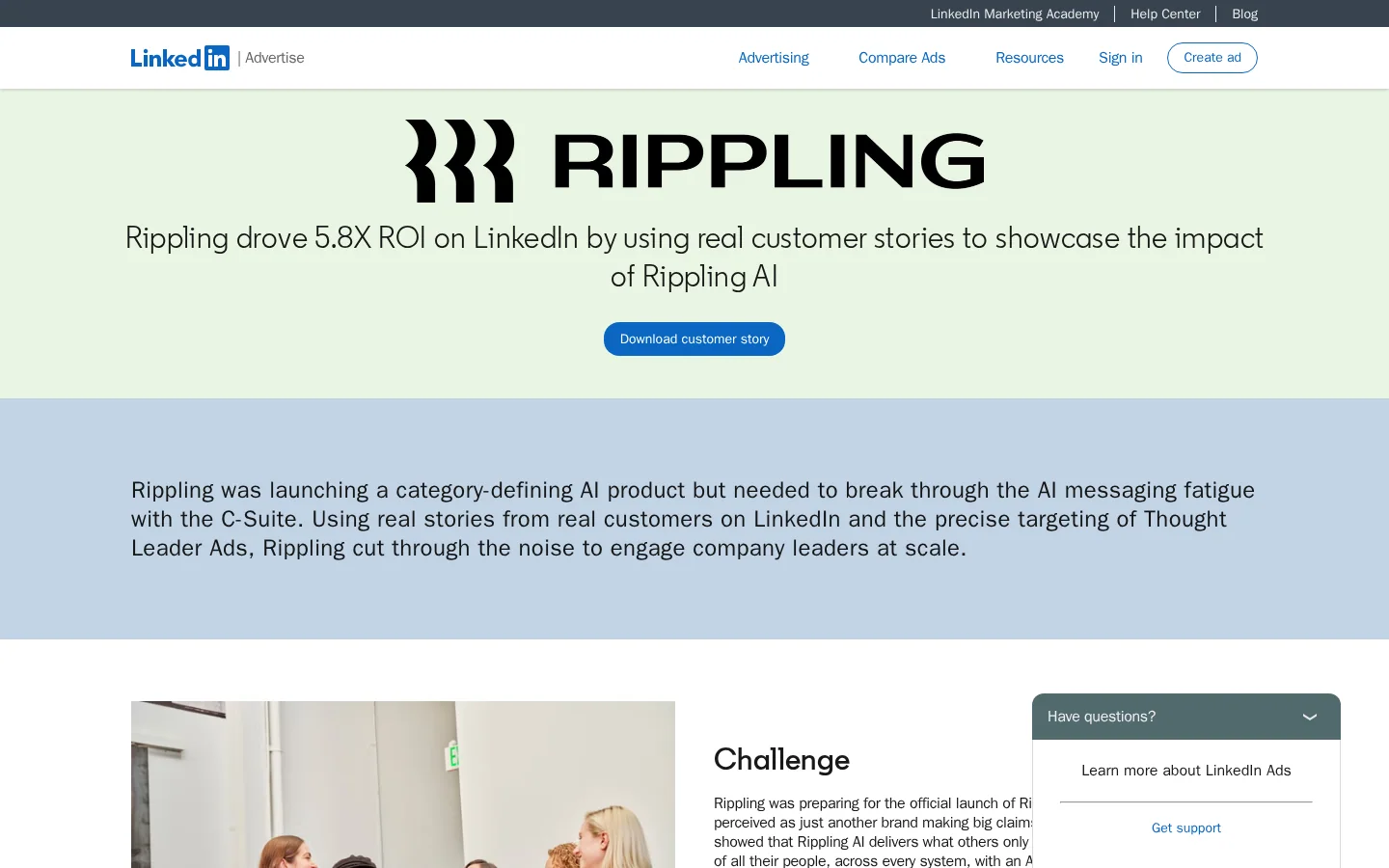
Video was the anchor format. Targeting aimed at C-suite leaders and functional heads. Rippling tracked the path from ad exposure to sales-qualified opportunities and closed deals with the Conversions API. LinkedIn's Rippling customer story reports a 5.8x ROI on total campaign investment, 35% of Thought Leader Ad clicks coming from C-suite members and 38% higher engagement rates for video Thought Leader Ads than LinkedIn benchmarks.
Lesson to copy: ask five customers to write one post each about a specific result, then promote only the post that performs best organically. Our LinkedIn marketing strategy guide explains how to fit this into a company page plan.
LANEIGE, the Korean skincare brand of the AMOREPACIFIC group, launched its JuicePop Box Lip Tint collection in the US. The creative mixed photo ads, video ads and partnership ads with well-known influencers and celebrities. Every ad showed the benefits of the tints and ended with a "Shop now" call to action that led to Sephora's website, where the product was sold.
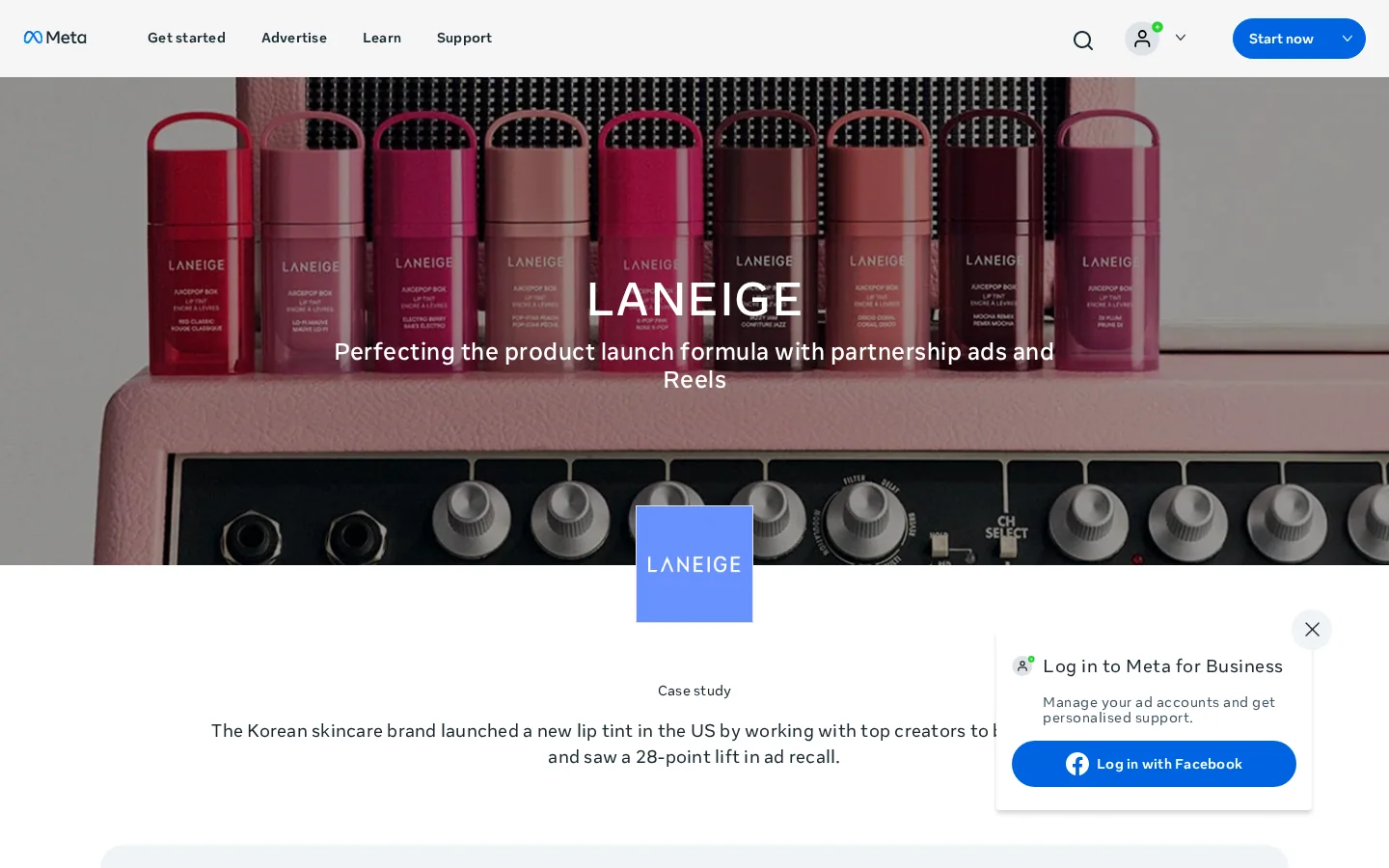
LANEIGE ran several campaigns at once with different objectives: reach for scale, traffic for people likely to visit Sephora's site, and video views for engagement. Placements covered Facebook and Instagram Feed, Reels and Stories, with a broad audience of US women aged 18 to 44 plus people interested in beauty. Meta's LANEIGE case study describes a brand lift test from 27 January to 31 March 2026 that measured a 28-point lift in ad recall, a 22-point lift in brand awareness and a 7-point lift in consideration.
Lesson to copy: for a launch, do not judge week one on purchases. Set a reach or video views campaign next to the traffic one and measure recall, as LANEIGE did.
CREA Jewelry: boost what already works organicallyCREA Jewelry is a Japanese online store selling affordable, durable jewelry, including pieces for people with metal allergies. It opened its TikTok channel in late 2022. Rather than producing new ads, it picked its best organic videos (the ones with the most views and engagement) and ran them as Spark Ads in the For You feed, with an Anchor Link at the bottom of each video pointing to the landing page.
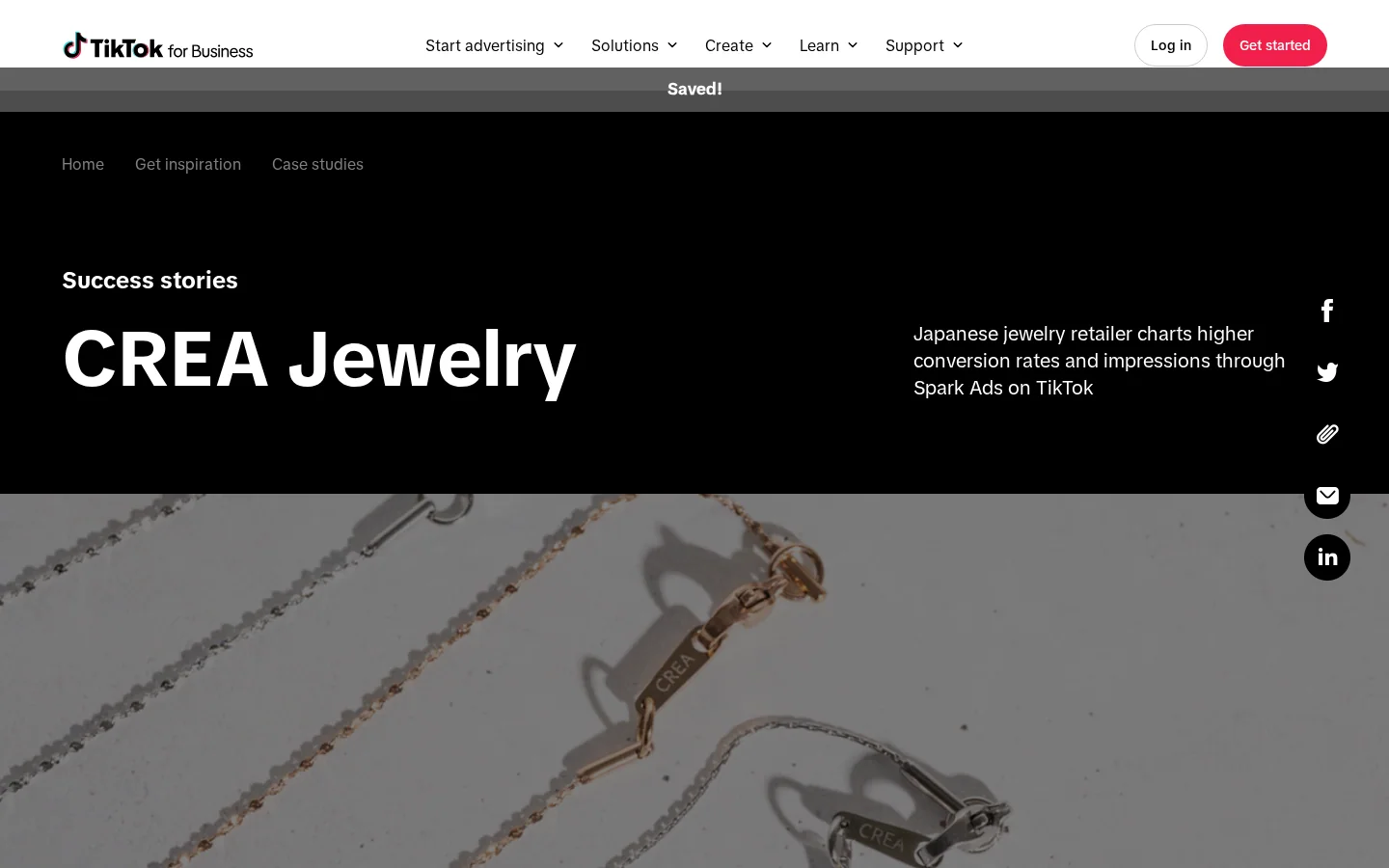
Setup was deliberately simple: automatic targeting toward people likely to complete a payment, Lowest Cost bidding and a fixed daily budget, over a two-week test. TikTok's CREA Jewelry success story compares it with an in-feed video ad campaign run over the same two weeks: the Spark Ads had a 44% higher conversion rate, a 26.4% lower cost per acquisition and 35.8% more conversions.
Lesson to copy: sort your last 30 organic posts by engagement, take the top three and run them as ads before you brief anything new. Our TikTok marketing guide covers the organic side that feeds this.
Snowflake: one engineer's post beat the brand adsSnowflake, the cloud data platform, held its first Dev Day in 2024 next to its annual Summit and needed sign-ups from developers, data scientists and engineers, an audience that ignores corporate ads. For the companion Data Cloud Summit, it had already tested Thought Leader Ads featuring two outside voices, a speaker and an attendee, against Single Image Ads. For Dev Day, it went further: the only LinkedIn tactic was a promoted post from Dash Desai, Snowflake's Principal Developer Advocate, shown to audiences that had already engaged.
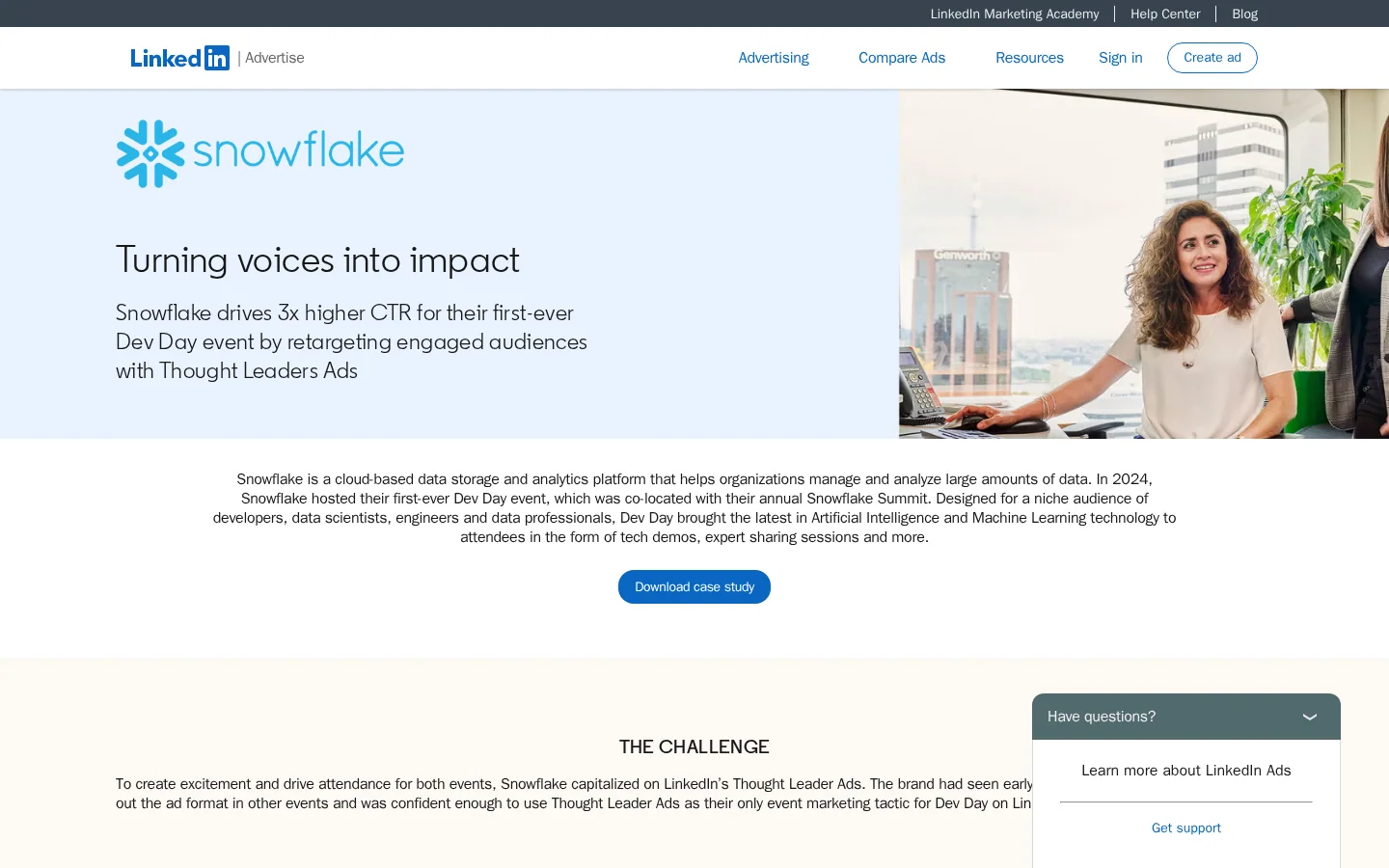
LinkedIn's Snowflake customer story reports a 5.6% click-through rate for the Summit Thought Leader Ads, 2.7x higher than Single Image Ads, then a 21.2% CTR for the retargeted Dev Day post, which drove 64 sign-ups from data professionals. Snowflake also secured registrations from 40 targeted accounts.
Lesson to copy: find the person in your team the audience would follow (an engineer, a head chef, a lawyer), have them write the post, and promote it to people who already visited your site or engaged with your page.
Thank You Lab: educational videos made in houseThank You Lab is a French dermocosmetics brand founded in 2022 by Victoire Duhamel, built around its Skin Restore cream. It wanted to be seen as a skin problem specialist by a wider audience and to sell more. Every video was produced in house, with no well-known TikTok creators. The tone was informative and educational, inspired by the organic content that was already popular in skincare.
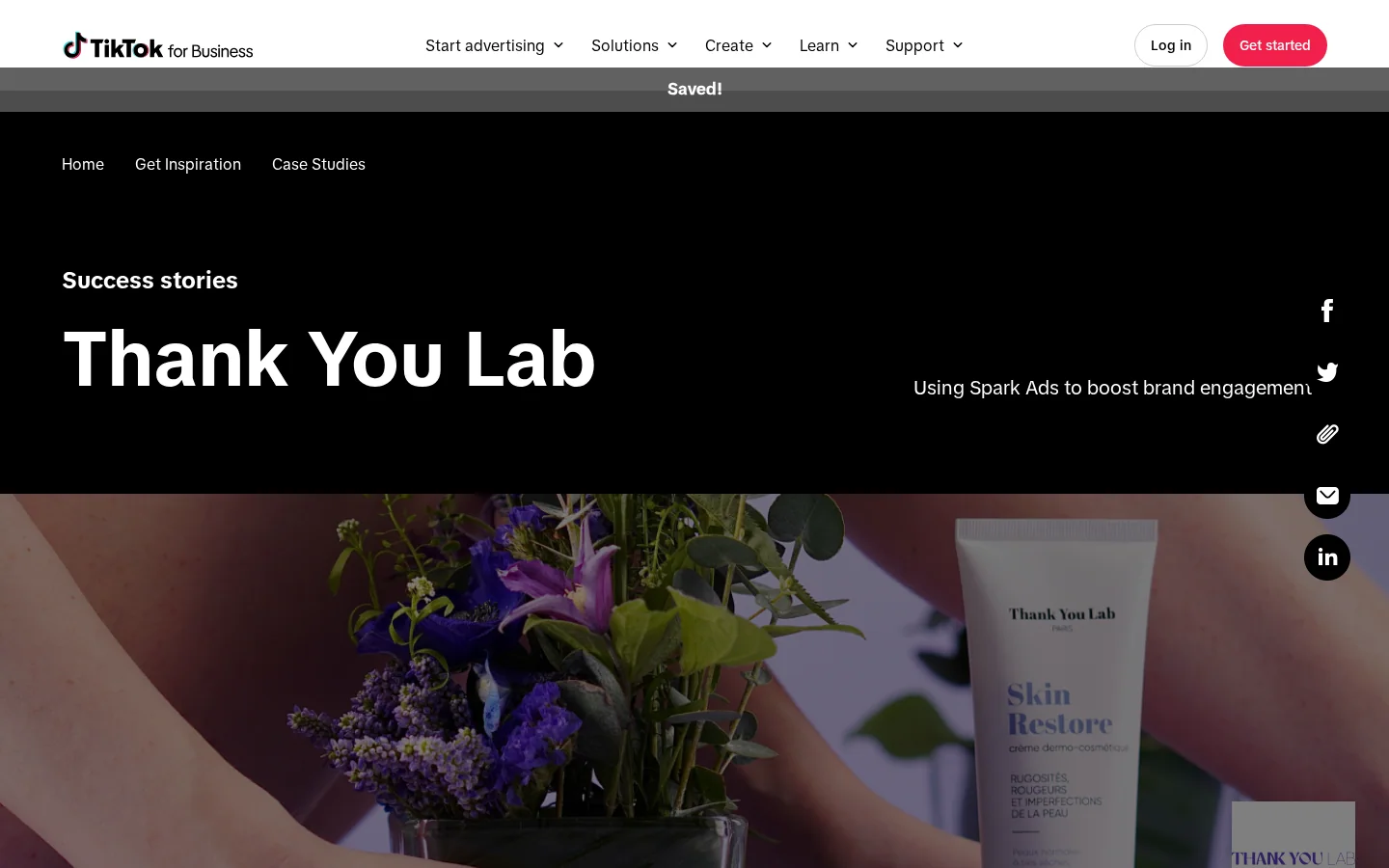
The brand ran these videos as Spark Ads in an always-on campaign launched in December 2022, aimed at a broad audience in France and refined with its TikTok account manager. TikTok's Thank You Lab success story reports a cost per acquisition of €6, a ROAS of 6.5, a cost per click of €0.30 and a 50% reduction in both CPA and CPC.
Lesson to copy: write down the five questions customers ask before buying and answer each one in a 30 second video filmed by someone from your team. That is your first ad set.
Søstrene Grene, the home and lifestyle retailer present in 14 European markets, wanted to know whether Pinterest brought real extra sales or only took credit for them in last-click reports. Before the holiday season, it ran Catalog Sales ads for both prospecting and dynamic product retargeting, plus lead ads to bring new audiences into the purchase journey.
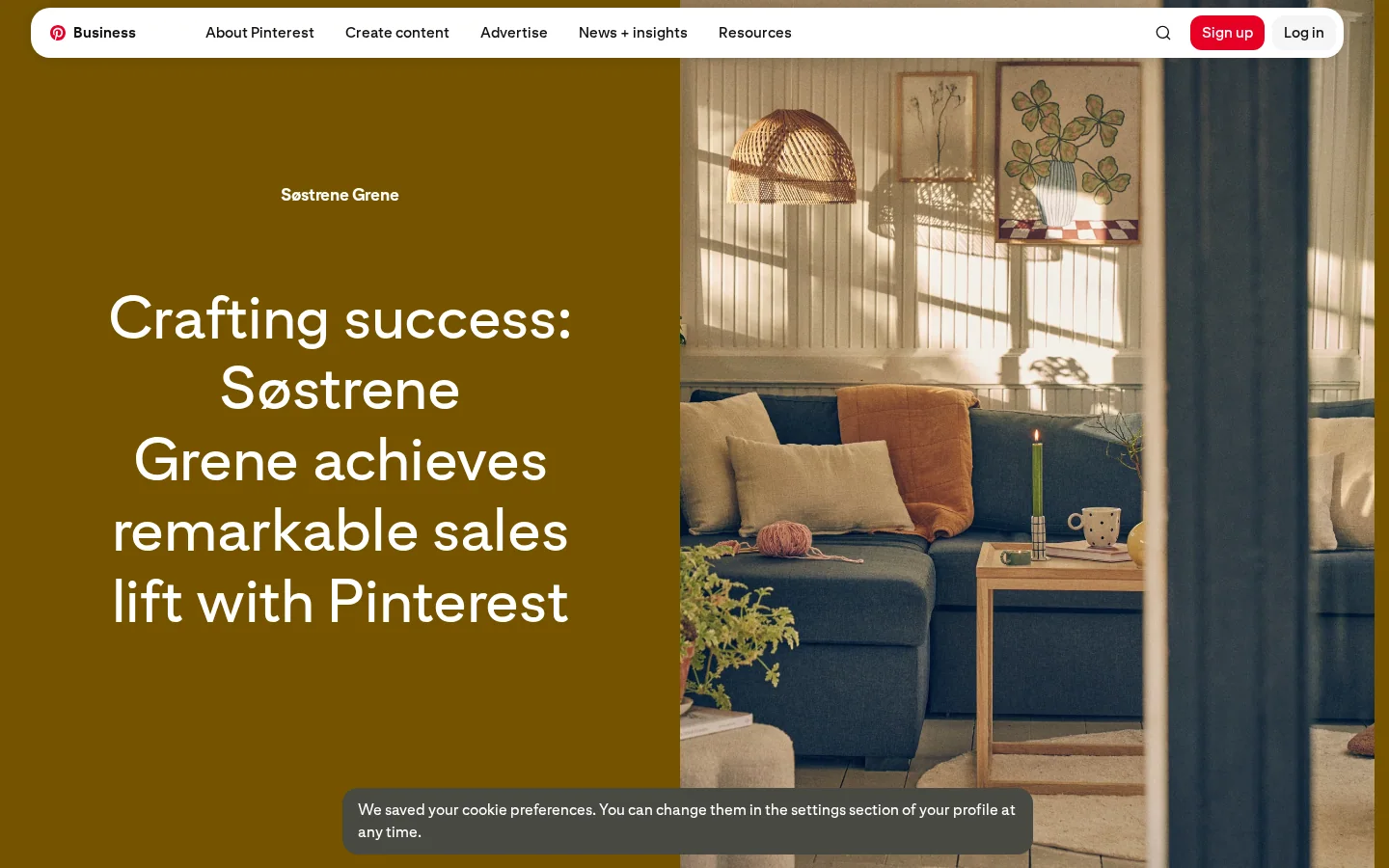
The proof is the interesting part. Pinterest's Søstrene Grene success story describes a seven-week conversion lift study combining always-on and flighted campaigns. It measured a 22% increase in incremental checkout conversions, up to a 46% lift in checkouts among people exposed to Catalogue Sales ads, a 21% sales lift, a 1.3x incremental ROAS and a 21% lift in new and lapsed buyers.
Lesson to copy: start catalog ads six to eight weeks before your peak season, not the week before, and ask your platform rep for a conversion lift study so you can defend the budget with incremental numbers.
Starbucks: the fans wrote the menu, the ads amplified itStarbucks noticed that TikTok was full of fans sharing their own custom drinks. It put two of them on the regular menu for two weeks as limited editions "inspired by TikTok": a Strawberry Sunset iced tea and a Churro Frappuccino. Then it promoted two popular creator videos about these drinks as Spark Ads, served In-Feed and as TopView (the first ad seen when the app opens), next to in-store activity.
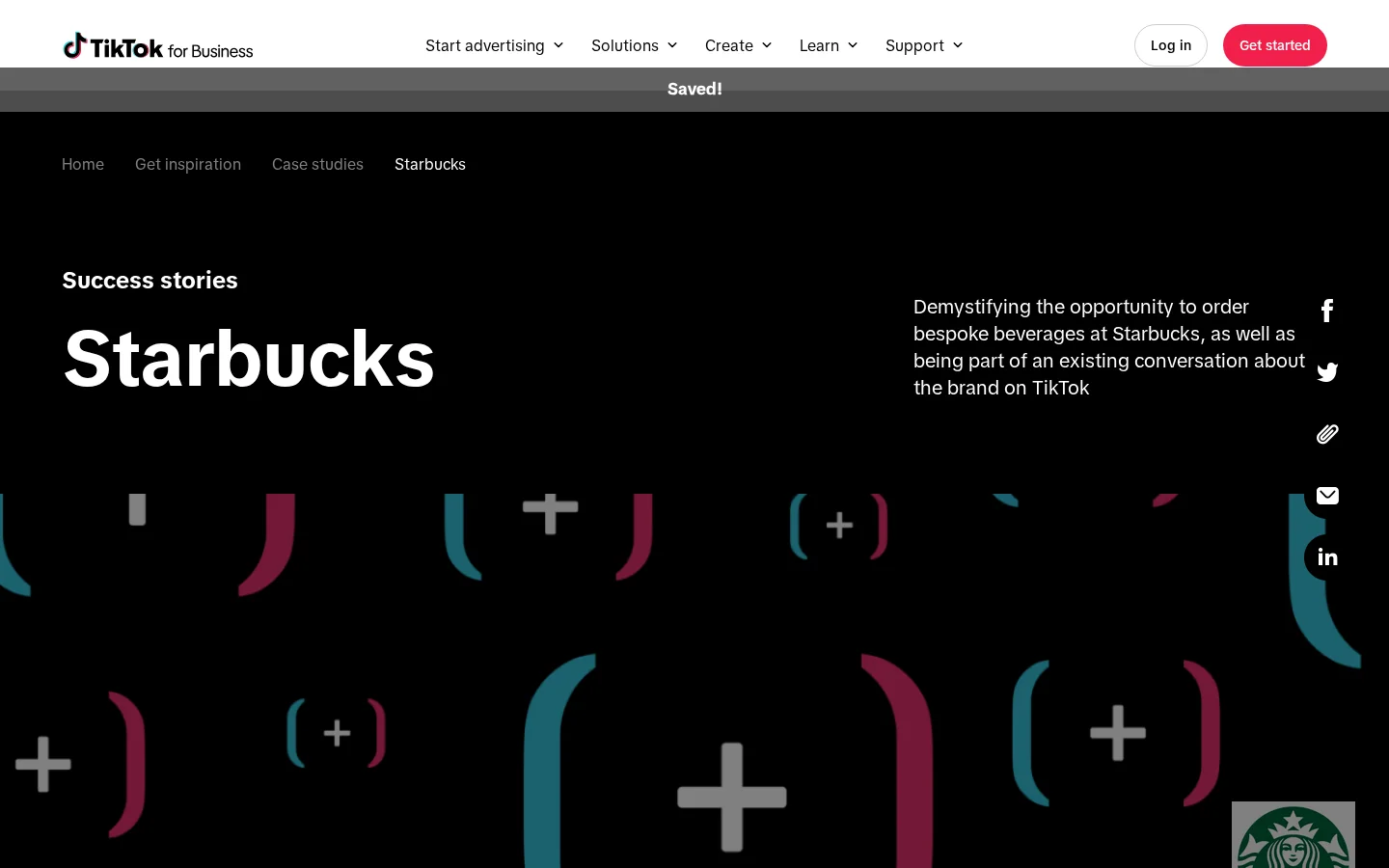
The ads carried a follow option and a call to action button to an external landing page. Starbucks bought at auction and also used a Reach and Frequency objective so people would not see the ad too often. TikTok's Starbucks success story reports more than 11.5 million impressions, 31500 new followers and over 220000 likes.
Lesson to copy: search your brand name on TikTok and Instagram, find what customers invent with your product, make it official for a limited time and promote the original creator's video.
On 9 February 2026, Gucci launched with Snapchat the first Sponsored AI Lens for a luxury house. Powered by Snap's generative AI, the Lens turns the user into one of six characters from Gucci's "La Famiglia" collection, such as La VIP, La Bomba or Il Figo. It was offered in the Lens carousel in France, the United Kingdom, the United Arab Emirates and Saudi Arabia, and worldwide through Gucci's public Snapchat profile.
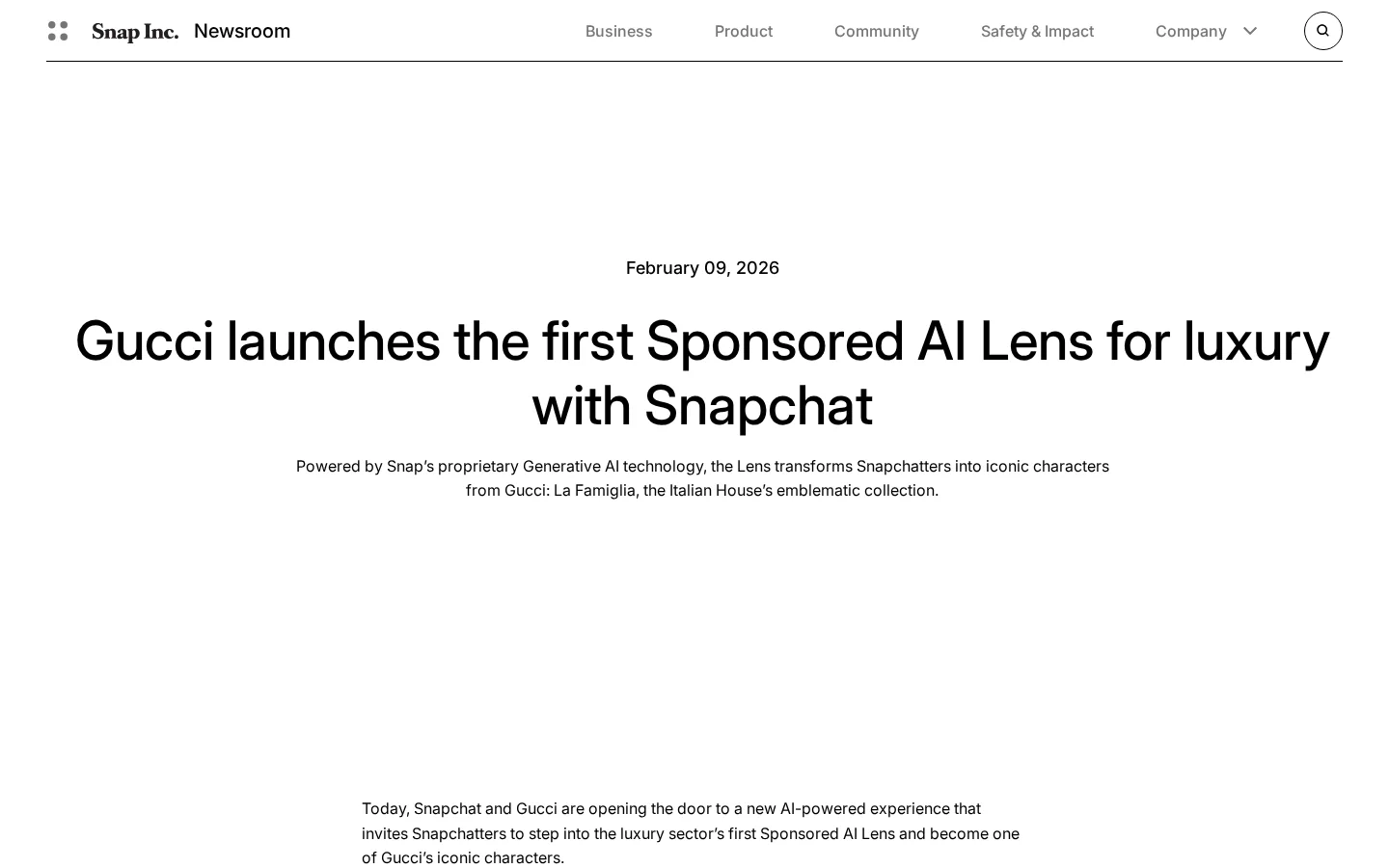
Snap's announcement of the Gucci Sponsored AI Lens shows where social ads are heading: the person does not watch the ad, they play with it, take a picture and send it to friends, which carries the brand into private conversations.
Lesson to copy: even without a lens budget, ask yourself what the viewer could do with your ad (vote, try, customize, send) rather than only watch.

These ten examples use six different approaches. The short version: the person speaking matters more than the format. Five of the ten put someone other than the brand in front (a creator, a reviewer, a customer, an employee or the viewer themselves). Here is each approach, when to use it and what it costs you.
Principle: a creator makes the content and the ad runs with their handle, on Meta as partnership ads. When to use it: launches and retail, when you need reach and trust fast. Advantages: borrowed credibility, reach on the creator's audience. Limits: creator fees, approvals, dependence on one face. Examples: Sephora, LANEIGE.
Principle: turn an organic post that already worked, yours or a customer's, into an ad. When to use it: small budgets, ecommerce, TikTok and Reels. Advantages: creative already tested for free, native look, likes and comments stay on the post. Limits: you need organic hits first, and authorization codes expire. Examples: Nature Spell, CREA Jewelry, Starbucks.
Principle: promote posts from real people's profiles rather than the company page. When to use it: B2B, events, complex products. Advantages: higher CTR than brand formats in both LinkedIn cases above. Limits: people must agree, and their tone is not fully yours. Examples: Rippling, Snowflake.
Principle: your team answers buyers' questions on camera. When to use it: expert products with a learning curve. Advantages: low cost, full control, trust. Limits: needs someone at ease on camera and a steady output. Example: Thank You Lab.
Principle: the platform builds ads from your product feed and shows each person the items most relevant to them. When to use it: large catalogs, seasonal peaks, retargeting. Advantages: scale without design work, always up to date. Limits: generic look, depends on feed quality. Examples: Søstrene Grene, the catalog half of Sephora.
Principle: the viewer uses the ad on their own face or photo. When to use it: fashion, beauty, entertainment, young audiences. Advantages: participation and private sharing. Limits: production cost, proof of sales harder to show. Example: Gucci.
| Approach | Main goal | Production cost | Speed to launch | Best networks | Examples |
|---|---|---|---|---|---|
| Creator partnership ads | Reach and trust | Medium to high | 2 to 4 weeks | Instagram, Facebook, TikTok | Sephora, LANEIGE |
| Boosted organic and UGC | Sales at low CPA | Low | Same day | TikTok, Instagram Reels | Nature Spell, CREA, Starbucks |
| Employee and customer voice | B2B credibility, leads | Low | 1 to 2 weeks | Rippling, Snowflake | |
| Educational in-house video | Trust then sales | Low | 1 week | TikTok, Instagram, YouTube | Thank You Lab |
| Catalog and dynamic product ads | Sales at scale | Low (feed work) | 1 to 2 weeks | Pinterest, Meta | Søstrene Grene |
| Interactive AR and AI lenses | Awareness, sharing | High | 4 weeks or more | Snapchat, Instagram | Gucci |
Brand-voice ad vs human-voice ad
The quick answer: pick one example that matches your goal, copy its structure (not its visuals), and test it against your current ad with one clear metric. Here is the method we use, in six steps.
From example to live ad in 6 steps
Most weak ads come from copying a format without its goal. Starbucks measured impressions and followers; Søstrene Grene measured incremental checkouts. If you need sales next month, the Starbucks example is the wrong model even if you love it. Write the metric on top of your brief, then pick the example whose published result uses that metric.
CREA Jewelry, Nature Spell and Rippling all started from content that existed before the ad. Pull your last 90 days of organic posts, sort by saves, shares and comments (likes are the weakest signal), and keep the top 10%. Add customer reviews that mention a specific result. That list is your creative backlog.
Tip
No organic material yet? Our free social media post generator drafts five post ideas from your topic in seconds. Publish them organically first, then promote the one that performs.
The first second (video) or first line (LinkedIn, Facebook) decides everything. Write three versions: a question the buyer asks, a specific result, and a surprising fact. Keep the call to action concrete ("Shop the lip tints", "Save your seat"), as LANEIGE's "Shop now" to a named retailer did. Our ad copywriting guide, platform by platform goes deeper on each network, and the glossary entry on writing a call to action covers the wording.
Sephora and Rippling both relied on the Conversions API to send offline or downstream events back to the platform. At minimum, tag every ad link with UTM parameters and name campaigns so you can read results in a year. A template you can copy:
https://example.com/product?utm_source=tiktok&utm_medium=paid_social&utm_campaign=2027-01_spark-ugc_sales&utm_content=hook-question_v1

Campaign name: [network]_[goal]_[approach]_[market]_[yyyy-mm]
Example:       tiktok_sales_spark-ugc_fr_2027-01
Ad name:       [hook]_[format]_[creator-or-team]_v[n]
Example:       hook-question_video-30s_customer-julie_v1
For the full pixel, Conversions API and GA4 setup, follow our conversion tracking guide for GA4, Google Ads and Meta.
CREA compared Spark Ads with in-feed ads over the same two weeks; Sephora used a multi-cell conversion lift test; LANEIGE used a brand lift study. Copy that discipline. Change one variable (the voice, the hook or the format), keep budget and audience equal, and wait until each version has enough conversions to compare. On Meta, the Experiments tool runs A/B and lift tests; on TikTok and LinkedIn, ask your account rep for a lift study once your spend allows it. Our guide to A/B testing in marketing explains how long to run a test and when a difference is real.
Every big network now has a public library of ads, and some show performance. Use them to collect examples in your own industry rather than relying on lists like this one.
| Source | What you see | Performance data | Best use |
|---|---|---|---|
| Meta Ad Library | All active ads on Facebook and Instagram, by advertiser or keyword | No results data | See how long a competitor runs an ad: an ad live for months is probably profitable |
| TikTok Creative Center, Top Ads | High-performing auction ads, filtered by region, objective, language and format | Likes, reach and CTR as sort options | Find hooks and formats that work in your market |
| LinkedIn Ad Library | Ads run by a company page or member | No | Study B2B competitors' offers and Thought Leader Ads |
| Platform success stories (the pages above) | Full case: creative, targeting, test, results | Yes, selected by the platform | Copy a method with known results |
TikTok's Top Ads page in the Creative Center is the most useful free source, because it lets you sort by CTR and filter by objective, so you see ads that worked for a goal like yours. For paid tools that track ads across networks over time, see our comparison of the best ad spy tools.
Checklist: is this ad example worth copying?
Choose by goal first, then by the resources you have. A small ecommerce shop and a B2B software company should not copy the same ad, even on the same network.
Which example to copy at each stage
Each network rewards a different behavior. TikTok rewards content that looks organic, which is why three of the four TikTok examples are Spark Ads. LinkedIn rewards people over pages, hence Thought Leader Ads. Pinterest users are planning purchases, so catalog ads fit. Meta covers everything but works best when creators and catalog run together. For a deeper look at the Meta side, read our guides to setting up and scaling Meta ads and to Instagram ad placements and creative. To know what a "good" result looks like on each network before you start, check our social media benchmarks by platform.
The main mistake is copying what an ad looks like instead of why it worked. Here are the seven we see most often, how to spot them and how to fix them.
What it is: you reproduce Sephora's in-store creator video without the catalog ads and the lift test that made it work. How to spot it: your brief describes colors and scenes but no audience, objective or metric. How to fix it: write the mechanism in one sentence ("a human voice in front, product feed behind, measured against our usual ads") before any creative work.
What it is: you run a LANEIGE-style launch and cut it after a week because purchases are low. How to spot it: the campaign objective is reach or video views but you report CPA. How to fix it: match the metric to the objective (recall, reach, cost per thousand views), or run a brand lift study.
What it is: you compare a 16.5x attributed ROAS with your own 3x and conclude you are failing. How to spot it: no control group in your reports. How to fix it: compare incremental results, as Søstrene Grene and Sephora did. Pinterest's Honeylove story shows how much the window alone changes things: a 30-day attribution window matched incremental impact better and showed 2x more revenue than a 7-day window.
What it is: on LinkedIn or TikTok, every ad comes from the company account. How to spot it: your CTR stays below the network's benchmark whatever the copy. How to fix it: test one Thought Leader Ad or Spark Ad against your best brand ad, same budget.
What it is: you screenshot a customer's video and run it as an ad. How to spot it: no written authorization, no Spark Ads code, no partnership ad permission. How to fix it: use the platform's authorization tools (Spark Ads codes, partnership ads permissions, Thought Leader Ads approvals) and keep a written agreement covering duration and usage.
What it is: one winning ad runs for months and its CTR slides down. How to spot it: frequency climbs above 3 or 4 per week while CTR falls and CPA rises. How to fix it: cap frequency (Starbucks used a Reach and Frequency objective for that reason) and keep a backlog of new hooks to rotate every two to four weeks.
What it is: ads go live before the pixel, Conversions API or UTM parameters are set. How to spot it: sales in your shop that no channel claims, or "direct" traffic rising during a campaign. How to fix it: test every event with the platform's test tool before spending, and use the naming template from the step by step section.
A typical ad brief, before and after these examples
If you only copy one example this week, copy CREA Jewelry: take your three best organic posts, run them as Spark Ads or boosted Reels against your current ad for two weeks, and compare cost per acquisition. It costs nothing to produce and tells you quickly whether a human, native voice beats your brand ads in your market. B2B teams should start with Snowflake's approach: one expert's post, promoted to people who already know you.
Then think about what happens when the budget stops. Every result above lasts as long as the spend. The traffic that keeps coming without a media budget comes from search: Google, and now the answers of ChatGPT, Gemini and Claude. That is the part Sorank automates for marketing teams: keyword research, articles written and published on autopilot, backlink exchanges and tracking of your brand in AI answers, so your paid social campaigns have an organic base underneath them.
This ranking reflects my own experience and opinion as an SEO expert with more than 7 years in the field. It is based on verified facts, but the order itself is my personal view.
An effective social media ad looks native to the feed, puts a human voice in front (a creator, customer or employee) and has one clear goal with one metric. In published case studies, Thought Leader Ads on LinkedIn and Spark Ads on TikTok beat the brand's standard formats on CTR or conversion rate.
It depends on your goal and audience. TikTok and Instagram Reels suit consumer brands with video content, LinkedIn suits B2B and high-value services, Pinterest suits shoppers planning purchases with catalog ads, and Snapchat suits young audiences with interactive lenses.
Use the free public libraries: Meta Ad Library for Facebook and Instagram, TikTok Creative Center Top Ads, and LinkedIn Ad Library. TikTok's Top Ads page also lets you sort by CTR and reach, and the platforms' success story pages show the results behind selected campaigns.
We analyse your competitors, your website and your AI visibility to create a tailored content plan for free.
 Website Value Calculator
 Website Accessibility Checker
 Google Analytics Checker
 Duplicate Content Checker
 Mobile-Friendly Test
 Website Speed Test
 Subdomain Finder
 Domain Age Checker
 CMS Detector
 Googlebot Simulator
 Nofollow Link Checker
 Meta Tag Checker
 Keyword Cannibalization Checker
 Keyword Intent Checker
 Keyword Extractor
 Google Ads Cost Calculator
 CPC Calculator
 Local Citation Finder
 Reddit Threads Finder
 Disavow File Generator
 Redirect Generator
 Canonical Tag Generator
 Passive Voice Checker
 Google Location Changer
 Google Review Calculator
 Google Review Link Generator
 Keyword Combiner
 Podcast Show Notes Generator
 AI Content Rewriter
 AI Text Humanizer
 ChatGPT Prompt Generator
 Twitter Thread Generator
 Tweet Generator
 Landing Page Copy Generator
 Google Ads Copy Generator
 Pinterest Pin Description Generator
 Anchor Text Generator
 Social Media Post Generator
 LinkedIn Post Generator
 Free AI Writer
 Review Response Generator
 LSI Keyword Generator
 YouTube Video Ideas Generator
 YouTube Tag Generator
 YouTube Description Generator
 Product Description Generator
 CTA Generator
 Blog Introduction Generator
 Conclusion Generator
 Hook Generator
 AI Content Brief Generator
 FAQ Schema Generator
 AI Blog Post Ideas Generator
 Structured Data Validator (Schema Validator)
 Alt Text Checker
 Internal Link Analyzer
 Backlink Challenge
 AI Meta Description Generator
 AI Blog Title Generator
 Google Indexability Checker
 AI Blog Outline Generator
 UTM Link Builder
 Keyword Clustering Tool
 Canonical Tag Checker
 XML Sitemap Generator
 Broken Link Checker
 AI SEO Title Generator
 Headline Analyzer
 SERP Preview Tool
 Redirect Checker
 Hreflang Tag Generator
 Heading Structure Analyzer
 HTTP Headers Checker
 Favicon Extractor
 SERP CTR Calculator
 SEO vs Paid Search Savings Calculator
 SEO Share of Voice Calculator
 SEO ROI Calculator
 SEO Traffic and Revenue Forecast Calculator
 SEO Budget Calculator
 SEO Break-Even Calculator
 SaaS SEO ROI Calculator
 ROAS Calculator
 Reading Time Calculator
 Ranking Gain Simulator
 Organic Traffic Value Calculator
 Organic Traffic Estimator and Website Traffic Checker
 LTV to CAC Ratio Calculator
 Local SEO ROI Calculator
 Link Building Cost Calculator
 Keyword Value Calculator
 Keyword Opportunity Score Calculator
 Keyword Density Calculator
 GEO ROI Calculator
 GEO Content Investment Calculator
 Ecommerce SEO ROI Calculator
 Customer Lifetime Value Calculator
 Customer Acquisition Cost Calculator
 CTR Calculator
 Cost Per Article Calculator
 Conversion Rate Calculator
 Content Marketing ROI Calculator
 ChatGPT Referral Traffic Estimator
 Bounce Rate Calculator
 Backlink ROI Calculator
 AI Visibility Score Calculator
 AI Traffic Value Calculator
 AI Share of Voice Calculator
 Cost of AI Invisibility Calculator
 AI Citation Rate Calculator
 llms.txt Validator
 AI Overview Checker and AI Overviews Rank Checker
 Robots.txt Checker
 AI SEO Audit
 LLM Readability Checker
 SearchGPT Readiness Checker
 Structured Data LLM Audit
 Website Crawlability AI Audit
 Why ChatGPT Is Not Recommending My Website
 Gemini Ranking Tool
 Perplexity Ranking Checker
 LLM Citation Checker
 Answer Engine Optimization Audit
 GEO Audit
 AI Search Visibility Test
 ChatGPT Visibility Checker
 llms.txt Generator
 URL Extractor
 Webpage to Markdown
 Sitemap Checker
 SERP Volatility Sensor
 Page Size Checker
 Word Counter
 Slug Generator
 Schema Generator
 Robots Generator
 OG Preview
 Meta Tags Generator
 Image Compressor
 Favicon Generator
 On-Page SEO Audit: SEO Checker and SEO Analyzer
 Backlink Analysis Tool
 Keyword Research Tool
 Domain Authority Checker
 “I tested Sorank on a real client site and it's insane. It does everything an agency would bill you $1500 a month for. It's going into production on that client now.”

 Guillaume Guersanguersanguillaume.com“We are an Ads agency and we wanted to get our SEO back on track once and for all. Sorank gave us a clear view of our site, helped us prioritize optimizations, and properly structure our content. The tool is easy to use, well designed for a team, and very practical for centralizing tracking without having to juggle multiple platforms. A very solid foundation to start fresh with our SEO.”
 Gaspard MadouiAds Agency
 “I just let the Sorank software do its thing, and now my DR is 25 and my page is ranking higher.”
 Lucas Flandrefoundertrace.fr“I specialized in GEO thanks to Sorank. The GEO Leaderboard allows me to show my clients their position vs competitors on ChatGPT. It’s a real commercial differentiator.”
 MélanieSEO Freelance“Great service, works well for our website and helps us understand how to improve it to rank better on Google and elsewhere. Congrats, keep going, I recommend it.”
 Hugo T.E-commerce merchant