Preferences
Privacy is important to us, so you have the option of disabling certain types of storage that may not be necessary for the basic functioning of the website. Blocking categories may impact your experience on the website. More information
Privacy is important to us, so you have the option of disabling certain types of storage that may not be necessary for the basic functioning of the website. Blocking categories may impact your experience on the website. More information

How Instagram ads work in 2026: placements and specs, the six objectives, buying methods, targeting, tracking with the Conversions API, costs and 9 mistakes.

Tools

In short
Instagram ads are paid placements bought through Meta's auction, shown in the Instagram Feed, Stories, Reels, Explore, search results and profiles. You create them in Meta Ads Manager (or by boosting a post), pick one of six objectives, let Meta's delivery system find the audience, and judge the result on cost per result and incremental revenue, not on likes. Start with one Sales or Leads campaign, broad targeting, 3 to 6 vertical creatives built for Reels and Stories, and the pixel plus Conversions API firing correctly.
Want to go further? Ask
Quick quiz
Which social network should you focus on?
Sorank matches your answers


Test it for 3 days on your own site and see where you stand on Google, ChatGPT and the other AIs.
Start 3-day free trial3 days free, then stop whenever you want. 90-day results guarantee, conditions apply.
This guide is about the paid side. If you want the organic side (profile, formats, posting, search), read our guide to Instagram marketing first; the two work best together, and we come back to that at the end.
There is no separate "Instagram ads platform". Instagram ads are Meta ads delivered on Instagram placements. You buy them in the same Ads Manager as Facebook ads, with the same pixel, the same audiences and the same auction. What changes is the inventory: full-screen vertical video, a younger audience on average, and a feed where your ad competes with creators, not with search results.
Every time someone opens Reels or scrolls their Feed, Meta runs an auction among all the ads eligible for that person. The winner is not the highest bidder. Meta ranks ads on a total value that combines your bid, the estimated chance that this person takes the action you optimize for, and an ad quality signal (feedback, low-quality attributes such as engagement bait). In practice, a cheaper ad with a strong creative and a clear conversion signal often beats a richer competitor with a weak one.
Before the auction, Meta has to pick a short list from a huge pool of eligible ads. In a December 2024 post on Engineering at Meta, the team behind Andromeda, Meta's retrieval engine, describes this stage as "selecting ads from tens of millions of ad candidates into a few thousand relevant ad candidates". That is why creative variety matters so much today: each distinct creative is a new way to be retrieved for a different kind of person. Ten near-identical videos count as one idea.
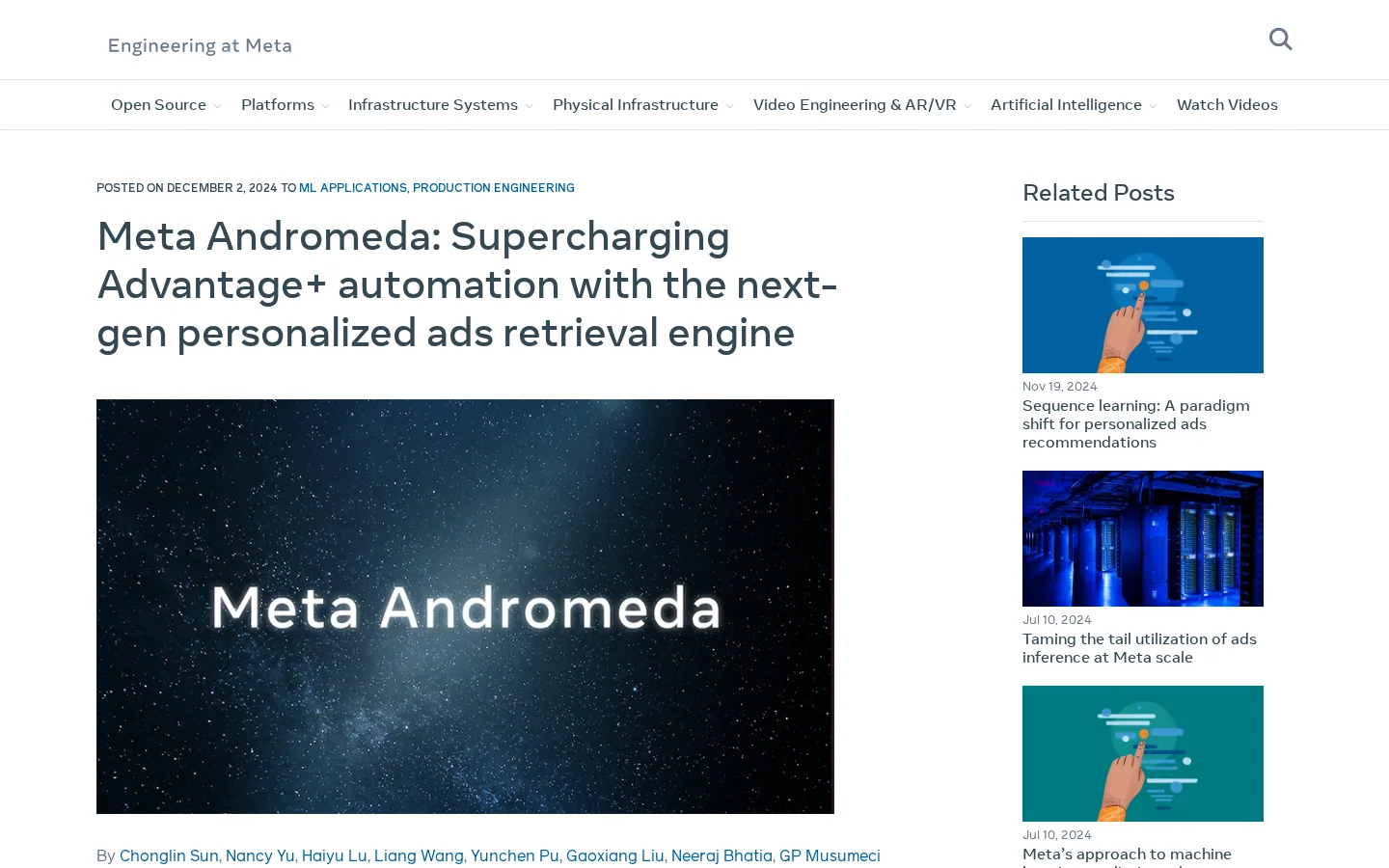
From eligible ads to the one ad a person sees
Source: Engineering at Meta, "Meta Andromeda", December 2024
Two public figures help you set expectations. According to DataReportal's essential Instagram stats, updated on 5 November 2026, Instagram ads could reach about 1.96 billion people in October 2026, or 32.3% of adults worldwide. And in its third quarter 2026 results, published on 21 October 2026, Meta reported that ad impressions across its apps grew 10% year over year while the average price per ad grew 14%. In plain words: the inventory is huge, but it is getting more expensive, so wasted spend hurts more every year.
Instagram ads in four figures
Sources: DataReportal, November 2026; Meta Q3 2026 results, October 2026
A placement is a slot on Instagram where an ad can show. A format is the shape of the ad (single image, video, carousel, collection). Not every format runs everywhere, and each placement has its own screen real estate, so the same file rarely works well in all of them.
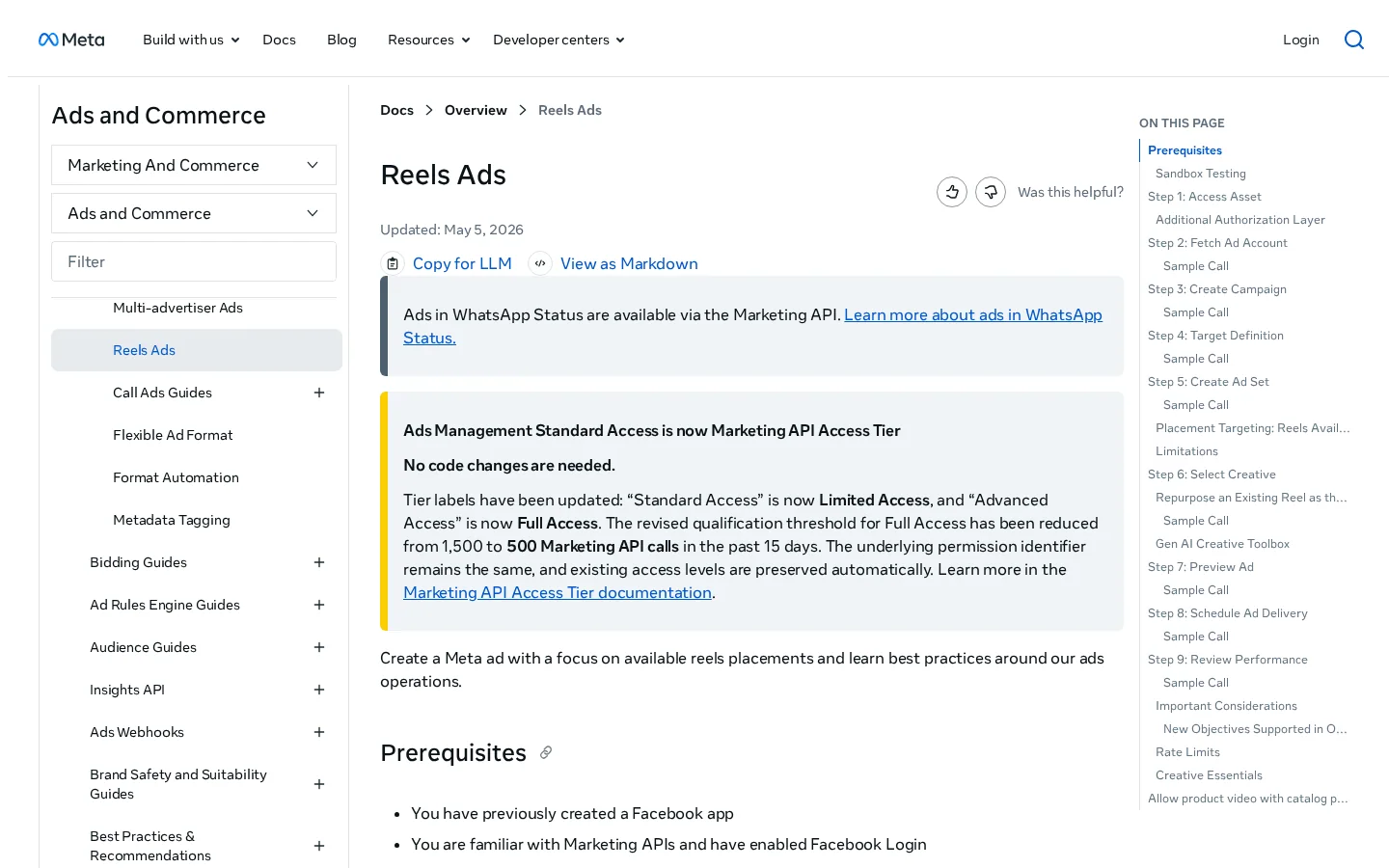
Meta's placement targeting documentation lists the Instagram positions an ad set can use. Their technical names are handy when you read breakdown reports or work with an agency that builds campaigns through the API.
| Placement | API value | Best creative | What it is good for |
|---|---|---|---|
| Instagram Feed | stream | 4:5 image or video, carousel | Product detail, offers, carousels that explain |
| Instagram Stories | story | 9:16 full screen, short | Fast offers, swipe-up style traffic, retargeting |
| Instagram Reels | reels | 9:16 video with sound | Reach, discovery, creator-style demos |
| Reels on profiles | profile_reels | 9:16 video | Extra reach on Reels watched from profiles |
| Explore and Explore home | explore, explore_home | Same as Feed | Discovery by interest |
| Profile feed | profile_feed | Same as Feed | People browsing other accounts' grids |
| Search results | ig_search | Feed creative | Intent: people typing a query in Instagram |
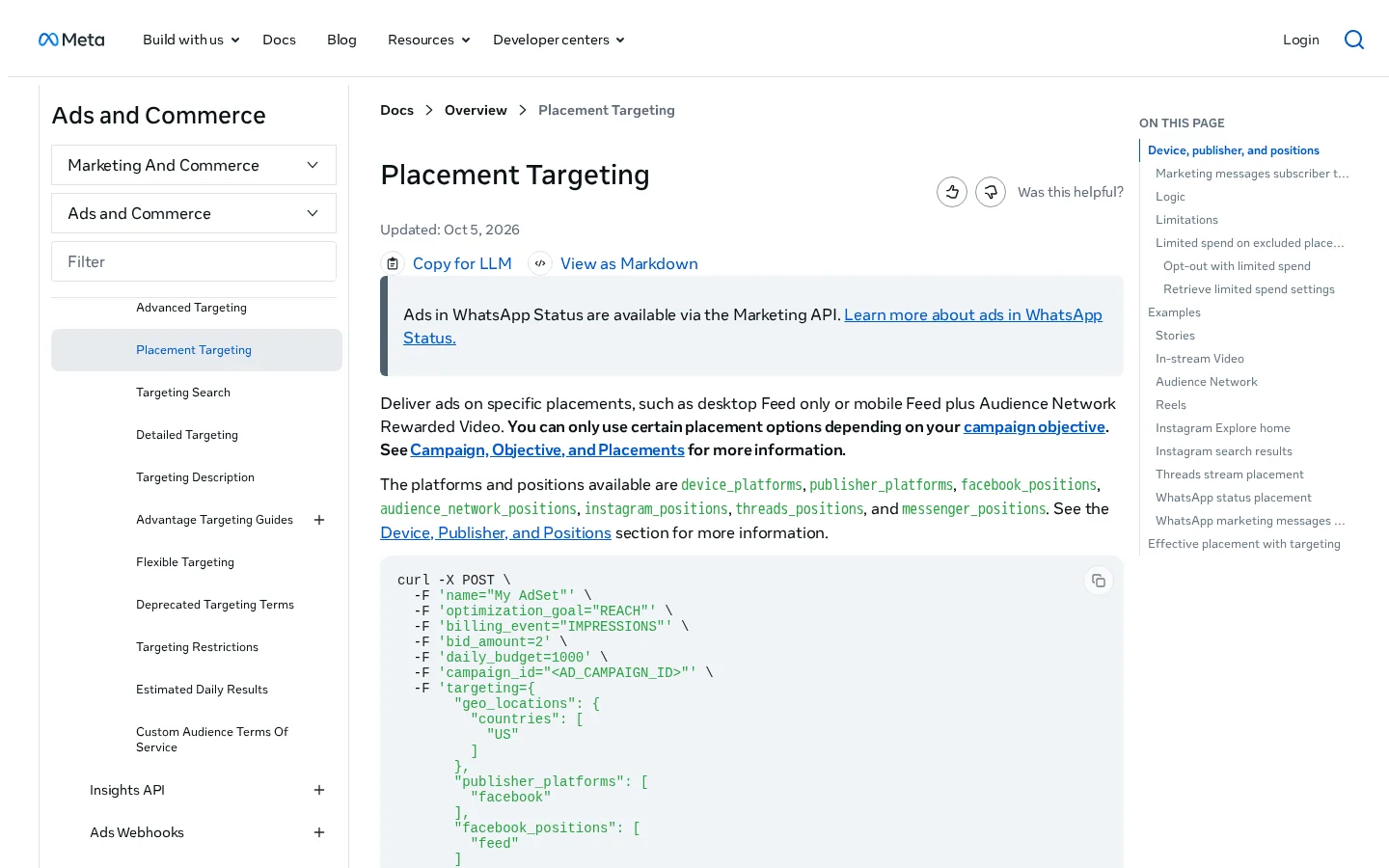
Meta's own Reels ads documentation sets three rules worth memorizing: a full-screen 9:16 vertical format, organic Reels used as ads must be under 90 seconds, and you should keep the bottom 35% of the frame free of text, logos and key elements because the Reels interface covers it. The same page tells you to "build for sound on". In practice, export your master in 9:16, crop a 4:5 version for Feed, and keep text in the central band.
Warning
Organic Reels you want to reuse as ads must not contain third-party copyrighted music, GIFs, interactive stickers or camera filters, according to the same Meta documentation. Record a clean version without them if you plan to put money behind a post.
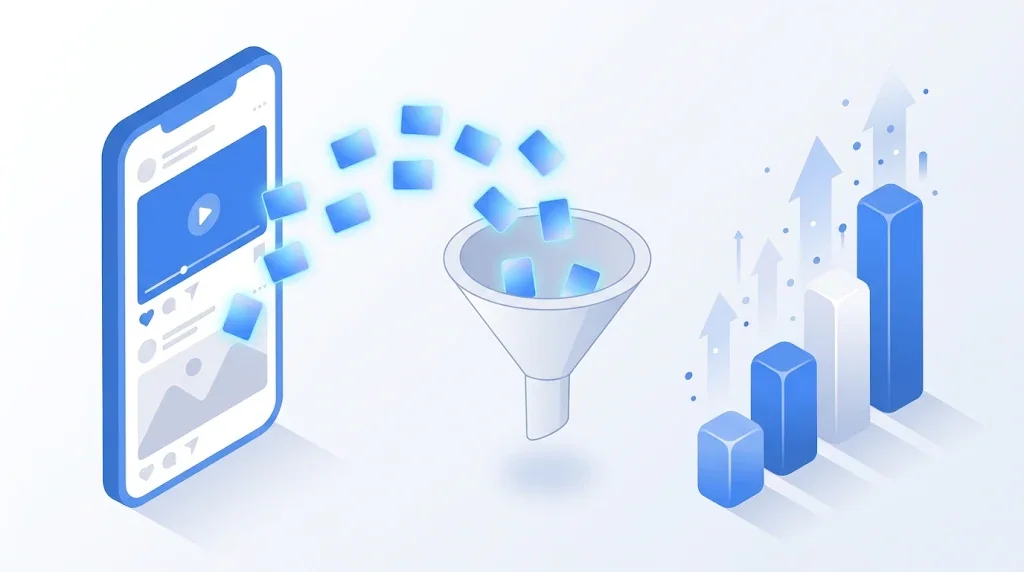
Every Instagram ad lives in a three-level structure. The objective you choose at the top decides what Meta optimizes for, and that choice matters more than any targeting tweak.
| Objective | What Meta optimizes for | Use it when | Main metric to judge it |
|---|---|---|---|
| Awareness | Reach, ad recall, video views | Launch, brand building, large audiences | Cost per 1000 people reached, frequency |
| Traffic | Link clicks or landing page views | Content distribution, cheap audience building | Cost per landing page view, bounce rate |
| Engagement | Interactions, messages, video views | Social proof on a post, DMs for local business | Cost per conversation or per engaged person |
| Leads | Instant forms, calls, sign-ups on site | B2B, services, quotes, demos | Cost per qualified lead, not per form |
| App promotion | Installs and in-app events | Mobile apps | Cost per install, cost per paying user |
| Sales | Purchases or other conversion events | E-commerce, paid sign-ups, any tracked conversion | Cost per purchase, ROAS, incremental revenue |
The rule of thumb: pick the objective that matches the business result you want, even if it looks more expensive per click. A Traffic campaign finds people who click; a Sales campaign finds people who buy. Those are rarely the same people.
Inside Sales or Leads, the ad set asks for a conversion event: Purchase, Add to cart, Lead, Complete registration. Meta's guidance is that an ad set leaves its learning phase after roughly 50 optimization events in a week. If you sell 10 items a week, optimizing for Purchase will keep you in learning forever; moving one step up the funnel (Add to cart or Initiate checkout) or merging ad sets gives the system enough data. For the full picture of funnel stages, see our guide to the marketing funnel.
There are four distinct buying methods, and most guides only mention two. Each one fits a different stage of maturity.
Principle: you tap "Boost" under a post or Reel, pick a goal (profile visits, website visits, messages), an audience, a budget and a duration. When to use it: a post already performs organically and you want more of the same, or you have no time for Ads Manager. Advantages: two minutes, no setup. Limits: few objectives, no Sales optimization, weak reporting, no A/B tests, and boosted posts often optimize for cheap engagement. Example: a café boosts a Reel of its new menu to people within 5 km for a week.
Principle: you build campaign, ad sets and ads yourself, choose placements, audiences and bid strategy. When to use it: you need control, testing, specific exclusions or lead forms. Advantages: every setting is yours, clean experiments. Limits: easy to over-segment, which starves each ad set of data. Example: a B2B software company runs a Leads campaign with an instant form and excludes current customers uploaded from its CRM.
Principle: Meta automates audience, placements and budget allocation across ads; you mostly supply creatives, a budget, a country and a conversion event. When to use it: e-commerce or any account with a reliable conversion signal and enough volume. Advantages: fewer settings to get wrong, retrieval has more freedom. In the same Andromeda post, Meta states that advertisers who adopted Advantage+ creative features saw a 22% ROAS increase (Meta's own figure, measured on its own platform). Limits: less transparency, existing customers can absorb budget unless you set a cap, and bad tracking produces confident bad decisions. Example: a fashion store with a catalog feeds 12 creatives into one Advantage+ sales campaign.
Principle: a creator grants your ad account access to their handle or content, and your ad runs showing both names. When to use it: categories where trust drives purchase (beauty, fitness, food, software tutorials). Advantages: native look in Reels, the creator's audience signals help delivery. Limits: you depend on the creator's approval, disclosure rules apply, and costs of creator fees add to media spend. Example: a skincare brand runs a creator's honest routine video as a partnership ad to cold audiences. Our influencer marketing strategy guide covers briefs and legal disclosure.
| Method | Setup time | Control | Optimization for sales | Best for |
|---|---|---|---|---|
| Boost from app | Minutes | Low | No | Local businesses, quick reach on a good post |
| Manual Ads Manager | Hours | High | Yes | Lead generation, tests, complex exclusions |
| Advantage+ automated | Under an hour | Medium to low | Yes, core use | E-commerce and accounts with solid tracking |
| Partnership ads | Days (creator approval) | Medium | Yes | Trust-driven categories, Reels-first brands |
Boosted post vs Ads Manager campaign
Targeting on Instagram changed a lot in five years. Detailed interests still exist, but they are now treated as suggestions more than walls. The real targeting lever is your creative and your conversion signal.
You set a location, an age floor if needed, and optional "audience suggestions". Meta may go beyond those suggestions when it predicts better results. For most accounts with working tracking, broad delivery now beats narrow interest stacks, because it lets retrieval find buyers you would never have guessed.
A lookalike finds people similar to a source audience. The source quality matters more than the percentage: a list of your best customers by revenue beats a list of every newsletter subscriber. Use lookalikes as a signal inside broad campaigns rather than as a hard limit.
Exclude recent buyers from acquisition campaigns, employees and job seekers if your page attracts them, and existing leads from lead campaigns. Without exclusions, a share of your budget pays to show ads to people who already converted.
Creative is the main targeting tool now. A good Instagram ad is built for a thumb that scrolls at full speed, often without sound at first, inside a feed full of friends and creators.
Open on movement, a face, a result or a strong question. Avoid logos and slow intros in the first frame. Put the product in use, not on a white background. If the video only makes sense after five seconds, most people never see the point.
Each creative should carry one angle: a pain point, a demo, a testimonial, a comparison, an offer. Then run several angles side by side. Changing only the color of a button gives the retrieval system nothing new to work with; changing the angle does.
The primary text shows only the first line or two before "more". Put the benefit there. Keep the headline short, match the call to action button to the real next step ("Shop now" for a product page, "Get quote" for a form). For platform-by-platform copy rules, see our guide to ad copywriting.
A weak Reels ad vs a strong one
Tip
Before you spend on an ad, test the hook as text. Our free headline analyzer scores clarity and emotional pull, which works just as well for the first line of an Instagram ad as for a blog title.
Here is the setup we recommend for a first serious campaign. It assumes a website with something to sell or a lead to capture.
Your first Instagram ads campaign in 7 steps
In the ad's "URL parameters" field, Meta replaces dynamic values at click time. This template keeps campaign, ad set, ad and placement readable in your analytics:
utm_source=instagram&utm_medium=paid_social&utm_campaign={{campaign.name}}&utm_term={{adset.name}}&utm_content={{ad.name}}_{{placement}}Name your campaigns and ads with no spaces (for example sales_fr_q4_broad) so the values stay clean in GA4. If you prefer to build links by hand, our free UTM builder generates them in seconds.
The Conversions API sends events from your server, so you keep signal when browsers block the pixel. A purchase event looks like this; the event_id must match the one sent by the pixel for the same order, otherwise Meta counts the sale twice:
{
  "data": [
    {
      "event_name": "Purchase",
      "event_time": 1794614400,
      "action_source": "website",
      "event_id": "order_48213",
      "event_source_url": "https://www.example.com/checkout/thank-you",
      "user_data": {
        "em": ["<sha256 of the lowercased email>"],
        "client_ip_address": "203.0.113.24",
        "client_user_agent": "Mozilla/5.0 ..."
      },
      "custom_data": {
        "currency": "EUR",
        "value": 89.90
      }
    }
  ]
}
For the full setup across GA4, Google Ads and Meta, follow our conversion tracking guide.
There is no fixed price for Instagram ads. You pay for impressions in an auction, and the price per result depends on your audience, season, creative and conversion rate. What you can control is the math.
Cost per acquisition is the cost of 1000 impressions divided by how many buyers those 1000 impressions produce:
CPA = CPM / (1000 x CTR x CVR)

Example (illustrative values):
CPM = 8 EUR, CTR = 1.2%, landing page CVR = 2.5%
CPA = 8 / (1000 x 0.012 x 0.025) = 8 / 0.3 = 26.67 EUR
This tells you where to work. Double the click-through rate with a better hook and your CPA halves, without touching the bid. Improve the landing page conversion rate from 2.5% to 3.5% and the CPA falls by more than a quarter. Our guide to landing pages covers the page side.
| Strategy | How it works | When to use it |
|---|---|---|
| Highest volume | Spends the budget to get as many results as possible | Default, new campaigns, learning |
| Cost per result goal | Aims for an average cost per result you set | Stable accounts with a known target CPA |
| ROAS goal | Aims for a minimum return on ad spend | E-commerce with purchase values passed correctly |
| Bid cap | Caps the bid in each auction | Experienced buyers, strict margins, flash sales |
Size the daily budget from your target cost per result and the learning threshold, not from a round number. If your target CPA is 30 EUR and the ad set needs about 50 conversions a week to stabilize, you need around 1500 EUR per week on that ad set, or a higher-funnel event if that is out of reach. Check your break-even point first with our free ROAS calculator, and compare it with your customer acquisition cost on other channels.
Note
With Meta reporting a 14% year-over-year rise in average price per ad in Q3 2026, a campaign that was profitable last year at the same CPA target may now struggle to spend. Re-check your break-even ROAS each quarter instead of reusing old targets.
Meta's reporting and your analytics will never match exactly. They count different things, with different attribution windows. The goal is not a perfect match but a reading you can trust for decisions.
Ads Manager credits conversions within an attribution setting, typically 7 days after a click and 1 day after a view. GA4 uses its own model and does not see view-through conversions at all. So Meta usually reports more conversions than GA4 for the same campaign. Compare trends inside each tool rather than absolute numbers across them. Our marketing attribution guide explains the models.
Retargeting campaigns often show a beautiful ROAS because they target people who were going to buy anyway. Run a lift test (Meta offers them in Experiments) or a simple geographic holdout: pause ads in one region for four weeks and compare sales with similar regions. It is the only way to know what the ads really add.
These are the errors we see most often in Instagram ad accounts. For each one: what it is, how to spot it, how to fix it.
What it is: a Traffic campaign used to sell. How to spot it: cheap clicks, high bounce rate, almost no purchases in GA4. How to fix it: switch to a Sales campaign optimized for Purchase, or Add to cart if volume is too low.
What it is: one ad set per interest, per age group, per country. How to spot it: most ad sets stuck in "Learning limited". How to fix it: merge into one or two broad ad sets and let creatives do the segmentation.
What it is: 16:9 or 1:1 videos pushed into Reels and Stories. How to spot it: in the placement breakdown, Reels and Stories have much higher costs than Feed. How to fix it: produce a 9:16 master and use placement asset customization to assign the right crop to each placement.
What it is: captions or prices in the bottom third of a Reels ad. How to spot it: preview the ad on a phone in Ads Manager; if the caption sits under the username and buttons, it is lost. How to fix it: keep the bottom 35% clear, as Meta's Reels documentation recommends.
What it is: pixel and Conversions API sending the same purchase without a shared event_id, or a missing value and currency. How to spot it: Events Manager shows warnings, or Meta reports more purchases than your shop. How to fix it: pass the same event_id from both sources and send value and currency on every Purchase.
What it is: changing budget, audience or creative every day. How to spot it: the delivery column keeps flipping back to "Learning". How to fix it: group your edits, change budgets in moderate steps, and add new creatives in batches rather than one by one.
What it is: the same three ads running for months. How to spot it: frequency climbs while CTR and hook rate fall over two or three weeks. How to fix it: plan a creative refresh rhythm, with new angles, not just new colors.
What it is: acquisition campaigns that also reach existing customers. How to spot it: a high share of "returning customers" in your shop data for ad-driven orders. How to fix it: upload a customer list and exclude it, or set an existing-customer budget cap in Advantage+ campaigns.
What it is: scaling a campaign because Ads Manager shows a high ROAS. How to spot it: total revenue does not move when spend goes up. How to fix it: watch blended revenue against total ad spend and run a holdout test before scaling retargeting.
Pre-launch checklist
Knowing the shape of the ad audience helps you set expectations for each market. DataReportal's November 2026 update gives a gender split of the global Instagram ad audience, and notes that these figures describe the advertising audience, which may differ from the total active user base.
Instagram ad audience by gender, worldwide
Source: DataReportal, essential Instagram stats, data for October 2026
The same source reports that the reachable audience grew by 2.5% between October 2025 and October 2026 but fell by 3.7% over the last quarter. Audience estimates move, so always check the "estimated audience size" in Ads Manager for your own country and age range before planning a budget.
Instagram ads buy attention for as long as you pay. What people do after seeing the ad is often a search: your brand name on Google, a question to ChatGPT, a comparison on Perplexity. If those searches lead to thin pages or to competitors, part of your ad spend leaks.
This is where Sorank fits in: it handles the organic side on autopilot, with articles written and published for your keywords and tracking of your visibility in ChatGPT, Gemini, Claude and Perplexity. Marketing teams use it to turn the demand that ads create into durable traffic, as described on our page for marketing teams.
Example
A furniture brand runs Reels ads for a new sofa. Within two weeks, searches for "brand name + sofa review" rise. The brand publishes a detailed comparison page and an FAQ on delivery and returns. Ad-driven visitors who search before buying now land on the brand's own answers instead of a marketplace listing.
There is no fixed price: you pay for impressions in an auction, so cost depends on your audience, season, creative and conversion rate. Work out your cost per acquisition as CPM divided by (1000 x CTR x conversion rate), then set a budget large enough for about 50 conversions a week per ad set. Meta reported a 14% year-over-year rise in average price per ad in Q3 2026, so recheck your targets regularly.
Boosting is fine for quick reach on a post that already performs, especially for local businesses. Ads Manager gives you all six objectives, conversion optimization, exclusions, A/B tests and detailed reporting. If you want sales or qualified leads, use Ads Manager.
Build a 9:16 vertical master for Reels and Stories and crop a 4:5 version for the Feed. Meta's Reels documentation asks for full-screen 9:16 video and recommends keeping the bottom 35% of the frame free of text and logos. Organic Reels reused as ads must be under 90 seconds.
We analyse your competitors, your website and your AI visibility to create a tailored content plan for free.
 AI Content Brief Generator
 FAQ Schema Generator
 AI Blog Post Ideas Generator
 Structured Data Validator (Schema Validator)
 Alt Text Checker
 Internal Link Analyzer
 Backlink Challenge
 AI Meta Description Generator
 AI Blog Title Generator
 Google Indexability Checker
 AI Blog Outline Generator
 UTM Link Builder
 Keyword Clustering Tool
 Canonical Tag Checker
 XML Sitemap Generator
 Broken Link Checker
 AI SEO Title Generator
 Headline Analyzer
 SERP Preview Tool
 Redirect Checker
 Hreflang Tag Generator
 Heading Structure Analyzer
 HTTP Headers Checker
 Favicon Extractor
 SERP CTR Calculator
 SEO vs Paid Search Savings Calculator
 SEO Share of Voice Calculator
 SEO ROI Calculator
 SEO Traffic and Revenue Forecast Calculator
 SEO Budget Calculator
 SEO Break-Even Calculator
 SaaS SEO ROI Calculator
 ROAS Calculator
 Reading Time Calculator
 Ranking Gain Simulator
 Organic Traffic Value Calculator
 Organic Traffic Estimator and Website Traffic Checker
 LTV to CAC Ratio Calculator
 Local SEO ROI Calculator
 Link Building Cost Calculator
 Keyword Value Calculator
 Keyword Opportunity Score Calculator
 Keyword Density Calculator
 GEO ROI Calculator
 GEO Content Investment Calculator
 Ecommerce SEO ROI Calculator
 Customer Lifetime Value Calculator
 Customer Acquisition Cost Calculator
 CTR Calculator
 Cost Per Article Calculator
 Conversion Rate Calculator
 Content Marketing ROI Calculator
 ChatGPT Referral Traffic Estimator
 Bounce Rate Calculator
 Backlink ROI Calculator
 AI Visibility Score Calculator
 AI Traffic Value Calculator
 AI Share of Voice Calculator
 Cost of AI Invisibility Calculator
 AI Citation Rate Calculator
 llms.txt Validator
 AI Overview Checker and AI Overviews Rank Checker
 Robots.txt Checker
 AI SEO Audit
 LLM Readability Checker
 SearchGPT Readiness Checker
 Structured Data LLM Audit
 Website Crawlability AI Audit
 Why ChatGPT Is Not Recommending My Website
 Gemini Ranking Tool
 Perplexity Ranking Checker
 LLM Citation Checker
 Answer Engine Optimization Audit
 GEO Audit
 AI Search Visibility Test
 ChatGPT Visibility Checker
 llms.txt Generator
 URL Extractor
 Webpage to Markdown
 Sitemap Checker
 SERP Volatility Sensor
 Page Size Checker
 Word Counter
 Slug Generator
 Schema Generator
 Robots Generator
 OG Preview
 Meta Tags Generator
 Image Compressor
 Favicon Generator
 On-Page SEO Audit: SEO Checker and SEO Analyzer
 Backlink Analysis Tool
 Keyword Research Tool
 Domain Authority Checker
5/5 from 5 reviews
 “I tested Sorank on a real client site and it's insane. It does everything an agency would bill you $1500 a month for. It's going into production on that client now.”

 Guillaume Guersanguersanguillaume.com“We are an Ads agency and we wanted to get our SEO back on track once and for all. Sorank gave us a clear view of our site, helped us prioritize optimizations, and properly structure our content. The tool is easy to use, well designed for a team, and very practical for centralizing tracking without having to juggle multiple platforms. A very solid foundation to start fresh with our SEO.”
 Gaspard MadouiAds Agency
 “I just let the Sorank software do its thing, and now my DR is 25 and my page is ranking higher.”
 Lucas Flandrefoundertrace.fr“I specialized in GEO thanks to Sorank. The GEO Leaderboard allows me to show my clients their position vs competitors on ChatGPT. It’s a real commercial differentiator.”
 MélanieSEO Freelance“Great service, works well for our website and helps us understand how to improve it to rank better on Google and elsewhere. Congrats, keep going, I recommend it.”
 Hugo T.E-commerce merchant