Preferences
Privacy is important to us, so you have the option of disabling certain types of storage that may not be necessary for the basic functioning of the website. Blocking categories may impact your experience on the website. More information
Privacy is important to us, so you have the option of disabling certain types of storage that may not be necessary for the basic functioning of the website. Blocking categories may impact your experience on the website. More information

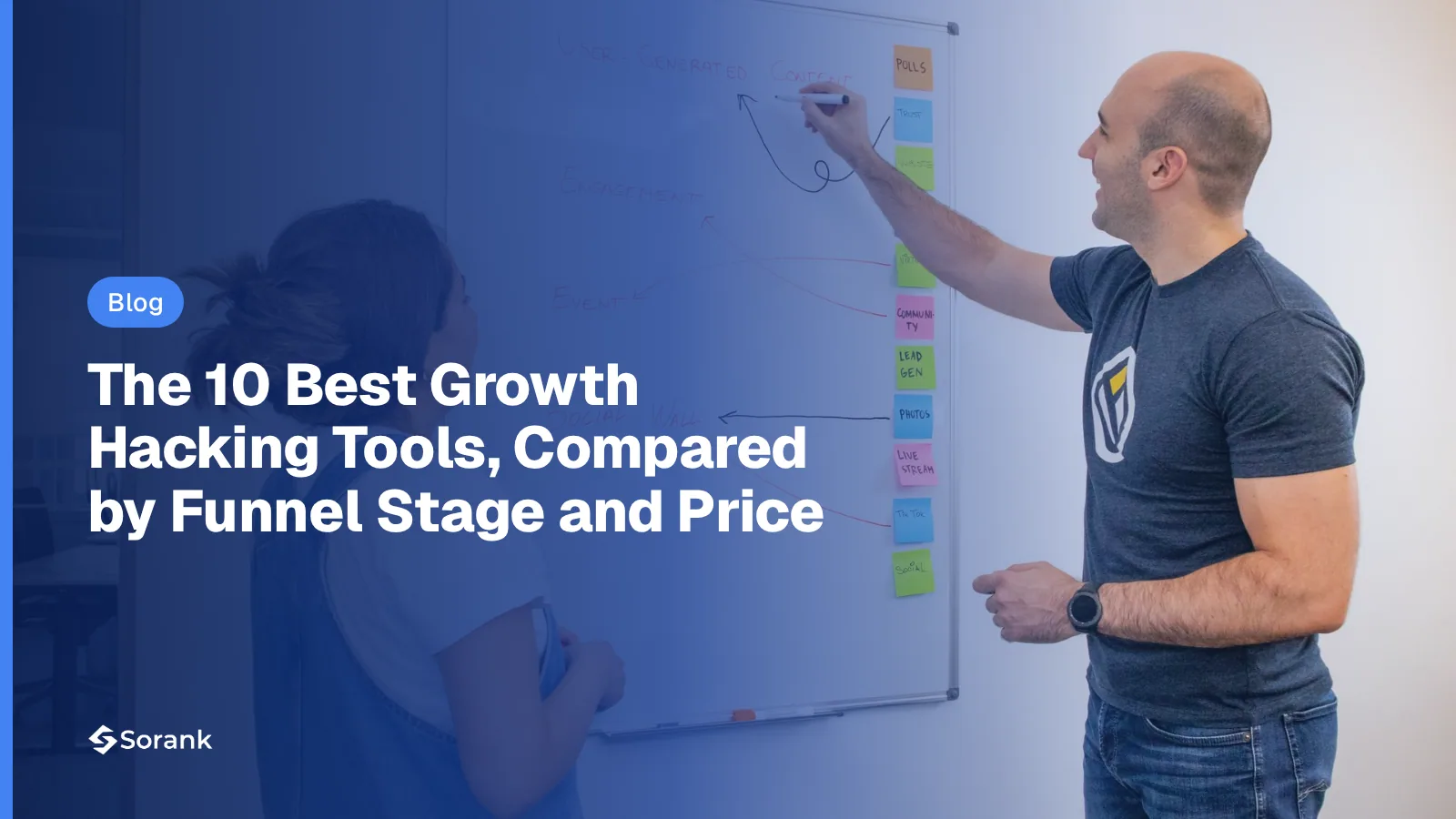
Compare the 10 best growth hacking tools by funnel stage, with verified prices, free plans, honest limits and a 6-step method to pick your growth stack.
In short
Growth hacking tools are the software that lets a small team run fast experiments across acquisition, activation, retention and referral. The best ones in 2026 are Sorank for organic traffic, HubSpot for CRM, PostHog and Microsoft Clarity for analytics, GrowthBook for A/B tests, plus Unbounce, Zapier, Mailchimp, lemlist and ReferralCandy. Most are free to start.
Want to go further? Ask
Quick quiz
Which way of finding customers online fits you best?
Sorank matches your answers


Test it for 3 days on your own site and see where you stand on Google, ChatGPT and the other AIs.
Start 3-day free trial3 days free, then stop whenever you want. 90-day results guarantee, conditions apply.
How this list was made
Sorank is our own software. It is listed first only for the job it does: organic acquisition from Google and AI assistants. Every other tool was reviewed from its official product and pricing pages, checked on 26 November 2026. Tools that were acquired and folded into another brand, or that no longer publish a clear product page, were left out.
The right growth hacking tool is the one that removes the bottleneck in your funnel right now. The table below gives each pick, who it suits, its main strength and the lowest price published on the vendor's site. A free plan does not mean free forever at scale: read each card below for the limits.
| Tool | Funnel stage | Best for | Main strength | Starting price (official site, 26 Nov 2026) |
|---|---|---|---|---|
| Sorank | Acquisition (SEO and GEO) | Teams with no writer or SEO lead | Articles researched, written and published on autopilot, plus AI visibility tracking | $49/month billed yearly, 3-day free trial |
| HubSpot | All stages (CRM) | B2B startups and sales-led teams | One contact database for forms, email and deals | Free plan for up to 2 users |
| PostHog | Activation, retention | Product and SaaS teams | Analytics, session replay, flags and experiments in one tool | Free up to 1 million events/month |
| Microsoft Clarity | Activation, conversion | Any website on a zero budget | Heatmaps and session recordings | Free |
| GrowthBook | Activation, conversion | Teams with a developer | Open source A/B testing and feature flags | Free (3 seats on cloud), Pro $40/seat/month |
| Unbounce | Acquisition, conversion | Paid campaigns that need fast pages | Landing pages without a developer | $29/month (Starter, monthly billing) |
| Zapier | All stages (automation) | Teams gluing many apps together | Connects your apps without code | Free (100 tasks/month), Pro from $19.99/month billed yearly |
| Mailchimp | Retention, activation | Newsletters and simple email flows | Easy email builder and automations | Free (250 contacts), Essentials from €11.95/month |
| lemlist | Acquisition (outbound) | B2B outbound prospecting | Email and LinkedIn sequences with a lead database | $55/user/month billed yearly |
| ReferralCandy | Referral | E-commerce stores | Turnkey referral and affiliate programs | $39/month plus a success fee |
Prices change often and some vendors show different amounts by country. Treat this table as a shortlist, then confirm the price on the vendor's page the day you buy.
Each card below follows the same order: what the tool does, who it is for, its strengths, one honest limit and the price read on the official site. The tools are grouped by the job they do in the funnel, so you can skip to the stage that hurts most.
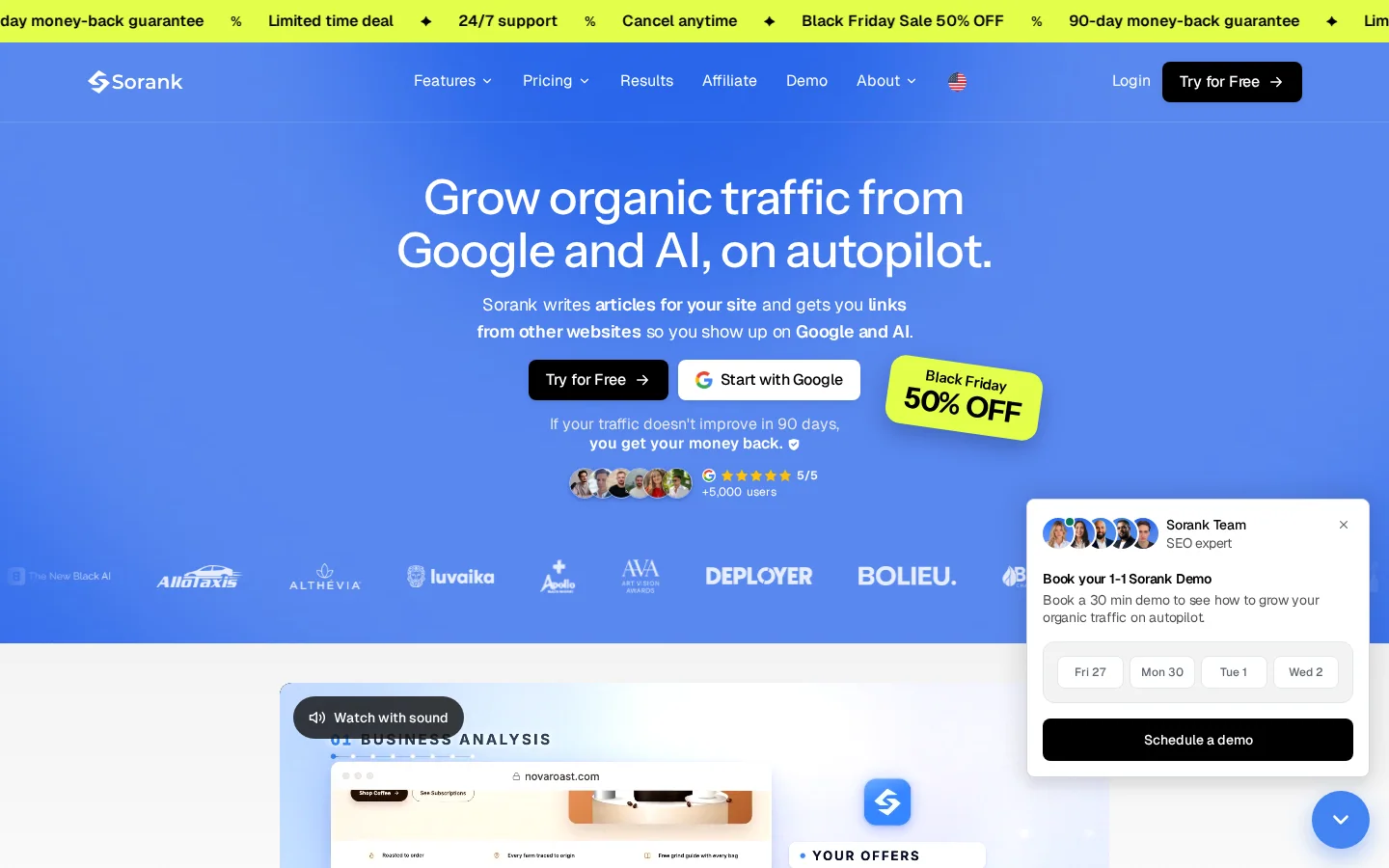
What it is. Sorank is our SEO and GEO software. It finds the keywords and the questions your buyers ask, then writes, illustrates and publishes articles on your site automatically, with internal links and anti-cannibalization built in. It also tracks whether ChatGPT, Claude and Gemini mention and cite your brand, through AI mention tracking, and gets you backlinks through exchanges with other sites.
Who it is for. Founders and marketing teams who know organic search compounds but never find the time to publish every week.
Strengths. Organic traffic is the one growth channel where each piece of work keeps paying after you stop spending. Sorank turns it into a routine that runs without a dedicated writer and connects to more than 10 CMS, including WordPress, Shopify, Webflow and Wix. Its GEO optimization features cover the AI answers where more and more buyers now start their research.
Honest limit. Sorank covers acquisition from Google and AI assistants. It does not send your emails, run your ads or analyse in-product behaviour, so pair it with the tools below.
Price. Read on the Sorank pricing page on 26 November 2026: Essential at $49/month billed yearly ($69.30 with no commitment), 20 articles a month, a 3-day free trial and a 90-day results-or-money-back guarantee (conditions apply).
 HubSpot: best free CRM to centralise your growth data
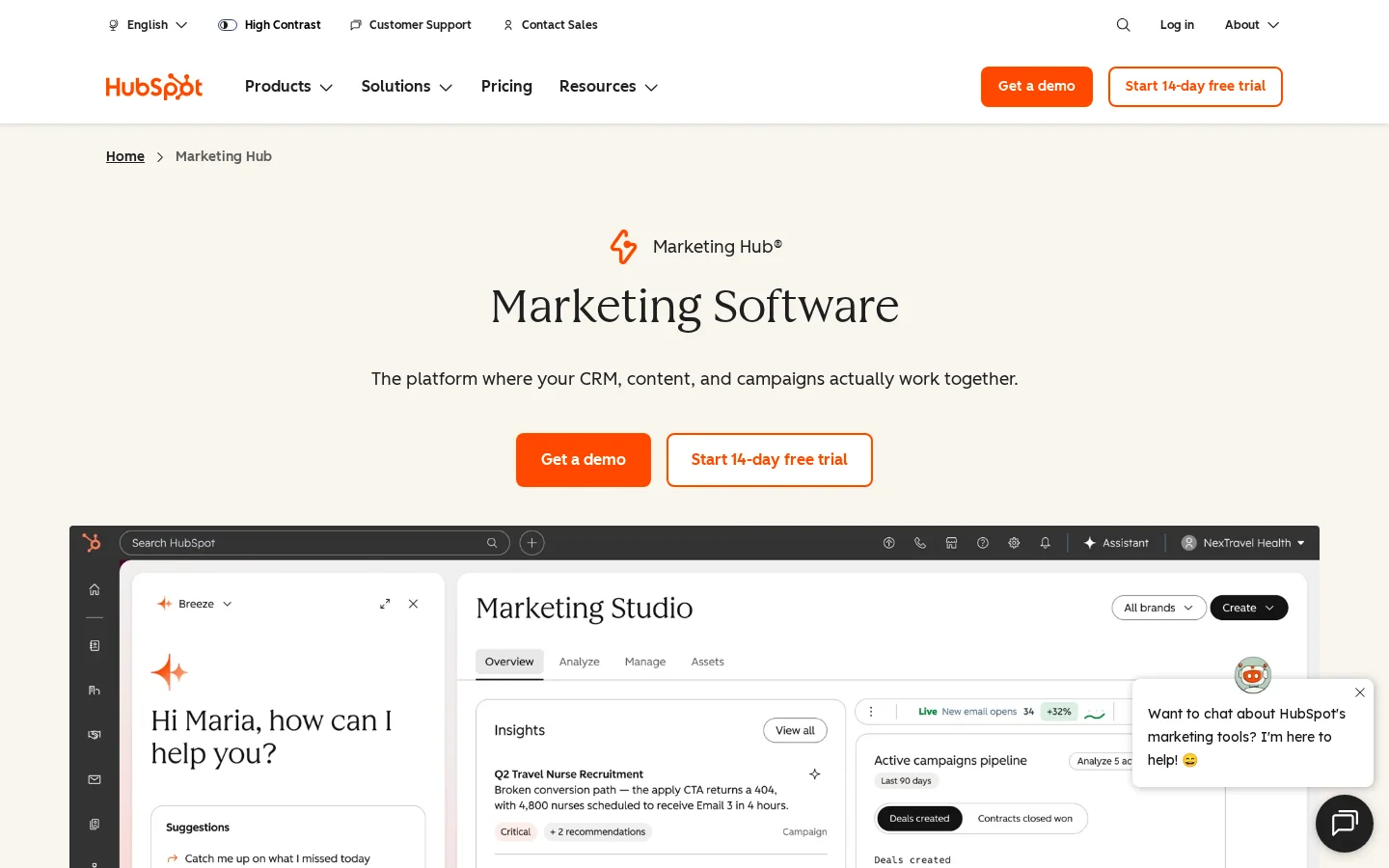
What it is. HubSpot is a CRM with marketing, sales and service modules. Marketing Hub adds forms, landing pages, email, lead scoring and workflows on top of the contact database.
Who it is for. B2B startups and service companies where a lead becomes a conversation with a salesperson.
Strengths. One record per contact, with every form fill, email open and deal stage attached. That is what lets you see which channel brings customers, not just signups. The free plan is enough to start capturing and emailing leads.
Honest limit. The jump between tiers is steep. On the HubSpot Marketing Hub pricing page, Professional starts at $800/month with 3 core seats and a required one-time onboarding fee of $3000.
Price. Free for up to 2 users. Starter was displayed from $7 per seat per month on 26 November 2026, next to a $20 list price, so check whether the offer still runs.
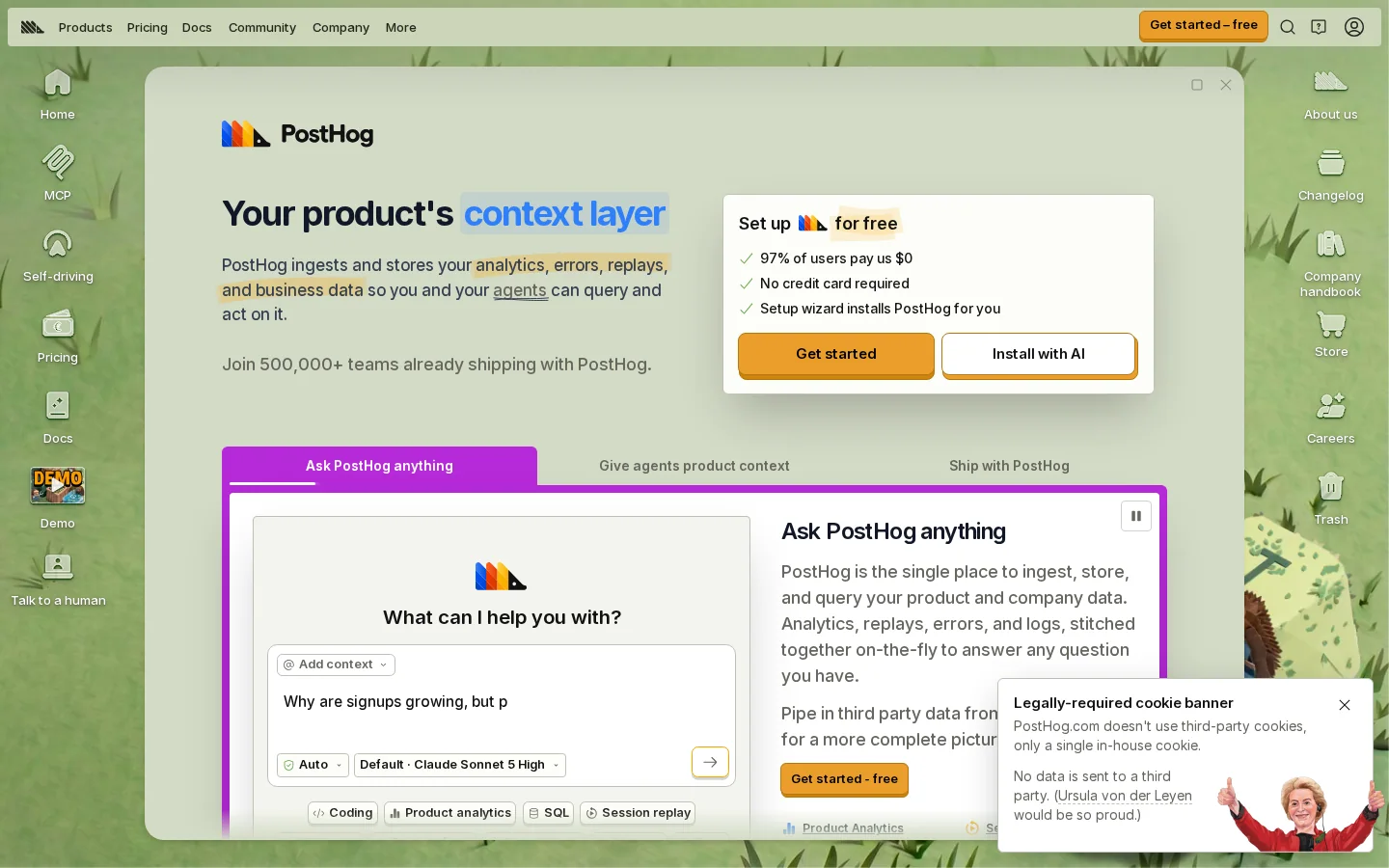
What it is. PostHog is a product analytics suite: event analytics, funnels, session replay, feature flags, experiments and in-app surveys share the same data.
Who it is for. SaaS and app teams who need to know where new users drop between signup and the first moment of value.
Strengths. The free tier is wide. The PostHog pricing page lists, per month, the first 1 million analytics events, 5000 session recordings, 1 million feature flag requests (experiments share that allowance) and 1500 survey responses at no cost, with no credit card required. Having replay and funnels in one tool means you can click from a drop in a funnel step straight to the sessions behind it.
Honest limit. It is built for people who are comfortable with events and properties. Without a tracking plan, you get a lot of data and few answers.
Price. Free tier as above, then usage-based: product analytics starts at $0.00005 per event between 1 and 2 million events a month.
 Microsoft Clarity: best free heatmaps and session recordings
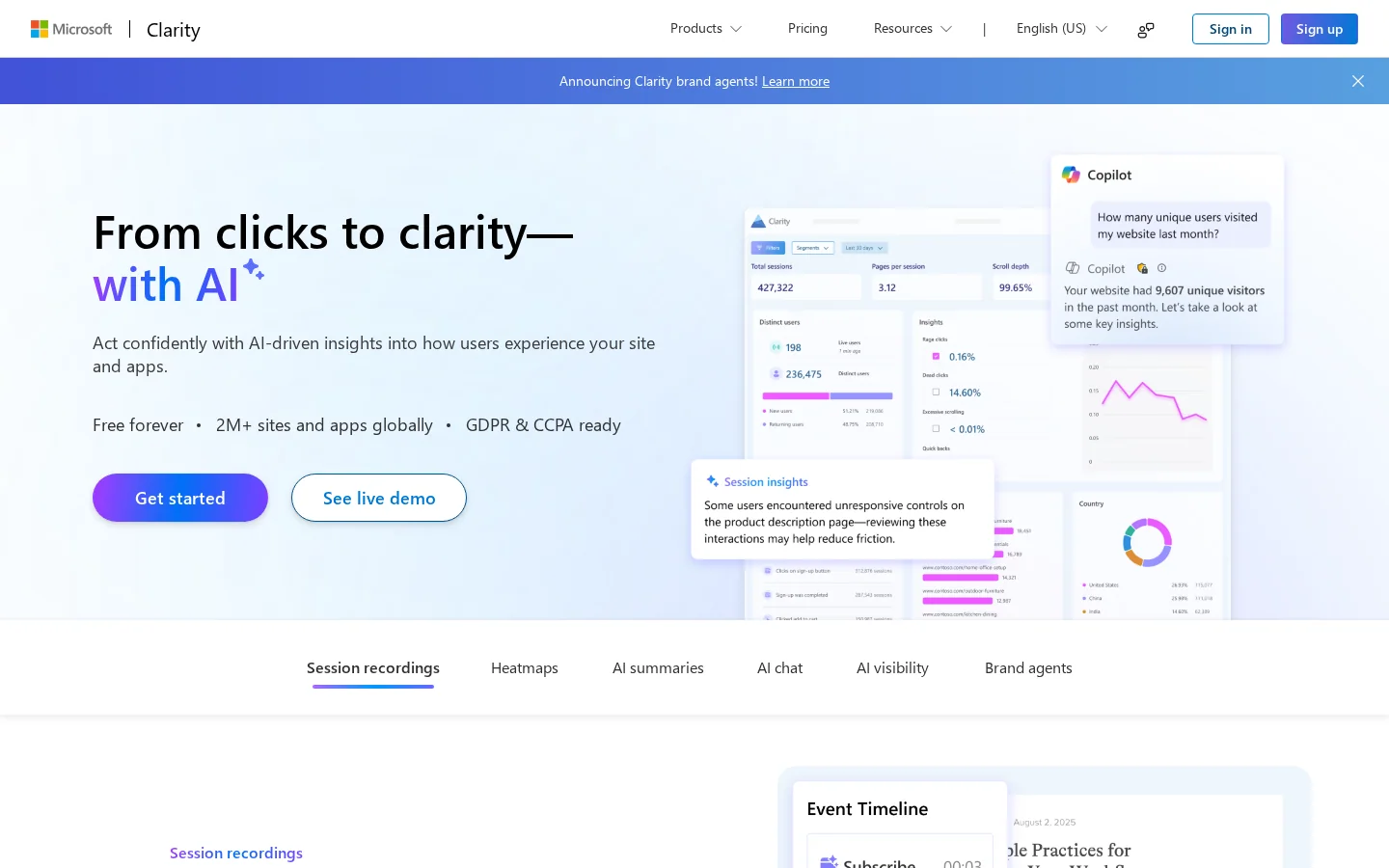
What it is. Microsoft Clarity records real visitor sessions and builds click and scroll heatmaps, with AI summaries of what happens on a page.
Who it is for. Any site owner who wants to see why a page does not convert, without paying for a behaviour analytics suite.
Strengths. Microsoft states on its site that Clarity is free forever with no traffic limit. It integrates with Google Analytics and offers SDKs for Android, iOS, Flutter and React Native.
Honest limit. It shows what people do, not how to fix it, and it does not run A/B tests. You still need a testing tool to prove that your change worked.
Price. Free.
 GrowthBook: best open source A/B testing and feature flags
What it is. GrowthBook is an experimentation platform: feature flags, A/B tests and a statistics engine that reads results from your own data warehouse.
Who it is for. Teams with at least one developer who want to test product and pricing changes, not only button colours.
Strengths. According to the GrowthBook pricing page, both the free cloud Starter plan and the paid Pro plan include unlimited feature flags, experiments and traffic. The self-hosted open source version is free with unlimited users. Our guide to running A/B tests that give real answers explains how to size such tests.
Honest limit. It is not a visual editor for marketers. Expect to write code or ask a developer for each experiment.
Price. Cloud Starter free for 3 seats and 1 project. Pro at $40 per seat per month. Open source self-hosted: free.
 Unbounce: best landing page builder for paid campaigns
What it is. Unbounce builds landing pages with drag and drop, then lets you test variants against each other.
Who it is for. Marketers who run ads and need a dedicated page per campaign without waiting for a developer.
Strengths. Pages go live without a developer, and every plan counts unlimited conversions, so a campaign that works is not penalised. If you need words for the page first, our free landing page copy generator drafts the headline, benefits and calls to action.
Honest limit. A/B testing is only named on the higher tiers: the Unbounce pricing page lists "Unlimited A/B testing" from the Experiment plan ($149/month billed monthly). The Starter plan is capped at 500 visitors.
Price. Starter at $29/month billed monthly, Build at $99, 14-day free trial with no credit card.
 Zapier: best for automating the glue between your tools
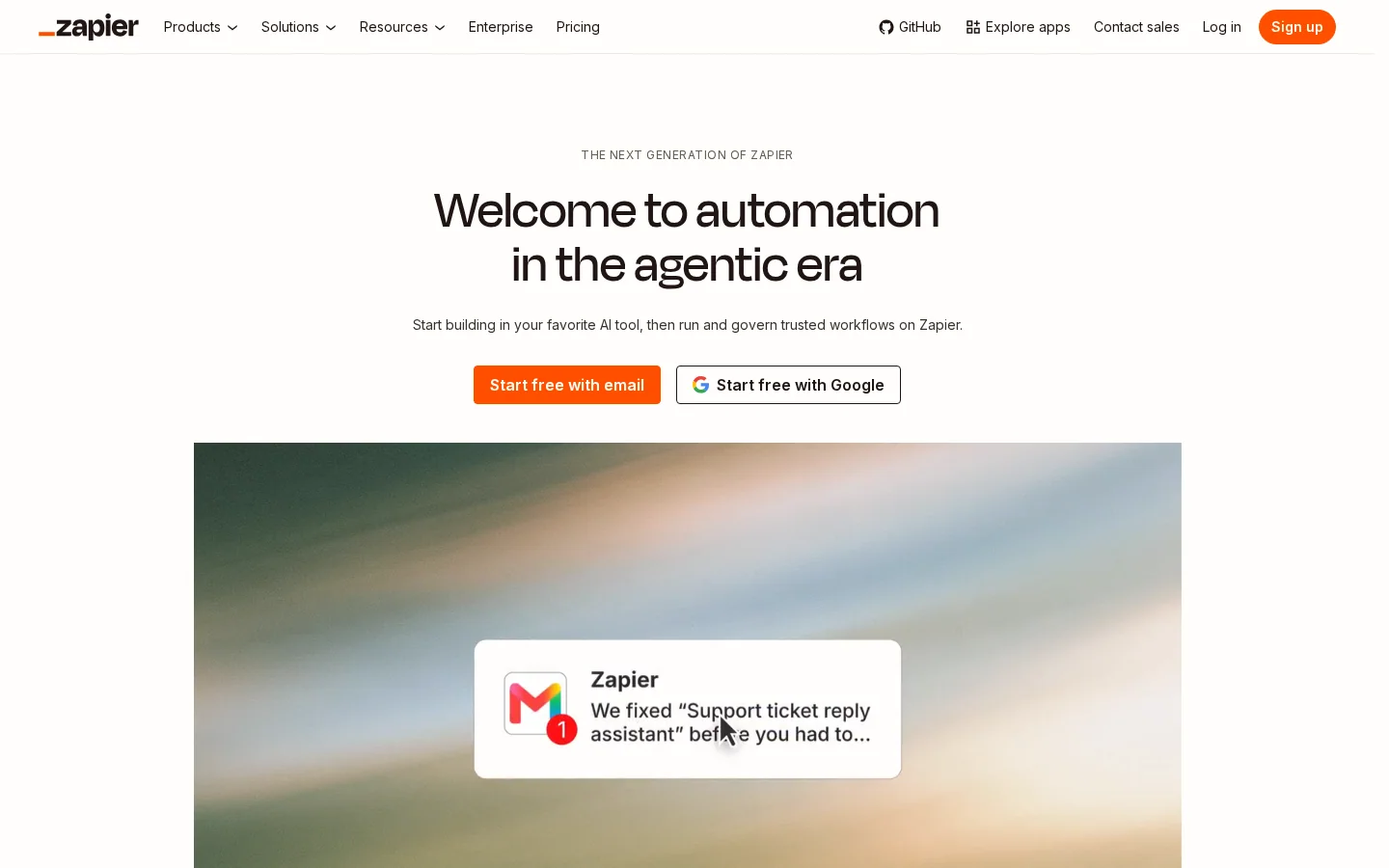
What it is. Zapier connects apps with triggers and actions: a new form fill creates a CRM contact, sends a Slack alert and adds a row to a sheet.
Who it is for. Small teams who want growth workflows without engineering time.
Strengths. A free plan, no code and multi-step workflows from the Pro plan. Many growth hacks are just a well-timed automation: alert sales when a trial user hits a usage threshold, tag a lead when they read the pricing page twice.
Honest limit. Cost grows with tasks. On the Zapier pricing page, 750 tasks cost $19.99/month billed yearly, while 10000 tasks cost $129/month. Each action in a multi-step Zap counts as a task, so a five-step workflow burns tasks five times faster.
Price. Free with 100 tasks a month and two-step Zaps only. Pro from $19.99/month billed yearly ($29.99 monthly).
 Mailchimp: best for newsletters and simple email automations

What it is. Mailchimp sends newsletters and automated email sequences, with signup forms and audience segments.
Who it is for. Startups and small businesses that need welcome flows, onboarding emails and a regular newsletter.
Strengths. A free plan to start, a 14-day trial on paid plans and a simple setup for welcome and onboarding flows. Email remains the cheapest way to bring back a user who signed up and left. For deeper comparisons, see our ranking of the best email marketing software.
Honest limit. The free plan is small: the Mailchimp pricing page caps it at 250 contacts, 500 emails a month (250 a day) and 1 seat. Price rises with your contact count.
Price. Free plan as above. Essentials displayed from €11.95/month (12-month rate) when we checked from Europe; prices are shown in local currency, with a 14-day free trial on Essentials and Standard.
 lemlist: best for multichannel outbound prospecting
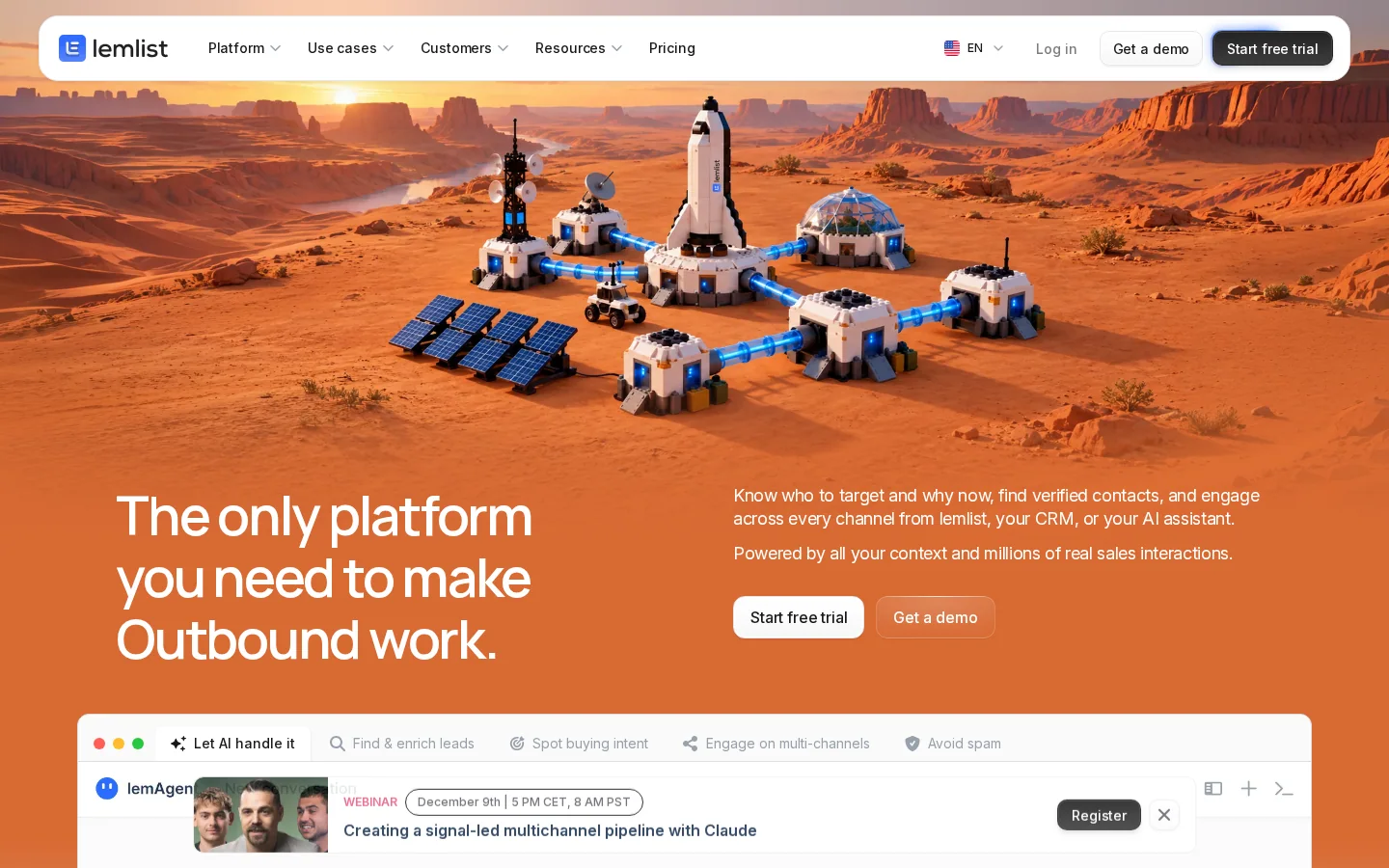
What it is. lemlist sends personalised cold email and LinkedIn sequences, with a built-in lead database and dialer on the higher plan.
Who it is for. B2B companies whose buyers can be named and reached one by one.
Strengths. Prospect list, sequence and follow-up live in one tool. The lemlist pricing page mentions a database of more than 650 million leads and 50000 emails a month on the Email plan.
Honest limit. Outbound only works with a sharp target list and a clean sending domain. Badly run, it damages your domain reputation and your brand. Our list of the best cold email software compares the alternatives.
Price. Email plan at $55 per user per month billed yearly ($69 monthly), Multichannel at $87 billed yearly. 14-day free trial.
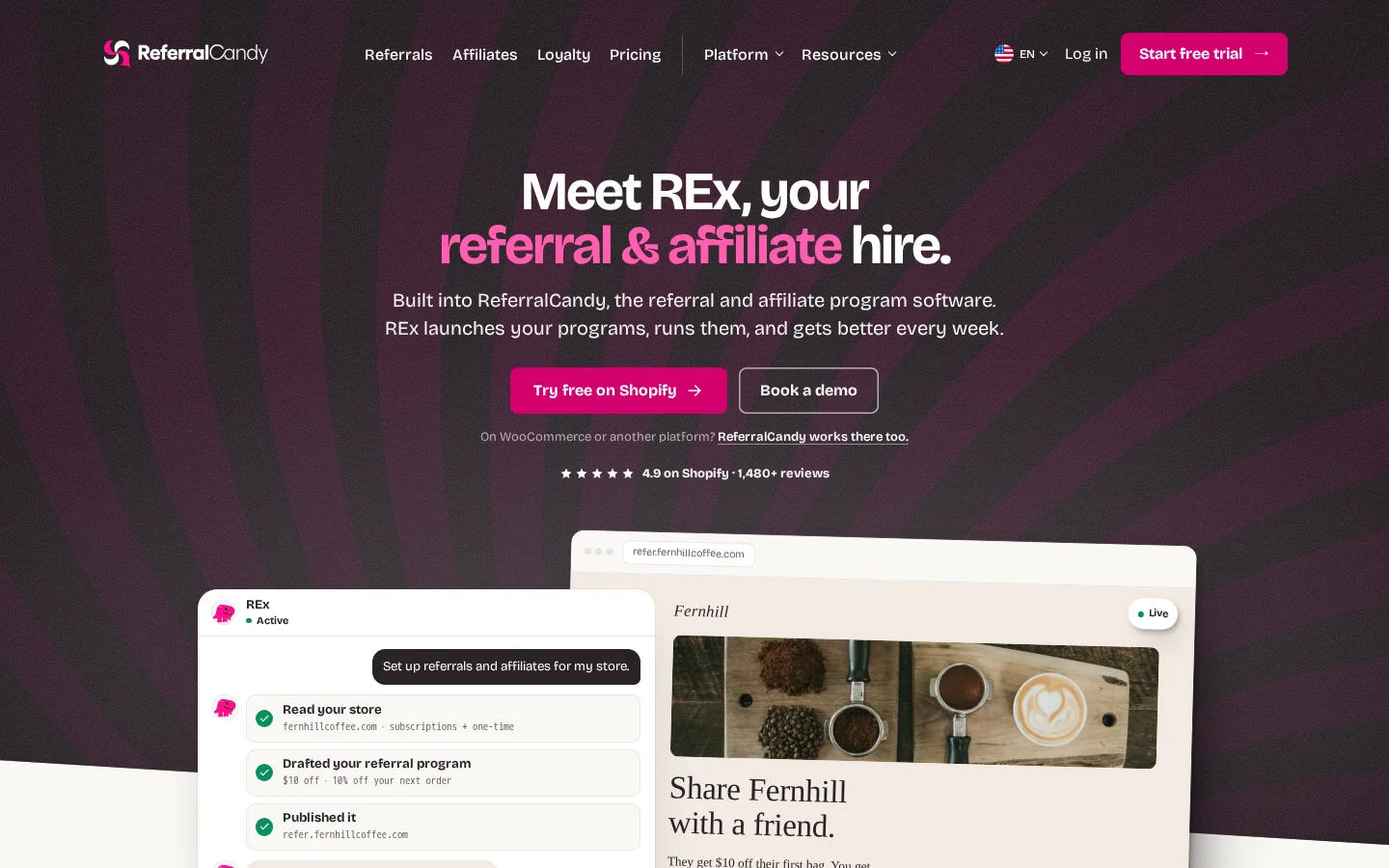
What it is. ReferralCandy runs referral and affiliate programs for e-commerce: customers get a link, friends get a discount, the referrer gets a reward.
Who it is for. Shopify, BigCommerce, WooCommerce, Squarespace and Magento 2 stores with happy repeat buyers.
Strengths. Turnkey setup, all features on every plan, and rewards that pay out in store credit, gift cards or cash. A good program turns your best customers into a channel, which is the "R" most funnels forget. Our guide to building a referral marketing program covers the incentive design.
Honest limit. The success fee adds up. The ReferralCandy pricing page lists 10.5% on Basic, 3.5% on Grow and 1.5% on Scale, charged on the first three paid orders of each new referred customer.
Price. Basic at $39/month, Grow at $79, Scale at $249, 7-day free trial.

Growth hacking tools each cover one stage of the AARRR funnel: acquisition, activation, retention, referral and revenue. The term comes from Sean Ellis, who wrote in his post "Find a Growth Hacker for Your Startup" (26 July 2010) that "a growth hacker is a person whose true north is growth". The tools follow from that: anything that helps you measure a stage, test a change and scale what works.
Which tool covers which stage of the AARRR funnel
Acquisition tools bring visitors or leads. Three families matter: organic (SEO and now GEO, the visibility inside AI answers), outbound (cold email and LinkedIn) and paid (ads sent to landing pages). Organic is slow to start and cheap to keep. Paid is instant and stops the day you stop paying. Outbound sits between them and works best when your buyers are a short, known list.
Activation is the step where a visitor or new user gets the result they came for: a first report, a first order, a first message sent. Analytics (PostHog), replay and heatmaps (Clarity) and experiments (GrowthBook, Unbounce) live here. This is usually where the biggest wins hide, because every improvement multiplies everything you already pay to acquire. Our glossary entry on conversion rate optimization (CRO) lays out the method.
Retention tools (email, in-app messages) bring users back. Referral tools turn them into a channel. Revenue sits in the CRM, where you link a closed deal to the first touch. Without that link, you cannot tell which acquisition channel deserves more budget. For the strategy side of the funnel, including growth loops, read our guide to growth marketing and the AARRR funnel.
There are three ways to assemble growth hacking tools, and the choice matters more than any single tool. You can buy one suite that does most jobs, pick the best tool for each stage, or run open source tools on your own data. Each fits a different team.
Principle: one vendor for CRM, email, forms and landing pages (HubSpot is the typical case). When to use it: a sales-led B2B team with no technical marketer. Advantages: one database, one login, reporting that joins marketing and sales. Limits: each module is good, rarely the best, and higher tiers get expensive. Example: a 10-person consulting firm runs forms, nurture emails and deals inside HubSpot and adds nothing else for a year.
Principle: one specialist per stage, connected by Zapier or native integrations. When to use it: a team that knows which stage is the bottleneck and wants the strongest tool there. Advantages: depth where it matters, start on free plans, swap a tool without migrating everything. Limits: data spread across tools, more integrations to maintain. Example: a SaaS uses Sorank for organic traffic, PostHog for onboarding analytics, Mailchimp for onboarding emails and Zapier to push trial users into the CRM.
Principle: self-host the tools or plug them into your data warehouse (GrowthBook, PostHog self-hosted). When to use it: a product team with engineers, strict data rules or high event volumes. Advantages: data stays with you, costs stay flat as traffic grows. Limits: you run the servers, upgrades and security. Example: a fintech app keeps all event data in its warehouse and runs GrowthBook on top to analyse pricing experiments.
| Approach | Best for | Setup effort | Cost as you grow | Main risk |
|---|---|---|---|---|
| All-in-one suite | Sales-led B2B, non-technical team | Low | Jumps at each tier | Paying for modules you never use |
| Best of breed | Teams with a clear bottleneck | Medium | Grows tool by tool | Broken integrations, scattered data |
| Open source / warehouse-native | Product teams with engineers | High | Mostly flat (hosting) | Maintenance falls on your team |
All-in-one suite vs best of breed for an early-stage startup
Choose growth hacking tools from your bottleneck, not from a list. The method below takes about a day and stops you from buying five subscriptions to fix a problem that only one stage has.
Choosing your growth tools in 6 steps
Take one month of data and compute each conversion ratio. If 10000 visitors give 200 signups (2%) and 200 signups give 20 activated users (10%), activation is your problem, not traffic. Buying an outbound tool there only pours more people into a leaky step. Our free conversion rate calculator does the arithmetic and projects the revenue effect of each improvement.
A tracking plan is a short list of events, their names and their properties. Use one convention (object then verb, past tense) and stick to it. In PostHog, a tracked event looks like this:
posthog.capture('trial_started', {
  plan: 'pro',
  source: 'pricing_page'
})
For traffic you send yourself (newsletters, social posts, partner links), tag every link with UTM parameters so your analytics tool knows where visitors came from:
https://example.com/pricing?utm_source=newsletter&utm_medium=email&utm_campaign=spring_trialTip
Keep UTM values lowercase and consistent: "email" and "Email" show up as two different mediums in your reports. Our free UTM link builder creates clean tagged URLs in seconds.
For the stage you chose, compare candidates on five points: does it solve this exact job, can you set it up in under a week, is there a free plan or trial, how does the price grow (contacts, events, tasks, seats), and does it connect to your CRM or analytics. Price growth is the trap: Zapier counts tasks, Mailchimp counts contacts, PostHog counts events, HubSpot counts seats. Model your volume in six months, not today.
Growth teams often rank test ideas with an ICE score, so the team argues about numbers rather than opinions:
ICE score = (Impact + Confidence + Ease) / 3
Each criterion scored from 1 to 10.
Example: new onboarding checklist = (8 + 6 + 7) / 3 = 7
Run the top three ideas, one at a time or as parallel tests on separate pages. After 30 days, keep only the tools that produced a decision. For a deeper look at test design and testing software, see our ranking of the best A/B testing tools.
You can run a complete growth stack for under $100 a month by starting every tool on its free plan and paying only where volume demands it. Here is one combination built only from the prices listed above.
| Job | Tool | Plan | Monthly cost |
|---|---|---|---|
| Organic acquisition (SEO and GEO) | Sorank | Essential, billed yearly | $49 |
| CRM | HubSpot | Free (up to 2 users) | $0 |
| Product analytics and replay | PostHog | Free tier | $0 |
| Heatmaps | Microsoft Clarity | Free | $0 |
| A/B testing | GrowthBook | Cloud Starter (3 seats) | $0 |
| Mailchimp | Free (250 contacts) | $0 | |
| Automation | Zapier | Pro, 750 tasks, billed yearly | $19.99 |
| Total | $68.99 |
The weak points of this stack are known in advance: Mailchimp's free plan stops at 250 contacts and Zapier's task count grows with every new workflow. Budget the next tier of those two before you hit the cap. If you sell B2B and need outbound, add lemlist; if you run an online store, add ReferralCandy once you have repeat buyers. Our ranking of the best digital marketing tools by category covers design, social and ads tools that sit outside the growth funnel.
Most teams do not lack tools; they underuse the ones they have. Pierre Raymond, writing in CMSWire on 16 October 2026, reports that marketers use just 49% of their martech stacks according to Gartner's 2025 Marketing Technology Survey, a rebound from 33% in 2023 but well short of the 58% Gartner recorded in 2020.
Share of their martech stack that marketers actually use
Source: Gartner Marketing Technology Surveys, reported by CMSWire, October 2026
The supply side explains part of it. Mike Pastore of MarTech.org (6 May 2025) notes that the State of Martech 2025 landscape counts 15384 tools. With that much choice, the risk is not missing the right tool; it is collecting tools that nobody owns.
The martech paradox in two numbers
Sources: MarTech.org, May 2025; Gartner via CMSWire, October 2026
Give every tool an owner and a metric. If nobody can say which ratio a tool improved last quarter, cancel it. A stack of five tools that each move a number beats fifteen that each produce a dashboard. This is also why autopilot tools make sense for small teams: a tool that does the work, instead of reporting on work you have no time to do, gets used by default. Our glossary page on what SEO autopilot automates explains where that line sits.
The most common mistake is buying tools before knowing the bottleneck. The others follow from it: no tracking plan, tests stopped too early and tools that never talk to each other. Here is how to spot and fix each one.
What it is: adding acquisition tools when activation or retention is the leak. How to spot it: traffic or signups grow, but paying customers stay flat. How to fix it: redo the funnel ratios from step 1 of the method above and freeze acquisition spend until the weakest ratio improves.
What it is: dropping scripts on the site and letting each tool name events its own way. How to spot it: the same action appears as "signup", "sign_up" and "Registered" in different reports, and nobody trusts the numbers. How to fix it: write a one-page event list with one naming convention, then rename or merge existing events to match.
What it is: declaring a winner after two days because one variant looks ahead. How to spot it: "winning" changes that, once shipped, do not move the conversion rate. How to fix it: decide the sample size and duration before launch, run at least one full business cycle (often a full week or two) and do not peek at results to stop early.
What it is: choosing on today's free plan without modelling next year's volume. How to spot it: a surprise invoice after a successful campaign, or a forced upgrade to unlock one feature. How to fix it: for each tool, write down the unit it charges for (contacts, events, tasks, seats, success fee) and price your volume at 3 times today's level.
What it is: email, analytics and outbound data that never reach the customer record. How to spot it: you cannot say which channel brought your last ten customers. How to fix it: connect every tool to the CRM, natively or with Zapier, and store the first-touch source on each contact. Our guide to conversion tracking in GA4, Google Ads and Meta covers the analytics side.
What it is: measuring Google rankings but never checking whether ChatGPT, Claude or Gemini name your brand when buyers ask for a recommendation. How to spot it: ask those assistants the three questions your customers ask most and see whether you appear. How to fix it: publish clear, factual pages that answer those questions and track your mentions over time.
Before you pay for any growth tool
The best growth hacking tools are the ones that fix the stage where you lose the most people. For most startups, that means a free base (HubSpot, PostHog, Clarity, GrowthBook, Mailchimp), one paid tool on the bottleneck and a channel that keeps working while you sleep.
Our recommendation: if traffic is the bottleneck and you have no time to publish, start with Sorank for marketing teams and let organic search and AI answers become a steady acquisition channel. If activation is the bottleneck, install PostHog and Clarity this week, watch twenty sessions of users who signed up and left, and turn what you see into your first three experiments. Today, take 30 minutes to write your funnel ratios on one page: it will tell you which tool to open first.
This ranking reflects my own experience and opinion as an SEO expert with more than 7 years in the field. It is based on verified facts, but the order itself is my personal view.
Growth hackers use one tool per stage of the AARRR funnel: SEO and outbound tools for acquisition, product analytics, heatmaps and A/B testing for activation, email for retention, referral software for referral and a CRM for revenue. Typical picks are Sorank, lemlist, PostHog, Microsoft Clarity, GrowthBook, Mailchimp, ReferralCandy and HubSpot, connected with Zapier.
Yes. Microsoft Clarity is free with no traffic limit, PostHog gives 1 million analytics events a month for free, GrowthBook has a free cloud plan and a free open source version, and HubSpot, Mailchimp and Zapier all have free plans. Their limits are contacts, tasks or seats, so check how the price grows before you scale.
Start from your funnel numbers and find the stage with the biggest drop, then pick one tool for that stage only. Write a short tracking plan, start on a free plan or trial, run three experiments and review after 30 days before adding anything else.
We analyse your competitors, your website and your AI visibility to create a tailored content plan for free.
 Website Value Calculator
 Website Accessibility Checker
 Google Analytics Checker
 Duplicate Content Checker
 Mobile-Friendly Test
 Website Speed Test
 Subdomain Finder
 Domain Age Checker
 CMS Detector
 Googlebot Simulator
 Nofollow Link Checker
 Meta Tag Checker
 Keyword Cannibalization Checker
 Keyword Intent Checker
 Keyword Extractor
 Google Ads Cost Calculator
 CPC Calculator
 Local Citation Finder
 Reddit Threads Finder
 Disavow File Generator
 Redirect Generator
 Canonical Tag Generator
 Passive Voice Checker
 Google Location Changer
 Google Review Calculator
 Google Review Link Generator
 Keyword Combiner
 Podcast Show Notes Generator
 AI Content Rewriter
 AI Text Humanizer
 ChatGPT Prompt Generator
 Twitter Thread Generator
 Tweet Generator
 Landing Page Copy Generator
 Google Ads Copy Generator
 Pinterest Pin Description Generator
 Anchor Text Generator
 Social Media Post Generator
 LinkedIn Post Generator
 Free AI Writer
 Review Response Generator
 LSI Keyword Generator
 YouTube Video Ideas Generator
 YouTube Tag Generator
 YouTube Description Generator
 Product Description Generator
 CTA Generator
 Blog Introduction Generator
 Conclusion Generator
 Hook Generator
 AI Content Brief Generator
 FAQ Schema Generator
 AI Blog Post Ideas Generator
 Structured Data Validator (Schema Validator)
 Alt Text Checker
 Internal Link Analyzer
 Backlink Challenge
 AI Meta Description Generator
 AI Blog Title Generator
 Google Indexability Checker
 AI Blog Outline Generator
 UTM Link Builder
 Keyword Clustering Tool
 Canonical Tag Checker
 XML Sitemap Generator
 Broken Link Checker
 AI SEO Title Generator
 Headline Analyzer
 SERP Preview Tool
 Redirect Checker
 Hreflang Tag Generator
 Heading Structure Analyzer
 HTTP Headers Checker
 Favicon Extractor
 SERP CTR Calculator
 SEO vs Paid Search Savings Calculator
 SEO Share of Voice Calculator
 SEO ROI Calculator
 SEO Traffic and Revenue Forecast Calculator
 SEO Budget Calculator
 SEO Break-Even Calculator
 SaaS SEO ROI Calculator
 ROAS Calculator
 Reading Time Calculator
 Ranking Gain Simulator
 Organic Traffic Value Calculator
 Organic Traffic Estimator and Website Traffic Checker
 LTV to CAC Ratio Calculator
 Local SEO ROI Calculator
 Link Building Cost Calculator
 Keyword Value Calculator
 Keyword Opportunity Score Calculator
 Keyword Density Calculator
 GEO ROI Calculator
 GEO Content Investment Calculator
 Ecommerce SEO ROI Calculator
 Customer Lifetime Value Calculator
 Customer Acquisition Cost Calculator
 CTR Calculator
 Cost Per Article Calculator
 Conversion Rate Calculator
 Content Marketing ROI Calculator
 ChatGPT Referral Traffic Estimator
 Bounce Rate Calculator
 Backlink ROI Calculator
 AI Visibility Score Calculator
 AI Traffic Value Calculator
 AI Share of Voice Calculator
 Cost of AI Invisibility Calculator
 AI Citation Rate Calculator
 llms.txt Validator
 AI Overview Checker and AI Overviews Rank Checker
 Robots.txt Checker
 AI SEO Audit
 LLM Readability Checker
 SearchGPT Readiness Checker
 Structured Data LLM Audit
 Website Crawlability AI Audit
 Why ChatGPT Is Not Recommending My Website
 Gemini Ranking Tool
 Perplexity Ranking Checker
 LLM Citation Checker
 Answer Engine Optimization Audit
 GEO Audit
 AI Search Visibility Test
 ChatGPT Visibility Checker
 llms.txt Generator
 URL Extractor
 Webpage to Markdown
 Sitemap Checker
 SERP Volatility Sensor
 Page Size Checker
 Word Counter
 Slug Generator
 Schema Generator
 Robots Generator
 OG Preview
 Meta Tags Generator
 Image Compressor
 Favicon Generator
 On-Page SEO Audit: SEO Checker and SEO Analyzer
 Backlink Analysis Tool
 Keyword Research Tool
 Domain Authority Checker
 “I tested Sorank on a real client site and it's insane. It does everything an agency would bill you $1500 a month for. It's going into production on that client now.”

 Guillaume Guersanguersanguillaume.com“We are an Ads agency and we wanted to get our SEO back on track once and for all. Sorank gave us a clear view of our site, helped us prioritize optimizations, and properly structure our content. The tool is easy to use, well designed for a team, and very practical for centralizing tracking without having to juggle multiple platforms. A very solid foundation to start fresh with our SEO.”
 Gaspard MadouiAds Agency
 “I just let the Sorank software do its thing, and now my DR is 25 and my page is ranking higher.”
 Lucas Flandrefoundertrace.fr“I specialized in GEO thanks to Sorank. The GEO Leaderboard allows me to show my clients their position vs competitors on ChatGPT. It’s a real commercial differentiator.”
 MélanieSEO Freelance“Great service, works well for our website and helps us understand how to improve it to rank better on Google and elsewhere. Congrats, keep going, I recommend it.”
 Hugo T.E-commerce merchant