Preferences
Privacy is important to us, so you have the option of disabling certain types of storage that may not be necessary for the basic functioning of the website. Blocking categories may impact your experience on the website. More information
Privacy is important to us, so you have the option of disabling certain types of storage that may not be necessary for the basic functioning of the website. Blocking categories may impact your experience on the website. More information

SEO autopilot is software that does your SEO with little human input. Learn what it automates, what to check and how to avoid the risks.








Founder Sorank, 7+ years in SEO.
Summary
SEO autopilot is software that runs the search optimization of a website with little human input. It finds keywords, writes and publishes pages, earns backlinks and tracks results on Google and in AI answers. You set the goals and approve the work, and the software does the daily tasks.
Want to go further? Ask
SEO autopilot lets software carry the routine work of SEO and GEO, the work that used to fill a marketer's week. The software runs the steps in order. You keep the goals, the topics you refuse and the final check. The basics come first: read our guide to SEO and to GEO if you want the background.
An SEO autopilot follows the same chain a human SEO follows, but nobody starts each step by hand. A typical chain runs like this:
Some products use the word for tools that still need you to pick keywords, approve outlines or press publish. Those tools are helpers, not autopilots. Ask which steps run without you before you believe the label.
Each task has a part the software can do and a part that stays with you. The table shows the split for a full platform.
| Task | What the software does | What stays with you |
|---|---|---|
| Keyword research | Lists the terms and questions the site could win | Set the business goals and the topics to skip |
| Writing | Drafts each page from the keyword and your site's facts | Check every fact, add your own examples and approve |
| Publishing | Sends approved pages to the site on a schedule | Set the calendar and the rule for pausing |
| Backlinks | Finds sites in your niche that could link to you | Judge each site and each link |
| Tracking | Reports rankings and mentions in AI answers | Read the report and change the plan |
The more rows the software covers without you, the closer it is to a true autopilot. Keep the human rows. Mistakes there are the costly ones.
Free tools usually do one job at a time, such as a free keyword research and suggestions tool or a free on-page SEO audit. They help with a single step. They do not write, publish and track on their own.
A tool that runs the whole chain is usually a paid platform. Compare the plans side by side, and check which steps run without you. For a list of tools by job, read our article on the best SEO automation tools.
Sorank is one example of a full platform. It covers keyword research, content, links and AI tracking, and it has a plan for SEO teams that want the whole chain in one place.
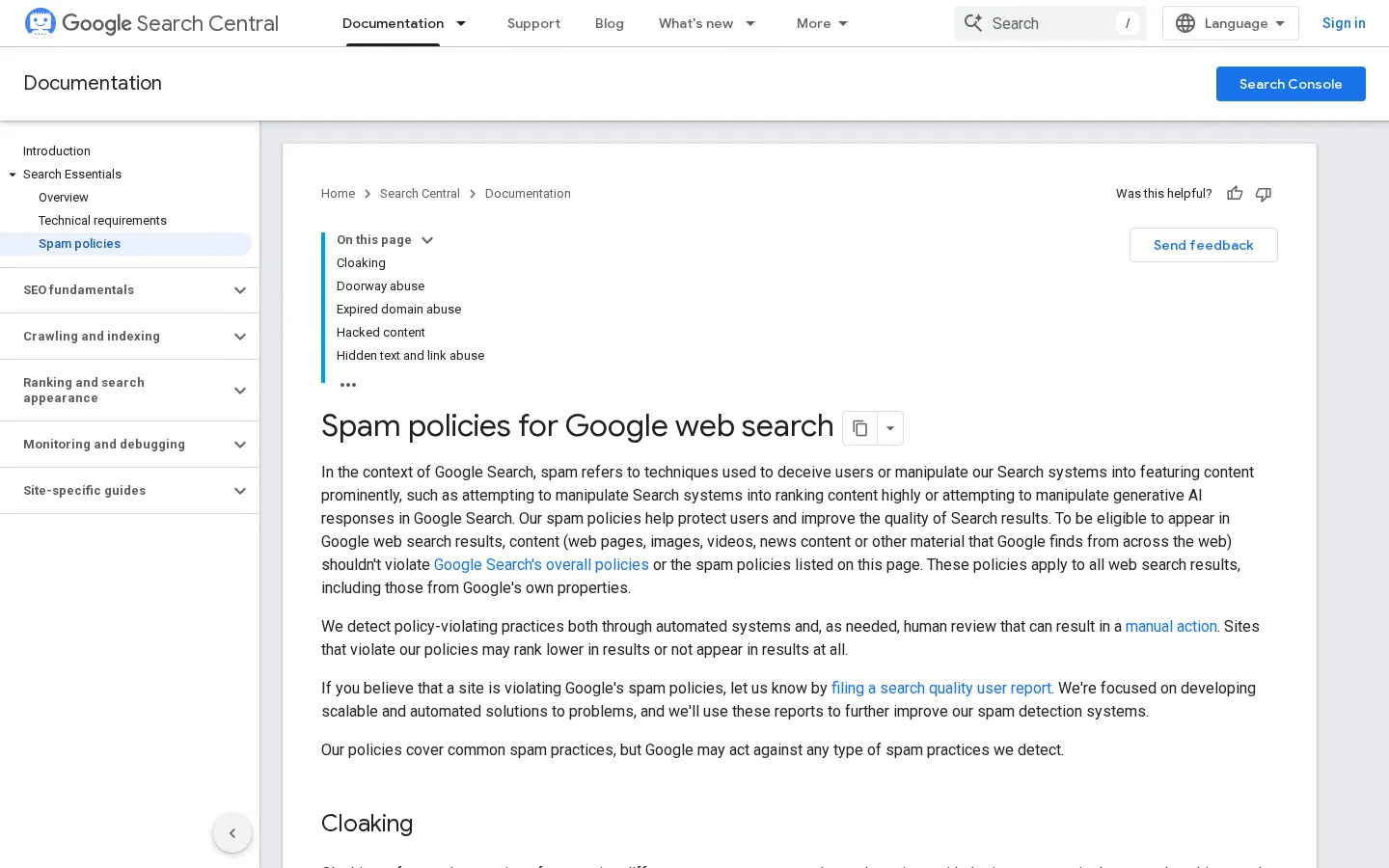
Google judges the pages, not the software that made them. Its spam policy on scaled content abuse covers many pages made to manipulate rankings, and it names generative AI tools as one way to make them. The rule applies "no matter how it's created", so an autopilot that publishes thin pages at scale breaks it just as a human writer would.
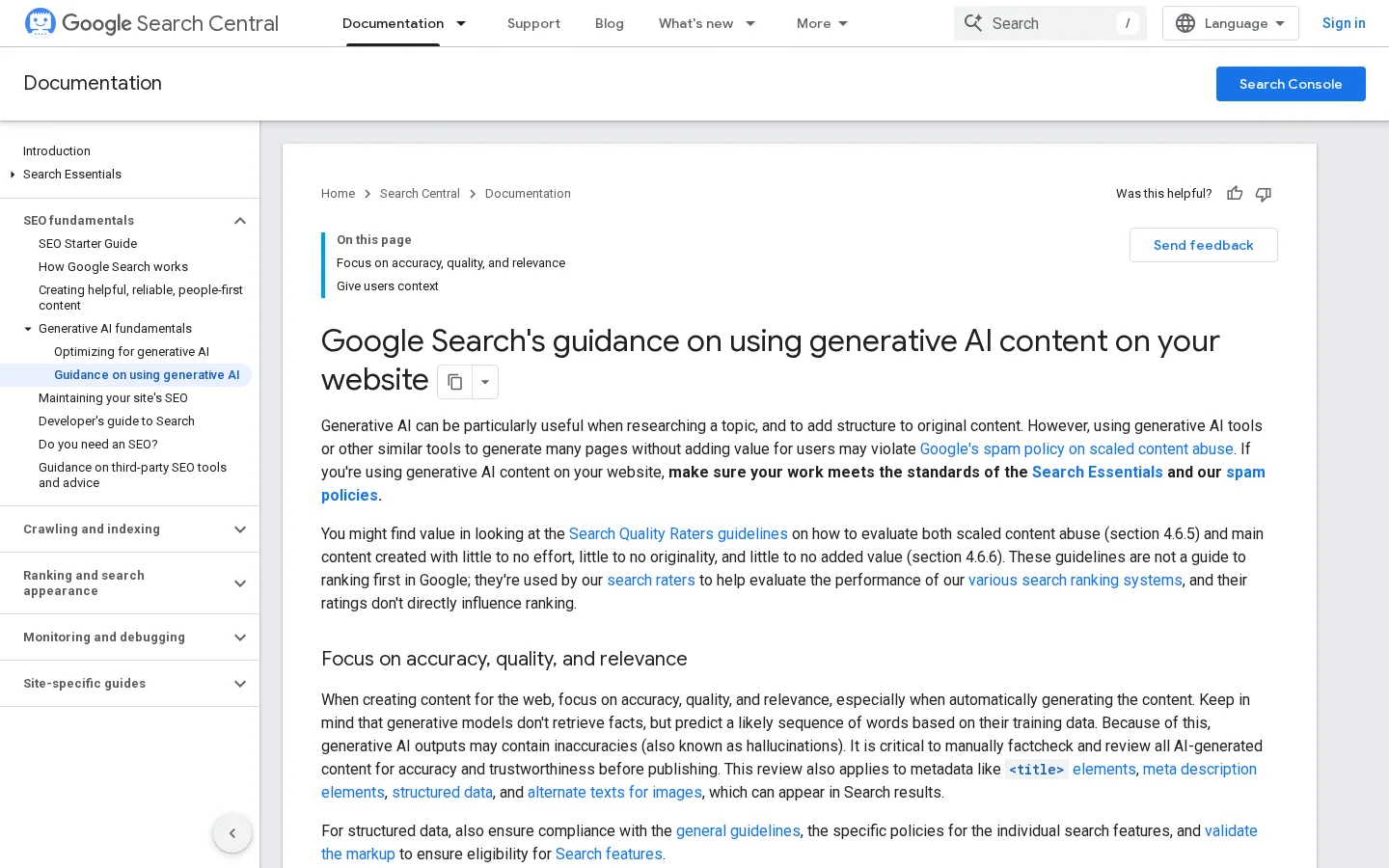
Google also expects AI-assisted work to meet its quality standards. Its guidance on using generative AI content tells you to "manually factcheck and review all AI-generated content for accuracy" before you publish it.
Tip
Before you turn on any autopilot, read ten of its pages as a stranger would. If you would not send one of them to a customer, the tool is not ready to publish on its own.
Use four checks. Each one is a question you can put to a vendor in a demo.
An autopilot does not know your margins, your legal limits or what your customers ask on the phone. It cannot promise a position in Google, because results depend on who else ranks for each query. Plan for a few months, not a few weeks, and judge the work on the pages that were read and kept, not on the number of pages published.
It also cannot replace a point of view. A page that only repeats what the top results say gives a reader no reason to stay. Add one fact, one example or one clear opinion that only your business can offer.
Most failures come from three mistakes.
Routine work takes most of the time in SEO. An autopilot frees that time for the choices that move results: which market to target, which claims to make and which pages to fix first. The output still has to be useful, so review and helpful content remain your job.
For GEO, the same routine matters more. AI answers tend to cite pages that are clear, sourced and kept up to date, so a steady flow of checked pages gives them more to choose from. For what happens when AI agents take on the SEO work themselves, read our guide to agentic SEO.
SEO autopilot means software that runs most of the routine SEO work with little input from you. Let it handle the steps that repeat, keep the goals and the checks in your hands, and judge every page the way Google and a reader would.
Sources
Not quite. A single SEO tool does one task, such as checking a page or finding keyword ideas. An SEO autopilot runs several tasks in a row and acts on the results without waiting for you at each step.
Google judges the pages, not the software that made them. Its spam policy targets many pages made to manipulate rankings or with little value for users. Review each page before it goes live, and publish only pages that help a reader.
Free tools usually do one job, such as keyword ideas or a page audit. For a tool that runs the whole chain, compare the paid plans and test one on a single site before you commit.
 “I tested Sorank on a real client site and it's insane. It does everything an agency would bill you $1500 a month for. It's going into production on that client now.”

 Guillaume Guersanguersanguillaume.com“We are an Ads agency and we wanted to get our SEO back on track once and for all. Sorank gave us a clear view of our site, helped us prioritize optimizations, and properly structure our content. The tool is easy to use, well designed for a team, and very practical for centralizing tracking without having to juggle multiple platforms. A very solid foundation to start fresh with our SEO.”
 Gaspard MadouiAds Agency
 “I just let the Sorank software do its thing, and now my DR is 25 and my page is ranking higher.”
 Lucas Flandrefoundertrace.fr“I specialized in GEO thanks to Sorank. The GEO Leaderboard allows me to show my clients their position vs competitors on ChatGPT. It’s a real commercial differentiator.”
 MélanieSEO Freelance“Great service, works well for our website and helps us understand how to improve it to rank better on Google and elsewhere. Congrats, keep going, I recommend it.”
 Hugo T.E-commerce merchant