Preferences
Privacy is important to us, so you have the option of disabling certain types of storage that may not be necessary for the basic functioning of the website. Blocking categories may impact your experience on the website. More information
Privacy is important to us, so you have the option of disabling certain types of storage that may not be necessary for the basic functioning of the website. Blocking categories may impact your experience on the website. More information

What Google's AI contribution pilot is, who it pays, how much publishers earn, how invitations work in  Search Console and how to prepare your site.
In short
The Google AI contribution pilot is an invitation-only test, run inside Search Console, that pays websites when their content contributes significantly to answers in AI Overviews, AI Mode and the Gemini app. Being cited or linked does not pay. Amounts are not public, vary widely, and you cannot apply: Google invites you.
Want to go further? Ask
Quick quiz
How should you use AI in your marketing?
Sorank matches your answers


Test it for 3 days on your own site and see where you stand on Google, ChatGPT and the other AIs.
Start 3-day free trial3 days free, then stop whenever you want. 90-day results guarantee, conditions apply.
The AI contribution pilot is a Google program that pays a website when its pages shape the answer an AI feature generates. It is not an ad product and not a licensing contract you negotiate. It is a payment line that appears in Google Search Console for the sites Google has invited.
Google confirmed the program to Digiday, which revealed it on 14 September 2026. In Digiday's report by Jessica Davies and Sara Guaglione, Google calls it "an early-stage learning pilot to test how best to reward high-quality content". The same report describes the model as pay per value: Google pays when it judges that your content added something to a response, not each time it reads your page.
Google has not published a public help page about the pilot. What we know of its wording comes from screenshots of the help text that Digiday published, and that Search Engine Roundtable and Search Engine Journal then quoted. Three sentences matter:
Three products are covered: AI Overviews (the summary above classic results), AI Mode (the conversational search tab) and the Gemini app. Classic blue links, Discover, Google News and Google Images are not part of it. If you need a refresher on the first two, our comparison of AI Mode and AI Overviews explains how each one picks its sources.
Everything happens in Search Console, not in AdSense, Google Ad Manager or Publisher Center. Once a site owner accepts the program terms, an "AI contribution" panel appears with a monthly earnings figure and some history. Payment details are managed in the Search Console settings, and the owner can leave at any time from the same place. This is unusual: Search Console has never handled money before, which is why some observers read the pilot as a sign that Google wants a payment channel open to any website, not only to news publishers.
What earns money in the pilot, and what does not
The pilot appeared in pieces over six months, first as an unexplained help topic, then as a policy hint, then as a paid program. Reading the steps in order helps you separate what Google said from what the press reported.
On 13 April 2026, Barry Schwartz of Search Engine Roundtable spotted links to an "AI contribution pilot" in Google's support documentation, with no details. On 18 June 2026, Markham Erickson, Google's vice president for government affairs and public policy, wrote in a post on supporting the information ecosystem that "beyond news, we are piloting a new way to partner with websites whose content meaningfully contributes to the freshness and factuality of generative AI responses". No name, no amounts. The money only became public with Digiday in September.
Google AI contribution pilot: key dates in 2026
Two events around it matter for context. On 3 June 2026, the UK Competition and Markets Authority imposed conduct requirements on Google: publishers must be able to keep their content out of AI features in Search, opt out of model fine-tuning, and get clear attribution, with nine months for Google to comply. And Penske Media, owner of Rolling Stone and Variety, has been suing Google since September 2025 over the use of its content in AI Overviews. A payment program does not settle those disputes, but it changes the conversation: Google can now say it pays for value.

A significant contribution is content that changes what the AI writes, during generation. A page that is fetched, read and shown as a source after the answer exists does not count. Google has not published how it measures the difference, so the rest of this section explains the mechanism and what can reasonably be inferred from it.
Google's AI features do not answer from memory alone. For most queries, they run searches in the Google index, pull passages from the best pages and give them to the model as context before it writes. This is called grounding an AI answer in real sources. Google's own crawler documentation defines it as content "from the Google Search index" provided "to the model at prompt time". The pilot pays at this exact moment: when your passage sits in the model's context and steers the text it produces.
Modern answer pipelines often have two passes. The first pass retrieves sources and writes the answer. The second pass checks claims and attaches links, sometimes from pages that played no role in the writing. The help text draws the line between them: being "linked to" or used to "confirm facts" after the response is generated does not earn. In practice, this means the link you see under an AI Overview is not proof that your page earned anything, and a page with no visible link may still have contributed.
Google has not said how it computes the payout, and one executive quoted by Digiday called it "quite black box". The known methods in research on attribution give an idea of what is possible:
Whatever the method, the logic favors content that adds something the model could not get elsewhere: a fresh figure, an original test, a precise answer to a narrow question. That matches a detail from the press: some publishers in the pilot told The Information that content on high-interest but less widely covered topics, such as anime and gaming, appears to earn more. When ten sites say the same thing, each one is replaceable, and replaceable content contributes little.
Note
Everything in the "how Google could score" list above is a description of known techniques, not a statement about Google's system. Google has published no formula, and nobody outside the pilot has seen the help pages directly.
Google pays very little to most sites and a lot to a few, and it publishes no rate card. All known figures come from publishers who talked to the press, so treat them as examples, not averages.
The clearest numbers come from The Information, as summarized by Matt G. Southern in Search Engine Journal on 1 October 2026: Google pays roughly 100 digital publishers through the pilot. For several small and midsize sites, payments are below 0.1% of their advertising revenue, and some smaller sites earned less than $1000 over several months. At the other end, one early participant earns more than $1 million a year, and a publisher that joined a few months earlier had made about $50000 to $60000.
What publishers report about the payouts
Source: The Information, via Search Engine Journal, 1 October 2026
Three factors explain most of the spread. First, volume: a site that feeds thousands of AI answers a day will earn more than one that feeds a few dozen, even at the same rate. Second, uniqueness: if your page is one of many saying the same thing, removing it changes little, so its measured contribution is small. Third, topic demand: the more often people ask Gemini or AI Mode about a subject you cover, the more chances your pages have to contribute. Participants also told reporters that the monthly figure changes from one month to the next without explanation.
The earnings shown in the panel are an estimate. According to the help text quoted by Search Engine Roundtable, the money actually transferred "may differ from your estimated earnings due to tax deductions or local payment thresholds". Payment tracking is separate from earnings tracking. Neither the threshold amount nor the tax rules have been published.
You cannot sign up. The pilot is by invitation only, and Google has not said how it chooses sites. What is known is who received invitations: at least dozens of publishers according to Digiday in September, about 100 paid publishers according to The Information in October, mostly small and mid-sized, and well beyond news.
Google has given no criteria. From the reports, the profile is a site with real editorial content, verified in Search Console, whose pages are already used often in AI Overviews, AI Mode or Gemini. Larger publishers were approached too, but several have stayed out: one executive told Digiday that the offers to their company and several peers were too low to opt in, and talks were continuing.
An invited site sees the AI contribution panel in Search Console, with a prompt to "Accept the Program Terms to start earning". The terms are not public, so nobody outside the pilot can say exactly what rights a site grants Google by accepting. If you receive the invitation, read the terms in full before clicking, and keep a copy with the date.
How to check whether your site could be invited
Even without an invitation, Search Console shows part of what the pilot pays for. The generative AI performance report, rolled out to all sites on 31 August 2026, counts how often links to your site appear in AI Overviews and AI Mode. It does not cover the Gemini app, it counts impressions and no clicks, and it says nothing about contribution.
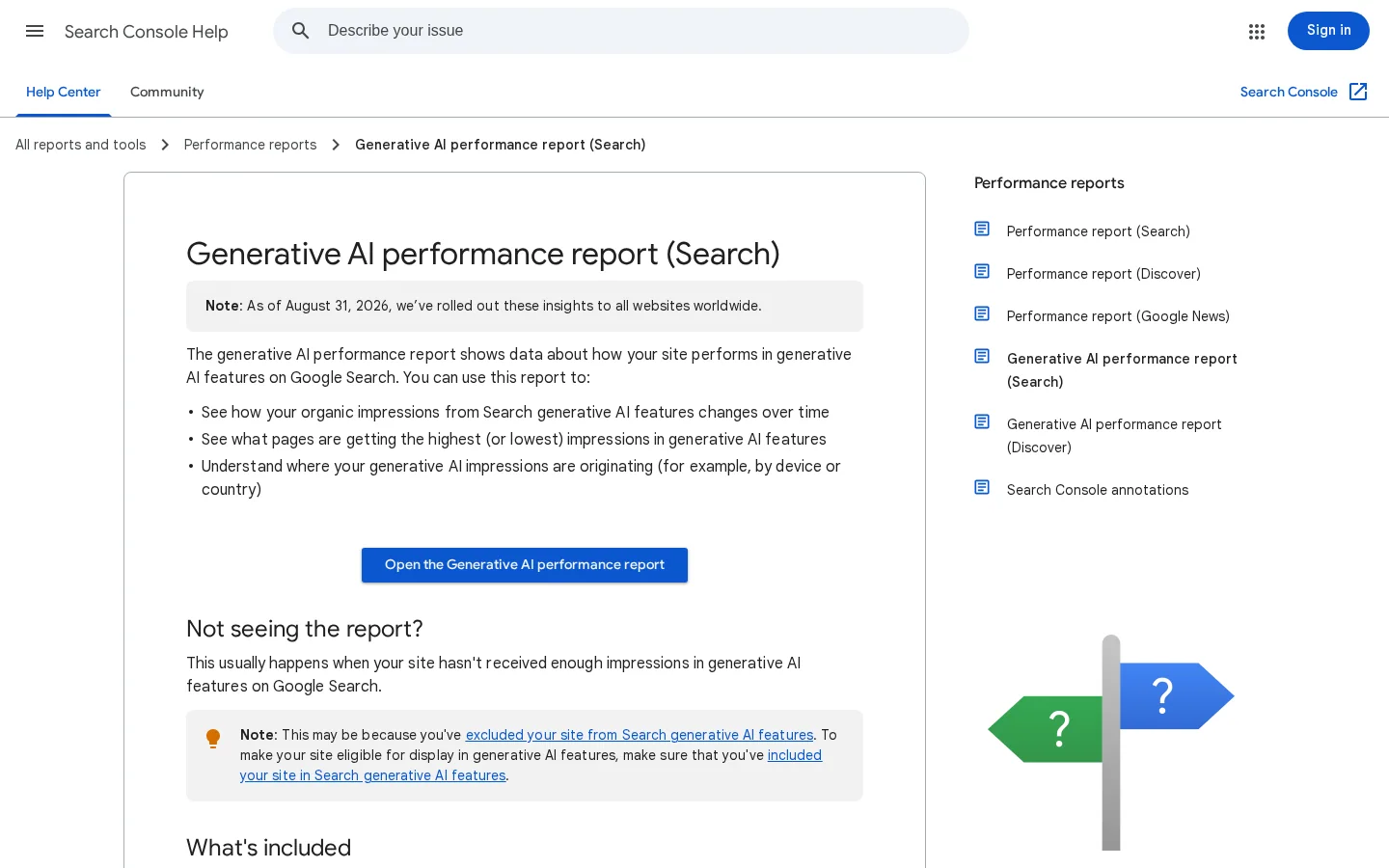
You get impressions over time, by page, country and device, plus filters for text and multimodal searches (Google Lens, image uploads). The table is limited to 1000 rows, like the classic performance report, and recent data can still change. Our guide on reading the Search Console generative AI report walks through each view. You can open it directly at the address below.
https://search.google.com/search-console/performance/search-analytics/aiAn impression means a link to your site was shown. As seen above, links shown after generation do not pay. So the report measures the "does not pay" side better than the "pays" side. Use it as a proxy for how often Google's AI uses your site, not as a revenue forecast. To see the Gemini app and other models too, you need a tool that asks the AI models real questions and records which sources they cite.
Tip
Before you look for payments, check that Google's AI uses your site at all. The free AI Overview checker shows whether Google cites your brand on a given query.
The AI contribution pilot is one of six models that exist today. They differ on who triggers payment, who sets the price and who can join. Knowing all of them stops you from judging the pilot in isolation.
Principle: Google pays when its systems judge that your content contributed to an answer. When to use it: when you are invited and your content is unique enough to be hard to replace. Advantages: no negotiation, works for small sites, money arrives through a tool you already use. Limits: invitation only, opaque formula, unknown terms. Example: a niche gaming site that publishes original patch notes analysis.
Principle: Google pays news publishers to supply content to experimental features such as AI story previews and an audio briefing in the Google News app. It is not pay per value. Nieman Lab reported on 15 October 2026 that more than 400 publications now take part, including CNN, the Financial Times and local outlets. When to use it: news sites only. Limits: invitation and negotiation.
Principle: Google pays for the display of press content. In its June 2026 post, Google says it pays more than 2800 partners in 33 countries through Google News Showcase, and more than 5500 European publications through Extended News Previews. When to use it: news publishers, especially in Europe. Limits: tied to news display, not to AI answers.
Principle: a negotiated contract that gives Google access to a whole body of content. Examples: Reddit in 2024 and the Associated Press in 2025 for Gemini. When to use it: very large or unique data sets. Advantages: large, predictable sums. Limits: out of reach for most sites. Our definition of publisher licensing for AI covers how these deals work.
Principle: the AI company pays each time its crawler fetches a page. Cloudflare runs this model in private beta, and Search Engine Journal noted on 18 September 2026 that the site owner sets the price there, with a minimum of $0.001 per crawl. When to use it: against AI crawlers that send no traffic. Limits: Google's crawlers treat a payment response (HTTP 402) as a 4xx error, and pages that keep returning 4xx drop out of the index. Never meter Googlebot.
Principle: you are not paid by the AI, you are paid by the visitors and customers it sends. When to use it: always, and for every business that sells something. Advantages: works on every AI model, no invitation. Limits: needs steady content and links. This is the model most businesses depend on, and the one GEO optimization is built for.
| Model | What triggers payment | Who sets the price | Who can join | Visibility of the formula |
|---|---|---|---|---|
| AI contribution pilot | Significant contribution to an AI answer | Invited sites, any sector | None | |
| News AI pilot | Content supplied to AI news features | Negotiated | Invited news publishers | Private contract |
| News Showcase, Extended News Previews | Display of press content | Negotiated or regulated | News publishers | Private contract |
| Direct licensing | Access to a body of content | Negotiated | Very large content owners | Private contract |
| Pay per crawl | Each fetch by a paying crawler | The site owner | Sites on a participating network | Public price per crawl |
| Citations and traffic | A visitor who buys | Your own offer | Everyone | Your own analytics |
For most invited sites, accepting is reasonable if the terms do not restrict your other options. The money is usually small, but it costs nothing to receive, and you can leave at any time. The real question is what you give up, and nobody can answer that without reading the terms.
Luke Stillman of Madison and Wall told Digiday that publishers have little leverage over how AI changes discovery, so a new revenue stream is worth taking while it is offered. Two executives inside the pilot said the data is basic but that direct payment beats waiting for referral traffic to come back. One participating publisher described Google as "extremely collaborative", with weekly partner calls. For a small site, even a modest monthly sum is income it had no other way to get from Google's AI.
One publishing executive warned Digiday that accepting could weaken a publisher's position in later talks, since Google could point to the pilot as compensation already paid. David Buttle of Spur and DJB Strategies called the payments a "strategic hedge" for Google: paying for contribution rather than for every use means Google does not pay each time it reads your content. Some publishers outside the pilot see it as a response to regulators more than a real revenue source. And the terms are private, so the scope of rights you grant is unknown.
Before you click "Accept the Program Terms"
You cannot force an invitation, but you can make your site the kind that contributes to AI answers. The same work raises your AI visibility everywhere, so it pays off even if Google never writes to you.
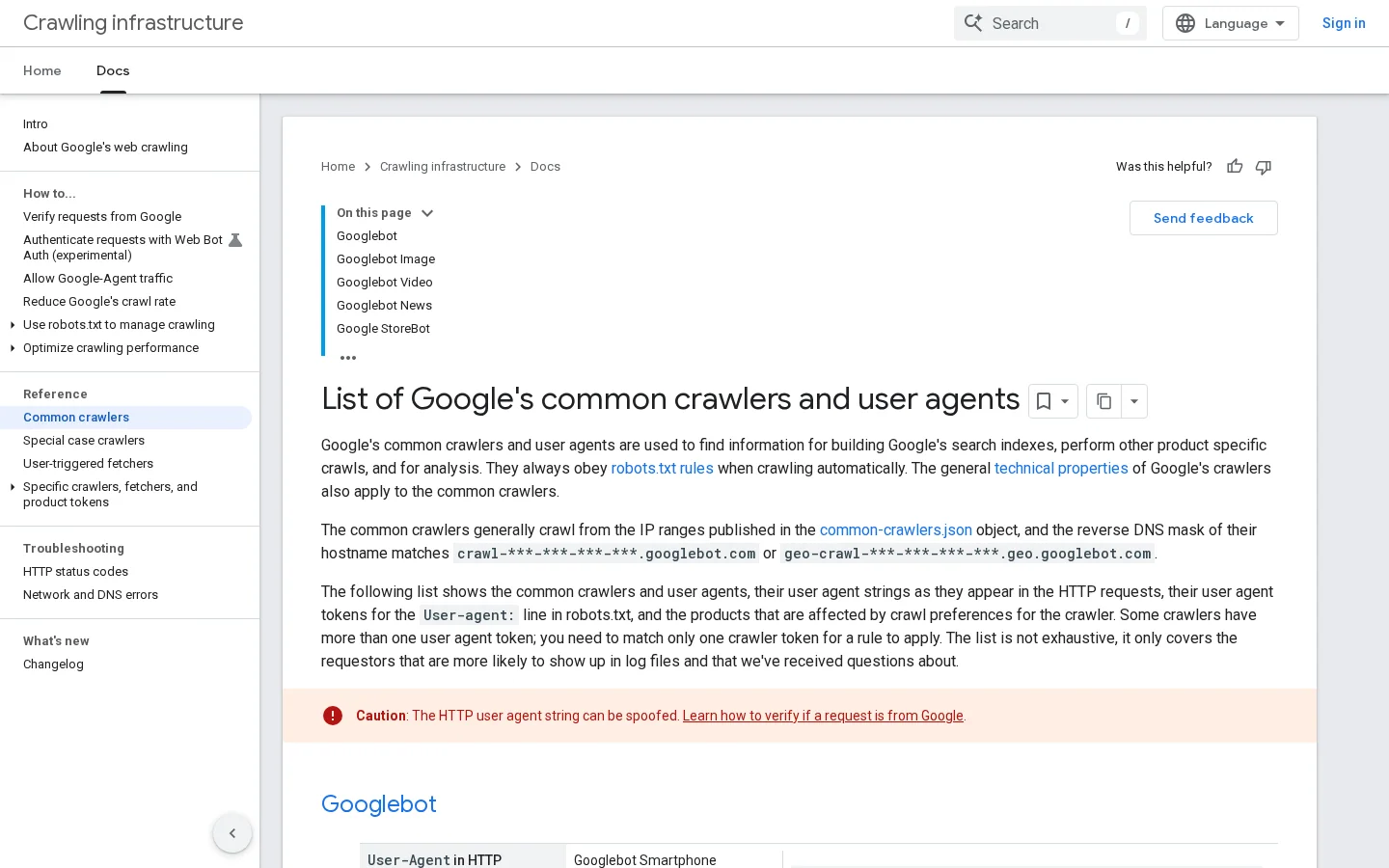
Google-Extended is the robots.txt token that controls whether Google uses your content to train Gemini and to ground answers in the Gemini app and Vertex AI. Google's documentation of its common crawlers says it "does not impact a site's inclusion in Google Search nor is it used as a ranking signal". Blocking it may keep your pages out of Gemini app grounding, which is one of the three products the pilot covers. Check your file for a block like this one:
User-agent: Google-Extended
Disallow: /
If you find it and you want to be eligible for Gemini contributions, remove it, or allow only the sections you are willing to share:
User-agent: Google-Extended
Allow: /guides/
Allow: /data/
Disallow: /
Our guide to robots.txt rules for AI crawlers covers the other bots, and our news piece on Google's new AI training group in robots.txt explains how Google now groups AI training bots.
AI Overviews and AI Mode follow Google's snippet controls. A page with a nosnippet tag cannot be quoted, so it cannot contribute. Search your templates for these lines:
<meta name="robots" content="nosnippet">
<meta name="robots" content="max-snippet:0">
<div data-nosnippet>...</div>
Keep data-nosnippet only on blocks you truly want hidden (prices behind a login, legal text), not on your main content.
Tip
The free robots.txt checker tells you in a few seconds which AI crawlers your file allows or blocks.
Contribution rewards information that changes the answer. Write pages that carry it:
Grounding works on passages, not on full pages. A paragraph that starts with "As mentioned above, it" loses its meaning once cut out. Start each section with a full sentence that names its subject. Put definitions, figures and conditions in the same paragraph. Use tables for comparisons: they extract cleanly. Our method to get your pages cited in AI Overviews goes deeper on page structure.
Search Console does not show the Gemini app. Build a list of 30 to 100 real questions your customers ask, run them in Gemini, AI Mode, ChatGPT and Claude every week, and record which domains are cited. Sorank's AI mention tracking runs these prompts on autopilot and shows when ChatGPT, Gemini or Claude cite your site. Since citations do not pay in the pilot, read them as a sign that the AI uses you, which is the precondition for contributing.
Write down today, in one sheet: monthly organic clicks, AI impressions from the generative AI report, ad revenue, and the number of pages cited by AI models. If you join later, this baseline is the only way to judge whether the payment is worth more than any change in traffic.
Most mistakes come from treating the pilot as a program anyone can join or as a reward for citations. Here are the six we see most, with how to spot and fix each one.
What it is: assuming that every link under an AI Overview earns money. How to spot it: your reports or client decks show "paid citations" or estimate pilot revenue from citation counts. How to fix it: separate the two metrics. Citations show visibility; contribution is only known through the panel of an invited site. Our article on what AI citations do compared with backlinks explains what a citation is actually worth.
What it is: searching for an application page or paying a service that claims to "get you into" the pilot. How to spot it: any offer promising access for a fee. How to fix it: there is no application. Invitations appear only inside Search Console for verified owners. Spend the time on Steps 1 to 6 above.
What it is: a robots.txt template copied from a "block all AI" list. How to spot it: a Google-Extended Disallow line that nobody in the team can explain. How to fix it: decide deliberately. If you want Gemini grounding and possible pilot earnings, allow it. If you want to protect content from training, accept that you probably give up Gemini app contribution.
What it is: putting Googlebot behind a pay-per-crawl rule or a bot wall. How to spot it: 402 or 403 codes for Googlebot in your server logs or in the Search Console crawl stats. How to fix it: whitelist Google's crawlers. Pages that keep returning 4xx codes are removed from the index, and then they contribute nothing, in AI or in classic search.
What it is: clicking "Accept" because the panel looks like a normal Search Console feature. How to spot it: nobody in the company has a copy of the terms. How to fix it: download or screenshot the terms, date them, and have them read by whoever handles your contracts, especially if you license content to anyone else.
What it is: cutting content that sells in favor of content that might "contribute". How to spot it: editorial plans built on guesses about the pilot formula. How to fix it: keep the plan built on what your customers search and ask AI models. For most businesses, one customer brought by an AI answer is worth more than months of contribution payments, as the reported amounts show.
From citation hunting to contribution thinking
The pilot is the first time Google has tied money to how much a page shapes an AI answer, rather than to clicks. Even if the sums stay small, it confirms what search marketers have seen since AI Overviews launched: the unit of value in AI search is the passage that the model uses, not the blue link.
Revenue from AI is becoming a mix: some ads, some direct payments, some licensing. Our guide to content monetization models covers the full set, and our SEO guide for news and media publishers covers Google News, Discover and AI answers.
The pilot is not your revenue model. Your revenue is the customer who reads an AI answer that names you and then buys. The work is the same: content with facts nobody else has, clear passages, open access for Google's AI, and links from sites in your niche. Sorank does that work on autopilot: keyword research, articles written and published, backlink exchanges between sites, and tracking of your visibility in ChatGPT, Gemini and Claude.
Four signals will tell you where this goes: whether Google publishes a public help page and terms; whether the generative AI report adds the Gemini app or contribution data; how Google meets the CMA's nine-month deadline in the UK; and whether the pilot opens to more sites. Until then, the right move is simple: make your pages the ones the model needs, measure your presence in every AI model, and read the terms carefully if the invitation arrives.
No. The pilot is invitation only and Google has not published any selection criteria. Invited sites see an AI contribution panel in Search Console and must accept the program terms to start earning.
No. The pilot pays only when your content contributes significantly to an answer while it is being generated. Pages that are linked or used to confirm facts after the answer is written do not earn money.
Google publishes no rates. According to The Information, reported by Search Engine Journal in October 2026, several small and midsize sites earn less than 0.1% of their ad revenue, while one early participant earns more than $1 million a year.
We analyse your competitors, your website and your AI visibility to create a tailored content plan for free.
 Duplicate Content Checker
 Mobile-Friendly Test
 Website Speed Test
 Subdomain Finder
 Domain Age Checker
 CMS Detector
 Googlebot Simulator
 Nofollow Link Checker
 Meta Tag Checker
 Keyword Cannibalization Checker
 Keyword Intent Checker
 Keyword Extractor
 Google Ads Cost Calculator
 CPC Calculator
 Local Citation Finder
 Reddit Threads Finder
 Disavow File Generator
 Redirect Generator
 Canonical Tag Generator
 Passive Voice Checker
 Google Location Changer
 Google Review Calculator
 Google Review Link Generator
 Keyword Combiner
 Podcast Show Notes Generator
 AI Content Rewriter
 AI Text Humanizer
 ChatGPT Prompt Generator
 Twitter Thread Generator
 Tweet Generator
 Landing Page Copy Generator
 Google Ads Copy Generator
 Pinterest Pin Description Generator
 Anchor Text Generator
 Social Media Post Generator
 LinkedIn Post Generator
 Free AI Writer
 Review Response Generator
 LSI Keyword Generator
 YouTube Video Ideas Generator
 YouTube Tag Generator
 YouTube Description Generator
 Product Description Generator
 CTA Generator
 Blog Introduction Generator
 Conclusion Generator
 Hook Generator
 AI Content Brief Generator
 FAQ Schema Generator
 AI Blog Post Ideas Generator
 Structured Data Validator (Schema Validator)
 Alt Text Checker
 Internal Link Analyzer
 Backlink Challenge
 AI Meta Description Generator
 AI Blog Title Generator
 Google Indexability Checker
 AI Blog Outline Generator
 UTM Link Builder
 Keyword Clustering Tool
 Canonical Tag Checker
 XML Sitemap Generator
 Broken Link Checker
 AI SEO Title Generator
 Headline Analyzer
 SERP Preview Tool
 Redirect Checker
 Hreflang Tag Generator
 Heading Structure Analyzer
 HTTP Headers Checker
 Favicon Extractor
 SERP CTR Calculator
 SEO vs Paid Search Savings Calculator
 SEO Share of Voice Calculator
 SEO ROI Calculator
 SEO Traffic and Revenue Forecast Calculator
 SEO Budget Calculator
 SEO Break-Even Calculator
 SaaS SEO ROI Calculator
 ROAS Calculator
 Reading Time Calculator
 Ranking Gain Simulator
 Organic Traffic Value Calculator
 Organic Traffic Estimator and Website Traffic Checker
 LTV to CAC Ratio Calculator
 Local SEO ROI Calculator
 Link Building Cost Calculator
 Keyword Value Calculator
 Keyword Opportunity Score Calculator
 Keyword Density Calculator
 GEO ROI Calculator
 GEO Content Investment Calculator
 Ecommerce SEO ROI Calculator
 Customer Lifetime Value Calculator
 Customer Acquisition Cost Calculator
 CTR Calculator
 Cost Per Article Calculator
 Conversion Rate Calculator
 Content Marketing ROI Calculator
 ChatGPT Referral Traffic Estimator
 Bounce Rate Calculator
 Backlink ROI Calculator
 AI Visibility Score Calculator
 AI Traffic Value Calculator
 AI Share of Voice Calculator
 Cost of AI Invisibility Calculator
 AI Citation Rate Calculator
 llms.txt Validator
 AI Overview Checker and AI Overviews Rank Checker
 Robots.txt Checker
 AI SEO Audit
 LLM Readability Checker
 SearchGPT Readiness Checker
 Structured Data LLM Audit
 Website Crawlability AI Audit
 Why ChatGPT Is Not Recommending My Website
 Gemini Ranking Tool
 Perplexity Ranking Checker
 LLM Citation Checker
 Answer Engine Optimization Audit
 GEO Audit
 AI Search Visibility Test
 ChatGPT Visibility Checker
 llms.txt Generator
 URL Extractor
 Webpage to Markdown
 Sitemap Checker
 SERP Volatility Sensor
 Page Size Checker
 Word Counter
 Slug Generator
 Schema Generator
 Robots Generator
 OG Preview
 Meta Tags Generator
 Image Compressor
 Favicon Generator
 On-Page SEO Audit: SEO Checker and SEO Analyzer
 Backlink Analysis Tool
 Keyword Research Tool
 Domain Authority Checker
 “I tested Sorank on a real client site and it's insane. It does everything an agency would bill you $1500 a month for. It's going into production on that client now.”

 Guillaume Guersanguersanguillaume.com“We are an Ads agency and we wanted to get our SEO back on track once and for all. Sorank gave us a clear view of our site, helped us prioritize optimizations, and properly structure our content. The tool is easy to use, well designed for a team, and very practical for centralizing tracking without having to juggle multiple platforms. A very solid foundation to start fresh with our SEO.”
 Gaspard MadouiAds Agency
 “I just let the Sorank software do its thing, and now my DR is 25 and my page is ranking higher.”
 Lucas Flandrefoundertrace.fr“I specialized in GEO thanks to Sorank. The GEO Leaderboard allows me to show my clients their position vs competitors on ChatGPT. It’s a real commercial differentiator.”
 MélanieSEO Freelance“Great service, works well for our website and helps us understand how to improve it to rank better on Google and elsewhere. Congrats, keep going, I recommend it.”
 Hugo T.E-commerce merchant