Preferences
Privacy is important to us, so you have the option of disabling certain types of storage that may not be necessary for the basic functioning of the website. Blocking categories may impact your experience on the website. More information
Privacy is important to us, so you have the option of disabling certain types of storage that may not be necessary for the basic functioning of the website. Blocking categories may impact your experience on the website. More information

Compare 10 blog niche ideas with real example blogs, revenue models and trust risks, then score them with a 6-step method to pick the niche that fits you.

In short
A blog niche is the one topic and audience your whole blog serves. The 10 best blog niche ideas today are personal finance, health and fitness, food, travel, home and DIY, pets, AI and tech, gardening, personal development and parenting. Pick the one where your real experience meets proven search demand and a clear way to earn money.
Want to go further? Ask
Quick quiz
How should you run your blog?
Sorank matches your answers


Test it for 3 days on your own site and see where you stand on Google, ChatGPT and the other AIs.
Start 3-day free trial3 days free, then stop whenever you want. 90-day results guarantee, conditions apply.
The short answer: every niche below has steady demand and at least three ways to earn money, but they differ a lot in competition, seasonality and how much proof of expertise Google expects. Use the table to shortlist two or three, then read their detailed cards.
We ranked them on four criteria: how many revenue models already work in the niche, how evergreen the demand is, how much room it leaves for a narrow sub-niche, and how heavy the trust burden is. For each niche we picked one real blog and read its homepage on 27 November 2026, so every example below is a living business, not a theory.
| Niche | Best for | Main strength | Revenue models seen on the example blog | Example blog |
|---|---|---|---|---|
| 1. Personal finance | People with real money experience (debt payoff, investing, frugality) | High-value affiliate offers | Affiliate links, newsletter | Mr. Money Mustache |
| 2. Health and fitness | Coaches, trainers, people who changed their own body | Strong service upsell | 1-on-1 online coaching, newsletter | Nerd Fitness |
| 3. Food and recipes | Home cooks with a clear diet or style | Huge, daily search demand | Shop of recommended gear, cookbook, email list | Minimalist Baker |
| 4. Travel | Frequent travelers with a specific angle | Many affiliate partners | Books, courses, trip-planning service, affiliate links | Nomadic Matt |
| 5. Home and DIY | Renovators, decorators, handy people | Visual, product-heavy content | Ads, Amazon affiliate, own product line, books | Young House Love |
| 6. Pets | Owners, trainers, vets, breeders | Loyal, emotional audience | Paid subscription, product lists, courses | Whole Dog Journal |
| 7. AI and tech | Developers, IT pros, early adopters | Fast-growing topics, B2B sponsors | Sponsorship, paid monthly briefing | Simon Willison's Weblog |
| 8. Gardening | Growers with hands-on results | Path to selling physical products | Online store, paid membership | Epic Gardening |
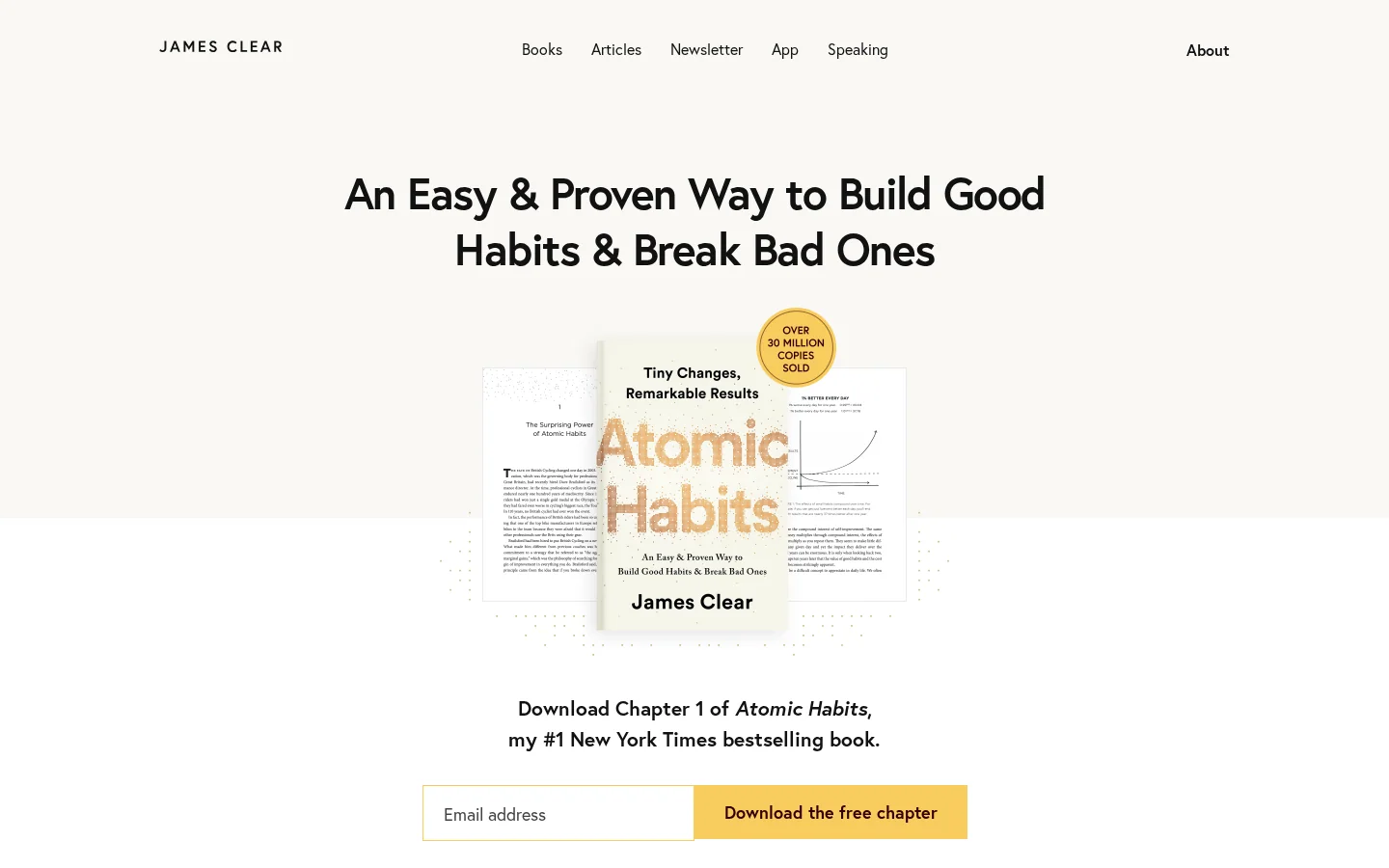
| 9. Personal development | Writers with a method or framework | Books and courses scale well | Book, app, free email course, newsletter | James Clear |
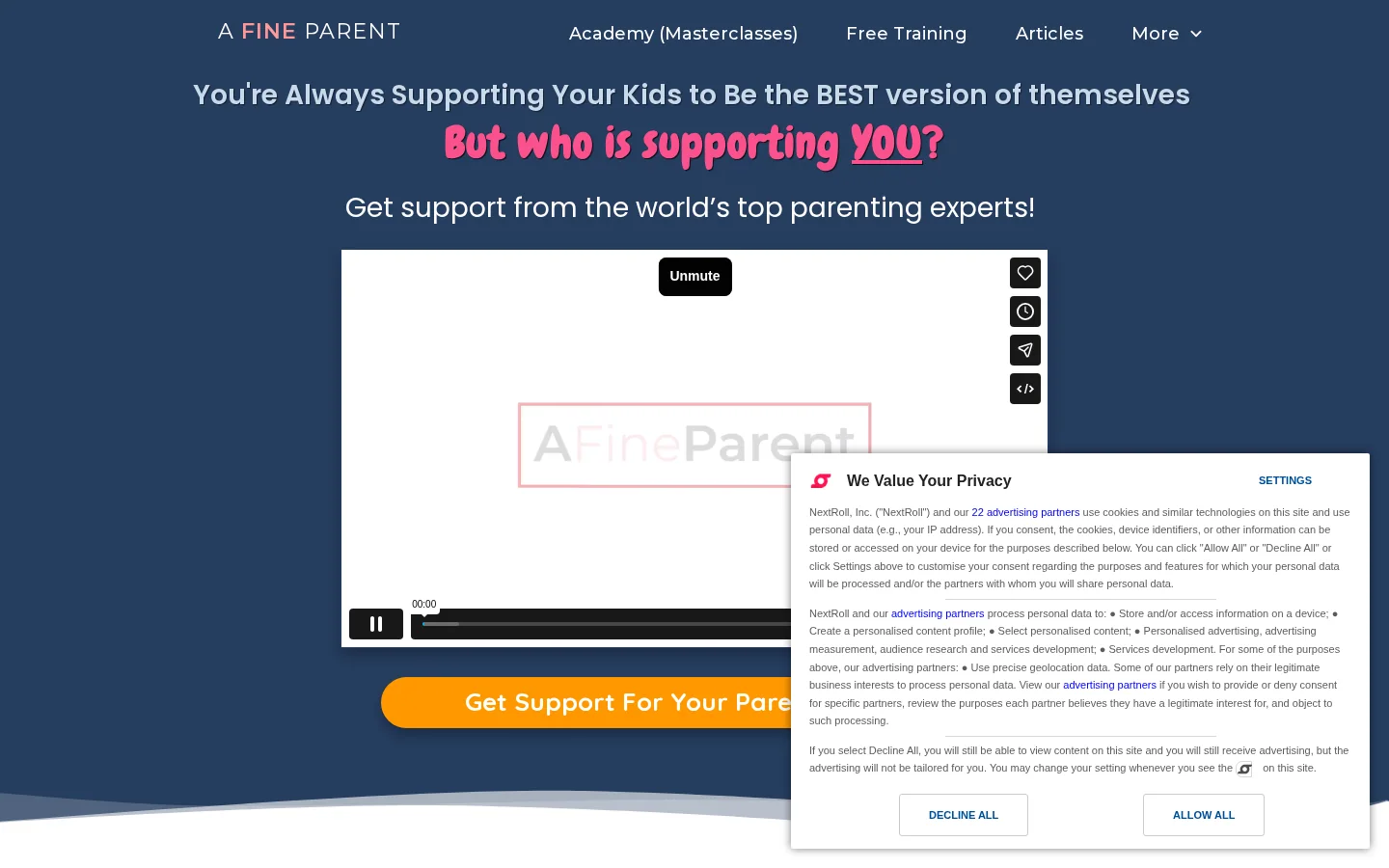
| 10. Parenting | Parents, educators, child specialists | Recurring needs at each age | Paid membership with masterclasses and coaching | AFineParent |
Two kinds of profitable niches
Each card tells you what the niche covers, who it suits, why it works, one honest limit, and sub-niches you can still win. The example blog shows how one real publisher earns money in that niche today.
 Personal finance
What it is. Budgeting, debt payoff, saving, investing, retirement, credit cards, taxes. It is the classic money niche because the reader's problem is directly tied to money, so offers convert well.
Who it suits. You, if you have paid off debt, reached a savings goal, work in finance or accounting, or run your own household numbers with discipline. Readers want proof, so your own numbers and spreadsheets are your best content.
Strengths. Banks, brokers, budgeting apps and card issuers run affiliate programs. Search demand never stops, and it peaks in January and at tax time. Long guides with calculators earn links naturally.
Honest limit. Finance is a "Your Money or Your Life" topic. Google's guide to creating helpful, reliable, people-first content says its systems give "even more weight" to strong E-E-A-T for topics that could affect "the health, financial stability, or safety of people". A new anonymous blog will struggle against banks and big publishers on head terms.
Sub-niches you can still win: money for nurses or teachers, budgeting on an irregular freelance income, FIRE for families with three kids, investing as an expat in one country, paying off student loans in a specific system.
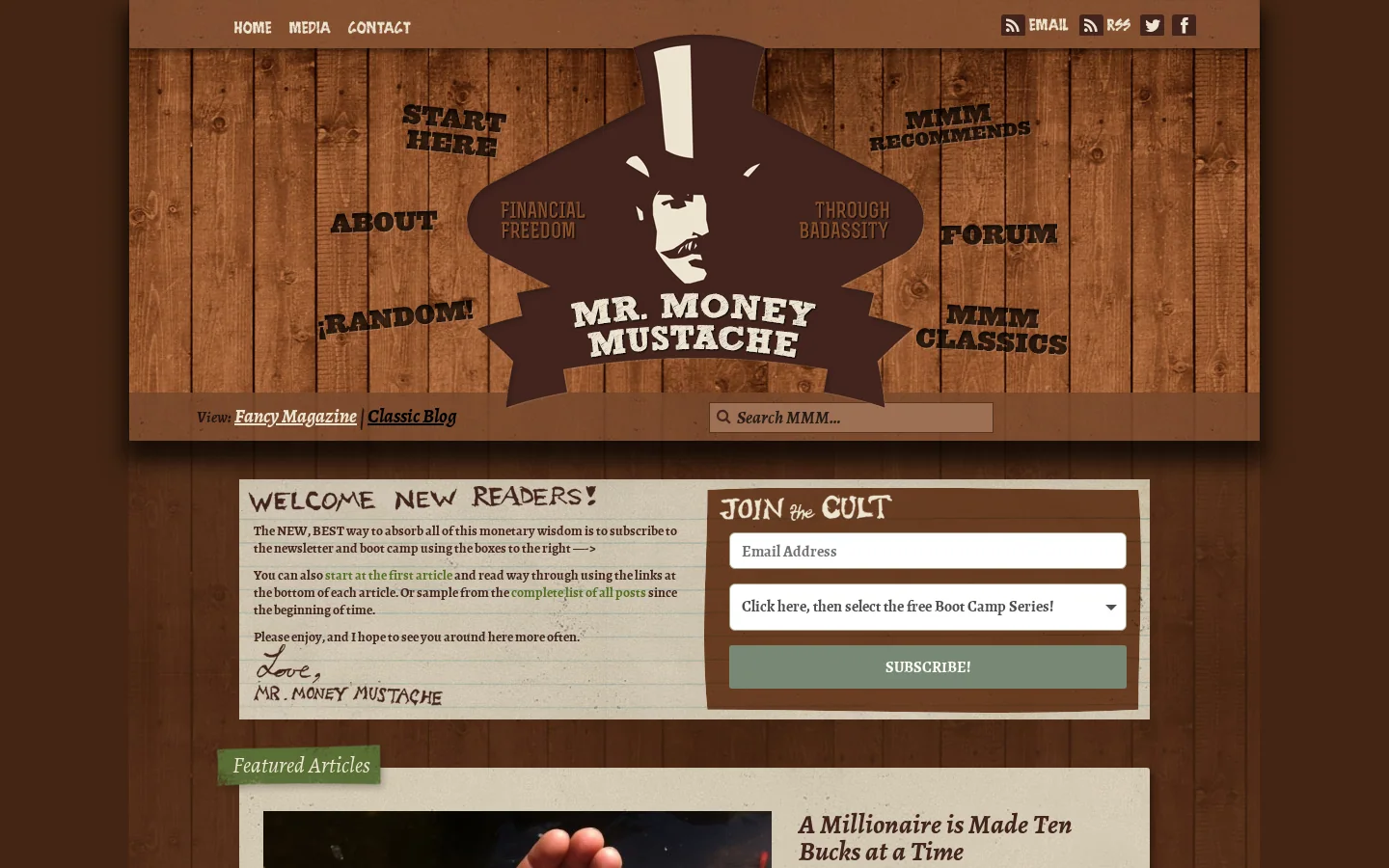
Real example. Mr. Money Mustache covers early retirement and frugality. On 27 November 2026 its homepage showed a "Start Here" page, an "MMM Recommends" box with a link labeled as an affiliate link, and a newsletter signup. The lesson: one strong point of view (early retirement through frugality) beats generic money tips.
What it is. Training plans, weight loss, nutrition, mobility, running, sleep, mental fitness. Health is a huge umbrella: you should never blog about "health" in general.
Who it suits. Certified coaches, physiotherapists, dietitians, or anyone who documents a real transformation with numbers and photos.
Strengths. The audience buys programs, coaching, equipment and supplements. A blog is the best lead generator for an online coaching business, because each free workout proves your method.
Honest limit. Like finance, health is YMYL. Medical claims need sources and, ideally, a credentialed author or reviewer. Supplements also carry legal risk if you overstate benefits.
Sub-niches you can still win: strength training after 50, running for heavy beginners, kettlebell training at home, fitness for shift workers, post-pregnancy core recovery (with a qualified reviewer).
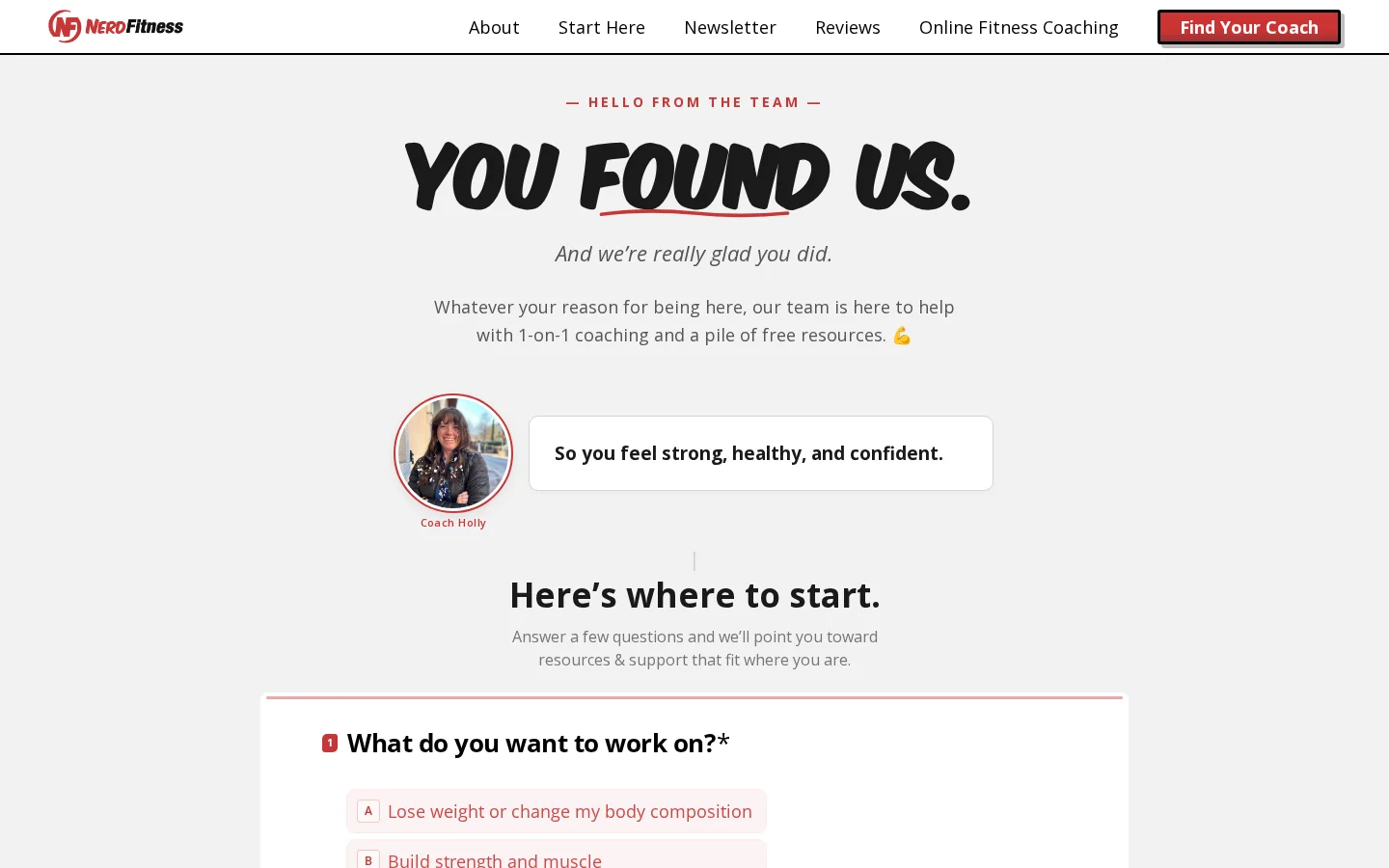
Real example. Nerd Fitness pairs a pile of free resources with 1-on-1 online coaching. On 27 November 2026 its homepage claimed more than 10000 clients coached since 2018 and more than 100000 newsletter readers. The free content feeds the paid coaching.
What it is. Recipes, meal prep, diets, baking, cooking techniques, kitchen gear. People search for food every day, often several times a day.
Who it suits. Home cooks with a clear style: a diet (vegan, gluten-free, low-FODMAP), a constraint (15 minutes, one pan, budget) or a cuisine you know from the inside.
Strengths. Demand is daily and evergreen, recipes are very visual, and they spread on Pinterest and short video. Display ads, cookbooks, meal plans and kitchen affiliate links all work.
Honest limit. Recipe results are crowded and rich: Google shows recipe cards with ratings and cooking times. Without clean Recipe structured data, you are invisible in that carousel. You also need good photos from day one.
The minimum Recipe markup looks like this. Validate it before you publish.
<script type="application/ld+json">
{
  "@context": "https://schema.org",
  "@type": "Recipe",
  "name": "One-pan lemon chickpea pasta",
  "image": ["https://example.com/img/chickpea-pasta-16x9.jpg"],
  "author": {"@type": "Person", "name": "Your Name"},
  "prepTime": "PT10M",
  "cookTime": "PT20M",
  "recipeYield": "4 servings",
  "recipeIngredient": ["300 g pasta", "1 can chickpeas", "1 lemon"],
  "recipeInstructions": [
    {"@type": "HowToStep", "text": "Boil the pasta in salted water."},
    {"@type": "HowToStep", "text": "Fry the chickpeas, add lemon and pasta."}
  ]
}
</script>
Sub-niches you can still win: high-protein vegetarian meal prep, recipes for one person, cooking for kidney disease (with a dietitian), air fryer baking, regional cuisine from one country written in English.
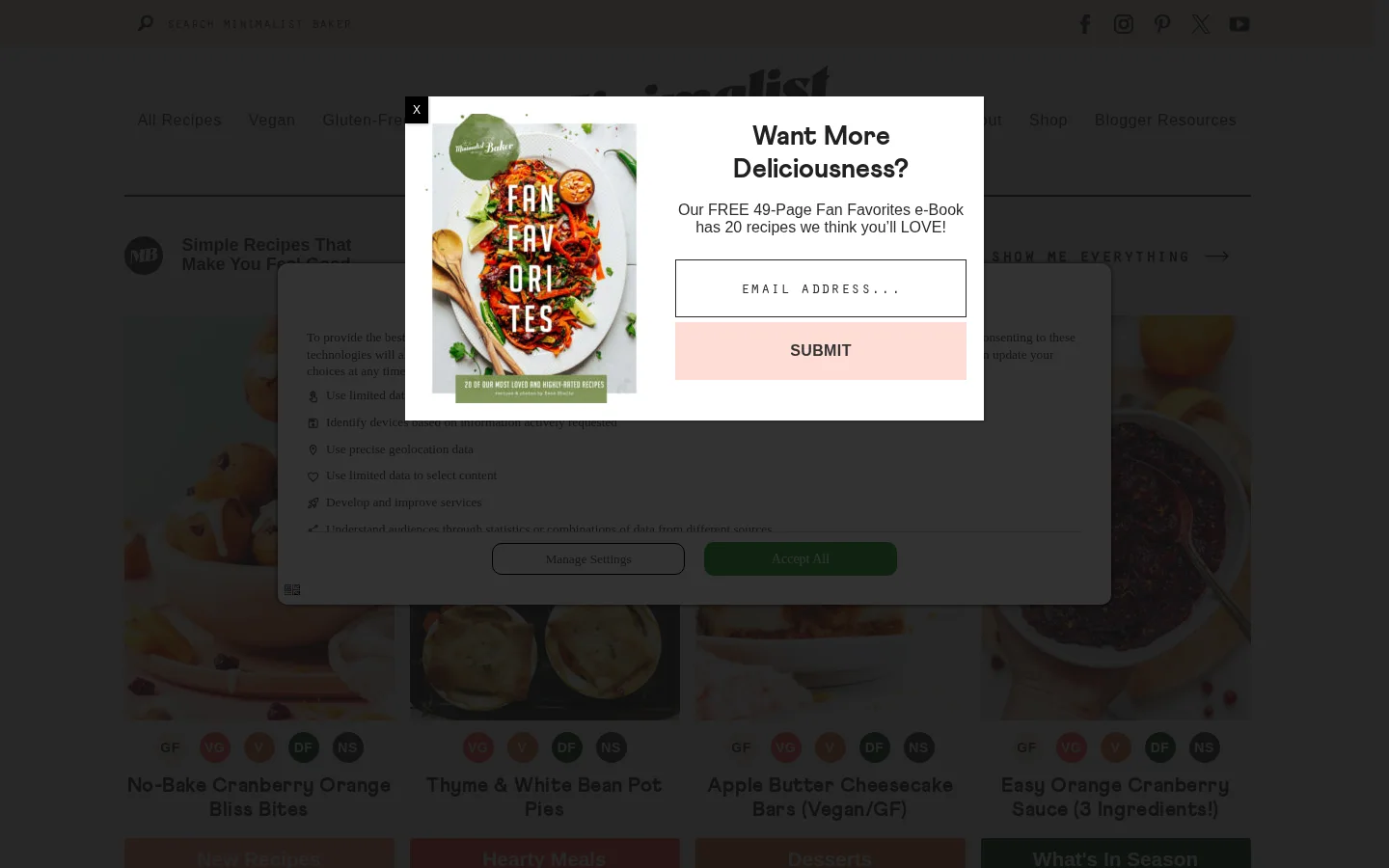
Real example. Minimalist Baker lets you filter recipes by vegan, gluten-free, vegetarian, dairy-free and naturally sweetened. On 27 November 2026 it offered a free 49-page e-book in exchange for an email, a cookbook and a shop of recommended appliances and ingredients. Its angle ("simple recipes", mostly plant-based) is narrow enough to own.
What it is. Destination guides, itineraries, budget tips, gear, travel insurance, credit card points, digital nomad life.
Who it suits. People who travel often with a specific angle: budget, family, accessibility, slow travel, or one region you know deeply.
Strengths. Hotels, flights, insurance, tours and travel cards all pay commissions. Long trip guides attract links from forums and other blogs.
Honest limit. Travel is seasonal and sensitive to world events. Generic "things to do in Paris" queries are now answered directly in AI answers and dominated by big platforms. You win with first-hand detail that AI cannot invent: prices you paid, routes you walked, mistakes you made.
Sub-niches you can still win: wheelchair-accessible city breaks, train travel in one region, travel with toddlers in Japan, hiking huts in the Alps, workations for remote employees.
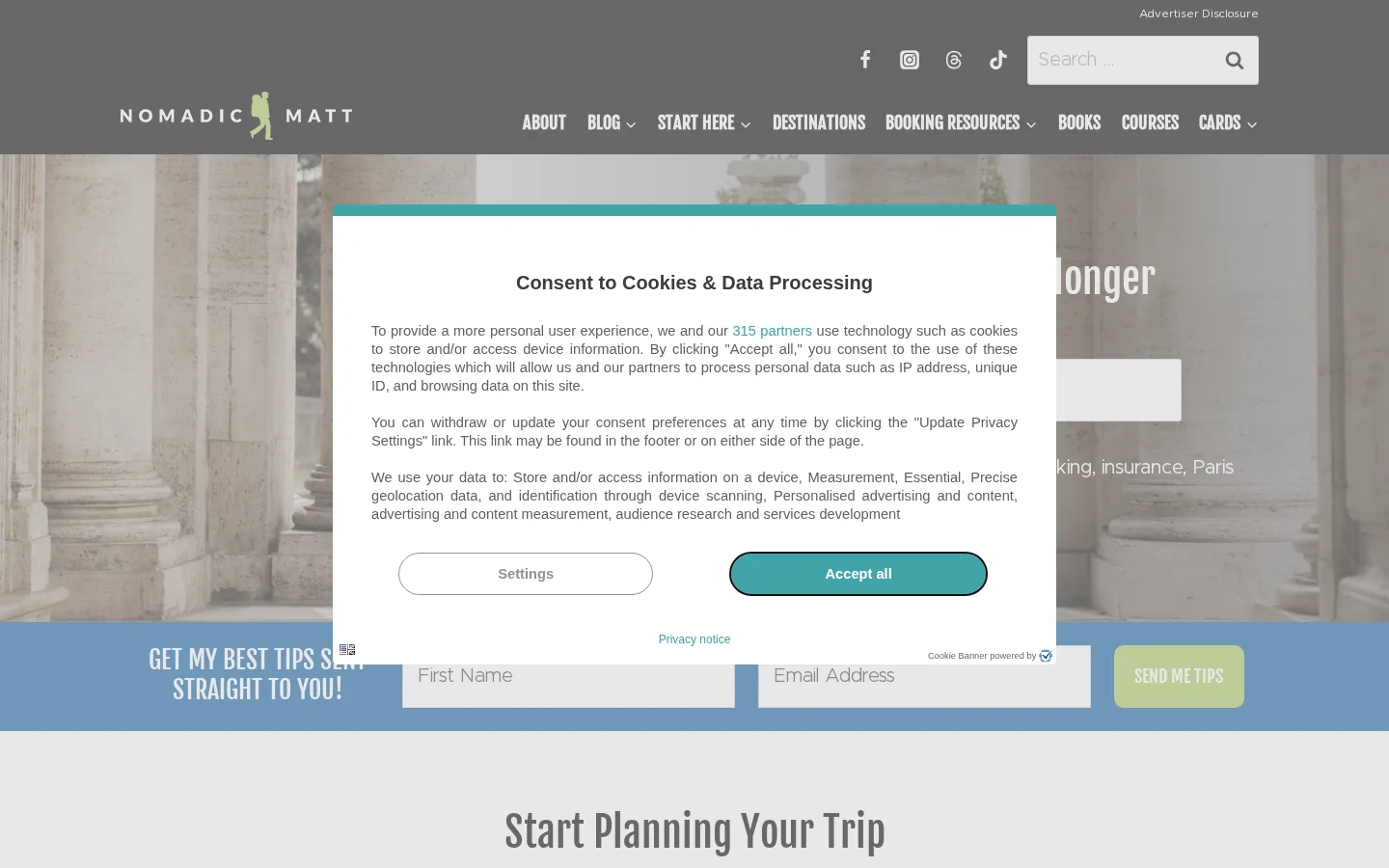
Real example. Nomadic Matt has written about budget travel since 2008. On 27 November 2026 the site showed books, a blogging course, a paid trip-planning service, an advertiser disclosure and a page listing the author's favorite travel companies. Four revenue lines from one niche.
What it is. Renovation, decorating, repairs, organizing, cleaning, tools. Every project is a buying decision: paint, floors, lights, furniture.
Who it suits. Homeowners who renovate, decorators, tradespeople, or renters who make clever changes without drilling.
Strengths. Before and after photos are magnetic on Pinterest and Instagram. Product links fit naturally in each tutorial, and brands sponsor makeovers.
Honest limit. Projects cost time and money, so publishing is slow. Electrical and structural work carries safety risk: say when a professional is needed.
Sub-niches you can still win: small apartment storage, renter-friendly upgrades, old house restoration in one region, garage workshops, budget bathroom remodels.
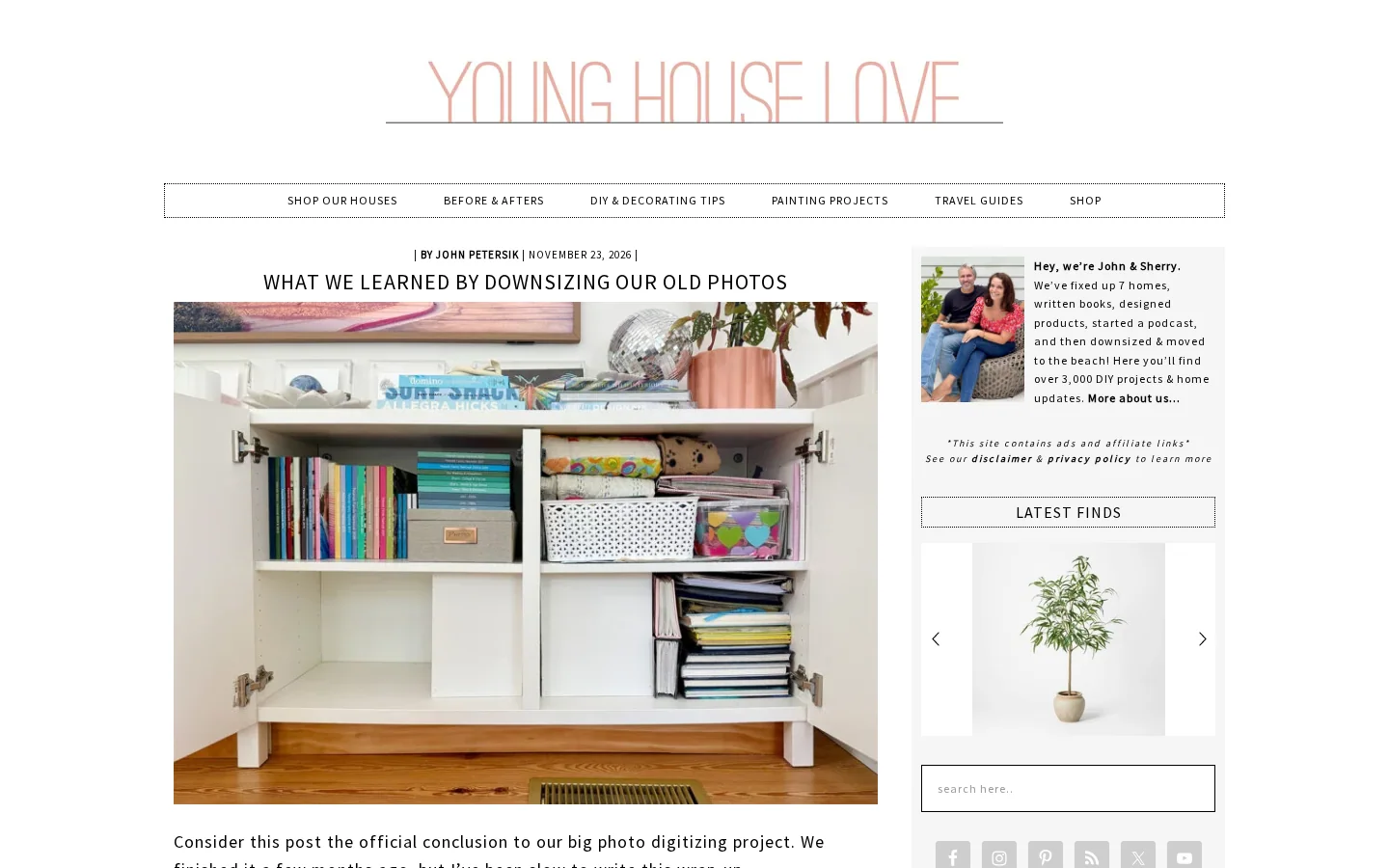
Real example. Young House Love is written by John and Sherry Petersik, who say they have published over 3000 DIY projects and home updates. On 27 November 2026 its footer read "This site contains ads and affiliate links", and the site linked to an Amazon storefront, their own lighting line and their books.
What it is. Dog and cat care, training, food, health, behavior, breeds, and also fish, birds, reptiles and horses.
Who it suits. Trainers, vets, groomers, breeders, shelter volunteers, or an owner with deep experience of one breed or problem.
Strengths. Pet owners spend money on food, toys, insurance and training. They are loyal readers and buy again every month.
Honest limit. Pet health is close to YMYL: a wrong answer can hurt an animal. Product reviews only rank if you really test products.
Sub-niches you can still win: reactive dog training, senior cat care, raw feeding with a vet's review, aquarium plants, adopting retired greyhounds.
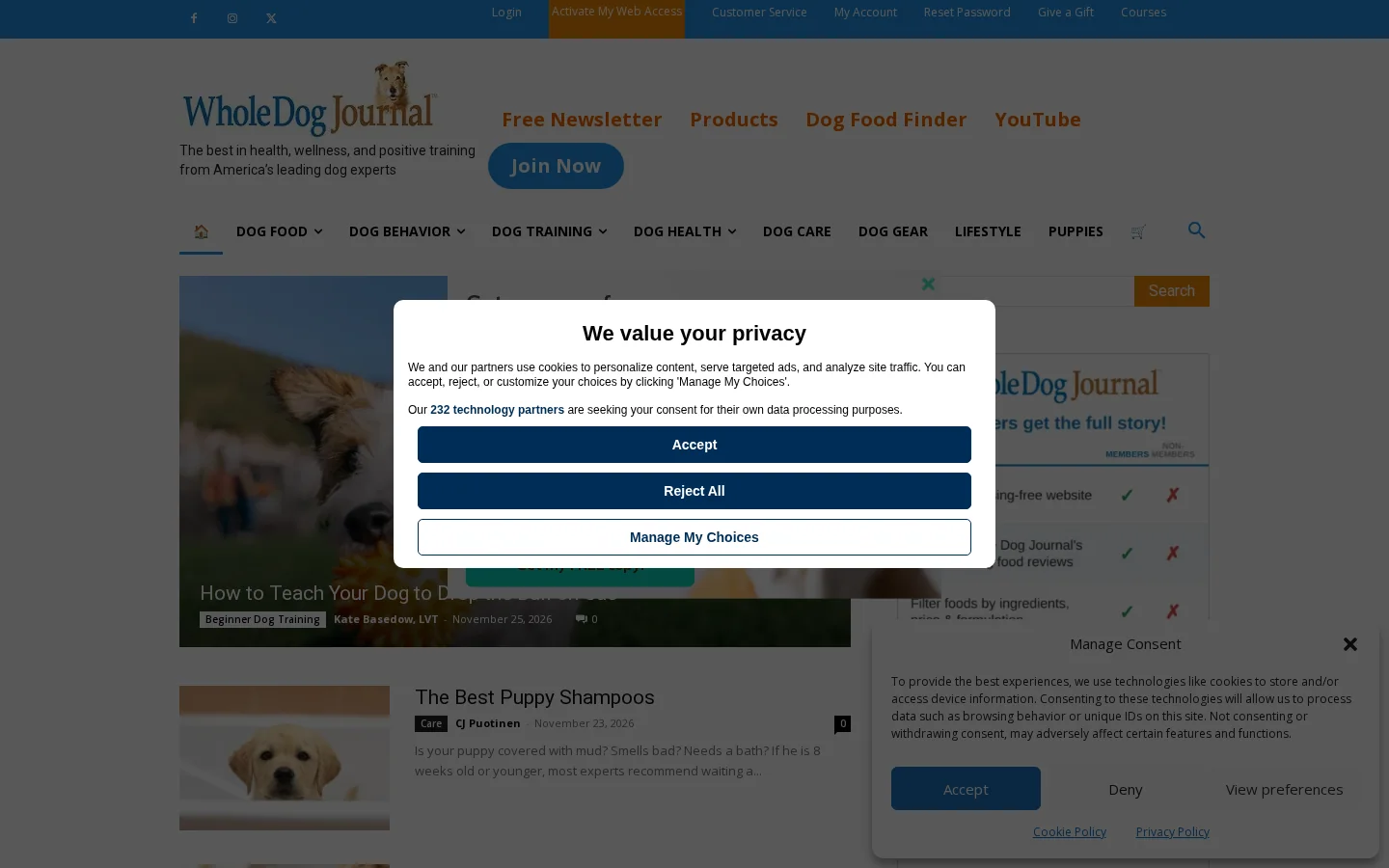
Real example. Whole Dog Journal says it has helped dog owners since 1998. On 27 November 2026 it ran on a paid digital subscription, with a Dog Food Finder, approved dog food lists and links to online courses. Proof that independent reviews can be the product itself.
What it is. AI tools and models, software tutorials, programming, gadgets, cybersecurity, automation for small businesses.
Who it suits. Developers, IT staff, analysts and early adopters who test tools every week and can show their results.
Strengths. Software companies pay for sponsorships and run generous affiliate programs. B2B readers have budgets. New topics appear every month, so a newcomer can rank before big sites arrive.
Honest limit. Content goes stale fast. A model comparison is outdated in a few months, so you must update posts or accept decay.
Sub-niches you can still win: AI for accountants, automation for real estate agents, local LLMs on a laptop, no-code tools for nonprofits, AI tools tested for one language.
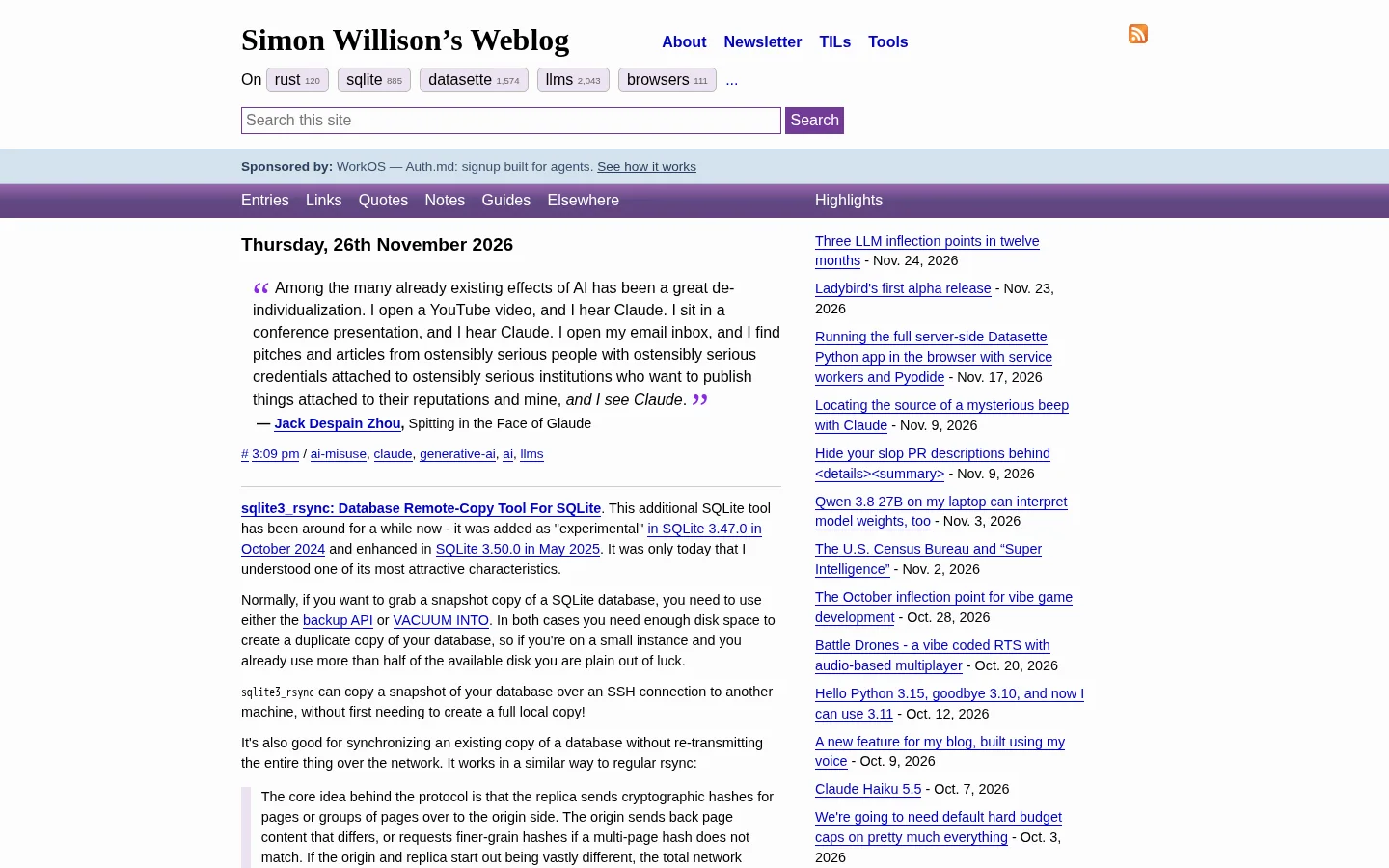
Real example. Simon Willison's Weblog covers LLMs, SQLite and the author's own open source tools. On 27 November 2026 it showed posts on most days, a sponsor banner and a $10 per month "Monthly briefing" sold through GitHub Sponsors. One expert publishing working notes almost daily became a reference.
What it is. Vegetable gardens, houseplants, seed starting, raised beds, lawns, permaculture, small homesteads.
Who it suits. Growers with photos of their own results, and people who know a specific climate.
Strengths. Highly practical searches ("when to plant garlic") and a natural path to selling seeds, kits and tools.
Honest limit. Very seasonal: traffic peaks in spring and drops in winter. Advice depends on climate, so state your zone or region on every guide.
Sub-niches you can still win: balcony vegetables, gardening in clay soil, houseplants for low light, growing chillies indoors, gardening in one specific climate zone.
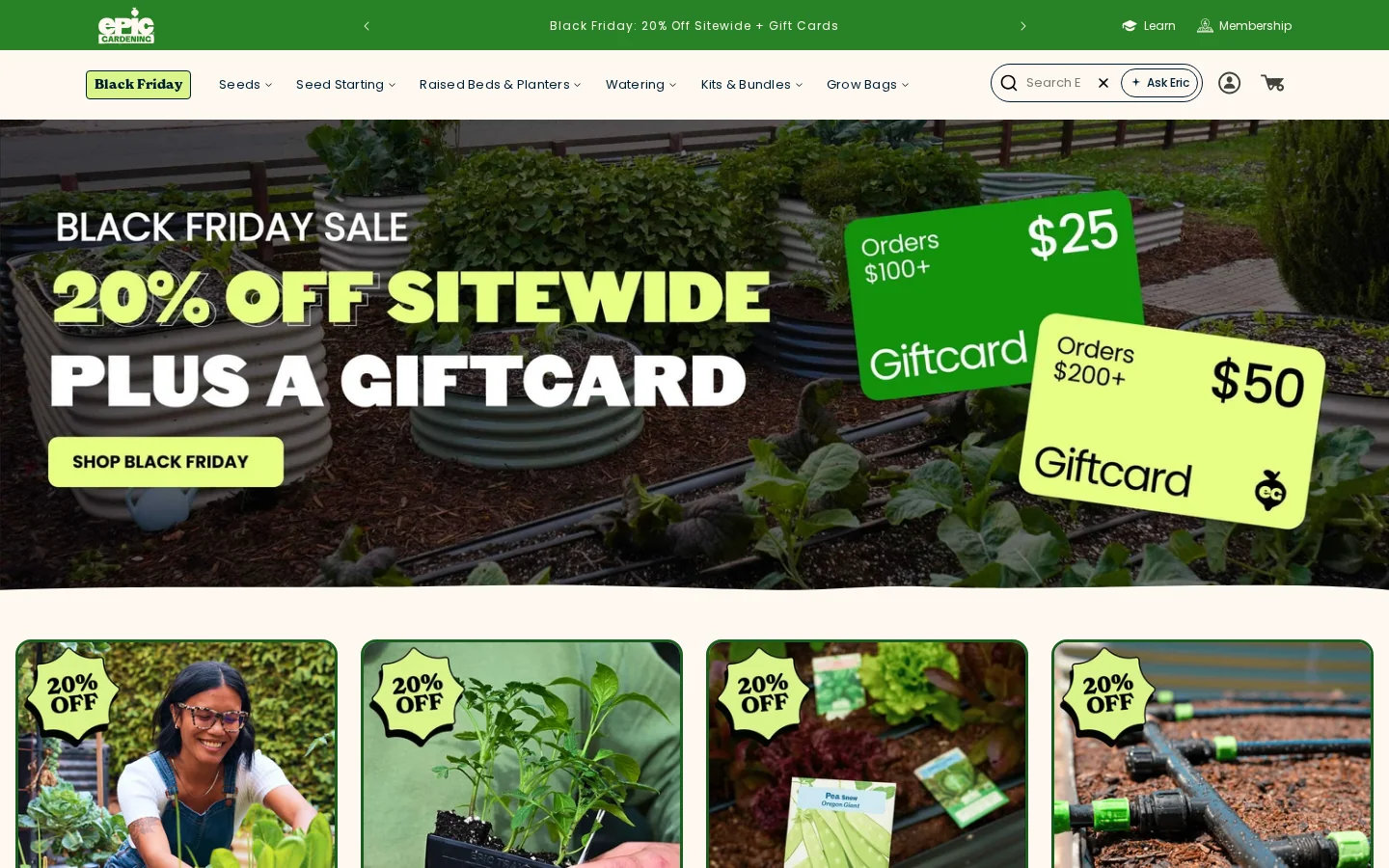
Real example. Epic Gardening mixes a "Learn" section and grow guides with an online store of seeds, raised beds and watering kits. On 27 November 2026 its homepage advertised "The Greenhouse" membership at $49 per year. Content first, then products.
What it is. Habits, focus, time management, career growth, learning, mindset, journaling.
Who it suits. Writers with a clear framework, managers and coaches, or researchers who can turn studies into simple methods.
Strengths. Books, courses, workshops and newsletters scale without stock. A strong idea spreads through social media and podcasts.
Honest limit. Generic advice is everywhere and AI answers it well. Without an original method or personal story, you will not stand out. Affiliate income is weaker than in finance or tech.
Sub-niches you can still win: productivity for people with ADHD, habits for nurses on night shifts, career change after 40, studying for one professional exam, focus for remote developers.
Real example. The site of James Clear is built around habits. On 27 November 2026 it presented Atomic Habits (said to have sold "more than 30 million copies"), the 3-2-1 newsletter and a free 30-day email course with 11 lessons. The blog was the testing ground for the book.
What it is. Pregnancy, babies, toddlers, school years, teens, education, discipline, family logistics.
Who it suits. Parents with a clear angle, teachers, child psychologists, pediatric nurses.
Strengths. Needs change at each age, so readers return for years. Gear, education products, courses and memberships sell well.
Honest limit. Child health and development are YMYL, and personal stories involve your children's privacy. Your own children grow out of your topics, so plan the age range you cover.
Sub-niches you can still win: parenting a child with dyslexia, raising bilingual kids, single dads, homeschooling science, screen time rules by age.
Real example. AFineParent now runs as a paid membership: on 27 November 2026 its page listed "102 on-demand masterclasses" based on parenting books, twice-monthly coaching calls and content for kids from birth to 13. A blog that turned its audience into recurring revenue.

The 10 niches above are markets, not blogs. Your blog should sit on one narrow slice of them, at least for the first year. Here are 40 more ideas, already narrowed down, to show what "narrow" looks like.
| Category | Micro-niche ideas |
|---|---|
| Business and careers | Bookkeeping for freelancers, starting a cleaning business, LinkedIn for engineers, pricing for photographers |
| Education | Learning Japanese as an adult, nursing exam prep, homeschool math, coding for kids |
| Hobbies | Film photography, fountain pens, mechanical keyboards, beginner knitting patterns |
| Outdoors | Fly fishing in one region, winter camping, bikepacking routes, trail running for beginners |
| Sustainability | Zero-waste kitchens, home solar for renters, repairing clothes, electric bikes for commuting |
| Cars and mobility | Electric car charging at home, classic car restoration, van conversions, motorcycle touring |
| Beauty and fashion | Skincare for sensitive skin, curly hair care, capsule wardrobes, modest fashion |
| Gaming and entertainment | Board games for two players, retro console repair, cozy games, tabletop RPG game mastering |
| Real estate | First-time buyers in one city, house hacking, short-term rental hosting, buying abroad |
| Relationships and life events | Small weddings on a budget, long-distance relationships, moving abroad with a family, retirement planning for couples |
Tip
Once you have a candidate niche, paste it into our free blog post ideas generator. If you cannot see 50 posts you would enjoy writing in that niche, it is too narrow or not for you.
The answer: score each candidate on knowledge, demand, money, durability and competition, then test the winner with 10 posts before you commit. Passion alone is not enough, and demand alone burns you out by month six.
Choose a blog niche in 6 steps
Start with what you know, not with "most profitable niches" lists. Write down your job, past jobs, hobbies, problems you solved in the last five years and the questions friends keep asking you. Google's own self-assessment includes the question: "Did you decide to enter some niche topic area without any real expertise, but instead mainly because you thought you'd get search traffic?" A "yes" is a warning sign in that same Google Search Central guidance.
For each candidate, collect 30 to 50 keywords. Look at monthly search volume, but do not chase head terms: a beginner blog grows on long questions with low volume. Then open Google Trends, set the period to "Past 5 years" and the region to your target market. You are looking for a flat or rising line, and for the seasonal pattern you will live with. Our guide on using Google Trends for SEO explains the right settings and how to read the curve.
A quick way to start: run the niche through our free keyword suggestions tool and keep the questions. If you want this done continuously, the automated keyword research in Sorank finds keywords for Google and the questions people ask AI assistants, and keeps the list fresh.
Volume tells you people search. The results page tells you if you can rank. Search your 10 best keywords and note who sits in the top 10. Forums, Q&A threads and small blogs in the top 10 are good news: Google lacks great answers. Only big brands and marketplaces means a slow climb. Check keyword difficulty as a second signal, not the only one.
These search operators speed up the check:
"best kettlebell for beginners" inurl:blog
intitle:"review" "reactive dog" harness
site:reddit.com "balcony vegetables" help
"write for us" gardening
The first two show how many blogs target the keyword. The third shows real questions people ask in their own words. The last one lists blogs that accept guest posts, a sign of an active community of publishers.
Find three revenue models that already work for blogs in the niche: affiliate programs, display ads, sponsorships, digital products, services, memberships. Look at the footer and menus of the top blogs, like we did for the 10 examples above. Search "[niche] affiliate program" and read the commission terms on the merchant's own page. Our guide to content monetization models details each one and the audience size each needs.
Give each criterion a score from 1 to 5, then apply weights. Knowledge and demand count double, because they decide whether you keep writing and whether anyone reads.
Niche score = 2 x Knowledge + 2 x Demand + Money + Durability + (6 - Competition)

Knowledge   1 = curious beginner      5 = professional or 5+ years of practice
Demand      1 = under 20 keywords     5 = hundreds of questions, flat or rising trend
Money       1 = no clear offer        5 = 3+ revenue models already proven
Durability  1 = fad or one season     5 = evergreen, all year
Competition 1 = forums in the top 10  5 = only big brands

Maximum = 35. Above 25: test it. Under 20: drop it.
Example
A nurse compares "personal finance" and "money for nurses". Knowledge 2 vs 5, demand 5 vs 3, money 5 vs 4, durability 5 vs 5, competition 5 vs 2. Scores: 2x2 + 2x5 + 5 + 5 + 1 = 25 for the broad niche, 2x5 + 2x3 + 4 + 5 + 4 = 29 for the micro-niche. The narrow niche wins because the nurse's experience is the edge.
Before you buy a premium theme, write 10 posts answering specific questions. Connect Google Search Console, then watch impressions for 8 to 12 weeks. Rising impressions on long questions mean Google sees you as relevant. Ask yourself the second question too: did you enjoy writing post number 10 as much as post number 1? Our step-by-step guide to starting a blog covers the platform, domain and first posts.
There is not one way to occupy a niche. You can cover a broad market, own a narrow corner, grow cluster by cluster, build around your name, or combine two audiences. Choose the strategy as carefully as the topic.
Principle: cover a whole market, like "personal finance". When to use it: you have a team, a budget and an existing audience. Pros: unlimited topics, many offers. Limits: you compete with media groups from day one. Example: a finance media site with writers for each topic.
Principle: one problem for one audience, like "budgeting for nurses". When to use it: you are solo and starting from zero. Pros: fast relevance, readers feel the blog is for them, easier links from their community. Limits: a ceiling on traffic, so plan how you will widen later. Example: a reactive dog training blog.
Principle: start with one cluster of 15 to 30 posts around a core topic, then open a neighboring cluster only when the first ranks. This is how you build topical authority step by step. When to use it: you want to grow from micro to broad. Pros: strong internal linking, clear signals for Google and AI assistants. Limits: needs planning to avoid two posts targeting the same query. Example: "kettlebell training" first, then "home gym", then "strength after 50". Sorank's topic cluster generator builds these clusters with an anti-cannibalization check.
Principle: the blog is about you and your method; topics follow your work. When to use it: you sell services, books or courses. Pros: trust and recognizable voice, which both search engines and AI answers reward. Limits: depends on you; hard to sell later. Example: James Clear and Simon Willison above.
Principle: combine two areas you know, like "personal finance + nurses" or "gardening + clay soil". When to use it: both sides are crowded alone. Pros: instant differentiation. Limits: check that the intersection has enough questions (Step 2). Example: "AI for accountants".
| Strategy | Best for | Time to first traffic | Traffic ceiling | Main risk |
|---|---|---|---|---|
| Broad niche | Teams with budget | Slow | Very high | Never stands out |
| Micro-niche | Solo beginners | Fast | Low to medium | Hits a ceiling |
| Topic cluster growth | Bloggers planning for years | Medium | High | Cannibalization |
| Expert brand | Consultants, authors, coaches | Medium | Medium | Depends on one person |
| Stacked niche | Experts with two skills | Fast | Medium | Intersection too small |
AI answers in Google, ChatGPT, Claude and Gemini now answer simple factual questions directly. Niches built on generic definitions lose clicks; niches built on experience, testing and opinions gain citations.
Ask of each candidate: can an AI answer my typical post without visiting me? "What temperature to bake chicken" can be answered by anyone. "We tested 12 harnesses on a reactive dog for 3 months" cannot. The more your niche needs first-hand experience, photos, data or local knowledge, the safer it is.
Niche content that AI absorbs vs content AI cites
Orbit Media's 2026 blogger survey of 1042 content marketers found that publishing original research improves the likelihood of strong results by 50% (Orbit Media blogging statistics, 2026). In a niche, original research can be small: a survey of 100 readers, a price comparison you update every quarter, your own test logs.
To be recommended by AI assistants, you also need a consistent presence: the same topic, the same entities, cited by others. Our method for blogging that ranks explains how to structure posts so both Google and AI assistants can extract your answers.
A niche blog is a long project: expect months of steady publishing before any meaningful income. The figures below come from Orbit Media's 2026 survey and show the effort behind a typical post.
The effort behind a blog post in 2026
Source: Orbit Media, Blogging Statistics 2026 (1042 content marketers)
The same survey shows that only a minority of bloggers report strong results, while almost all use AI. AI saves writing time, but it does not create the advantage: experience and original data do.
Bloggers, AI and results in 2026
Source: Orbit Media, Blogging Statistics 2026
In practice, plan for 2 to 4 posts a month if you work alone, and favor evergreen content that keeps earning visits for years. That rhythm is why the niche must be one you will still enjoy in two years.
Most niche blogs combine an email list with affiliate links first, then add ads, services or their own product once traffic grows. The ten examples above all follow a version of this path.
The niche blog revenue path
The fastest model to start, as long as you recommend products you really use. Our guide to how affiliate marketing works covers networks, commissions and cookies. In the United States, the endorsement guides require disclosure: 16 CFR 255.5, published by Cornell's Legal Information Institute, says a material connection "must be disclosed clearly and conspicuously", and one of its examples is a blogger who earns a share of sales through affiliate links in coffee maker reviews. Put the disclosure near the links, not only in the footer:
<p class="disclosure">
  This post contains affiliate links. If you buy through them, I earn a commission
  at no extra cost to you. I only recommend products I have tested.
</p>Display ads need volume, so they come later. Sponsorships pay best in B2B and tech niches. Your own products (e-books, courses, templates, memberships) have the best margin and appear in almost every example above: Minimalist Baker's cookbook, Nomadic Matt's books, AFineParent's membership, Epic Gardening's store.
Most failed niche blogs fail for the same few reasons: wrong motivation, too broad, no demand check, or no money plan. Each mistake below comes with a way to spot it and fix it.
What it is: choosing finance or insurance because commissions are high, with no experience. How to spot it: you need to research every basic fact; your posts sound like everyone else's. How to fix it: stack the profitable niche with something you know (Step 5 example), or hire a credentialed reviewer and show their name.
What it is: a "lifestyle" blog mixing recipes, travel and fashion. How to spot it: Search Console shows impressions scattered on unrelated queries, and no topic gets past page 2. How to fix it: pick the category with the most impressions, focus 80% of new posts on it for six months, and stop adding categories.
What it is: a niche with 15 possible posts. How to spot it: you run out of ideas after a few months; keyword tools return almost nothing. How to fix it: widen the audience or the problem by one step ("sourdough" becomes "bread baking at home").
What it is: trusting volume numbers alone. How to spot it: after six months, posts sit beyond page 5 behind brands and marketplaces. How to fix it: redo Step 3 and pivot to long questions where forums and small blogs still rank.
What it is: health, finance or legal advice with no author bio, no sources and no credentials. How to spot it: no visible author, and medical or money claims without a link to a primary source. How to fix it: add author pages, cite primary sources, get expert review. Read our definition of YMYL topics and what Google expects before you start.
What it is: 100 posts and no offer. How to spot it: traffic grows but revenue is zero, and you have no email list. How to fix it: add a lead magnet in your most visited posts and one affiliate or product offer that matches the main problem of your readers.
What it is: building a blog around a fad product or game. How to spot it: Google Trends over 5 years shows one sharp spike. How to fix it: treat the trend as one cluster inside an evergreen niche.
Niche checklist before you buy a domain
If you have relevant experience, start with a micro-niche inside one of the YMYL markets (personal finance, health or parenting): they pay best and reward the expertise you already have. If you are starting from a hobby, home and DIY, gardening, pets or food are the easiest to begin, because your own photos and tests are the content. In both cases, score your candidates, test with 10 posts and grow cluster by cluster.
Today, do one thing: list your 10 candidates and score them with the formula above. Once you have chosen, Sorank's AI content calendar can plan and publish your posts on autopilot, so you can spend your time on what nobody else has: your experience.
This ranking reflects my own experience and opinion as an SEO expert with more than 7 years in the field. It is based on verified facts, but the order itself is my personal view.
Personal finance, health and AI or tech usually earn the most per visitor, because their readers buy high-value products and services. But they are also the hardest to rank in, and finance and health are YMYL topics where Google expects proven expertise. The most profitable niche for you is the one where your experience meets real demand.
List the posts you could write: if you cannot reach 50 ideas, or keyword tools return almost no questions, the niche is too narrow. Widen the audience or the problem by one step, for example from sourdough to bread baking at home.
Yes, and many successful blogs did, usually by widening from a micro-niche to the neighboring topics. Move one cluster at a time, keep linking new posts to your existing ones, and redirect old posts you remove so you do not lose their traffic.
We analyse your competitors, your website and your AI visibility to create a tailored content plan for free.
 Website Value Calculator
 Website Accessibility Checker
 Google Analytics Checker
 Duplicate Content Checker
 Mobile-Friendly Test
 Website Speed Test
 Subdomain Finder
 Domain Age Checker
 CMS Detector
 Googlebot Simulator
 Nofollow Link Checker
 Meta Tag Checker
 Keyword Cannibalization Checker
 Keyword Intent Checker
 Keyword Extractor
 Google Ads Cost Calculator
 CPC Calculator
 Local Citation Finder
 Reddit Threads Finder
 Disavow File Generator
 Redirect Generator
 Canonical Tag Generator
 Passive Voice Checker
 Google Location Changer
 Google Review Calculator
 Google Review Link Generator
 Keyword Combiner
 Podcast Show Notes Generator
 AI Content Rewriter
 AI Text Humanizer
 ChatGPT Prompt Generator
 Twitter Thread Generator
 Tweet Generator
 Landing Page Copy Generator
 Google Ads Copy Generator
 Pinterest Pin Description Generator
 Anchor Text Generator
 Social Media Post Generator
 LinkedIn Post Generator
 Free AI Writer
 Review Response Generator
 LSI Keyword Generator
 YouTube Video Ideas Generator
 YouTube Tag Generator
 YouTube Description Generator
 Product Description Generator
 CTA Generator
 Blog Introduction Generator
 Conclusion Generator
 Hook Generator
 AI Content Brief Generator
 FAQ Schema Generator
 AI Blog Post Ideas Generator
 Structured Data Validator (Schema Validator)
 Alt Text Checker
 Internal Link Analyzer
 Backlink Challenge
 AI Meta Description Generator
 AI Blog Title Generator
 Google Indexability Checker
 AI Blog Outline Generator
 UTM Link Builder
 Keyword Clustering Tool
 Canonical Tag Checker
 XML Sitemap Generator
 Broken Link Checker
 AI SEO Title Generator
 Headline Analyzer
 SERP Preview Tool
 Redirect Checker
 Hreflang Tag Generator
 Heading Structure Analyzer
 HTTP Headers Checker
 Favicon Extractor
 SERP CTR Calculator
 SEO vs Paid Search Savings Calculator
 SEO Share of Voice Calculator
 SEO ROI Calculator
 SEO Traffic and Revenue Forecast Calculator
 SEO Budget Calculator
 SEO Break-Even Calculator
 SaaS SEO ROI Calculator
 ROAS Calculator
 Reading Time Calculator
 Ranking Gain Simulator
 Organic Traffic Value Calculator
 Organic Traffic Estimator and Website Traffic Checker
 LTV to CAC Ratio Calculator
 Local SEO ROI Calculator
 Link Building Cost Calculator
 Keyword Value Calculator
 Keyword Opportunity Score Calculator
 Keyword Density Calculator
 GEO ROI Calculator
 GEO Content Investment Calculator
 Ecommerce SEO ROI Calculator
 Customer Lifetime Value Calculator
 Customer Acquisition Cost Calculator
 CTR Calculator
 Cost Per Article Calculator
 Conversion Rate Calculator
 Content Marketing ROI Calculator
 ChatGPT Referral Traffic Estimator
 Bounce Rate Calculator
 Backlink ROI Calculator
 AI Visibility Score Calculator
 AI Traffic Value Calculator
 AI Share of Voice Calculator
 Cost of AI Invisibility Calculator
 AI Citation Rate Calculator
 llms.txt Validator
 AI Overview Checker and AI Overviews Rank Checker
 Robots.txt Checker
 AI SEO Audit
 LLM Readability Checker
 SearchGPT Readiness Checker
 Structured Data LLM Audit
 Website Crawlability AI Audit
 Why ChatGPT Is Not Recommending My Website
 Gemini Ranking Tool
 Perplexity Ranking Checker
 LLM Citation Checker
 Answer Engine Optimization Audit
 GEO Audit
 AI Search Visibility Test
 ChatGPT Visibility Checker
 llms.txt Generator
 URL Extractor
 Webpage to Markdown
 Sitemap Checker
 SERP Volatility Sensor
 Page Size Checker
 Word Counter
 Slug Generator
 Schema Generator
 Robots Generator
 OG Preview
 Meta Tags Generator
 Image Compressor
 Favicon Generator
 On-Page SEO Audit: SEO Checker and SEO Analyzer
 Backlink Analysis Tool
 Keyword Research Tool
 Domain Authority Checker
 “I tested Sorank on a real client site and it's insane. It does everything an agency would bill you $1500 a month for. It's going into production on that client now.”

 Guillaume Guersanguersanguillaume.com“We are an Ads agency and we wanted to get our SEO back on track once and for all. Sorank gave us a clear view of our site, helped us prioritize optimizations, and properly structure our content. The tool is easy to use, well designed for a team, and very practical for centralizing tracking without having to juggle multiple platforms. A very solid foundation to start fresh with our SEO.”
 Gaspard MadouiAds Agency
 “I just let the Sorank software do its thing, and now my DR is 25 and my page is ranking higher.”
 Lucas Flandrefoundertrace.fr“I specialized in GEO thanks to Sorank. The GEO Leaderboard allows me to show my clients their position vs competitors on ChatGPT. It’s a real commercial differentiator.”
 MélanieSEO Freelance“Great service, works well for our website and helps us understand how to improve it to rank better on Google and elsewhere. Congrats, keep going, I recommend it.”
 Hugo T.E-commerce merchant