Preferences
Privacy is important to us, so you have the option of disabling certain types of storage that may not be necessary for the basic functioning of the website. Blocking categories may impact your experience on the website. More information

Privacy is important to us, so you have the option of disabling certain types of storage that may not be necessary for the basic functioning of the website. Blocking categories may impact your experience on the website. More information

Evergreen content explained: definition, the formats that stay relevant for years, real examples, evergreen vs news content and how to update it without losing rankings.

Tools


In short
Evergreen content answers a question people keep asking, so it stays useful and keeps attracting visitors for years. Guides, definitions, tutorials, checklists and comparisons of stable options are typical formats; news, trends and dated announcements are the opposite. Evergreen does not mean "write once and forget": examples, figures and screenshots age, so review each page at least once a year and update it when traffic drops. Done well, it builds a traffic base that grows instead of resetting every month.
Want to go further? Ask
Some articles get a spike of traffic and disappear within a week. Others keep bringing visitors years after publication. The second group is evergreen content, and it is the backbone of most blogs that generate steady organic traffic. This guide explains what makes a piece evergreen, which formats work, real examples, how it compares with news content and how to keep it fresh.
Evergreen content is content whose topic stays relevant long after publication, because the question behind it does not expire. The name comes from evergreen trees, which keep their leaves all year. An evergreen page targets a need that comes back every month: how to do something, what a term means, which option to choose.
Three conditions define it:
A page can fill the first two conditions and still age badly if it is full of dated references. Writing evergreen content is partly a matter of choosing the topic and partly a matter of writing in a way that does not expire.
Formats that explain, teach or help decide tend to stay evergreen; formats that report on events do not.
| Format | Why it lasts | Point of attention |
|---|---|---|
| How-to guides and tutorials | The task keeps being done | Interface screenshots and steps change |
| Definitions and glossary entries | Terms keep being searched | Add current examples to keep them concrete |
| Beginner's guides | New beginners arrive every year | Keep the recommended tools current |
| Checklists and templates | Reusable at every new project | Check that each item still applies |
| Comparisons of stable options | The choice keeps being made | Products and features evolve |
| Frequently asked questions | The questions come back | Update answers when rules change |
Statistics pages, "trends of the year" and lists of tools sit in between: the demand is stable, but the content expires quickly. They can be evergreen topics with a mandatory yearly update.
Every industry has questions that its customers ask year after year. A few examples by type of business:
What they share: the title would make sense if read in three years, and the reader arriving from Google gets a complete answer without needing context about current events.
News content captures a short peak of interest; evergreen content captures steady interest over time. Both have a role, and a good editorial calendar mixes them.
| Criteria | Evergreen content | News or trending content |
|---|---|---|
| Traffic curve | Slow start, then stable or growing | Fast peak, then decline |
| Main source of traffic | Search engines and the AIs | Social networks, newsletters, news aggregators |
| Lifespan | Years, with updates | Days or weeks |
| Backlinks | Accumulate over time | Mostly at publication |
| Maintenance | Periodic updates | Rarely updated |
News pieces can feed evergreen ones: once an update or a new rule settles, integrate what remains true into the matching evergreen guide and link the news article to it.
Pick a question with steady demand, answer it completely, and avoid anything that will date the page.
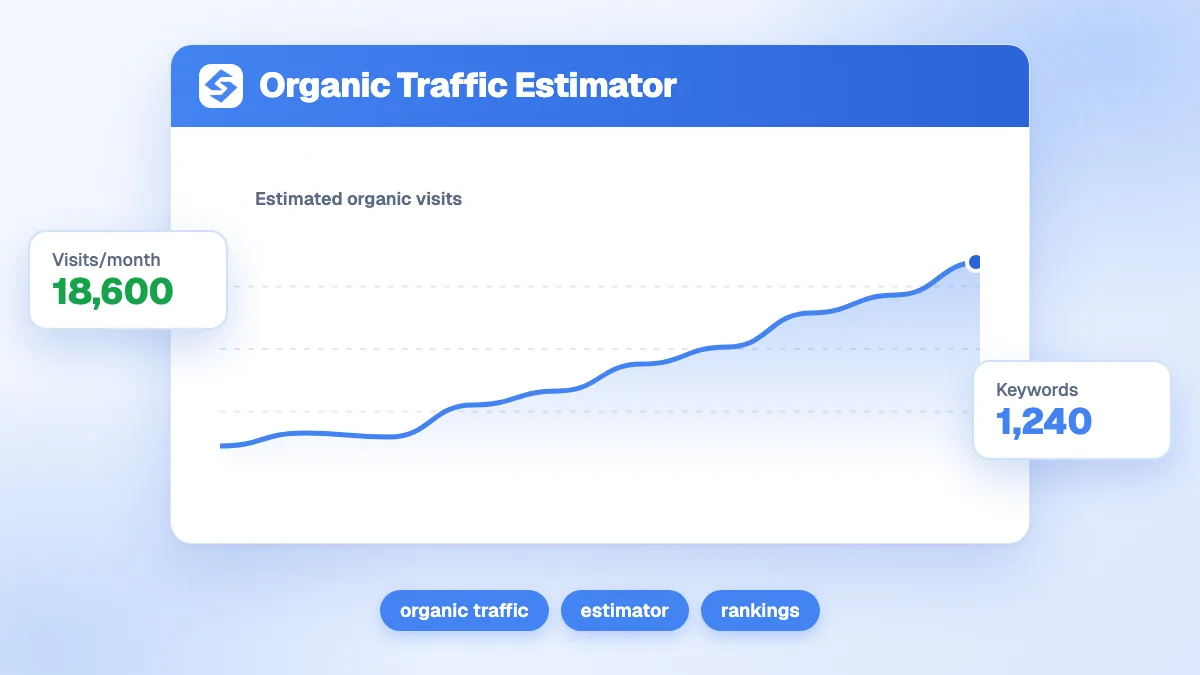
Before investing, estimate the traffic a topic can bring with our organic traffic estimator, so you spend time on questions with real demand.
Review each evergreen page on a schedule and update it when the data says so. Even a timeless topic suffers from content decay: competitors publish more complete pages, examples age, and the way people phrase the question shifts.
Content freshness matters more for some queries than others: a definition can stay unchanged for years, a "best tools" page cannot. Our guide on content refresh details the full method.
The AIs answer recurring questions, and evergreen pages are built to answer exactly those. When someone asks ChatGPT, Gemini, Perplexity or Claude to explain a concept or a process, the assistant often relies on pages that give a clear definition, structured steps and precise examples. Google's AI Overviews work the same way on informational queries.
An evergreen page that is complete, well structured and up to date has a durable chance of being cited. The accuracy part matters: an outdated figure or a tool that no longer exists makes a passage less likely to be picked, so the review routine above protects visibility in the AIs as much as rankings.
Evergreen content is the long-term capital of a site. Choose questions with steady demand, answer them completely in timeless wording, link these pages together, and review them regularly so they stay accurate.
Sorank finds the questions your customers keep asking, then writes and publishes evergreen SEO and GEO articles on autopilot, with internal links to your existing pages. Start with a 3-day free trial.

A guide titled "How to write a cover letter", a glossary entry defining "search intent" or a recipe for a classic dish are evergreen: people search for them every month and the core answer barely changes. An article about this week's algorithm update or a product launch is not, because interest peaks and then disappears.
The topic can stay relevant for years, but the page itself ages: examples, screenshots, tools and figures go out of date. Most evergreen pages need a light review once a year and a real update when traffic drops or when the top results start covering something the page does not.
Yes. Because demand is stable, an evergreen page that ranks keeps bringing visits month after month, accumulates backlinks over time and supports the rest of the site through internal links. It is usually the best return on a writing hour, as long as it is kept accurate.
 AI Content Brief Generator
 FAQ Schema Generator
 AI Blog Post Ideas Generator
 Structured Data Validator
 Alt Text Checker
 Internal Link Analyzer
 Backlink Challenge
 AI Meta Description Generator
 AI Blog Title Generator
 Google Indexability Checker
 AI Blog Outline Generator
 UTM Link Builder
 Keyword Clustering Tool
 Canonical Tag Checker
 XML Sitemap Generator
 Broken Link Checker
 AI SEO Title Generator
 Headline Analyzer
 SERP Preview Tool
 Redirect Checker
 Hreflang Tag Generator
 Heading Structure Analyzer
 HTTP Headers Checker
 Favicon Extractor
 SERP CTR Calculator
 SEO vs Paid Search Savings Calculator
 SEO Share of Voice Calculator
 SEO ROI Calculator
 SEO Traffic and Revenue Forecast Calculator
 SEO Budget Calculator
 SEO Break-Even Calculator
 SaaS SEO ROI Calculator
 ROAS Calculator
 Reading Time Calculator
 Ranking Gain Simulator
 Organic Traffic Value Calculator
 Organic Traffic Estimator
 LTV to CAC Ratio Calculator
 Local SEO ROI Calculator
 Link Building Cost Calculator
 Keyword Value Calculator
 Keyword Opportunity Score Calculator
 Keyword Density Calculator
 GEO ROI Calculator
 GEO Content Investment Calculator
 Ecommerce SEO ROI Calculator
 Customer Lifetime Value Calculator
 Customer Acquisition Cost Calculator
 CTR Calculator
 Cost Per Article Calculator
 Conversion Rate Calculator
 Content Marketing ROI Calculator
 ChatGPT Referral Traffic Estimator
 Bounce Rate Calculator
 Backlink ROI Calculator
 AI Visibility Score Calculator
 AI Traffic Value Calculator
 AI Share of Voice Calculator
 Cost of AI Invisibility Calculator
 AI Citation Rate Calculator
 llms.txt Validator
 AI Overview Checker
 Robots.txt Checker
 AI SEO Audit
 LLM Readability Checker
 SearchGPT Readiness Checker
 Structured Data LLM Audit
 Website Crawlability AI Audit
 Why ChatGPT Is Not Recommending My Website
 Gemini Ranking Tool
 Perplexity Ranking Checker
 LLM Citation Checker
 Answer Engine Optimization Audit
 GEO Audit
 AI Search Visibility Test
 ChatGPT Visibility Checker
 llms.txt Generator
 URL Extractor
 Webpage to Markdown
 Sitemap Checker
 SERP Volatility Sensor
 Page Size Checker
 Word Counter
 Slug Generator
 Schema Generator
 Robots Generator
 OG Preview
 Meta Tags Generator
 Image Compressor
 Favicon Generator
 On-Page SEO Audit
 Backlink Analysis Tool
 Keyword Research Tool
 Domain Authority Checker
THEY TRIED SORANK BEFORE YOU
 “I tested Sorank on a real client site and it's insane. It does everything an agency would bill you $1500 a month for. It's going into production on that client now.”

 Guillaume Guersanguersanguillaume.com“We are an Ads agency and we wanted to get our SEO back on track once and for all. Sorank gave us a clear view of our site, helped us prioritize optimizations, and properly structure our content. The tool is easy to use, well designed for a team, and very practical for centralizing tracking without having to juggle multiple platforms. A very solid foundation to start fresh with our SEO.”
 Gaspard MadouiAds Agency
 “I just let the Sorank software do its thing, and now my DR is 25 and my page is ranking higher.”
 Lucas Flandrefoundertrace.fr“I specialized in GEO thanks to Sorank. The GEO Leaderboard allows me to show my clients their position vs competitors on ChatGPT. It’s a real commercial differentiator.”
 MélanieSEO Freelance“Great service, works well for our website and helps us understand how to improve it to rank better on Google and elsewhere. Congrats, keep going, I recommend it.”
 Hugo T.E-commerce merchant