Preferences
Privacy is important to us, so you have the option of disabling certain types of storage that may not be necessary for the basic functioning of the website. Blocking categories may impact your experience on the website. More information

Privacy is important to us, so you have the option of disabling certain types of storage that may not be necessary for the basic functioning of the website. Blocking categories may impact your experience on the website. More information

Keyword difficulty estimates how hard it is to rank for a keyword. Learn the 0 to 100 scale, how it is calculated, and how to use it.







Sources
Keyword difficulty, sometimes called SEO difficulty, estimates the effort needed to reach the top of search results for a particular term. It is one of the most useful metrics in planning, because it helps you separate the keywords you can realistically win from the ones dominated by established, authoritative sites.
Used well, difficulty turns keyword selection from guesswork into strategy. Paired with volume and intent, it tells you where to invest your content effort for the best return, which matters just as much when optimizing for traditional rankings and for AI search visibility.
Keyword difficulty is a score that predicts how competitive a search term is. A high score means the existing results are strong and well-linked, so outranking them takes significant authority and effort. A low score means the competition is weaker, giving newer or smaller sites a realistic chance to rank.
It is an estimate, not a guarantee. The score reflects the current landscape of pages competing for that term, which is why it is most powerful when read alongside other keywords metrics rather than in isolation.
Most tools present difficulty on a 0 to 100 scale, where 0 is easiest and 100 is hardest, often shown as a percentage. The exact bands vary by tool, but a common breakdown treats roughly 0 to 29 as easy, 30 to 49 as possible, 50 to 69 as difficult, 70 to 84 as hard, and 85 to 100 as very hard.
For practical planning, the low end is where new sites find their footing, often through long-tail terms that bigger players ignore. The middle band holds most of the valuable, winnable traffic for sites with some authority, while the top band is usually reserved for established brands with deep link profiles.
There is no single standard formula, but most tools center on the backlink strength of the pages ranking in the top results. Common inputs include the median number of referring domains pointing at those pages, the ratio of follow to nofollow links, and the authority of the ranking domains. Some tools also factor in SERP features such as knowledge panels or local packs, which can crowd out organic clicks.
This backlink emphasis is why the strength of each link matters so much in the calculation. That said, some platforms now blend in content quality, topical authority, and on-page signals, reflecting that links alone no longer tell the whole story of competitiveness.
Because each tool uses its own methodology, the same keyword can score differently across platforms. One tool may estimate difficulty almost entirely from referring domains to the top results, while another combines authority scores, link ratios, and SERP characteristics. None is the official Google number, since Google does not publish one.
The practical response is to treat difficulty as directional. Compare scores across tools to find consensus rather than trusting a single figure, and always confirm by looking at the actual pages ranking, which a quick competitor analysis makes clear.
Difficulty is most useful in combination. Cross-reference it with keyword volume to find terms that are both winnable and worth winning, and with intent to ensure the keyword matches what you can actually offer. A low-difficulty term with no demand is not a prize, and a high-volume term you cannot rank for is a trap.
Match targets to your site's strength. A new site should start with easier, often long-tail keywords to build topical authority before attempting competitive head terms. Some tools even offer a personalized difficulty that adjusts the score to your own domain's authority, revealing realistic opportunities a generic score would hide. Starting from a strong seed keyword helps you map a cluster of these achievable targets.
For SEO, difficulty is the lever that keeps your content plan realistic. Targeting only high-difficulty terms wastes effort on pages that may never rank, while ignoring difficulty entirely scatters your resources. A balanced mix of winnable and aspirational keywords builds momentum and authority over time.
For generative AI, the same logic applies in spirit. AI systems still draw heavily on content that ranks and earns trust, so winning achievable terms and building topical depth improves your odds of being cited. Pairing difficulty analysis with disciplined keyword research and content planning ensures your effort compounds across both search and AI answers.
Difficulty scores are approximations with real blind spots. They lean heavily on backlinks, which are no longer the only thing that matters, and they cannot fully capture content quality, intent match, or how well you cover a topic. A modest-looking score can still be hard to crack if the ranking pages are exceptionally relevant.
Treat the number as a starting point, not a verdict. Always pair it with a look at the live results and a content gap analysis to judge whether you can genuinely offer something better, since that, more than any score, determines whether you will rank.
Keyword difficulty estimates how hard it is to rank for a term on a 0 to 100 scale, based mainly on the authority and backlinks of the pages already ranking. It is a directional metric that varies by tool, so it works best when read alongside volume, intent, and a direct look at the results.
To go further, connect this with keyword volume and search intent, and use Sorank's research and content planning tools to find keywords you can realistically win. Reference sources: Semrush, seoClarity, and Keyword.com.

It depends on your site's authority. New or smaller sites should focus on low-difficulty terms, often in the 0 to 29 range and frequently long-tail, to build momentum. Established sites can compete in the medium band, roughly 30 to 69, where most valuable traffic sits. High scores above 70 usually require strong domain authority and a deep backlink profile to win.
Each tool uses its own formula. Some estimate difficulty almost entirely from referring domains to the top results, while others combine domain authority, follow to nofollow link ratios, content signals, and SERP features. None of them is Google's official number, because Google does not publish one. Compare scores across tools for a consensus and confirm by checking the pages that actually rank.
No. Difficulty only tells you how competitive a term is, not whether it is worth pursuing. Combine it with search volume to confirm there is demand, and with intent to make sure the keyword matches what your page offers. Then look at the live results to judge whether you can create something genuinely better, which matters more than the score itself.
THEY TRIED SORANK BEFORE YOU
 “I tested Sorank on a real client site and it's insane. It does everything an agency would bill you $1500 a month for. It's going into production on that client now.”
 Guillaume Guersanguersanguillaume.com“We are an Ads agency and we wanted to get our SEO back on track once and for all. Sorank gave us a clear view of our site, helped us prioritize optimizations, and properly structure our content. The tool is easy to use, well designed for a team, and very practical for centralizing tracking without having to juggle multiple platforms. A very solid foundation to start fresh with our SEO.”
 Gaspard MadouiAds Agency
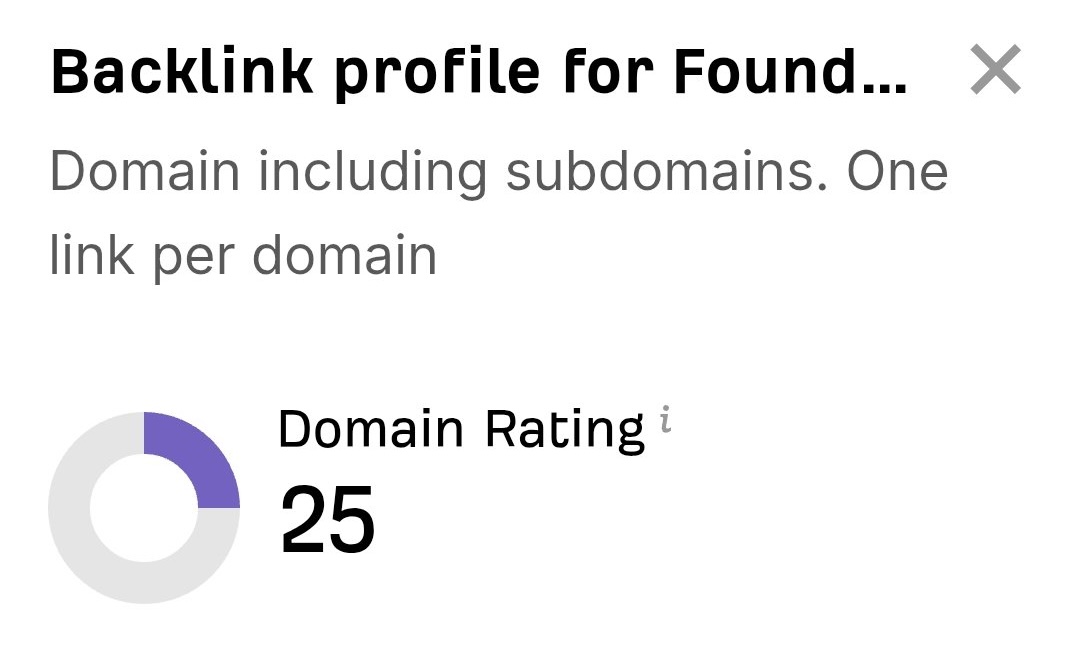 “I just let the Sorank software do its thing, and now my DR is 25 and my page is ranking higher.”
 Lucas FlandrePodcast Host“I specialized in GEO thanks to Sorank. The GEO Leaderboard allows me to show my clients their position vs competitors on ChatGPT. It’s a real commercial differentiator.”
 MélanieSEO Freelance“Great service, works well for our website and helps us understand how to improve it to rank better on Google and elsewhere. Congrats, keep going, I recommend it.”
 Hugo T.E-commerce merchant