Preferences
Privacy is important to us, so you have the option of disabling certain types of storage that may not be necessary for the basic functioning of the website. Blocking categories may impact your experience on the website. More information

Privacy is important to us, so you have the option of disabling certain types of storage that may not be necessary for the basic functioning of the website. Blocking categories may impact your experience on the website. More information
SERP features are the special elements Google adds beyond blue links. Learn the main types, their 2026 prevalence, and how to optimize for them.








Sources
SERP features are the unique elements that appear on a search engine results page beyond the classic list of ten blue links. They include answer boxes, question carousels, entity cards, images, videos, local maps, and AI-generated summaries. Their purpose is to deliver answers, visuals, and quick information directly on the results page so users find what they need faster.
These features now dominate the page. As of 2026 Google displays 37 distinct SERP features in the US, and Semrush Sensor data from March 2026 found features present in 98.84 percent of first-page results. Understanding them is no longer optional, because ranking position alone no longer determines visibility.
SERP features are page-level elements that go beyond traditional organic listings. Rather than a uniform list of links, a modern results page assembles different blocks depending on the query: a definition box for an informational search, a map for a local one, a shopping carousel for a product. Each block is engineered to answer a specific kind of intent.
Because they sit at or near the top, these features capture a large share of clicks and attention. Together they occupy 60 to 80 percent of above-the-fold space on commercial queries, leaving traditional organic results around 20 percent of the elements on the page. Visibility now means presence across features, not just a high rank.
The two are related but different in scope. SERP features are broad, page-level elements like AI Overviews, video carousels, and local packs that organize the whole results page. Rich results, sometimes called rich snippets, are extra pieces of information attached to one specific listing, such as star ratings, price, or cook time.
In other words, rich results are SERP features for a single result. They enhance how your individual listing looks rather than adding a separate block to the page. Both are earned largely through structured content and schema markup that tells Google what your page contains.
Featured snippets are boxed answers pulled from a page, shown in paragraph, list, or table form, though Semrush data from March 2026 found them in only 0.24 percent of searches. People Also Ask boxes surface related questions and appear in 53 percent of US queries. Knowledge panels show entity facts from the Knowledge Graph for recognized brands, people, and places.
Beyond these, local packs display maps and businesses for location queries, image packs and video carousels serve visual intent, and Top Stories surfaces news. The newest and most disruptive is the AI Overview. These categories span informational, navigational, commercial, and local intent, which is why almost every query now triggers at least one.
The biggest shift of 2026 is AI-generated answers on the results page. AI Overviews synthesize information from multiple sources into a summary at the very top, appearing in more than 30 percent of searches according to Semrush data from March 2026. Google has also rolled out a conversational AI Mode that answers follow-up questions inline.
These features compress the entire page: more answers at the top, fewer clicks below. They draw on the same generative capabilities as standalone AI assistants, which is why they sit at the intersection of classic search and AI search. Appearing as a cited source inside an AI Overview is now a primary visibility goal.
By answering questions on the page, features reduce the need to click through. When a featured snippet or AI Overview fully resolves a query, the user often stops there, which fuels the rise of zero-click attribution. With features in nearly 99 percent of first-page results, this effect touches almost every search.
The implication is twofold. Pages can lose clicks even while ranking well, but appearing inside a feature can earn prominent visibility and brand exposure that a plain blue link cannot. The strategic question becomes which features a query triggers and how to occupy them, rather than only how to rank tenth versus first.
For SEO, features redefine the target. Occupying a featured snippet, a People Also Ask answer, or a knowledge panel can deliver more visibility than a standard top ranking. Ignoring them means competing for an ever shrinking slice of the page. Modern visibility depends on presence across multiple features, not position alone.
For generative engine optimization the link is direct. AI Overviews and AI Mode are SERP features powered by the same models behind ChatGPT, Perplexity, and Gemini, and they cite sources the way assistants do. Optimizing to be cited in an AI Overview is essentially the same discipline as earning citations in any AI answer, which also strengthens your brand SERP.
Start by auditing your target keywords to see which features each query triggers, since you cannot optimize for a feature that does not appear. Then match your content to the feature: concise, well structured answers for snippets and People Also Ask, clear question and answer formatting, and comparison tables where the query invites them.
Add schema markup so Google can parse your facts and award rich results. Strengthen entity signals, consistent names, descriptions, and authoritative references, to earn knowledge panels. Pairing this with disciplined keyword research and content planning ensures you build content aimed at the features your audience actually sees.
Features are volatile. Google adds, removes, and redesigns them frequently, so a snippet you own today can vanish tomorrow, and the steep drop in featured snippet prevalence shows how fast the landscape moves. You also do not control whether a feature triggers or which source it picks, which limits how much you can guarantee.
There is a tradeoff too. Winning a feature can boost visibility but cannibalize clicks if it answers the query completely. The right response is to treat features as a portfolio: pursue the ones that drive brand exposure and qualified visits, and accept that some informational queries will be answered on the page no matter what you do.
SERP features are the elements that now define the search page, from featured snippets and People Also Ask to knowledge panels and AI Overviews. With features present in nearly all first-page results and occupying most of the space above the fold, visibility depends on occupying them, not just ranking well. The rise of AI-driven features ties SERP strategy directly to generative engine optimization.
Optimize with strong structured content and a clear view of the AI Overview landscape, and use Sorank's research and content planning tools to target the features each query triggers. Reference sources: Backlinko and GrowByData.

A SERP feature is a broad, page-level element like an AI Overview, local pack, or People Also Ask box that organizes the results page. A rich result is extra information attached to one specific listing, such as star ratings, price, or cook time. In short, a rich result is a SERP feature for a single result, earned mainly through schema markup.
Very common. Google displays 37 distinct SERP features in the US as of 2026, and Semrush Sensor data from March 2026 found features present in 98.84 percent of first-page results. AI Overviews appear in more than 30 percent of searches, and People Also Ask in around 53 percent of US queries. Together features occupy 60 to 80 percent of above-the-fold space on commercial queries.
Both, depending on the feature. Answer boxes and AI Overviews can resolve a query on the page and reduce clicks, contributing to zero-click searches even when you rank well. But appearing inside a feature delivers prominent visibility and brand exposure a plain link cannot. The goal is to occupy features that drive qualified visits and brand awareness.
THEY TRIED SORANK BEFORE YOU
 “I tested Sorank on a real client site and it's insane. It does everything an agency would bill you $1500 a month for. It's going into production on that client now.”
 Guillaume Guersanguersanguillaume.com“We are an Ads agency and we wanted to get our SEO back on track once and for all. Sorank gave us a clear view of our site, helped us prioritize optimizations, and properly structure our content. The tool is easy to use, well designed for a team, and very practical for centralizing tracking without having to juggle multiple platforms. A very solid foundation to start fresh with our SEO.”
 Gaspard MadouiAds Agency
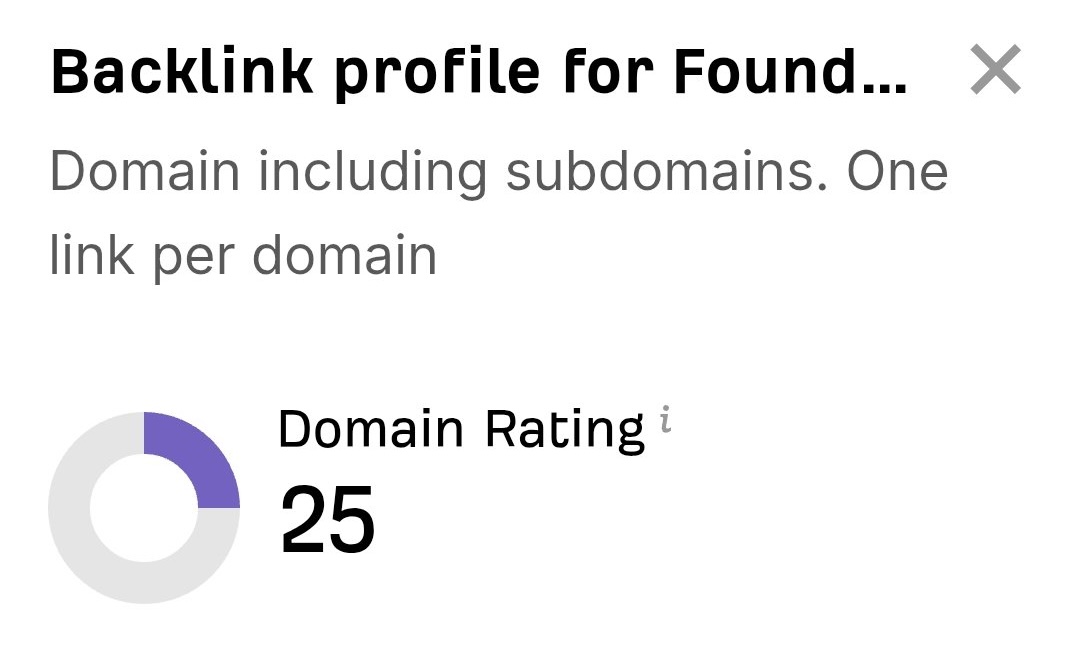 “I just let the Sorank software do its thing, and now my DR is 25 and my page is ranking higher.”
 Lucas FlandrePodcast Host“I specialized in GEO thanks to Sorank. The GEO Leaderboard allows me to show my clients their position vs competitors on ChatGPT. It’s a real commercial differentiator.”
 MélanieSEO Freelance“Great service, works well for our website and helps us understand how to improve it to rank better on Google and elsewhere. Congrats, keep going, I recommend it.”
 Hugo T.E-commerce merchant