Preferences
Privacy is important to us, so you have the option of disabling certain types of storage that may not be necessary for the basic functioning of the website. Blocking categories may impact your experience on the website. More information

Privacy is important to us, so you have the option of disabling certain types of storage that may not be necessary for the basic functioning of the website. Blocking categories may impact your experience on the website. More information
Zero click attribution measures brand value from searches that end without a click. Learn the visibility-first metrics that replace clicks.







Sources
Zero click attribution is the discipline of crediting and measuring brand value created in searches that never produce a click. As AI Overviews, featured snippets, and assistant answers resolve more questions directly on the results surface, users get what they need without visiting a website. Traditional analytics, built to count clicks and sessions, miss this entirely, so zero click attribution shifts the focus from interaction to influence.
This matters because the behavior is now the norm, not the exception. Over half of Google searches end without a click, which means a brand can be seen, named, and trusted by a huge audience while its click-based reports show nothing. Without a way to attribute that exposure, marketers risk undervaluing the channels that increasingly shape demand.
Zero click attribution is the set of methods used to assign value to appearances that do not generate a visit. Instead of asking how many people clicked through, it asks how often your brand appeared, was cited, or was recommended, and what influence that had downstream. The unit of value moves from the click to the impression and the mention.
The need arises directly from zero-click search: queries that conclude within the search interface through SERP features like AI Overviews, featured snippets, Knowledge Panels, and People Also Ask boxes. When the answer is delivered in place, the value to a brand is being part of that answer, and zero click attribution is how that value gets measured. It is closely tied to the problem of AI dark traffic, where influence happens invisibly to standard analytics.
Click-based models fail in this environment for several reasons. Visibility is now fragmented across many SERP features rather than concentrated in a ranked list, so position-based tracking no longer captures where a brand shows up. Zero-click impressions can strongly influence later conversions, but they rarely receive credit in analytics because their impact is so hard to trace.
There is also an entity measurement gap. Most legacy tools focus on keywords rather than entities, which prevents accurate measurement of Knowledge Graph presence and entity-level authority, the very things the AIs use to decide what to surface. The result is attribution blindness: real influence that the analytics stack simply cannot see, which makes entity SEO harder to value with old tools.
The replacement is a set of visibility-first metrics. Share of SERP presence measures how much of a category's results a brand occupies across all features, calculated as brand SERP volume divided by category SERP volume. Entity coverage tracks how many of your primary entity keywords have Knowledge Panel presence. Impression data now matters more, since Google Search Console includes impressions from AI Overviews and AI Mode alongside traditional search.
The richest signal is brand presence inside AI results: how often your brand is mentioned, cited, and how prominently, across AI Overviews, AI Mode, ChatGPT, Perplexity, and others. Tracking AI brand mentions and AI share of voice turns invisible influence into something you can monitor and compare against competitors.
A practical framework uses a handful of metrics. Share of voice compares your visibility against competitors: if your brand appears in 60 of 100 tracked mentions, your share of voice is 60 percent. Impression share in SERP features tracks how often you appear in answer boxes out of available opportunities. AI Overview citations monitor whether your brand is named in generated summaries. Brand mentions capture references across press, blogs, reviews, forums, and social, the signals that feed AI recommendation systems.
Two more metrics tie visibility to business outcomes. Lead quality and progression measure whether exposed accounts actually advance through the funnel, and multi-channel attribution connects zero-click touchpoints to eventual conversions. Sentiment adds nuance, since not all mentions are positive: one example categorized mentions as roughly 74.8 percent positive and 25.2 percent negative, which matters as much as the raw count and links to ongoing sentiment monitoring.
The mindset shift is from measuring interaction to measuring influence. Assisted conversions help here: track accounts that were exposed to zero-click surfaces and later converted, even if the conversion arrived through a different channel. Attribution modeling, whether linear, position-based, or data-driven, spreads credit across all touchpoints rather than awarding it solely to the final click.
CRM integration closes the loop by connecting visibility data with account progression, revealing the delayed but real impact of clickless exposure. Often that impact resurfaces as organic or direct traffic later, when someone who saw your brand in an AI answer searches for it by name. Treating these as connected, rather than separate, is the essence of zero click attribution and a core part of mature AI search analytics.
For generative engine optimization, zero click attribution is the scoreboard. If success means being cited and recommended inside AI answers, you need metrics that capture citations and mentions rather than clicks. Without them, GEO investment is flying blind, unable to show whether content is actually being surfaced and trusted.
It also reframes strategy. When repeated appearances build authority even without clicks, the goal becomes consistent presence across queries and platforms, not just driving traffic to a page. This is why entities matter so much: The AIs use entities to understand queries and choose what to mention, so strengthening your entity footprint directly improves the visibility that zero click attribution measures, alongside earning genuine source citation.
Zero click attribution is most valuable for brands whose audiences research heavily before buying, where many touchpoints precede a purchase. A B2B software company can show that being cited in AI answers correlates with pipeline, even when those answers generate no direct clicks. A consumer brand can track whether it dominates share of voice in its category's AI summaries.
It is equally useful for content publishers measuring reach beyond pageviews, and for any team justifying GEO spend to leadership. In each case, the discipline provides a defensible way to say the brand is winning visibility, supported by citation, mention, and share-of-voice data rather than a click count that no longer tells the whole story, and it pairs naturally with monitoring AI referred traffic.
The biggest challenge is that the data is incomplete and inconsistent. AI platforms expose limited information, citation tracking tools each measure differently, and there is no universal standard, so numbers can vary between sources. Proving a hard causal link between a zero-click appearance and a sale remains difficult, which can make the metrics feel softer than click data to skeptical stakeholders.
There is also a risk of over-measuring. With so many possible signals, teams can drown in dashboards without acting. The reliable approach is to pick a few metrics that map to business goals, citation frequency, share of voice, and assisted conversions, track them consistently, and treat them as directional evidence of influence rather than precise click-for-click accounting.
Zero click attribution measures the brand value created when searches end without a visit, replacing the click with visibility signals like citations, brand mentions, share of voice, and impressions. As more than half of searches resolve on the results surface and AI answers grow, it becomes essential for proving that GEO and modern SEO work. The shift is from counting interactions to measuring influence.
To go further, connect this with AI share of voice and AI search analytics, and use Sorank's research and content planning tools to build presence across the queries that matter. Reference sources: Search Engine Land and Madison Logic.

Zero click attribution is the practice of measuring the value a brand gains from searches that end without a click. Instead of counting visits, it tracks visibility signals like how often the brand is cited in AI answers, mentioned across the web, and its share of voice against competitors. The goal is to credit influence that happens on the results surface rather than on your site.
Because so many searches now end without a click, with over half resolving directly in features like AI Overviews and featured snippets. Visibility is also fragmented across many SERP features rather than a single ranked list, and most tools track keywords rather than entities. The result is attribution blindness: real influence on later conversions that standard analytics cannot see or credit.
The main ones are citation frequency in AI answers, share of voice versus competitors, impression share in SERP features, brand mentions across the web, and sentiment. These pair with business-focused measures like assisted conversions and multi-channel attribution to connect zero-click exposure to eventual outcomes. Together they shift measurement from counting interactions to measuring influence and brand presence.
THEY TRIED SORANK BEFORE YOU
 “I tested Sorank on a real client site and it's insane. It does everything an agency would bill you $1500 a month for. It's going into production on that client now.”
 Guillaume Guersanguersanguillaume.com“We are an Ads agency and we wanted to get our SEO back on track once and for all. Sorank gave us a clear view of our site, helped us prioritize optimizations, and properly structure our content. The tool is easy to use, well designed for a team, and very practical for centralizing tracking without having to juggle multiple platforms. A very solid foundation to start fresh with our SEO.”
 Gaspard MadouiAds Agency
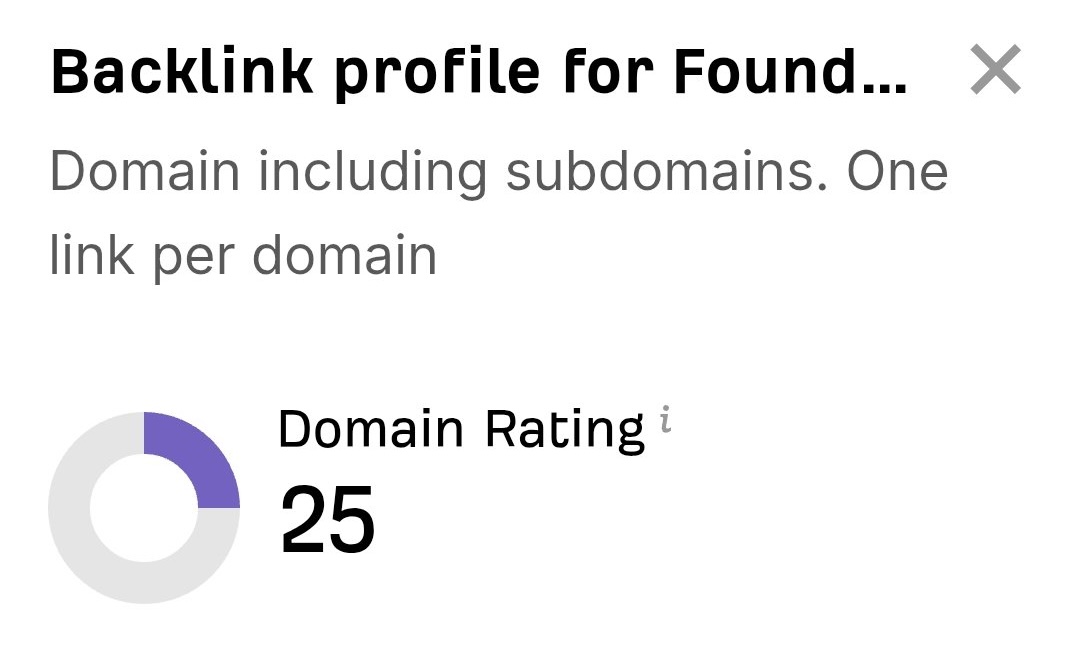 “I just let the Sorank software do its thing, and now my DR is 25 and my page is ranking higher.”
 Lucas FlandrePodcast Host“I specialized in GEO thanks to Sorank. The GEO Leaderboard allows me to show my clients their position vs competitors on ChatGPT. It’s a real commercial differentiator.”
 MélanieSEO Freelance“Great service, works well for our website and helps us understand how to improve it to rank better on Google and elsewhere. Congrats, keep going, I recommend it.”
 Hugo T.E-commerce merchant