Preferences
Privacy is important to us, so you have the option of disabling certain types of storage that may not be necessary for the basic functioning of the website. Blocking categories may impact your experience on the website. More information

Privacy is important to us, so you have the option of disabling certain types of storage that may not be necessary for the basic functioning of the website. Blocking categories may impact your experience on the website. More information

Sentiment monitoring tracks the emotional tone of brand mentions across channels. Learn how it works, why it matters, and its role in AI search visibility.








Sources
Sentiment monitoring is the process of collecting and analyzing how people talk about a brand and determining the emotional tone behind each message. Using natural language processing and machine learning, it classifies mentions as positive, negative, or neutral, turning a flood of unstructured opinion into a measurable signal of brand health.
The value is early insight. By watching tone over time, teams catch a brewing crisis before it spreads, learn what customers actually feel about a product, and benchmark perception against competitors. As more brand conversation now happens inside AI assistants, sentiment monitoring is expanding from social feeds to the answers these systems generate.
Sentiment monitoring is an automated process that gathers brand-related text and determines the emotional tone behind it. It is a subset of social listening: where monitoring tracks that a mention happened, sentiment analysis examines the feeling expressed in that mention. The system reads posts, comments, and reviews, then labels each as positive, negative, or neutral.
This emotional layer is what separates raw mention counts from real insight. Knowing a brand was mentioned 500 times says little; knowing 400 of those were negative says everything. Sentiment monitoring sits inside broader brand monitoring, adding the why behind the volume.
Tools apply natural language processing and machine learning to classify text. The system examines language patterns, emotional indicators, and contextual clues, then assigns a sentiment score, often on a scale from negative one to positive one or as a percentage from zero to one hundred. Each mention is sorted into positive, negative, or neutral.
Sentiment analysis is, at its core, a classification task within NLP, sometimes called opinion mining. Models are trained on labeled examples so they can generalize to new text. The output is aggregated into dashboards that show the mix of sentiment and, more importantly, how that mix shifts over time.
These terms overlap but differ in depth. Social monitoring tracks mentions: it answers what is being said and where. Social listening goes deeper, analyzing why conversations happen and what to do about them. Sentiment monitoring is the emotional dimension layered across both, classifying the tone of every mention.
In practice they work together. Monitoring catches the mentions, sentiment analysis grades their tone, and listening interprets the pattern into action. A spike in volume is neutral information until sentiment reveals whether it is a wave of praise or a backlash that needs an immediate response.
The central metric is the sentiment score, the balance of positive against negative mentions. Many tools express overall brand health as a percentage: 80 to 100 percent signals excellent health, 60 to 79 percent is good, and below 50 percent points to customer experience problems that need attention. These thresholds give teams a quick read on where they stand.
That said, trends matter more than any single snapshot. A score of 65 percent means little on its own, but a drop from 80 to 65 percent over two weeks is a clear warning. Watching the direction of sentiment, segmented by product, campaign, or channel, turns the metric into an early warning system rather than a vanity figure.
The benefits are concrete. Reputation management is first: catching negative spikes before they escalate into a crisis. Customer insight is second, surfacing the emotional drivers behind opinions, which influence a large share of purchase decisions. Product teams mine sentiment for specific feedback, and competitive analysis benchmarks perception against rivals.
Real examples make this vivid. Brands like Zappos and Oatly use sentiment data to respond publicly to negative feedback, turning complaints into loyalty. The jewelry company Yewo identified complaints about brass tarnishing through sentiment analysis and switched to gold-plating in response. The signal drives real product and service decisions.
A new frontier is AI assistants. When users ask ChatGPT, Perplexity, or Gemini about a brand, the assistant generates an answer with its own emotional slant, shaped by the sources it trusts. Monitoring sentiment in those answers reveals how AI portrays your brand, which increasingly shapes buyer perception before a human ever visits your site.
This connects sentiment monitoring to generative engine optimization. Tracking AI brand mentions and the tone attached to them, alongside prompt monitoring of the questions that surface your brand, lets you manage reputation inside the answer itself. Positive, well sourced content raises the odds that AI describes you favorably.
Accuracy is the main hurdle. Detecting sarcasm, irony, industry jargon, and cultural nuance remains difficult, so basic tools misclassify messages that a human reads instantly. A sarcastic "great service, waited two hours" can register as positive. Sophisticated, customizable models reduce these errors but do not eliminate them.
Context and language add further complexity. The same word can carry different sentiment across industries, and multilingual monitoring multiplies the difficulty. Treat sentiment scores as directional signals to investigate, not absolute truth, and pair automated classification with human review on high-stakes mentions.
Begin by defining what to track: your brand name, products, key people, campaigns, and competitors. Choose a tool that covers the channels your audience uses, including review sites and forums, not just the major social networks. Set a baseline so you can measure change rather than reacting to a single reading.
Then build a response workflow. Decide who acts on negative spikes, how quickly, and through which channel. Combine the data with your wider AI share of voice tracking so you see both how much you are discussed and how you are felt about. The goal is action, not just a dashboard.
Sentiment monitoring turns the emotional tone of brand conversation into a measurable signal, using NLP to classify mentions as positive, negative, or neutral. It powers reputation management, customer insight, and crisis prevention, and its trend over time matters far more than any single score. As conversation moves into AI assistants, monitoring the sentiment of generated answers becomes essential.
Pair it with broader brand monitoring and tracking of AI brand mentions to manage perception across both human and machine channels. Reference sources: Sprout Social and Buffer.

Social monitoring tracks that mentions happen and where, while social listening analyzes why conversations occur and what to do about them. Sentiment monitoring is the emotional layer across both, classifying each mention as positive, negative, or neutral. Together they tell you how much your brand is discussed and how people actually feel about it.
It is useful but imperfect. Natural language processing models classify most clear mentions well, but they struggle with sarcasm, irony, industry jargon, and cultural nuance, which can flip a label. Sophisticated, trainable tools reduce errors, yet sentiment scores are best treated as directional signals to investigate rather than absolute truth, with human review on high-stakes mentions.
When users ask ChatGPT, Perplexity, or Gemini about a brand, the assistant generates an answer with its own tone, shaped by the sources it trusts. Monitoring the sentiment of those AI answers reveals how machines portray your brand. Combined with tracking AI brand mentions, it lets you manage reputation inside the generated response, not just on social media.
THEY TRIED SORANK BEFORE YOU
 “I tested Sorank on a real client site and it's insane. It does everything an agency would bill you $1500 a month for. It's going into production on that client now.”
 Guillaume Guersanguersanguillaume.com“We are an Ads agency and we wanted to get our SEO back on track once and for all. Sorank gave us a clear view of our site, helped us prioritize optimizations, and properly structure our content. The tool is easy to use, well designed for a team, and very practical for centralizing tracking without having to juggle multiple platforms. A very solid foundation to start fresh with our SEO.”
 Gaspard MadouiAds Agency
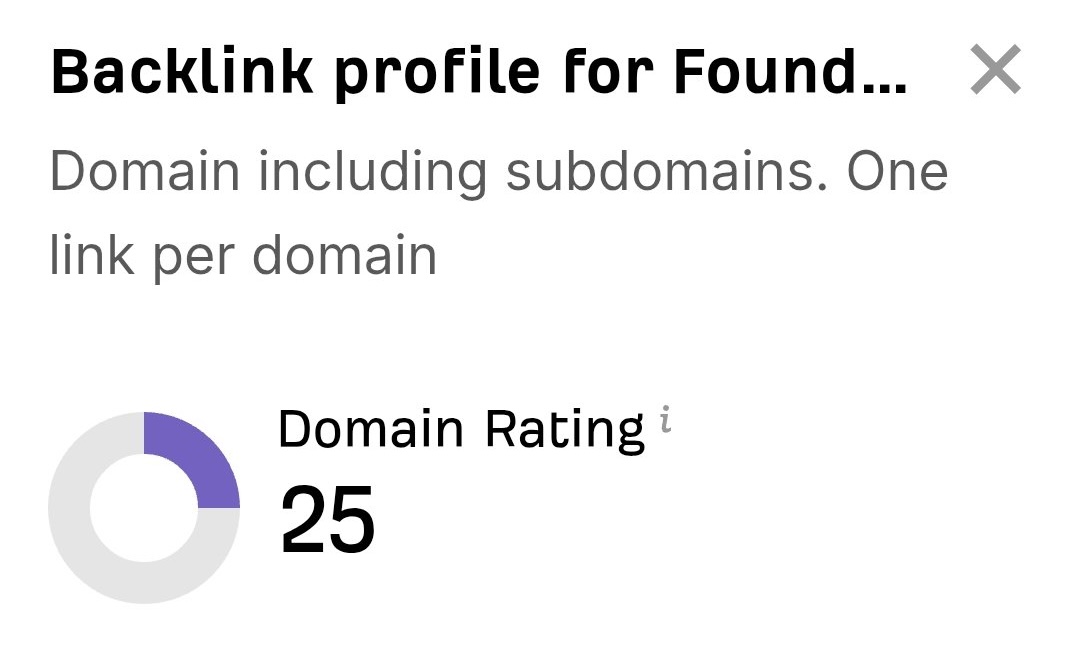 “I just let the Sorank software do its thing, and now my DR is 25 and my page is ranking higher.”
 Lucas FlandrePodcast Host“I specialized in GEO thanks to Sorank. The GEO Leaderboard allows me to show my clients their position vs competitors on ChatGPT. It’s a real commercial differentiator.”
 MélanieSEO Freelance“Great service, works well for our website and helps us understand how to improve it to rank better on Google and elsewhere. Congrats, keep going, I recommend it.”
 Hugo T.E-commerce merchant