Preferences
Privacy is important to us, so you have the option of disabling certain types of storage that may not be necessary for the basic functioning of the website. Blocking categories may impact your experience on the website. More information

Privacy is important to us, so you have the option of disabling certain types of storage that may not be necessary for the basic functioning of the website. Blocking categories may impact your experience on the website. More information
A Brand SERP is what people see when they Google your brand name. Learn what it includes, why it builds trust, and how to optimize it.








Sources
Brand SERP is the term for what your audience sees when they Google your brand or personal name. Unlike a generic keyword search, a branded search returns a results page dedicated to one entity, and that page reveals how Google understands and represents you. It is one of the clearest mirrors of your digital reputation that exists.
Brand SERP matters because it is often the first thing a prospect, partner, or investor checks after hearing about you. The concept was popularized by Jason Barnard, known as The Brand SERP Guy, who has studied and tracked these pages since 2012 through his company Kalicube. His core insight is simple: the results people see when they look you up function as your modern business card.
A Brand SERP is the search engine results page that appears for a branded query, meaning a search for your exact name rather than a topic or product category. It is distinct from the competitive results you fight for on generic keywords, because for your own name you should be the dominant, even exclusive, subject of the page.
This page is best understood as a reflection of your brand's digital ecosystem. Everything Google has learned about you, from your own site to third-party sources, gets distilled into what shows up. That makes a Brand SERP both a snapshot of reputation and an honest report card on how well you have communicated who you are to search engines. It is closely tied to the branded query that triggers it.
A healthy Brand SERP usually combines several elements. On the right, a knowledge panel summarizes the entity. On the left sit your main blue links and sitelinks to key pages, often followed by your social media profiles, reviews, news articles, and related searches. Rich elements like video boxes, image carousels, and featured snippets frequently appear too.
These are largely the same SERP features seen on other searches, but assembled around a single subject. Authoritative database entries, such as Wikipedia, LinkedIn, Crunchbase, or industry-specific sources like IMDb, often show up as well, because Google leans on trusted references to confirm what it knows about an entity.
The business card framing comes from real behavior: people search your name right after meeting you or hearing about you. Barnard found from personal experience that when his own results impressed prospects, his conversion rate jumped from around 50 percent to 80 percent without any extra negotiation, because the page acted as proof of credibility before a conversation even began.
That is the practical power of a strong Brand SERP. If the page that greets a researcher is clean, complete, and positive, it lowers their perceived risk and makes the next step easier. If it is sparse, confusing, or dominated by something negative, it quietly undermines trust at the worst possible moment. The page works for or against you on every introduction.
Behind the visible page sits the knowledge graph, Google's machine-readable understanding of entities like people, companies, and products. The knowledge panel on your Brand SERP is the visible display drawn from that data. Improving your Brand SERP is therefore largely about teaching the knowledge graph who you are and what you do.
Barnard reports that once Google trusts you on a topic, new information can enter the knowledge graph in as little as two minutes, which shows how responsive the system can be when the groundwork is solid. Building that trust is the heart of entity SEO and the broader practice of digital entity optimization.
The foundational move is to create a home for your entity: one dedicated page on your own site that clearly explains who you are and what you do, marked up with schema so Google can parse it. This becomes the reference point Google returns to when assembling your Brand SERP and knowledge panel.
From there, build corroboration. Aim for roughly 30 references across trusted third-party sites that confirm the same facts, claim your knowledge panel so others cannot control it, and publish high-quality content that outranks any negative listings. Barnard frames the three priorities as understanding, credibility, and deliverability: educate Google about your entity, prove it through independent sources, and make sure your content can be served to users. Grounding this in solid keyword research and content planning keeps the effort focused on what your audience actually searches.
Several issues recur. Over-reliance on Wikipedia is a frequent trap: across 75,000 tracked brands, about 57 percent of knowledge panels cite Wikipedia, yet a Wikipedia page can be edited or deleted outside your control, so leaning on it alone is risky. Roughly 30 percent of panels cite no source at all, and only about 10 percent are self-citations from a company's own website.
Other problems include conflicting information across sources, which confuses Google about your identity, and negative results ranking on your own name. The fix in each case is the same direction of travel: provide a clear, consistent, well-sourced story about your entity so Google has an authoritative version to trust and display.
As AI assistants increasingly answer branded questions, the signals behind a strong Brand SERP grow even more valuable. The clean entity definition, schema markup, and trusted corroboration that produce a good Brand SERP are the same inputs that help ChatGPT, Perplexity, and Gemini describe your brand accurately when someone asks about you.
In that sense, a well-built Brand SERP is a foundation for generative engine optimization, not a separate task. If Google clearly understands your entity, AI models that draw on similar structured knowledge are more likely to represent you correctly and cite you confidently. Controlling your name in search is becoming inseparable from controlling how AI talks about you.
A Brand SERP is the dedicated results page Google shows for your exact name, assembling your knowledge panel, links, profiles, and reviews into a single view that acts as a digital business card. It reflects how well you have taught the knowledge graph who you are, and a strong one measurably lifts trust and conversions. Optimizing it means giving your entity a clear home, corroborating it widely, and avoiding fragile dependencies.
To go further, connect this with the knowledge panel and entity SEO, and use Sorank's research and content planning tools to align your entity story with real searches. Reference sources: The Brand SERP Guy, Marketing Speak, and SEOSLY.

A Brand SERP is the page of Google results that appears when someone searches your exact brand or personal name. Unlike a generic keyword search, it is dedicated to one entity and typically combines a knowledge panel, your links and sitelinks, social profiles, reviews, and related searches. It reflects how Google understands and represents your brand.
It acts as a digital business card, because people often search your name right after hearing about you. A clean, complete, positive results page builds trust before any conversation. Jason Barnard found his conversion rate rose from about 50 percent to 80 percent when his results impressed prospects, while a weak or negative page can quietly undermine credibility.
Start by creating one dedicated page on your site that clearly explains your entity, marked up with schema. Then build around 30 corroborating references on trusted third-party sites, claim your knowledge panel, and publish strong content that outranks negative listings. The aim is to give Google a clear, consistent, well-sourced story it can trust and display.
THEY TRIED SORANK BEFORE YOU
 “I tested Sorank on a real client site and it's insane. It does everything an agency would bill you $1500 a month for. It's going into production on that client now.”
 Guillaume Guersanguersanguillaume.com“We are an Ads agency and we wanted to get our SEO back on track once and for all. Sorank gave us a clear view of our site, helped us prioritize optimizations, and properly structure our content. The tool is easy to use, well designed for a team, and very practical for centralizing tracking without having to juggle multiple platforms. A very solid foundation to start fresh with our SEO.”
 Gaspard MadouiAds Agency
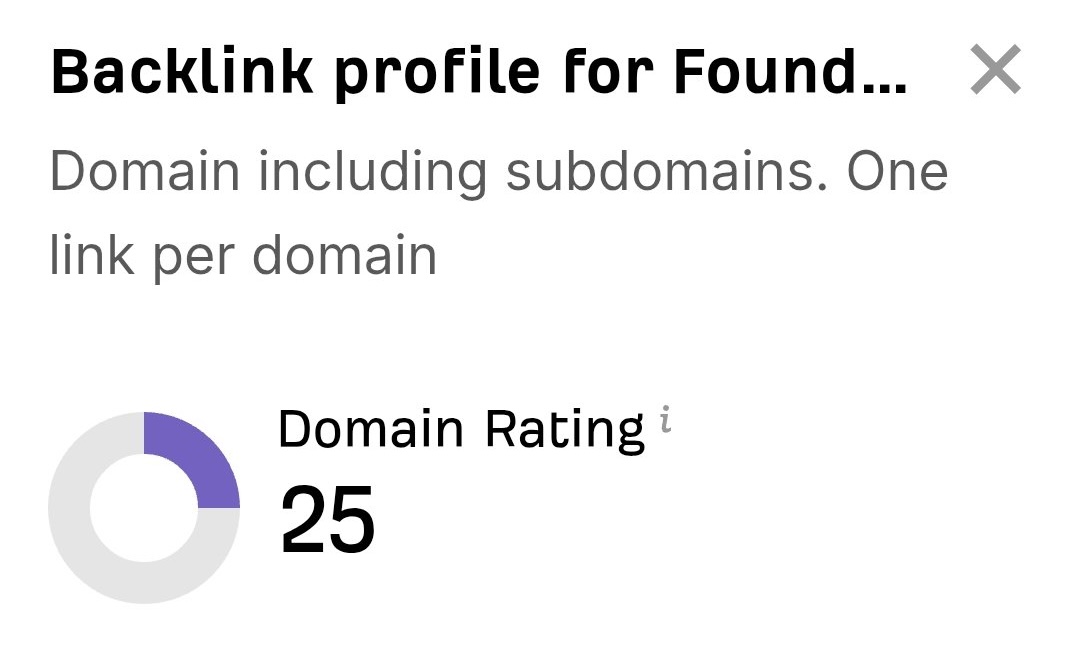 “I just let the Sorank software do its thing, and now my DR is 25 and my page is ranking higher.”
 Lucas FlandrePodcast Host“I specialized in GEO thanks to Sorank. The GEO Leaderboard allows me to show my clients their position vs competitors on ChatGPT. It’s a real commercial differentiator.”
 MélanieSEO Freelance“Great service, works well for our website and helps us understand how to improve it to rank better on Google and elsewhere. Congrats, keep going, I recommend it.”
 Hugo T.E-commerce merchant