Preferences
Privacy is important to us, so you have the option of disabling certain types of storage that may not be necessary for the basic functioning of the website. Blocking categories may impact your experience on the website. More information

Privacy is important to us, so you have the option of disabling certain types of storage that may not be necessary for the basic functioning of the website. Blocking categories may impact your experience on the website. More information

Digital entity optimization makes search engines and AI recognize your brand as a verified entity. Learn how to build entity authority and get cited.








Sources
Digital entity optimization is the practice of shaping how machines understand your brand, people, and products as distinct entities rather than as loose collections of keywords. The goal is to give search engines and AI systems an unambiguous, well-corroborated picture of who you are, what you do, and how you relate to other known entities, so they can place you correctly in their semantic networks and surface you with confidence.
This work has moved from a nice-to-have to core infrastructure. As AI assistants increasingly answer questions by reasoning over structured knowledge, a brand that is not recognized as a clear entity is hard to cite. Digital entity optimization is how you become the kind of source these systems can identify and trust.
An entity is a distinct, identifiable thing a search engine treats as a real concept rather than a string of text: an organization, a person, a place, a product, or an idea. Digital entity optimization is the deliberate effort to establish accurate, verified representations of your organization and key people across the structured databases that machines rely on, then to keep those representations consistent everywhere they appear.
It overlaps with entity SEO but takes a wider view. Entity SEO focuses on ranking and search features; digital entity optimization covers the full footprint of your brand entity across your own site, third-party databases, and the open web. The shared foundation is the knowledge graph, where entities are stored with unique identifiers, typed properties, and relationship edges to other entities.
Google's Knowledge Graph reportedly stores over 500 billion facts across more than 5 billion entities. Each entity gets a unique internal identifier (a kgmid in Google's systems, or a QID in Wikidata), a set of typed properties such as founding date, location, and leadership, and edges that connect it to related entities. When the system resolves who an entity is, it prioritizes structured, machine-readable sources like Wikipedia and Wikidata over raw web pages.
That is why disambiguation matters: the model has to be sure that Apple the company is not apple the fruit before it can use you in an answer. Strong entities reduce that uncertainty, and certainty is what drives visibility. The same resolved-entity data increasingly feeds AI systems, since models like Gemini are trained on knowledge graph information.
Start with an entity home, usually your About page, the single page that anchors how algorithms understand your brand. It should state accurate organizational facts, carry Organization schema in JSON-LD with an @id pointing to your canonical domain, and back every structured claim with matching on-page content. As one guide puts it, schema without substance is a well-formatted, empty declaration.
Next, create a Wikidata entry. Unlike Wikipedia, Wikidata has no notability requirement, so any legitimate business can register and earn a permanent QID for unambiguous identification. Then implement the sameAs property, officially supported by Google, linking your entity to its Wikidata QID, LinkedIn page, Wikipedia article if one exists, and relevant industry registries. This creates the bidirectional connections that confirm a single, consistent identity.
Machines trust entities that the wider web agrees on. Independent mentions in authoritative sources strengthen your entity far more than self-declarations alone. One analysis found brand mentions correlated with AI visibility at roughly 0.664, compared to about 0.218 for backlinks alone, which underscores how much consistent, third-party corroboration matters in an AI-search context.
This is closely tied to entity consensus: the more independent sources describe your brand the same way, with the same facts and relationships, the more confidently a model can resolve and reuse it. Inconsistent names, dates, or descriptions across the web do the opposite, forcing systems to hedge or omit you entirely.
Within a single page, entity salience measures how central an entity is to the content. High-salience pages make the target entity the subject of meaningful sentences with clear relationships and properties, not just scattered keyword mentions. Using mentions schema to point named concepts, people, and places to their Wikidata entities helps machines link your content to the right nodes in the graph.
One case study reported a 336 percent increase in click-through rate for a primary query after entity linking was applied to an article, though such vendor figures are directional rather than independently verified. The principle holds regardless: explicit, well-linked entities help search and AI systems understand exactly what a page is about.
Resolved entities are increasingly the gateway to AI citations. AI Overviews and assistant answers tend to cite entities the system can confidently identify, which means generative engine optimization depends on entities that are already established in the knowledge graph. Without that foundation, even strong content struggles to be referenced in AI answers.
Content recognized as an entity is also more eligible for rich results, knowledge panels, and AI-generated summaries. Pairing entity work with AI citation optimization and a focused AI content strategy turns recognition into durable visibility across both classic search and AI assistants.
Define your entity facts once and keep them identical everywhere: name, founding date, leadership, location, and description. Implement Organization and Person schema with a stable @id, then connect everything with sameAs links to Wikidata, LinkedIn, and authoritative registries. Pursue a Wikidata entry early, since it has no notability bar, and seek genuine third-party mentions that repeat your core facts.
On your own site, build topical depth so the brand entity is reinforced across many related pages, and use disciplined keyword research and content planning to cover the questions where you want to be the cited authority. Validate your structured data regularly so errors do not undermine the entity you are building.
Entity building is slow. Knowledge graphs update on their own schedule, so a Wikidata entry or schema change may take time to influence how you are recognized. There is no instant switch, and patience plus consistency are required.
Many widely cited statistics in this space come from vendors and should be treated as directional rather than proven, because results vary by industry and context. Finally, structured data only helps if it reflects reality: misrepresenting facts to chase entity signals can backfire when the wider web contradicts your claims.
Digital entity optimization is about making your brand legible to machines: a clearly defined, verified entity with consistent facts, strong third-party corroboration, and clean structured data. As AI search leans on resolved entities to decide what to cite, this work has become foundational rather than optional.
To go further, connect this with entity SEO and entity consensus, and use Sorank's research and content planning tools to target the topics where you want to be the recognized authority. Reference sources: Digital Applied and MRS Digital.

They overlap heavily. Entity SEO focuses on ranking and earning search features by clarifying entities for Google. Digital entity optimization takes a wider view, covering the full footprint of your brand entity across your own site, structured databases like Wikidata, and third-party sources. The aim is a single, verified identity that both search engines and AI systems can recognize and cite.
Build an entity home (usually your About page) with accurate facts and Organization schema, then create a Wikidata entry, which has no notability requirement. Connect everything with the sameAs property linking to your Wikidata QID, LinkedIn, and industry registries. Finally, earn consistent third-party mentions that repeat the same facts, so independent sources corroborate your identity.
AI systems tend to cite entities they can confidently identify, and models like Gemini are trained on knowledge graph data. If your brand is not resolved as a clear entity, it is hard for an AI assistant to reference you accurately. Establishing a verified entity is increasingly a prerequisite for appearing in AI Overviews and assistant answers.
THEY TRIED SORANK BEFORE YOU
 “I tested Sorank on a real client site and it's insane. It does everything an agency would bill you $1500 a month for. It's going into production on that client now.”
 Guillaume Guersanguersanguillaume.com“We are an Ads agency and we wanted to get our SEO back on track once and for all. Sorank gave us a clear view of our site, helped us prioritize optimizations, and properly structure our content. The tool is easy to use, well designed for a team, and very practical for centralizing tracking without having to juggle multiple platforms. A very solid foundation to start fresh with our SEO.”
 Gaspard MadouiAds Agency
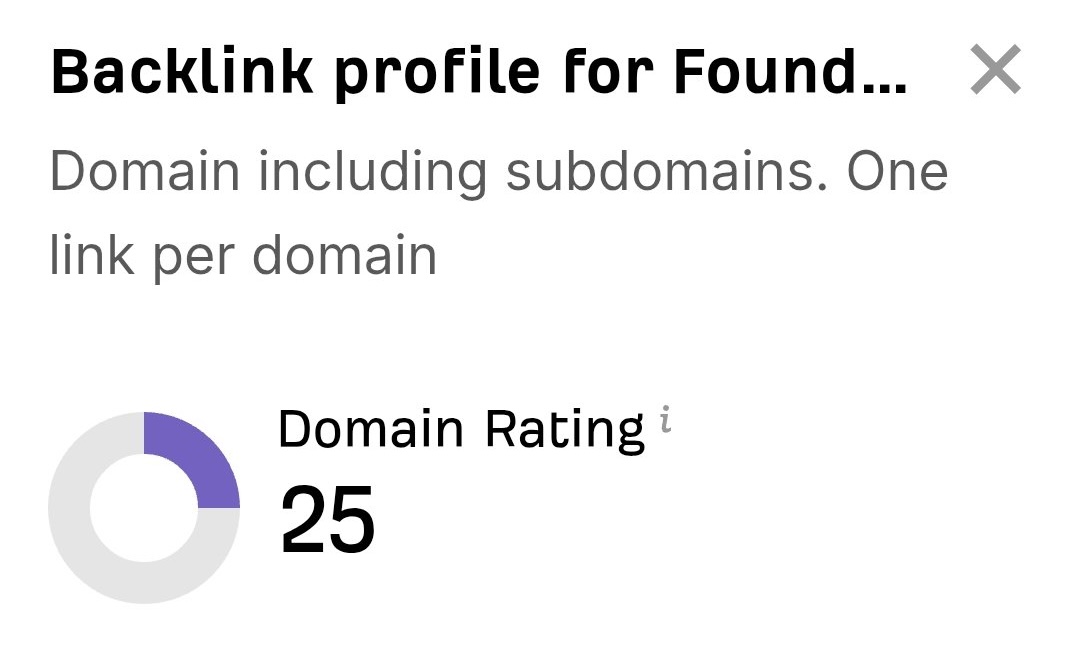 “I just let the Sorank software do its thing, and now my DR is 25 and my page is ranking higher.”
 Lucas FlandrePodcast Host“I specialized in GEO thanks to Sorank. The GEO Leaderboard allows me to show my clients their position vs competitors on ChatGPT. It’s a real commercial differentiator.”
 MélanieSEO Freelance“Great service, works well for our website and helps us understand how to improve it to rank better on Google and elsewhere. Congrats, keep going, I recommend it.”
 Hugo T.E-commerce merchant