Preferences
Privacy is important to us, so you have the option of disabling certain types of storage that may not be necessary for the basic functioning of the website. Blocking categories may impact your experience on the website. More information

Privacy is important to us, so you have the option of disabling certain types of storage that may not be necessary for the basic functioning of the website. Blocking categories may impact your experience on the website. More information

Entity salience scores how central an entity is to your text. Learn how Google measures it and how to make your topic clear for SEO and AI search.








Sources
Entity salience quantifies how central an entity, a named person, place, organization, product, or concept, is to a piece of content. It answers a simple but important question: is this text actually about the entity, or does it just happen to mention it? Google's Natural Language API expresses this as a score, and that score reflects topical focus rather than raw word count.
For anyone optimizing content, salience matters because modern search and AI systems lean far more on understanding what a page is about than on counting how often a keyword appears. Making your target entity unmistakably central is one of the clearest ways to signal relevance to a machine.
Salience is the prominence an entity has within a particular text, accounting for all of its references throughout the content. Google's Natural Language API reports an entity salience score, along with the entity's type and its linked Knowledge Graph identifier. A higher score means the entity is more central to the document; a lower score means it is peripheral.
The same deep machine learning that powers this API also underpins Google Search's ability to answer specific questions and the language understanding behind Google Assistant. In other words, salience is not an obscure metric; it reflects the same natural language processing Google uses to understand content at scale.
The score runs from 0 to 1. A value closer to 1 signals that the entity is highly important to the overall subject of the document, while a value near 0 signals a passing mention. To illustrate, the name Bilbo can score around 0.7 in a sentence where it is the clear subject and only about 0.13 in one where it is not, and a term like water butt can reach roughly 0.76 when grammar and position make it central.
Several factors feed the score: position in the text, with entities near the beginning ranking higher; grammatical role, with subjects scoring above objects; linguistic relationships to other sentence elements; consistent capitalization and phrasing; the count of named, nominal, and pronominal references; and connections in the entity graph. The classic contrast is Bilbo stole the ring versus the ring was stolen by Bilbo, where the same words shift salience depending on who is the subject.
The distinction from keyword density is fundamental. Keyword density is a purely lexical metric: how often a word appears divided by total word count, with no regard for meaning or relationships. Entity salience is semantic, derived from how entities are described, how they co-occur, and how they connect within knowledge graphs.
This is why repetition does not buy relevance. Modern Google systems rely far more on entity salience than on keyword repetition, so stuffing a phrase into a page does little, while structuring the page so the entity is genuinely its subject does a great deal. Entities are not keywords, and salience is not keyword targeting.
Salience bridges your content and a search engine's understanding of relevance. When your target entity is clearly central, Google can more confidently connect the page to the right queries, which supports the helpful content and topical authority systems. Across a content network, clear entity focus on each page compounds into recognized expertise on a subject, reinforcing entity SEO.
For generative engine optimization, the same clarity helps AI systems. When a page is unambiguously about one entity, it embeds cleanly in semantic search and is easier for an assistant to retrieve and cite for questions about that entity. High salience is, in effect, a way of telling machines exactly what you want to be found for.
Define the topic early: name and classify the entity in the opening sentence, as in a wingback armchair is a type of chair. List its key attributes, such as dimensions, materials, and use cases, and describe its relations through comparisons, alternatives, and examples. Support the entity with evidence like diagrams, tables, and captions with descriptive alt text.
At the sentence level, position your target entity at the start of paragraphs and sentences, make it the grammatical subject where possible, and refer to it consistently with matching capitalization. Vary references using named, nominal, and pronominal forms rather than repeating the exact phrase. Add JSON-LD structured data to make entity relationships explicit and tie the entity to its knowledge graph identity. Grounding all of this in disciplined keyword research and content planning ensures each page has one clear entity to center on.
The most direct tool is Google's Cloud Natural Language API demo, which returns salience scores for the entities it detects. Other options include TextRazor and IBM Watson NLP, while content tools like MarketMuse, Surfer, and Clearscope offer indirect, vector-based proxies. A common workflow is to paste the top competitor results into the API and study which entities they make salient.
One caution: do not compare raw salience values across pages of different lengths, because the absolute numbers are not directly comparable and will send you chasing figures that do not mean what you assume. Instead compare ranks within a single analysis, such as whether your entity lands in the top three, top five, or top ten, and track those positions over time.
Salience is a useful signal, not a silver bullet. One practitioner case study found only six of nineteen focus keywords improved after optimizing salience, with gains concentrated in top-ten positions, and the author stressed it was too early to judge its overall importance. Treat it as one part of a broader content strategy rather than a standalone lever.
The metric also has technical quirks. Scores depend on length and structure, so they are best read relatively, and the API reflects one model's interpretation rather than a definitive ground truth. Optimizing for salience should improve clarity for readers too; if it starts to feel like writing for an algorithm, the content usually suffers.
Entity salience measures how central an entity is to your content, scored from 0 to 1 by Google's Natural Language API, and it reflects the semantic understanding that drives modern search and AI. Unlike keyword density, it rewards clear structure and genuine focus: name your entity early, make it the subject, describe its attributes and relations, and reinforce it with structured data.
To go further, connect this with entity SEO and natural language processing, and use Sorank's research and content planning tools to give each page one clear entity to center on. Reference sources: Szymon Slowik and Impression.

Entity salience measures how central an entity is to a piece of text, reflecting how much the content is genuinely about it rather than just mentioning it. Google's Natural Language API reports a salience score from 0 to 1, where values near 1 mean the entity is highly central and values near 0 mean a passing mention. The score is based on meaning and structure, not word frequency.
Keyword density is purely lexical: how often a word appears divided by total word count, ignoring meaning. Entity salience is semantic, derived from how an entity is described, how it co-occurs with other concepts, and its grammatical role. Modern Google systems rely far more on salience than on repetition, so stuffing a keyword does little while making the entity the genuine subject helps a lot.
Name and classify the entity in the opening sentence, then list its attributes and describe its relations to other concepts. Place it at the start of sentences, make it the grammatical subject where possible, and refer to it consistently using named, nominal, and pronominal forms rather than repeating the exact phrase. Add JSON-LD structured data to make its relationships explicit.
THEY TRIED SORANK BEFORE YOU
 “I tested Sorank on a real client site and it's insane. It does everything an agency would bill you $1500 a month for. It's going into production on that client now.”
 Guillaume Guersanguersanguillaume.com“We are an Ads agency and we wanted to get our SEO back on track once and for all. Sorank gave us a clear view of our site, helped us prioritize optimizations, and properly structure our content. The tool is easy to use, well designed for a team, and very practical for centralizing tracking without having to juggle multiple platforms. A very solid foundation to start fresh with our SEO.”
 Gaspard MadouiAds Agency
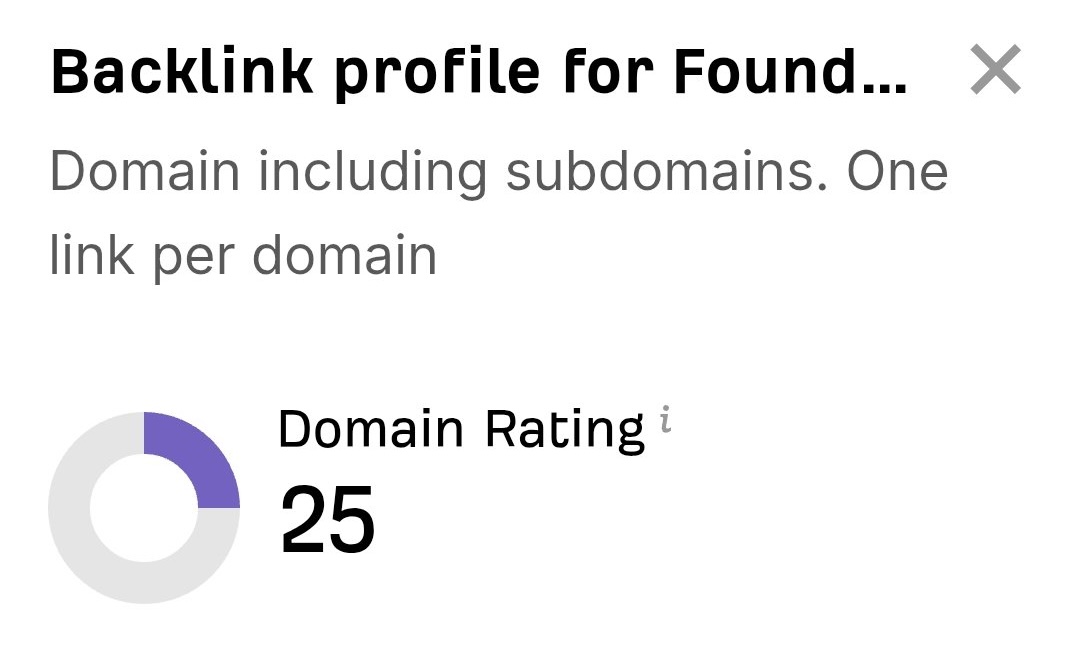 “I just let the Sorank software do its thing, and now my DR is 25 and my page is ranking higher.”
 Lucas FlandrePodcast Host“I specialized in GEO thanks to Sorank. The GEO Leaderboard allows me to show my clients their position vs competitors on ChatGPT. It’s a real commercial differentiator.”
 MélanieSEO Freelance“Great service, works well for our website and helps us understand how to improve it to rank better on Google and elsewhere. Congrats, keep going, I recommend it.”
 Hugo T.E-commerce merchant