
Preferences
Privacy is important to us, so you have the option of disabling certain types of storage that may not be necessary for the basic functioning of the website. Blocking categories may impact your experience on the website. More information

Privacy is important to us, so you have the option of disabling certain types of storage that may not be necessary for the basic functioning of the website. Blocking categories may impact your experience on the website. More information

Affiliate marketing explained: how it works, commission models (CPA, CPS, recurring), examples, how to start as a merchant or affiliate, SEO and disclosure rules.
Tools


In short
Affiliate marketing is a performance partnership: a merchant pays a commission to independent partners (affiliates) for each sale, lead or sign-up they bring through a tracked link. The merchant only pays for results, the affiliate earns without creating a product, and the customer finds the product through a recommendation. The common commission models are cost per action, cost per sale and recurring commissions. To do it well you need relevant traffic, honest content, a clear disclosure and affiliate links marked rel=sponsored.
Want to go further? Ask
Affiliate marketing sits behind a large share of the comparison pages, reviews and "best X" lists you read online. It works because it aligns interests: the merchant gets customers it would not have reached, and the publisher is paid for the trust it has built. This guide explains the mechanics, the models, concrete examples, how to start on each side of the market and the SEO and legal rules that keep a program healthy.
Affiliate marketing is a model in which a merchant rewards external partners for customers they refer, measured through unique tracking links. There are four parties in a typical setup:
The model differs from classic advertising because no money changes hands for visibility alone. The merchant pays when a defined action happens, which makes the channel predictable and easy to measure.
A tracked link records the visit, a cookie or server-side identifier remembers it, and a conversion within the attribution window triggers the commission. In practice the flow looks like this:
Most programs use last-click attribution: the last affiliate link clicked before the purchase earns the commission. Merchants should state their rules clearly (window length, validation delay, excluded traffic sources) because ambiguity is the main source of disputes.
The model defines what the merchant pays for: a sale, a lead, an action or a subscription that renews. The right choice depends on the business model and on how quickly a customer becomes profitable.
| Model | The affiliate is paid for | Typical use | Watch out for |
|---|---|---|---|
| CPS (cost per sale) or revenue share | A percentage of each sale | E-commerce, marketplaces | Returns and cancelled orders |
| CPA (cost per action) | A fixed amount per defined action | Apps, trials, account openings | Low-quality sign-ups |
| CPL (cost per lead) | A qualified contact or quote request | B2B, insurance, services | Defining what "qualified" means |
| Recurring commission | A share of each renewal over a period | SaaS, subscriptions | Churn and duration limits |
| Hybrid | A fixed fee plus a percentage | Premium publishers | Higher fixed cost for the merchant |
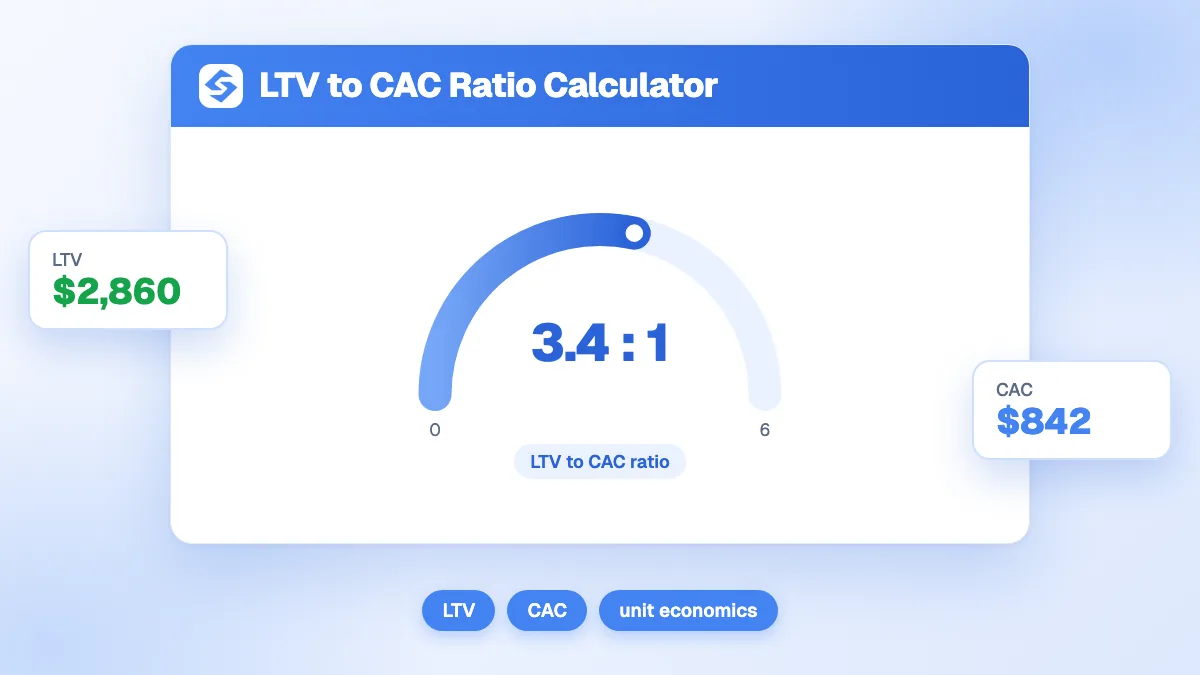
For a merchant, the ceiling of any commission is set by customer economics. Our free LTV to CAC ratio calculator shows how much you can afford to pay per customer while keeping acquisition profitable.
The most common affiliate formats are review sites, comparison pages, tutorials, newsletters and creator content, each matching a different stage of the purchase.
Merchants choosing where to run their program can compare the main platforms in our guides to the best affiliate networks and the best affiliate software.
As an affiliate, start from an audience and a niche you know; as a merchant, start from your margins and a clear partner offer. The two paths require different work.
For affiliates:
For merchants:
Affiliate links should carry rel="sponsored", and affiliate pages rank only when they add value that the merchant's own page does not. Google's documentation on qualifying outbound links asks publishers to mark paid and affiliate links with rel="sponsored" (rel="nofollow" is also accepted). This tells Google the link is commercial and should not pass ranking signals.
On the content side, Google's guidance on writing high quality reviews rewards first-hand evidence: original photos, measurements, comparisons with alternatives and clear pros and cons. Thin pages that copy the manufacturer's description and add a buy button rarely rank. Google's site reputation abuse policy also targets third-party pages, often affiliate coupon or review sections, published on a host site to exploit its ranking signals without the host's close involvement.
For merchants, the SEO lesson is the reverse: affiliate links do not build your authority, because they are marked sponsored. Your own organic visibility still depends on your content and on natural backlinks earned from relevant sites.
Any affiliate relationship must be disclosed clearly and close to the recommendation, before the reader clicks. In the United States the FTC's Endorsement Guides require a clear and conspicuous disclosure; in the EU and UK, consumer protection and advertising rules impose similar obligations.
AI assistants such as ChatGPT, Gemini, Perplexity and Claude often cite comparison and review pages when users ask what to buy, but they favour pages with clear criteria, evidence and balanced verdicts. A ranked list that explains how options were judged, states each product's limits and keeps facts up to date is easier to quote than a page of superlatives.
For merchants this creates a new reason to support affiliates: being present on the comparison pages the AIs consult raises the chance that your brand appears in their answers.
Affiliate marketing works when every party gains: the merchant pays for real customers, the affiliate is rewarded for trusted recommendations and the reader gets honest guidance. Choose the commission model your economics can carry, write terms that prevent disputes, mark links rel=sponsored and disclose every relationship. If you recommend SEO and GEO software to clients or an audience, the Sorank affiliate program pays you a commission on the customers you refer.

You join a merchant's affiliate program or an affiliate network, get a personal tracking link, and publish content that recommends the product to an audience that needs it. When a visitor clicks your link and buys or signs up within the tracking window, the sale is attributed to you and you earn the agreed commission. Most beginners start with one niche and products they actually use.
Earnings vary enormously and there is no reliable average. Income depends on the audience size, its purchase intent, the commission rate, the product price and whether the commission is one-off or recurring. Many affiliates earn little in the first months; the ones who earn steadily usually own content that ranks for buying queries and keeps sending qualified traffic.
Yes, affiliate marketing is legal, but disclosure is mandatory in most markets. In the United States the FTC's Endorsement Guides require a clear and conspicuous disclosure close to the recommendation, and the EU and UK have similar consumer protection and advertising rules. On the SEO side, Google asks you to mark affiliate links with rel=sponsored.
 AI Content Brief Generator
 FAQ Schema Generator
 AI Blog Post Ideas Generator
 Structured Data Validator
 Alt Text Checker
 Internal Link Analyzer
 Backlink Challenge
 AI Meta Description Generator
 AI Blog Title Generator
 Google Indexability Checker
 AI Blog Outline Generator
 UTM Link Builder
 Keyword Clustering Tool
 Canonical Tag Checker
 XML Sitemap Generator
 Broken Link Checker
 AI SEO Title Generator
 Headline Analyzer
 SERP Preview Tool
 Redirect Checker
 Hreflang Tag Generator
 Heading Structure Analyzer
 HTTP Headers Checker
 Favicon Extractor
 SERP CTR Calculator
 SEO vs Paid Search Savings Calculator
 SEO Share of Voice Calculator
 SEO ROI Calculator
 SEO Traffic and Revenue Forecast Calculator
 SEO Budget Calculator
 SEO Break-Even Calculator
 SaaS SEO ROI Calculator
 ROAS Calculator
 Reading Time Calculator
 Ranking Gain Simulator
 Organic Traffic Value Calculator
 Organic Traffic Estimator
 LTV to CAC Ratio Calculator
 Local SEO ROI Calculator
 Link Building Cost Calculator
 Keyword Value Calculator
 Keyword Opportunity Score Calculator
 Keyword Density Calculator
 GEO ROI Calculator
 GEO Content Investment Calculator
 Ecommerce SEO ROI Calculator
 Customer Lifetime Value Calculator
 Customer Acquisition Cost Calculator
 CTR Calculator
 Cost Per Article Calculator
 Conversion Rate Calculator
 Content Marketing ROI Calculator
 ChatGPT Referral Traffic Estimator
 Bounce Rate Calculator
 Backlink ROI Calculator
 AI Visibility Score Calculator
 AI Traffic Value Calculator
 AI Share of Voice Calculator
 Cost of AI Invisibility Calculator
 AI Citation Rate Calculator
 llms.txt Validator
 AI Overview Checker
 Robots.txt Checker
 AI SEO Audit
 LLM Readability Checker
 SearchGPT Readiness Checker
 Structured Data LLM Audit
 Website Crawlability AI Audit
 Why ChatGPT Is Not Recommending My Website
 Gemini Ranking Tool
 Perplexity Ranking Checker
 LLM Citation Checker
 Answer Engine Optimization Audit
 GEO Audit
 AI Search Visibility Test
 ChatGPT Visibility Checker
 llms.txt Generator
 URL Extractor
 Webpage to Markdown
 Sitemap Checker
 SERP Volatility Sensor
 Page Size Checker
 Word Counter
 Slug Generator
 Schema Generator
 Robots Generator
 OG Preview
 Meta Tags Generator
 Image Compressor
 Favicon Generator
 On-Page SEO Audit
 Backlink Analysis Tool
 Keyword Research Tool
 Domain Authority Checker
THEY TRIED SORANK BEFORE YOU
 “I tested Sorank on a real client site and it's insane. It does everything an agency would bill you $1500 a month for. It's going into production on that client now.”

 Guillaume Guersanguersanguillaume.com“We are an Ads agency and we wanted to get our SEO back on track once and for all. Sorank gave us a clear view of our site, helped us prioritize optimizations, and properly structure our content. The tool is easy to use, well designed for a team, and very practical for centralizing tracking without having to juggle multiple platforms. A very solid foundation to start fresh with our SEO.”
 Gaspard MadouiAds Agency
 “I just let the Sorank software do its thing, and now my DR is 25 and my page is ranking higher.”
 Lucas Flandrefoundertrace.fr“I specialized in GEO thanks to Sorank. The GEO Leaderboard allows me to show my clients their position vs competitors on ChatGPT. It’s a real commercial differentiator.”
 MélanieSEO Freelance“Great service, works well for our website and helps us understand how to improve it to rank better on Google and elsewhere. Congrats, keep going, I recommend it.”
 Hugo T.E-commerce merchant
























