Preferences
Privacy is important to us, so you have the option of disabling certain types of storage that may not be necessary for the basic functioning of the website. Blocking categories may impact your experience on the website. More information

Privacy is important to us, so you have the option of disabling certain types of storage that may not be necessary for the basic functioning of the website. Blocking categories may impact your experience on the website. More information
Off-page SEO explained: backlinks, citations and brand mentions, plus where to start SEO for a new website to build authority beyond your pages.






Tools


Summary
Off-page SEO encompasses backlinks, citations, brand mentions, and authority signals external to your site. It builds domain and topical authority required for competitive keyword rankings.
Want to go further? Ask
Off-page SEO is the set of optimization techniques applied outside your website to boost rankings and authority. While on-page SEO (titles, content, internal links) ensures your site is crawlable and semantically sound, off-page SEO builds the external authority signals that convince Google to rank you above competitors. In 2026, off-page SEO is more important than ever because the competitive landscape is crowded with well-optimized content.
The most critical off-page ranking factors are backlinks from high-authority, topically relevant sources; accurate business citations; prominent brand mentions in industry publications; and engagement signals across owned channels. A comprehensive off-page strategy combines all four to create a reinforced authority profile that dominates competitive keywords in your niche.
Backlinks are votes of confidence from other websites. A link from a high-authority domain signals to Google that your content is valuable and trustworthy. Google's official guidance explicitly states that links remain a core ranking factor. Not all backlinks are equal: a link from a domain with 50+ referring domains and topical relevance to your industry is worth 100 links from thin affiliate sites.
Domain authority (DA) is a predictive ranking metric that estimates your site's ability to rank based on link profile quality. Sites with DA 40+ typically rank for competitive keywords. Sites with DA 20 struggle unless the keyword is low-competition. Building domain authority requires sustained effort: 1 to 3 high-quality backlinks per month is a healthy pace. Aggressive link building can trigger Google's manual review systems.
Earning quality backlinks requires creating content valuable enough that other publishers want to link to it. The most effective tactics include publishing original research, creating comprehensive guides that others reference, developing tools or calculators, and building partnerships with complementary brands. Never buy links or participate in link schemes. Google's link scheme policies explicitly prohibit artificial link building.
Natural link earning strategies include: writing guest posts on authority blogs in your niche, publishing case studies and success stories, sponsoring industry events and requesting links from event pages, contributing to research projects and getting linked as a data source, and building relationships with journalists and bloggers who cover your industry. Each of these creates backlinks that feel natural and topically relevant.
Citations are mentions of your business name, address, and phone number (NAP) in online directories, industry databases, and local listings. Google uses citations to verify your business entity and build local authority signals. Consistency matters: if your business appears as "SolarTech Inc." in one directory and "Solar Tech, Inc." in another, Google treats these as potentially different entities, diluting authority.
Priority citation sources include Google Business Profile (the single most important local signal), local directories (Yelp, local chambers of commerce), industry-specific directories, and regional listings. Ensure your NAP data is consistent across all sources. Update it immediately if your business moves or phone number changes. For geographic SEO strategies, accurate citations are as important as backlinks. Sorank's citation audit tools identify inconsistencies and opportunities automatically.
Google increasingly values brand mentions, even without links. When your brand name appears in authoritative publications, industry blogs, and news outlets, Google's entity recognition systems extract these signals and correlate them with your domain. This signals entity authority and topical relevance. Monitor brand mentions across the web using free tools and Google Alerts. When your brand appears in relevant contexts, engagement increases awareness and strengthens entity signals.
Earned brand mentions (from journalists, bloggers, industry analysts) are stronger than owned mentions (your own blog, social channels). Create newsworthy events, publish original research, participate in industry discussions, and develop thought leadership content that earns third-party mentions. A mention in a major industry publication can pass more authority than 10 guest post links because it indicates independent editorial judgment about your expertise.
While Google doesn't directly use social shares as ranking factors, social engagement creates indirect ranking benefits. Posts that generate high engagement get shared more widely, creating more backlink opportunities. High-engagement social accounts build audience, which amplifies the reach of new content. Social engagement data signals content quality and relevance to Google's entity systems.
Prioritize building engaged followers on relevant platforms: LinkedIn for B2B, Instagram for visual content, Twitter/X for industry discussion, YouTube for video content. Create content specifically optimized for each platform rather than cross-posting identical content. Encourage comments, shares, and discussion. High-engagement social presence increases the likelihood that your content gets linked and mentioned by industry influencers.
Schema markup (structured data) tells Google explicitly what your site is about. Using schema.org schemas, you can markup business information, articles, products, events, and more. This helps Google understand your content and improves your chances of rich result eligibility (stars in search results, FAQ snippets, etc.). Schema markup is an off-page signal in the sense that it influences how Google categorizes and values your site across its entire index.
Implement at minimum: Organization schema (business name, address, phone, logo), LocalBusiness schema (for local SEO), Article schema (publication date, author), and Product schema (for ecommerce). Validate markup using Google's Rich Results Test before deploying. Proper schema markup can increase click-through rates from search results by 20 to 40 percent.
Partnerships create off-page authority through joint content, co-branded resources, and mutual referrals. When a complementary brand partners with you on content or co-hosts an event, both parties benefit from association signals. Co-authored articles with industry experts pass authority from both parties. Co-branded tools and calculators create backlink opportunities. Strategic partnerships signal that other industry players trust and respect your brand.
Identify complementary (non-competing) brands in your niche. Propose joint content projects, webinars, or research initiatives. Ensure partnerships are genuine and deliver value to both audiences. Promote partnership content across both parties' channels. These activities create backlink opportunities while building relationships that sustain long-term visibility.
Active participation in industry organizations, associations, and communities builds off-page authority signals. Speaking at industry conferences, contributing to industry working groups, serving on advisory boards, or publishing in industry journals all create third-party authority signals. Google's ranking systems recognize organizational affiliation and industry status as signals of authority. A financial advisor listed as CFA and member of the CFA Institute gains authority signals that a non-credentialed alternative cannot.
Document and publicize your industry participation. Include speaking engagements, board memberships, certifications, and awards on your website. Create blog posts announcing major speaking opportunities or industry recognition. Earn links from conference websites, association directories, and award pages. Each of these creates backlinks and brand mention signals that accumulate into stronger domain authority.
Contribute to industry discussions: participate in Reddit communities, answer questions on Quora, engage in Twitter/X industry conversations. This builds personal brand and thought leadership, which generate backlink and mention opportunities when others cite your insights. In competitive niches, thought leadership and industry presence often differentiate brands more than content alone.
Media mentions and press coverage are powerful off-page authority signals. Links from news sites, industry publications, and major media outlets carry significant weight in Google's algorithms. Media coverage also creates brand awareness and drives direct traffic. Earn media coverage by crafting compelling pitches to journalists, publishing newsworthy announcements, and offering expert commentary on trending topics.
Build media relationships proactively. Follow journalists covering your industry, engage with their articles, and develop genuine relationships before pitching. When pitching, provide clear angles: original research, timely insights, expert perspectives on trending topics. Avoid purely promotional pitches. Journalists link to stories that provide value to readers. Position yourself and your brand as valuable sources, not as products or services to promote.
Track your off-page authority using multiple metrics. Monitor backlink growth using free tools and Google Search Console's Links report. Track domain authority trends quarterly. Monitor citation consistency using local SEO tools. Set up Google Alerts for brand mentions. Track social engagement rates and audience growth. Use these metrics to identify gaps and opportunities for improvement.
Set targets: earn 2 to 3 quality backlinks per month, ensure 100 percent NAP consistency across major directories, achieve 500+ brand mentions annually in relevant industry sources, and maintain 3 to 5 percent engagement rates on social content. These targets align with a healthy, sustainable off-page SEO strategy that avoids manipulation penalties while building genuine authority.
SEO for a new website starts with on-site foundations, so Google can find and understand the site, then a few pages that target precise questions, and only then the first off-page signals: consistent brand profiles, links from people who already know you and a handful of earned mentions. Doing it in this order means every link you earn points to pages ready to rank.
| Phase | Focus | What to do |
|---|---|---|
| Launch week | Foundations | Indexable pages, Search Console verified, sitemap submitted, one clear title per page |
| First month | Core pages | Service or product pages and first articles on specific, low-competition questions, with solid on-page SEO |
| Months one to three | First off-page signals | Brand profiles, relevant directories, partner links, first mentions |
| Then | Measure and expand | Double down on the queries that start getting impressions |
A new domain usually needs several months of steady signals before it ranks on competitive terms, so regularity counts more than a single push. To keep that rhythm without manual outreach, Sorank's backlinks feature gets your new pages one-way links from quality sites in your theme.
Off-page SEO encompasses backlinks, citations, brand mentions, social signals, partnerships, and media coverage. Together, these signals convince Google that you are an authoritative, trustworthy expert in your field. Build quality backlinks through content excellence and strategic partnerships. Maintain consistent citations across directories. Amplify brand mentions by creating newsworthy content and building media relationships. Monitor these signals continuously and refine your strategy quarterly.
Combining strong off-page SEO with topical authority and on-page optimization creates a competitive moat that competitors cannot easily replicate. For comprehensive off-page audit and backlink analysis, explore Sorank's competitor intelligence tools. Identify your competitors' strongest backlinks and authority sources, then create a plan to earn similar or superior links.
Sources

On-page SEO optimizes elements within your site: title tags, meta descriptions, content quality, internal linking, page speed. Off-page SEO builds authority signals external to your site: backlinks, citations, brand mentions, social engagement, and partnership signals. Both are essential. Strong on-page SEO ensures your site is crawlable and semantically sound. Strong off-page SEO builds the authority required to rank for competitive keywords.
Yes. Backlinks remain Google's most important authority signal. A site with 50 high-quality backlinks from authority domains will outrank a competitor with 200 low-quality backlinks. Quality matters far more than quantity. Focus on earning links from topically relevant, high-authority sources. Monitor backlink quality using anchor text relevance and linking domain authority.
Increasingly, yes. Google's algorithms now correlate branded mentions (name, address, phone) with entity authority. They use these signals to validate that you are a real, established entity in your industry. Unlinked brand mentions are weaker than linked citations, but both contribute to topical authority. Combine citation building (structured data in directories) with brand mention monitoring and amplification.
THEY TRIED SORANK BEFORE YOU
 “I tested Sorank on a real client site and it's insane. It does everything an agency would bill you $1500 a month for. It's going into production on that client now.”
 Guillaume Guersanguersanguillaume.com“We are an Ads agency and we wanted to get our SEO back on track once and for all. Sorank gave us a clear view of our site, helped us prioritize optimizations, and properly structure our content. The tool is easy to use, well designed for a team, and very practical for centralizing tracking without having to juggle multiple platforms. A very solid foundation to start fresh with our SEO.”
 Gaspard MadouiAds Agency
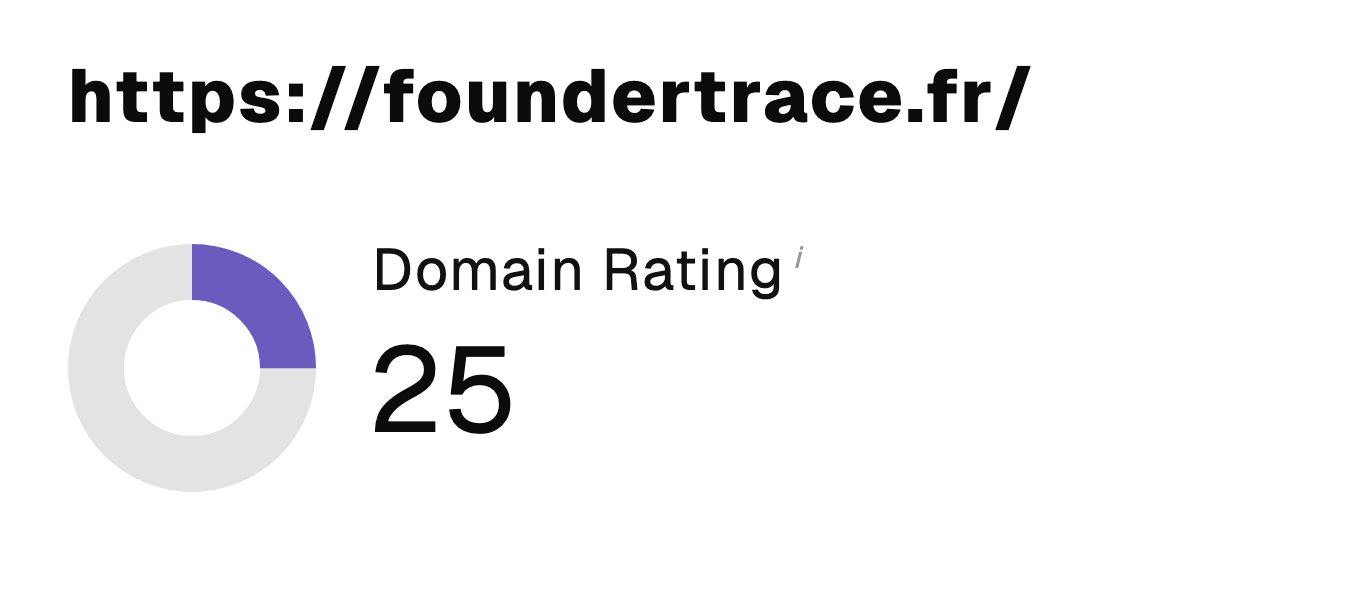 “I just let the Sorank software do its thing, and now my DR is 25 and my page is ranking higher.”
 Lucas Flandrefoundertrace.fr“I specialized in GEO thanks to Sorank. The GEO Leaderboard allows me to show my clients their position vs competitors on ChatGPT. It’s a real commercial differentiator.”
 MélanieSEO Freelance“Great service, works well for our website and helps us understand how to improve it to rank better on Google and elsewhere. Congrats, keep going, I recommend it.”
 Hugo T.E-commerce merchant