Preferences
Privacy is important to us, so you have the option of disabling certain types of storage that may not be necessary for the basic functioning of the website. Blocking categories may impact your experience on the website. More information
Privacy is important to us, so you have the option of disabling certain types of storage that may not be necessary for the basic functioning of the website. Blocking categories may impact your experience on the website. More information

 ChatGPT Hallucinated URLs: How Often They Happen, Why, and What to Do
Why ChatGPT invents URLs that lead to 404 pages, how often it happens, how to check a link, and how to find and redirect fake URLs on your site.
In short
ChatGPT hallucinated URLs are links the model writes that look real but lead to a page that does not exist, usually a 404. They affect about 1% to 2.4% of the URLs ChatGPT cites, depending on the study. Open every link before you trust it, and redirect the fake URLs that send real visitors to your site.
Want to go further? Ask
Quick quiz
How should you get mentioned by ChatGPT and other AI assistants?
Sorank matches your answers


Test it for 3 days on your own site and see where you stand on Google, ChatGPT and the other AIs.
Start 3-day free trial3 days free, then stop whenever you want. 90-day results guarantee, conditions apply.
A hallucinated URL is a web address that ChatGPT presents as a source but that never existed, or no longer exists, at that location. The domain is often real. The path after it is not. You click, and you land on an error page.
It is one form of AI hallucination: the model produces something fluent and confident that is not true. With a URL, the error is easy to prove. Either the server returns the page, or it does not.
Not every broken link from ChatGPT is a pure invention. When you look at the URLs one by one, you find five different cases. The fix depends on the case, so it is worth naming them.
| Type | What happens | Example pattern | Who can fix it |
|---|---|---|---|
| Invented path on a real domain | The model guesses a slug that fits the site's URL pattern | example.com/blog/internal-links/ when the real post is /blog/internal-linking/ | The site owner (redirect or new page) |
| Invented domain | The whole site does not exist, or belongs to someone else | A plausible brand name with a .com that was never registered | Nobody: the user must not trust it |
| Outdated URL | The page existed when the model learned it, then was moved or deleted without a redirect | An old product page removed during a site migration | The site owner (301 to the new page) |
| Mangled URL | A real URL with a wrong date, ID, language folder or trailing parameter | /2023/05/ instead of /2023/06/ in a news URL | The site owner, if it repeats |
| Fake citation | A reference to an article, study or paper that was never published | A journal title, authors and DOI that match no record | Nobody: the user must check the reference |
The first and third cases matter most for site owners, because they send real visitors to your domain. The second and fifth cases matter most for readers, because there is nothing to click through to.
Google crawls a page before it ranks it. A URL in the results was fetched by Googlebot at some point. ChatGPT can write a URL that no crawler ever visited, because the model can produce text, and a URL is just text. That is the core difference, and it explains why the error rate is higher.
ChatGPT sends users to broken pages in roughly 1% of clicks and cites a broken URL in about 1.2% to 2.4% of cases, depending on how you measure. It is the highest rate among the large AI models measured, and several times Google's rate.
The largest public dataset comes from a study by Ryan Law at Ahrefs, published on September 2, 2025. It ran two tests. The first looked at URLs that real people clicked from an AI model, in anonymized web analytics data, and flagged a page as a likely 404 when its title contained "404" or "not found". The second looked at every URL the AI models cited, then checked the last known HTTP status in the Ahrefs crawler database.
In the first test, 84465 of the 8332436 unique URLs clicked from ChatGPT were likely 404 pages: a rate of 1.01%. Google's rate on the same kind of data was 0.15%. Across all AI models, the average was 0.43%, which Ahrefs reports as 2.87 times Google's rate.
In the second test, ChatGPT had the highest rate again: 2.38% of the cited URLs it could check returned a 404. Gemini was at 0.86% and Copilot at 0.54%, against a Google baseline of 0.84% for the top 20 results of 400000 searches. Ahrefs notes that Gemini probably relies on Google's index, which may explain why its rate is close to Google's.
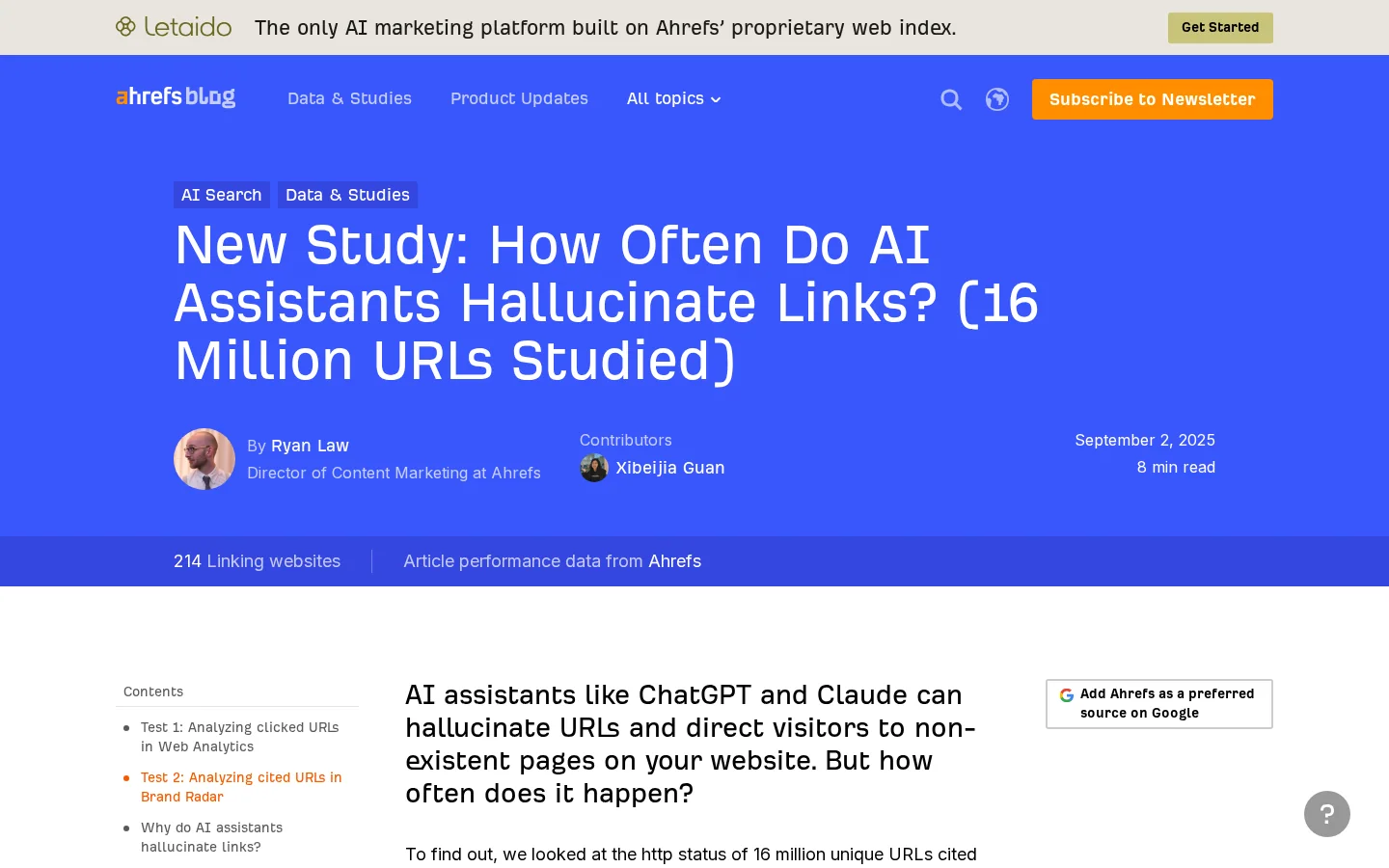
A second study, written by Yulia Deda for SE Ranking and published on December 19, 2025, sent 100000 long-tail prompts to ChatGPT and collected 159949 unique cited URLs. It then recorded the HTTP status code of each one and compared them with Google's organic results, AI Overviews and AI Mode on the same topics.
The result is more reassuring: 97.55% of the URLs ChatGPT cited loaded normally. Only 1.22% returned a 404. That is still about twice the rate of AI Overviews (0.56%) and above organic results (0.65%) and AI Mode (0.87%). Among ChatGPT's client errors, 91% were plain 404s, the "page not found" code that points to a wrong or invented address rather than a blocked page.
ChatGPT and broken links in two studies
Sources: Ahrefs, September 2025; SE Ranking, December 2025
The numbers differ because the methods differ. Read them with these limits in mind:
The SE Ranking article also cites an analysis by SEO specialist Dan Hinckley of more than 18000 landing pages, where 3.35% of visits from ChatGPT landed on 404 pages. So for a given site, the share can be several times the global average. Your own data is the only number that counts for you.

ChatGPT invents URLs because it predicts the most likely next characters, and a URL that follows a site's usual pattern is very likely text, whether or not the page exists. Training methods that reward an answer over "I don't know" make it worse.
A language model learns from huge amounts of text. It sees thousands of URLs from the same site and learns their shape: the domain, the folder, the slug style. When it needs a source, it writes the address that best fits that shape. Ahrefs gives a real example from its own blog: the most visited hallucinated URLs included /blog/internal-links/ and /blog/newsletter/. Both look exactly like Ahrefs blog URLs. Neither exists.
This is why clean, predictable URL slugs cut both ways. They help users and crawlers. They also make it easy for a model to guess a slug that "should" exist.
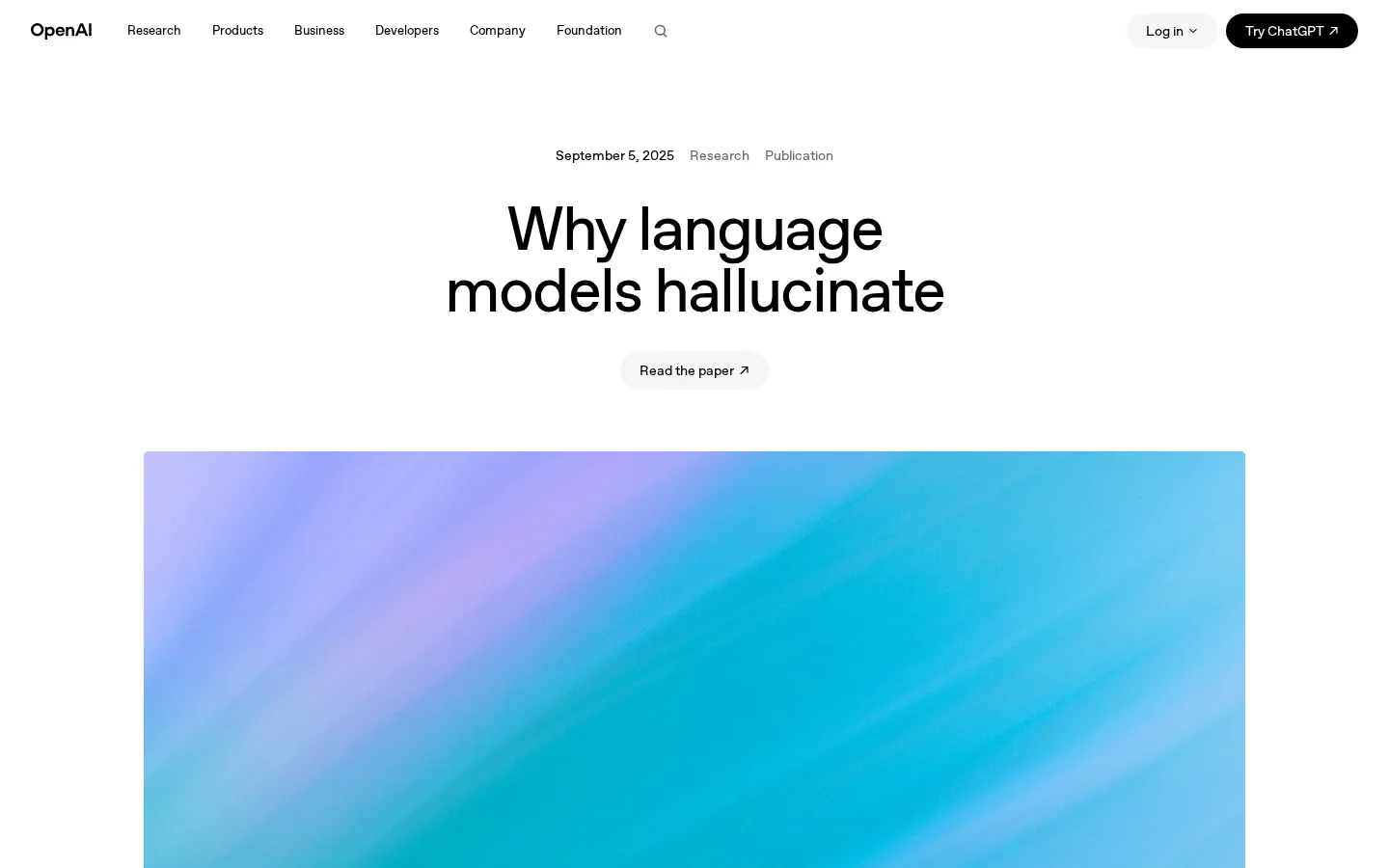
OpenAI explains the mechanism in "Why language models hallucinate", published on September 5, 2025. Pretraining has no true or false labels: the model only learns what fluent text looks like. Regular patterns, such as spelling, become reliable with scale. Arbitrary, rare facts cannot be predicted from patterns. The exact slug of one blog post is that kind of arbitrary fact.
Then evaluation makes it worse. Most benchmarks score accuracy only. An "I don't know" earns zero, like a wrong answer, so a model that guesses scores better. OpenAI shows the effect with two of its own models on the SimpleQA test.
Guessing versus abstaining on SimpleQA (OpenAI)
The older model is two points more accurate, but it is wrong three times as often. A URL works the same way: when the model is not sure of the exact address, writing a plausible one looks better on a test than writing none.
ChatGPT has two ways to give you a link. It can answer from what it learned during training, or it can run a web search and cite the pages it fetched. You can read the full path in our guide on how ChatGPT works, from training to web search.
The search path is grounded in real sources: the URL comes from a page that was actually retrieved, so it exists, at least at that moment. The memory path is not grounded. The URL is rebuilt from patterns, and it may also be old. A page can be removed or moved after the model learned it, which is plain link rot rather than invention. Ahrefs names exactly these two causes: formerly valid URLs and true hallucinations.
Before web search was common in ChatGPT, researchers measured how often it invented references. William H. Walters and Esther Isabelle Wilder published a study in Scientific Reports in 2023 on 636 citations from 84 short literature reviews written by GPT-3.5 and GPT-4.
Fabricated references in literature reviews written by ChatGPT
Source: Walters and Wilder, Scientific Reports, 2023
These rates are far above the 1% to 2.4% of recent web studies, because the task is different: long reference lists from memory, with no search. The lesson is the same. The less the model can look up, the more it invents.
Open the link, confirm the page loads with a 200 status, then confirm the page actually says what ChatGPT claims. A URL that loads is not enough: a real page can still be cited for something it does not say.
Check a ChatGPT link in 5 steps
If you check links often, the browser is slow. A terminal gives you the final status code and the final address after redirects:
curl -s -o /dev/null -L -w "%{http_code} %{url_effective}\n" "https://example.com/blog/some-page/"A 200 means the page loads. A 404 or 410 means it does not exist. A 403 often means the site blocks scripts, not that the page is missing: open it in a browser to be sure. For several links at once, our free broken link checker lists the dead links of any page.
For a list of 50 or 500 URLs (for example the sources ChatGPT gave you for a report), a small Apps Script function returns the status code in a cell. Open Extensions, then Apps Script, and paste:
function HTTPSTATUS(url) {
  var response = UrlFetchApp.fetch(url, {
    muteHttpExceptions: true,
    followRedirects: false
  });
  return response.getResponseCode();
}
Then type =HTTPSTATUS(A2) next to each URL. With followRedirects: false, you also see the 301 and 302 codes, which tells you when ChatGPT cited an old address that now redirects.
A 404 does not always mean the information is false. Try these, in this order:
site:example.com internal linking guide in Google.https://web.archive.org/web/*/example.com/blog/internal-links/. If a copy exists, the page was real and was removed.Warning
A real page can still be misquoted. In the 2023 Walters and Wilder study, 24% of the real references written by GPT-4 had substantive errors. Always find the claim on the page, not just the page.
To find fake URLs on your own site, list the 404 pages that receive visits from ChatGPT. Three data sources do the job: Google Analytics 4, your server logs and a crawler or status checker. Use at least two of them, because each one misses something.
In GA4, create an exploration with the dimensions "Page title", "Landing page + query string" and "Session source", and the metric "Sessions". Add a filter on the session source with this regex:
chatgpt\.com|chat\.openai\.com|openai\.com|gemini\.google\.com|claude\.ai|copilot\.microsoft\.comThen add a second filter: page title contains "404" or "not found" (use the title of your own error page). The result is your list of AI-referred 404s. ChatGPT often adds utm_source=chatgpt.com to the links it shows, which helps when the referrer is missing. Our guide to measuring visits from AI with Google Analytics shows the full setup of an AI channel.
Logs see what GA4 misses: visitors who block analytics, and visits from OpenAI's own agents. When a user asks ChatGPT to open a page, the request comes from the ChatGPT-User agent, one of the OpenAI crawlers and user agents. On a standard Apache or Nginx log, this command lists the 404 paths requested from ChatGPT, most frequent first:
awk '$9 == 404' access.log \
  | grep -iE 'chatgpt\.com|ChatGPT-User|OAI-SearchBot' \
  | awk '{print $7}' \
  | sort | uniq -c | sort -rn | head -50
A path that comes back every week is a pattern, not noise. A path requested by ChatGPT-User means a real person asked ChatGPT about it, even if they never clicked.
Hallucinated URLs leak out of ChatGPT. People paste them into articles, forum posts and AI-written pages. They then appear as backlinks pointing to 404 pages on your site, and Google may report them in the Page indexing report of Search Console under "Not found (404)". SE Ranking's head of SEO found about 70 non-existent URLs that received ChatGPT traffic over three months, and about 20 of them already had backlinks. Those are links worth getting back, exactly as in reclaiming lost and broken backlinks.
| Method | What it finds | What it misses | Effort |
|---|---|---|---|
| GA4 exploration | 404 pages with real AI-referred sessions | Visitors who block tracking, referrers that are stripped | Low, once the filter is saved |
| Server logs | Every request, including ChatGPT-User fetches | Nothing on your server, but needs log access | Medium |
| Search Console | 404 URLs that Google found, often through links | URLs with no link anywhere | Low |
| Backlink tool | Fake URLs that earned links from other sites | URLs that only get direct clicks | Low |
| Status checker on a list | Whether each URL is 200, 301, 404 or 410 today | It only checks the URLs you give it | Low |
From raw 404s to the URLs worth fixing
Redirect a fake URL with a 301 when it gets repeat visits or backlinks and a matching page exists. Create a page when the fake URL reveals a real need you do not cover. Ignore one-off visits. Never send everything to the home page.
| Option | When to use it | Advantages | Limits |
|---|---|---|---|
| 301 redirect to the closest page | Repeat visits or backlinks, and a page that answers the same intent | Saves the visitor and the link value | Wrong if the target does not match the intent |
| Create a new page | The slug describes a topic you do not cover but should | Turns a phantom demand into a real page | Takes time; only worth it if the topic fits your business |
| Restore the old page | The URL is outdated: you deleted a page that people still want | Quickest fix for a link rot case | Only if the content is still true |
| Return a 410 | The page is gone for good and nothing replaces it | Clear signal to crawlers | The visitor still sees an error |
| Leave the 404, improve the error page | 1 or 2 visits, no links, no clear intent | Zero work per URL | Visitor has to search again |
Ahrefs suggests a simple filter: look at 404 pages with more than 10 visits a month, check them by hand, and redirect only those. On a smaller site, lower the bar to 3 visits or any backlink. The goal is low effort: a few redirects a month, not a project.
Google's documentation on how HTTP status codes affect Google Search says all 4xx errors except 429 are treated the same way: the content is considered missing, and an indexed URL is removed. A 301 is a strong signal that the target should be processed. So a fake URL that returns 404 does not hurt your site in Google. It only loses the visitor and any link pointing to it.
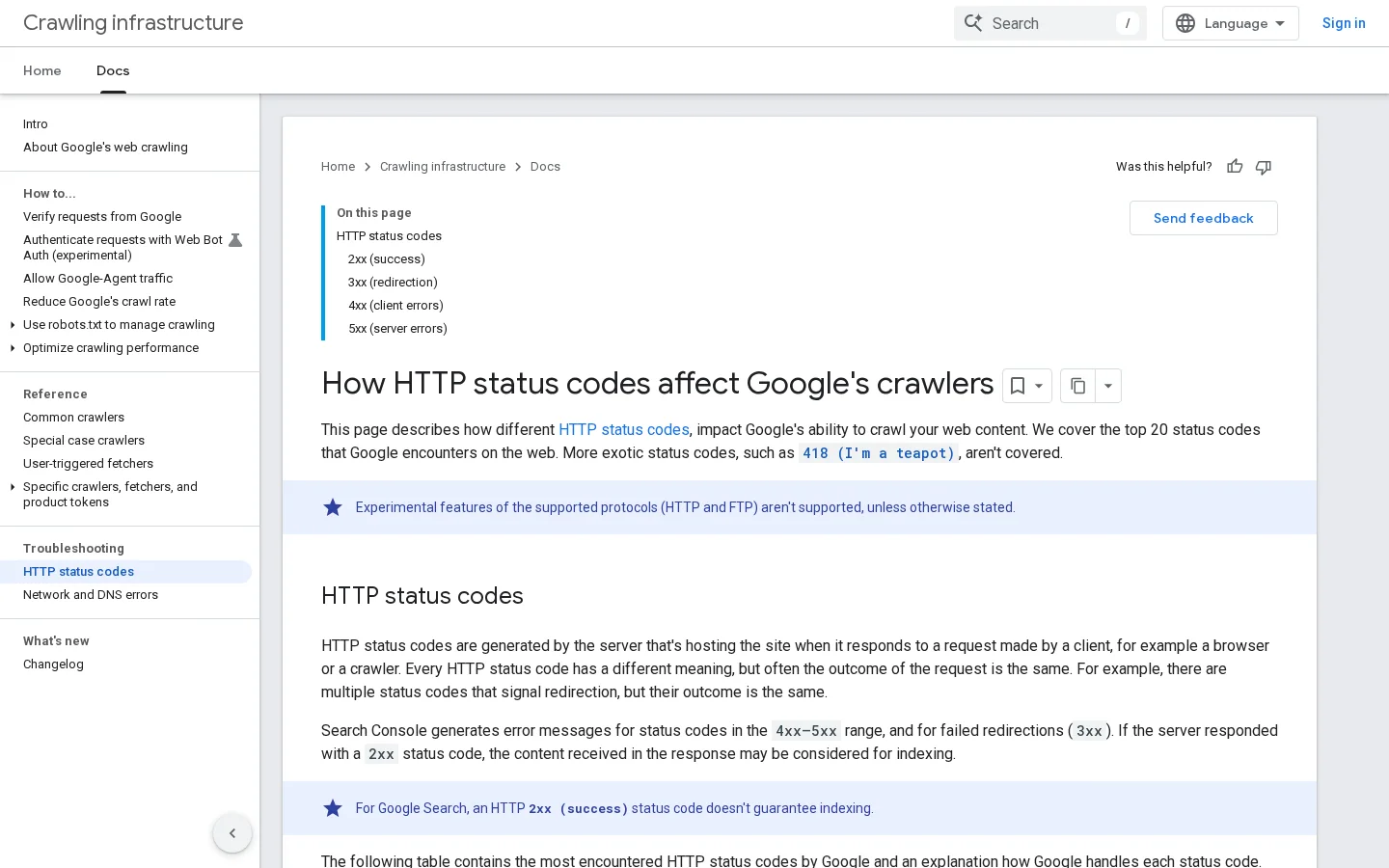
The same page explains that Google flags as a soft 404 a page whose content suggests an error, such as an empty page or an error message. That is the risk of sending every fake URL to an unrelated page. Our guide to the soft 404 error in Search Console covers the fix in detail.
On Apache, in the .htaccess file:
Redirect 301 /blog/internal-links/ https://example.com/blog/internal-linking-guide/On Nginx, in the server block:
location = /blog/internal-links/ {
    return 301 https://example.com/blog/internal-linking-guide/;
}
When ChatGPT invents many URLs on the same pattern (for example a /docs/ folder you never had), one rule can catch them all. Use it with care, and only when every match has the same right target:
RedirectMatch 301 ^/docs/(.*)$ https://example.com/help/Then test each redirect. It must go to the final page in one hop, with a 301, not a 302. Our free redirect checker follows the full chain hop by hop. The full rules for each code are in our complete guide to 301, 302, 307 and 308 redirects.
Tip
Keep a simple log of each fake URL: date found, source, visits, backlinks, decision. When the same pattern comes back months later, you know at once whether it is new or a known one.
For the fake URLs you leave as 404, the error page does the work. Return a true 404 status code, then help the visitor:
You cannot stop a model from guessing, but you can make the right URL easier to find and the wrong one less likely to fail. The idea is simple: give the model real, stable, crawlable pages, so it cites them instead of rebuilding them.
When ChatGPT searches, it cites pages it retrieved. Those URLs exist. If you block OAI-SearchBot in your robots.txt, you push ChatGPT back to its memory for your site, and memory is where invented URLs come from. Allow it:
User-agent: OAI-SearchBot
Allow: /

User-agent: ChatGPT-User
Allow: /
You can still block GPTBot, the crawler used for model training, if you do not want your content used for that. The two are separate.
Every migration, slug change or deleted page creates URLs that live on in model memory. Redirect every old URL to its new home, and keep those redirects for years, not months. Before you change a URL structure, ask whether the gain is worth thousands of old addresses that models may keep citing.
Look at the fake URLs you collected. If ChatGPT keeps inventing /pricing/enterprise/ or /blog/what-is-x/, it is telling you what it expects your site to contain, based on sites like yours. Some of those are content gaps worth filling.
Checklist to limit hallucinated URLs on your site
An llms.txt file at the root of your site lists your important pages with a short description of each. It is a proposed standard, not a guarantee, but it costs little and gives models a list of real URLs. Our free llms.txt generator builds one from your site in a few minutes.
Analytics only show the fake URLs people clicked. To see which of your pages ChatGPT, Claude and Gemini actually cite, and which sources they use when they talk about your brand, you need to track their answers. Sorank's AI mention tracking does it every month, prompt by prompt and model by model, and lists the reference sources each AI relies on. For the bigger picture of which sites ChatGPT tends to cite, see our data study of ChatGPT citations.
The biggest mistakes are blind redirects to the home page, ignoring repeat patterns, and trusting a link because it looks right. Each one is easy to spot and quick to fix.
What it is: a catch-all rule that sends every unknown URL to the home page, to "save" the traffic.
How to spot it: type a random path on your site, like /blog/zzz-test/. If you land on the home page, the rule is there.
How to fix it: remove the catch-all. Return a real 404 by default, and redirect only the URLs you checked, each to a page with the same intent. The visitor who wanted a guide on internal links does not want your home page.
What it is: a temporary redirect for a fake URL that will never come back.
How to spot it: run the URL through a redirect checker and read the first status code.
How to fix it: change it to a 301 (or 308). The fake page will never exist, so the move is permanent.
What it is: the fake URL redirects to an old page that itself redirects to the new one.
How to spot it: the checker shows more than one hop, for example 301, 301, 200.
How to fix it: point the fake URL straight to the final page, and update the old redirects too.
What it is: deciding that 1% of AI clicks is not worth a look.
How to spot it: you have never filtered your 404 pages by AI referrer.
How to fix it: check once. Across all sites the rate is small, but one site can be far above average, and the visitors who land there came with a precise question. The fake URLs that also earned backlinks are free links you are losing.
What it is: creating a short page for each invented URL, just so it does not 404.
How to spot it: a folder full of pages with a few lines each and no traffic from Google.
How to fix it: create a page only when the topic fits your business and you can write something useful. Otherwise, redirect to the closest real page, or leave the 404.
What it is: a robots.txt rule meant to block AI training that also blocks OAI-SearchBot, often through a broad User-agent: * block or a ready-made list of AI bots.
How to spot it: read your robots.txt and look for every OpenAI agent name, and for disallow rules under *.
How to fix it: allow OAI-SearchBot explicitly, and block only GPTBot if you want to opt out of training.
What it is: citing a ChatGPT link in a report, a client email or an article because it starts with a known domain.
How to spot it: you copied a URL from ChatGPT without opening it.
How to fix it: open every link, find the exact claim on the page, and run the curl check or the Sheets function on long lists.
Handling fake URLs: the wrong way and the right way
Yes, slowly. The more ChatGPT answers with web search, the more its URLs come from pages it actually fetched. The newer study found a lower 404 rate than the older one, but the two used different methods, so the trend is a sign, not a proof.
Key moments in the study of hallucinated links
SE Ranking reports Mueller's view that hallucinated links might rise in the short term, then decline as systems get better grounded. Both trends point the same way: fewer pure inventions, but outdated URLs will stay as long as models remember pages that sites have deleted. That part is in your hands.
And when you use ChatGPT yourself, keep one rule: no link goes into a document until you have opened it and found the claim on the page.
ChatGPT writes URLs by predicting likely text, so when it answers from memory it can produce an address that fits a site's usual pattern but does not exist. Some links are also old pages that were deleted or moved without a redirect. Links from a web search are much more reliable, because they come from pages ChatGPT actually opened.
An Ahrefs study of 16 million URLs found that 1.01% of the pages clicked from ChatGPT were 404 errors and 2.38% of the URLs it cited returned a 404. A later SE Ranking study measured 1.22% of 404s among 159949 URLs cited by ChatGPT, with 97.55% loading normally. Rates are higher when ChatGPT answers from memory, without search.
Redirect a fake URL with a 301 when it gets repeat visits or backlinks and you have a page that answers the same need. Leave one-off visits as a 404 with a helpful error page. Never redirect every unknown URL to the home page, because Google can treat that as a soft 404.
We analyse your competitors, your website and your AI visibility to create a tailored content plan for free.
 Website Value Calculator
 Website Accessibility Checker
 Google Analytics Checker
 Duplicate Content Checker
 Mobile-Friendly Test
 Website Speed Test
 Subdomain Finder
 Domain Age Checker
 CMS Detector
 Googlebot Simulator
 Nofollow Link Checker
 Meta Tag Checker
 Keyword Cannibalization Checker
 Keyword Intent Checker
 Keyword Extractor
 Google Ads Cost Calculator
 CPC Calculator
 Local Citation Finder
 Reddit Threads Finder
 Disavow File Generator
 Redirect Generator
 Canonical Tag Generator
 Passive Voice Checker
 Google Location Changer
 Google Review Calculator
 Google Review Link Generator
 Keyword Combiner
 Podcast Show Notes Generator
 AI Content Rewriter
 AI Text Humanizer
 ChatGPT Prompt Generator
 Twitter Thread Generator
 Tweet Generator
 Landing Page Copy Generator
 Google Ads Copy Generator
 Pinterest Pin Description Generator
 Anchor Text Generator
 Social Media Post Generator
 LinkedIn Post Generator
 Free AI Writer
 Review Response Generator
 LSI Keyword Generator
 YouTube Video Ideas Generator
 YouTube Tag Generator
 YouTube Description Generator
 Product Description Generator
 CTA Generator
 Blog Introduction Generator
 Conclusion Generator
 Hook Generator
 AI Content Brief Generator
 FAQ Schema Generator
 AI Blog Post Ideas Generator
 Structured Data Validator (Schema Validator)
 Alt Text Checker
 Internal Link Analyzer
 Backlink Challenge
 AI Meta Description Generator
 AI Blog Title Generator
 Google Indexability Checker
 AI Blog Outline Generator
 UTM Link Builder
 Keyword Clustering Tool
 Canonical Tag Checker
 XML Sitemap Generator
 Broken Link Checker
 AI SEO Title Generator
 Headline Analyzer
 SERP Preview Tool
 Redirect Checker
 Hreflang Tag Generator
 Heading Structure Analyzer
 HTTP Headers Checker
 Favicon Extractor
 SERP CTR Calculator
 SEO vs Paid Search Savings Calculator
 SEO Share of Voice Calculator
 SEO ROI Calculator
 SEO Traffic and Revenue Forecast Calculator
 SEO Budget Calculator
 SEO Break-Even Calculator
 SaaS SEO ROI Calculator
 ROAS Calculator
 Reading Time Calculator
 Ranking Gain Simulator
 Organic Traffic Value Calculator
 Organic Traffic Estimator and Website Traffic Checker
 LTV to CAC Ratio Calculator
 Local SEO ROI Calculator
 Link Building Cost Calculator
 Keyword Value Calculator
 Keyword Opportunity Score Calculator
 Keyword Density Calculator
 GEO ROI Calculator
 GEO Content Investment Calculator
 Ecommerce SEO ROI Calculator
 Customer Lifetime Value Calculator
 Customer Acquisition Cost Calculator
 CTR Calculator
 Cost Per Article Calculator
 Conversion Rate Calculator
 Content Marketing ROI Calculator
 ChatGPT Referral Traffic Estimator
 Bounce Rate Calculator
 Backlink ROI Calculator
 AI Visibility Score Calculator
 AI Traffic Value Calculator
 AI Share of Voice Calculator
 Cost of AI Invisibility Calculator
 AI Citation Rate Calculator
 llms.txt Validator
 AI Overview Checker and AI Overviews Rank Checker
 Robots.txt Checker
 AI SEO Audit
 LLM Readability Checker
 SearchGPT Readiness Checker
 Structured Data LLM Audit
 Website Crawlability AI Audit
 Why ChatGPT Is Not Recommending My Website
 Gemini Ranking Tool
 Perplexity Ranking Checker
 LLM Citation Checker
 Answer Engine Optimization Audit
 GEO Audit
 AI Search Visibility Test
 ChatGPT Visibility Checker
 llms.txt Generator
 URL Extractor
 Webpage to Markdown
 Sitemap Checker
 SERP Volatility Sensor
 Page Size Checker
 Word Counter
 Slug Generator
 Schema Generator
 Robots Generator
 OG Preview
 Meta Tags Generator
 Image Compressor
 Favicon Generator
 On-Page SEO Audit: SEO Checker and SEO Analyzer
 Backlink Analysis Tool
 Keyword Research Tool
 Domain Authority Checker
 “I tested Sorank on a real client site and it's insane. It does everything an agency would bill you $1500 a month for. It's going into production on that client now.”

 Guillaume Guersanguersanguillaume.com“We are an Ads agency and we wanted to get our SEO back on track once and for all. Sorank gave us a clear view of our site, helped us prioritize optimizations, and properly structure our content. The tool is easy to use, well designed for a team, and very practical for centralizing tracking without having to juggle multiple platforms. A very solid foundation to start fresh with our SEO.”
 Gaspard MadouiAds Agency
 “I just let the Sorank software do its thing, and now my DR is 25 and my page is ranking higher.”
 Lucas Flandrefoundertrace.fr“I specialized in GEO thanks to Sorank. The GEO Leaderboard allows me to show my clients their position vs competitors on ChatGPT. It’s a real commercial differentiator.”
 MélanieSEO Freelance“Great service, works well for our website and helps us understand how to improve it to rank better on Google and elsewhere. Congrats, keep going, I recommend it.”
 Hugo T.E-commerce merchant