Preferences
Privacy is important to us, so you have the option of disabling certain types of storage that may not be necessary for the basic functioning of the website. Blocking categories may impact your experience on the website. More information

Privacy is important to us, so you have the option of disabling certain types of storage that may not be necessary for the basic functioning of the website. Blocking categories may impact your experience on the website. More information

Learn how to create SEO-friendly URL slugs. Structure, keywords, length, hyphens, and best practices for ranking.







Tools


Summary
A URL slug is the part of the URL that identifies a specific page. Clean, descriptive slugs improve SEO, user experience, and click-through rates from search results.
Want to go further? Ask
A URL slug is the part of the URL that describes the page. In the URL "example.com/blog/how-to-write-title-tags," the slug is "/blog/how-to-write-title-tags." URL slugs serve multiple purposes. They help users and search engines understand what a page is about. They appear in search results and influence whether users click. They make URLs shareable and memorable. A well-structured slug improves SEO and user experience.
Many websites ignore URL structure and end up with slugs like "/post-12345," "/page/?id=1234," or "/article-new-version-2." These vague URLs hurt SEO and user experience. In 2026, as competition intensifies and user trust becomes more important, clear, descriptive URLs are more valuable than ever. This guide teaches you how to structure URL slugs for both ranking and user experience.
Google's documentation recommends using simple, descriptive URLs that include relevant words. While URL structure is a minor ranking factor compared to content quality and backlinks, descriptive URLs provide signals of relevance to both Google and users. A URL containing your target keyword tells Google the page is about that topic.
More importantly, URL slugs impact user behavior. Users see your URL in search results and the address bar. A clear, descriptive URL increases trust and click-through rate. A vague URL makes users hesitate. Research shows that search results with clean, descriptive URLs see 10-20% higher CTR than results with vague or auto-generated URLs. This CTR signal then boosts rankings, creating a positive feedback loop.
Use a logical site structure with a clear hierarchy. The homepage is the root. Main categories are one level deep: example.com/blog/, example.com/products/. Individual pages are two levels deep: example.com/blog/how-to-write-title-tags. Avoid deeply nested URLs (three or more levels) because they're harder for users to understand and Google to crawl efficiently.
Use lowercase letters only. Uppercase letters are treated as different characters and can cause duplicate content issues. Use hyphens to separate words, not underscores or no separators. "how-to-write-title-tags" is correct. "how_to_write_title_tags" works but is less standard. "howtowritetitletags" is hard to read. Use hyphens consistently throughout your site.
Include your target keyword in the URL slug if possible, but don't force it unnaturally. "example.com/title-tags" clearly indicates the page is about title tags. This keyword signal helps Google understand page topic. If your keyword is too long or doesn't fit naturally, use a shorter variation or leave it out. An accurate, descriptive URL without your exact keyword is better than an awkward URL crammed with keywords.
If your keyword is "title tag optimization," possible slugs include: "/title-tag-optimization" (exact match), "/title-tags" (shortened), "/how-to-write-title-tags" (contextual keyword). All three are valid. The first is most direct. The third is more conversational. Choose what fits your content and brand voice. Avoid keyword stuffing in URLs. "/title-tag-optimization-for-ranking-and-clicks-in-google-search" is too long and looks spammy.
Keep URL slugs short but descriptive. Aim for 2-5 words, 30-60 characters total. Short URLs are easier to remember, share, and type manually. They display fully in search results. They're less likely to get truncated in emails or social media. Examples of good lengths: "/on-page-seo" (12 chars), "/keyword-research-guide" (23 chars), "/how-to-rank-first-page" (23 chars).
Avoid extremely long or vague URLs. "/the-ultimate-comprehensive-complete-guide-to-search-engine-optimization-best-practices-2026" is too long and reads as keyword stuffing. "page-one" or "article-new" is too vague and doesn't help users or search engines. Find the middle ground: specific enough to be meaningful, short enough to be readable and shareable.
Mistake 1: Including unnecessary words like "the," "a," "and," "in," "for." These add length without value. "/the-ultimate-guide-to-seo" should be "/ultimate-guide-to-seo." Mistake 2: Dates in URLs. "/2026/03/blog-post-title" becomes outdated. If you update the article in 2027, the URL suggests it's old content, which hurts CTR. Use publication dates in metadata instead.
Mistake 3: Using special characters or non-ASCII characters. Stick to alphanumeric characters and hyphens. Avoid spaces, slashes, question marks, and special symbols (except hyphens). Mistake 4: Changing URLs frequently. Each URL change requires 301 redirects, which causes temporary ranking drops. Set URLs right the first time and keep them stable. Mistake 5: Using session IDs or parameters in URLs. "example.com/page?session=12345&user=john" is vague and changes with every visit. Use clean URLs instead.
Users see your URL in search results before clicking. A well-structured URL builds confidence that they're visiting the right page. Studies show URLs affect click-through rates as much as title tags in some cases. A URL like "/how-to-write-title-tags" immediately tells the user what they'll find. A URL like "/article-12345" creates uncertainty. When users copy and share your URL (via email, chat, or social media), a descriptive URL is more likely to be shared because it looks trustworthy and relevant.
Consider mobile users. Mobile URL display is limited. A 60-character URL on desktop might be truncated to 30 characters on mobile. Shorter URLs work better across devices. Also consider that URLs are part of your brand. Each URL is a touchpoint where users interact with your brand identity. Professional, clean URLs reinforce that impression. Sloppy, auto-generated URLs undermine credibility.
Your URL structure reinforces topical authority. If you have a pillar page at "/seo" and supporting pages at "/seo/keyword-research," "/seo/on-page-optimization," "/seo/backlinks," Google understands that these pages form a topical cluster. The hierarchy signals authority and relationships between pages. This cluster structure, combined with internal linking, builds topical authority faster than scattered, unstructured URLs. Breadcrumb list schema can explicitly mark your URL hierarchy for both users and search engines.
Use your URL structure to organize content by topic. Group all content related to SEO under /seo/. Group all content related to marketing automation under /marketing-automation/. This makes it obvious to users and search engines where related content lives. It also makes it easy for users to browse your site and discover related content by manipulating the URL directly. Site structure analysis shows that well-organized URL hierarchies increase user engagement and reduce bounce rates.
Blog posts: "/category/post-topic" or just "/post-topic." Example: "/blog/how-to-write-title-tags" or "/how-to-write-title-tags." Product pages: "/products/product-name" or just "/product-name." Example: "/products/geo-automation-platform." Category/archive pages: "/category-name" or "/topic." Example: "/seo-tools" or "/guides."
Landing pages: descriptive, specific. "/free-seo-audit" or "/webinar-2026" (with date). Comparison pages: "/{item1}-vs-{item2}." Example: "/sorank-vs-competitors." Consistency matters. If your blog uses "/blog/{slug}," apply it to all blog posts. If products use "/products/{name}," apply it consistently. Inconsistency confuses users and search engines.
Document your URL structure strategy. Create a guide showing how different content types are slugged. This ensures consistency as your team grows and new pages are created. If one person creates "/how-to-write-title-tags" and another creates "/title-tags-how-to-write" and a third creates "/the-complete-guide-to-writing-title-tags," you have fragmentation. A documented structure prevents this chaos and ensures all future URLs follow the same pattern.
Implement URL controls in your CMS. Most modern CMSs allow you to set default slug patterns. Configure your system to auto-generate clean slugs from post titles or to highlight slugs that don't follow the pattern. This reduces manual slug creation errors and ensures consistency automatically. Review and audit your URL structure annually as your site grows.
If you must change a URL (because it's vague, contains a date, or doesn't match your new structure), set up a 301 (permanent) redirect from the old URL to the new one. The 301 redirect tells Google that the page permanently moved and passes most link equity to the new URL. Keep redirects in place for at least one year.
If you're migrating your entire site to a new URL structure, plan it carefully. Map all old URLs to new URLs. Implement 301 redirects. Monitor your Google Search Console for crawl errors and redirect chains. Google's guidance on site moves explains the process in detail. Test redirects thoroughly before going live. A faulty migration can tank your traffic for weeks.
URL slugs are part of your site's technical SEO foundation. Along with clean URLs, ensure your site uses HTTPS (not HTTP), has proper XML sitemaps linking to all important pages, and uses consistent canonical tags if you have duplicate content. Google Search Console is your primary tool for monitoring URL crawlability and indexing. Use it to find crawl errors and ensure all your URLs are indexable.
Dynamic sites that generate URLs from databases can use "pretty URLs" (mod_rewrite in Apache) to convert "/product.php?id=123" into "/product-name." This improves readability and SEO without changing your backend. If you use a CMS like WordPress, Webflow, or HubSpot, you typically have built-in tools to control URL slugs visually. Leverage them.
URL slugs are small but meaningful SEO elements. Clean, descriptive URLs improve both search ranking signals and user experience. Include your target keyword when it fits naturally, keep slugs 2-5 words (30-60 characters), use hyphens to separate words, and maintain consistent structure across your site. Avoid dates, session IDs, and vague auto-generated slugs. Set URLs right the first time because changing them later requires redirects and causes temporary ranking impacts.
Audit your current URL structure. If it's logical and descriptive, keep it. If it's chaotic or vague, plan a migration with proper 301 redirects. For a comprehensive technical SEO audit that includes URL structure analysis, try Sorank's free SEO audit tool.
Sources

URL slugs are a minor ranking factor. Google can understand content from the page itself, but having your target keyword in the URL provides a small relevance signal. More importantly, clean, descriptive URLs improve user experience and click-through rates. Users see the URL in search results and use it to judge whether to click. A descriptive URL like '/how-to-write-title-tags' builds more trust than '/post-12345' or '/guide/?id=1234'.
Only if they're very poor. Don't change URLs just to add a keyword. Changing URLs breaks links and requires 301 redirects, which causes temporary ranking drops and lost link value. If your existing URLs are descriptive and working, leave them. If they're vague ('/page1', '/article-3') or overly long, plan a migration with proper 301 redirects. But generally, stable URLs are better than constantly optimized ones.
Keep URL slugs short but descriptive: 2-5 words, 30-60 characters total. Shorter is better for readability and shareability. 'example.com/title-tag-best-practices' (36 characters) is ideal. 'example.com/the-complete-guide-to-optimizing-your-page-title-tags-for-better-search-rankings' (92 characters) is too long. Every word in the URL should add value. Cut filler words like 'the,' 'a,' 'and.'
THEY TRIED SORANK BEFORE YOU
 “I tested Sorank on a real client site and it's insane. It does everything an agency would bill you $1500 a month for. It's going into production on that client now.”
 Guillaume Guersanguersanguillaume.com“We are an Ads agency and we wanted to get our SEO back on track once and for all. Sorank gave us a clear view of our site, helped us prioritize optimizations, and properly structure our content. The tool is easy to use, well designed for a team, and very practical for centralizing tracking without having to juggle multiple platforms. A very solid foundation to start fresh with our SEO.”
 Gaspard MadouiAds Agency
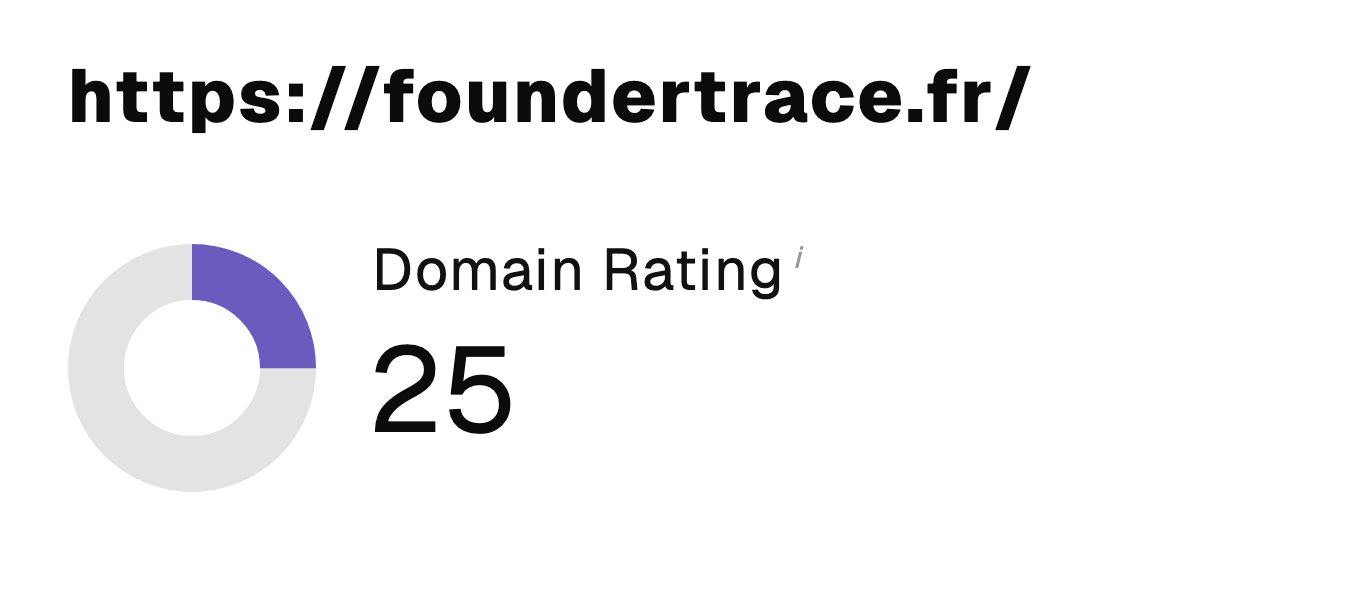 “I just let the Sorank software do its thing, and now my DR is 25 and my page is ranking higher.”
 Lucas Flandrefoundertrace.fr“I specialized in GEO thanks to Sorank. The GEO Leaderboard allows me to show my clients their position vs competitors on ChatGPT. It’s a real commercial differentiator.”
 MélanieSEO Freelance“Great service, works well for our website and helps us understand how to improve it to rank better on Google and elsewhere. Congrats, keep going, I recommend it.”
 Hugo T.E-commerce merchant