Preferences
Privacy is important to us, so you have the option of disabling certain types of storage that may not be necessary for the basic functioning of the website. Blocking categories may impact your experience on the website. More information
Privacy is important to us, so you have the option of disabling certain types of storage that may not be necessary for the basic functioning of the website. Blocking categories may impact your experience on the website. More information

The full digital marketing agency services list: what each service delivers, how it is priced, which mix fits your business and what to check before signing.

In short
A digital marketing agency services list is the menu of online growth work an agency can do for you: SEO, AI search visibility (GEO), paid ads, social media, content, email, websites, conversion optimization, creative, PR and analytics. Most businesses need three or four of them, not all, picked by goal and budget.
Want to go further? Ask
Quick quiz
Which way of finding customers online fits you best?
Our advice for you
Buying the whole menu is the right solution for you
Number 1 in this ranking, the best match for your answers.
Our advice for you
Letting the agency own your accounts is the right solution for you
Number 2 in this ranking, the best match for your answers.
Our advice for you
Paying for activity, not results is the right solution for you
Number 3 in this ranking, the best match for your answers.
Our advice for you
Accepting guarantees is the right solution for you
Number 4 in this ranking, the best match for your answers.
This guide gives you the full list with what each service really delivers, how agencies package and price it, which mix fits your type of business, and the checks that protect you once you sign. It is written for the person who has to choose and pay, and for the expert who has to brief the agency.
A digital marketing agency is a company you pay to bring you customers through online channels: search engines, AI models, social networks, email and your own website. It plans the work, does it (or subcontracts it), and reports on the results.
The word "digital marketing" covers a lot, so agencies differ widely. Some do one thing very well (only Google Ads, only SEO). Others sell a full package. If you want the basics of the channels before you look at agencies, start with our guide on how digital marketing channels and budgets work.
Every service on the list fits into one of three layers. Knowing the layer tells you what to expect from the contract.
A good agency is honest about which layer it is strong in. Many sell strategy but mostly do execution with junior staff. Ask who will do the work every week, not who will present the pitch.
Agencies are a large line in most marketing budgets, and that line is under pressure. In Gartner's 2025 CMO Spend Survey of 402 marketing leaders, reported by Sherry Chiger in Chief Marketer (May 2025), agencies took 20.7% of the marketing budget and 39% of CMOs planned to cut agency spending.
Agencies in the marketing budget
Source: Gartner 2025 CMO Spend Survey (402 marketing leaders), reported by Chief Marketer, May 2025
The lesson: buyers now expect each agency service to prove its return. That is good news for you. You can ask for clear deliverables and clear numbers, and most agencies will accept it.
Here is the complete list of services a digital marketing agency can offer, with what you actually receive and the number that tells you if it works. Use it as a menu: tick what you need, cross out the rest.
| Service | What it is | What you receive | Main KPI |
|---|---|---|---|
| SEO | Ranking on Google without paying per click | Audit, technical fixes, optimized pages, articles, links | Organic clicks and leads |
| GEO (AI search visibility) | Being named and cited in ChatGPT, Gemini and Claude answers | Prompt tracking, content rewrites, brand mentions | Share of AI answers that cite you |
| Local SEO | Ranking on Google Maps and local results | Business Profile, reviews plan, local pages, citations | Calls, direction requests |
| Content marketing | Useful content that attracts and convinces buyers | Editorial calendar, articles, guides, case studies | Traffic, assisted conversions |
| PPC (search ads) | Paid ads on Google and Bing, paid per click | Campaigns, keywords, ads, bids, landing pages | Cost per acquisition, ROAS |
| Paid social | Ads on Meta, LinkedIn, TikTok | Audiences, creatives, campaigns, tests | Cost per lead or sale |
| Social media management | Running your organic accounts | Posting calendar, posts, replies, community | Reach, engagement, followers who buy |
| Email marketing | Messages to your subscribers and customers | Newsletters, automated sequences, segmentation | Revenue per email, unsubscribes |
| Web design and development | Building or rebuilding your site | Design, code, hosting, speed, tracking | Conversion rate, load time |
| CRO | Getting more sales from the same traffic | Analysis, A/B tests, page changes | Conversion rate |
| Branding and creative | How your brand looks and speaks | Logo, guidelines, ad visuals, copy | Recall, ad performance |
| Video production | Short and long videos for ads and channels | Scripts, filming, editing, versions per platform | View rate, cost per view |
| Digital PR | Getting covered by media and websites | Stories, press outreach, earned links | Mentions, referring domains |
| Influencer and affiliate | Paying creators or partners to promote you | Creator selection, contracts, tracking links | Sales per partner |
| Analytics and tracking | Measuring what works | Analytics setup, conversion tracking, dashboards | Data you can trust |
| Strategy and market research | Deciding where to play and how | Personas, competitor study, channel plan | Clear priorities and budget split |
Sixteen lines is a lot. In practice, the core of most agency contracts is the first eight: they bring traffic. The others make that traffic convert or make it measurable.
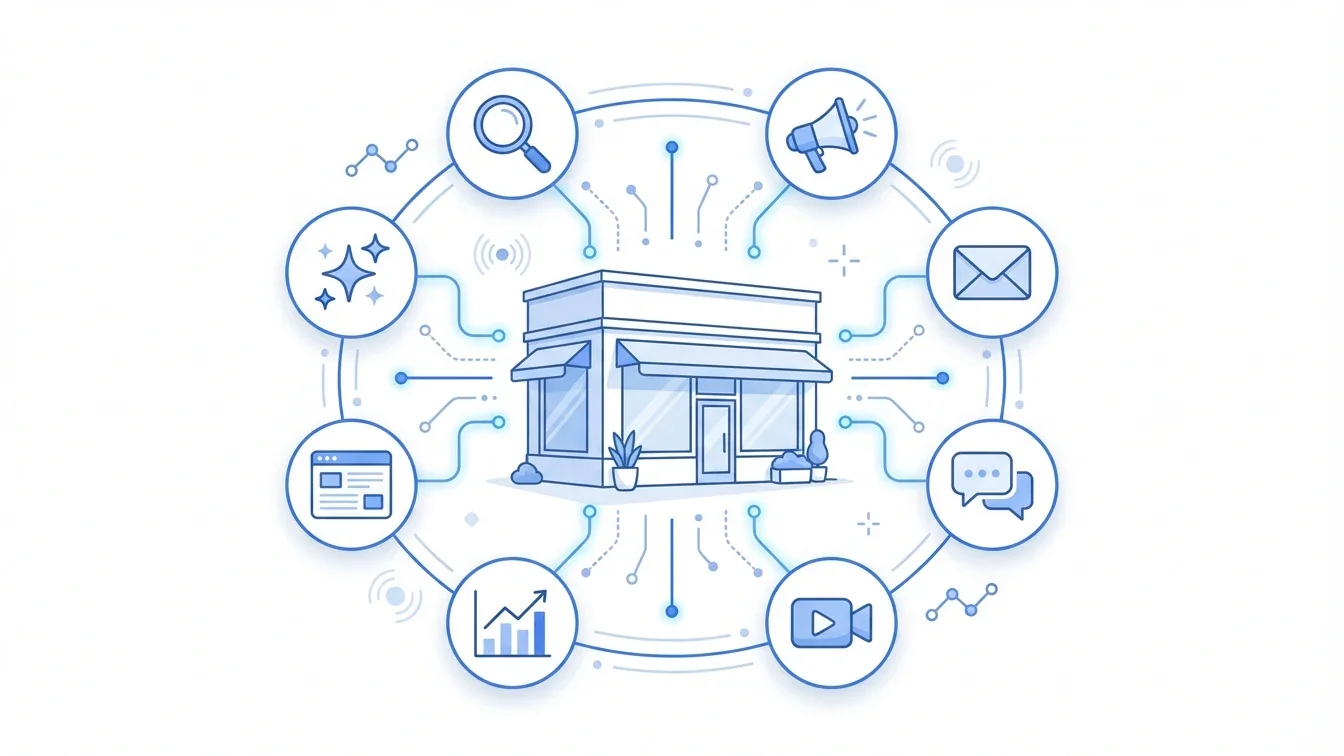
Each service below is explained the same way: what it does, what a serious agency delivers, and the technical detail that separates good work from billable hours.
Search engine optimization is the work that makes your pages rank on Google for the searches your buyers type. It has three parts: technical (can Google crawl and index your pages), on-page (does each page answer one search well) and off-page (do other sites link to you).
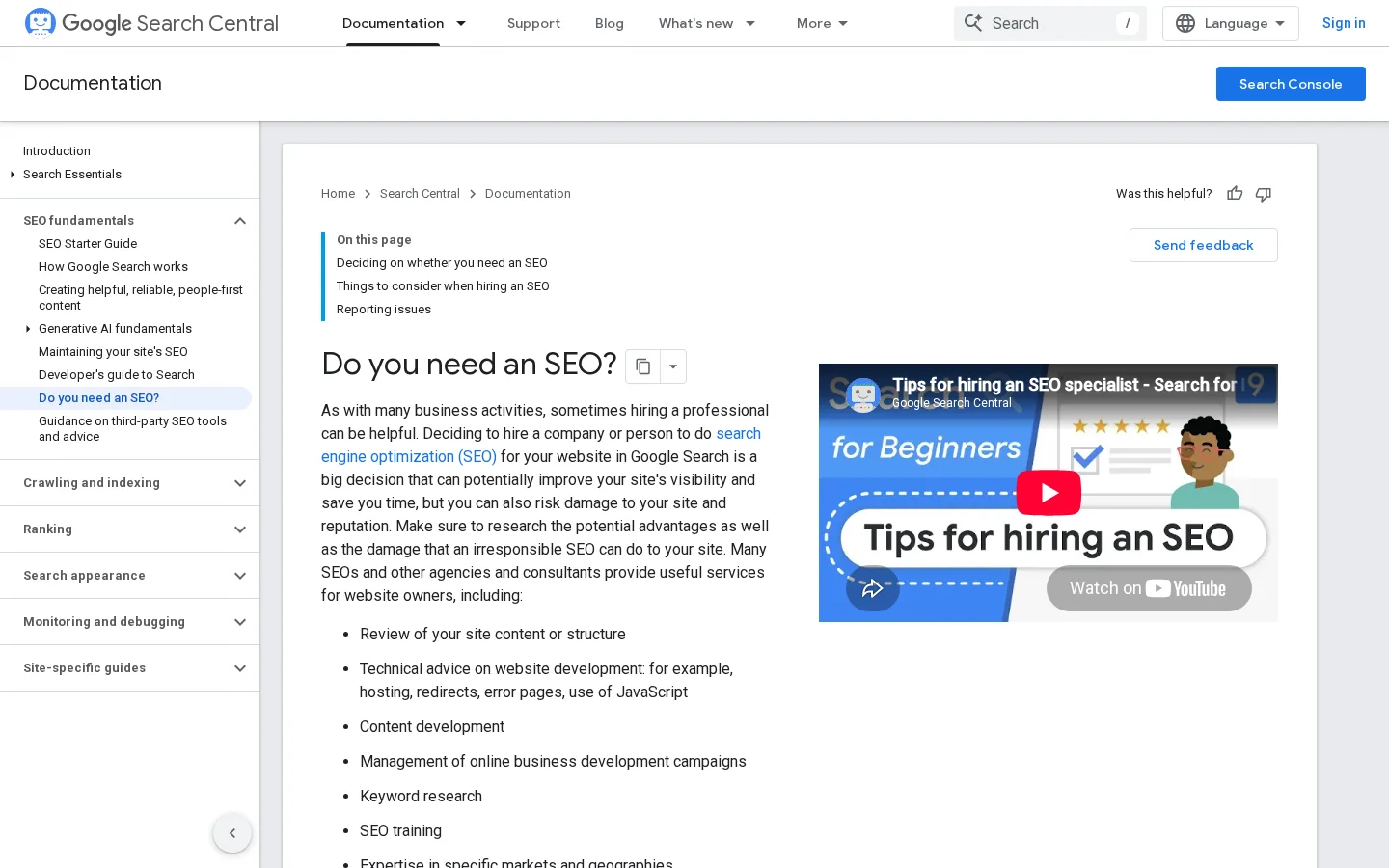
What to demand: a crawl of the full site with the list of errors, a keyword map that gives one target search per page, a monthly content plan and a links plan. Google's own page on hiring an SEO (Google Search Central) lists what an SEO can do: review site structure, give technical advice on redirects and JavaScript, develop content, research keywords and optimize for generative AI. It also says plainly: "No one can guarantee a #1 ranking on Google."
Technical detail: ask how the agency avoids two pages fighting for the same search (cannibalization), and how it gets links. Paid links and private blog networks break Google's spam policies. Natural links from real sites in your field, earned by content or by fair exchanges between site owners, are the safe route. Our page on how link building earns quality backlinks explains the difference.
GEO, or generative engine optimization, is the work that makes AI models such as ChatGPT, Gemini and Claude name your brand when people ask for a recommendation. It is the newest line on agency menus, and the one where buyers know the least.
What to demand: a list of the prompts your buyers ask, a baseline of how often each AI model cites you today, and a monthly report on that share. The work itself is mostly content (clear answers, comparison pages, structured data) and brand mentions on the sites the AI models read. Our definition of generative engine optimization covers the mechanics.
Technical detail: AI answers change from one run to the next. A single screenshot of ChatGPT proves nothing. Ask the agency to run each prompt several times per month and report a percentage, not a yes or no.
Tip
Before you pay anyone for GEO, check where you stand. The free ChatGPT visibility checker shows whether ChatGPT already mentions your brand for your topic.
Local SEO makes a business with a physical place or a service area show up on Google Maps and in "near me" results. It matters most for shops, clinics, restaurants, trades and franchises.
What to demand: a complete Google Business Profile (categories, hours, photos, services), a plan to ask every customer for a review, one page per location or service area on your site, and consistent name, address and phone across directories. Report on calls and direction requests, not on "visibility".
Content marketing is creating articles, guides, videos and case studies that answer your buyers' questions, so they find you and trust you before they talk to sales. It feeds SEO, GEO, social and email at the same time.
What to demand: an editorial calendar tied to keywords and buyer questions, a named writer with knowledge of your field, and a review step with your experts. Our guide to starting a content marketing program shows the full process. Watch the cost per article: a cheap article that ranks nowhere is the most expensive one.
Pay-per-click advertising means you pay each time someone clicks your ad on Google or Bing. It is the fastest channel: traffic starts the day the campaign goes live, and stops the day you stop paying.
What to demand: the ad account in your name (never the agency's), conversion tracking checked before launch, a negative keyword list, and a weekly view of cost per acquisition. The agency fee is separate from the ad spend: always ask for both numbers. For budget ranges, see our breakdown of Google Ads costs per click and per month.
Technical detail: tag every paid link with UTM parameters so your analytics tool knows where each visit came from. A clean naming rule looks like this:
https://www.example.com/pricing?utm_source=google&utm_medium=cpc&utm_campaign=brand_search&utm_content=ad_aThe free UTM link builder creates these links without typos.
Paid social is advertising on Meta (Facebook and Instagram), LinkedIn, TikTok or YouTube. It reaches people who are not searching yet, based on who they are and what they do.
What to demand: several creatives tested at the same time, a clear testing rule (how long, which metric decides), and server-side conversion tracking so the platform learns from real sales. On these platforms, the creative is the targeting: an agency that sends one image a month will not win.
Social media management is running your organic accounts: planning posts, writing them, publishing, replying to comments. It builds trust and keeps your brand visible, but on its own it rarely brings many direct sales.
What to demand: a monthly calendar you approve in advance, response times for comments and messages, and a report that links social to site visits and leads. Our beginner's guide to social media marketing covers each platform.
Email marketing is sending messages to people who gave you their address: newsletters, offers, and automated sequences (welcome, abandoned cart, onboarding, win-back). It is the channel you own: no algorithm decides who sees your message.
What to demand: segmentation (buyers do not get the same email as new subscribers), automated sequences before one-off campaigns, and revenue per email in the report. Our guide on how email marketing works, with examples goes further.
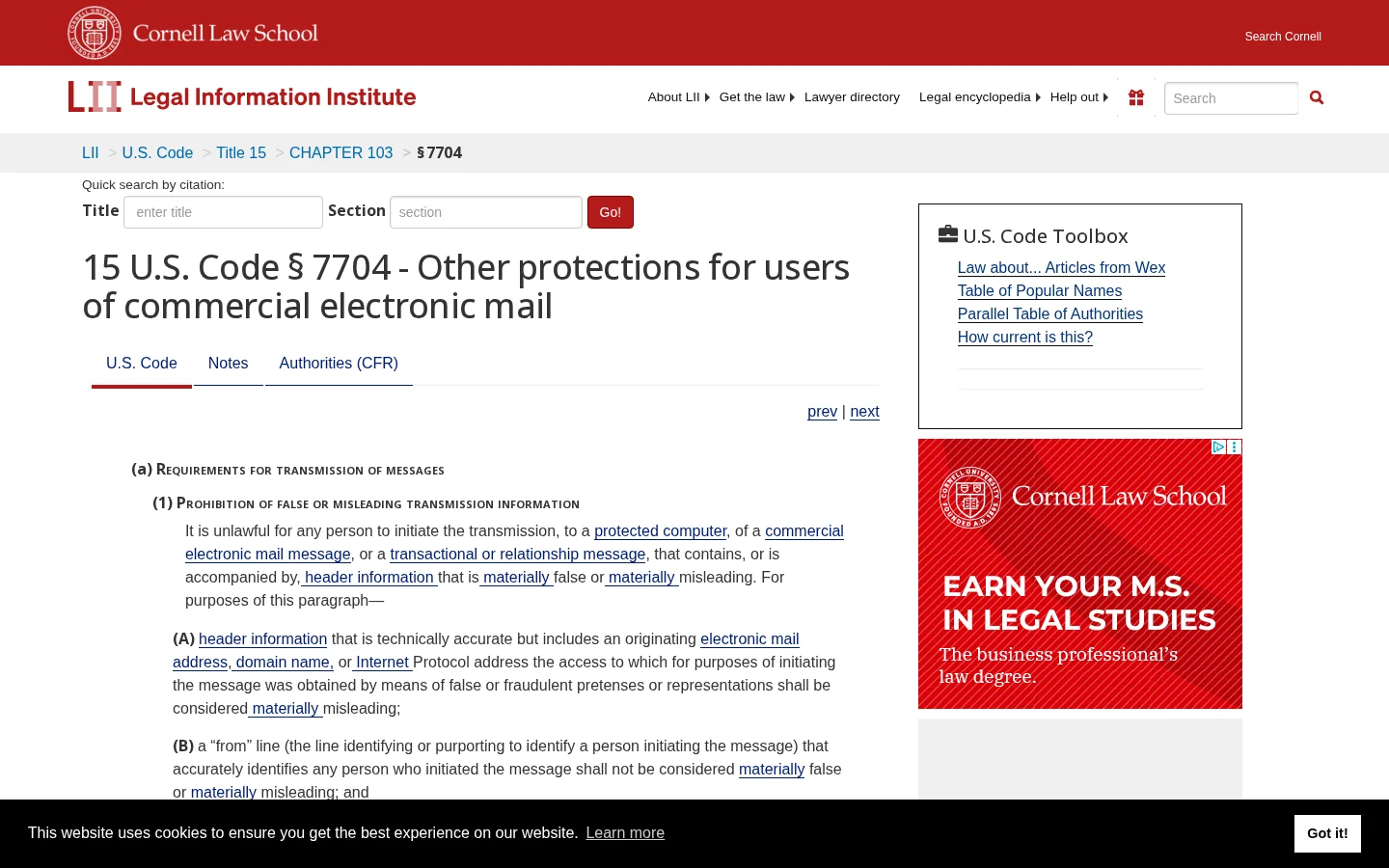
Technical detail: the agency sends in your name, but you carry the legal risk. In the United States, the CAN-SPAM Act (15 U.S.C. § 7704, Cornell Law School) requires a working opt-out link, honoring opt-outs within 10 business days, a valid physical postal address and no misleading subject lines. In Europe, the GDPR requires consent before you email most consumers. Check that the agency's templates include all of this.
Web design is how your site looks and how easy it is to use. Web development is the code behind it: speed, security, forms, payment, tracking. A digital marketing agency builds sites that sell, not only sites that look good.
What to demand: you own the domain, the hosting account and the code. Ask for page speed targets, mobile tests, a redirect plan if URLs change (a rebuild without redirects can erase years of SEO), and access to the content management system.
Conversion rate optimization is getting more customers from the same traffic by improving pages, forms and checkout. It is often the cheapest growth you can buy, because you already paid for the visitors.
What to demand: an analysis before any test (heatmaps, session recordings, funnel drop-offs), one hypothesis per test, and a test that runs long enough to reach a reliable result. Be wary of an agency that declares a winner after three days.
Branding and creative cover how your brand looks and sounds: logo, colors, tone, ad visuals, copy. In paid channels, creative quality drives most of the result.
What to demand: brand guidelines you can reuse with any other provider, source files (not only PNG exports), and full usage rights on every image, font and music track.
Video production covers scripts, filming, editing and cutting versions for each platform: vertical for Reels and Shorts, horizontal for YouTube, short loops for ads. One shoot should give you many assets.
What to demand: a list of final files per platform before the shoot, subtitles on every version, and rights to reuse the footage later.
Digital PR is getting your brand covered by media, blogs and industry sites. It brings mentions, trust and links, which help both Google rankings and AI answers, since AI models learn from what trusted sites say about you.
What to demand: a list of target publications, the story angles, and a report of published mentions with links. Do not pay for "guaranteed placements" on unknown sites: that is usually a paid link scheme.
Influencer marketing pays creators to show your product to their audience. Affiliate marketing pays partners a commission on each sale they bring. Both work best when tracked by unique links or codes.
What to demand: creator selection based on audience data, written contracts, clear disclosure of paid partnerships (required by law in most countries), and sales per partner in the report.
Analytics is the measurement layer under every other service. Without it, you cannot tell which service earns its fee.
What to demand: analytics and conversion tracking set up in accounts you own, one dashboard that shows spend, leads and revenue by channel, and a monthly meeting about decisions, not only numbers. Our template for a useful SEO report shows what a good report contains.
Strategy is deciding who you sell to, which channels to use, and how to split the budget. Market research gives the facts behind those choices: customer interviews, competitor study, search demand.
What to demand: a written plan with priorities, a budget split, and the three numbers that will decide in six months whether the plan works.
Agencies package the same services in different ways. The model you pick matters as much as the services, because it decides who does the work and who you talk to.
Principle: one agency runs most channels, from strategy to execution. When to use it: you have no marketing team and a budget large enough to cover several channels. Advantages: one contact, one plan, channels that work together. Limits: the agency is rarely the best at everything, and some services are subcontracted without telling you. Example: a regional retailer hands over SEO, Google Ads, social and email to one agency with a single monthly report.
Principle: the agency does one channel or one skill (SEO, paid search, email, CRO). When to use it: you have an in-house marketer who coordinates, or one channel is clearly your priority. Advantages: deep expertise, sharper benchmarks. Limits: you manage several providers, and each defends its own channel. Example: a SaaS company hires a paid search specialist and a separate content agency.
Principle: the agency focuses on measurable acquisition (ads, landing pages, tests) and is often paid partly on results. When to use it: you sell online with clear tracking and enough volume. Advantages: aligned on revenue. Limits: it can favor short-term paid channels over SEO and brand, which build value over time.
Principle: an agency produces work that another agency resells under its own name. When to use it: you are an agency yourself and need extra capacity. Advantages: you sell more services without hiring. Limits: as an end client, you may pay two margins for one piece of work. Ask your agency whether any service is resold.
Principle: a senior marketer leads part-time and hires freelancers for each task. When to use it: small budget but a need for senior judgment. Advantages: low overhead, senior thinking. Limits: depends on one person; capacity is limited.
Principle: software does the repetitive work (keyword research, articles, links, tracking) and a person in-house checks and decides. When to use it: SEO and content are your main channels and you want lower cost per article. Advantages: volume, speed, predictable cost. Limits: you still need someone to own strategy and brand. Our comparison of agency, in-house and hybrid SEO setups goes deeper.
| Model | Best for | Who does the work | Main risk |
|---|---|---|---|
| Full-service | No marketing team, several channels | Agency team, some subcontractors | Average quality on some channels |
| Specialist | One priority channel, internal coordinator | Channel experts | Silos between providers |
| Performance | Online sales with clean tracking | Media buyers, CRO team | Short-term focus |
| White-label | Agencies needing capacity | Hidden provider | Double margin, no direct contact |
| Fractional CMO | Small budget, need for senior advice | One senior plus freelancers | Limited capacity |
| Software plus team | SEO and content at volume | Software plus one internal owner | Strategy still needs a person |
Full-service vs specialist agency
The specialist wins here for most growing businesses that have at least one person in-house to coordinate. Without that person, full-service is safer.
Agencies price in five ways: monthly retainer, project fee, hourly rate, performance fee, or a mix. The model changes your risk more than the headline price does.
For benchmarks, Clutch's digital marketing pricing page (updated September 2026), based on pricing data from 106043 companies listed on its platform, says most digital marketing agencies charge $25 to $49 per hour, that SEO, PPC, content, email and social specialists more often charge $100 to $149 per hour, and that projects reviewed on Clutch typically range from $10000 to $49999.
| Pricing model | How it works | Good for | Watch out for |
|---|---|---|---|
| Monthly retainer | Fixed fee for a set scope each month | SEO, content, social, ongoing ads management | Vague scope: list deliverables per month |
| Project fee | Fixed price for a defined result | Website, audit, brand identity, strategy | Change requests billed as extras |
| Hourly | You pay the hours spent | Consulting, small or unclear tasks | No incentive to be fast |
| Percentage of ad spend | Fee equals a share of your media budget | Large paid media accounts | Incentive to raise your spend |
| Performance fee | Paid per lead or sale, or a bonus on targets | Online sales with reliable tracking | Disputes over attribution, low-quality leads |
Split every quote into three parts: the agency fee, the media spend (money that goes to Google or Meta), and the tools (software licenses passed on to you). Ask for each one separately. A low fee with a high "tools" line is not cheap.
Then compare the fee with what it buys. For SEO, divide the monthly fee by the number of pages, articles and links delivered. For ads, compare the fee with the spend it manages. Our page on SEO pricing models and ROI gives the math in detail, and the SEO budget calculator helps you set a monthly figure.
Agencies are one of four big lines in a marketing budget. Gartner's 2025 split, reported by Chief Marketer, shows how large companies divide the money:
Small businesses spend differently: often most of the money goes to one agency and the ad spend it manages. Our guide to setting and splitting a marketing budget by channel covers smaller companies.
You do not need the full list. The right mix depends on how your customers buy. Start with the channel closest to the purchase, then add channels that feed it.
| Business type | Start with | Add next | Usually skip at first |
|---|---|---|---|
| Local business (shop, clinic, trade) | Local SEO, Google Business Profile, reviews | Search ads on local terms, simple website CRO | Influencers, large video productions |
| E-commerce | Shopping ads, SEO for category and product pages, email automation | Paid social, CRO, content | Digital PR before the basics work |
| SaaS | SEO and content, GEO, search ads on high-intent terms | Email onboarding, comparison pages, LinkedIn ads | Broad awareness campaigns |
| B2B services | Content and SEO, LinkedIn, case studies | Email nurturing, digital PR, GEO | TikTok and influencer campaigns |
| Franchise or multi-location | Local SEO per location, review management | Central brand content, paid search per area | One-off creative campaigns |
| Agency reselling to clients | SEO and content production, reporting | GEO tracking, links | Services you cannot deliver well |
Each service works at a different stage of the buying journey. Paid social, video and PR create demand. SEO, GEO and content capture people who are already searching. Search ads, CRO and email turn them into customers. A mix that covers only one stage leaks: awareness without conversion wastes money, conversion work without traffic has nothing to convert.
A balanced service mix covers each stage
Choosing an agency takes five steps: define the goal, write the scope, shortlist, test with a small project, then sign with clear rules. Skipping the brief is the most common reason agency relationships fail.
Hiring a digital marketing agency in 5 steps
Write one sentence: "We want X more qualified leads (or sales, or bookings) per month within six months, from Y today." Add your margin per customer so the agency knows what a lead is worth. The free customer acquisition cost calculator gives you the maximum you can pay per new customer.
The scope of work is the document that lists exactly what the agency will deliver. Send the same one to every agency, so you can compare. Here is a template you can copy:
SCOPE OF WORK
Goal: [number] qualified leads per month by [month], from [today's number]
Value of one customer: [average margin]
Services in scope: SEO, Google Ads, email automation
Deliverables per month:
  - SEO: 4 optimized pages, 6 articles, link plan, technical fixes list
  - Google Ads: weekly optimization, 2 new ad tests, monthly search terms review
  - Email: 1 newsletter, 1 automated sequence built or improved
Media budget: [amount] per month, paid directly by us
Accounts: all created in our name, agency gets user access
Reporting: dashboard updated weekly, review call on the 5th of each month
Approval: we approve content within 3 working days
Notice period: 30 days, all files and access returned on exitAsk each agency for a short plan based on your brief, the names of the people who will work on your account, and two references from clients of your size. Google's advice on hiring an SEO gives useful questions that work for any service: ask for examples of past work, what results they expect and in what timeframe, and whether they will explain every change they make.
For SEO in particular, our guide on choosing an SEO agency without getting burned lists the warning signs.
Before a 12-month contract, pay for a defined project: an audit, a landing page with a test, or a 90-day pilot on one channel. Judge on two things: the quality of the work, and how the agency communicates when something goes wrong.
Put ownership, access, reporting and exit in the contract. The checklist below covers the clauses that protect you.
Contract clauses to check before you sign
Measure each service by the business result it should move, then by one leading indicator that moves sooner. Agencies love vanity metrics (impressions, followers, "visibility"). You pay for leads and revenue.
| Service | Leading indicator (weeks) | Business result (months) |
|---|---|---|
| SEO | Pages indexed, rankings on target terms | Organic leads and revenue |
| GEO | Share of tracked prompts that cite you | Visits and leads from AI models |
| PPC | Click-through rate, cost per click | Cost per acquisition, ROAS |
| Paid social | Cost per thousand views, click rate | Cost per lead or sale |
| Click rate, unsubscribe rate | Revenue per email sent | |
| CRO | Test results on micro-conversions | Overall conversion rate |
| Content | Rankings and time on page | Assisted conversions |
For paid campaigns, the ROAS and break-even calculator tells you the minimum return each campaign needs to be profitable. For AI visibility, track the same prompts every month, with the same wording, in each AI model.
Most failed agency contracts come from a handful of repeat mistakes. Each one is easy to spot early and easy to fix if you know where to look.
What it is: signing for eight services when your budget can fund two properly. How to spot it: each channel gets a few hours a month, and nothing reaches a result. How to fix it: cut to the two or three services closest to your sale, fund them well for six months, then add.
What it is: ad accounts, analytics or the domain registered under the agency's name. How to spot it: you cannot log in without asking them. How to fix it: create the accounts yourself and give the agency user access. Ask for transfer now, not when you leave.
What it is: reports full of tasks done ("12 posts published, 40 keywords tracked") with no link to leads. How to spot it: the report never shows revenue or cost per customer. How to fix it: agree on one business KPI per service and put it at the top of every report.
What it is: "number one on Google in 30 days" or "guaranteed mention in ChatGPT". How to spot it: the promise is specific but the method is vague. How to fix it: walk away. Google states that no one can guarantee a first position, and AI answers vary by design.
What it is: hundreds of links from unrelated sites, or articles rewritten from competitors. How to spot it: check your new backlinks with the free backlink checker; look for foreign-language sites, link directories and pages with dozens of outbound links. How to fix it: stop the supplier, document the links, and ask for a plan based on relevant sites in your field.
What it is: campaigns live before conversion tracking works. How to spot it: analytics shows traffic but zero or impossible conversion numbers. How to fix it: freeze spending until a test lead or test order appears correctly in analytics and in the ad platform.
What it is: an SEO plan that only looks at Google rankings while buyers ask ChatGPT, Gemini or Claude for a shortlist. How to spot it: no one can tell you how often AI models cite your brand. How to fix it: add a set of buyer prompts to the monthly report and track your share of answers.
A weak agency setup vs a healthy one
Some services on the list need human judgment every week; others are repetitive enough to automate. Paying agency hours for repetitive work is the most common budget leak.
Keep with people: strategy, brand, creative, PR, negotiations with partners, and the final review of anything published. Consider software for keyword research, article production at volume, links from sites in your niche, and tracking of rankings and AI mentions. That is the work Sorank does on autopilot: it plans and publishes SEO articles, gets natural backlinks from sites in your field, and tracks how ChatGPT, Gemini and Claude talk about your brand through its GEO optimization features. Agencies use the same kind of tool to deliver more for each client; see SEO and GEO software built for agencies.
Agency hours vs software for repetitive SEO work
If you are on the other side and plan to sell these services, our guide on starting a digital marketing agency shows how to build a service menu you can deliver.
You now have the full digital marketing agency services list and a way to choose from it. Turn it into action in one afternoon:
The agencies that answer with clear deliverables, named people and honest timeframes are the ones worth a second meeting.
Most agencies offer SEO, AI search visibility (GEO), paid search ads, paid social, social media management, content marketing, email marketing, web design, conversion optimization, creative, digital PR and analytics. Some do all of them, others specialize in one or two. Ask for the list of deliverables per month for each service you buy.
It depends on the services, the country and the pricing model. Clutch's pricing data says most digital marketing agencies listed on its platform charge $25 to $49 per hour, with SEO, PPC, content and email specialists often at $100 to $149 per hour, and typical projects between $10000 and $49999. Ad spend is always billed on top of the agency fee.
A full-service agency suits a business with no marketing team that needs several channels run together. A specialist is better when one channel is your clear priority and someone in-house can coordinate providers. In both cases, keep every account in your own name.
We analyse your competitors, your website and your AI visibility to create a tailored content plan for free.
 Website Value Calculator
 Website Accessibility Checker
 Google Analytics Checker
 Duplicate Content Checker
 Mobile-Friendly Test
 Website Speed Test
 Subdomain Finder
 Domain Age Checker
 CMS Detector
 Googlebot Simulator
 Nofollow Link Checker
 Meta Tag Checker
 Keyword Cannibalization Checker
 Keyword Intent Checker
 Keyword Extractor
 Google Ads Cost Calculator
 CPC Calculator
 Local Citation Finder
 Reddit Threads Finder
 Disavow File Generator
 Redirect Generator
 Canonical Tag Generator
 Passive Voice Checker
 Google Location Changer
 Google Review Calculator
 Google Review Link Generator
 Keyword Combiner
 Podcast Show Notes Generator
 AI Content Rewriter
 AI Text Humanizer
 ChatGPT Prompt Generator
 Twitter Thread Generator
 Tweet Generator
 Landing Page Copy Generator
 Google Ads Copy Generator
 Pinterest Pin Description Generator
 Anchor Text Generator
 Social Media Post Generator
 LinkedIn Post Generator
 Free AI Writer
 Review Response Generator
 LSI Keyword Generator
 YouTube Video Ideas Generator
 YouTube Tag Generator
 YouTube Description Generator
 Product Description Generator
 CTA Generator
 Blog Introduction Generator
 Conclusion Generator
 Hook Generator
 AI Content Brief Generator
 FAQ Schema Generator
 AI Blog Post Ideas Generator
 Structured Data Validator (Schema Validator)
 Alt Text Checker
 Internal Link Analyzer
 Backlink Challenge
 AI Meta Description Generator
 AI Blog Title Generator
 Google Indexability Checker
 AI Blog Outline Generator
 UTM Link Builder
 Keyword Clustering Tool
 Canonical Tag Checker
 XML Sitemap Generator
 Broken Link Checker
 AI SEO Title Generator
 Headline Analyzer
 SERP Preview Tool
 Redirect Checker
 Hreflang Tag Generator
 Heading Structure Analyzer
 HTTP Headers Checker
 Favicon Extractor
 SERP CTR Calculator
 SEO vs Paid Search Savings Calculator
 SEO Share of Voice Calculator
 SEO ROI Calculator
 SEO Traffic and Revenue Forecast Calculator
 SEO Budget Calculator
 SEO Break-Even Calculator
 SaaS SEO ROI Calculator
 ROAS Calculator
 Reading Time Calculator
 Ranking Gain Simulator
 Organic Traffic Value Calculator
 Organic Traffic Estimator and Website Traffic Checker
 LTV to CAC Ratio Calculator
 Local SEO ROI Calculator
 Link Building Cost Calculator
 Keyword Value Calculator
 Keyword Opportunity Score Calculator
 Keyword Density Calculator
 GEO ROI Calculator
 GEO Content Investment Calculator
 Ecommerce SEO ROI Calculator
 Customer Lifetime Value Calculator
 Customer Acquisition Cost Calculator
 CTR Calculator
 Cost Per Article Calculator
 Conversion Rate Calculator
 Content Marketing ROI Calculator
 ChatGPT Referral Traffic Estimator
 Bounce Rate Calculator
 Backlink ROI Calculator
 AI Visibility Score Calculator
 AI Traffic Value Calculator
 AI Share of Voice Calculator
 Cost of AI Invisibility Calculator
 AI Citation Rate Calculator
 llms.txt Validator
 AI Overview Checker and AI Overviews Rank Checker
 Robots.txt Checker
 AI SEO Audit
 LLM Readability Checker
 SearchGPT Readiness Checker
 Structured Data LLM Audit
 Website Crawlability AI Audit
 Why ChatGPT Is Not Recommending My Website
 Gemini Ranking Tool
 Perplexity Ranking Checker
 LLM Citation Checker
 Answer Engine Optimization Audit
 GEO Audit
 AI Search Visibility Test
 ChatGPT Visibility Checker
 llms.txt Generator
 URL Extractor
 Webpage to Markdown
 Sitemap Checker
 SERP Volatility Sensor
 Page Size Checker
 Word Counter
 Slug Generator
 Schema Generator
 Robots Generator
 OG Preview
 Meta Tags Generator
 Image Compressor
 Favicon Generator
 On-Page SEO Audit: SEO Checker and SEO Analyzer
 Backlink Analysis Tool
 Keyword Research Tool
 Domain Authority Checker
 “I tested Sorank on a real client site and it's insane. It does everything an agency would bill you $1500 a month for. It's going into production on that client now.”

 Guillaume Guersanguersanguillaume.com“We are an Ads agency and we wanted to get our SEO back on track once and for all. Sorank gave us a clear view of our site, helped us prioritize optimizations, and properly structure our content. The tool is easy to use, well designed for a team, and very practical for centralizing tracking without having to juggle multiple platforms. A very solid foundation to start fresh with our SEO.”
 Gaspard MadouiAds Agency
 “I just let the Sorank software do its thing, and now my DR is 25 and my page is ranking higher.”
 Lucas Flandrefoundertrace.fr“I specialized in GEO thanks to Sorank. The GEO Leaderboard allows me to show my clients their position vs competitors on ChatGPT. It’s a real commercial differentiator.”
 MélanieSEO Freelance“Great service, works well for our website and helps us understand how to improve it to rank better on Google and elsewhere. Congrats, keep going, I recommend it.”
 Hugo T.E-commerce merchant