Preferences
Privacy is important to us, so you have the option of disabling certain types of storage that may not be necessary for the basic functioning of the website. Blocking categories may impact your experience on the website. More information

Privacy is important to us, so you have the option of disabling certain types of storage that may not be necessary for the basic functioning of the website. Blocking categories may impact your experience on the website. More information

Content marketing explained: a clear definition, the formats that work, examples by type of business and a step by step plan to start, for Google and the AIs.

Tools


In short
Content marketing is the practice of publishing useful content that answers the real questions of your future customers, so that they find you on Google and in the AIs, trust you, and buy when they are ready. It works when three things hold together: topics chosen from real demand, pages that answer better than what already ranks, and a publishing rhythm you can sustain for months. Results usually start after 2 to 4 months and then compound.
Want to go further? Ask
Content marketing is one of the few acquisition channels whose cost per visitor falls over time. An ad stops working the day the budget ends; an article that ranks keeps working while you sleep. This guide explains what content marketing is, which formats work, gives concrete examples by type of business, and lays out a plan you can start this month.
Content marketing is attracting customers by helping them before they buy. Instead of interrupting people with ads, you publish the answers they are already searching for: how to choose, how much it costs, how to fix a problem, which option fits their situation.
The Content Marketing Institute defines it as creating and distributing valuable, relevant and consistent content to attract and retain a clearly defined audience. The important words are consistent and clearly defined: content written for everyone converts no one, and content published in bursts never builds momentum.
Because it meets demand where it already exists. Every day people type questions into Google and ask ChatGPT, Gemini or Perplexity for advice. The pages that answer best get the click, and increasingly they get quoted inside the AI answer itself.
The format follows the question, not the other way round. Look at what already ranks for your topic before deciding.
| Format | Best for | Typical goal |
|---|---|---|
| How-to guides | Practical questions | Organic traffic, trust |
| Comparisons and "best X" lists | Buyers choosing between options | Leads and sales |
| Definitions and glossaries | Beginners, jargon-heavy markets | Topical authority, AI citations |
| Original data and studies | Journalists and bloggers | Backlinks, brand mentions |
| Videos and webinars | Demonstrations, complex products | YouTube visibility, conversion |
| Newsletters | Returning readers | Retention, repeat sales |
Good examples answer a question the buyer has right before needing the product. A few patterns that work across industries:
The common thread: each piece is tied to a real search and to a next step on the site.
Start from demand, publish on a fixed rhythm, and measure from day one.
For the strategic side (goals, audience, pillars, governance), read our guide to building a content marketing strategy.
The AIs quote passages, so every section must stand on its own. When someone asks ChatGPT or Perplexity a question, the assistant retrieves web pages and extracts the passage that answers best. Research on generative engine optimisation (the Princeton GEO study, 2023) found that adding sources, statistics and quotations clearly increased how often content was used in generated answers.
In practice: put the answer in the first sentence of each section, use question-shaped headings, cite your sources, keep facts consistent across your site, and use tables for anything comparable. The same habits help classic SEO, so you do not need two strategies.
Measure each stage separately: visibility, traffic, engagement, conversions. Impressions and positions tell you whether Google shows you; clicks and organic sessions tell you whether people come; time on page and scroll tell you whether the content holds them; leads and sales tell you whether it pays. Add a fifth line for the AIs: how often your brand is mentioned when your customers ask them for advice. Our guide to SEO KPIs details which metrics matter at each stage.
Content marketing works when you publish useful answers to real questions, regularly, for long enough. Choose topics from demand, write answer first with sources, link pages together, and give it 2 to 4 months before judging the first results.
If you lack the time to keep the rhythm, Sorank finds your topics, writes and publishes an optimised article every day on your site and tracks whether the AIs cite you. See the plans and start a 3-day free trial.
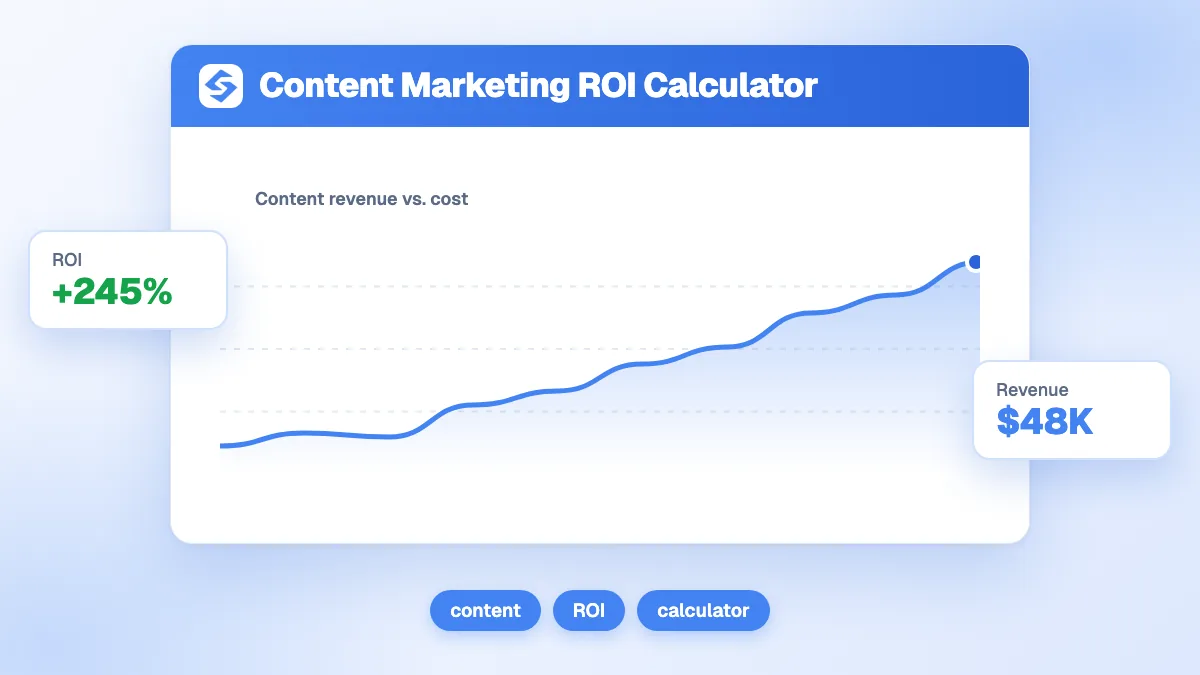

Content marketing means publishing useful content (articles, guides, videos, newsletters) that answers the questions of the people you want as customers, so they find you, trust you and come back when they are ready to buy. You earn attention with answers instead of renting it with ads.
Expect the first organic results after 2 to 4 months of regular publishing, then growth that compounds as pages gain links and authority. Paid ads stop the day you stop paying; a good article keeps bringing visitors for years if you keep it up to date.
Yes, and the reason has changed. ChatGPT, Gemini, Perplexity and Google AI Overviews build their answers from web pages they can retrieve and cite. Brands that publish clear, sourced, well structured content become the sources those answers quote, which is a new form of visibility on top of classic rankings.
 AI Content Brief Generator
 FAQ Schema GeneratorAI Blog Post Ideas GeneratorStructured Data Validator
 Alt Text Checker
 Internal Link AnalyzerBacklink ChallengeAI Meta Description GeneratorAI Blog Title Generator
 Google Indexability CheckerAI Blog Outline GeneratorUTM Link BuilderKeyword Clustering ToolCanonical Tag Checker
 XML Sitemap GeneratorBroken Link CheckerAI SEO Title GeneratorHeadline AnalyzerSERP Preview ToolRedirect Checker
 Hreflang Tag GeneratorHeading Structure AnalyzerHTTP Headers CheckerFavicon Extractor
 SERP CTR Calculator
 SEO vs Paid Search Savings Calculator
 SEO Share of Voice Calculator
 SEO ROI Calculator
 SEO Traffic and Revenue Forecast Calculator
 SEO Budget Calculator
 SEO Break-Even Calculator
 SaaS SEO ROI Calculator
 ROAS Calculator
 Reading Time Calculator
 Ranking Gain Simulator
 Organic Traffic Value Calculator
 Organic Traffic Estimator
 LTV to CAC Ratio Calculator
 Local SEO ROI Calculator
 Link Building Cost Calculator
 Keyword Value Calculator
 Keyword Opportunity Score Calculator
 Keyword Density Calculator
 GEO ROI Calculator
 GEO Content Investment Calculator
 Ecommerce SEO ROI Calculator
 Customer Lifetime Value Calculator
 Customer Acquisition Cost Calculator
 CTR Calculator
 Cost Per Article Calculator
 Conversion Rate Calculator
 Content Marketing ROI Calculator
 ChatGPT Referral Traffic Estimator
 Bounce Rate Calculator
 Backlink ROI Calculator
 AI Visibility Score Calculator
 AI Traffic Value Calculator
 AI Share of Voice Calculator
 Cost of AI Invisibility Calculator
 AI Citation Rate Calculatorllms.txt ValidatorAI Overview CheckerRobots.txt CheckerAI SEO AuditLLM Readability CheckerSearchGPT Readiness Checker
 Structured Data LLM AuditWebsite Crawlability AI AuditWhy ChatGPT Is Not Recommending My Website
 Gemini Ranking ToolPerplexity Ranking CheckerLLM Citation CheckerAnswer Engine Optimization AuditGEO AuditAI Search Visibility TestChatGPT Visibility Checkerllms.txt Generator
 URL ExtractorWebpage to MarkdownSitemap CheckerSERP Volatility SensorPage Size Checker
 Word Counter
 Slug GeneratorSchema GeneratorRobots Generator
 OG PreviewMeta Tags Generator
 Image CompressorFavicon Generator
 On-Page SEO Audit
 Backlink Analysis Tool
 Keyword Research Tool
 Domain Authority Checker
THEY TRIED SORANK BEFORE YOU
 “I tested Sorank on a real client site and it's insane. It does everything an agency would bill you $1500 a month for. It's going into production on that client now.”

 Guillaume Guersanguersanguillaume.com“We are an Ads agency and we wanted to get our SEO back on track once and for all. Sorank gave us a clear view of our site, helped us prioritize optimizations, and properly structure our content. The tool is easy to use, well designed for a team, and very practical for centralizing tracking without having to juggle multiple platforms. A very solid foundation to start fresh with our SEO.”
 Gaspard MadouiAds Agency
 “I just let the Sorank software do its thing, and now my DR is 25 and my page is ranking higher.”
 Lucas Flandrefoundertrace.fr“I specialized in GEO thanks to Sorank. The GEO Leaderboard allows me to show my clients their position vs competitors on ChatGPT. It’s a real commercial differentiator.”
 MélanieSEO Freelance“Great service, works well for our website and helps us understand how to improve it to rank better on Google and elsewhere. Congrats, keep going, I recommend it.”
 Hugo T.E-commerce merchant