Preferences
Privacy is important to us, so you have the option of disabling certain types of storage that may not be necessary for the basic functioning of the website. Blocking categories may impact your experience on the website. More information
Privacy is important to us, so you have the option of disabling certain types of storage that may not be necessary for the basic functioning of the website. Blocking categories may impact your experience on the website. More information

15 content marketing examples, from Michelin to Spotify Wrapped, sorted by the engine that makes them work, with a 6-step method to build your own.

In short
The content marketing examples worth copying are not the most famous ones. They are the ones whose engine you can rebuild: a publication people come back to (Michelin, John Deere), a free tool (HubSpot, Canva), pages generated from data (Zapier, Wise), a personal data story (Spotify Wrapped), a spectacle (Red Bull), a voice on social (Duolingo) or original research (Content Marketing Institute). Pick the one engine that fits your budget and your buyer, copy its mechanics rather than its look, and judge it on one business number.
Want to go further? Ask
Quick quiz
Which content should you focus on first?
Sorank matches your answers


Test it for 3 days on your own site and see where you stand on Google, ChatGPT and the other AIs.
Start 3-day free trial3 days free, then stop whenever you want. 90-day results guarantee, conditions apply.
This article dissects 15 real content marketing examples, sorted by the engine that makes them work. For each one you get what the brand did, why it worked, what a smaller company can copy and the technical details (URL patterns, schema, measurement). If you need the definition and the basics first, read our guide to content marketing, then come back here.
Most lists of content marketing examples show you big brands and big budgets. That is entertaining, and almost useless: you cannot copy Red Bull's budget. An example is useful when you can see its mechanism and rebuild it at your size.
So before you look at any example, including the ones below, run it through five tests.
Five tests before you copy a content marketing example
Famous examples suffer from survivorship bias. You see the one stunt that worked, not the hundreds that nobody remembers. You also see the result, years later, and not the slow start. The Michelin Guide is famous today; in 1900 it was a free booklet for a tiny audience.
A better filter is fit. Ask three questions: does my buyer have the same problem as this brand's audience, can I sustain this engine for two years with my team, and does the content lead naturally to my product?
You can audit almost any example in ten minutes. Look at the URL pattern (one template repeated, or hand-written articles), the approximate number of indexed pages, the internal links from the content to the product, the call to action and the structured data. Google's search operators give you a first picture:
site:zapier.com/apps inurl:integrations
site:wise.com inurl:currency-converter
site:hubspot.com inurl:templates
site:example.com intitle:"calculator" OR intitle:"template"
The counts Google shows for a site: query are rough estimates, so use them to compare orders of magnitude (tens of pages or tens of thousands), not as exact figures. Then open three pages and note what they share: that shared structure is the engine.
The oldest engine is simple: publish what your customer needs to succeed, on a regular schedule, under your name. You become the publication your market reads, and the product sale follows trust.
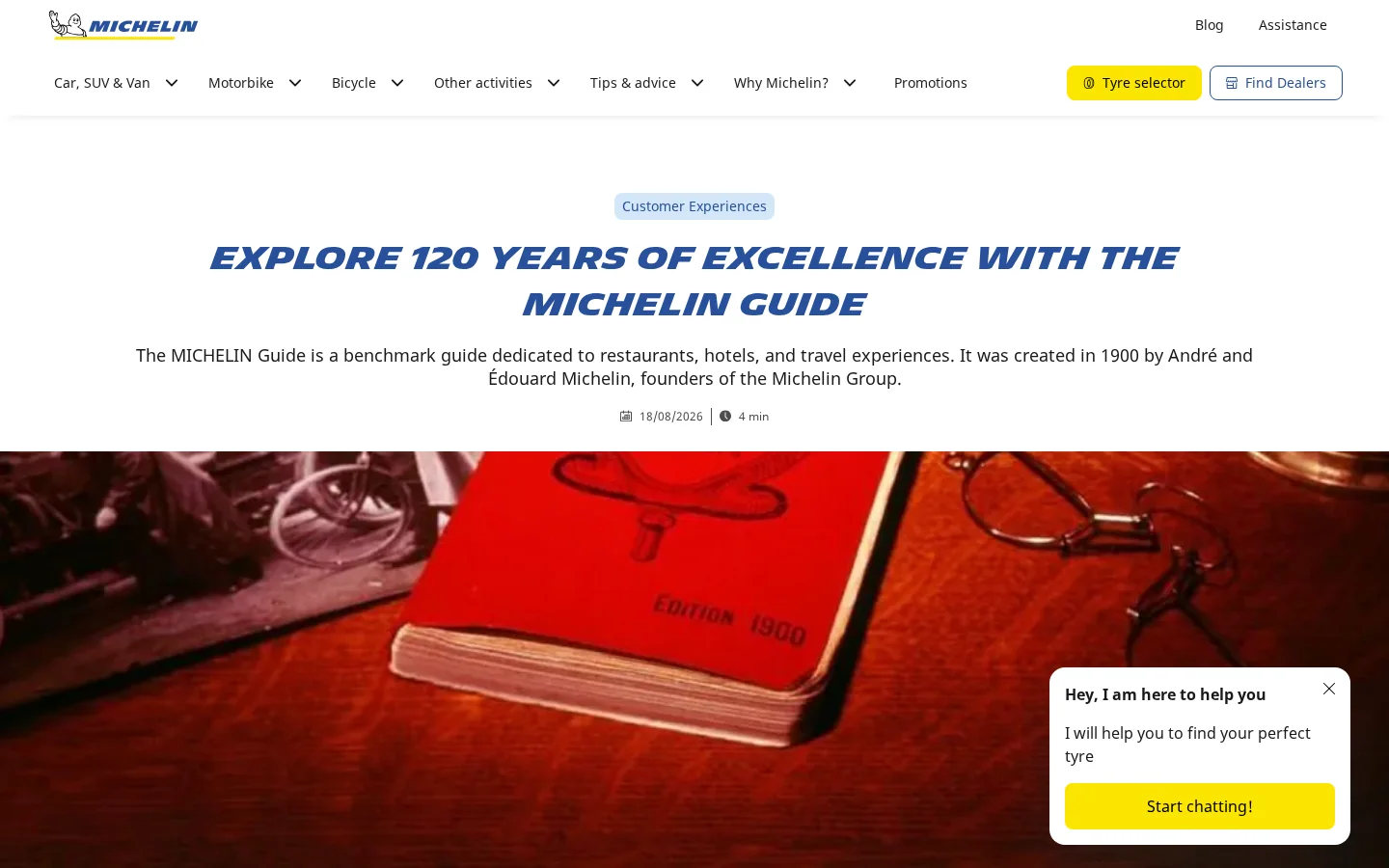
Michelin sold tyres. Its problem was that people did not drive enough to wear them out. According to the history section of the Wikipedia article on the Michelin Guide, the first edition came out in 1900 and nearly 35000 copies were given away free, at a time when France had fewer than 3000 cars. The guide told drivers where to sleep, eat, refuel and repair. More trips meant more tyres.
The lesson is the most useful one in this whole article: write about the job your customer is trying to do around your product, not about the product. A tyre maker wrote about restaurants. An accounting software can write about hiring a first employee. A kitchen brand can write about recipes.
The Michelin Guide in three numbers
Source: Wikipedia, "Michelin Guide", History section
Notice the last number. The guide became so valuable that people were willing to pay for it. That is the sign of an editorial engine that works: the content has value on its own, independent of the product it promotes.
John Deere has published The Furrow since 1895. It is a magazine about farming: techniques, stories of farmers, ways to run a farm better. It is not a tractor catalogue. Dealers sent it to their customers, so the content also fed the sales network.
What to copy: a recurring format (monthly or quarterly), real stories of customers solving real problems, and a distribution channel you already own (your customer list, your resellers, your newsletter). If you are starting one, our guide on how to create a newsletter covers the setup.
HubSpot built a blog that covers almost every question a marketer, salesperson or support manager types into Google. The company popularised the term inbound marketing and then made its blog the proof of the method: articles attract the search, a free template or tool at the end captures the email, and the CRM is offered later.
What to copy is not the volume. It is the topic map: a clear list of subjects your buyer searches, grouped into clusters, each cluster linked to one offer.
A modern editorial engine has four parts. A topic map, made of content pillars and clusters of articles under each pillar. Internal links from each article to its pillar and to the relevant product page. A publishing rhythm the team can hold. And an update cycle: each article is reviewed when its data ages or its rankings drop.
The hard part is the cluster map: two articles that target the same query compete with each other. Sorank's topic cluster generator builds the map and checks for cannibalization before an article is planned.

The second engine replaces an article with something the reader uses. A calculator, a grader, a template, a generator. The reader gets a result in one minute, and your brand is attached to that result.
HubSpot's free Website Grader asks for a URL and returns a score on performance, SEO, mobile and security. The person who wants to know if their website is good is exactly the person who might buy marketing software. The tool qualifies the lead by itself.
Canva publishes thousands of template pages, each one targeting a search like "instagram post template" or "resume template". Each page is a usable starting point, and using it means using the product. Its tutorials teach design basics with the tool, so learning the skill and adopting the product are the same action.
Tool queries ("roi calculator", "headline checker", "invoice template") show strong intent: the person wants to do something now. Tools also earn links naturally, because bloggers and teachers point their readers to them. And when someone asks ChatGPT or Perplexity for "a free tool to check X", assistants recommend tools by name, which is free brand exposure an article rarely gets.
Blog article vs free tool as a content asset
Five rules. One tool per URL, with the query in the title ("Free Freight Cost Calculator"). The result is shown without signup; ask for the email only to send a detailed report. The page has 300 to 800 words under the tool explaining the method, the formula and the limits, because a form alone gives Google and AI models nothing to read. The tool loads fast on mobile. And it carries structured data that says what it is:
{
  "@context": "https://schema.org",
  "@type": "WebApplication",
  "name": "Freight Cost Calculator",
  "applicationCategory": "BusinessApplication",
  "operatingSystem": "Any",
  "offers": { "@type": "Offer", "price": "0", "priceCurrency": "EUR" }
}
This is also the engine we use at Sorank: our free SEO tools each answer one precise search, and each one leads to the matching feature of the software.
Tip
Before building a tool, list the calculations your sales team does by hand in a spreadsheet for prospects. Each recurring calculation is a candidate tool, and you already know the formula.
The third engine takes a database and turns each row into a useful page. It works when your market searches thousands of variations of the same question, and when you hold data that makes each variation genuinely different.
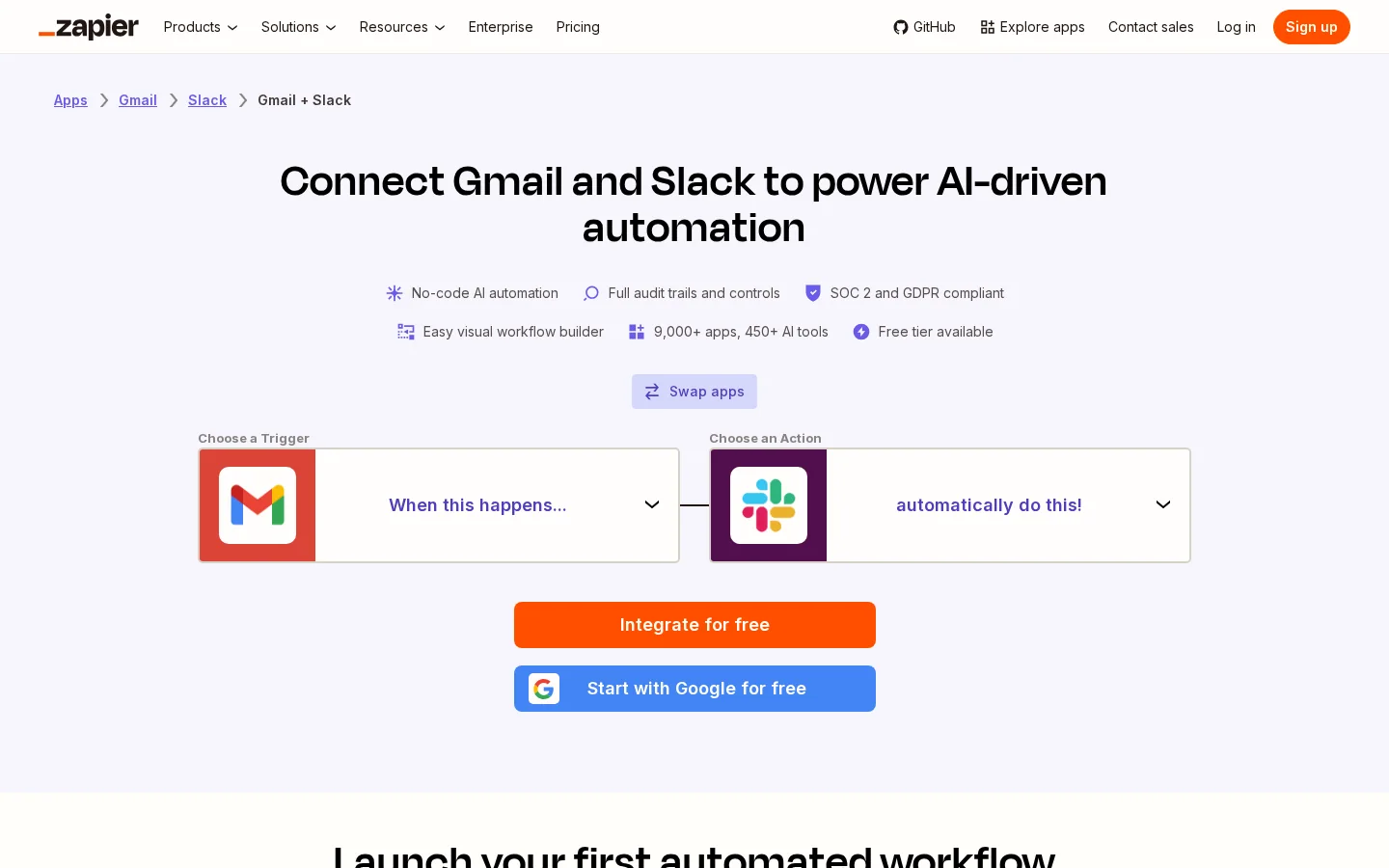
Zapier connects apps to each other. People search "connect Gmail to Slack", "Typeform to Google Sheets" and every other pair. Zapier answers each pair with its own page at a predictable address such as /apps/gmail/integrations/slack, listing the triggers, the actions and ready-made workflows for that exact pair. The page is the product demo.
Wise, the money transfer company, publishes a converter page for each currency pair (EUR to USD, GBP to INR and so on). Each page shows the live mid-market rate, a rate chart and what the transfer would cost with Wise. Someone checking a rate is often about to send money, so the page meets the buyer at the moment of decision.
The same engine produces spam when the rows do not carry real data. A page "Plumber in [city]" with the same text and a different city name helps nobody. Google's guide to creating helpful, reliable, people-first content lists warning signs, including content "primarily made to attract visits from search engines" and content that is "mainly summarizing what others have to say without adding much value". A programmatic page that passes is one where removing the template text still leaves something useful: the data. Our glossary entry on programmatic SEO goes deeper into the setup.
Write the template before you write any page. Here is the skeleton of an integration-style page:
URL:    /integrations/{app-a}/{app-b}
Title:  Connect {App A} to {App B}: {count} ready-made workflows
H1:     {App A} + {App B} integration
Blocks: what you can automate (list from database)
        top 3 workflows with steps
        setup time and plan required
        FAQ generated from real support tickets
Rule:   publish only if {count} >= 3, else noindex
The last line matters most. A threshold rule keeps thin pages out of the index, so the whole set stays credible.
| Field on the page | Why it matters | Where the data comes from |
|---|---|---|
| Unique data (rate, price, list of workflows) | Makes the page different from its siblings | Your product database or a live API |
| Last update date | Shows freshness to readers and crawlers | Automatic timestamp at each data refresh |
| Internal links to close variations | Spreads crawl and helps navigation | Rule in the template (same app, same region) |
| One real use case or example | Gives the reader a reason to act | Support tickets, customer interviews |
| Index or noindex rule | Keeps thin pages out of Google | Threshold on the data count |
The fourth engine uses data your product already collects and gives it back to each user as a story about themselves. People share stories about themselves far more than stories about a brand.
Every December, Spotify gives each listener a set of story cards about their year: top artists, top songs, minutes listened. Users post them everywhere, and each post is an ad for Spotify made by its own customer. The scale is the point: as reported by Sarah Perez in TechCrunch on December 4, 2025, Wrapped 2025 reached over 200 million engaged users in its first 24 hours.
Spotify Wrapped 2025, first day
Source: Spotify figures reported by TechCrunch, December 4, 2025
Strava sends athletes a yearly summary of their activities, and fitness apps, banks and food delivery apps now do the same. You do not need hundreds of millions of users. A B2B software with 200 customers can send each account "your year in numbers": hours saved, tasks automated, comparison with the median customer. That email gets forwarded to the boss, which is exactly where your renewal is decided.
No user data? Aggregate public data instead, or your own anonymised usage data, and publish a yearly report for your industry. That moves you toward the original research engine described below.
Data stories spread through screenshots, so design the card, not the page. Use a vertical 9:16 format for stories, one number per card, a large type size, and your brand discreetly at the bottom. Add a share link with UTM parameters so you can count the visits the shares bring:
https://example.com/year-in-review?utm_source=share&utm_medium=social&utm_campaign=year-in-review-2026Our free UTM link builder creates these links without typos. Check your privacy rules before you use personal data: the user must see their own data only, and sharing must stay their choice.
The fifth engine is the big event, the film or the stunt, built to be watched by millions and then cut into a library of smaller pieces. It is the most visible engine and the hardest to copy.
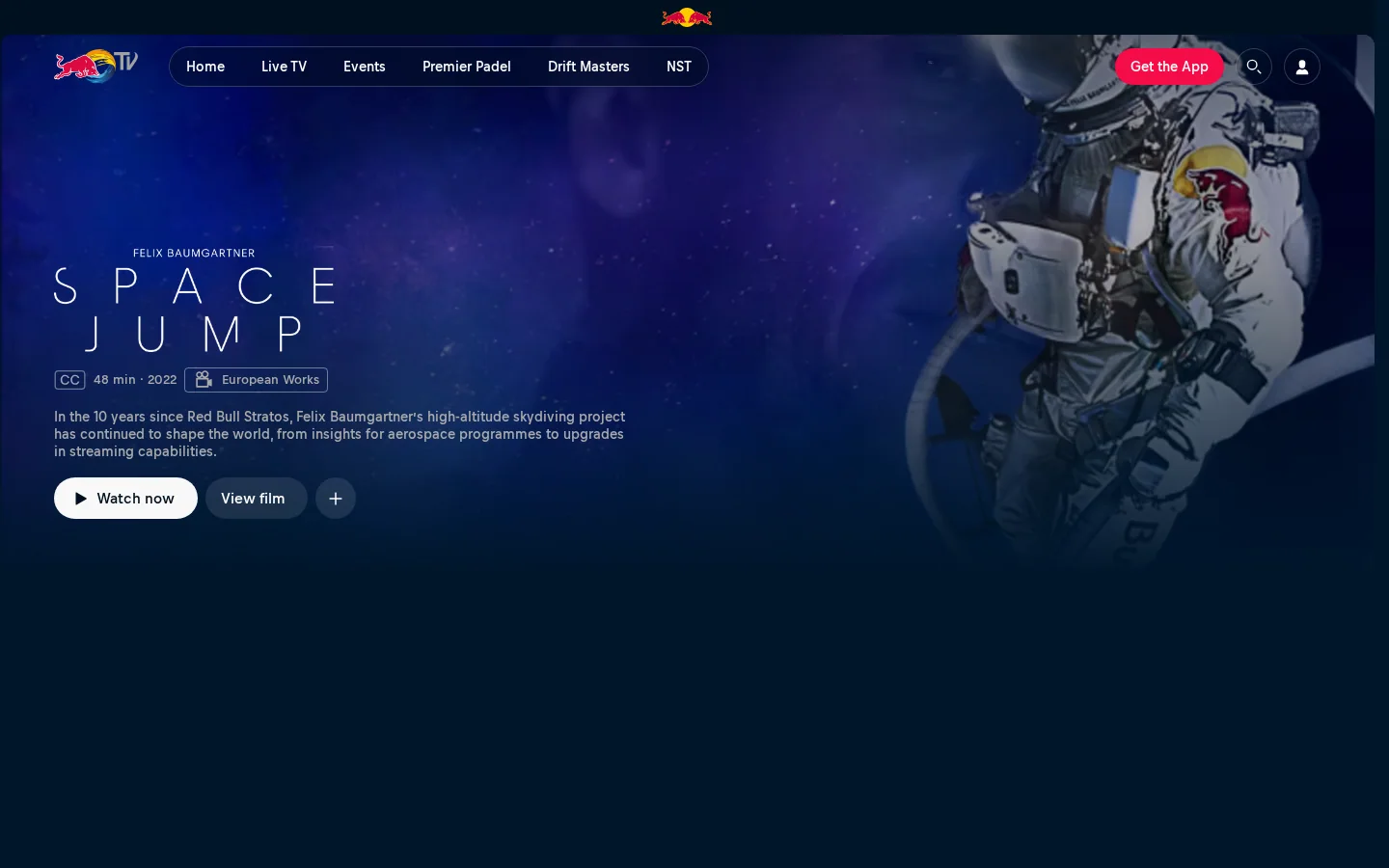
In October 2012, Felix Baumgartner jumped from a capsule at the edge of space, in a project funded and broadcast by Red Bull. Sam Gutelle reported in Tubefilter on October 14, 2012 that the live stream drew over 8 million concurrent viewers right before the jump. More than a decade later, Red Bull still publishes the film, the data and the behind-the-scenes stories on its site.
Stratos was not a one-off ad. It fits Red Bull's media business: films, magazines and events about extreme sports, published by the brand. The drink is barely shown. The brand owns an idea (pushing limits), and the content proves it, again and again.
Patagonia publishes documentaries on environmental issues and runs Worn Wear, which tells the stories of old, repaired Patagonia clothes and sells used gear. The content is consistent with what the company does, so it is believed. That is the condition of this engine: the spectacle must prove something true about the brand, otherwise it is just an expensive ad.
Copy the structure, not the size: one tentpole piece per year, then a library cut from it. The tentpole can be a field study, a live event with customers, a long video interview series or a big public experiment. Then cut it into 20 to 30 pieces: short videos, quotes, charts, articles, a newsletter series. Our guide to content repurposing shows how to plan that cut before you even record. And if you are hoping for virality, read what really makes content spread in our article on viral marketing, because hope is not a plan.
The sixth engine is people: a character your audience follows, customers who make content for you, or customers whose stories you tell.
Duolingo's TikTok account is run by its green owl mascot, who reacts to trends, jokes about users skipping their lessons and plays a slightly unhinged character. The account rarely explains the product. It makes the brand part of the culture, and the owl's "do your lesson" reminders echo the app's own notifications, so the joke reinforces the habit the product needs.
From corporate account to character account
GoPro's best content is shot by its customers: surfers, skiers, parents. The brand selects, rewards (through its GoPro Awards program) and republishes the footage. Each video shows the product's result, filmed in real conditions, by someone credible. Our glossary entry on user-generated content explains how to run this with permissions and credits.
Microsoft runs a large library of customer stories, searchable by industry, size and product. Each story follows the same pattern: the customer's problem, what they deployed, the result. This looks boring next to Duolingo. It is also what B2B buyers read just before they buy. In the B2B Content and Marketing Trends research published by Robert Rose on November 4, 2026, 50% of B2B marketers named showcasing customer stories and testimonials as a way to build trust.
The technical detail that makes a customer story useful: put the result in a number in the title, add a quote with the person's name and role, and link the story from the matching product and pricing pages, not just from a "customers" section nobody visits. Our guide to social proof marketing covers formats and placement.
The seventh engine produces data nobody else has. Every article that quotes your number links to you, and AI assistants cite the primary source of a number more readily than a page that repeats it.
The best example of this engine is the source we just quoted. Content Marketing Institute and MarketingProfs have run their B2B survey for 17 years. Its latest edition is based on 1132 global responses, of which 861 B2B marketers were analysed, and each year marketing blogs (including this one) cite it. The research is the content, and the citations are the distribution.
What B2B marketers said in CMI's latest survey
Source: Content Marketing Institute and MarketingProfs, B2B Content and Marketing Trends: Insights for 2027, November 2026
Read those numbers together: almost everyone uses AI to produce content, and only a small share feels highly effective. Producing more is not the bottleneck. Producing something worth citing is, which is exactly what this engine does.
When ChatGPT, Gemini or Perplexity answer a question with a figure, they tend to name where it comes from. If the figure is yours, your brand appears in the answer. That makes original research the engine that works for both Google (links) and AI answers (citations). Our guide to data-driven content marketing explains how to run a study with a small budget, and you can check whether AI models already cite you with Sorank's AI mention tracking.
Put one key number per sentence, in plain text (not only in an image). Publish the method: sample, dates, questions, limits. Give each key finding its own heading so it can be linked and extracted. Offer the charts with an embed code that links back. And describe the data with structured markup:
{
  "@context": "https://schema.org",
  "@type": "Dataset",
  "name": "State of Freight Costs in Europe 2026",
  "description": "Survey of logistics managers on freight costs and delays.",
  "creator": { "@type": "Organization", "name": "Your Company" },
  "datePublished": "2026-11-11",
  "measurementTechnique": "Online survey, sample and dates described in the method section",
  "license": "https://creativecommons.org/licenses/by/4.0/"
}
A permissive license with attribution, like the one above, encourages others to reuse your charts, and each reuse is a citation.
Each engine fits a different company. The table compares them on what matters when you have to choose: budget, time to results, risk and how well the content is picked up by AI assistants.
| Engine | Examples | Best for | Cost | Time to first results | Main risk | AI citation potential |
|---|---|---|---|---|---|---|
| Editorial publishing | Michelin, John Deere, HubSpot blog | Any company with expertise to share | Low to medium | 6 to 12 months | Generic articles that compete with everyone | Medium, high on niche questions |
| Free tools and templates | HubSpot Website Grader, Canva | Software, finance, any market with calculations | Medium (development) | 3 to 6 months | Tool abandoned, broken or outdated | High: tools get named |
| Programmatic data pages | Zapier, Wise | Companies with a proprietary database | Medium | 3 to 9 months | Thin pages, spam signals | Medium |
| Personal data stories | Spotify Wrapped, Strava | Products with rich usage data | Medium to high | Immediate, once a year | Privacy, one-off spike | Low |
| Tentpole and brand media | Red Bull Stratos, Patagonia | Consumer brands with a strong idea | High | Immediate spike, slow library | Expensive flop | Low to medium |
| Social, community, customer stories | Duolingo, GoPro, Microsoft | Consumer apps (social), B2B (stories) | Low to medium | 1 to 6 months | Off-brand posts, dependence on one platform | Medium (stories), low (social) |
| Original research | Content Marketing Institute | B2B, any market lacking data | Medium | 1 to 3 months after launch | Weak method, nobody picks it up | Very high |
Time ranges are field estimates, not study results: they depend on your domain's authority, your niche and how well you distribute.
The engines also act at different moments. Spectacle and social create awareness. Editorial and research earn consideration. Tools, data pages and customer stories catch people who are close to a decision.
Content marketing engines by stage of the buying journey
Start with one engine. A second one comes once the first runs without you pushing it every week. For the full planning method, see our content marketing strategy guide, and for the list of formats each engine can use, our overview of types of content.
Here is the method to go from "nice examples" to your own engine. It takes about two weeks of part-time work for the first asset.
From examples to your own engine: the 6-step method
Do what Michelin did. Take your product and list the tasks around it: what the buyer must do before (choose, budget, convince their boss), during (set up, learn) and after (report, improve). Ask your sales and support teams for the ten questions they hear most. Each job is a content territory where you are legitimate.
Search your main topics and note what ranks: are the results articles, tools, data pages or videos? Then look for the gap. If every result is a generic article and nobody offers a calculator, the tool engine is open. If nobody publishes data for your industry, research is open. Our method for competitive content analysis gives you a scoring grid for this.
Your own data helps too. In Google Search Console, open the Performance report, add a query filter, choose "Custom (regex)" and paste this to see the questions people already find you for:
^(how|what|why|which|can|should|is|does|best)\sAdd a second filter to find tool and template intent:
(calculator|template|checker|generator|tool|example|examples)Queries with impressions but few clicks show demand you are close to serving.
Tip
No Search Console data yet? Use Sorank's free keyword suggestions tool to list the questions and tool searches around your main topic.
Put each idea in a spreadsheet and rate it from 1 to 5 on four criteria: product fit (B), budget fit (C), gap in the market (D) and reuse potential (E). Weight product fit highest, because content that attracts the wrong audience is the most common waste:
=ROUND(B2*0.35 + C2*0.25 + D2*0.25 + E2*0.15; 1)Use a comma instead of the semicolon if your spreadsheet is set to English. Anything below 3 goes to the bottom of the list. Look at the top three ideas: usually one is obviously easier to ship.
The examples above all started with one asset that worked. Build the first one fully: the tool that calculates, the study with its method, the flagship article that answers the question better than anything else. Write a proper brief first (our free content brief generator gives you a structure in seconds). The calendar comes after the first asset has proved it attracts the right people. When it does, Sorank's AI content calendar can plan and publish the supporting articles around it.
Plan distribution before you publish: who you will email, which partners can share it, which communities have the problem, and which ten short pieces you will cut from the asset. A study gives charts and quotes. A tool gives "we tested it on 50 sites" posts. A flagship article gives a newsletter series. Link every piece back to the main asset, so the authority flows to one URL.
Pick one number before launch: demo requests, trials, sales or qualified leads that touched the asset. Views, likes and time on page are diagnostics, not results. Our guide to content marketing metrics lists what to track for each goal, and you can add a second channel to watch: how often AI assistants mention your brand on the topic.
Tip
To know whether the asset paid for itself, plug its cost and the revenue it influenced into Sorank's free content marketing ROI calculator.
These mistakes come up again and again when teams take inspiration from famous examples. Each one is easy to spot once you know what to look for.
Mistakes to avoid
What it is: you see Spotify Wrapped and launch a "year in review" with no personal data, or you see Duolingo and post memes with no character behind them. How to spot it: your version gets polite engagement from your team and silence from customers. How to fix it: name the mechanism first ("people share stories about themselves"), then ask what data or angle you have that triggers the same mechanism.
What it is: a tentpole video with no budget for a sequel, or a weekly newsletter for a team of one. How to spot it: the publishing rhythm drops after the second month. How to fix it: choose an engine whose minimum rhythm you can hold for two years. A quarterly study held for three years beats a weekly blog stopped after ten weeks.
What it is: traffic from people who will never buy, or articles with no link to anything you sell. How to spot it: in your analytics, the top pages bring visits but zero conversions, and their visitors never reach a product page. How to fix it: for each piece, write down the next step (template, tool, demo, product page) before writing the piece. If there is no natural next step, the topic is probably outside your territory.
What it is: thousands of pages built from a template with no real data, often swapping only a city or a product name. How to spot it: in Search Console's Pages report, many URLs sit in "Crawled, currently not indexed" or "Discovered, currently not indexed", and the indexed ones get few impressions. How to fix it: add a data threshold (publish only rows with enough unique data), noindex or merge the rest, and enrich the template with information only you hold.
What it is: success reports full of impressions, likes and followers. How to spot it: nobody in the sales team can name a deal the content helped. How to fix it: tag content touchpoints in your CRM (first page seen, assets downloaded), and report pipeline influenced every quarter, next to the traffic.
What it is: a study from three years ago still presented as "the latest data", a tool with broken inputs, a guide describing an old interface. How to spot it: rankings and clicks on your best assets decline slowly over months, and the data in them is dated. How to fix it: put each major asset on a review schedule (yearly for studies, quarterly for tools, when the topic changes for guides). Sorank's content optimization flags pages that are losing ground and rewrites them. For content built to last, see our guide to evergreen content.
What it is: optimising only for Google rankings while buyers increasingly ask ChatGPT, Gemini, Claude or Perplexity which tool or provider to choose. How to spot it: ask those assistants the five questions your buyers ask; if competitors are named and you are not, your content is not reaching them. How to fix it: favour engines that produce citable assets (research, tools, clear definitions), state facts in plain sentences, and track mentions over time. Our guide on how to optimize content for AI search details the method.
You do not need a Red Bull budget to start. You need one engine, one asset and one number. Here is what you can do before the end of the day.
Your checklist for today
The brands in this article did not win because they were creative once. They won because they chose an engine that fitted their product and ran it for years. Choose yours today, and give it the time the Michelin Guide had.
The Michelin Guide is a classic example: in 1900 a tyre maker gave away a free guide to restaurants and hotels so people would drive more. It works because it helps the customer with a job around the product, not with the product itself. Modern equivalents are HubSpot's blog, Zapier's integration pages and Spotify Wrapped.
Most successful examples rely on one of seven engines: editorial publishing, free tools and templates, programmatic data pages, personal data stories, tentpole events and brand media, social and customer stories, and original research. Each fits a different budget and buyer. A small team usually gets the best return from editorial content in a niche, a free tool or original research.
Copy the mechanism, not the format or the budget. Name what makes the example work, for instance 'people share stories about themselves', then find the data or expertise you hold that triggers the same mechanism. Build one asset, distribute it, and judge it on one business number such as leads or sales.
We analyse your competitors, your website and your AI visibility to create a tailored content plan for free.
 AI Content Brief Generator
 FAQ Schema Generator
 AI Blog Post Ideas Generator
 Structured Data Validator (Schema Validator)
 Alt Text Checker
 Internal Link Analyzer
 Backlink Challenge
 AI Meta Description Generator
 AI Blog Title Generator
 Google Indexability Checker
 AI Blog Outline Generator
 UTM Link Builder
 Keyword Clustering Tool
 Canonical Tag Checker
 XML Sitemap Generator
 Broken Link Checker
 AI SEO Title Generator
 Headline Analyzer
 SERP Preview Tool
 Redirect Checker
 Hreflang Tag Generator
 Heading Structure Analyzer
 HTTP Headers Checker
 Favicon Extractor
 SERP CTR Calculator
 SEO vs Paid Search Savings Calculator
 SEO Share of Voice Calculator
 SEO ROI Calculator
 SEO Traffic and Revenue Forecast Calculator
 SEO Budget Calculator
 SEO Break-Even Calculator
 SaaS SEO ROI Calculator
 ROAS Calculator
 Reading Time Calculator
 Ranking Gain Simulator
 Organic Traffic Value Calculator
 Organic Traffic Estimator and Website Traffic Checker
 LTV to CAC Ratio Calculator
 Local SEO ROI Calculator
 Link Building Cost Calculator
 Keyword Value Calculator
 Keyword Opportunity Score Calculator
 Keyword Density Calculator
 GEO ROI Calculator
 GEO Content Investment Calculator
 Ecommerce SEO ROI Calculator
 Customer Lifetime Value Calculator
 Customer Acquisition Cost Calculator
 CTR Calculator
 Cost Per Article Calculator
 Conversion Rate Calculator
 Content Marketing ROI Calculator
 ChatGPT Referral Traffic Estimator
 Bounce Rate Calculator
 Backlink ROI Calculator
 AI Visibility Score Calculator
 AI Traffic Value Calculator
 AI Share of Voice Calculator
 Cost of AI Invisibility Calculator
 AI Citation Rate Calculator
 llms.txt Validator
 AI Overview Checker and AI Overviews Rank Checker
 Robots.txt Checker
 AI SEO Audit
 LLM Readability Checker
 SearchGPT Readiness Checker
 Structured Data LLM Audit
 Website Crawlability AI Audit
 Why ChatGPT Is Not Recommending My Website
 Gemini Ranking Tool
 Perplexity Ranking Checker
 LLM Citation Checker
 Answer Engine Optimization Audit
 GEO Audit
 AI Search Visibility Test
 ChatGPT Visibility Checker
 llms.txt Generator
 URL Extractor
 Webpage to Markdown
 Sitemap Checker
 SERP Volatility Sensor
 Page Size Checker
 Word Counter
 Slug Generator
 Schema Generator
 Robots Generator
 OG Preview
 Meta Tags Generator
 Image Compressor
 Favicon Generator
 On-Page SEO Audit: SEO Checker and SEO Analyzer
 Backlink Analysis Tool
 Keyword Research Tool
 Domain Authority Checker
 “I tested Sorank on a real client site and it's insane. It does everything an agency would bill you $1500 a month for. It's going into production on that client now.”

 Guillaume Guersanguersanguillaume.com“We are an Ads agency and we wanted to get our SEO back on track once and for all. Sorank gave us a clear view of our site, helped us prioritize optimizations, and properly structure our content. The tool is easy to use, well designed for a team, and very practical for centralizing tracking without having to juggle multiple platforms. A very solid foundation to start fresh with our SEO.”
 Gaspard MadouiAds Agency
 “I just let the Sorank software do its thing, and now my DR is 25 and my page is ranking higher.”
 Lucas Flandrefoundertrace.fr“I specialized in GEO thanks to Sorank. The GEO Leaderboard allows me to show my clients their position vs competitors on ChatGPT. It’s a real commercial differentiator.”
 MélanieSEO Freelance“Great service, works well for our website and helps us understand how to improve it to rank better on Google and elsewhere. Congrats, keep going, I recommend it.”
 Hugo T.E-commerce merchant