Preferences
Privacy is important to us, so you have the option of disabling certain types of storage that may not be necessary for the basic functioning of the website. Blocking categories may impact your experience on the website. More information
Privacy is important to us, so you have the option of disabling certain types of storage that may not be necessary for the basic functioning of the website. Blocking categories may impact your experience on the website. More information

12 business growth strategies for small businesses, with the numbers to check first, steps for each strategy, a scoring table and a 90-day plan.
In short
A business growth strategy is a deliberate plan to increase revenue and profit by acting on one lever: more customers, more purchases per customer, bigger orders or better prices. Small businesses grow fastest by first fixing retention and pricing, then adding one acquisition channel, measured with clear numbers every week.
Want to go further? Ask
Quick quiz
Which way of finding customers online fits you best?
Sorank matches your answers


Test it for 3 days on your own site and see where you stand on Google, ChatGPT and the other AIs.
Start 3-day free trial3 days free, then stop whenever you want. 90-day results guarantee, conditions apply.
A business growth strategy is a written choice about where your next euro or dollar of profit will come from, and what you will stop doing to get it. It is not a list of ideas. It names one lever, one target, one owner and one deadline.
Every growth idea you will read about acts on one of four numbers. Revenue is simply the product of them:
Revenue = Number of customers × Purchases per customer per year × Average order value
Profit  = Revenue × Gross margin - Fixed costs
This equation is the most useful filter you have. A 10% gain on each of the three revenue factors gives 1.1 × 1.1 × 1.1 = 1.331, so a 33% revenue increase without a single big bet. Most owners chase only the first factor (new customers), which is usually the most expensive one.
| Lever | What moves it | Typical cost | Time to see results |
|---|---|---|---|
| More customers | SEO, ads, referrals, partnerships, new markets | Medium to high | Weeks (ads) to months (SEO) |
| More purchases per customer | Retention, email, subscriptions, loyalty | Low | 2 to 8 weeks |
| Bigger orders | Upsells, bundles, cross-sells, minimum for free delivery | Low | Days to weeks |
| Better prices and margin | Price increases, packaging, premium tiers, cost cuts | Very low | Immediate |
Organic growth comes from your own sales, products and channels. Inorganic growth comes from buying or merging with another business. Small businesses should almost always start organic: it is cheaper, reversible and teaches you what customers really pay for. Our guide to what organic growth means for a business and for its traffic goes deeper on the difference.
Organic vs inorganic growth for a small business
Pick a growth strategy only after you know where growth is blocked. Six numbers tell you that in one afternoon, from your accounting tool, your payment tool and your analytics.
1. Customer acquisition cost (CAC) = Sales and marketing spend ÷ New customers won
2. Customer lifetime value (LTV)   = Average order value × Purchases per year × Gross margin % × Years retained
3. LTV to CAC ratio                = LTV ÷ CAC
4. Churn rate (monthly)            = Customers lost in the month ÷ Customers at start of month
5. Repeat purchase rate            = Customers with 2+ orders ÷ All customers (last 12 months)
6. Website conversion rate         = Orders or leads ÷ Sessions
Then read them like a doctor reads a blood test:
These thresholds are rules of thumb, not laws. A business with very high margins can live with a lower ratio; a business with thin margins needs a higher one. What matters is the trend over three to six months.
Tip
Do not do this math by hand. Enter your numbers in our free LTV to CAC ratio calculator to see in one minute whether you should spend on acquisition or fix retention first.
Growth diagnosis checklist (one afternoon)
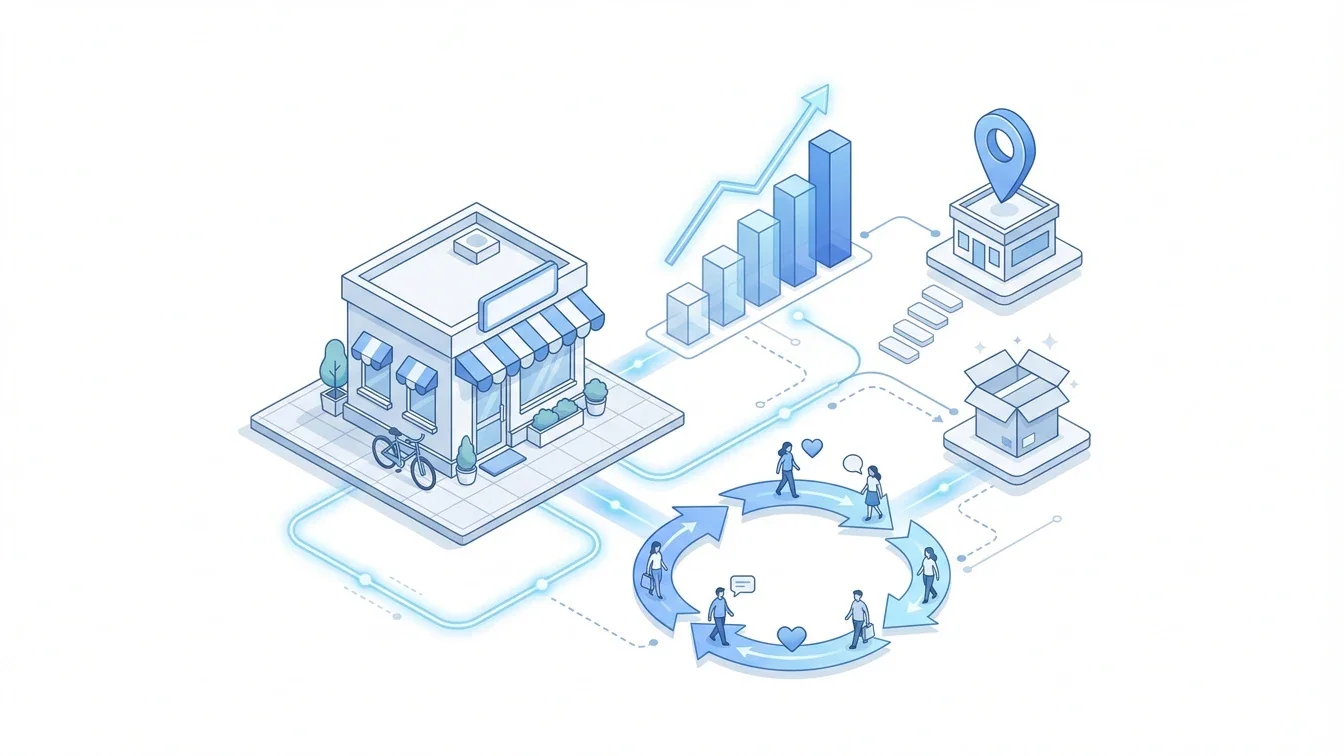
All growth strategies fall into four directions, defined by Igor Ansoff in the Harvard Business Review in 1957: sell more of what you have to the people you serve, take what you have to new people, build something new for the people you serve, or build something new for new people. Risk rises at each step.
Principle: sell more of your current offer to your current type of customer. When to use it: your market is not saturated and you hold a small share of your market. Advantages: lowest risk, you already know the product and the buyer. Limits: you hit a ceiling in small or local markets. Example: a dental clinic adds online booking and evening slots and fills its empty chairs without adding a new service.
Principle: bring the same offer to a new city, country, segment or channel. When to use it: your offer converts well and your home market is crowded. Advantages: you reuse what works. Limits: new rules, taxes, languages and competitors. Example: a French online shop for handmade soaps translates its site into German and Spanish and ships to both.
Principle: create a new product or service for customers who already trust you. When to use it: customers keep asking for something you do not sell. Advantages: no need to win trust again. Limits: development cost and the risk of spreading the team thin. Example: an accounting firm launches a monthly payroll service for its current clients.
Principle: enter a new business. When to use it: your core market is shrinking or you have a clear asset (skills, brand, distribution) that transfers. Advantages: spreads risk across markets. Limits: highest failure rate, you start from zero twice. Example: a wedding photographer opens a corporate video studio.
| Direction | Risk | Cash needed | Best for | First move |
|---|---|---|---|---|
| Market penetration | Low | Low | Most small businesses, first | Retention, pricing, local SEO, referrals |
| Market development | Medium | Medium | Offers that convert well at home | Test one new city or language with a landing page |
| Product development | Medium | Medium to high | Loyal customer base asking for more | Pre-sell to 10 existing customers |
| Diversification | High | High | Shrinking core market | Buy or partner instead of building |
Here are the strategies that work for small and mid-size companies, ordered from cheapest and fastest to most expensive and slowest. Each one comes with the steps to run it this month.
Retention is the cheapest growth there is. In their Harvard Business Review article "Zero Defections" (1990), Frederick Reichheld and W. Earl Sasser of Bain showed that companies can boost profits by almost 100% by retaining just 5% more of their customers. The reason: loyal customers buy more, cost less to serve and bring others.
What retention is worth
Source: Reichheld and Sasser, "Zero Defections", Harvard Business Review, 1990
For the email side, lifecycle marketing that speaks to customers at every stage gives the full structure.
A price increase drops almost entirely to profit, because your costs do not change. With a 40% gross margin, a 5% price rise with stable volume lifts gross profit by 12.5% (5 ÷ 40). Most small businesses underprice because they set prices once and never revisit them.
Upsells, cross-sells and bundles grow revenue from the traffic you already pay for.
Referred customers arrive with trust already built. A simple program beats a complex one: give the referrer and the new customer the same reward, make the link easy to share, and pay the reward only after the first purchase. Our guide to building a referral program that brings in customers covers reward sizing and fraud checks.
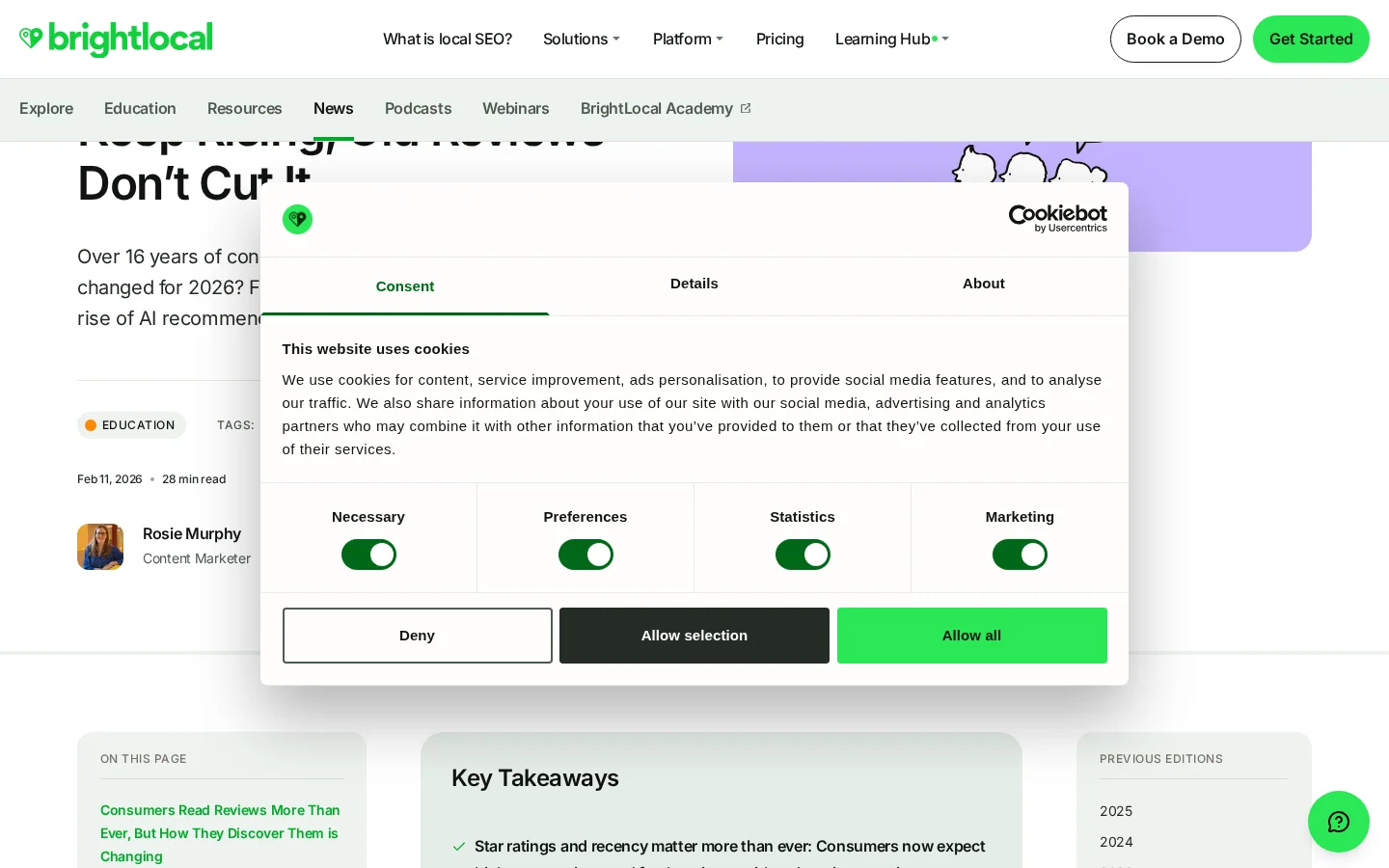
Reviews are now part of the buying path. BrightLocal's Local Consumer Review Survey (February 2026, 1002 US adults) found that 97% of consumers read reviews for local businesses, that 74% look for reviews written in the last three months and that 47% will not use a business with fewer than 20 reviews.
How consumers use reviews
Source: BrightLocal, Local Consumer Review Survey, February 2026
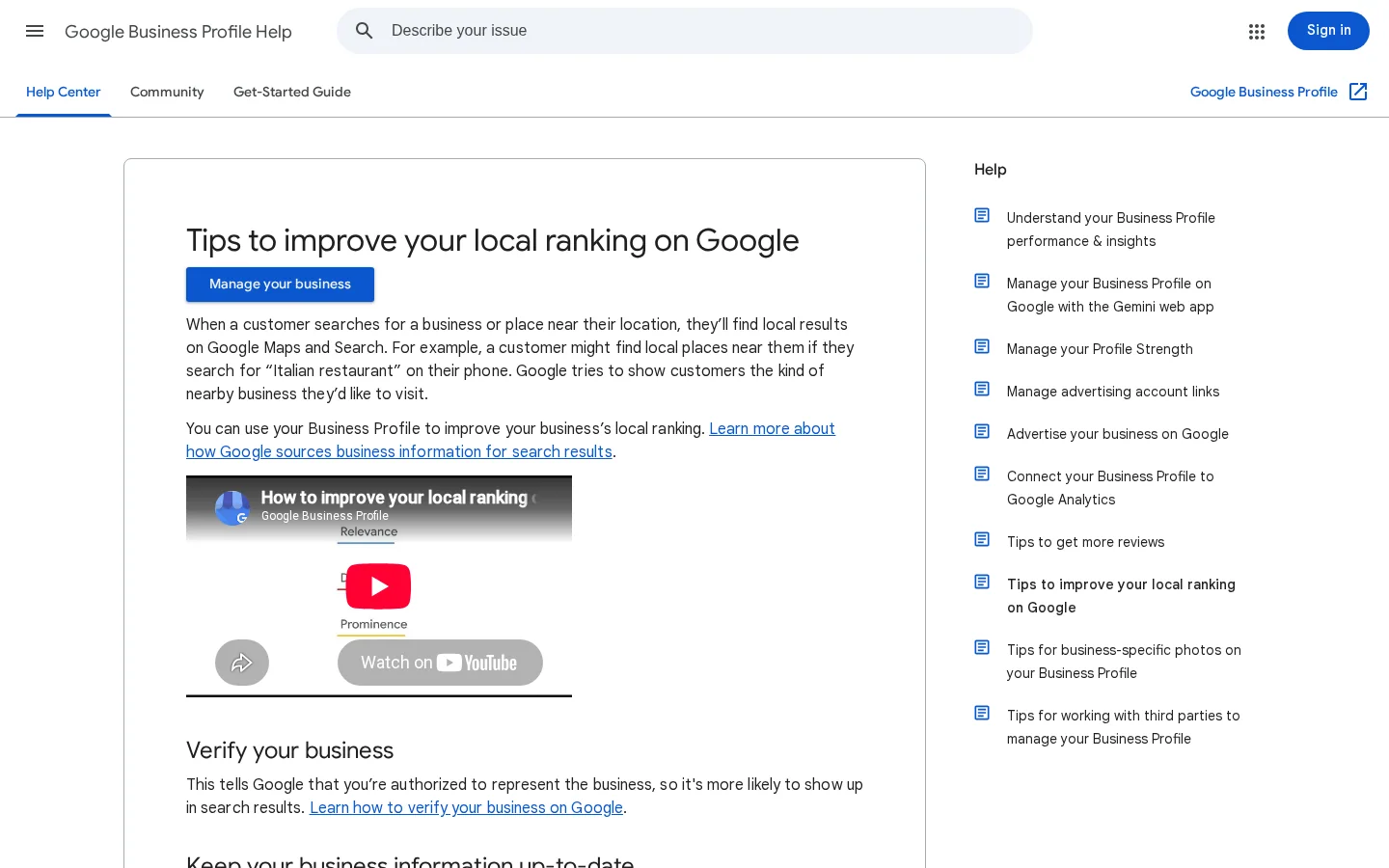
For any business with a physical area, the Google Business Profile is the most underused asset. Google's own help page, "Tips to improve your local ranking on Google", names three factors: relevance, distance and prominence, and states that more reviews and positive ratings can help your local ranking.
Read our definition of local SEO and how to rank on Google Maps for the full checklist.
Ads stop the day you stop paying. Content that ranks keeps bringing visitors for years, and it now also feeds the answers of AI models like ChatGPT, Claude and Gemini, which cite the pages they trust. That second part is called GEO (generative engine optimization).
This is the work Sorank does on autopilot: it finds the keywords and the questions people ask AI, writes and publishes the articles, gets natural backlinks from other sites, and tracks your visibility in ChatGPT, Claude and Gemini. Our definition of why organic traffic compounds over time explains the math.
Ads are the fastest way to test an offer, and the fastest way to burn cash. Set one rule before the first euro: the CAC payback period.
CAC payback (months) = CAC ÷ (Monthly revenue per customer × Gross margin %)If payback is longer than your cash runway allows (often 3 to 6 months for a small business), stop or change the offer. Start with search ads on high-intent keywords, then test social ads once you know which message converts. Our guide to setting up and scaling Meta ads details the tracking.
The best partners sell something different to the same people: a wedding planner and a florist, an accountant and a lawyer, a gym and a physiotherapist. Start with a co-promotion (shared email, joint offer), then a referral fee, then a bundle. See how to choose partners and structure partnership deals.
Never build first. Pre-sell instead.
Launch a new offer without wasting money
The US Small Business Administration's guide "Grow your business" advises expanding when times are good, and lists the steps for a new location: update your marketing plan, build a forecast for the new site and confirm you can cover the costs, check licenses, permits and zoning, register in any new state, and plan for the new taxes.
For an online business, a new market often means a new language. Test demand first with one translated landing page and a small ad budget before you translate the whole site.
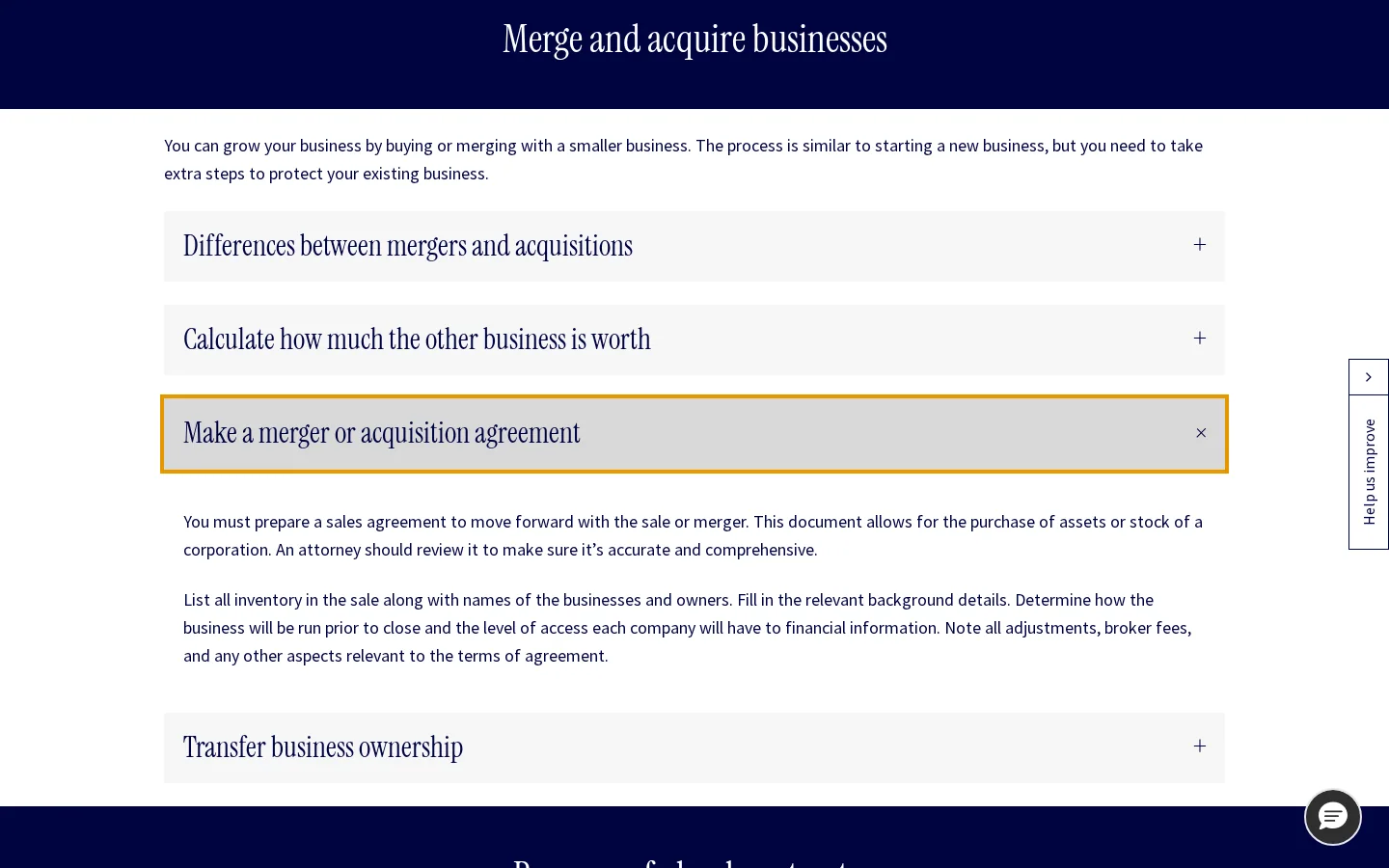
Buying a competitor, a supplier or a business with complementary customers gives you revenue on day one. It is also the riskiest move on this list. Before you sign, check three things: the customer concentration (no client above 20% of revenue), the reason the owner sells, and whether the key people stay. Finance it with debt you can repay from the target's own cash flow, not from your core business.
Choose the strategy that removes your main constraint at the lowest cost and risk. Score each candidate from 1 to 5 on four criteria, then pick the top one or two. Never more than two at a time.
| Strategy | Impact | Cost (5 = cheap) | Speed | Risk (5 = safe) | Best when |
|---|---|---|---|---|---|
| Retention | 4 | 5 | 4 | 5 | Churn is high or repeat rate is low |
| Price increase | 4 | 5 | 5 | 3 | Prices unchanged for 2+ years |
| Average order value | 3 | 5 | 5 | 5 | Many single-item orders |
| Referrals | 3 | 4 | 3 | 5 | Customers are already happy |
| Reviews and local SEO | 4 | 4 | 3 | 5 | Local or service business |
| SEO and GEO content | 5 | 3 | 2 | 4 | Customers search before buying |
| Paid ads | 4 | 2 | 5 | 2 | Proven offer, good margins |
| Partnerships | 3 | 4 | 3 | 4 | Clear complementary businesses |
| New product | 4 | 2 | 2 | 3 | Customers ask for more |
| New market | 5 | 2 | 2 | 2 | Home market saturated |
| Acquisition | 5 | 1 | 4 | 1 | Cash or financing available |
These scores are a starting point for a typical small business. Change them for your case: a SaaS company with high margins can score paid ads higher; a local plumber should score local SEO at 5. For a longer list of channels, see our 50 customer acquisition channels ranked.
Where each strategy acts in the customer journey
A growth plan fits on one page and runs in 90 days. Shorter, and you cannot see results; longer, and nobody remembers the goal.
The 90-day growth plan
Use this template: "Increase [metric] from [current value] to [target] by [date], owned by [name]." Example: "Increase the repeat purchase rate from 18% to 24% by 31 March, owned by Julie." One metric, one owner.
Turn the strategy into weekly outputs you control: "send 15 review requests", "publish 2 articles", "call 10 lapsed customers". You do not control the result each week, but you control the output.
Tag every link with UTM parameters so you know which channel brought each sale:
https://example.com/offer?utm_source=newsletter&utm_medium=email&utm_campaign=winback_q1Add a "How did you hear about us?" field to your forms and checkout. It catches word of mouth and AI recommendations that no tag will see.
Three questions: did we produce the planned output, did the leading indicator move, what do we change this week? If you want to test two versions of an offer or page, follow a proper method: our article on running A/B tests that give real answers explains sample sizes.
Keep the strategy if it reached at least half the target and the trend is up. Change it if the output was done but the result did not move. Stop it if neither moved. Then start the next cycle.
Growth eats cash before it brings cash: stock, hires, ads and new premises are paid before customers pay you. Many profitable businesses close because they run out of money while growing.
Survival is never guaranteed. The US Bureau of Labor Statistics reported on 30 October 2026 that only 15.7% of private establishments born in 2000 were still operating in 2026, with wide gaps between states.
Cash runway (months) = Cash available ÷ Monthly net cash burn
Monthly net cash burn = Cash going out - Cash coming in (average of the last 3 months)
Keep at least 6 months of runway when you launch a growth push. If you are below that, start with the strategies that bring cash in first: price, order value, annual plans paid upfront, retention.
Measure each strategy with one leading indicator (moves in days) and one lagging indicator (moves in months). The leading one tells you early if you are on track; the lagging one tells you if it paid off.
| Strategy | Leading indicator | Lagging indicator |
|---|---|---|
| Retention | Open rate of reorder emails, support response time | Churn, repeat purchase rate, LTV |
| Pricing | Quote acceptance rate | Gross margin, revenue per customer |
| Order value | Bundle take rate | Average order value |
| Referrals | Links shared | Referred customers, their CAC |
| Reviews and local | Reviews per week, profile calls | Local leads, map ranking |
| SEO and GEO | Pages published, impressions, AI mentions | Organic leads and sales |
| Paid ads | Click-through rate, cost per lead | CAC, payback period |
| New market or product | Pre-orders, sign-ups | Revenue share from the new line |
Put these numbers in one place. Our customer lifetime value calculator helps you track LTV each quarter, and Sorank's GEO and SEO dashboard shows Google and AI traffic side by side.
Most growth plans fail for the same few reasons. Each one is easy to spot when you know what to look for.
What it is: spending on acquisition with high churn. How to spot it: new customers grow every month, total active customers stay flat. How to fix it: freeze new acquisition spend for one cycle and put the budget on the top churn reason.
What it is: a little SEO, a little TikTok, a little ads, a new product. How to spot it: nobody can say which action brought last month's sales. How to fix it: keep one or two strategies per 90-day cycle, each with an owner.
What it is: discounts and ads that bring sales at a loss. How to spot it: revenue up, gross margin down, cash down. How to fix it: compute CAC payback with gross margin, and stop any channel above your payback limit.
What it is: months spent on a product nobody pre-ordered. How to spot it: no paying customer before launch. How to fix it: pre-sell to existing customers before writing a line of code or ordering stock.
What it is: 60% of leads from one ad platform, or one client making 30% of revenue. How to spot it: a single change of algorithm or contract would hurt you badly. How to fix it: add an owned channel (SEO, email list) and cap any client at 20% of revenue.
What it is: recruiting for the revenue you hope to have. How to spot it: payroll grows faster than gross profit. How to fix it: hire when the current team is at capacity for two months in a row, and use freelancers in between.
What it is: celebrating followers, likes or traffic. How to spot it: your report has no revenue, margin or customer count. How to fix it: pair each activity number with a money number (leads, sales, LTV).
A typical growth plan, before and after
Growth does not start with a big idea. It starts with one number you understand and one action you can take this week. If you have one hour today, do these four things.
Your first hour of growth work
Then pick the cheapest strategy that removes your main constraint. For most small businesses, that means retention, pricing and reviews first, then one channel that compounds, such as search. The small business marketing priorities for a small budget and our growth marketing guide to the AARRR funnel and growth loops will help you plan the next steps.
The four main directions come from the Ansoff matrix: market penetration (sell more of your current offer to current customers), market development (take it to new markets), product development (new offers for current customers) and diversification (new offers for new markets). Risk and cost rise from the first to the last, so most small businesses should start with market penetration.
The fastest levers are the ones that act on customers you already have: raising prices, increasing the average order value with bundles and upsells, and bringing back past customers. They cost little and show results in days or weeks. New acquisition channels like SEO take longer but keep paying off over time.
Start with a diagnosis: compute your customer acquisition cost, lifetime value, churn and conversion rate to find what blocks growth. Then score each strategy from 1 to 5 on impact, cost, speed and risk, and run only the top one or two for 90 days with one measurable target and one owner.
We analyse your competitors, your website and your AI visibility to create a tailored content plan for free.
 Website Value Calculator
 Website Accessibility Checker
 Google Analytics Checker
 Duplicate Content Checker
 Mobile-Friendly Test
 Website Speed Test
 Subdomain Finder
 Domain Age Checker
 CMS Detector
 Googlebot Simulator
 Nofollow Link Checker
 Meta Tag Checker
 Keyword Cannibalization Checker
 Keyword Intent Checker
 Keyword Extractor
 Google Ads Cost Calculator
 CPC Calculator
 Local Citation Finder
 Reddit Threads Finder
 Disavow File Generator
 Redirect Generator
 Canonical Tag Generator
 Passive Voice Checker
 Google Location Changer
 Google Review Calculator
 Google Review Link Generator
 Keyword Combiner
 Podcast Show Notes Generator
 AI Content Rewriter
 AI Text Humanizer
 ChatGPT Prompt Generator
 Twitter Thread Generator
 Tweet Generator
 Landing Page Copy Generator
 Google Ads Copy Generator
 Pinterest Pin Description Generator
 Anchor Text Generator
 Social Media Post Generator
 LinkedIn Post Generator
 Free AI Writer
 Review Response Generator
 LSI Keyword Generator
 YouTube Video Ideas Generator
 YouTube Tag Generator
 YouTube Description Generator
 Product Description Generator
 CTA Generator
 Blog Introduction Generator
 Conclusion Generator
 Hook Generator
 AI Content Brief Generator
 FAQ Schema Generator
 AI Blog Post Ideas Generator
 Structured Data Validator (Schema Validator)
 Alt Text Checker
 Internal Link Analyzer
 Backlink Challenge
 AI Meta Description Generator
 AI Blog Title Generator
 Google Indexability Checker
 AI Blog Outline Generator
 UTM Link Builder
 Keyword Clustering Tool
 Canonical Tag Checker
 XML Sitemap Generator
 Broken Link Checker
 AI SEO Title Generator
 Headline Analyzer
 SERP Preview Tool
 Redirect Checker
 Hreflang Tag Generator
 Heading Structure Analyzer
 HTTP Headers Checker
 Favicon Extractor
 SERP CTR Calculator
 SEO vs Paid Search Savings Calculator
 SEO Share of Voice Calculator
 SEO ROI Calculator
 SEO Traffic and Revenue Forecast Calculator
 SEO Budget Calculator
 SEO Break-Even Calculator
 SaaS SEO ROI Calculator
 ROAS Calculator
 Reading Time Calculator
 Ranking Gain Simulator
 Organic Traffic Value Calculator
 Organic Traffic Estimator and Website Traffic Checker
 LTV to CAC Ratio Calculator
 Local SEO ROI Calculator
 Link Building Cost Calculator
 Keyword Value Calculator
 Keyword Opportunity Score Calculator
 Keyword Density Calculator
 GEO ROI Calculator
 GEO Content Investment Calculator
 Ecommerce SEO ROI Calculator
 Customer Lifetime Value Calculator
 Customer Acquisition Cost Calculator
 CTR Calculator
 Cost Per Article Calculator
 Conversion Rate Calculator
 Content Marketing ROI Calculator
 ChatGPT Referral Traffic Estimator
 Bounce Rate Calculator
 Backlink ROI Calculator
 AI Visibility Score Calculator
 AI Traffic Value Calculator
 AI Share of Voice Calculator
 Cost of AI Invisibility Calculator
 AI Citation Rate Calculator
 llms.txt Validator
 AI Overview Checker and AI Overviews Rank Checker
 Robots.txt Checker
 AI SEO Audit
 LLM Readability Checker
 SearchGPT Readiness Checker
 Structured Data LLM Audit
 Website Crawlability AI Audit
 Why ChatGPT Is Not Recommending My Website
 Gemini Ranking Tool
 Perplexity Ranking Checker
 LLM Citation Checker
 Answer Engine Optimization Audit
 GEO Audit
 AI Search Visibility Test
 ChatGPT Visibility Checker
 llms.txt Generator
 URL Extractor
 Webpage to Markdown
 Sitemap Checker
 SERP Volatility Sensor
 Page Size Checker
 Word Counter
 Slug Generator
 Schema Generator
 Robots Generator
 OG Preview
 Meta Tags Generator
 Image Compressor
 Favicon Generator
 On-Page SEO Audit: SEO Checker and SEO Analyzer
 Backlink Analysis Tool
 Keyword Research Tool
 Domain Authority Checker
 “I tested Sorank on a real client site and it's insane. It does everything an agency would bill you $1500 a month for. It's going into production on that client now.”

 Guillaume Guersanguersanguillaume.com“We are an Ads agency and we wanted to get our SEO back on track once and for all. Sorank gave us a clear view of our site, helped us prioritize optimizations, and properly structure our content. The tool is easy to use, well designed for a team, and very practical for centralizing tracking without having to juggle multiple platforms. A very solid foundation to start fresh with our SEO.”
 Gaspard MadouiAds Agency
 “I just let the Sorank software do its thing, and now my DR is 25 and my page is ranking higher.”
 Lucas Flandrefoundertrace.fr“I specialized in GEO thanks to Sorank. The GEO Leaderboard allows me to show my clients their position vs competitors on ChatGPT. It’s a real commercial differentiator.”
 MélanieSEO Freelance“Great service, works well for our website and helps us understand how to improve it to rank better on Google and elsewhere. Congrats, keep going, I recommend it.”
 Hugo T.E-commerce merchant