
Preferences
Privacy is important to us, so you have the option of disabling certain types of storage that may not be necessary for the basic functioning of the website. Blocking categories may impact your experience on the website. More information

Privacy is important to us, so you have the option of disabling certain types of storage that may not be necessary for the basic functioning of the website. Blocking categories may impact your experience on the website. More information

SEO for small business: what to prioritise with little time and budget, from Google Business Profile and reviews to service pages, content and measurement.

Tools


In short
Small business SEO means getting found on Google and in the AIs by the customers most likely to buy, with limited time and money. Start with what pays back fastest: a complete Google Business Profile, a steady flow of reviews, one clear page per service and per area served, and consistent business details across directories. Then publish useful content that answers your customers' questions and measure calls, forms and visits rather than rankings alone. Most owners can do the essentials themselves in a few hours a week.
Want to go further? Ask
Small business SEO has a different shape from enterprise SEO. Hundreds of pages and a technical team are unnecessary. What counts is being the obvious answer for a handful of searches that bring customers, often within a city or a region. This guide ranks the actions by return, explains each one and compares doing it yourself, using software and hiring an agency.
Small business SEO is the set of actions that make a small company visible in search results for the queries its customers use, with resources matched to its size. It combines local SEO (the map results and "near me" searches) with classic organic SEO (service pages, product pages, articles).
Its specificity is focus. A plumber in Lyon or a bakery in Austin wins by covering a short list of services and places perfectly; national terms dominated by large publishers are rarely worth the effort. Our glossary entry on local SEO covers the local layer in more detail.
Claim and complete your Google Business Profile, then make sure your website has one page per service and correct titles. These two actions cover the searches with the clearest buying intent. The table ranks the main actions by effort and expected impact.
| Priority | Action | Effort | Why it matters |
|---|---|---|---|
| 1 | Complete Google Business Profile | 2 to 3 hours, then 30 minutes a week | Drives map pack visibility and calls |
| 2 | Ask every satisfied customer for a review | A routine, a few minutes per customer | Reviews influence both ranking and choice |
| 3 | One page per service, and per area if relevant | A few hours per page | Matches precise, high intent searches |
| 4 | Titles, meta descriptions, contact details on every page | An afternoon | Improves clicks and local relevance |
| 5 | Consistent name, address, phone in directories | A day, once | Confirms your details to Google and the AIs |
| 6 | Regular articles answering customer questions | Ongoing | Captures research queries and builds authority |
| 7 | A few local or sector backlinks | Ongoing | Strengthens prominence |
Fill in every field accurately, choose the most precise primary category, add real photos and keep information current. Google states that local results are based mainly on relevance, distance and prominence, and that a complete, accurate profile helps relevance (Google Business Profile help on local ranking).
Our glossary page on the Google Business Profile explains each field.
Reviews build prominence and persuade searchers, while consistent citations confirm that your business exists where you say it does. Google lists review count and score among the elements that factor into local ranking, in the same help page on local results.
For reviews, make asking a habit: a short message or a card after each job, with a direct link to the review form. Reply to every review, positive or negative, politely and specifically. Never buy reviews or offer rewards for positive ones; Google's policies prohibit it.
For local citations, list your business with exactly the same name, address and phone number on the main directories of your country, your chamber of commerce and the platforms of your sector. Inconsistent details across sites are a frequent cause of weak local visibility.
A home page that says what you do and where, one page per service, a contact page with full details, and articles that answer the questions customers ask before buying. Google's SEO Starter Guide recommends exactly this kind of clear, useful structure.
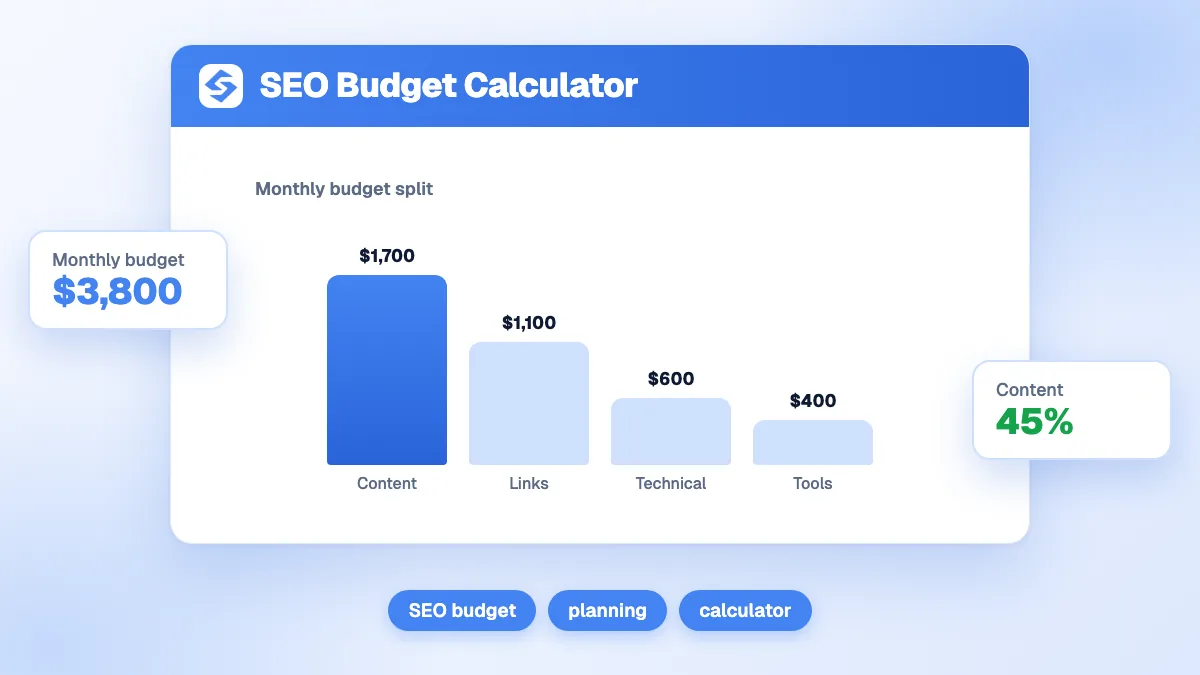
Do the profile, reviews and service pages yourself, use software for regular content and tracking, and call an agency only for a competitive market or a technical issue. The right mix depends on time available more than on budget. To size a budget, a SEO budget calculator helps compare options against your expected revenue.
| Option | Best for | Strengths | Limits |
|---|---|---|---|
| DIY | Owners with a few hours a week | Cheapest, you know your customers best | Hard to keep a regular publishing rhythm |
| SEO software | Businesses that need steady content and tracking | Regular output, lower cost than a provider | Still requires your input on offers and proof |
| Freelancer or agency | Competitive markets, migrations, technical problems | Expertise, time saved | Highest cost, quality varies widely |
The AIs recommend local businesses they can describe with confidence, so consistent details, reviews and clear pages matter as much as for Google. When someone asks ChatGPT, Gemini or Perplexity "who is a good electrician in Bordeaux", the answer draws on web pages, directories, review platforms and, for Google's AI Overviews, Google's own local data.
Three habits help: state your services, area and specialities in plain sentences on your site; keep the same description everywhere you are listed; and publish pages that answer customers' questions with precise facts. Checking which prompts mention you, and which competitors appear instead, shows where to act.
Track the actions that bring revenue: calls, direction requests, form submissions and bookings, alongside organic traffic and positions on a few key searches. Google Business Profile shows calls, website clicks and direction requests; Google Search Console shows the queries that bring visitors.
Give it time. Local visibility can improve within weeks once the profile is complete, while organic rankings for new pages usually take months; our article on how long SEO takes details the factors.
Small business SEO rewards focus: a complete Business Profile, a habit of collecting reviews, one strong page per service and consistent details everywhere, followed by regular useful content. These actions are affordable, cumulative and also make you easier for the AIs to recommend.
If writing and publishing content every week is the part you never find time for, Sorank finds your keywords, writes and publishes articles in autopilot, helps you obtain natural backlinks automatically and tracks whether the AIs mention your business. See the plans and the 3-day free trial.

Usually yes, because people searching for a service near them or a precise product are already looking to buy. A complete Google Business Profile, clear service pages and steady reviews cost little and keep working after the effort stops, unlike paid ads that stop when the budget does. The return depends on competition in your area and sector.
Yes, most of the basics are within reach of a business owner: setting up the Google Business Profile, collecting reviews, writing one page per service and fixing titles. It takes a few hours a week. Software helps with content and tracking, and an agency makes sense mainly for very competitive markets or technical problems.
Local results such as the map pack can move within weeks once the Business Profile is complete and reviews come in. Organic rankings for service and content pages generally take two to four months or more, depending on competition, the age of the site and how consistently new pages are published.
 AI Content Brief Generator
 FAQ Schema Generator
 AI Blog Post Ideas Generator
 Structured Data Validator
 Alt Text Checker
 Internal Link Analyzer
 Backlink Challenge
 AI Meta Description Generator
 AI Blog Title Generator
 Google Indexability Checker
 AI Blog Outline Generator
 UTM Link Builder
 Keyword Clustering Tool
 Canonical Tag Checker
 XML Sitemap Generator
 Broken Link Checker
 AI SEO Title Generator
 Headline Analyzer
 SERP Preview Tool
 Redirect Checker
 Hreflang Tag Generator
 Heading Structure Analyzer
 HTTP Headers Checker
 Favicon Extractor
 SERP CTR Calculator
 SEO vs Paid Search Savings Calculator
 SEO Share of Voice Calculator
 SEO ROI Calculator
 SEO Traffic and Revenue Forecast Calculator
 SEO Budget Calculator
 SEO Break-Even Calculator
 SaaS SEO ROI Calculator
 ROAS Calculator
 Reading Time Calculator
 Ranking Gain Simulator
 Organic Traffic Value Calculator
 Organic Traffic Estimator
 LTV to CAC Ratio Calculator
 Local SEO ROI Calculator
 Link Building Cost Calculator
 Keyword Value Calculator
 Keyword Opportunity Score Calculator
 Keyword Density Calculator
 GEO ROI Calculator
 GEO Content Investment Calculator
 Ecommerce SEO ROI Calculator
 Customer Lifetime Value Calculator
 Customer Acquisition Cost Calculator
 CTR Calculator
 Cost Per Article Calculator
 Conversion Rate Calculator
 Content Marketing ROI Calculator
 ChatGPT Referral Traffic Estimator
 Bounce Rate Calculator
 Backlink ROI Calculator
 AI Visibility Score Calculator
 AI Traffic Value Calculator
 AI Share of Voice Calculator
 Cost of AI Invisibility Calculator
 AI Citation Rate Calculator
 llms.txt Validator
 AI Overview Checker
 Robots.txt Checker
 AI SEO Audit
 LLM Readability Checker
 SearchGPT Readiness Checker
 Structured Data LLM Audit
 Website Crawlability AI Audit
 Why ChatGPT Is Not Recommending My Website
 Gemini Ranking Tool
 Perplexity Ranking Checker
 LLM Citation Checker
 Answer Engine Optimization Audit
 GEO Audit
 AI Search Visibility Test
 ChatGPT Visibility Checker
 llms.txt Generator
 URL Extractor
 Webpage to Markdown
 Sitemap Checker
 SERP Volatility Sensor
 Page Size Checker
 Word Counter
 Slug Generator
 Schema Generator
 Robots Generator
 OG Preview
 Meta Tags Generator
 Image Compressor
 Favicon Generator
 On-Page SEO Audit
 Backlink Analysis Tool
 Keyword Research Tool
 Domain Authority Checker
THEY TRIED SORANK BEFORE YOU
 “I tested Sorank on a real client site and it's insane. It does everything an agency would bill you $1500 a month for. It's going into production on that client now.”

 Guillaume Guersanguersanguillaume.com“We are an Ads agency and we wanted to get our SEO back on track once and for all. Sorank gave us a clear view of our site, helped us prioritize optimizations, and properly structure our content. The tool is easy to use, well designed for a team, and very practical for centralizing tracking without having to juggle multiple platforms. A very solid foundation to start fresh with our SEO.”
 Gaspard MadouiAds Agency
 “I just let the Sorank software do its thing, and now my DR is 25 and my page is ranking higher.”
 Lucas Flandrefoundertrace.fr“I specialized in GEO thanks to Sorank. The GEO Leaderboard allows me to show my clients their position vs competitors on ChatGPT. It’s a real commercial differentiator.”
 MélanieSEO Freelance“Great service, works well for our website and helps us understand how to improve it to rank better on Google and elsewhere. Congrats, keep going, I recommend it.”
 Hugo T.E-commerce merchant
























