Preferences
Privacy is important to us, so you have the option of disabling certain types of storage that may not be necessary for the basic functioning of the website. Blocking categories may impact your experience on the website. More information

Privacy is important to us, so you have the option of disabling certain types of storage that may not be necessary for the basic functioning of the website. Blocking categories may impact your experience on the website. More information

Local citations are mentions of your business name, address, and phone number online. Learn how they work, why NAP consistency matters, and how to manage them.








Sources
Local citations are mentions of your business's name, address, and phone number, commonly shortened to NAP, on a website that is not your own. Every time a directory, review site, or profile lists those details, it creates a citation that search engines can read and cross-check.
For any business with a physical location or service area, citations are a foundational local SEO signal. They prove to Google that you exist, that you are legitimate, and that you operate where you say you do, which directly influences whether you appear in local results and on the map.
A local citation is created any time your business NAP appears online. That can happen on business directories, review platforms, social profiles, chamber of commerce pages, press coverage, and more. Citations can be deliberate, like a directory submission you make, or unintentional, like a mention in local news or a sponsorship.
The core data is NAP: name, address, and phone number. This trio acts like a digital fingerprint for your business. When the same fingerprint appears consistently across many trusted sites, search engines gain confidence that the business is real and accurately located, which is why citations sit alongside the humble link as a trust signal.
Citations come in two forms. Structured citations are listings in dedicated directories and platforms, where NAP appears in defined fields, such as Google, Yelp, Apple Maps, Facebook, and Foursquare. These are the classic, organized citations most local SEO work focuses on.
Unstructured citations are mentions that appear in free-form content, like a blog post, a news article, a press release, or a website footer. They are less formal but still count as a citation when they include your business details. A healthy profile usually mixes both, supported by genuine local relevance and broader content authority.
Google's local algorithm treats NAP as a signal of relevance and proof that you are a legitimate local business at the listed address. As your details appear on more reputable local sites, the algorithm begins to associate that volume with prominence and popularity, which can lift your local rankings.
Citations are widely cited as one of the top local ranking factors for the local pack and organic results. Google needs a sufficient pool of consistent data to confidently display your business, so both the quantity and the quality of citations matter. They reinforce the trust that strong brand monitoring helps you protect.
Consistency is the single most important rule. Your NAP should be identical across every listing, because conflicting details confuse both people and search engines. When the data disagrees, Google trusts it less, and your local visibility suffers.
The stakes are concrete. Research cited by BrightLocal found that 80 percent of consumers say they lose trust in a business due to inconsistent contact details, and 93 percent are frustrated by incorrect information in online directories. Minor formatting differences, like St versus Street, are generally understood by Google, but real discrepancies in the name, address, or number are the ones to eliminate.
Start with the major platforms that nearly every business needs: Google Business Profile, Apple Maps, Facebook, Yelp, and Foursquare. From there, look for sources specific to your industry and city, such as a local chamber of commerce, reputable regional directories, and industry-specific listing sites.
There is no universal must-have list, because each vertical and each location has its own influential directories. A practical approach is to search for your service plus your city and note which directories rank, then prioritize the most visible opportunities. Aligning this with focused keyword research and content planning helps you target the locations and terms that matter.
You can build citations three ways: manual submission by your team, paid submission services that do the manual work for you, or aggregator submission that pushes your NAP to primary data sources which feed hundreds of downstream sites. Aggregators are efficient for reach, while manual control is best for your most important listings.
The ongoing job is maintenance. When you relocate, change a phone number, or rebrand, update every citation promptly, because stale data quietly erodes trust. Citation management tools and trackers help you monitor consistency at scale and catch listings that drift out of sync.
Citations increasingly feed AI and voice answers too. Voice assistants and AI tools pull from the same structured local data, so inaccurate or inconsistent NAP reduces the trust these systems place in your business and can keep you out of spoken or generated answers. Clean, consistent citations improve your odds across all of them.
This makes citation hygiene part of broader AI search visibility for local businesses. A consistent NAP footprint helps an assistant confidently recommend you when someone asks for a nearby service, extending the value of citations well beyond the classic map pack.
Local citations are mentions of your NAP across the web, and they remain a foundational signal that proves your business is real, legitimate, and correctly located. Consistency is everything: identical details across trusted directories build the confidence that lifts local rankings and AI recommendations alike.
To go further, pair citation building with a strong link profile and active brand monitoring to keep your information accurate everywhere. Reference sources: BrightLocal and Mailchimp.

NAP stands for name, address, and phone number, the three core pieces of business information in a local citation. This trio acts like a digital fingerprint for your business. When the same NAP appears consistently across trusted directories and sites, search engines gain confidence that your business is real and located where it claims.
Because conflicting details confuse both customers and search engines and erode trust. Google needs a consistent pool of data to confidently display your business, so discrepancies can lower your local rankings. Research shows most consumers lose trust over inconsistent contact details, so identical NAP across every listing is essential. Minor formatting differences are usually fine.
Start with major platforms like Google Business Profile, Apple Maps, Yelp, and Facebook, then add industry and city-specific directories. Build them manually, through paid submission services, or via data aggregators that distribute your NAP widely. The key ongoing task is maintenance: update every listing promptly when your details change, and use a tracker to monitor consistency.
THEY TRIED SORANK BEFORE YOU
 “I tested Sorank on a real client site and it's insane. It does everything an agency would bill you $1500 a month for. It's going into production on that client now.”
 Guillaume Guersanguersanguillaume.com“We are an Ads agency and we wanted to get our SEO back on track once and for all. Sorank gave us a clear view of our site, helped us prioritize optimizations, and properly structure our content. The tool is easy to use, well designed for a team, and very practical for centralizing tracking without having to juggle multiple platforms. A very solid foundation to start fresh with our SEO.”
 Gaspard MadouiAds Agency
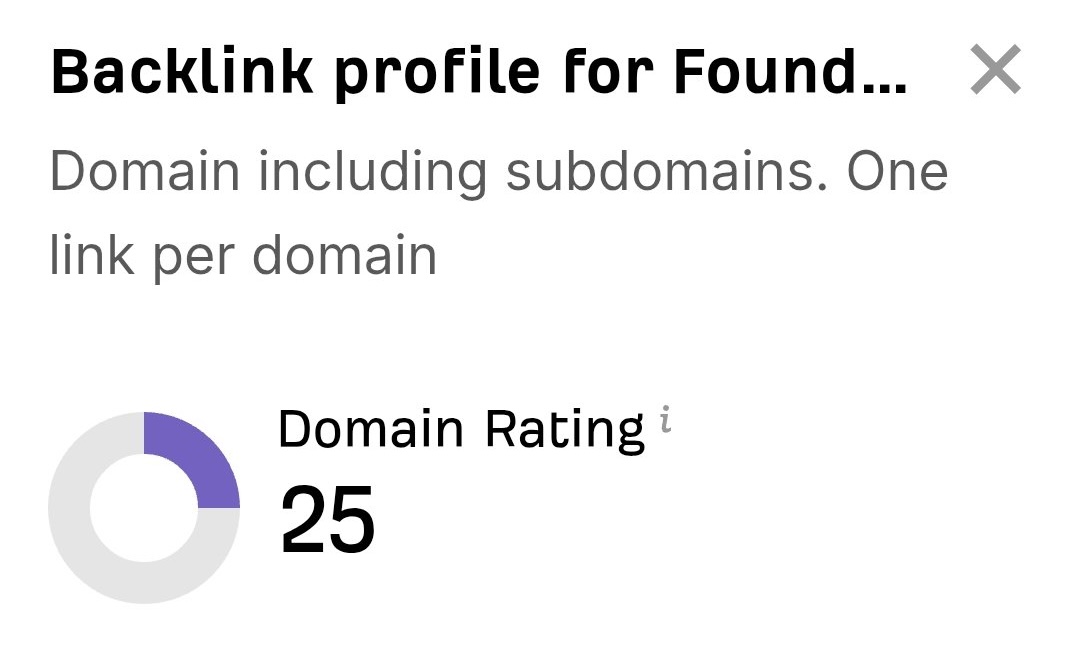 “I just let the Sorank software do its thing, and now my DR is 25 and my page is ranking higher.”
 Lucas FlandrePodcast Host“I specialized in GEO thanks to Sorank. The GEO Leaderboard allows me to show my clients their position vs competitors on ChatGPT. It’s a real commercial differentiator.”
 MélanieSEO Freelance“Great service, works well for our website and helps us understand how to improve it to rank better on Google and elsewhere. Congrats, keep going, I recommend it.”
 Hugo T.E-commerce merchant