
Preferences
Privacy is important to us, so you have the option of disabling certain types of storage that may not be necessary for the basic functioning of the website. Blocking categories may impact your experience on the website. More information
Privacy is important to us, so you have the option of disabling certain types of storage that may not be necessary for the basic functioning of the website. Blocking categories may impact your experience on the website. More information

On 24 November 2026, John Mueller advised marketplaces to use one shared inventory section with local details, not a page per product and city. What to do.
In short
On 24 November 2026, Google's John Mueller answered a marketplace owner who runs tens of thousands of city landing pages with heavily overlapping listings. His advice: keep one shared inventory section and give each location only its own details, instead of a full page for every product and city pair. If your site copies the same stock across many location pages, this is the model Google says works well.
Want to go further? Ask
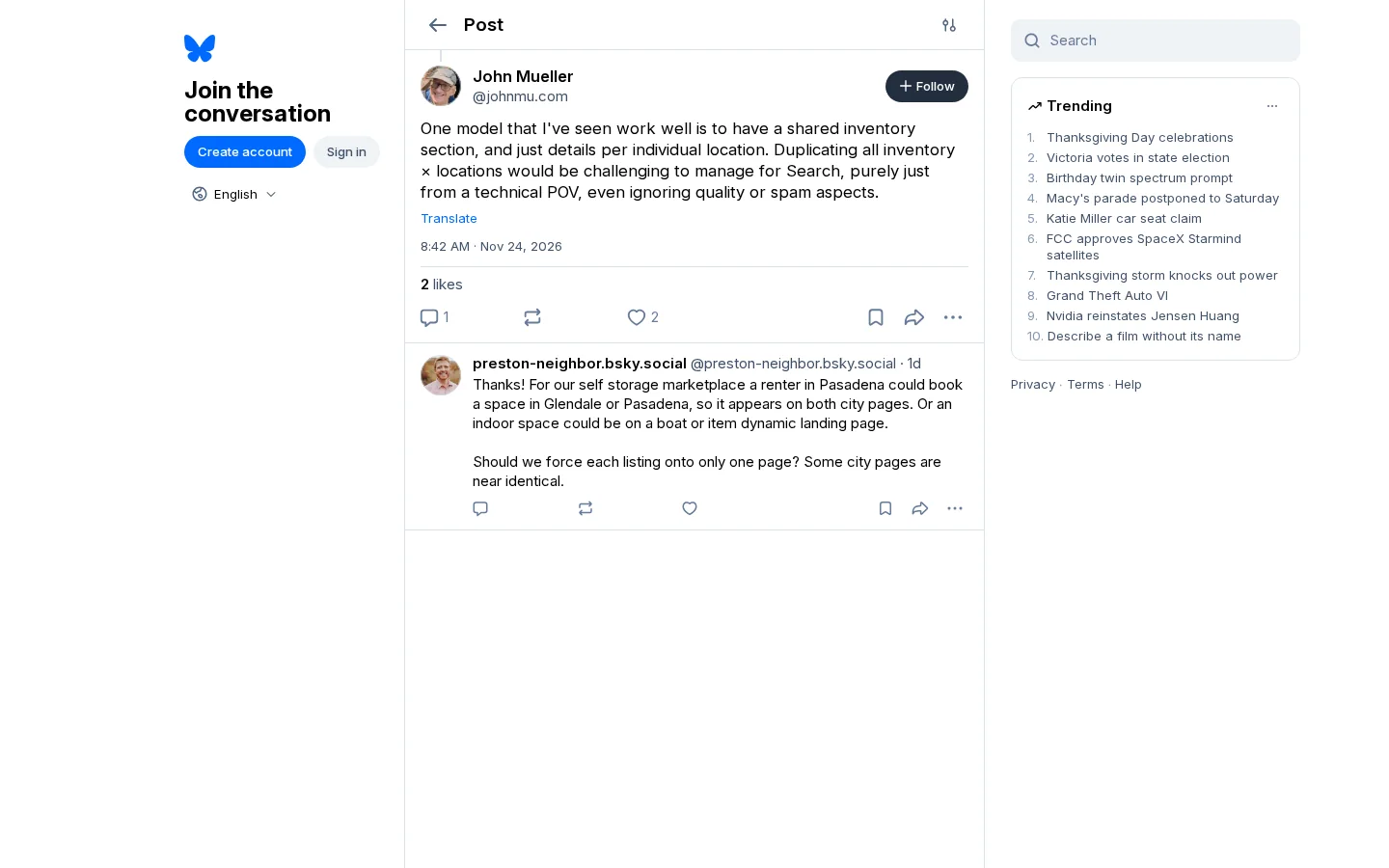
The question came from Preston, who runs a US marketplace with supply in every city. On 23 November 2026 he asked Mueller on Bluesky whether high listing overlap across tens of thousands of geography and offer-type landing pages could put the site at risk of being treated as doorway spam.
Mueller replied on 24 November 2026 in a public Bluesky post: "One model that I've seen work well is to have a shared inventory section, and just details per individual location." He added that duplicating every inventory and location combination would be technically hard for Search to manage, even before you think about quality or spam.
Barry Schwartz reported the exchange on Search Engine Roundtable on 25 November 2026. He pointed to Apple as an example: one product page shows stock at nearby Apple Stores for pickup, so the stock varies by place but the page stays one page.
How the advice came out
This is not a new rule or an algorithm update. It is advice from Google's Search team on a common pattern: one page per product (or offer type) per city, where each page shows almost the same listings with a different city name.
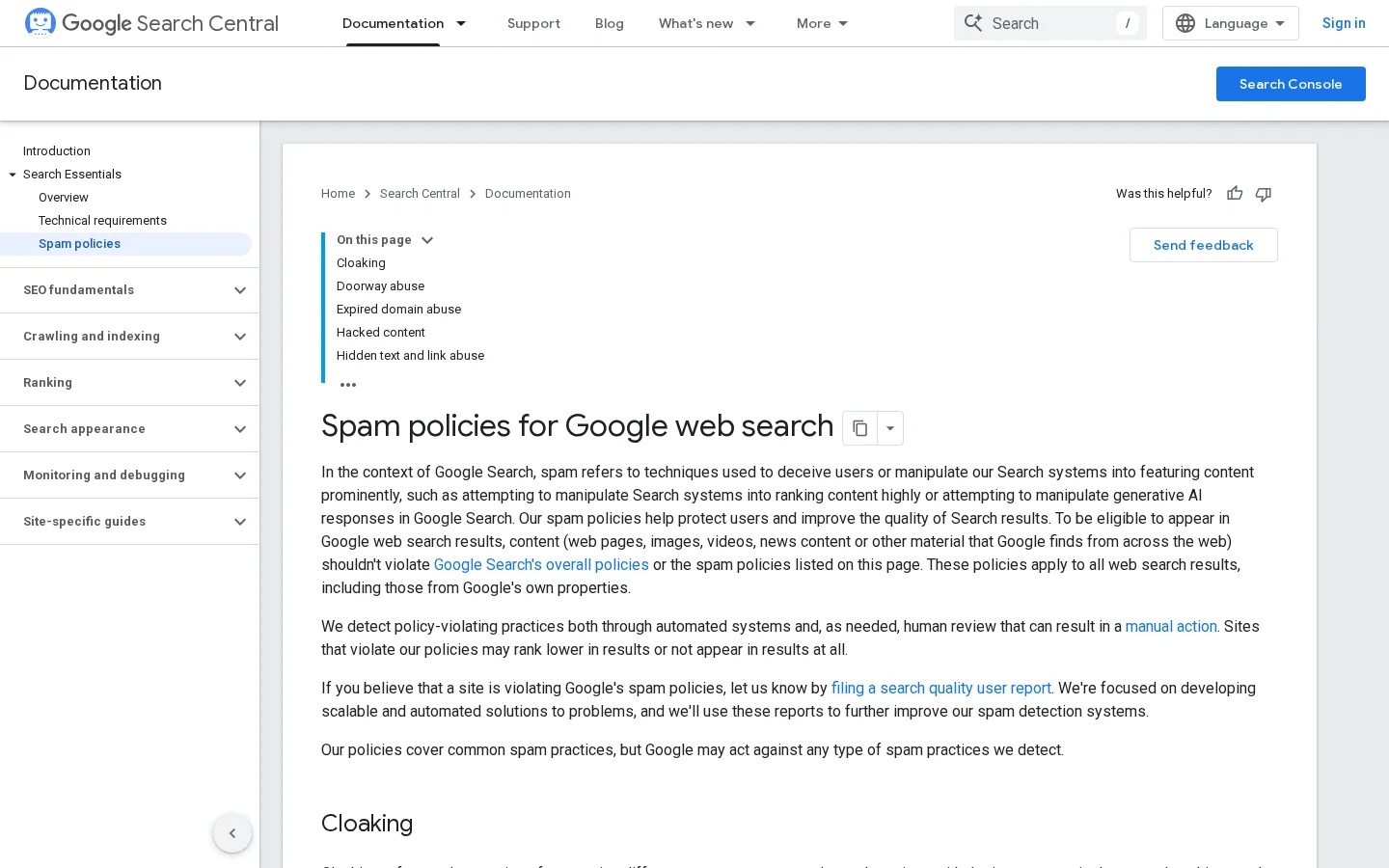
That pattern sits close to what Google already describes as doorway abuse. Google's spam policies list, among the examples of doorways, "having multiple domain names or pages targeted at specific regions or cities that funnel users to one page" and "creating substantially similar pages that are closer to search results than a clearly defined, browseable hierarchy."
Mueller did not say such a site is spam. He made a more practical point: even if it were fine on quality, a page for every inventory and location pair is hard for Google to crawl, index and keep up to date. Many near-identical URLs also split your signals. Google's guide on consolidating duplicate URLs explains that grouping duplicates helps merge links and other signals into one preferred URL and lets Googlebot spend its time on new or updated pages instead.
Two ways to show stock by city
You should look at your site if it publishes pages built from the same stock for many places. The typical cases:
If each of your location pages already has real, unique content (an address, opening hours, local staff, local reviews, a real local offer), you are close to the model Mueller describes. The risk is the page whose only unique element is the city name.
The model has two layers. The inventory lives in one place: each product, listing or offer has one URL. The location layer holds what is truly local: where the place is, when it is open, how to get there, and which items are available nearby. A location page can link to or filter the shared inventory, but it does not copy it into a new indexable page for every city.
| Page type | What it holds | Indexed? |
|---|---|---|
| Shared inventory item | One product, listing or offer, with one URL | Yes |
| Location page | Address, opening hours, directions, local contact, stock nearby | Yes, if it has real local details |
| Product and city copy | The same listings with a new city name | No: redirect or canonicalize |
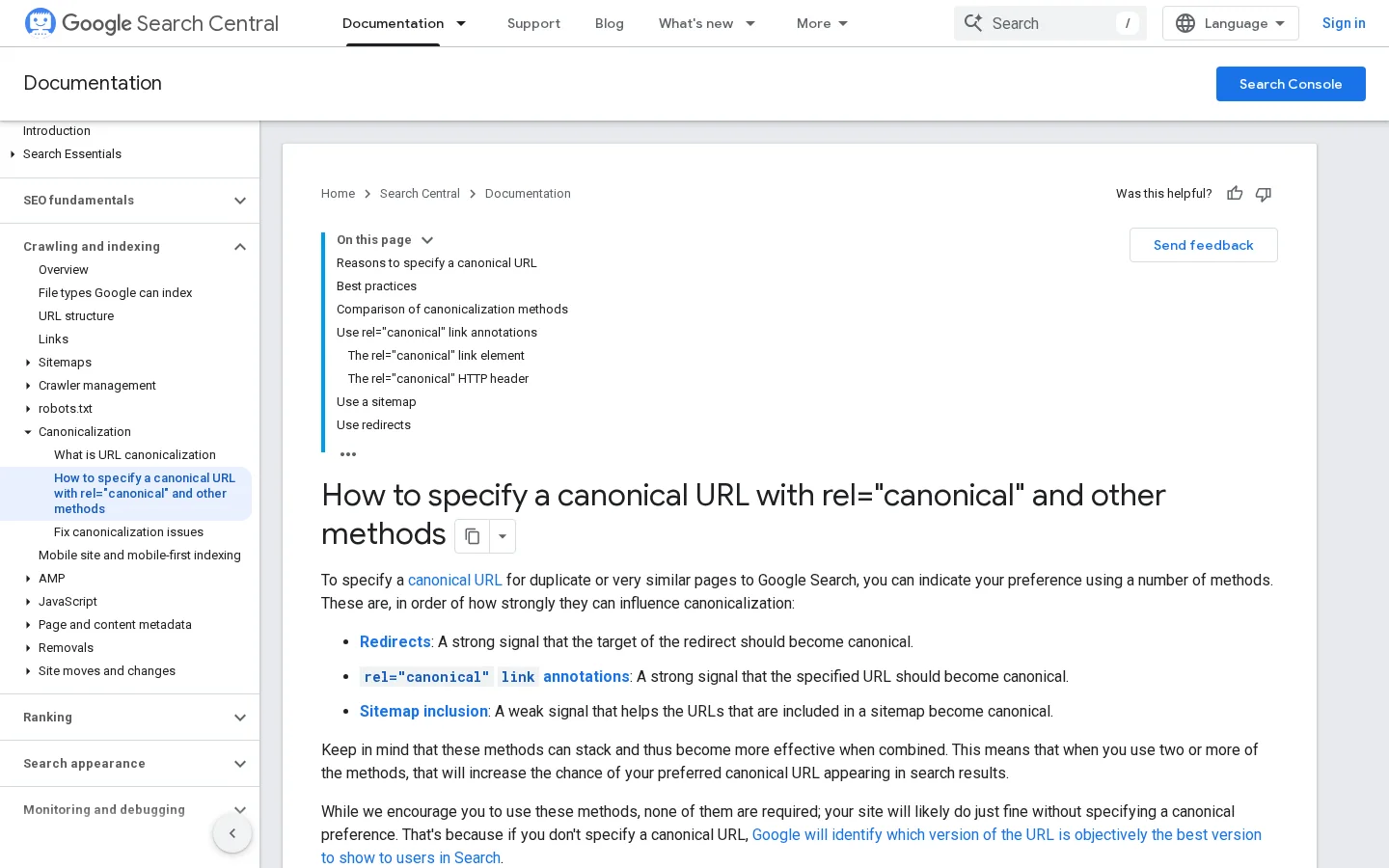
When you merge near-duplicate URLs, point the duplicates to the page you keep. A redirect is the strongest signal for a page you retire. For a page you keep for users but do not want indexed as a separate version, a canonical tag tells Google which URL is the main one:
<link rel="canonical" href="https://example.com/listings/blue-sofa" />Filter pages by city or by offer type raise the same question. Our guide to faceted navigation SEO explains which filter pages to index, block or canonicalize, and our page on duplicate content covers the basics.
Mueller gave a model, not a threshold. He did not say how much overlap is too much, how many location pages a site can have, or whether Google will act on sites that keep a page per product and city. His answer was a short social post, not an update to Google's documentation, and Google has not announced any change to its doorway policy. Apple's store pickup page is an example chosen by Search Engine Roundtable, not by Google.
What Google's doorway examples suggest is a simple test: a location page should help a visitor in that place, not exist only to target that place's search query.
If you publish content on autopilot, the same logic applies to articles: several pages that answer the same query compete with each other. Sorank's topic cluster generator plans articles with built-in anti-cannibalization, so you do not create overlapping pages in the first place.
Move to a shared inventory model
On 24 November 2026, John Mueller said on Bluesky that a model he has seen work well is a shared inventory section with only details per individual location. He added that duplicating every inventory and location combination would be technically hard for Search to manage, even apart from quality or spam concerns.
Mueller did not say they are. But Google's spam policies list pages targeted at specific regions or cities that funnel users to one page, and substantially similar pages, among the examples of doorway abuse. Pages that differ mostly by the city name are the ones at risk.
No. Keep location pages that carry real local details such as an address, opening hours, directions and stock available nearby. Merge the ones that only repeat the shared listings with a new city name, using 301 redirects or canonical tags.
We analyse your competitors, your website and your AI visibility to create a tailored content plan for free.
 Website Value Calculator
 Website Accessibility Checker
 Google Analytics Checker
 Duplicate Content Checker
 Mobile-Friendly Test
 Website Speed Test
 Subdomain Finder
 Domain Age Checker
 CMS Detector
 Googlebot Simulator
 Nofollow Link Checker
 Meta Tag Checker
 Keyword Cannibalization Checker
 Keyword Intent Checker
 Keyword Extractor
 Google Ads Cost Calculator
 CPC Calculator
 Local Citation Finder
 Reddit Threads Finder
 Disavow File Generator
 Redirect Generator
 Canonical Tag Generator
 Passive Voice Checker
 Google Location Changer
 Google Review Calculator
 Google Review Link Generator
 Keyword Combiner
 Podcast Show Notes Generator
 AI Content Rewriter
 AI Text Humanizer
 ChatGPT Prompt Generator
 Twitter Thread Generator
 Tweet Generator
 Landing Page Copy Generator
 Google Ads Copy Generator
 Pinterest Pin Description Generator
 Anchor Text Generator
 Social Media Post Generator
 LinkedIn Post Generator
 Free AI Writer
 Review Response Generator
 LSI Keyword Generator
 YouTube Video Ideas Generator
 YouTube Tag Generator
 YouTube Description Generator
 Product Description Generator
 CTA Generator
 Blog Introduction Generator
 Conclusion Generator
 Hook Generator
 AI Content Brief Generator
 FAQ Schema Generator
 AI Blog Post Ideas Generator
 Structured Data Validator (Schema Validator)
 Alt Text Checker
 Internal Link Analyzer
 Backlink Challenge
 AI Meta Description Generator
 AI Blog Title Generator
 Google Indexability Checker
 AI Blog Outline Generator
 UTM Link Builder
 Keyword Clustering Tool
 Canonical Tag Checker
 XML Sitemap Generator
 Broken Link Checker
 AI SEO Title Generator
 Headline Analyzer
 SERP Preview Tool
 Redirect Checker
 Hreflang Tag Generator
 Heading Structure Analyzer
 HTTP Headers Checker
 Favicon Extractor
 SERP CTR Calculator
 SEO vs Paid Search Savings Calculator
 SEO Share of Voice Calculator
 SEO ROI Calculator
 SEO Traffic and Revenue Forecast Calculator
 SEO Budget Calculator
 SEO Break-Even Calculator
 SaaS SEO ROI Calculator
 ROAS Calculator
 Reading Time Calculator
 Ranking Gain Simulator
 Organic Traffic Value Calculator
 Organic Traffic Estimator and Website Traffic Checker
 LTV to CAC Ratio Calculator
 Local SEO ROI Calculator
 Link Building Cost Calculator
 Keyword Value Calculator
 Keyword Opportunity Score Calculator
 Keyword Density Calculator
 GEO ROI Calculator
 GEO Content Investment Calculator
 Ecommerce SEO ROI Calculator
 Customer Lifetime Value Calculator
 Customer Acquisition Cost Calculator
 CTR Calculator
 Cost Per Article Calculator
 Conversion Rate Calculator
 Content Marketing ROI Calculator
 ChatGPT Referral Traffic Estimator
 Bounce Rate Calculator
 Backlink ROI Calculator
 AI Visibility Score Calculator
 AI Traffic Value Calculator
 AI Share of Voice Calculator
 Cost of AI Invisibility Calculator
 AI Citation Rate Calculator
 llms.txt Validator
 AI Overview Checker and AI Overviews Rank Checker
 Robots.txt Checker
 AI SEO Audit
 LLM Readability Checker
 SearchGPT Readiness Checker
 Structured Data LLM Audit
 Website Crawlability AI Audit
 Why ChatGPT Is Not Recommending My Website
 Gemini Ranking Tool
 Perplexity Ranking Checker
 LLM Citation Checker
 Answer Engine Optimization Audit
 GEO Audit
 AI Search Visibility Test
 ChatGPT Visibility Checker
 llms.txt Generator
 URL Extractor
 Webpage to Markdown
 Sitemap Checker
 SERP Volatility Sensor
 Page Size Checker
 Word Counter
 Slug Generator
 Schema Generator
 Robots Generator
 OG Preview
 Meta Tags Generator
 Image Compressor
 Favicon Generator
 On-Page SEO Audit: SEO Checker and SEO Analyzer
 Backlink Analysis Tool
 Keyword Research Tool
 Domain Authority Checker
 “I tested Sorank on a real client site and it's insane. It does everything an agency would bill you $1500 a month for. It's going into production on that client now.”

 Guillaume Guersanguersanguillaume.com“We are an Ads agency and we wanted to get our SEO back on track once and for all. Sorank gave us a clear view of our site, helped us prioritize optimizations, and properly structure our content. The tool is easy to use, well designed for a team, and very practical for centralizing tracking without having to juggle multiple platforms. A very solid foundation to start fresh with our SEO.”
 Gaspard MadouiAds Agency
 “I just let the Sorank software do its thing, and now my DR is 25 and my page is ranking higher.”
 Lucas Flandrefoundertrace.fr“I specialized in GEO thanks to Sorank. The GEO Leaderboard allows me to show my clients their position vs competitors on ChatGPT. It’s a real commercial differentiator.”
 MélanieSEO Freelance“Great service, works well for our website and helps us understand how to improve it to rank better on Google and elsewhere. Congrats, keep going, I recommend it.”
 Hugo T.E-commerce merchant































