Preferences
Privacy is important to us, so you have the option of disabling certain types of storage that may not be necessary for the basic functioning of the website. Blocking categories may impact your experience on the website. More information
Privacy is important to us, so you have the option of disabling certain types of storage that may not be necessary for the basic functioning of the website. Blocking categories may impact your experience on the website. More information

Learn what multichannel marketing is, the channels to use with examples, how it differs from omnichannel, and a 7-step plan with tracking and attribution.
In short
Multichannel marketing is reaching the same customers through several channels (search, email, social media, ads, stores, SMS) so they meet your brand more than once before they buy. Each channel can run on its own. Omnichannel goes one step further: every channel shares the same customer data and picks up where the last one stopped.
Want to go further? Ask
Quick quiz
Which way of finding customers online fits you best?
Sorank matches your answers


Test it for 3 days on your own site and see where you stand on Google, ChatGPT and the other AIs.
Start 3-day free trial3 days free, then stop whenever you want. 90-day results guarantee, conditions apply.
Multichannel marketing means you are present on more than one channel and you use each one to move people toward a purchase. A shopper sees your Instagram post, searches your brand on Google two days later, signs up to your newsletter, and buys after the third email. Four channels, one sale.
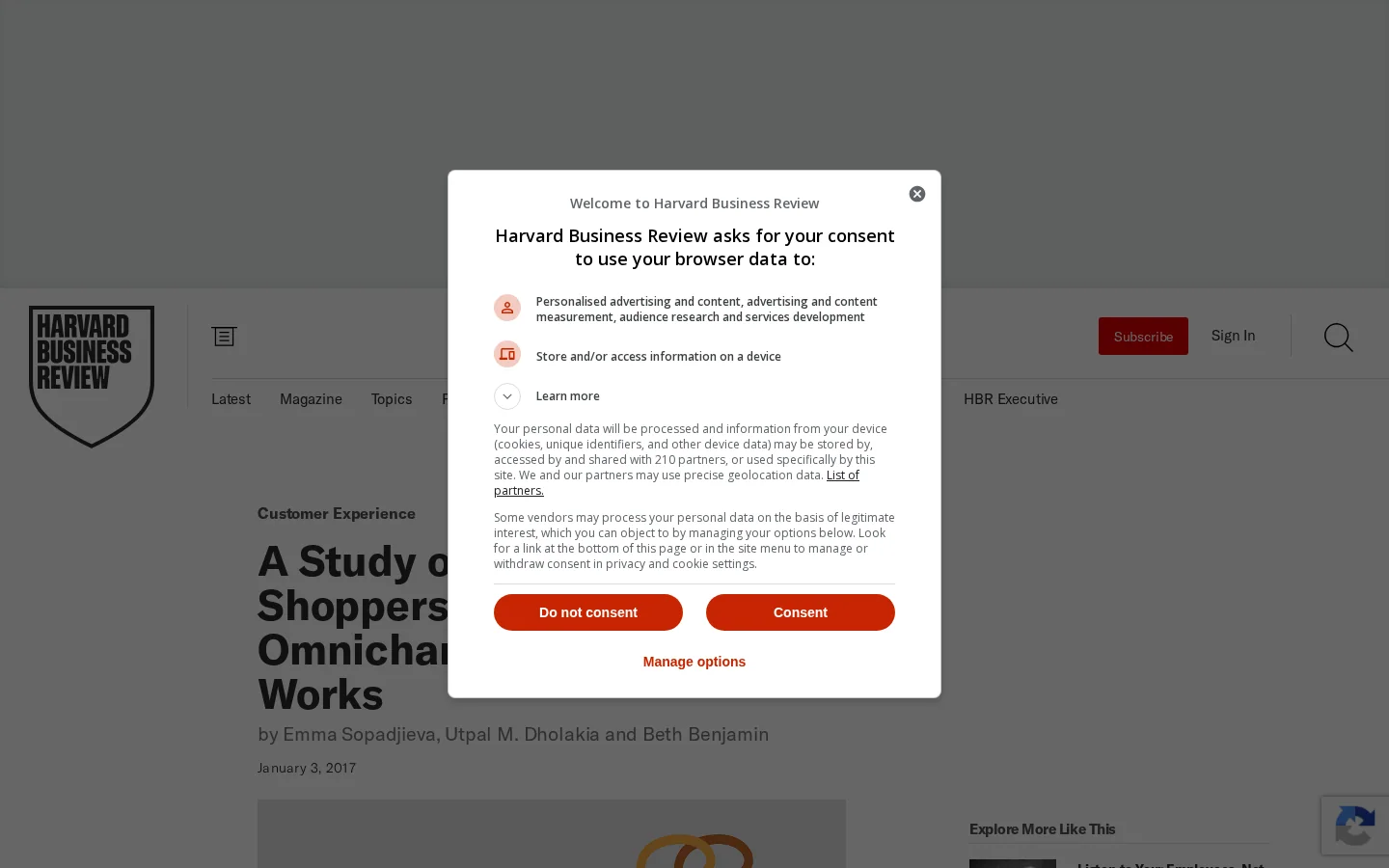
The idea is simple: people do not live on one channel, so a brand that only uses one misses most of its buyers. A Harvard Business Review study by Emma Sopadjieva, Utpal M. Dholakia and Beth Benjamin (January 2017) followed just over 46000 shoppers of one retailer for 14 months: only 7% bought online only and 20% in stores only. The other 73% used several channels.
How 46000 shoppers of one retailer bought
Source: Sopadjieva, Dholakia and Benjamin, Harvard Business Review, January 2017
Teams mix these words up, and the mix-up later breaks the reporting. Here is how to keep them apart:
email, cpc, referral).Multichannel marketing is the plan that decides which touchpoints you create, on which channels, in which order. It sits inside your wider marketing mix: the channels are the "place" and "promotion" part of it.
A second useful split is who controls the channel. Owned channels are yours (website, blog, email list, app, store). Paid channels are rented (search ads, social ads, sponsorships). Earned channels are given by others (press, reviews, backlinks, word of mouth, mentions in AI answers). A healthy multichannel plan has at least one of each: paid brings speed, owned brings margin, earned brings trust.
The difference is how connected the channels are. Multichannel means several channels, each with its own team, goals and data. Cross-channel means the channels pass the customer to each other on purpose. Omnichannel means one customer profile shared by every channel, so the experience continues wherever the person goes.
A concrete way to see it, with one clothing brand:
| Criterion | Single channel | Multichannel | Cross-channel | Omnichannel |
|---|---|---|---|---|
| Number of channels | One | Several | Several | Several |
| Centre of the plan | The channel | Each channel | The campaign | The customer |
| Shared customer data | Not needed | No, one tool per channel | Partly (codes, links, lists) | Yes, one profile in a CRM or customer data platform |
| Message | One | Adapted per channel, sometimes inconsistent | Same campaign, handed over | Personal, continues from the last contact |
| Typical tools | One | Email tool, ad managers, social scheduler | Same, plus tracked links and shared codes | CRM, customer data platform, marketing automation, store systems |
| Cost and effort | Low | Medium | Medium to high | High |
| Best for | Testing a market | Most small and mid-size businesses | Growing brands with a few strong channels | Retailers and brands with stores, apps and a large customer base |
Omnichannel is not "better" by default. It is a bigger project, with data, tools and staff. Most businesses should first run a clean multichannel plan, then add cross-channel links, and move to omnichannel only when the customer base justifies it. If you are at that stage, our guide on how to build an omnichannel marketing strategy covers the data and tool side. Whatever the level, the message must stay the same across channels: that is the job of integrated marketing communications.
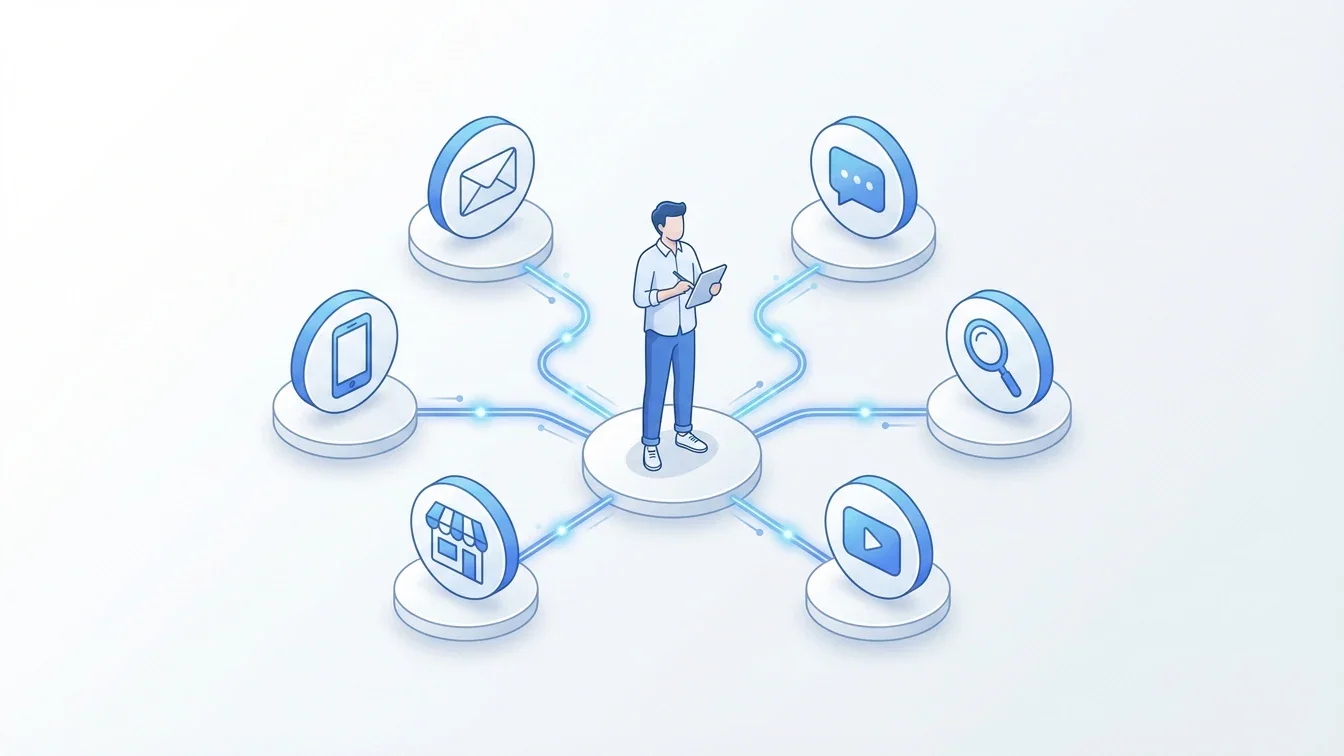
A channel is worth using when your buyers are on it and when you can measure what it brings. Below are the main channels, grouped the way Google Analytics groups them, with what each one does best.
Search catches people who already have a need. Organic search (SEO) brings visits for free once you rank, but takes months. Paid search (Google Ads, Microsoft Ads) brings visits the same day, but stops when you stop paying. Example: a plumber ranks for "boiler repair + city" with a page per service and runs ads on "emergency plumber" at night.
ChatGPT, Gemini and Claude now answer buying questions and name brands. Being one of those names is a channel of its own, close to search but with other rules (more on that below).
Email is the owned channel with the most control: you choose who gets what, and when. Welcome series, abandoned cart, re-order reminders, newsletters. SMS is shorter and faster, good for delivery updates, flash sales and appointment reminders. Both need consent (see the legal section).
Organic social builds attention and trust: short videos, carousels, founder posts on LinkedIn. Paid social (Meta, TikTok, LinkedIn ads) targets people by interest or by lists, and retargets visitors who did not buy.
YouTube, podcasts and streaming audio ads. Long formats teach and convince; they also feed search, because YouTube videos show up in Google results.
Display banners and retargeting, affiliate programs paid per sale, influencers, comarketing with a brand that has the same buyers. Partners give you their audience's trust; you pay with a fee, a commission or an exchange.
Amazon, Etsy, app stores, B2B marketplaces. Buyers search there directly. You get volume but share the margin and do not own the customer data.
Stores, events, trade shows, direct mail, print, radio, TV, outdoor. They are harder to measure, but they still drive searches and visits that show up online (people see a poster, then search your name).
| Channel | Type | Main role | Key metric | Concrete example |
|---|---|---|---|---|
| Organic search (SEO) | Owned and earned | Catch existing demand, at low cost over time | Clicks and sign-ups from non-brand searches | A guide that ranks for "how to choose a road bike" |
| AI answers | Earned | Be named when people ask an AI model for advice | Share of answers that mention you | ChatGPT lists your software among the "best tools for X" |
| Paid search | Paid | Capture demand today | Cost per acquisition | Ads on "accountant near me" |
| Owned | Convert and retain | Revenue per email sent | Abandoned cart series in three emails | |
| SMS | Owned | Urgent and short messages | Click rate, opt-out rate | "Your table is ready" or a 24-hour sale |
| Organic social | Owned | Attention, trust, community | Profile visits and brand searches | A weekly behind-the-scenes reel |
| Paid social | Paid | Reach new people, retarget | Cost per acquisition, incremental lift | Retargeting site visitors with a review video |
| Video and podcasts | Owned or paid | Educate, convince on complex offers | Watch time, brand searches | A YouTube tutorial on your product |
| Affiliates and influencers | Paid or earned | Borrowed trust | Sales per partner | A creator code that tracks sales |
| Marketplaces | Paid (commission) | Volume from buyers already shopping | Net margin per order | Your bestseller listed on Amazon |
| Stores and events | Owned | Touch, try, buy now | Sales per visit, leads collected | A trade show stand that collects emails |
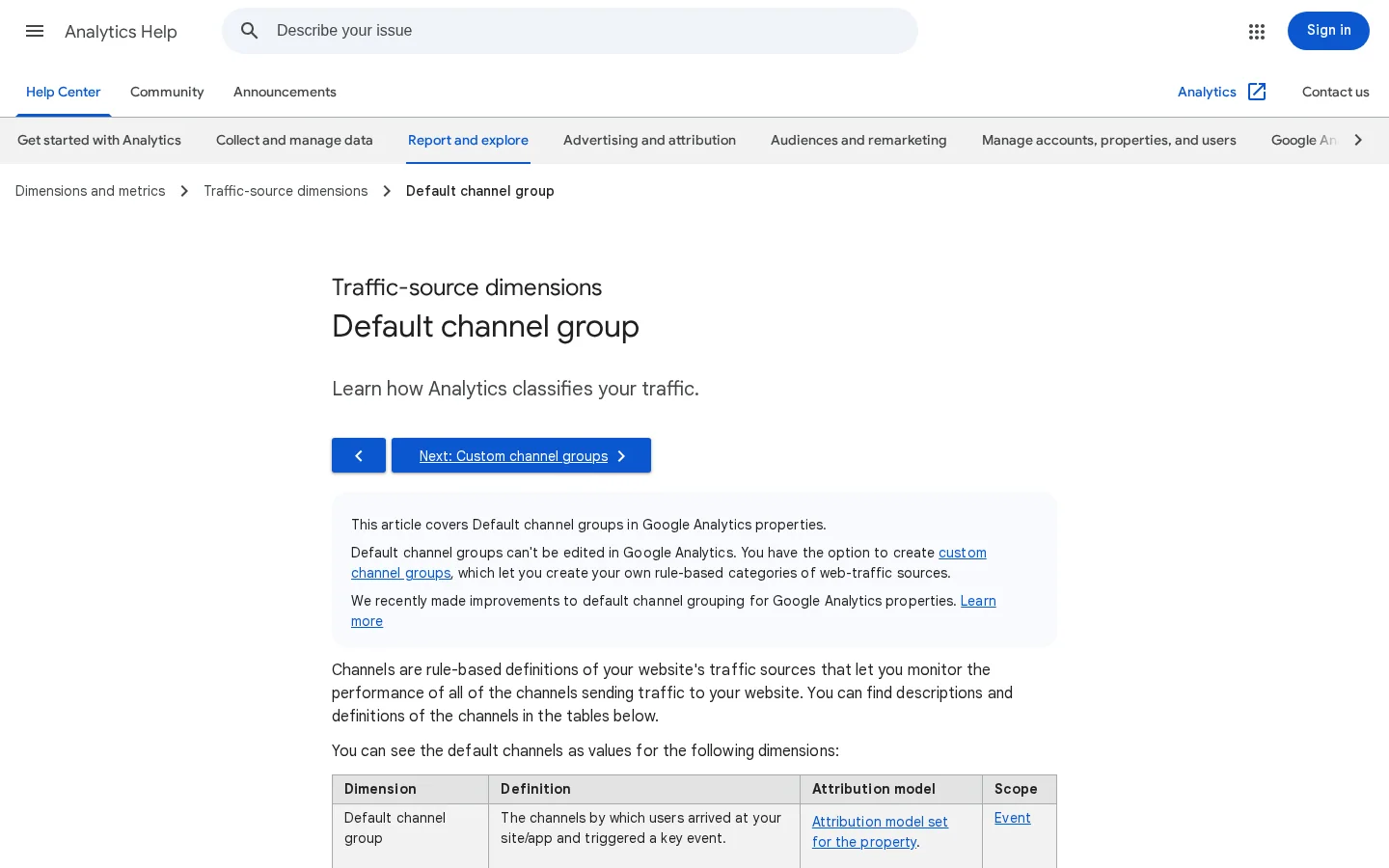
Google Analytics 4 sorts every visit into channels using fixed rules, and that list is a good checklist of what exists. Its default channel group documentation lists Affiliates, Audio, Display, Email, Mobile Push Notifications, Organic Search, Organic Shopping, Organic Social, Organic Video, Paid Search, Paid Social, Paid Video, Referral, SMS and others, plus a recent channel for visits sent by AI models such as ChatGPT and Gemini.
For a much longer list with ideas per business type, see our 50 customer acquisition channels.
It works because buying is rarely a single moment. People hear about you, compare, forget, come back, and buy when the timing is right. Each extra channel is another chance to be there at that moment, and each repeat contact makes your name easier to recall and to trust.
The same Harvard Business Review study found that shoppers who used several channels spent more and came back more often than those who used one. The authors are clear that this is a link, not proof of cause: the best customers may simply use more channels. It still tells you not to force people into one path.
Shoppers who used several channels, compared with single-channel shoppers
Source: Sopadjieva, Dholakia and Benjamin, Harvard Business Review, January 2017 (46000 shoppers)
Every channel needs content, time, tools and someone who watches the numbers. Adding a channel you cannot feed properly lowers the quality of all the others. The rule: add a channel only when the current ones run without you checking them every day.
There is not one way to run several channels. There are five common models, and most mature teams combine two of them. Pick the one that fits your sales cycle and your team size.
Principle: each channel gets one job in the buying journey. Social and video create awareness, search and content catch the research phase, email and retargeting convert, email and SMS retain. When to use it: almost always, as a base. Advantages: clear goals and metrics per channel; no channel is judged on a job it does not do. Limits: real journeys loop back; a person can buy straight from a social post. Example: a software company uses LinkedIn posts for awareness, comparison articles for research, a free trial email series to convert.
One job per channel along the journey
Principle: you make one strong piece (a guide, a study, a webinar) and cut it into formats for each channel: posts, short videos, newsletter, ads. When to use it: small teams with little time, content-led businesses. Advantages: one research effort feeds ten channels; the message stays consistent. Limits: lazy copy-paste looks the same everywhere and performs poorly; each format must be rewritten for its channel. Example: a 3000-word guide becomes a carousel, three short videos, a newsletter and a LinkedIn post. Our channel-by-channel content distribution plan details this model.
Principle: for a launch or a seasonal peak, the same message hits every channel during the same short window. When to use it: product launches, sales events, fundraising news. Advantages: strong recall, the feeling that "everyone is talking about it". Limits: expensive, needs planning weeks ahead, hard to tell which channel did the work. Example: a launch week with a press article, ads, an email to the list, creator posts and a live demo.
Principle: what a person does on one channel decides what they get on the next. A visitor reads the pricing page and gets a retargeting ad, then an email with a case study. When to use it: when you have tracking, an email tool with automation and enough traffic. Advantages: relevant messages, high conversion. Limits: needs consent, clean data and careful frequency caps; this is the first step toward omnichannel. Example: an online shop sends a cart reminder by email after one hour and an SMS after 24 hours, only to those who agreed to SMS. See our guide to email automation workflows to build the email part.
Principle: most of the budget goes to proven channels, a smaller share to promising ones, a small share to pure tests. The 70/20/10 split is a common rule of thumb, not a law. When to use it: when you already have one or two channels that work. Advantages: you keep growing without betting everything on a new channel. Limits: tests need enough budget and time to give a real answer. Example: a shop keeps most of its spend on search and email, tests TikTok ads with a fixed budget for six weeks, and tries a podcast sponsorship once.
| Model | Best for | Team needed | Data needed | Main risk |
|---|---|---|---|---|
| Funnel-stage mapping | Every business, as a base | Small | Basic analytics | Judging a channel on the wrong job |
| Hub and spoke | Small teams, content-led brands | Small | Basic | Same copy pasted everywhere |
| Surround sound | Launches, seasonal peaks | Medium to large | Low | High cost, unclear results |
| Sequenced journeys | E-commerce, SaaS with traffic | Medium | High (tracking, consent, CRM) | Annoying people, legal issues |
| Test and scale | Businesses with one working channel | Small to medium | Medium | Tests stopped too early |
Start from the customer, not from the channels. The steps below take two to four weeks for a small team, and you can start step 1 today.
The 7 steps of a multichannel plan
"Grow awareness" is not a goal. "200 demo requests per month by June, at less than a set cost per demo" is. One goal for the whole plan keeps channels from optimising their own vanity numbers (likes, opens) at the expense of sales.
Look at the data you have: where your last 50 customers first came from in your CRM, the "how did you hear about us?" field, the search terms in Google Search Console. Then talk to customers. You will often find a channel you did not plan, such as a forum, a podcast or an AI answer. A customer journey map you can act on turns this into a one-page document the whole team uses.
Score each candidate channel from 1 to 5 on three questions: are my buyers there, can we make good content for it, can we measure it? Keep the top two to four. A small business with one marketer should run two channels well rather than six badly. Typical starting pairs:
Write it in a short table: channel, job, metric, target, owner. Instagram's job may be new followers who visit the site; email's job is revenue from the list. A channel with no job is a channel nobody will improve.
Write a one-page message sheet: who it is for, the problem, the promise, three proofs (a number, a review, a case), the offer. Every channel uses it. The tone and the format change (a 15-second video is not a newsletter), the promise does not.
Decide the naming rules for tracked links once, write them down, and never improvise them. The detail is in the measurement section below.
Monthly: check each channel against its own metric. Quarterly: move budget and time toward what moves the business goal. Put the dates in a shared marketing calendar that covers every channel, so launches and emails do not collide.
You measure multichannel marketing with three tools that answer three different questions: tracked links say where each visit came from, attribution shares the credit for a sale between channels, and tests show whether a channel really added sales. Use all three; none is enough alone.
Every link you control outside your site (emails, social posts, ads without auto-tagging, partner links, QR codes on print) gets UTM parameters. Without them, a click from your newsletter opened in a mail app often lands in "Direct", and email looks useless. A clean link looks like this:
https://www.example.com/spring-sale?utm_source=newsletter&utm_medium=email&utm_campaign=spring-sale&utm_content=hero-buttonWrite down a naming convention and share it with everyone who creates links:
utm_source   = the exact sender, lowercase: newsletter, facebook, linkedin, partner-name
utm_medium   = the channel family, from a fixed list: email, sms, cpc, paid-social, social, referral, affiliate, display
utm_campaign = campaign-name, lowercase, hyphens, no spaces, no dates in the middle
utm_content  = the variant or placement: hero-button, footer-link, video-a
GA4 decides the channel from these values, so the words matter. According to Google's default channel group rules, a visit counts as Email when the source or medium is email, e-mail, e_mail or e mail; a medium of exactly organic counts as Organic Search; a social source with a paid-looking medium counts as Paid Social. A medium like newsletter or Email_Blast will not match the Email rule and falls into "Unassigned".
Tip
Build your tracked links with our free UTM link builder: fill in the fields once, copy the link, and keep the same values every time.
A sale often follows several touches, so you need a rule to share the credit. Last click gives everything to the final touch and makes email and paid search look great while hiding social and content. Data-driven attribution spreads credit based on observed paths. Google's GA4 attribution help page lists the three models still available: data-driven, paid and organic last click, and Google paid channels last click. First click, linear, time decay and position-based models have not been available since November 2023.
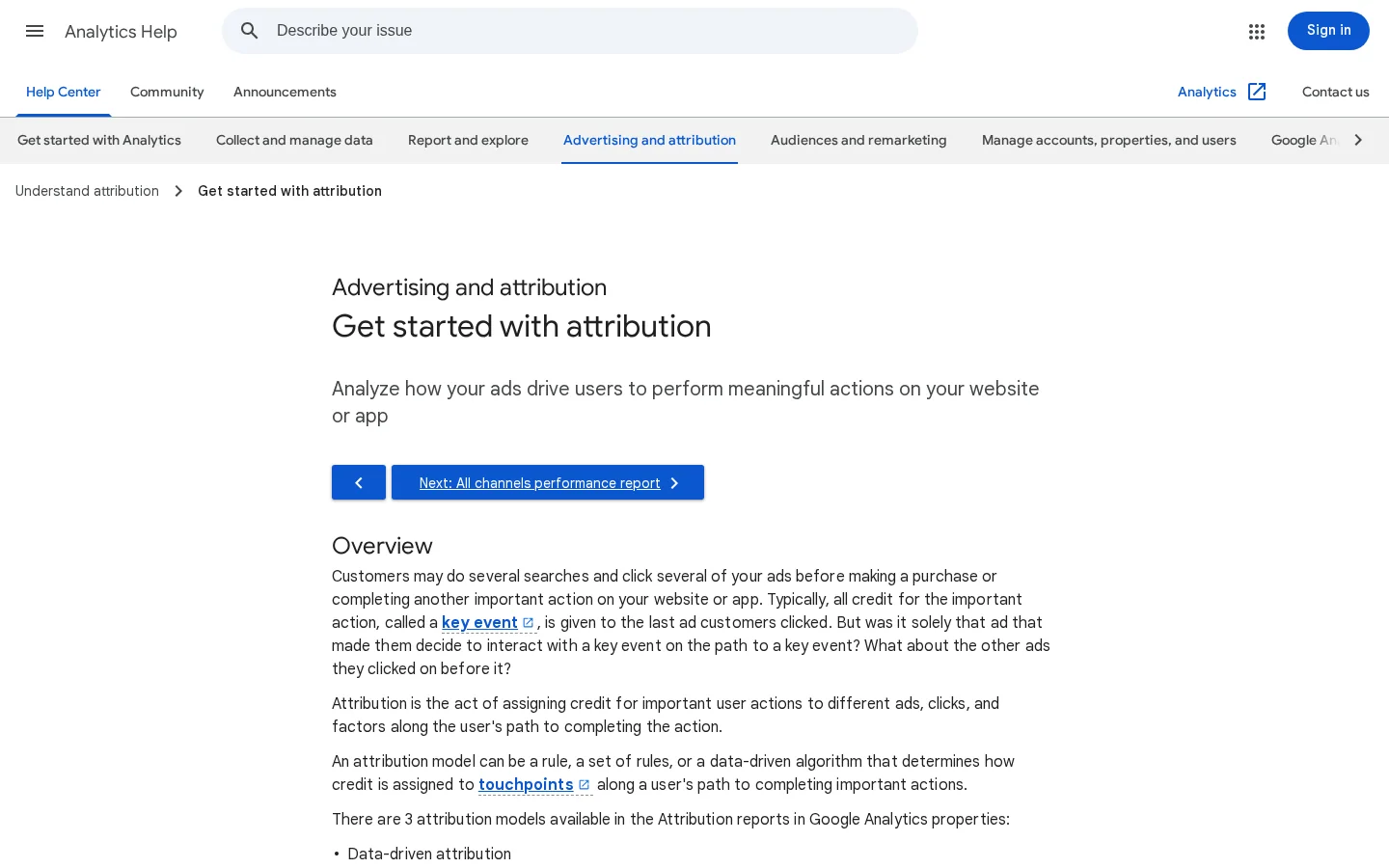
In practice: use data-driven attribution in GA4 for the overall view, compare it with last click to see which channels "assist", and read our deeper guide on attribution models and their limits before you cut a channel because of one report.
Attribution only sees clicks it can track. To know if a channel truly adds sales, run a holdout test: pause it (or hide it from a random part of the audience, or from some regions) for a few weeks, and compare sales with the group that still sees it. If sales do not drop, the channel was taking credit for sales that would have happened anyway. Branded search ads and retargeting are the classic cases to test.
Whatever channel people first meet you on, many of them check you on Google or ask an AI model before they buy. Search and AI answers are where the other channels "land". If your brand is absent there, part of the money spent on social, ads and events leaks to competitors who show up instead.
GA4's default channel rules now put visits referred by AI models such as ChatGPT and Gemini in their own channel, while Google's AI Overviews and AI Mode still count as Organic Search. You can now see this traffic next to email and social, and treat it as a channel with its own goal.
Search as a channel: before and after AI answers
This is the part Sorank handles: it writes and publishes your articles, earns backlinks from sites in your niche, and tracks when ChatGPT, Gemini and Claude mention your brand. The GEO and SEO dashboard shows Google and AI traffic in one view, so search stops being the channel you do "when there is time".
Split your budget by job, not by habit: first fund the channels that capture existing demand (search, email to customers), then the ones that create demand (social, video, partners), and keep a fixed slice for tests. Time counts as much as money: a free channel that needs ten hours a week is not free.
For benchmarks and splits by business type, see our guide on how to split a marketing budget by channel.
In a small team, one person owns the plan and the message sheet, and each channel has one named owner, even if one person owns three channels. Automate what repeats (publishing, email sequences, reporting) so people spend their time on ideas and on talking to customers.
Six channels run by one person vs two channels run well
Each channel has its own consent rules, and a multichannel plan multiplies the risk: someone who unsubscribes from email must not keep getting your SMS if they asked to stop all marketing. Keep one record of consent per person and per channel. This is general information, not legal advice.
| Channel | Consent needed | What every message needs |
|---|---|---|
| Email (US) | Not before sending, but opt-out must work | True sender, honest subject, postal address, opt-out |
| Email (EU, UK) | Yes, except existing customers for similar products | Sender identity, easy opt-out |
| SMS | Yes in most countries | Sender identity, a way to stop (for example reply STOP) |
| Retargeting ads (EU) | Yes, through the cookie banner | Respect of the choice made |
| Influencer posts | Not applicable | Clear "ad" or "paid partnership" label |
The most common mistake is adding channels faster than you can run them. The others come from data and message problems that are easy to spot once you know where to look.
What it is: launching on five or six channels at once with a small team. How to spot it: irregular posting, campaigns launched late, nobody can say which channel brings customers. How to fix it: keep the two channels with the best cost per customer, pause the rest, and add one back only when the first two run on a routine.
What it is: the ad promises one thing, the landing page another, the email a third. How to spot it: put your last ad, email, post and landing page side by side; if a stranger would not see one brand and one offer, you have the problem. High bounce rate on ad traffic is another sign. How to fix it: one message sheet (step 5), and every campaign starts from it.
What it is: the blog intro posted as is on LinkedIn, the YouTube video cut to square for Instagram with no changes. How to spot it: the same text on every network, engagement much lower than on the original channel. How to fix it: keep the idea, rewrite the format: a hook in the first line, native length, native video ratio.
What it is: links without UTM, mixed spellings (Facebook, fb, facebook.com), mediums that GA4 does not recognise. How to spot it: a large "Direct" or "Unassigned" share in the traffic acquisition report, or several rows for the same source. How to fix it: one written naming convention, links built with a tool, and a monthly check of the source and medium report.
What it is: cutting social or content because they rarely close the sale. How to spot it: after a cut, branded searches and email sign-ups drop a few weeks later. How to fix it: judge each channel on its own job, compare data-driven and last click, and test before you cut.
What it is: the same customer gets an email, an SMS, a retargeting ad and a push notification on the same day. How to spot it: rising unsubscribe and opt-out rates, complaints, ad frequency far above your usual level. How to fix it: a contact limit per person per week across channels, and exclude recent buyers from acquisition ads.
What it is: spending on social and ads but leaving the brand search and the AI answers to others. How to spot it: search your brand name and ask ChatGPT about your category: if review sites or competitors answer for you, you lose part of the demand you paid to create. How to fix it: pages for every brand question, regular content, links from sites in your niche, and tracking of AI mentions.
What it is: the email list, the SMS list, the store loyalty file and the CRM never meet. How to spot it: the same customer gets a "welcome" offer after five purchases. How to fix it: one customer ID (usually the email) shared by every tool, synced at least daily.
The mistakes to avoid
The right mix depends on how people buy from you. Three short examples show the logic; adapt the channels, keep the structure.
Google Business Profile and local SEO catch "dentist near me". Reviews requested by SMS after each visit feed the profile. A short email every six months reminds patients of their check-up. Search catches demand, SMS creates proof, email brings people back.
Buying guides rank on Google and get cited in AI answers ("best tent for two"). Short videos on social show the products in use. Email handles the welcome series, cart reminders and seasonal re-orders. Retargeting shows reviews to visitors who did not buy. Each channel has one job along the funnel.
The founder posts on LinkedIn twice a week. Comparison and how-to articles rank on Google and get named by ChatGPT and Gemini. Webinars turn readers into leads. A trial email series takes them to a demo. Sales calls close. Monthly, the team checks which first channel brings the customers who stay longest.
You can start with what you have. The list below takes a few hours for the first pass, then one hour a month to keep up.
Multichannel marketing checklist
Multichannel marketing is not about being everywhere. It is about being on the few channels your buyers use, with one clear message, tracked properly, and improved every month. Start with two channels, measure them honestly, and add the next one when both run without you.
Multichannel marketing uses several channels, each often run with its own team, goals and data. Omnichannel marketing connects those channels around one shared customer profile, so the experience continues from one channel to the next. Omnichannel is a bigger data and tool project, so most businesses start with multichannel.
Start with two channels you can run well, chosen where your buyers already are and where you can measure results. Add a third only when the first two run on a routine without daily checks. Two channels done well beat six done badly.
Tag every link you share with UTM parameters, use data-driven attribution in Google Analytics 4 to share credit between channels, and run holdout tests to check whether a channel really adds sales. Judge each channel on its own job, such as awareness or conversion, not only on last click.
We analyse your competitors, your website and your AI visibility to create a tailored content plan for free.
 Duplicate Content Checker
 Mobile-Friendly Test
 Website Speed Test
 Subdomain Finder
 Domain Age Checker
 CMS Detector
 Googlebot Simulator
 Nofollow Link Checker
 Meta Tag Checker
 Keyword Cannibalization Checker
 Keyword Intent Checker
 Keyword Extractor
 Google Ads Cost Calculator
 CPC Calculator
 Local Citation Finder
 Reddit Threads Finder
 Disavow File Generator
 Redirect Generator
 Canonical Tag Generator
 Passive Voice Checker
 Google Location Changer
 Google Review Calculator
 Google Review Link Generator
 Keyword Combiner
 Podcast Show Notes Generator
 AI Content Rewriter
 AI Text Humanizer
 ChatGPT Prompt Generator
 Twitter Thread Generator
 Tweet Generator
 Landing Page Copy Generator
 Google Ads Copy Generator
 Pinterest Pin Description Generator
 Anchor Text Generator
 Social Media Post Generator
 LinkedIn Post Generator
 Free AI Writer
 Review Response Generator
 LSI Keyword Generator
 YouTube Video Ideas Generator
 YouTube Tag Generator
 YouTube Description Generator
 Product Description Generator
 CTA Generator
 Blog Introduction Generator
 Conclusion Generator
 Hook Generator
 AI Content Brief Generator
 FAQ Schema Generator
 AI Blog Post Ideas Generator
 Structured Data Validator (Schema Validator)
 Alt Text Checker
 Internal Link Analyzer
 Backlink Challenge
 AI Meta Description Generator
 AI Blog Title Generator
 Google Indexability Checker
 AI Blog Outline Generator
 UTM Link Builder
 Keyword Clustering Tool
 Canonical Tag Checker
 XML Sitemap Generator
 Broken Link Checker
 AI SEO Title Generator
 Headline Analyzer
 SERP Preview Tool
 Redirect Checker
 Hreflang Tag Generator
 Heading Structure Analyzer
 HTTP Headers Checker
 Favicon Extractor
 SERP CTR Calculator
 SEO vs Paid Search Savings Calculator
 SEO Share of Voice Calculator
 SEO ROI Calculator
 SEO Traffic and Revenue Forecast Calculator
 SEO Budget Calculator
 SEO Break-Even Calculator
 SaaS SEO ROI Calculator
 ROAS Calculator
 Reading Time Calculator
 Ranking Gain Simulator
 Organic Traffic Value Calculator
 Organic Traffic Estimator and Website Traffic Checker
 LTV to CAC Ratio Calculator
 Local SEO ROI Calculator
 Link Building Cost Calculator
 Keyword Value Calculator
 Keyword Opportunity Score Calculator
 Keyword Density Calculator
 GEO ROI Calculator
 GEO Content Investment Calculator
 Ecommerce SEO ROI Calculator
 Customer Lifetime Value Calculator
 Customer Acquisition Cost Calculator
 CTR Calculator
 Cost Per Article Calculator
 Conversion Rate Calculator
 Content Marketing ROI Calculator
 ChatGPT Referral Traffic Estimator
 Bounce Rate Calculator
 Backlink ROI Calculator
 AI Visibility Score Calculator
 AI Traffic Value Calculator
 AI Share of Voice Calculator
 Cost of AI Invisibility Calculator
 AI Citation Rate Calculator
 llms.txt Validator
 AI Overview Checker and AI Overviews Rank Checker
 Robots.txt Checker
 AI SEO Audit
 LLM Readability Checker
 SearchGPT Readiness Checker
 Structured Data LLM Audit
 Website Crawlability AI Audit
 Why ChatGPT Is Not Recommending My Website
 Gemini Ranking Tool
 Perplexity Ranking Checker
 LLM Citation Checker
 Answer Engine Optimization Audit
 GEO Audit
 AI Search Visibility Test
 ChatGPT Visibility Checker
 llms.txt Generator
 URL Extractor
 Webpage to Markdown
 Sitemap Checker
 SERP Volatility Sensor
 Page Size Checker
 Word Counter
 Slug Generator
 Schema Generator
 Robots Generator
 OG Preview
 Meta Tags Generator
 Image Compressor
 Favicon Generator
 On-Page SEO Audit: SEO Checker and SEO Analyzer
 Backlink Analysis Tool
 Keyword Research Tool
 Domain Authority Checker
 “I tested Sorank on a real client site and it's insane. It does everything an agency would bill you $1500 a month for. It's going into production on that client now.”

 Guillaume Guersanguersanguillaume.com“We are an Ads agency and we wanted to get our SEO back on track once and for all. Sorank gave us a clear view of our site, helped us prioritize optimizations, and properly structure our content. The tool is easy to use, well designed for a team, and very practical for centralizing tracking without having to juggle multiple platforms. A very solid foundation to start fresh with our SEO.”
 Gaspard MadouiAds Agency
 “I just let the Sorank software do its thing, and now my DR is 25 and my page is ranking higher.”
 Lucas Flandrefoundertrace.fr“I specialized in GEO thanks to Sorank. The GEO Leaderboard allows me to show my clients their position vs competitors on ChatGPT. It’s a real commercial differentiator.”
 MélanieSEO Freelance“Great service, works well for our website and helps us understand how to improve it to rank better on Google and elsewhere. Congrats, keep going, I recommend it.”
 Hugo T.E-commerce merchant