Preferences
Privacy is important to us, so you have the option of disabling certain types of storage that may not be necessary for the basic functioning of the website. Blocking categories may impact your experience on the website. More information
Privacy is important to us, so you have the option of disabling certain types of storage that may not be necessary for the basic functioning of the website. Blocking categories may impact your experience on the website. More information

Build an SEO team that ships: the five roles, five team models compared, the hiring order, the handoffs and the mistakes that stall progress.

In short
An SEO team needs five jobs covered: strategy, technical SEO, content, links and reporting. One generalist with freelancers can cover all five on a small site, and each new hire should remove the bottleneck that slows your output most. The structure you pick depends on how many sites you run, how often you publish and who controls the developers who ship the fixes.
Want to go further? Ask
Quick quiz
Is SEO right for you, and how should you start?
Sorank matches your answers


Test it for 3 days on your own site and see where you stand on Google, ChatGPT and the other AIs.
Start 3-day free trial3 days free, then stop whenever you want. 90-day results guarantee, conditions apply.
Most teams start with a job title, such as "SEO specialist", and hope the work follows. It does not. A title tells you who to call. It does not tell you what gets done. Start with the work, then find the people.
Google's SEO Starter Guide groups the basics into four areas: helping Google find your content, organizing your site, making your site interesting and useful, and promoting it. Each area needs a different skill. Finding and indexing pages is a technical job. Organizing the site is part architecture and part editorial. Being useful is a content job. Promotion is where links and outreach come in. Reporting is not in Google's guide, but a team needs it to know what changed.
Use the table below as your first draft. Each row is a piece of work, the area it belongs to and the kind of person who usually owns it. The owner column will change as your team grows, but the work does not.
| Work | Area | Usual owner |
|---|---|---|
| Crawling, indexing, redirects, page speed | Help Google find your content | Technical SEO |
| URL structure, categories, internal links | Organize your site | Technical SEO with content SEO |
| Keyword research, briefs, article quality | Make your site useful | Content SEO |
| Mentions, backlinks, digital PR | Promote your site | Link acquisition |
| Weekly review, what changed and why | Reporting (added to Google's four areas) | SEO analyst or lead |
If you want the same work mapped to content operations rather than SEO only, our guide on content operations shows how the roles connect to the publishing pipeline.
Five roles cover the list above on a site of any size. A small team can give two roles to one person. Do not give all five to one person who also runs development, because that is the usual route to a team that plans well and ships nothing.
The lead sets priorities, ties SEO to revenue goals, agrees the calendar with leadership and decides what not to do. This is the person who says no to a request that would put a new page in the wrong place, or who stops a project that cannot be measured.
What the SEO lead owns
The technical specialist makes sure Google can crawl, render and index the pages you care about, and that they load fast enough. The job is half writing clear tickets and half checking that the fixes actually shipped. You need someone who can read a server log, a sitemap and a robots file without asking a developer to explain each one.
What the technical specialist owns
The content specialist turns keyword research into briefs, checks each draft against search intent and makes sure every article links to the right parent and sibling pages. This role owns the internal linking plan. On a team with several writers, it also stops two people from writing about the same search.
What the content specialist owns
This person earns mentions and links from sites in your field. Add the role when your content is good and your rankings still stall against pages with more links. Before you hire, check that the gap is really links and not content or technical problems. The rules for this role are strict, and we cover them in the link section below.
What the link specialist owns
The analyst owns reporting. The analyst tracks what changed and explains it in plain language. In a small team, the lead does this part. Without it, every decision turns into an argument about whose traffic it was.
What the analyst owns
Developers, designers, product managers, sales and legal are not SEO roles, but they control most of the work. SEO needs their time. Write that time into their planning, or nothing ships.

Every SEO team runs one of five models, or a mix of them. Each one fits a different shape of company. None of them is right for every company, and the choice matters less than the clarity of who owns each job. The sections below cover all five, with their principle, when to use them, benefits, limits and an example.
Principle: one person owns all five jobs for one site. Freelancers handle the volume work, such as first drafts and link prospecting lists.
When to use it: one site, one language, a few articles a month, and a developer who will ship fixes when asked.
Benefits: low cost, one owner, fast decisions and no handoff delays.
Limits: the person becomes the bottleneck, technical depth is thin and there is no backup when they are away.
Example (illustrative): a founder runs the SEO calendar and checks technical issues once a month, while one freelance writer delivers two drafts a week. The founder approves each draft before it goes live.
Principle: specialists are grouped by discipline (technical, content, links) under one lead. Each specialist works across the whole site.
When to use it: a large site, several languages or many product lines, with enough volume to keep each specialist busy.
Benefits: deep skills, clear career paths and one set of standards applied to every page.
Limits: specialists can drift away from business goals, handoffs between groups slow things down, and the link group may chase links the content group does not need.
Example (illustrative): a lead with one technical specialist, two content specialists and one outreach specialist. The technical specialist works through crawl errors while the content specialists work through the blog plan.
Principle: a small central SEO team sets standards, tools and priorities. Each product or marketing team has an SEO champion who does the daily work in that area.
When to use it: several products or markets, each with its own writers or developers, under one brand.
Benefits: standards travel across teams, champions know their product well and the central team stays small.
Limits: champions have other jobs, so SEO is always second. Standards need enforcement, and the central team has to review the champions every quarter.
Example (illustrative): a central lead maintains a playbook for titles, headings and internal links. A champion in the product team fixes titles on the product pages and asks the developers for a template change when a rule cannot be met with content alone.
Principle: SEO specialists sit inside product, content or growth squads and share their goals. The squad owns the search results of its own pages.
When to use it: fast-moving product teams where search affects each release, such as a SaaS with many new pages or a marketplace with frequent listings.
Benefits: SEO is in the room when decisions get made, so fewer fixes arrive late. Data flows between paid and organic teams, which lets one team learn from the other's search terms.
Limits: standards drift from one squad to the next, a single specialist may be the only SEO person in their squad, and the model needs strong shared templates to stay consistent.
Example (illustrative): a growth squad notices that paid search converts well on one query. The embedded SEO specialist turns that query into an organic landing page, and the page is built from the same template as the paid one.
Principle: an internal owner sets the strategy and checks the results. An outside partner or freelancers do the execution, such as writing, audits and links.
When to use it: the company has someone who understands the business and can judge the output, but no time to train a full team.
Benefits: flexible capacity, access to skills you would not hire full time, and a start within weeks rather than months.
Limits: the knowledge sits partly outside the company, the quality of contract reporting matters, and link work carries risk if a partner buys links on your behalf.
Example (illustrative): an internal owner approves the calendar and reviews the monthly report. A freelance writer produces drafts, and an agency handles link work under written rules. If you want the cost side of this choice, read SEO agency vs in-house SEO, which covers costs, speed and control in detail.
Functional team or embedded model
The table below puts all five models side by side, with the risk you accept by picking each one.
| Model | Best for | Main risk | Hire or assign first |
|---|---|---|---|
| Generalist pod | One site, one language, low volume | One person is a bottleneck | A strong owner with a freelance writer |
| Functional team | Large catalog or many languages | Handoffs slow everything | Technical specialist |
| Hub and spoke | Several products under one brand | Champions have other jobs | Central SEO lead, then one champion per product |
| Embedded | Fast releases and many new pages | Standards drift between squads | Shared templates, then one specialist per squad |
| Hybrid | Little time to train staff | Knowledge sits outside | An internal owner who can judge the work |
Choose by answering three questions in order. First, how many sites, languages or product lines do you run? Second, how many new pages do you publish each month? Third, who ships the fixes? Answer honestly. A team that publishes ten pages a month needs a different model from one that publishes two hundred.
| Your situation | Start with |
|---|---|
| Solo founder, one site | Generalist pod, plus a freelance writer |
| Several products, one brand | Hub and spoke |
| Large catalog or many languages | Functional team |
| Frequent product releases | Embedded model with shared templates |
| No internal SEO owner yet | Hybrid, with the owner hired first |
Use these seven steps in order. Each one is short, but skipping the second is the most common reason a team works hard on the wrong pages.
The seven-step build
A job is an outcome with a check. "Get more traffic" is not a job, because nobody can say when it is done. "Every product category page is indexed, loads under the speed target set with your developer, and links to its parent category" is a job. Write 8 to 12 of them. Specific jobs matter more than the total count.
Each job should end with a test you can run in ten minutes. If you cannot write the test, the job is not clear yet. This is also the list that you will reuse when you talk to an agency or a freelancer, so write it in plain words.
For every job, write which other person must act and when. A content brief needs a writer's time. A redirect needs a developer's release. Put the dependency in the other team's planning, not only in a chat thread that will be forgotten by Friday.
A RACI table makes ownership visible. R means does the work, A means accountable (only one per task), C means consulted and I means informed. The example below uses five columns that most small teams need.
| Task | SEO lead | Technical SEO | Content SEO | Developer | Writer |
|---|---|---|---|---|---|
| Fix a redirect chain | I | R | I | A | - |
| Brief for a new article | A | I | R | - | C |
| Publish a new article | I | C | A | - | R |
| Ship a template change | C | R | I | A | - |
Notice that the developer is accountable for the template change, not the SEO specialist. The SEO specialist does the work of writing the ticket and checking the result. Accountability stays with the team that controls the release.
An SOP is a checklist that someone can follow without asking you. Keep each one under a page. Write one for each recurring job, such as publishing an article, requesting a redirect, reviewing a crawl report or pitching a link. The content workflow guide, content creation workflow, shows the stages and quality gates that a publishing SOP should include.
Here is a short example of a redirect SOP:
Give each role KPIs it can control. A technical specialist owns crawl errors and the share of key pages that get indexed. That person does not own total organic revenue, which also depends on pricing, sales and the offer. Keep one or two KPIs per role. If a KPI depends on three other teams, it belongs to the lead.
Hire in the order of the bottleneck. If your site cannot be crawled, you need technical help before you need a content writer. If the site is in good shape and you have nothing new to publish, hire the writer, or buy the production capacity from outside.
Before and after an owner is named
The first hire is usually the person who owns strategy and can judge other people's work. That person can tell a good partner from a weak one. Google's guide puts it simply: "You might consider hiring a professional." The useful question is what to look for in that professional, which our guide on how to choose an SEO agency answers in detail.
Outsource work that is repeatable and easy to check: first drafts, technical audits, prospect lists for links and reporting exports. Keep in-house the work that needs company context: positioning, product decisions, the final approval of claims, and any change to the structure of the site. A partner can produce a good draft, but only your team knows whether the draft is true for your product.
Reporting turns a team's work into decisions. The minimum is a weekly check of Google Search Console and a monthly note on what changed and why. Google describes Search Console as a set of tools and reports that "help you measure your site's Search traffic and performance, fix issues", and it lists search analytics, sitemap submission, issue alerts and a URL Inspection tool.
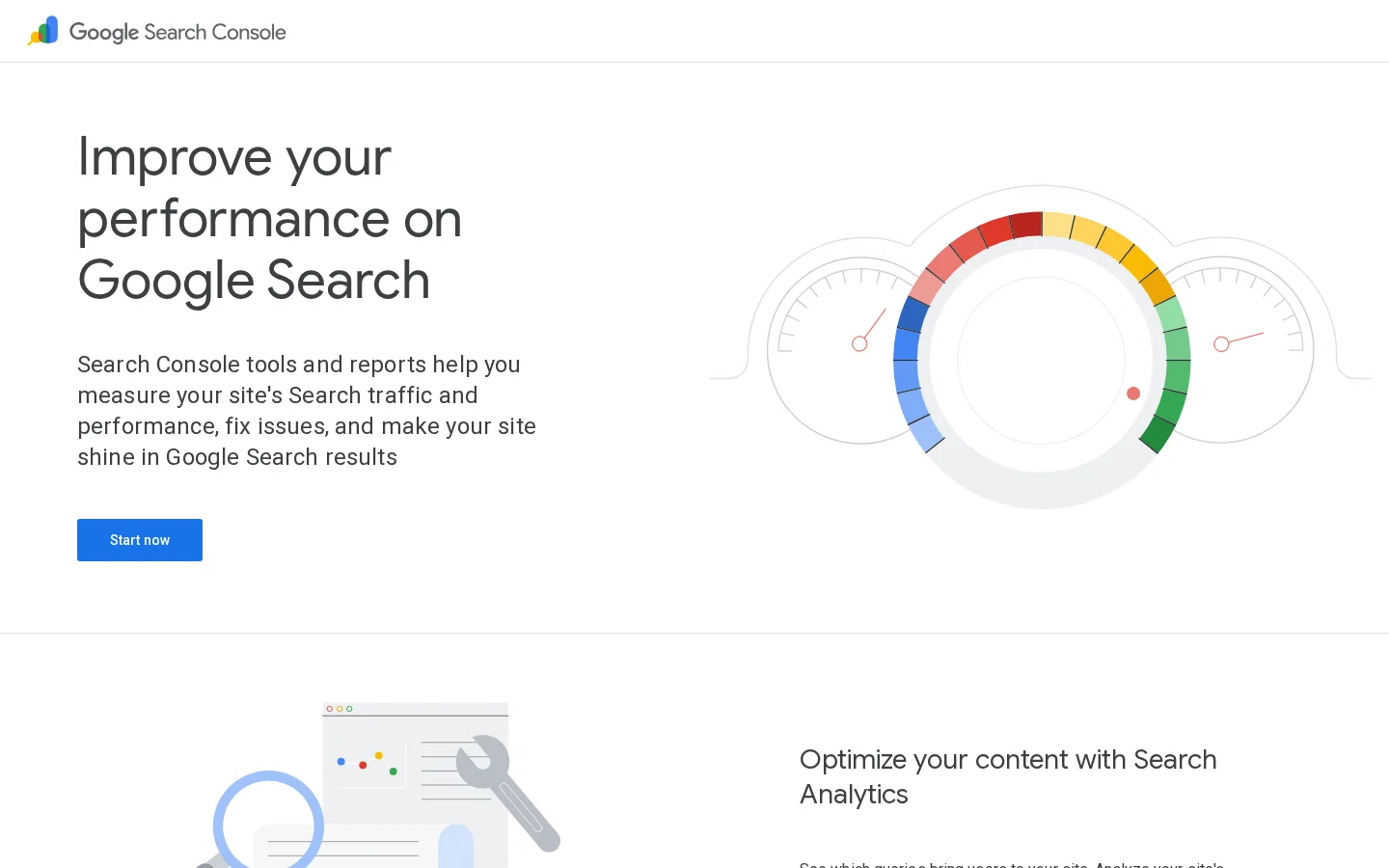
Search Console is the primary source for the analyst. Two habits make its data useful for decisions.
Brand queries show demand you already have. Non-brand queries show whether your content reaches people who did not know you. Track the two separately, because a rise in brand queries after a campaign can hide a fall in non-brand traffic. The Performance report filters accept a regular expression, so you can save a brand filter once and reuse it. A starting pattern is below. Replace the placeholders with your brand name and its common misspellings.
(?i)yourbrand|your brand name|yourbrand\.comApply the filter, then compare the totals with and without it each week. If the non-brand total falls while the brand total rises, the team is getting noticed without getting found. That is a content and architecture problem, not a branding one.
Log every technical release, content update and link placed, with the date and the URLs. When traffic moves, you can match the cause to the change. Without the log, the analyst has to guess, and the team argues from memory. The log is also the source for the quarterly review in step seven.
For a deeper view of which reports to automate and which to keep manual, read automated SEO reporting.
Link acquisition is the role most likely to hurt a team, because the fastest shortcuts are the ones that Google calls spam. Google's spam policies list buying or selling links for ranking purposes, excessive link exchanges and automated link creation, among other practices. These are the three most relevant to a team that is under pressure to show links:
The full list is in Google's spam policies, and it also covers paid articles that pass ranking credit and widely distributed footer links. The same page makes an exception for paid links that are qualified with rel="sponsored" or rel="nofollow". The rule is about how a link is marked, not only about whether money changed hands.
Warning
A link you did not earn stays in your profile for as long as the site exists. If an offer sounds like a shortcut, it is one, and the risk stays with your site, not with the seller.
Before any placement, the link specialist should answer a short set of questions. A good link is one a reader would click without being asked. For the other side of the work, read backlink exchange, which explains what to do instead, and backlink audit, which shows how to review the links you already have.
Check before every placement
Earn links with things other sites want to cite. That means original data from your own product or customers, a free tool that answers a common question, or a guide that no one else in your niche has written with this depth. Outreach then becomes a short message to a real editor, with a specific reason to link.
Most SEO work fails at a handoff, not at the strategy stage. A ticket that says "fix the titles" waits three sprints. A ticket with the URL list, the rule and the test passes in a day. The table below shows what each handoff should carry and what should come back.
| Handoff | What to send | What comes back |
|---|---|---|
| Technical SEO to developer | URL list, the rule, the expected result and the test | Release note with the changed URLs |
| Content SEO to writer | Brief with intent, headings and required links | Draft with sources and internal links |
| Writer to content SEO | Draft for review | Revised draft and a planned publish date |
| Analyst to lead | Weekly change log with the open questions | A decision on the next priority |
Internal links are the handoff most teams underestimate. Each new article should link to a parent page, to a sibling and back from an older page where it fits. Our guide on automated internal linking explains the rules that keep automation safe, and site architecture for SEO covers the structure those links should follow.
Tip
Before you send a developer a list of internal link fixes, check the current links on one page with the free Internal Link Analyzer. Send the result with the ticket, so the developer sees the exact links to change.
These mistakes show up most often in teams that stall. For each one you get what it looks like, how to spot it in your own team and the fix.
Signs your SEO team is stalled
What it is: a senior hire with no budget for developers, writers or tools. The person has a title but no backlog to run.
How to spot it: the lead spends the first quarter writing reports on data that does not change, and nothing ships.
How to fix it: write the job list first (step one), then buy the capacity that clears the bottleneck. Hire the head once the work is queued.
What it is: two writers publish similar articles, and both compete for one query.
How to spot it: in Search Console, one query shows impressions split between two of your URLs, and neither page reaches the top positions.
How to fix it: keep a keyword map that assigns each query to one page before anyone writes. For the weaker page, merge the content into the stronger one and set up a redirect. Our guide on 301 vs 302 redirects explains which redirect to use.
What it is: a request such as "improve page speed" with no page list and no measure of success.
How to spot it: tickets close, but nobody can say whether the problem is solved.
How to fix it: every ticket carries a URL list, the rule, and a check to run after release. If the check cannot be written, the ticket is not ready.
What it is: the team reports position changes and treats them as the result.
How to spot it: rankings rise for a set of queries, but clicks stay flat. Search Console shows impressions and clicks by page and query, so the gap is visible if you look.
How to fix it: report clicks and impressions by page and query group. Where impressions are high and clicks are low, test the title and the snippet before writing more content.
What it is: a monthly target for the number of links, set without rules for their quality.
How to spot it: links arrive from sites unrelated to your field, or the same anchor text repeats across many new links.
How to fix it: replace the quota with rules, such as the pre-placement checklist above. Review the profile every quarter with a backlink audit.
What it is: nobody owns the URL rules, so new pages land in random folders and some have no internal link at all.
How to spot it: you find duplicate paths for the same topic, and orphan pages that only appear in the sitemap.
How to fix it: name one owner for the architecture, usually the technical specialist, and write the URL rules in the SOP library. Review the structure before each new section of the site launches.
Sorank is an SEO and GEO platform that runs the repeatable production side of the work on autopilot. It pulls keywords from your Search Console and from competitor rankings, groups them into clusters, checks each keyword against your existing pages to avoid cannibalization, writes and publishes articles, and tracks your brand in answers from ChatGPT, Claude and Gemini, with Grok added on higher plans. For a team, that covers much of the content, links and AI tracking work, so the content specialist and the analyst spend their time on decisions rather than on exports.
Sorank does not replace the strategy. The lead still decides the priorities, approves the calendar and owns the jobs list. Treat any tool, Sorank included, as one way to run the repeatable jobs in the hybrid or hub models above. If you run a larger marketing group, the Sorank page for marketing teams explains how the same work fits a wider plan.
Run this list once. Each unchecked item is a job without an owner, and each owner without a check is a risk.
Team review, one hour
Start with the job list. Every other decision in this guide follows from it.
One person can run SEO for a small site with one language, if freelancers handle the writing. Larger sites usually need three roles covered: leadership, technical SEO and content SEO. Add a link or reporting role only when a specific bottleneck shows up.
Hire the internal owner first, because someone in the company has to judge the work of anyone else. An agency or freelancers can then handle the execution. Our guide on SEO agency vs in-house SEO compares the costs and the control of each option.
Give it to the person who already owns the site's pages and their results, usually the marketing lead or the product owner. Write the job list first, assign each job to one named person and check the results every month.
We analyse your competitors, your website and your AI visibility to create a tailored content plan for free.
 Duplicate Content Checker
 Mobile-Friendly Test
 Website Speed Test
 Subdomain Finder
 Domain Age Checker
 CMS Detector
 Googlebot Simulator
 Nofollow Link Checker
 Meta Tag Checker
 Keyword Cannibalization Checker
 Keyword Intent Checker
 Keyword Extractor
 Google Ads Cost Calculator
 CPC Calculator
 Local Citation Finder
 Reddit Threads Finder
 Disavow File Generator
 Redirect Generator
 Canonical Tag Generator
 Passive Voice Checker
 Google Location Changer
 Google Review Calculator
 Google Review Link Generator
 Keyword Combiner
 Podcast Show Notes Generator
 AI Content Rewriter
 AI Text Humanizer
 ChatGPT Prompt Generator
 Twitter Thread Generator
 Tweet Generator
 Landing Page Copy Generator
 Google Ads Copy Generator
 Pinterest Pin Description Generator
 Anchor Text Generator
 Social Media Post Generator
 LinkedIn Post Generator
 Free AI Writer
 Review Response Generator
 LSI Keyword Generator
 YouTube Video Ideas Generator
 YouTube Tag Generator
 YouTube Description Generator
 Product Description Generator
 CTA Generator
 Blog Introduction Generator
 Conclusion Generator
 Hook Generator
 AI Content Brief Generator
 FAQ Schema Generator
 AI Blog Post Ideas Generator
 Structured Data Validator (Schema Validator)
 Alt Text Checker
 Internal Link Analyzer
 Backlink Challenge
 AI Meta Description Generator
 AI Blog Title Generator
 Google Indexability Checker
 AI Blog Outline Generator
 UTM Link Builder
 Keyword Clustering Tool
 Canonical Tag Checker
 XML Sitemap Generator
 Broken Link Checker
 AI SEO Title Generator
 Headline Analyzer
 SERP Preview Tool
 Redirect Checker
 Hreflang Tag Generator
 Heading Structure Analyzer
 HTTP Headers Checker
 Favicon Extractor
 SERP CTR Calculator
 SEO vs Paid Search Savings Calculator
 SEO Share of Voice Calculator
 SEO ROI Calculator
 SEO Traffic and Revenue Forecast Calculator
 SEO Budget Calculator
 SEO Break-Even Calculator
 SaaS SEO ROI Calculator
 ROAS Calculator
 Reading Time Calculator
 Ranking Gain Simulator
 Organic Traffic Value Calculator
 Organic Traffic Estimator and Website Traffic Checker
 LTV to CAC Ratio Calculator
 Local SEO ROI Calculator
 Link Building Cost Calculator
 Keyword Value Calculator
 Keyword Opportunity Score Calculator
 Keyword Density Calculator
 GEO ROI Calculator
 GEO Content Investment Calculator
 Ecommerce SEO ROI Calculator
 Customer Lifetime Value Calculator
 Customer Acquisition Cost Calculator
 CTR Calculator
 Cost Per Article Calculator
 Conversion Rate Calculator
 Content Marketing ROI Calculator
 ChatGPT Referral Traffic Estimator
 Bounce Rate Calculator
 Backlink ROI Calculator
 AI Visibility Score Calculator
 AI Traffic Value Calculator
 AI Share of Voice Calculator
 Cost of AI Invisibility Calculator
 AI Citation Rate Calculator
 llms.txt Validator
 AI Overview Checker and AI Overviews Rank Checker
 Robots.txt Checker
 AI SEO Audit
 LLM Readability Checker
 SearchGPT Readiness Checker
 Structured Data LLM Audit
 Website Crawlability AI Audit
 Why ChatGPT Is Not Recommending My Website
 Gemini Ranking Tool
 Perplexity Ranking Checker
 LLM Citation Checker
 Answer Engine Optimization Audit
 GEO Audit
 AI Search Visibility Test
 ChatGPT Visibility Checker
 llms.txt Generator
 URL Extractor
 Webpage to Markdown
 Sitemap Checker
 SERP Volatility Sensor
 Page Size Checker
 Word Counter
 Slug Generator
 Schema Generator
 Robots Generator
 OG Preview
 Meta Tags Generator
 Image Compressor
 Favicon Generator
 On-Page SEO Audit: SEO Checker and SEO Analyzer
 Backlink Analysis Tool
 Keyword Research Tool
 Domain Authority Checker
 “I tested Sorank on a real client site and it's insane. It does everything an agency would bill you $1500 a month for. It's going into production on that client now.”

 Guillaume Guersanguersanguillaume.com“We are an Ads agency and we wanted to get our SEO back on track once and for all. Sorank gave us a clear view of our site, helped us prioritize optimizations, and properly structure our content. The tool is easy to use, well designed for a team, and very practical for centralizing tracking without having to juggle multiple platforms. A very solid foundation to start fresh with our SEO.”
 Gaspard MadouiAds Agency
 “I just let the Sorank software do its thing, and now my DR is 25 and my page is ranking higher.”
 Lucas Flandrefoundertrace.fr“I specialized in GEO thanks to Sorank. The GEO Leaderboard allows me to show my clients their position vs competitors on ChatGPT. It’s a real commercial differentiator.”
 MélanieSEO Freelance“Great service, works well for our website and helps us understand how to improve it to rank better on Google and elsewhere. Congrats, keep going, I recommend it.”
 Hugo T.E-commerce merchant