Preferences
Privacy is important to us, so you have the option of disabling certain types of storage that may not be necessary for the basic functioning of the website. Blocking categories may impact your experience on the website. More information
Privacy is important to us, so you have the option of disabling certain types of storage that may not be necessary for the basic functioning of the website. Blocking categories may impact your experience on the website. More information

Learn to write SEO OKRs with one objective, three measurable key results, owners and weekly scores. Six examples and  Search Console formulas included.

In short
An SEO OKR is one ambitious objective, such as growing organic revenue, paired with about three measurable key results, such as organic clicks to a page group or AI citations on a set of queries. The objective sets the direction, the key results prove progress, and KPIs show the health of the work between reviews. Use one quarter per cycle, and review the numbers every week.
Want to go further? Ask
Quick quiz
Is SEO right for you, and how should you start?
Sorank matches your answers


Test it for 3 days on your own site and see where you stand on Google, ChatGPT and the other AIs.
Start 3-day free trial3 days free, then stop whenever you want. 90-day results guarantee, conditions apply.
An SEO OKR is a goal written in two parts. The objective says where you want organic search to take the business by the end of a period. The key results are the numbers that show whether you are getting there. The format comes from Objectives and Key Results, a method Google has used for years to set ambitious goals and track progress, and it works for SEO because the results you care about (leads, sign-ups, revenue) depend on many small changes made over months.
Most SEO teams already track metrics. The problem is that a dashboard full of metrics does not tell anyone what to change. Separate three things and the job gets clearer:
| Element | The question it answers | Example for SEO | How often you check it |
|---|---|---|---|
| Objective | Where do we want to be? | Grow organic sign-ups from the blog | Once per quarter |
| Key result | How do we know we got there? | Organic sign-ups from blog pages go from 40 to 60 a month by the end of the quarter | Every week |
| KPI | Is the engine healthy enough to get there? | Indexed pages, clicks, average position on the target cluster | Every week or month |
The objective is the direction, the key results are the checkpoints, and the KPIs are the gauges you watch to see whether the car is overheating. A KPI can stay on your dashboard without an objective. An objective without key results is only a wish.
SEO has a delay that paid search does not. You publish a page, Google has to crawl and index it, the page has to rank, and then clicks arrive. A campaign that spends money on Monday can show results on Tuesday. A content plan can take a quarter or more before it moves a number. If you only look at the monthly traffic total, you will see nothing for weeks and then decide the work failed.
OKRs solve this in two ways. First, the key results can measure the work you control, such as pages published, pages rewritten and internal links added, alongside the outcome you want. Second, a fixed review rhythm forces you to ask what blocked a result before the quarter closes, not after.
Example
A B2B software company wants more demo requests from search. Its objective is "Win more demo requests from comparison searches." Its key results are: eight comparison pages published and indexed, top 10 rankings for five comparison queries, and organic demo requests from those pages up from 4 to 10 a month. The KPIs are clicks to the comparison pages, indexed page count and average position for the five queries. The team checks the KPIs every week and scores the key results every Friday.
Start from one business number, choose three to five objectives, and give each objective three key results with an owner, a baseline, a target and a date. Google's re:Work guide "Set goals with OKRs" recommends picking only three to five objectives, because more than that spreads the team thin. It also suggests about three key results per objective, which is a useful default for a small SEO team.
Six steps to your first SEO OKRs
Ask which number the company already reports. For an online store it is usually revenue or orders. For a software company it is trial sign-ups or demo requests. For a publisher it may be subscriptions or ad revenue. An SEO objective that does not connect to one of these numbers will be hard to defend when budgets are reviewed.
A target without a baseline is a guess. Open the Performance report in Search Console, set the date range to the last three full months, and export clicks, impressions and average position for the page group you care about. In your analytics tool, pull the matching conversions for the same pages and period. Write both numbers down. A target such as "double the clicks" means little until you know whether you start at 300 or at 3000.
Use this pattern: verb, outcome, place, period. "Grow organic demo requests from the comparison pages by the end of Q3" is an objective. "Improve SEO" is not, because nobody can tell when it is done. Keep the list to three to five. If you have more, pick the ones that move the business number from step 1 and park the rest for next quarter.
A good key result is a number you can check without a debate. Each one needs four parts: what you measure, the start value, the target and the date. "Top 10 rankings for 15 target keywords, from 6 today to 12 by 30 September" is measurable. "Rank better for our main keywords" is not. Make at least one key result an outcome (clicks, conversions, revenue) and at least one a control on the work (pages published, pages updated, links earned), so the team can act before the outcome moves.
Shared goals with no owner tend to drift. Assign one person to each key result. A common split for a small team is content for engagement and internal links, technical for speed and crawl issues, outreach for links and referral traffic, and reporting for the scoreboard. The owner decides the actions, and the team reviews the score. Owners do not need to do all the work, but they must answer when the score drops.
Put the reviews in the calendar before the quarter starts. Score the key results once a week, reset the plan at mid-quarter, and close the cycle at the end. The mid-quarter reset is where you drop a key result that cannot move in the time left and rewrite it, but keep the objective. Changing the objective in the middle of a quarter usually means the objective was wrong, and that is a conversation to have at the end of the cycle.

A key result is only useful if the number behind it is one you can recompute. Google's own documentation defines the Search Console metrics you will use most often, and it is worth using those exact definitions in your sheet so that everyone reads the same number. Google's Search Console Help page on impressions, position and clicks sets the definitions below.
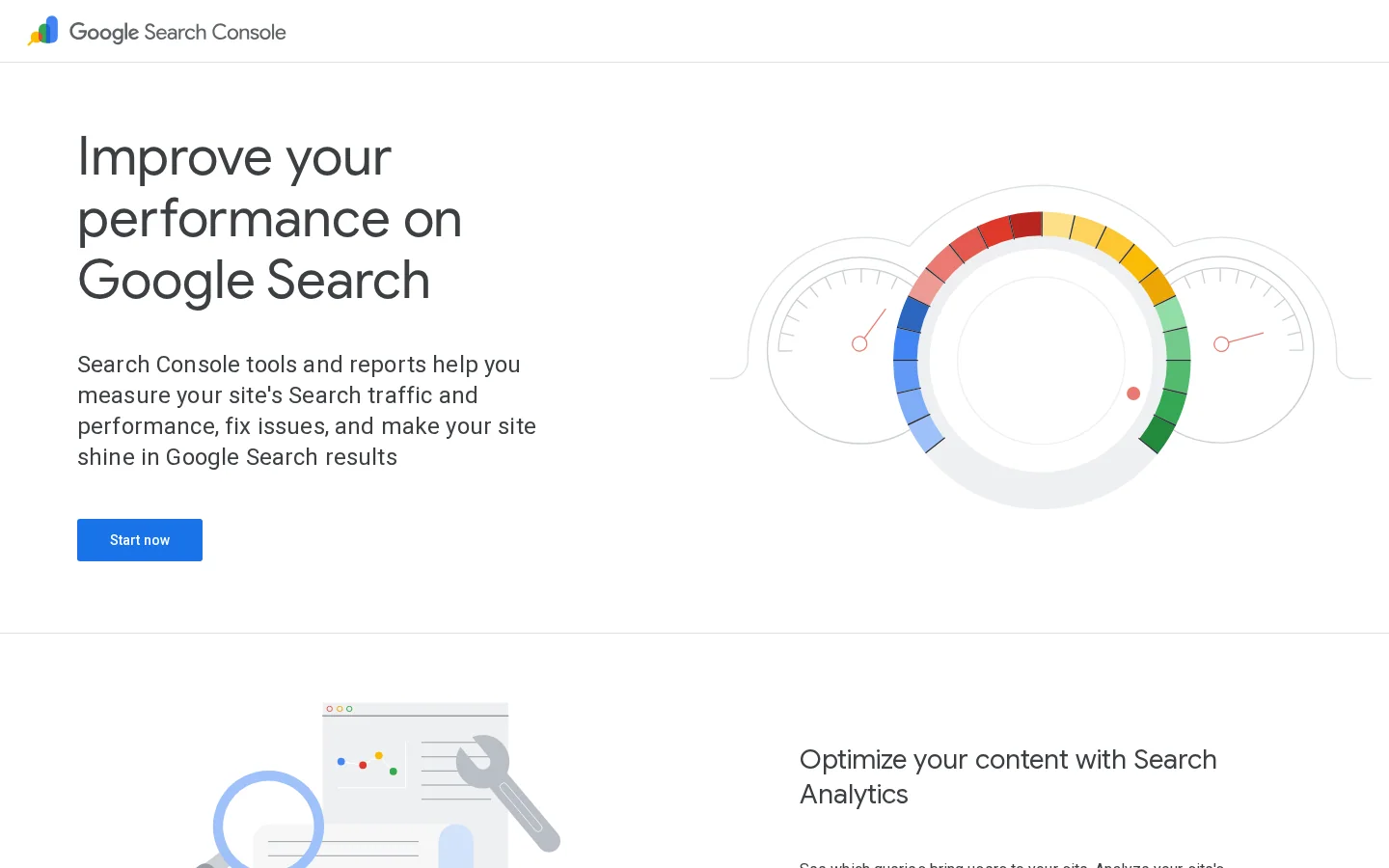
Clicks count how often someone clicked a link from Google to your site. Impressions count how often someone saw a link to your site on Google. Click-through rate is clicks divided by impressions, and you can write it as a formula in your sheet so that nobody has to trust a screenshot. For a deeper explanation of the metric, see our click-through rate (CTR) glossary entry.
CTR = clicks / impressions x 100
Example: 180 clicks / 6000 impressions x 100 = 3%
Use CTR as a key result only with a clear reason. A higher CTR on a page that already ranks top 3 can be a strong result, while a higher CTR on a page buried at position 30 may just reflect a small number of impressions. Read it next to clicks, not alone.
Average position is a relative ranking of your link on Google, with 1 as the topmost position, and it is shown only for Google Search results. The average is taken across queries, and for each query Search Console keeps the topmost position your site held. Google's help page gives an example: if a query returns your site at positions 2, 4 and 6, that query counts as position 2. If a second query counts as position 3, the average is (2 + 3) / 2 = 2.5.
Average position = (2 + 3) / 2 = 2.5This average hides the spread. A page that sits at position 1 for one query and position 40 for ten others can average a number that looks respectable. When you use position as a key result, pair it with a count of queries in the top 10, which is easier to read and harder to fake.
Note
Pick one view of Search Console for the whole OKR set, either by page or by query, and write it in the sheet. That way a score from March can be compared with a score from June.
Activity is easy to count and easy to hit, which is why teams fall into it. Publishing 12 articles is an activity. Getting those articles to produce qualified clicks is an outcome. Keep activity results when they are the lever you control, but make sure at least half of your key results describe something a customer would notice.
Activity key result or outcome key result
Tip
Before you lock a target, test whether it is realistic with the SEO Forecast Calculator, which projects traffic growth month by month from your starting point. Use the output to check whether the end-of-quarter target is a stretch or a fantasy.
These six objectives cover revenue, conversions, mid-funnel traffic, rankings, engagement and links. The numbers in the table are examples to show the format. Replace every one of them with a target based on your own baseline from step 2.
| Objective | Key result 1 | Key result 2 | Key result 3 |
|---|---|---|---|
| Grow organic revenue from product pages | Organic revenue from product pages up 20% this quarter | Organic conversion rate on those pages up from 1.5% to 2% | Product pages in the top 5 for 10 commercial keywords |
| Turn blog readers into trial users | Organic sign-ups from blog pages up from 40 to 60 a month | Blog posts with a product callout rise from 30% to 80% | Clicks from blog to product pages up 25% |
| Win buyers who compare options | Eight comparison pages published and indexed | Comparison pages in the top 10 for five comparison queries | Demo requests from comparison pages up from 4 to 10 a month |
| Improve visibility in one topic cluster | Top 10 rankings for 15 target keywords, up from 6 | Two cannibalizing pages merged or re-targeted | Clicks from the cluster up 30% |
| Earn links from relevant sites | 12 editorial links from sites in your niche | All links lost to redirect errors recovered | Referring domains up 15% |
| Get named by AI assistants | Brand cited in 25% of tracked prompts, up from 10% | Cited URL rate up on 10 priority pages | Pricing facts correct in every sampled answer |
Two rules make these examples usable. First, each key result has a number and a date, so anyone can score it. Second, the outcome results come from a source you can open, not from a summary someone wrote. For AI visibility, the method needs its own rules, which we cover in the section on AI visibility optimization and below.
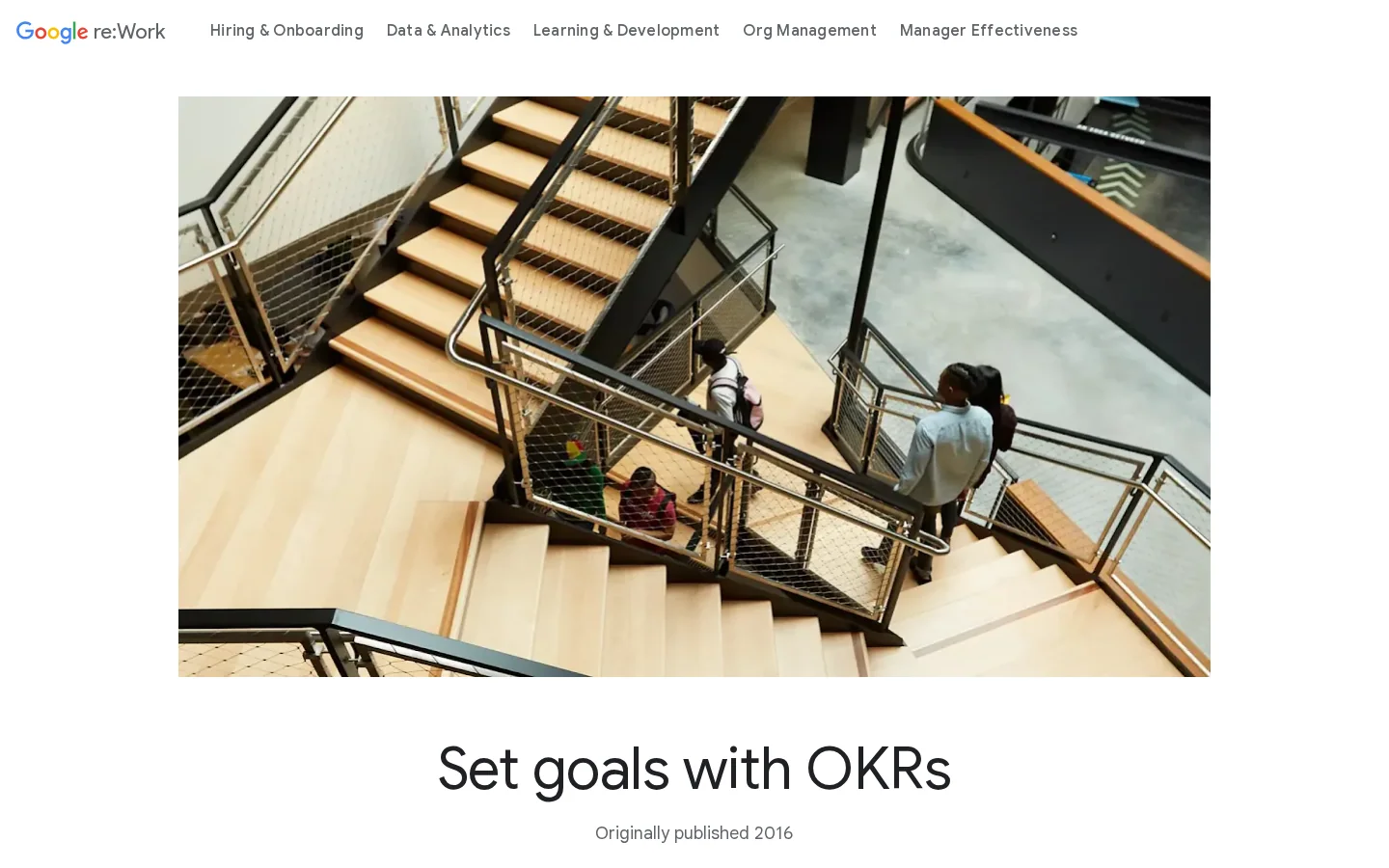
Score each key result on a fixed scale, and treat the quarter as a whole rather than as a pass or fail on each line. Google's re:Work guide grades key results on a scale from 0 to 1.0 and describes success as achieving 70% of the objectives, with reaching all of them counted as exceptional. That idea matters for SEO, where some targets depend on Google's algorithm and are partly outside your control.
Google's OKR rules of thumb
Source: Google re:Work, "Set goals with OKRs" (originally published 2016)
Use the 0 to 1.0 scale or a simpler version, such as 0, 0.5 and 1. Write the rule in the sheet: a key result scores 1.0 when the target is reached, 0.5 when it moves at least half the distance, and 0 when it does not move. Set the rule before the quarter starts, so the owner cannot argue the scale after the fact.
Each week, the owners update their scores and write one line on what blocked them. Keep the meeting under 30 minutes. The question is not "who failed", it is "what do we change this week". If a KPI turned red, such as indexed pages falling, the owner checks the cause before the next meeting.
At mid-quarter, look at the scores and the time left. A key result at 0 with six weeks left may need to be rewritten, or swapped for a leading indicator. A key result at 1.0 may be too easy, and you should raise the target. Keep a record of every change, because a silent change makes the final score meaningless.
Score the cycle, write one page on what worked, what did not, and what the next objectives should be. Carry over only the key results that still matter. This is also the moment to compare the outcome results with the business numbers from step 1, to see whether the OKRs served the business or only the dashboard.
One quarter of SEO OKRs
OKRs, SMART goals, a KPI dashboard on its own and a 12-month roadmap each answer a different question, so you do not have to choose one forever. Many teams combine two of them, for example OKRs for the quarter and a roadmap for the year. Here is what each one does, when it fits and where it breaks.
Principle: one ambitious objective per goal, with three or so measurable key results and an owner for each. When to use it: several people share one goal and need to see how their work adds up. Advantages: clear ownership, an explicit stretch target, a scoring habit that exposes problems early. Limits: it needs discipline to keep the list short, and it can feel heavy for a one-person SEO job. Example: the comparison-page objective in the earlier example, with three key results and a weekly score.
Principle: each goal is specific, measurable, achievable, relevant and time-bound. When to use it: a single target for a single person, such as a technical fix or a migration deadline. Advantages: quick to write, easy to explain to a manager, and a good fit for a one-off project. Limits: SMART goals rarely connect several goals into one story, and they do not separate the outcome from the work. Example: "Publish 24 posts by 30 June, two per topic cluster." Our guide to SEO goals and SMART targets covers this format in detail.
Principle: track a fixed set of metrics over time and watch the trend. When to use it: monitoring the health of a site, where you need early warnings more than targets. Advantages: the cheapest method to start, and it works well with the SEO KPIs by stage that a team already tracks. Limits: nobody owns the numbers, so a red line produces a meeting and no action. Example: a weekly report of clicks, impressions and indexed pages, with no target attached.
Principle: plan the projects month by month, such as a site migration in spring and a content push in autumn. When to use it: large work with dependencies, such as a redesign, a CMS change or a multilingual rollout. Advantages: it shows the order of work and the resources it needs. Limits: plans go stale fast, and a roadmap does not say whether the work moved the business. Example: the steps in our 12-month SEO roadmap, with a quarterly OKR set inside each phase.
| Method | The question it answers | Review rhythm | Best for | Main limit |
|---|---|---|---|---|
| OKRs | What do we aim to achieve this quarter, and who owns each result? | Weekly scores, quarterly close | Teams sharing one goal | Needs a short list and discipline |
| SMART goals | Is this one target specific and reachable? | At the deadline | One person, one project | No link between goals |
| KPI dashboard | Is the site healthy this week? | Weekly or monthly | Monitoring | No owner, no action |
| 12-month roadmap | What is the order of the big projects? | Monthly or quarterly | Migrations and builds | Goes stale quickly |
OKRs with KPIs, or a KPI dashboard alone
For AI visibility, a key result measures how often AI assistants name or cite your brand on a fixed set of prompts, sampled the same way each time. The rules differ from classic SEO because an AI answer can change between two runs of the same prompt, so one check tells you almost nothing. You need a set of prompts, a schedule and a trend over several runs.
Collect the questions your buyers really ask, from sales calls, support tickets, search queries and the people-also-ask boxes you see on Google. Keep the list fixed for the quarter, so that the score compares like with like. Write the prompts in the way buyers type them, not as keywords. The method behind this is covered in our guide to GEO performance metrics.
Three metrics work well as key results: the share of tracked prompts where your brand is named, the share where your URL is cited, and the accuracy of the facts the AI gives about you. Pick one as the key result and keep the other two as KPIs. Write the formula in the sheet, for example brand named in 25 of 100 prompts equals 25%.
Run the same prompts on the same days, on the same tools, and log each answer with the date. Compare the trend over several runs before you call a change real. A single good answer is not a result. Our monthly AI visibility report guide shows how to turn these samples into a report that a manager can read.
Before you set an AI visibility key result
Most failed SEO OKRs share five faults: a vague objective, too many key results, vanity metrics, no owner and no baseline. Each one can be spotted in the first review, and each one has a fix you can apply the same week.
What it is: an objective such as "Improve SEO" or "Be more visible." How to spot it: two people read it and describe two different goals. How to fix it: rewrite it with a verb, an outcome, a place and a period, such as "Grow organic sign-ups from the blog by the end of Q3." If the team cannot name the outcome, the objective is not ready for a quarter.
What it is: seven or eight key results under one objective. How to spot it: nobody scores them every week, and the sheet has empty cells. How to fix it: keep three. Move the rest into the KPI list, where they are tracked without a target that someone must hit.
What it is: a key result that rises while the business does not move, such as impressions. How to spot it: impressions grow, clicks stay flat, and sign-ups do not change. Impressions can rise because Google shows your page for more queries, and that alone is not a gain in customers.
Warning
Do not use impressions or average position as the only key result for an objective about revenue or leads. Pair them with clicks to the pages that sell, and with conversions from those clicks, so a higher number cannot hide a flat business.
How to fix it: replace one of the vanity numbers with clicks to commercial pages, or with conversions from organic sessions. Keep impressions as a KPI, where it helps you spot a problem early.
What it is: a key result that belongs to "the team." How to spot it: the score stays at 0 for weeks, and nobody explains why in the meeting. How to fix it: write one name next to every key result. The owner is responsible for the score and the answer, even when others do part of the work.
What it is: a target such as "rank first for our main keywords" set without knowing today's positions. How to spot it: the team argues about whether the target is possible, and nobody can check the start value. How to fix it: pull the baseline from Search Console and your analytics tool before the quarter starts, as described in step 2. If the baseline is unknown, make the first two weeks a measurement period and set the target after.
What it is: a quarter in which the outcome results do not move, so the team drops the OKRs and goes back to tasks. How to spot it: the work was done, but the scores show zero on the outcome. How to fix it: keep at least one leading key result on the work you control, such as pages published and pages updated, and read the outcome key results with the lag in mind. Changing the objective after one quarter of slow results is almost always a mistake.
You need one source of truth for each key result, and most small teams need only three tools. Search Console gives you the search data, your analytics tool gives you the business outcomes, and a shared sheet holds the baseline, the target, the owner and the weekly score. Add a rank tracker or an AI visibility tool when Search Console does not cover the question.
| Tool | What it gives you | Use it for |
|---|---|---|
| Google Search Console | Clicks, impressions, CTR and average position per query and page | Search key results and the KPIs behind them |
| Google Analytics | Sessions, conversions and sign-ups by landing page | Business key results |
| A shared spreadsheet | Baseline, target, owner, date and weekly score | The OKR scoreboard that everyone reads |
| A rank tracker | Positions for a fixed keyword list over time | Ranking key results when Search Console is too coarse |
| An AI visibility tool | Brand mentions and citations across AI assistants | AI visibility key results |
If your team wants content, links and AI tracking handled in one tool, the Sorank page for SEO teams describes that setup, so the owners of each key result can read the same data. Keep the sheet as the reference even when you use a tool, because the score must stay the same when the tool changes.
Start with one objective, three key results and a baseline pulled this week. You do not need the full cycle to begin. Choose the business number, pull the last three months from Search Console, write the objective and the three results, name an owner for each, and put the first weekly review in the calendar. Then run the quarter, score every week, and fix the process at the end rather than in the middle.
Your first week with SEO OKRs
An SEO OKR is one objective, such as growing organic revenue, with about three measurable key results and an owner for each. The objective sets the direction, and the key results show whether you are getting there.
Google's re:Work guide recommends three to five objectives per cycle, with about three key results for each. More objectives than that usually spread the team too thin to finish any of them.
Use a number you can recompute from a source you can open, such as clicks, conversions or the count of queries in the top 10. Write the baseline, the target and the date next to it, and score it every week.
We analyse your competitors, your website and your AI visibility to create a tailored content plan for free.
 Website Value Calculator
 Website Accessibility Checker
 Google Analytics Checker
 Duplicate Content Checker
 Mobile-Friendly Test
 Website Speed Test
 Subdomain Finder
 Domain Age Checker
 CMS Detector
 Googlebot Simulator
 Nofollow Link Checker
 Meta Tag Checker
 Keyword Cannibalization Checker
 Keyword Intent Checker
 Keyword Extractor
 Google Ads Cost Calculator
 CPC Calculator
 Local Citation Finder
 Reddit Threads Finder
 Disavow File Generator
 Redirect Generator
 Canonical Tag Generator
 Passive Voice Checker
 Google Location Changer
 Google Review Calculator
 Google Review Link Generator
 Keyword Combiner
 Podcast Show Notes Generator
 AI Content Rewriter
 AI Text Humanizer
 ChatGPT Prompt Generator
 Twitter Thread Generator
 Tweet Generator
 Landing Page Copy Generator
 Google Ads Copy Generator
 Pinterest Pin Description Generator
 Anchor Text Generator
 Social Media Post Generator
 LinkedIn Post Generator
 Free AI Writer
 Review Response Generator
 LSI Keyword Generator
 YouTube Video Ideas Generator
 YouTube Tag Generator
 YouTube Description Generator
 Product Description Generator
 CTA Generator
 Blog Introduction Generator
 Conclusion Generator
 Hook Generator
 AI Content Brief Generator
 FAQ Schema Generator
 AI Blog Post Ideas Generator
 Structured Data Validator (Schema Validator)
 Alt Text Checker
 Internal Link Analyzer
 Backlink Challenge
 AI Meta Description Generator
 AI Blog Title Generator
 Google Indexability Checker
 AI Blog Outline Generator
 UTM Link Builder
 Keyword Clustering Tool
 Canonical Tag Checker
 XML Sitemap Generator
 Broken Link Checker
 AI SEO Title Generator
 Headline Analyzer
 SERP Preview Tool
 Redirect Checker
 Hreflang Tag Generator
 Heading Structure Analyzer
 HTTP Headers Checker
 Favicon Extractor
 SERP CTR Calculator
 SEO vs Paid Search Savings Calculator
 SEO Share of Voice Calculator
 SEO ROI Calculator
 SEO Traffic and Revenue Forecast Calculator
 SEO Budget Calculator
 SEO Break-Even Calculator
 SaaS SEO ROI Calculator
 ROAS Calculator
 Reading Time Calculator
 Ranking Gain Simulator
 Organic Traffic Value Calculator
 Organic Traffic Estimator and Website Traffic Checker
 LTV to CAC Ratio Calculator
 Local SEO ROI Calculator
 Link Building Cost Calculator
 Keyword Value Calculator
 Keyword Opportunity Score Calculator
 Keyword Density Calculator
 GEO ROI Calculator
 GEO Content Investment Calculator
 Ecommerce SEO ROI Calculator
 Customer Lifetime Value Calculator
 Customer Acquisition Cost Calculator
 CTR Calculator
 Cost Per Article Calculator
 Conversion Rate Calculator
 Content Marketing ROI Calculator
 ChatGPT Referral Traffic Estimator
 Bounce Rate Calculator
 Backlink ROI Calculator
 AI Visibility Score Calculator
 AI Traffic Value Calculator
 AI Share of Voice Calculator
 Cost of AI Invisibility Calculator
 AI Citation Rate Calculator
 llms.txt Validator
 AI Overview Checker and AI Overviews Rank Checker
 Robots.txt Checker
 AI SEO Audit
 LLM Readability Checker
 SearchGPT Readiness Checker
 Structured Data LLM Audit
 Website Crawlability AI Audit
 Why ChatGPT Is Not Recommending My Website
 Gemini Ranking Tool
 Perplexity Ranking Checker
 LLM Citation Checker
 Answer Engine Optimization Audit
 GEO Audit
 AI Search Visibility Test
 ChatGPT Visibility Checker
 llms.txt Generator
 URL Extractor
 Webpage to Markdown
 Sitemap Checker
 SERP Volatility Sensor
 Page Size Checker
 Word Counter
 Slug Generator
 Schema Generator
 Robots Generator
 OG Preview
 Meta Tags Generator
 Image Compressor
 Favicon Generator
 On-Page SEO Audit: SEO Checker and SEO Analyzer
 Backlink Analysis Tool
 Keyword Research Tool
 Domain Authority Checker
 “I tested Sorank on a real client site and it's insane. It does everything an agency would bill you $1500 a month for. It's going into production on that client now.”

 Guillaume Guersanguersanguillaume.com“We are an Ads agency and we wanted to get our SEO back on track once and for all. Sorank gave us a clear view of our site, helped us prioritize optimizations, and properly structure our content. The tool is easy to use, well designed for a team, and very practical for centralizing tracking without having to juggle multiple platforms. A very solid foundation to start fresh with our SEO.”
 Gaspard MadouiAds Agency
 “I just let the Sorank software do its thing, and now my DR is 25 and my page is ranking higher.”
 Lucas Flandrefoundertrace.fr“I specialized in GEO thanks to Sorank. The GEO Leaderboard allows me to show my clients their position vs competitors on ChatGPT. It’s a real commercial differentiator.”
 MélanieSEO Freelance“Great service, works well for our website and helps us understand how to improve it to rank better on Google and elsewhere. Congrats, keep going, I recommend it.”
 Hugo T.E-commerce merchant