Preferences
Privacy is important to us, so you have the option of disabling certain types of storage that may not be necessary for the basic functioning of the website. Blocking categories may impact your experience on the website. More information
Privacy is important to us, so you have the option of disabling certain types of storage that may not be necessary for the basic functioning of the website. Blocking categories may impact your experience on the website. More information

Learn what an SEO contract template must include: scope, fees, link rules, content ownership, guarantees and termination, with examples to copy.

In short
An SEO contract template is a written agreement that sets out what the provider delivers, what you pay, when you pay it, who owns the work, and how either side can end it. Fill every blank before you sign, and check that the scope lists deliverables you can count, not results nobody controls. Most disputes start in one of those gaps.
Want to go further? Ask
Quick quiz
Is SEO right for you, and how should you start?
Sorank matches your answers


Test it for 3 days on your own site and see where you stand on Google, ChatGPT and the other AIs.
Start 3-day free trial3 days free, then stop whenever you want. 90-day results guarantee, conditions apply.
An SEO contract template must answer eight questions: what work is included, what it costs, how and when you pay, what the client has to provide, how results are reported, who owns the content and the links, how the agreement ends, and which law applies. If one answer is missing, the gap usually shows up at the worst moment, such as when a monthly report is late or when you want to leave.
The template does not need to be long. It needs to be specific. The sections below follow the order most SEO contracts use. For each clause, you get what to write, how to check it, and what to change when the provider sends a standard form.
If you need the basics before you draft anything, read what SEO is in plain terms. If you have not agreed the offer yet, read the SEO proposal guide first. The contract should repeat the scope and the price from the proposal word for word, so that neither document can contradict the other.
The eight clauses every SEO contract needs
The scope of work causes more disputes than any other clause. Write it as a list of deliverables with a quantity, a frequency and a finish line, so either side can check it in a minute. "SEO optimization" is not a scope. "Four articles per month, each with a keyword brief, on-page optimization and two internal links to existing pages" is a scope.
Start from the work you actually buy. Split it into streams: technical audit, on-page work, content production, link building, reporting. For each stream, write what is done, how often, and what is excluded. Exclusions matter as much as inclusions. If paid ads, copywriting for the homepage or site development are not in the price, say so in the same clause, so the provider cannot later call them "part of SEO".
The same service, written two ways

Read the scope and underline every verb that has no object or no number. "Improve", "manage", "optimize" and "support" are the usual suspects. Each one needs a replacement that you could check on a given day. Ask yourself: if the provider did nothing for a month, could I prove it from the contract alone? If the answer is no, the clause is too vague.
Adapt this structure. Replace the numbers with your own, and keep the exclusions line, because it is the one most templates leave out.
Example
Monthly deliverables: four blog articles of 1500 to 2000 words, each with a keyword brief, a title tag, a meta description and two internal links to existing pages. One technical crawl per quarter with a prioritized fix list. Excluded: paid advertising, website copywriting, site development and translation.
Any work outside the scope needs a written change order before it starts. It should state the extra work, the price, the new deadline and the signature of both parties. Without this rule, the provider's extra requests become your extra bill, or the reverse. A change order can be one page. What matters is that it exists before the work does.
Most SEO contracts use one of three fee models: a monthly retainer, a fixed project fee, or a performance fee. The retainer suits ongoing work, the project fee suits a defined audit or migration, and the performance fee suits only the narrow part of the work that you can measure. The table compares them, and the sections below explain how to write each clause.
| Fee model | Works best for | Main risk | What to write |
|---|---|---|---|
| Monthly retainer | Ongoing content, links and reporting | Paying for work you never check | Deliverables per month and a monthly report |
| Fixed project fee | An audit, a migration or a content sprint | Scope creep once the price is set | A change-order rule with a price per extra unit |
| Performance fee | A narrow target you can measure | Pay depends on factors the provider does not control | A base fee plus a bonus with a clear trigger |
The retainer is the default for ongoing SEO. You pay a fixed amount each month for a defined set of deliverables. Its strength is predictability. Its weakness is that the fee can keep coming while the work slips, so the contract must link each payment to a list you can check.
Write the retainer as a unit price. Divide the fee by the number of deliverables and keep the result in the contract. If the provider delivers fewer articles than agreed, you can then calculate the credit owed. The formula is simple:
cost per deliverable = monthly fee / deliverables delivered
example: 2400 / 4 articles = 600 per article
If the provider delivers three articles in a month instead of four, the unit price tells you what to claim. Put a credit rule in the contract: a short month reduces the next invoice by the unit price times the missing deliverables.
A project fee covers one defined job with a clear end, such as a technical audit, a site migration or a 90-day content sprint. It is easy to budget and easy to end. The risk is scope creep: once the price is fixed, every extra request feels like a favor, and the provider has little reason to say no.
Write an end date, an acceptance step and a change-order rule. The acceptance step means the client signs off each deliverable within a set number of days, and silence counts as approval only if the contract says so. Without that line, a project can drag on indefinitely.
A performance fee pays the provider a bonus when a measurable target is met, for example a number of qualified leads from organic search in a given quarter. It sounds fair, but it is the riskiest model for SEO. Rankings and traffic depend on search engine decisions and on competitors, which the provider does not control.
If you use it, keep a base fee that covers the work, and make the bonus depend on a metric you can track in your own analytics, measured over a period long enough to smooth out normal swings. Write down the source of the number, the exact formula and who checks it. A bonus tied to a single keyword position is a dispute waiting to happen.
Payment terms are where small costs hide. Write the invoice date, the due date (for example, 30 days after invoice), the currency, whether taxes are extra, and the late payment rule. Ask whether the fee includes the tools the provider uses, such as a crawler or a keyword database. If the contract is silent, those tools often arrive later as expenses.
Tip
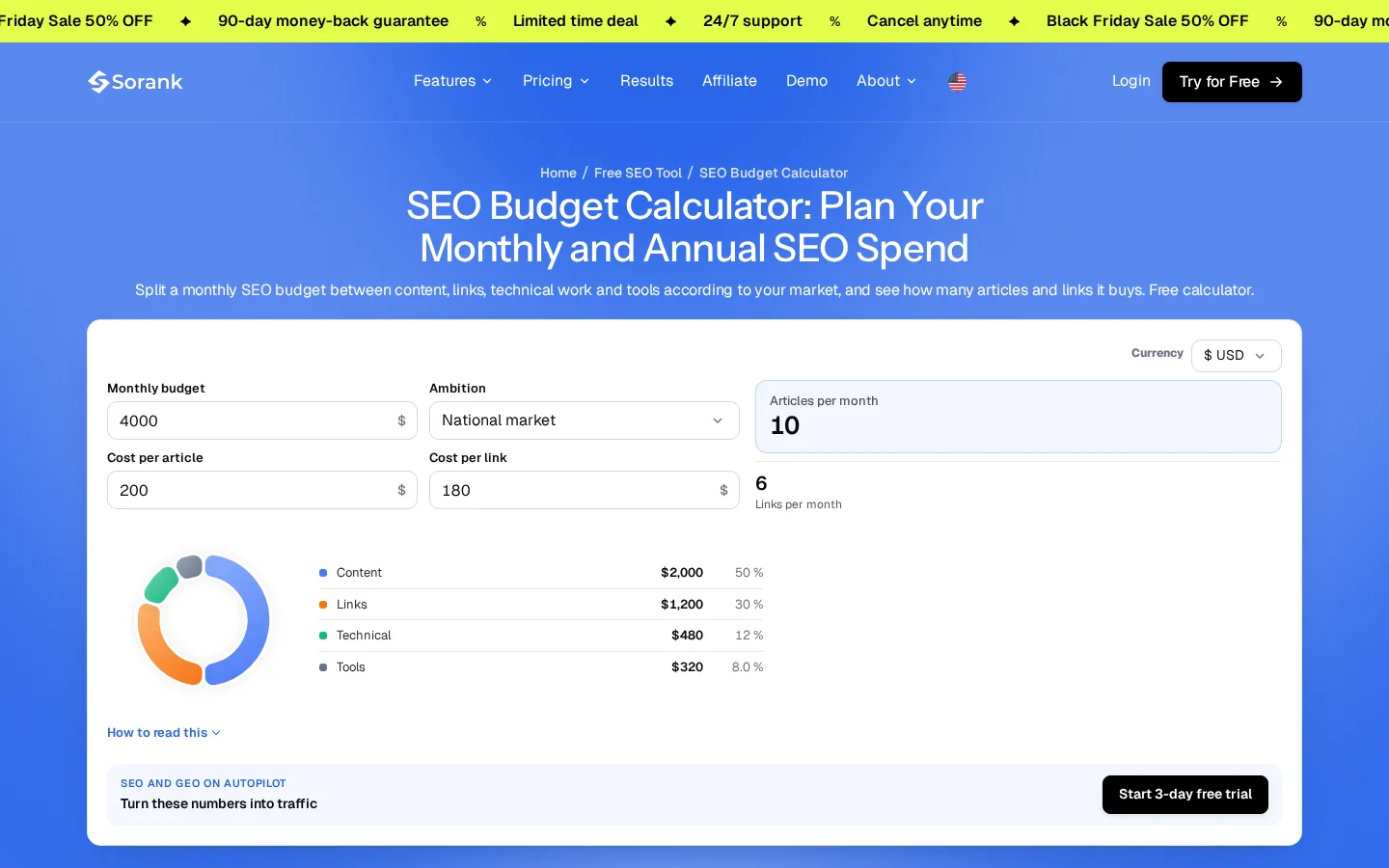
To check whether a monthly fee is reasonable before you negotiate, split it across content, links, technical work and tools with the free SEO budget calculator. The result shows how much each line can buy, which makes the deliverables in the contract easier to argue about.
Your contract should list what you must provide, such as access, approvals and answers within a set time. It should also say what the provider reports, how often, and in which format. Give the provider the access it needs to work, and no more. Tie every report to a deliverable, so a report that shows nothing new is also a signal.
Shared login or named user with a role
List every input the provider needs from you: access to analytics and search tools, product information, approvals of drafts, and contact for questions. Give each one a deadline. The provider can only be held to its own deadlines if yours are written too, so a delay on your side should not become a delay on its side without a record.
Example
The client approves each draft within five working days. If no answer arrives, the provider sends a reminder, and the draft is treated as approved after a second reminder and five more working days.
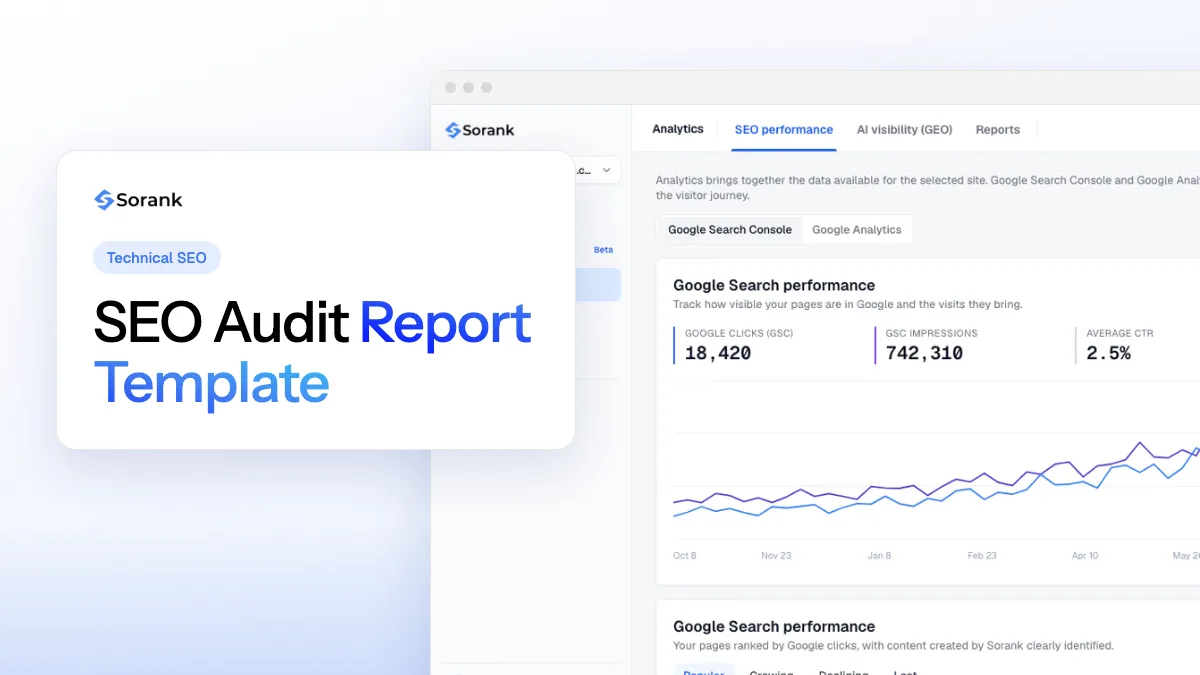
A useful monthly report lists the deliverables completed against the scope, the changes made to pages, the links won or lost, the search and AI visibility figures for the agreed keywords, and the plan for the next month. Write the metrics in the contract, with their source, so the report cannot quietly switch to a more flattering number. The SEO audit report template shows how to structure the findings part.
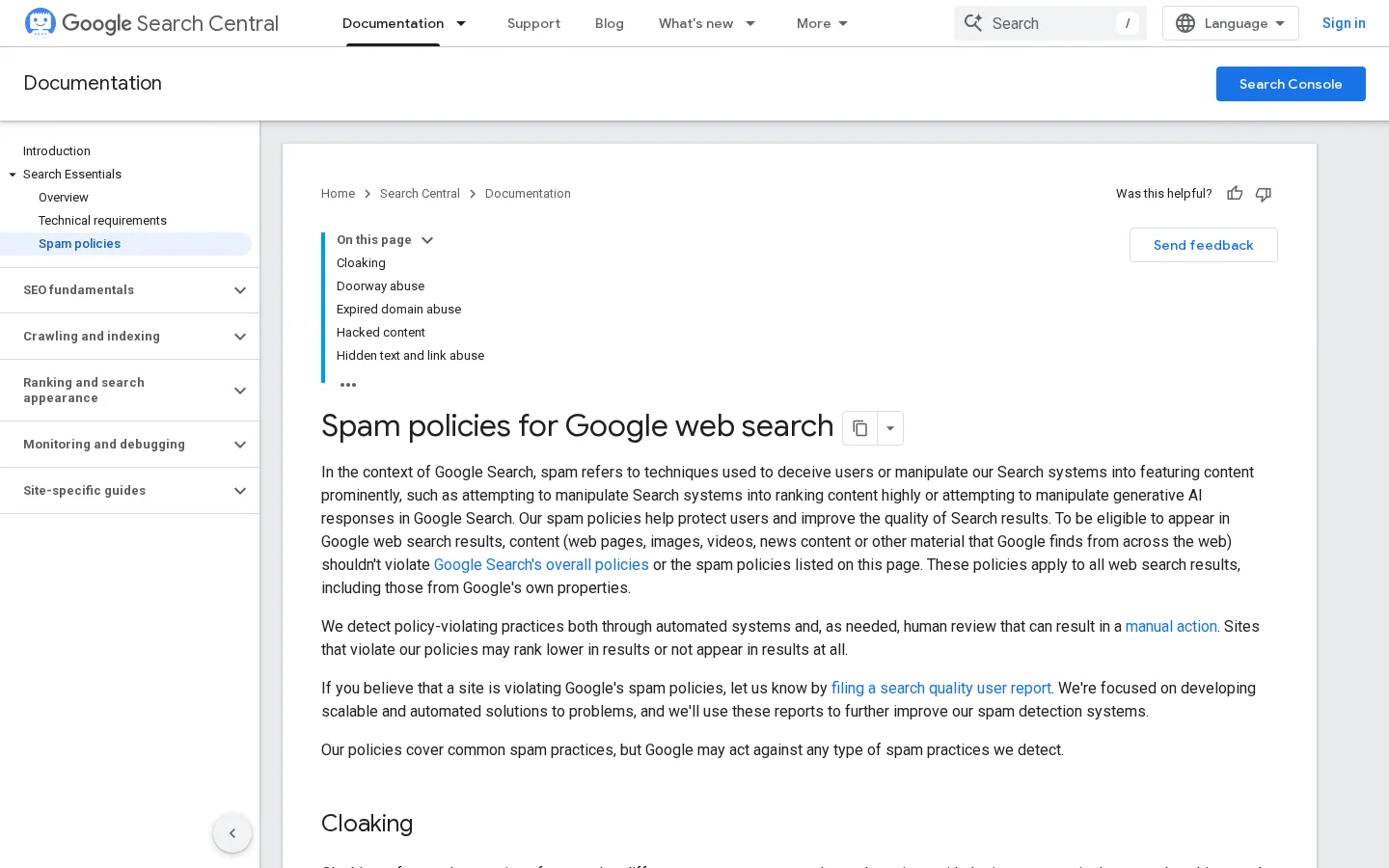
The contract should forbid any link practice that Google's spam policies describe, and it should require the provider to list every link it builds. Google Search Central defines link spam, in its spam policies for Google web search, as "the practice of creating links to or from a site primarily for the purpose of manipulating search rankings." If the provider cannot list its links, you cannot judge whether they are safe.
| Link practice | Status under Google's spam policies | Clause to write |
|---|---|---|
| Links earned from relevant sites because the content is useful | Not covered as spam when earned editorially | Each link listed with its URL, date and target page |
| Paid placements | Allowed only when they carry a sponsored or nofollow attribute | Written approval before any paid placement is bought |
| Buying or selling links for ranking | Link spam, and Google lists it as an example | Forbidden |
| Excessive link exchanges, such as "link to me and I'll link to you" | Link spam | No reciprocal deals without written approval |
| Partner pages built only to cross-link sites | Link spam | Forbidden |
Two practices deserve a line of their own. The first is buying links, which the buy backlinks guide covers in detail. The second is reciprocal linking, which the backlink exchange guide explains and which needs a clear veto in the contract. Both are easy to add to a provider's workflow without telling you, which is why the clause must require a list.
A strong link clause has three parts. It defines what counts as an acceptable link, for example a link from a site in your niche that is not a competitor. It states the approval rule, for example written approval for any paid placement or guest post. And it requires a monthly link list with the URL, the anchor text, the date and the status of each link, so you can spot a bad pattern early. The definition of a backlink gives you the vocabulary to write those columns.
Tip
Write the anchor text rule as well. Ask for a mix of brand names, plain URLs and descriptive phrases, and forbid exact-match anchors on every link. A list of anchors that all repeat the same keyword is a pattern that a provider should be asked to explain.
A reputable SEO contract never promises a specific rank. Google Search Central's guidance on hiring an SEO says "No one can guarantee a #1 ranking on Google." Write commitments to actions and to their timing, and state clearly that positions depend on decisions made by search engines, which the provider does not control.
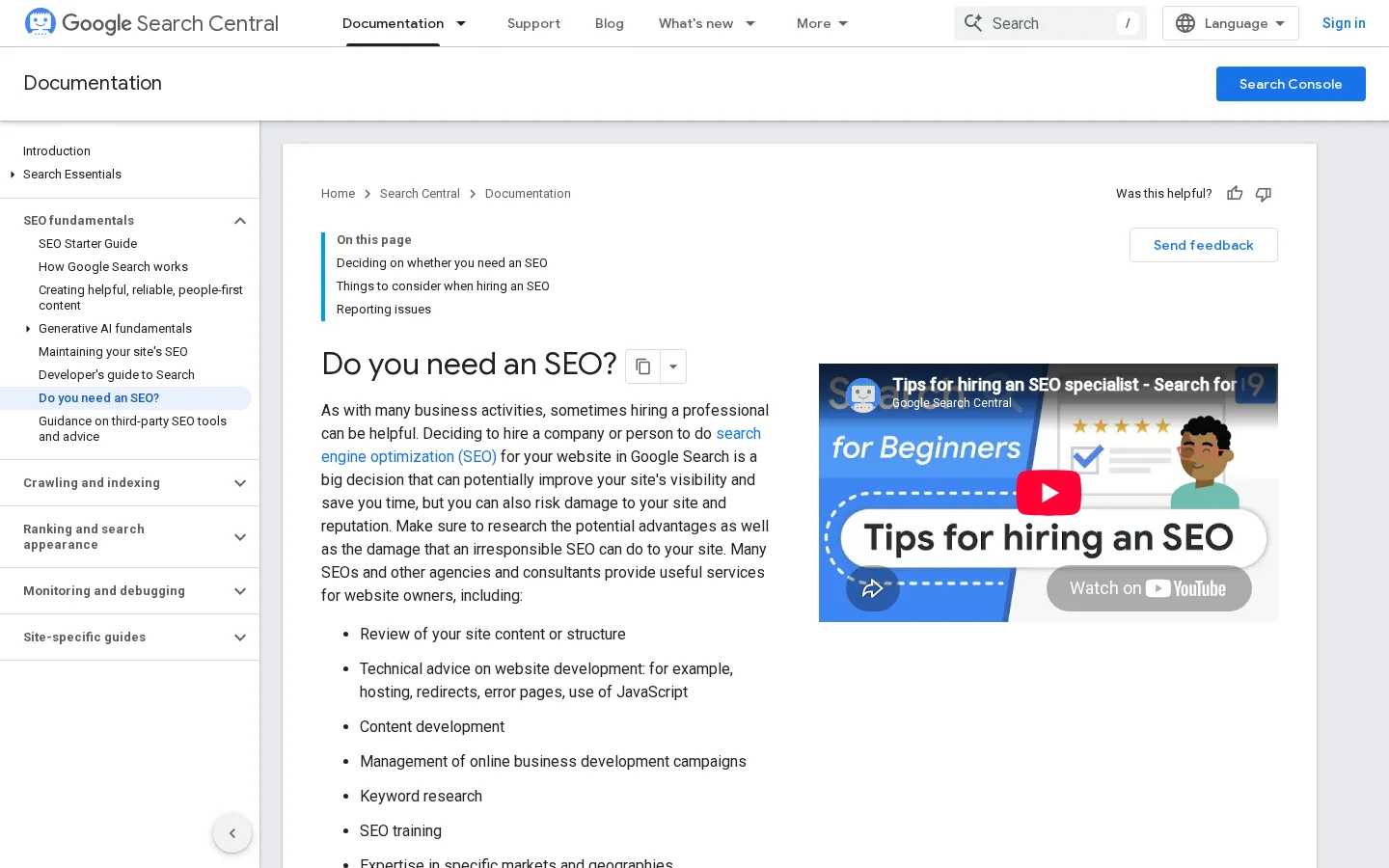
Search the contract for the words "guarantee", "first page", "top three" and "position". When they appear next to a keyword and a deadline, the clause is a promise the provider cannot keep and you cannot enforce. The provider will argue that it meant its best effort, and you will argue that the contract said guarantee. Neither outcome is good for you.
Warning
Google Search Central's hiring guidance also warns clients to be wary of SEOs that "claim to guarantee rankings, allege a 'special relationship' with Google, or advertise a 'priority submit' to Google." If a provider offers any of these, treat the offer as a red flag, and ask for the contract clause that stops it.
Replace the guarantee with a commitment you can check: the provider delivers the scope in the schedule, reports the agreed metrics each month, and explains any drop within a set number of days. Add a disclaimer that states results depend on search engines and on factors outside the provider's control. This is not a loophole. It describes the risk honestly, which is what a contract is for.
Google Search Central's hiring guidance also says that "if an SEO creates deceptive or misleading content on your behalf, your site could be removed entirely from Google's index." Your contract should therefore require the provider to follow Google's spam policies, and to tell you within a set number of days if it receives a manual action or a penalty notice that affects your site. Require the provider to stop any practice you have objected to in writing, and say what happens if it does not.
Decide who owns each article, page and link report before work starts, and say whether you receive the rights to the text after the final payment. Put the approval step in the contract too. Approval is the only real control you have over what gets published under your name.
| Ownership option | What it means | Risk for you | Clause to write |
|---|---|---|---|
| Assignment | The provider transfers its rights in each deliverable to you after the final payment | Low, if the transfer is written and signed | A signed assignment, with the reusable parts listed |
| License | The provider keeps the rights and you get a license to use the work | You may not be able to edit or move the text freely | A perpetual, transferable license covering every site you own |
| Provider keeps the content | Content stays with the provider and does not come with you when the contract ends | You lose the work if the relationship ends | Avoid, unless everything can be exported in editable form |
In the US, copyright transfers generally need to be in a signed writing, so a verbal promise that "the content is yours" is not enough. If you operate outside the US, check the rule where you are. A lawyer can confirm the detail in ten minutes.
Write who approves each piece of content, how long approval takes, and whether anything can be published without it. Some tools publish automatically. Sorank's page for SEO teams describes articles that are published automatically or saved as drafts, so a contract can require draft mode until you approve each article.
Note
Ask the provider to name the human who reviews each article before publication. Automation is fine for the production step. The contract should still assign one person on your side and one on theirs to be accountable for the final text.
Set a minimum term, a notice period and a handover list. Without a minimum term, the provider can stop after a month, and without a handover list, you may lose access to work you paid for. The exit clause matters most in the month you want to leave, so write it while you still agree on everything else.
How an exit should run
Some contracts must be in writing to be enforced. Cornell Law School's Legal Information Institute explains that the statute of frauds requires certain contracts to be in writing and signed by the parties bound by them, and one category is contracts that cannot be completed within one year. A two-year SEO retainer falls in that category. The rules are set by each state, so the exact wording depends on where the contract is governed.
Many SEO contracts renew automatically. Write the renewal date, the notice needed to stop it, and the last day to give that notice. If the contract says "renews monthly unless cancelled", say how cancellation is sent and confirm that the provider must acknowledge it. Without an acknowledgement, a dispute about whether you cancelled in time is hard to win.
A complete handover includes the keyword research in a spreadsheet, every content file in an editable format, the list of links with their status, the redirect map with old and new URLs, and a copy of the monthly reports. Ask for the Search Console and analytics owner to be your account, with the provider added as a named user. Then the handover is a formality, not a negotiation.
Define a material breach, such as missing two consecutive deliverables or building links the contract forbids. Give the other side a cure period, for example 15 days to fix it. If the breach is not fixed, the contract ends at once and the handover clause applies. Without this, you either have to keep paying through a broken relationship or argue about whether a problem counts as serious.
These three clauses decide what happens when things go wrong. Cap the provider's liability at a set amount, keep your data confidential after the contract ends, and name the state or country whose law applies, along with the place to resolve a dispute. Most templates include them in one short paragraph, which is why they are the clauses people accept without reading.
| Clause | What it does | What to check | Common mistake |
|---|---|---|---|
| Limitation of liability | Caps the damages one side can claim | A cap tied to the fees paid over a set period | No cap, or a cap that protects only the provider |
| Confidentiality | Protects your data, plans and reports | Survives termination for a stated period | Expires the day the contract ends |
| Governing law and disputes | Names the law and the place to resolve a dispute | A jurisdiction you can reach, with a mediation step first | A distant court chosen for no reason |
| Data processing | Sets who handles personal data and how | A data processing addendum when the provider touches personal data | Not mentioned at all |
A common cap is the fees paid in the period before the claim. It limits what you can claim against the provider, and it limits what the provider risks. Write the formula so there is no debate later about which invoices count:
liability cap = fees paid in the 3 months before the claimCheck that the cap does not also protect the provider from the consequences of its own gross negligence or from breaching confidentiality. Many contracts exclude those cases from the cap, and a provider that refuses that exclusion is telling you something about its risk.
Warning
This guide is not legal advice. Have a lawyer in the state or country where the contract is governed review the final version, especially the cap, the governing law and any data processing terms.
Work through the template in order: scope first, then price, then the rules, and finish with the legal clauses. Filling it in this order keeps the price tied to the work, and it stops the legal text from setting the business terms by accident.
The seven steps, in order
Take a small B2B software company that wants four articles a month, one technical audit per quarter and a monthly report, on a 12-month term. The scope lists those deliverables and the exclusions. The fee is a retainer with a unit price per article, so a short month produces a credit. The link clause forbids link spam and requires a monthly list. The exit clause gives 60 days' notice and a handover list. Each step produces one clause, and the seven steps together produce a contract that a new provider could take over without a rebuild.
The most common mistakes are a vague scope, a guaranteed ranking, no link rules, missing exit terms, and signing the provider's form unchanged. Each one shows up in the text of the contract, and each one can be fixed with a specific sentence. The table is a quick check, and the sections below explain each mistake in detail.
| Mistake | How to spot it | How to fix it |
|---|---|---|
| Vague scope | Verbs with no object, such as "manage SEO" | Replace each with deliverables, quantities and exclusions |
| Guaranteed rankings | "Guarantee", "first page" or "top three" in the text | Replace with commitments to actions and a reporting rhythm |
| No link rules | No clause on link building or on the link list | Add the spam-policy list, the approval rule and a monthly link report |
| Missing exit terms | No notice period, no handover list, no renewal date | Add notice, handover list, access revocation and renewal rules |
| Signing the form unchanged | Clauses you did not read or cannot explain | Mark up each clause, and change the ones you do not accept |
What it is: a scope written as an intention, such as "ongoing SEO support", which can mean almost anything. How to spot it: read it aloud and ask what you would see on a given day if the work were done. If you cannot name a file, a report or a number, the scope is vague. How to fix it: rewrite each line with a quantity, a frequency and an exclusion, and add the change-order rule for work outside the list.
What it is: a promise of a position on a keyword within a fixed time. How to spot it: search for "guarantee", "first page" and "top three", and for any deadline attached to a keyword. How to fix it: remove the promise, commit to the actions and the reports, and add a disclaimer about search engines' decisions. A provider that insists on the guarantee has shown you its method.
What it is: a contract that says nothing about how links are built, so the provider can use paid links, exchanges or networks without telling you. How to spot it: the words "link building" appear in the scope, but there is no clause that forbids a practice or requires a list. How to fix it: add the forbidden practices from the table above, require the monthly link list with its status, and give yourself a veto over paid placements and reciprocal deals. A link you cannot see is a risk you cannot manage.
What it is: a contract with no notice period, no handover list and no renewal date, so leaving costs more than staying. How to spot it: search for "notice", "terminate" and "handover". If none of them appear, the exit is not written. How to fix it: add a notice period, the handover list from the exit section, the day your access is revoked, and the renewal date with its opt-out window.
What it is: accepting the provider's standard form without reading each clause, or without knowing what it means. How to spot it: you cannot explain a clause in one sentence to a colleague. How to fix it: mark up every clause, change the ones that protect only the provider, and ask a lawyer to review the liability, governing law and data processing terms before you sign.
Run the contract through this list before the signature page. If one item is missing, the fix is usually one sentence, so do not sign until it is in the text. The guide to choosing an SEO agency without getting burned covers what to check in the provider itself, and the comparison of SEO agency and in-house SEO helps you decide whether an agency contract is the right model at all.
Before you sign
Yes, a signed SEO contract is generally binding once both sides agree on the terms and exchange something of value. The rules depend on the state or country where you sign, so have a lawyer review the final version. For a contract that cannot be completed within one year, many US states require a signed writing.
The price depends on the scope, not on the template. Write the fee, the payment schedule and the unit price per deliverable into the contract, so you can see what each payment buys. Use a budget calculator to check whether the monthly fee fits your content and link goals.
No. Google's guidance says no one can guarantee a #1 ranking on Google, so a contract that promises one is a warning sign. Write commitments to actions, reporting and timing instead, and state that search engines decide the results.
We analyse your competitors, your website and your AI visibility to create a tailored content plan for free.
 Duplicate Content Checker
 Mobile-Friendly Test
 Website Speed Test
 Subdomain Finder
 Domain Age Checker
 CMS Detector
 Googlebot Simulator
 Nofollow Link Checker
 Meta Tag Checker
 Keyword Cannibalization Checker
 Keyword Intent Checker
 Keyword Extractor
 Google Ads Cost Calculator
 CPC Calculator
 Local Citation Finder
 Reddit Threads Finder
 Disavow File Generator
 Redirect Generator
 Canonical Tag Generator
 Passive Voice Checker
 Google Location Changer
 Google Review Calculator
 Google Review Link Generator
 Keyword Combiner
 Podcast Show Notes Generator
 AI Content Rewriter
 AI Text Humanizer
 ChatGPT Prompt Generator
 Twitter Thread Generator
 Tweet Generator
 Landing Page Copy Generator
 Google Ads Copy Generator
 Pinterest Pin Description Generator
 Anchor Text Generator
 Social Media Post Generator
 LinkedIn Post Generator
 Free AI Writer
 Review Response Generator
 LSI Keyword Generator
 YouTube Video Ideas Generator
 YouTube Tag Generator
 YouTube Description Generator
 Product Description Generator
 CTA Generator
 Blog Introduction Generator
 Conclusion Generator
 Hook Generator
 AI Content Brief Generator
 FAQ Schema Generator
 AI Blog Post Ideas Generator
 Structured Data Validator (Schema Validator)
 Alt Text Checker
 Internal Link Analyzer
 Backlink Challenge
 AI Meta Description Generator
 AI Blog Title Generator
 Google Indexability Checker
 AI Blog Outline Generator
 UTM Link Builder
 Keyword Clustering Tool
 Canonical Tag Checker
 XML Sitemap Generator
 Broken Link Checker
 AI SEO Title Generator
 Headline Analyzer
 SERP Preview Tool
 Redirect Checker
 Hreflang Tag Generator
 Heading Structure Analyzer
 HTTP Headers Checker
 Favicon Extractor
 SERP CTR Calculator
 SEO vs Paid Search Savings Calculator
 SEO Share of Voice Calculator
 SEO ROI Calculator
 SEO Traffic and Revenue Forecast Calculator
 SEO Budget Calculator
 SEO Break-Even Calculator
 SaaS SEO ROI Calculator
 ROAS Calculator
 Reading Time Calculator
 Ranking Gain Simulator
 Organic Traffic Value Calculator
 Organic Traffic Estimator and Website Traffic Checker
 LTV to CAC Ratio Calculator
 Local SEO ROI Calculator
 Link Building Cost Calculator
 Keyword Value Calculator
 Keyword Opportunity Score Calculator
 Keyword Density Calculator
 GEO ROI Calculator
 GEO Content Investment Calculator
 Ecommerce SEO ROI Calculator
 Customer Lifetime Value Calculator
 Customer Acquisition Cost Calculator
 CTR Calculator
 Cost Per Article Calculator
 Conversion Rate Calculator
 Content Marketing ROI Calculator
 ChatGPT Referral Traffic Estimator
 Bounce Rate Calculator
 Backlink ROI Calculator
 AI Visibility Score Calculator
 AI Traffic Value Calculator
 AI Share of Voice Calculator
 Cost of AI Invisibility Calculator
 AI Citation Rate Calculator
 llms.txt Validator
 AI Overview Checker and AI Overviews Rank Checker
 Robots.txt Checker
 AI SEO Audit
 LLM Readability Checker
 SearchGPT Readiness Checker
 Structured Data LLM Audit
 Website Crawlability AI Audit
 Why ChatGPT Is Not Recommending My Website
 Gemini Ranking Tool
 Perplexity Ranking Checker
 LLM Citation Checker
 Answer Engine Optimization Audit
 GEO Audit
 AI Search Visibility Test
 ChatGPT Visibility Checker
 llms.txt Generator
 URL Extractor
 Webpage to Markdown
 Sitemap Checker
 SERP Volatility Sensor
 Page Size Checker
 Word Counter
 Slug Generator
 Schema Generator
 Robots Generator
 OG Preview
 Meta Tags Generator
 Image Compressor
 Favicon Generator
 On-Page SEO Audit: SEO Checker and SEO Analyzer
 Backlink Analysis Tool
 Keyword Research Tool
 Domain Authority Checker
 “I tested Sorank on a real client site and it's insane. It does everything an agency would bill you $1500 a month for. It's going into production on that client now.”

 Guillaume Guersanguersanguillaume.com“We are an Ads agency and we wanted to get our SEO back on track once and for all. Sorank gave us a clear view of our site, helped us prioritize optimizations, and properly structure our content. The tool is easy to use, well designed for a team, and very practical for centralizing tracking without having to juggle multiple platforms. A very solid foundation to start fresh with our SEO.”
 Gaspard MadouiAds Agency
 “I just let the Sorank software do its thing, and now my DR is 25 and my page is ranking higher.”
 Lucas Flandrefoundertrace.fr“I specialized in GEO thanks to Sorank. The GEO Leaderboard allows me to show my clients their position vs competitors on ChatGPT. It’s a real commercial differentiator.”
 MélanieSEO Freelance“Great service, works well for our website and helps us understand how to improve it to rank better on Google and elsewhere. Congrats, keep going, I recommend it.”
 Hugo T.E-commerce merchant