Preferences
Privacy is important to us, so you have the option of disabling certain types of storage that may not be necessary for the basic functioning of the website. Blocking categories may impact your experience on the website. More information
Privacy is important to us, so you have the option of disabling certain types of storage that may not be necessary for the basic functioning of the website. Blocking categories may impact your experience on the website. More information

Learn what relatable content is, why audiences share it, 7 ways to create it, real brand examples, how to measure it and the mistakes that make it feel fake.
In short
Relatable content is content in which your audience recognizes their own situation, words or feelings, so they think "that's me" and react. It works because recognition creates trust and sharing. You create it by collecting your audience's exact words, picking one specific moment they live, and tying that moment back to what you offer.
Want to go further? Ask
Quick quiz
Which content should you focus on first?
Sorank matches your answers


Test it for 3 days on your own site and see where you stand on Google, ChatGPT and the other AIs.
Start 3-day free trial3 days free, then stop whenever you want. 90-day results guarantee, conditions apply.
Relatable content is any post, article, video or email that describes a situation your reader has lived, in the words they would use themselves. The reader does not just understand it. They recognize themselves in it. That moment of recognition ("this is so me", "same", "I thought I was the only one") is what separates relatable content from content that is simply correct.
Relatability is not a format or a tone. A 3000-word technical guide can be relatable if it opens with the exact error message the reader is staring at. A funny TikTok can fail if the joke is about a life the audience does not have. The test is always the same: does the reader see their own life on the screen?
Specificity is the ingredient most brands skip. It feels risky to be precise, because a precise detail excludes some people. That is the point. The people it includes feel seen, and they are the ones who comment, save and share.
These words are often used as synonyms. They are not. Mixing them up leads to bad briefs ("make it go viral") and bad content.
| Concept | What it means | What it needs | Main risk |
|---|---|---|---|
| Relatable content | The audience recognizes their own situation | Deep knowledge of the audience's life and words | Being so broad that nobody feels targeted |
| Authentic content | The brand shows what is true about itself | Honesty, real people, real numbers | True but irrelevant to the reader |
| Viral content | Content shared far beyond the existing audience | Strong emotion and easy sharing | Reach without buyers |
| User-generated content | Content made by customers, not the brand | Happy customers and their permission | Uneven quality, consent issues |
| Personalized content | Content adapted to one person's data | Data and tooling | Feels creepy if done badly |
The best pieces combine several of them. A customer story (user-generated content) told with honest numbers (authentic) about a moment most of your buyers live (relatable) has a real chance to travel far.
Relatable content works because people trust, remember and share what reflects them. Recognition lowers the guard we keep up against ads. It also gives the reader a social reason to share: forwarding a post that "says what I feel" is a way to say something about yourself without writing it.
Consumer surveys point the same way. In its pulse survey of 2250 consumers published on September 23, 2026, Sprout Social found that half of consumers want brands to stop sounding salesy and corporate and sound authentic and relatable instead. The same survey ranks originality of content (33%) as the second loyalty driver, behind product quality (44%) and ahead of price and customer service.
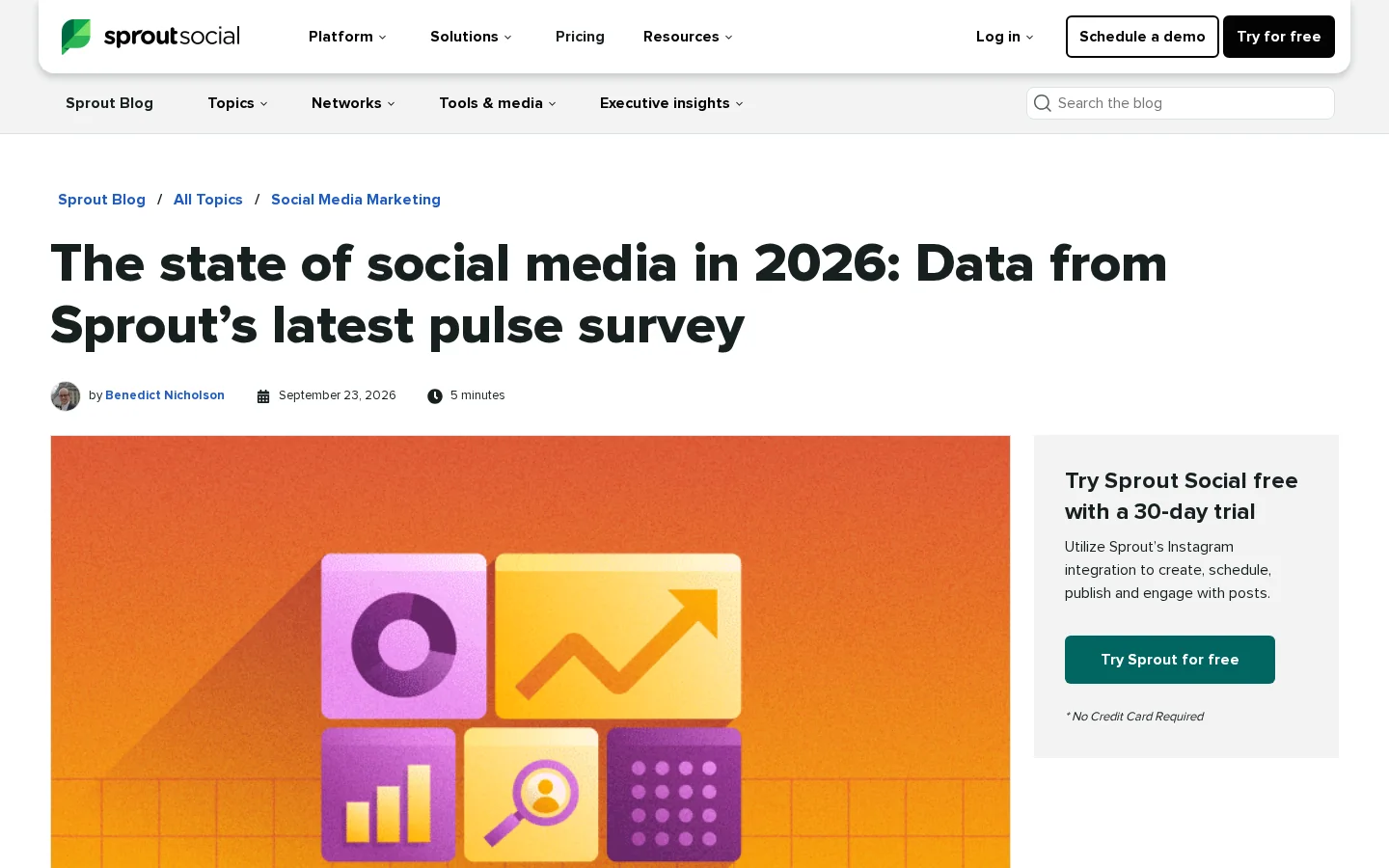
What consumers expect from brand content
Sources: Sprout Social pulse survey, September 2026 (2250 consumers); Sprout Social Index 2025 (4044 consumers)
Trust in what "people like me" say is also measurable. Nosto, in its article on authenticity updated in June 2026, reports that 86% of consumers say authenticity is important when deciding which brands they like and support, and that 58% have left an online store without buying because it had no customer reviews or photos.
Authenticity and real customer content
Source: Nosto (Stackla consumer reports), updated June 2026
Three mechanisms explain why recognition triggers action:
The practical lesson from the Berger and Milkman work: a relatable post that only makes people feel a little sad ("we all get tired") will be read and forgotten. One that triggers a sharper feeling (the anger of a stupid process, the relief of a fix, the awe of a result) gets forwarded.

Relatability is not only a social media topic. Google asks site owners whether their content "clearly demonstrates first-hand expertise", and AI models such as ChatGPT, Claude and Gemini tend to pick up passages that answer a real question in plain, specific words. Content written in the audience's language matches the way they type and speak their questions. We come back to this in the SEO section below.
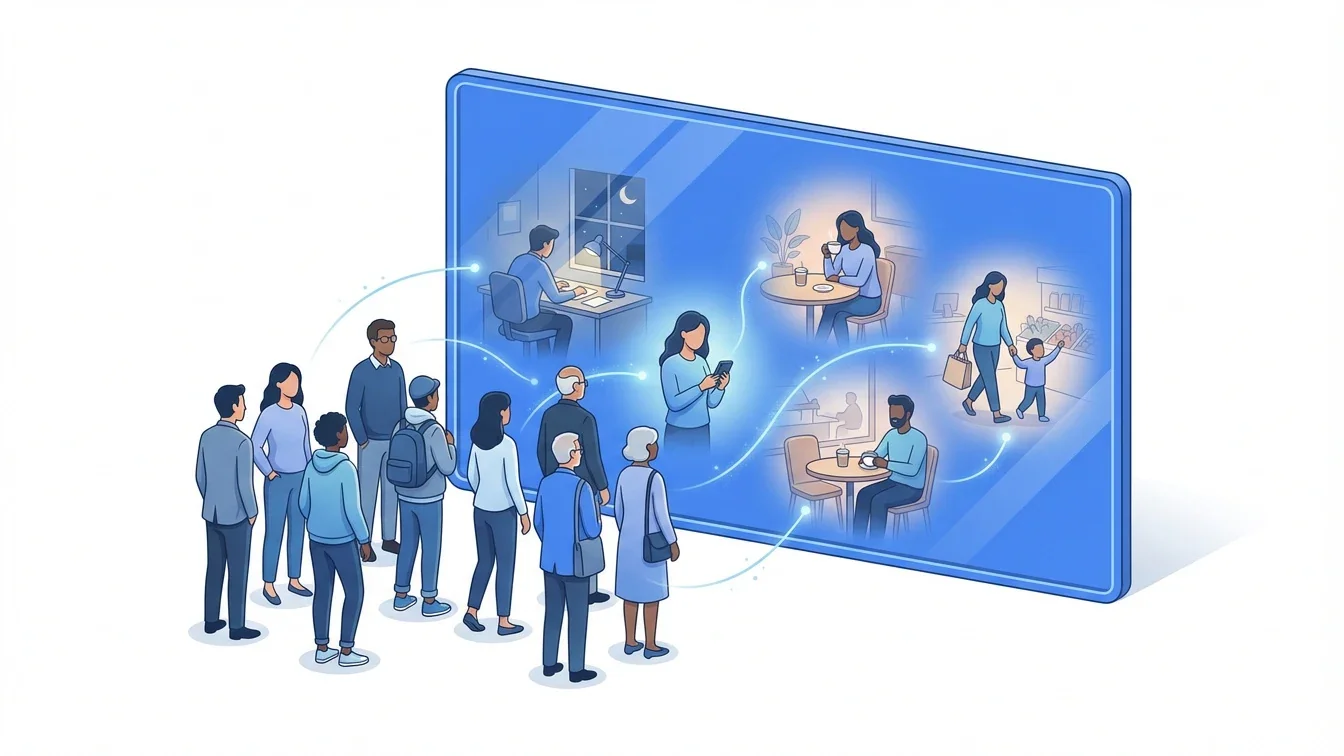
There are seven main ways to make content relatable. Each one has its own best use, strengths and limits. Most strong brands use two or three of them, not all seven.
Principle: describe a problem your reader has, in more detail than they could describe it themselves. When to use it: almost always, and first. It is the base of every other strategy. Advantages: directly linked to your product, works in B2B and B2C, works in search. Limits: can feel negative if you never move to the solution. Example: an accounting tool that opens a post with "It's the 28th. You have 43 receipts in a shoebox and one of them is a coffee you can't remember buying."
Principle: reuse the exact words your audience uses, including their slang, their abbreviations and their mistakes in naming things. When to use it: headlines, hooks, ad copy, product pages. Advantages: instant recognition, also matches the queries people type in Google. Limits: slang ages fast, and borrowed slang from a group you do not belong to sounds fake. Example: customers write "my site is invisible on Google", not "we lack organic visibility". Use their sentence.
Principle: show the messy part of your work: the failed test, the bug, the price you got wrong. When to use it: founder content, LinkedIn, newsletters, "what we learned" posts. Advantages: builds trust fast, hard for competitors to copy. Limits: needs real stories and the courage to publish them; staged vulnerability is spotted quickly. Example: a bakery posting the batch of croissants that collapsed and what went wrong with the butter temperature.
Principle: laugh at your own brand, your industry or the shared absurdity of your customers' daily life. When to use it: short video, social posts, brands with a known weakness. Advantages: high shares, disarms criticism. Limits: wrong for sensitive sectors (health, finance in crisis, grief) and risky if the joke lands on the customer instead of the brand. Example: Ryanair's TikTok account jokes about its own small seats and no-frills reputation.
Principle: let real customers and team members tell their story, in their own words and faces. When to use it: case studies, reviews, reels, product pages. Advantages: the most credible form of content, and the reader identifies with a peer, not a brand. Limits: needs consent, and only shows people who agreed to speak. Example: a short video of a plumber showing how they plan their week with your scheduling app, filmed in their van.
Principle: connect your message to something your audience is living right now: a season, an event, a common frustration in the news. When to use it: when the moment truly touches your audience and you can add something. Advantages: timely, easy to understand. Limits: the shortest shelf life of all, and trend-chasing can backfire (see the mistakes section). Example: a tax software brand posting about the panic of the last filing weekend.
Principle: reflect the audience's own data or behavior back to them. When to use it: when you hold usage data or can run a survey. Advantages: extremely shareable, because the content is literally about the reader. Limits: needs data, product work and strict privacy rules. Example: Spotify Wrapped, which turns each user's year of listening into a personal story that people post themselves.
| Strategy | Best channel | Effort | Shelf life | Best for | Watch out for |
|---|---|---|---|---|---|
| Shared pain point | Blog, ads, email | Low | Long | Every business | Staying negative |
| Mirroring language | Headlines, ads, product pages | Low | Medium | Conversion and SEO | Fake slang |
| Behind the scenes | LinkedIn, newsletter, stories | Medium | Long | Founders, small teams | Staged vulnerability |
| Self-deprecating humor | Short video, X, Instagram | Medium | Short | Consumer brands | Mocking the customer |
| Customer and employee stories | Reels, case studies, reviews | Medium | Long | Trust and conversion | Consent |
| Cultural moments | Social media | Low | Very short | Reach | Late trend-jacking |
| Data mirror | App, email, social | High | Yearly peak | Products with usage data | Privacy |
Note
If you only have time for one strategy, pick the shared pain point. It is the only one that works on every channel, including Google search, and it feeds every other strategy.
The best examples of relatable content all start from one feeling their audience already has, then exaggerate or name it. Here are six cases and the lesson you can reuse.
Every Duolingo learner knows the small guilt of a missed lesson and the reminder notification that follows. On TikTok, Duolingo turned that shared feeling into its green owl mascot, which "chases" users who skip their practice. The content is rarely about grammar. It is about the experience of being a Duolingo user. Lesson: find the feeling your product already creates in people's lives and make it the main character.
Ryanair is known for low prices, small seats and extra fees. Its TikTok account does not hide it. It makes jokes about exactly that, often with a plane given a face. Passengers recognize their own experience, and the brand looks self-aware instead of defensive. Lesson: when your weakness is public, saying it first and with humor makes you relatable.
Since 2004, the Dove Campaign for Real Beauty has shown women who look like the audience instead of professional models. The relatability does not come from a joke but from a shared frustration with impossible beauty standards. Lesson: relatable content can be serious. It needs a truth your audience feels, not a meme.
Each year, Spotify shows users their top songs, artists and listening habits, designed as shareable cards. Users post them because the content is about them, and their friends recognize them in it. Lesson: if you hold useful data about your customers, a yearly personal summary can become your most shared content.
Before Glossier sold products, its founder Emily Weiss ran the beauty blog Into The Gloss, which asked real women about their routines. The brand then built products and content from the words and habits of that community. Lesson: the most relatable brands are the ones that publish their audience's words, not their own.
Many creators grow on relatability alone. Emma Chamberlain became known for casual vlogs with jump cuts, self-mockery and ordinary days, at a time when most YouTube videos were polished. The format said: this is a normal person like you. Lesson: production quality matters less than the feeling of being in the room with someone real.
For more cases where emotion pushed content far beyond its audience, see our analysis of what makes viral marketing campaigns spread.
To create relatable content, you collect your audience's real words, pick one precise moment they live, write it in their language, then link it to your answer. Here is the method we use, step by step.
The 7-step method for relatable content
Relatability grows as the audience shrinks. "Small business owners" have too many different lives. "Restaurant owners who do their own social media at midnight" share the same scene. If you already have detailed buyer personas built from real interviews, start from the one that brings you the most revenue. Write one sentence: "This piece is for [who], at the moment when [situation]."
This is the step that makes the difference, and the one most teams skip. Do not guess how your audience talks. Copy it. The best sources, in order of value:
To find forum threads fast, use Google search operators. Replace the words in brackets with your topic:
site:reddit.com "[your topic]" "does anyone else"
site:reddit.com "[your topic]" "I hate when"
site:reddit.com "[your topic]" "I wish"
"[your product category]" "is it just me"
"[your product category]" "so frustrating" -site:yourdomain.com
"Does anyone else", "is it just me" and "I hate when" are relatability gold: they are people asking, in public, whether others share their experience. Each answer thread is a list of shared moments.
Then use an AI model to sort the material. Paste 50 to 200 reviews or comments and use a prompt like this one:
You are a market researcher. Below are real customer comments.
1. List the 10 most frequent situations people describe (when, where, what happens).
2. For each situation, quote 3 exact phrases from the comments. Do not rephrase.
3. Name the emotion behind each situation (frustration, guilt, fear, relief, pride).
4. Sort the situations by how often they appear.
Comments:
[paste comments here]
The instruction "do not rephrase" matters. AI models tend to smooth language into marketing words, which kills exactly what you are looking for.
A complaint is not yet content. A moment is. For each frequent situation, write a scene with four details: the time, the place, the action and the feeling. "Clients never pay on time" becomes "It's the 5th, rent is due tomorrow, and you're writing your third polite reminder email to a client who 'will check with accounting'."
The most common reason a piece feels generic is that it tries to cover every pain at once. One post, one scene. One article can have several, but each section should open with its own scene.
The hook is where relatability is won or lost. A simple formula works on every channel:
[Precise situation] + [the feeling nobody says out loud] + [the promise of what comes next]

Example:
"You open Search Console, see 0 clicks next to your best article,
and wonder if anyone has ever read it. Here's how to find out why."
Check that the hook contains at least one concrete detail (a number, an object, a time) and no word your audience would never say. Our free headline analyzer helps you test several versions of a title before you publish.
Relatable content without a purpose gets likes and no customers. After the scene, give something useful: a method, a template, a number, a fix, or the part of your product that removes the pain. The relatable scene earns attention. The useful part earns trust. This is the same structure as good brand storytelling: a character the reader recognizes, a problem, and a way out.
Reach tells you how many people saw the content. Recognition tells you how many felt it was about them. We detail the signals in the measurement section below.
Same message, generic vs relatable
Relatable content changes form with each channel: a scene in a 3-second hook on short video, a confession in the first line on LinkedIn, a search query turned into a heading on a blog. The audience insight stays the same. The packaging changes.
| Channel | Where relatability lives | Format that works | Technical detail |
|---|---|---|---|
| Short video (TikTok, Reels, Shorts) | First 2 to 3 seconds | POV scene, "when you..." skits, reaction | Text on screen with the scene, since many people watch without sound |
| First two lines before "see more" | Honest lesson, failure, behind the scenes | Short lines, one idea, a real number | |
| Instagram carousel | Slide 1 | "Signs you are..." lists, before/after | One idea per slide, the last slide asks for a save or share |
| Blog article | Title, intro, H2 headings | Guide that starts from the reader's problem | Headings that match real questions and queries |
| Email newsletter | Subject line and first sentence | Personal story, reply-worthy question | Plain text, written by a person, signed by a person |
| Ads | Hook and thumbnail | Customer video, "this is me" scene | Test several hooks on the same body |
| B2B sales content | Case study opening | A peer's situation before the solution | Name the role, company size and the exact problem |
For a full plan of pillars, formats and calendar on social networks, see our guide to building social media content that works.
B2B buyers are people with a boss, a budget and a deadline. Relatable B2B content speaks to the job, not the company: the marketing manager who has to justify a budget on Friday, the IT lead who receives a tool request on Monday that "must be live by Wednesday". The difference with B2C is that the emotion is often professional risk (looking bad in front of a manager) rather than personal life. Name that risk precisely and you will get replies, not only likes.
Relatable content helps SEO and AI visibility when it uses the words people type and speak, answers their real question first, and shows first-hand experience. It does not help when the relatable part is a long story that delays the answer.
People search in their own words. "Why is my website not showing on Google" is a relatable query; "organic visibility issues" is not. When your headings repeat the way people phrase their problem, you match their search intent and the long-tail variants around it. A practical check: take your H2 and H3 headings and compare them with the questions in "People also ask" and the queries in Search Console. If none of your headings looks like a real query, your content is written in your language, not theirs.
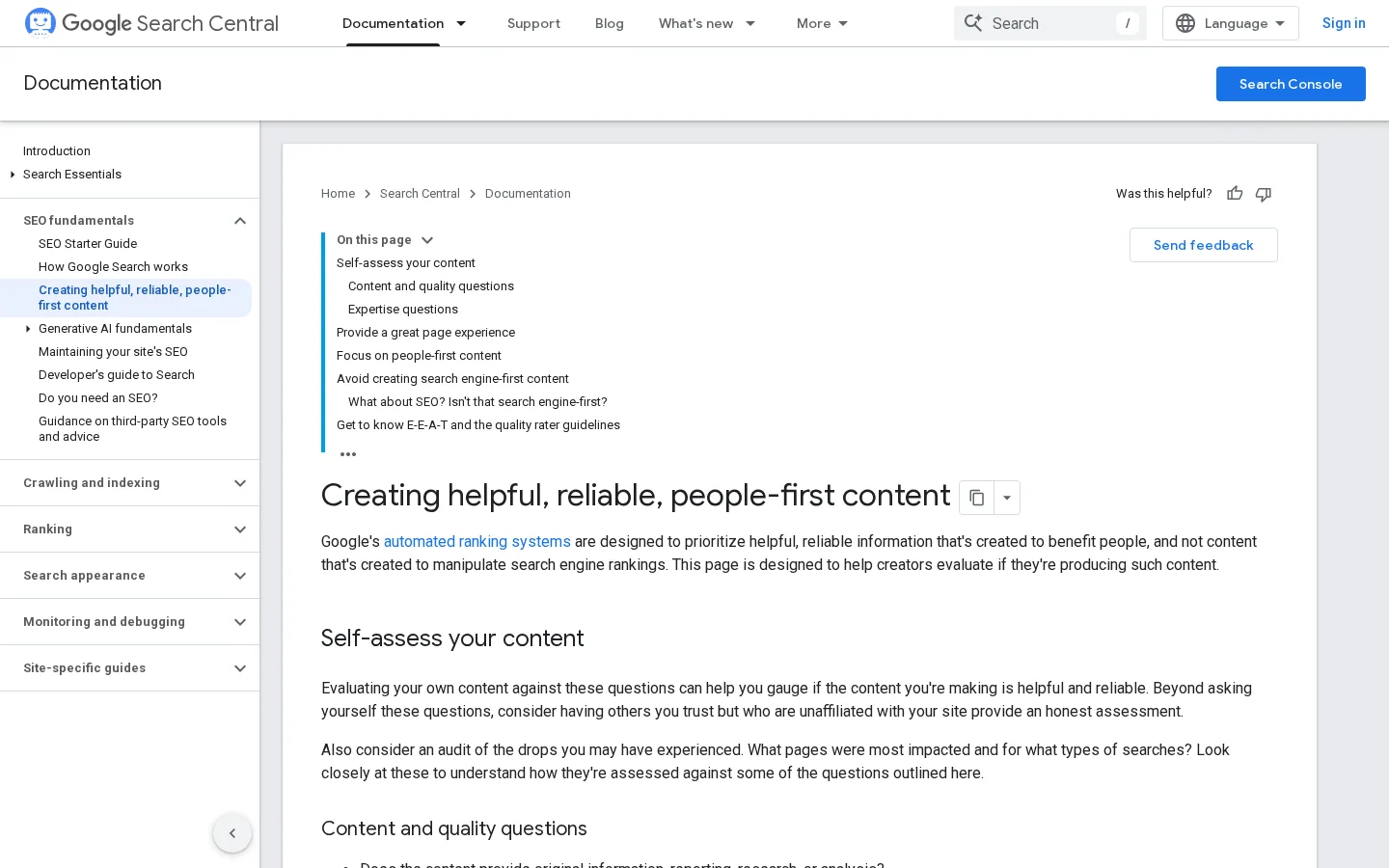
Google's guide to creating helpful, reliable, people-first content asks whether your content "clearly demonstrates first-hand expertise and a depth of knowledge", for example from having used a product or visited a place. Relatable details (the exact error you hit, the step that took longer than expected, the photo you took) are proof of that experience. This is one of the strongest links between relatability and Google's E-E-A-T quality framework.
On social media, the scene comes first. In search, the answer comes first. A reader who typed a question wants the answer in the first lines, and AI models like ChatGPT, Claude and Gemini extract short, direct passages. The right structure for an article: a direct answer in two or three sentences, then a relatable scene that shows you understand the situation, then the detail. Google's helpful content standard also asks whether the reader leaves feeling they learned enough: relatability must never replace substance.
When an AI model answers "how do I get my clients to pay on time", it looks for passages that answer the question precisely. Specific, experience-based sentences (with numbers, steps and real situations) are easier to quote than vague marketing text. Our free LLM readability checker scores how easily AI models can extract the key passages of a page.
Tip
To find the questions your customers ask AI models in their own words, Sorank's AI prompt research lists real prompts by topic. Each one is a ready-made relatable heading for your next article.
The hardest part of relatable content is keeping it relatable when you publish a lot. Generic AI writing drifts toward the same smooth tone. If you produce articles with AI, give it your audience's words, your examples and your tone, and check every piece for the three ingredients. Sorank's brand voice feature writes articles in your tone, with your words, so scaling does not mean sounding like everyone else.
You measure relatability by the signals that show recognition: shares, saves, comments that describe the reader's own situation, and people tagging friends. Likes and views measure attention, not recognition.
From view to customer: where relatability shows
| Signal | Where to find it | What it tells you |
|---|---|---|
| Share rate (shares divided by reach) | Native analytics of each network | People use your content to say something about themselves |
| Save rate (saves divided by reach) | Instagram, TikTok, LinkedIn | The content is useful enough to come back to |
| Recognition comments | Comments, exported or read by hand | The exact moment worked |
| Friend tags | Comments with a @ mention | Readers see someone they know in it |
| Replies to emails | Your inbox | The reader felt spoken to by a person |
| Scroll depth and engaged time | Analytics on your site | The relatable intro kept people reading |
For the definitions and formulas of these indicators, see our page on which engagement metrics to track.
Export your comments (most networks and social tools offer a CSV), then count the comments that express recognition. This case-insensitive regular expression catches the most common forms in English:
(?i)\b(this is (so )?me|literally me|same here|so true|i felt (this|that)|me every (day|time|morning|week)|why is this me|is it just me|called out)\b|@\w+Divide the number of matching comments by the total number of comments. Compare this "recognition rate" between posts rather than looking at it alone: the posts with the highest rate show you which moments to develop next. Adapt the list to your language and your audience's slang.
Most failed attempts at relatable content fail for the same reason: the brand talks about its audience instead of from inside it. Here are the eight most common mistakes, how to spot them and how to fix them.
What it is: using a meme or a trend that has nothing to do with your audience, or using it after it peaked. How to spot it: you need to explain the trend to your team, or it started more than two days ago. The 2025 Sprout Social Index, published on January 7, 2025, found that a third of consumers think jumping on viral trends is embarrassing for brands, and that 27% think it only works within 24 to 48 hours of a trend's lifespan. How to fix it: only join a trend if it fits a moment your audience lives and you can post within a day. Otherwise, skip it.
What it is: content written for "everyone", with no precise situation. How to spot it: the hook would work for any company in any sector. How to fix it: add a time, a place, a number or an object, and name one type of person.
What it is: a "failure" story that is in fact a disguised success story, or a staged emotional post. How to spot it: the failure has no cost, no number and no lesson you would not want to admit. How to fix it: share real numbers and a real mistake, or do not use this strategy.
What it is: using the vocabulary of a generation or community the brand does not belong to. How to spot it: nobody on the team uses these words in real life. How to fix it: use the words found in your customers' reviews and messages, not the words of the internet in general.
What it is: humor where the customer is the punchline ("people who still do X manually, lol"). How to spot it: a part of your audience would feel judged, not seen. How to fix it: laugh at the situation or at yourself, never at the person living it.
What it is: content that gets "so true" comments but has no link to what you do. How to spot it: high likes, zero clicks, zero sign-ups, and followers who would not know what you sell. How to fix it: always connect the scene to a piece of advice or to the part of your offer that solves it.
What it is: a blog article that opens with 300 words of anecdote before answering. How to spot it: the answer to the title appears after the first scroll. How to fix it: answer in the first two or three sentences, then add the relatable scene.
What it is: quoting a customer's message, name or photo without their permission. How to spot it: you cannot point to a written agreement for each story. How to fix it: ask for permission in writing, offer to anonymize, and keep a record of every agreement.
Talking about your audience vs talking from inside it
Before you publish, run every piece through this list. If a box stays empty, fix it or keep the draft for later.
Relatable content checklist
Relatable content is not a talent. It is a habit of listening, copying your audience's words with care and adding something useful after the "that's me" moment. Do it once a week and your content will sound less like a brand and more like someone your readers know.
Relatable content is content in which the audience recognizes their own situation, words or feelings. It makes people think "that's me", which leads them to comment, save and share. It relies on a precise situation, a real emotion and concrete details.
Start from one narrow audience and collect their exact words from reviews, support tickets, forums and search queries. Pick one precise moment they live, open with it in their language, then link it to useful advice or to your offer.
Look at the signals of recognition rather than views: share rate, save rate, friend tags and comments such as "this is so me". Compare the share of recognition comments between posts to see which moments to develop next.
We analyse your competitors, your website and your AI visibility to create a tailored content plan for free.
 Duplicate Content Checker
 Mobile-Friendly Test
 Website Speed Test
 Subdomain Finder
 Domain Age Checker
 CMS Detector
 Googlebot Simulator
 Nofollow Link Checker
 Meta Tag Checker
 Keyword Cannibalization Checker
 Keyword Intent Checker
 Keyword Extractor
 Google Ads Cost Calculator
 CPC Calculator
 Local Citation Finder
 Reddit Threads Finder
 Disavow File Generator
 Redirect Generator
 Canonical Tag Generator
 Passive Voice Checker
 Google Location Changer
 Google Review Calculator
 Google Review Link Generator
 Keyword Combiner
 Podcast Show Notes Generator
 AI Content Rewriter
 AI Text Humanizer
 ChatGPT Prompt Generator
 Twitter Thread Generator
 Tweet Generator
 Landing Page Copy Generator
 Google Ads Copy Generator
 Pinterest Pin Description Generator
 Anchor Text Generator
 Social Media Post Generator
 LinkedIn Post Generator
 Free AI Writer
 Review Response Generator
 LSI Keyword Generator
 YouTube Video Ideas Generator
 YouTube Tag Generator
 YouTube Description Generator
 Product Description Generator
 CTA Generator
 Blog Introduction Generator
 Conclusion Generator
 Hook Generator
 AI Content Brief Generator
 FAQ Schema Generator
 AI Blog Post Ideas Generator
 Structured Data Validator (Schema Validator)
 Alt Text Checker
 Internal Link Analyzer
 Backlink Challenge
 AI Meta Description Generator
 AI Blog Title Generator
 Google Indexability Checker
 AI Blog Outline Generator
 UTM Link Builder
 Keyword Clustering Tool
 Canonical Tag Checker
 XML Sitemap Generator
 Broken Link Checker
 AI SEO Title Generator
 Headline Analyzer
 SERP Preview Tool
 Redirect Checker
 Hreflang Tag Generator
 Heading Structure Analyzer
 HTTP Headers Checker
 Favicon Extractor
 SERP CTR Calculator
 SEO vs Paid Search Savings Calculator
 SEO Share of Voice Calculator
 SEO ROI Calculator
 SEO Traffic and Revenue Forecast Calculator
 SEO Budget Calculator
 SEO Break-Even Calculator
 SaaS SEO ROI Calculator
 ROAS Calculator
 Reading Time Calculator
 Ranking Gain Simulator
 Organic Traffic Value Calculator
 Organic Traffic Estimator and Website Traffic Checker
 LTV to CAC Ratio Calculator
 Local SEO ROI Calculator
 Link Building Cost Calculator
 Keyword Value Calculator
 Keyword Opportunity Score Calculator
 Keyword Density Calculator
 GEO ROI Calculator
 GEO Content Investment Calculator
 Ecommerce SEO ROI Calculator
 Customer Lifetime Value Calculator
 Customer Acquisition Cost Calculator
 CTR Calculator
 Cost Per Article Calculator
 Conversion Rate Calculator
 Content Marketing ROI Calculator
 ChatGPT Referral Traffic Estimator
 Bounce Rate Calculator
 Backlink ROI Calculator
 AI Visibility Score Calculator
 AI Traffic Value Calculator
 AI Share of Voice Calculator
 Cost of AI Invisibility Calculator
 AI Citation Rate Calculator
 llms.txt Validator
 AI Overview Checker and AI Overviews Rank Checker
 Robots.txt Checker
 AI SEO Audit
 LLM Readability Checker
 SearchGPT Readiness Checker
 Structured Data LLM Audit
 Website Crawlability AI Audit
 Why ChatGPT Is Not Recommending My Website
 Gemini Ranking Tool
 Perplexity Ranking Checker
 LLM Citation Checker
 Answer Engine Optimization Audit
 GEO Audit
 AI Search Visibility Test
 ChatGPT Visibility Checker
 llms.txt Generator
 URL Extractor
 Webpage to Markdown
 Sitemap Checker
 SERP Volatility Sensor
 Page Size Checker
 Word Counter
 Slug Generator
 Schema Generator
 Robots Generator
 OG Preview
 Meta Tags Generator
 Image Compressor
 Favicon Generator
 On-Page SEO Audit: SEO Checker and SEO Analyzer
 Backlink Analysis Tool
 Keyword Research Tool
 Domain Authority Checker
 “I tested Sorank on a real client site and it's insane. It does everything an agency would bill you $1500 a month for. It's going into production on that client now.”

 Guillaume Guersanguersanguillaume.com“We are an Ads agency and we wanted to get our SEO back on track once and for all. Sorank gave us a clear view of our site, helped us prioritize optimizations, and properly structure our content. The tool is easy to use, well designed for a team, and very practical for centralizing tracking without having to juggle multiple platforms. A very solid foundation to start fresh with our SEO.”
 Gaspard MadouiAds Agency
 “I just let the Sorank software do its thing, and now my DR is 25 and my page is ranking higher.”
 Lucas Flandrefoundertrace.fr“I specialized in GEO thanks to Sorank. The GEO Leaderboard allows me to show my clients their position vs competitors on ChatGPT. It’s a real commercial differentiator.”
 MélanieSEO Freelance“Great service, works well for our website and helps us understand how to improve it to rank better on Google and elsewhere. Congrats, keep going, I recommend it.”
 Hugo T.E-commerce merchant