Preferences
Privacy is important to us, so you have the option of disabling certain types of storage that may not be necessary for the basic functioning of the website. Blocking categories may impact your experience on the website. More information
Privacy is important to us, so you have the option of disabling certain types of storage that may not be necessary for the basic functioning of the website. Blocking categories may impact your experience on the website. More information

Learn how to build buyer personas from real evidence, how many to keep, and how to use them to plan keywords, pages and content buyers actually read.


In short
A buyer persona is a research-based profile of the person who chooses and pays for what you sell. Build it from real evidence, such as customer interviews, sales calls, support tickets, CRM fields and the questions people type into search engines and AI assistants. Keep only the details that change what you write, and use the result to pick keywords, shape each page and decide which proof the reader needs. Two to four well-researched personas per product line usually beat ten invented ones.
Want to go further? Ask
Quick quiz
Which way of finding customers online fits you best?
Sorank matches your answers


Test it for 3 days on your own site and see where you stand on Google, ChatGPT and the other AIs.
Start 3-day free trial3 days free, then stop whenever you want. 90-day results guarantee, conditions apply.
A persona is a character you build from research so that your team stops writing for "everyone." Nielsen Norman Group describes a persona as a fictional, yet realistic, description of a typical or target user of the product in an article by Taylor Dykes, published on October 3, 2025. TechTarget's definition, published on August 16, 2024, is more specific: a buyer persona is a composite representation of a specific type of customer in a market segment.
The word that matters in both definitions is composite. A persona is not one real customer. It merges what you see across many customers into one believable person, so a writer can picture who is reading, what that person is trying to do and what would make them stop reading. Teams often mix up the related terms, and that confusion leads to vague pages, so the table below separates them.
| Term | What it describes | Question it answers |
|---|---|---|
| Buyer persona | A research-based profile of one kind of buyer | What does this person need before they decide? |
| Customer segment | A group defined by a rule, such as company size or country | Which group is worth targeting first? |
| Ideal customer profile | The type of account you most want to win, often used by sales teams | Which companies should sales contact first? |
| User persona | The person who uses the product every day | What does this person do inside the tool? |
In B2B, the buyer and the user are often different people. A finance director may sign the contract while an operations manager uses the software every day. A good persona set names both, because the argument that wins the signature is not always the one that keeps the user happy.
Search engines reward pages that match what a specific person wants, and the same product attracts different queries from different people. Take a payroll tool. A founder who runs payroll alone might type "payroll software for a 20 person company". An engineering lead who needs an integration might type "payroll API for several countries". Both searches are valid, but they lead to different pages, different words and different objections. A persona tells you which of these queries deserve a dedicated page, which vocabulary belongs in the headline, and which question to answer first.
AI assistants add a second reason. People now ask ChatGPT, Claude, Gemini or Perplexity full questions in the first person, such as "I run a small clinic, which software can send appointment reminders without a big budget?" Those questions carry the context a persona describes: role, constraints, budget and the fear of choosing badly. A page written for one clearly described reader tends to answer that kind of question more directly, which makes its answer easier for an assistant to quote.
Same brief, two starting points
The brief is where this starts. A writer who receives only a keyword will write for an average reader, and an average reader does not really exist. A writer who receives a persona card knows which problem to open with, which objection to answer before the price, and which proof will feel credible. The difference shows up on the first screen, which is also the part that readers and search engines judge first.
Tip
Before you brief a writer, run your target keyword through our free AI content brief generator to get the structure, then add the persona's pains and objections by hand. The generator gives the skeleton. The persona gives the reason to read.

A persona is only as good as its inputs, and most teams already own more evidence than they use. The trick is to combine two kinds of data: what people tell you, and what people do. Interviews explain the reasons behind a decision. Behavioral data shows how common those reasons are. Use both, and let each one check the other.
Two kinds of evidence, one persona
Start with the people closest to the sale. Ask your sales and support teams what they hear on every call, and reread the notes they wrote last month. Then add the data that shows the wider market:
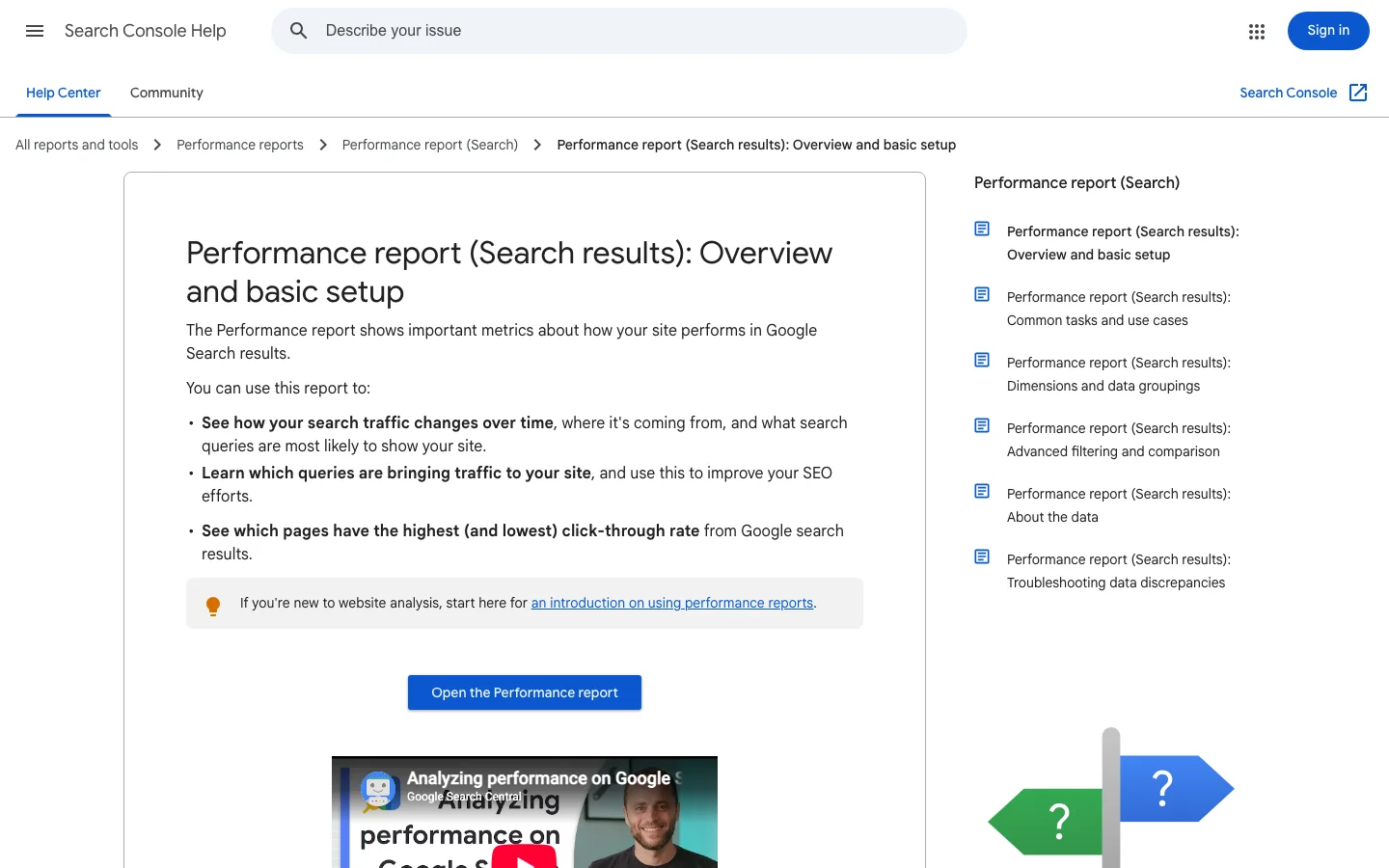
Google's help page on the Performance report explains that the Queries dimension groups your data by the search query users typed. The default view covers the past three months and shows four metrics: clicks, impressions, the ratio of clicks to impressions, and the average position. Those terms are a cheap way to see how your market names its own problems, even before you run a single interview.
Filtering helps you find the queries that carry a persona's context. In the Queries tab, the Custom (regex) filter accepts a regular expression, so this pattern pulls out searches that mention a price, a demo or a team size:
(price|pricing|quote|demo|how much)|(for|with) (a |our )?\d+ ?(person|people|employees|staff|team)Run it once a month, and copy the matches into your persona document with their exact wording. Each match is a candidate for a trigger or a goal. Counting the matches shows which pattern is real, and reading them shows why people search for it.
Note
When you interview customers or reuse their messages, ask permission before you record a call or quote someone. Keep names, company details and contact data out of the persona card that the whole team sees, and keep the raw notes where they were collected.
There is no single correct method. Each route answers a different question, and each has a typical failure. The four methods below cover most teams, from a two-person startup to a company with a full sales floor. You can combine them, and most strong persona sets do, because one method checks the blind spots of another.
| Method | Best for | Main risk | Typical effort |
|---|---|---|---|
| Interview-led | New products, new markets, unclear buyers | A handful of voices can sound like a whole market | Medium to high |
| Data-led | Teams with a clean CRM and enough customers | Clusters describe what you already sell | Medium |
| Question-led | Content planning and AI visibility work | Questions show interest, not budget or authority | Low |
| Workshop-led | Teams whose sales and support staff know buyers well | Opinions that nobody has tested | Low |
The sections that follow describe each method with the same five questions: the principle, when to use it, its advantages, its limits and an example. The examples are fictional, so you can follow the reasoning without copying a result.
Principle: talk to real buyers and let the patterns in their stories form the persona. When to use it: when you launch something new, enter a market, or find that your pipeline does not match your assumptions. Advantages: you hear the reasons, the alternatives they tried and the moment they decided, which no spreadsheet shows. Limits: a small sample can mislead, so check every claim against a second source before you publish it. Example (fictional): a bookkeeping tool interviews customers who upgraded after six months and finds that most of them did not want automation at all. They wanted a way to stop chasing invoices before a tax deadline, and that became the headline of the persona.
Principle: group existing customers by what they share, such as company size, sector, product usage or retention, and describe each group in plain words. When to use it: when your CRM is clean and you have enough customers to see repeated patterns. Advantages: it is fast, and it is grounded in what actually happened. Limits: clusters describe the customers you already have, so they can hide the buyer you have not reached yet. Example (fictional): a clinic software vendor notices that practices with two to five staff keep their subscriptions longest. That group becomes its first persona, and the team then interviews two of those practices to learn why.
A practical first rule is to split by one trait you can measure, such as the company size band or the plan the customer bought. Then check whether that group behaves differently on renewal or on support requests. If it does not, the split describes nothing useful, and you should try another trait before you give the group a name.
Principle: start from the questions people ask in search and in AI assistants, then work backward to the person who asks them. When to use it: for content planning and for visibility in AI answers, when you need to know what buyers want to know before they look at a product. Advantages: the language is the buyer's own, and you can start the same day. Limits: a question shows interest, not budget or authority. A question-led persona can overstate the enthusiasts and miss the person who signs.
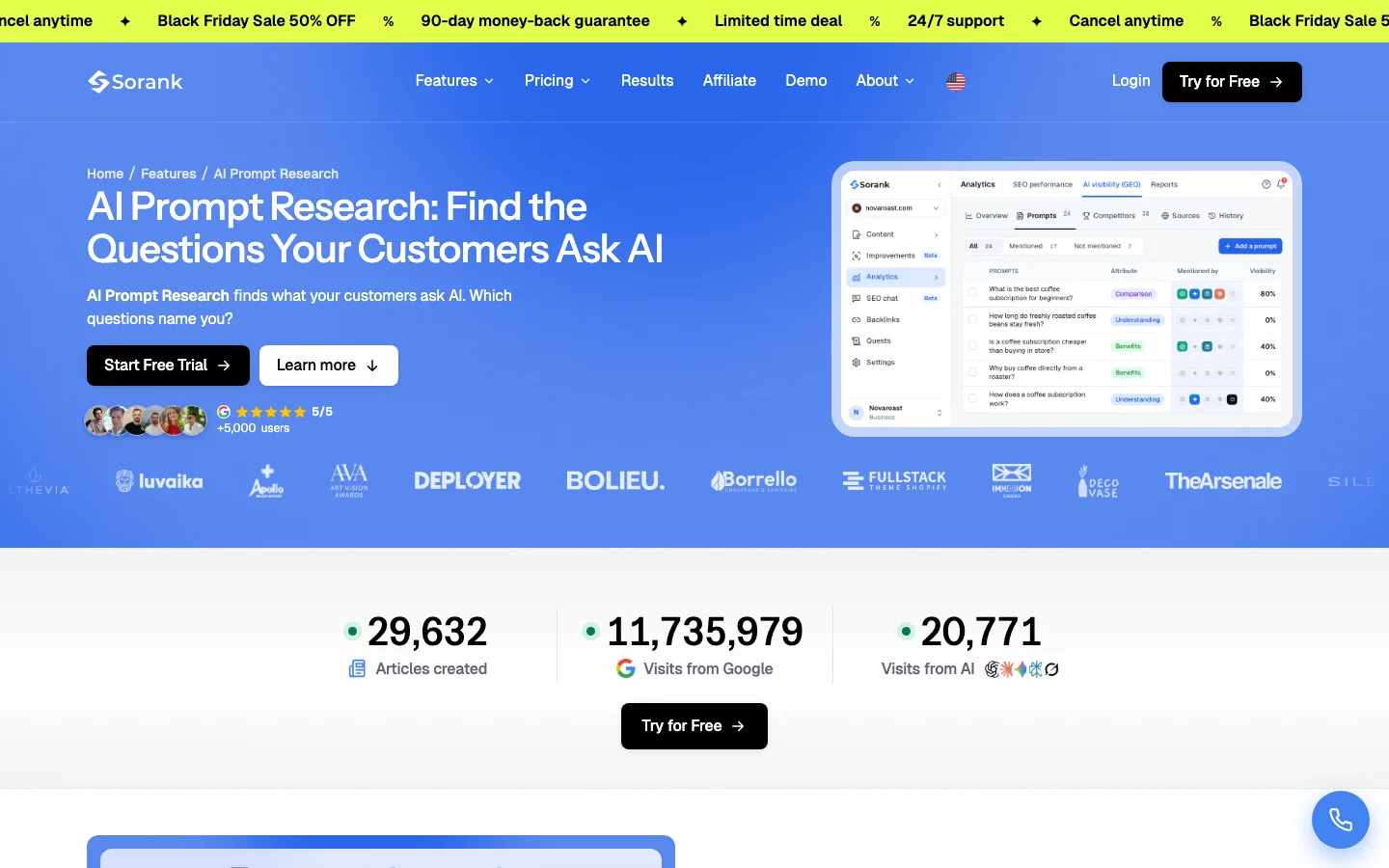
Sorank's AI Prompt Research feature covers this step. It drafts questions that buyers in your market might ask AI assistants, starting from your site brief, and labels each one by intent: understanding, benefits, comparison or quality. The page notes that comparison and quality prompts are where buying decisions happen, so read those labels first. You can edit, delete or add prompts before you use the list to shape a persona or a content plan.
Principle: gather the people who talk to buyers every day, such as sales, customer success, support and founders, and turn their shared knowledge into draft personas. When to use it: when the team already knows a lot but has never written it down. Advantages: it is cheap, it builds agreement, and it brings out objections that never reach a spreadsheet. Limits: opinions dominate when the most senior person speaks first, so collect ideas in writing before the discussion starts. Test each draft against at least two customer conversations before you treat it as true. Example (fictional): a support lead notices that many first-week tickets ask whether the product works with one specific accounting tool. That question becomes a pain point, and the persona card moves the integration check onto the first screen of the page.
This is the practical path. You can finish a first version in a few working sessions, and a rough persona shipped in a week is more useful than a perfect one that takes a quarter.
The five-step method
Pull everything into one document before you draw conclusions. Look for repetition: the same complaint in three support tickets, the same comparison in two sales calls, the same question in your search data. Write down the source of each finding next to it, such as "support ticket, March" or "sales call, lost deal," so you can check it later and so the team can trust the result. Then interview three to five buyers from each group you suspect exists. Include at least one person who did not buy, because their reasons for leaving often explain more than the reasons of people who stayed.
Group people by the decision they make and the situation that starts it. Two marketing managers may share a job title, yet one chooses tools alone while the other needs approval from finance and a security review. Demographic facts such as age or location can help with paid ads, but for most B2B companies and service businesses, the decision is the more useful axis. A simple test: if two people would read two different pages before buying, they belong in two segments. If they would read the same page, merge them.
A name helps the team remember a person and talk about them in meetings. Give the persona a role, a company type, a team size and two or three facts about the daily work that matters to the purchase. Add nothing more. The Nielsen Norman Group makes the same point when it advises you to leave out anything irrelevant to the design. In content, the test is simple: if a detail does not change the headline, the example, the proof or the answer to the price question, leave it out.
This step shapes your pages more than any other. For each persona, write four things:
Write the pains first. Personas must rest on user research, and pains are where that research pays off most, because they show where your offer can really help. A goal tells you what the reader hopes for. A pain tells you what they are trying to escape, and that is usually the stronger opening for a page.
Use the same structure for every persona, so writers and sales people can compare them at a glance. The template below fits on one line, so you can paste it into a brief tool, a shared note or your CRM.
Persona name | Role and company type | Decision they own (decides, influences or uses) | Trigger | Goal in their words | Main pain | Top objections | Where they search and ask | Words they useExample
Fictional example: "Dana, operations lead at a 30-person agency." Trigger: a client asks for monthly reporting that the team cannot produce on time. Goal: a report that can be sent without a weekend of spreadsheets. Main pain: the data sits in four tools that do not talk to each other. Top objection: "We tried a dashboard before, and nobody opened it." Words used: "a report my director actually reads." Every page written for this persona starts from the trigger and answers the objection on its first screen.
More personas feel more precise, but they are harder to use. A writer who has to choose between eight profiles often picks none of them and writes for a vague reader instead. For most teams, two to four personas per product line is a practical range. A narrow market may need only one, while a company with several very different buyers may need more, as long as each persona drives a different page and a different sales conversation.
When two personas share the same goal, the same pain and the same objections, merge them and keep the name of the one with stronger evidence. When a persona has no decision attached to it, drop it or keep it as a note under another persona. To decide which segments come first, score each one from 1 to 5 on three points: how much revenue it already brings, how many people match it, and how easily your team can reach it. Add the three scores, start with the highest total, and add the next segment only when the evidence shows a pattern that the first one does not explain.
From raw signals to live pages
Once personas exist, the next question is which page each one needs. This is where personas meet the buying journey, and each stage asks something different. A person who has just noticed a problem needs a clear definition and a way to measure what the problem costs. A person who compares options needs criteria, honest trade-offs and a fair comparison. A person who is ready to decide needs proof, a clear price logic and a low-risk next step.
Before you assign a URL, group the queries each persona uses into clusters, so that one page answers one cluster. Our guide to keyword clustering explains the method, and our content mapping guide covers the page-by-page step that assigns each URL to one persona and one stage. This section is about the input: what each person needs to hear, and in which order, before you decide which page will answer it.
| Persona (fictional) | Awareness | Consideration | Decision |
|---|---|---|---|
| Operations lead | A guide to the hidden cost of manual reporting | A comparison of reporting tools for small teams | Setup proof and a trial plan |
| Founder who runs reporting alone | A checklist for a first reporting routine | Pricing and the time to a first report | A case study from a similar business |
| Finance director | Why reporting errors cost money | Security, permissions and integrations | Contract terms and an onboarding plan |
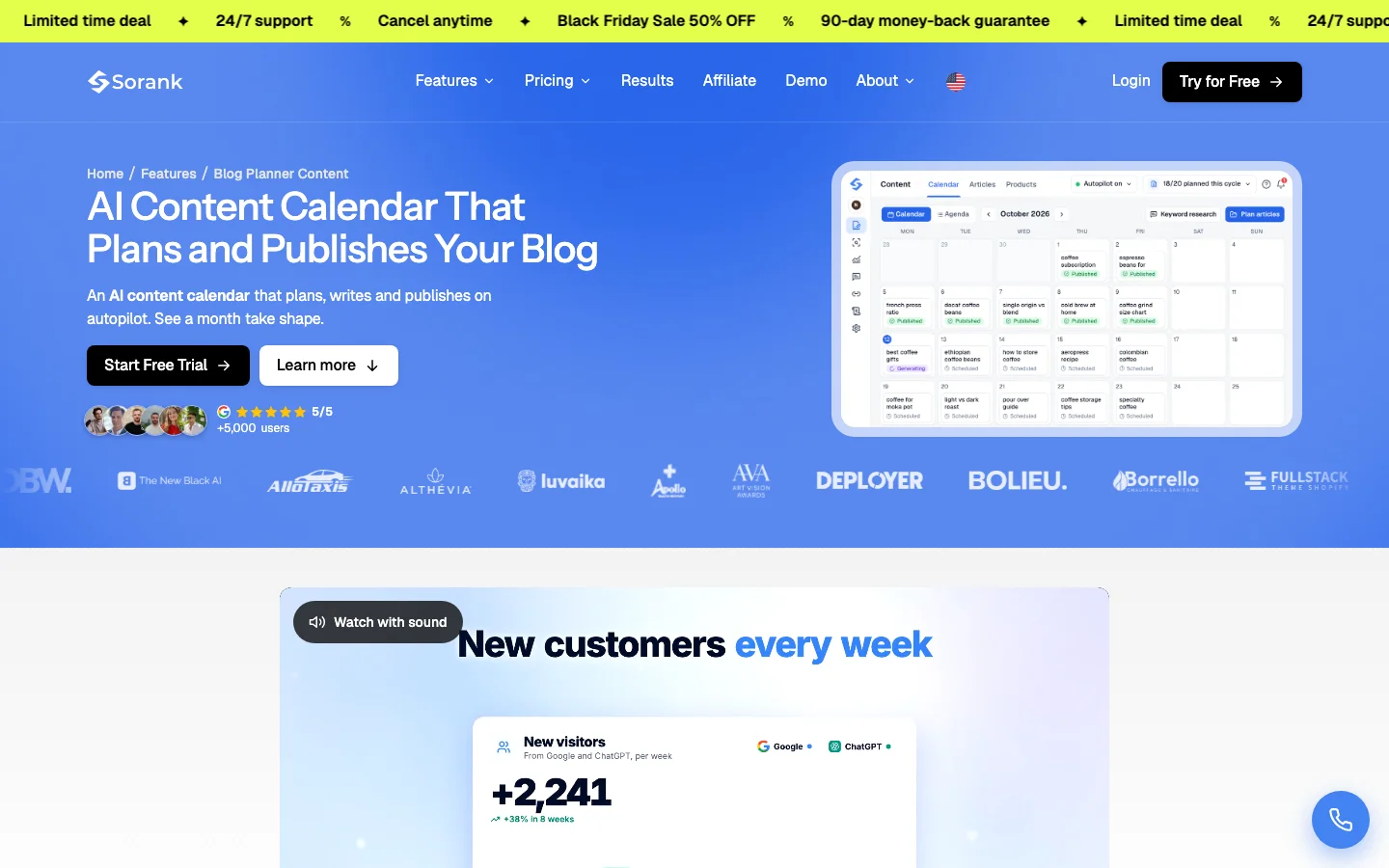
Once the map exists, you can schedule the work. Sorank's AI content calendar gives each slot a priority, from P1 Core to P3 Exploratory, and a content angle such as Decision or GEO. Each slot shows its status, Scheduled, Generated or Published. On autopilot, Sorank writes each article and publishes it to WordPress, Shopify, Webflow or Wix on its day, or sends it to your CMS as a draft for review. Write the persona's trigger and top objection into the brief of each slot, so every article has a reader before it has a keyword.
A persona is most useful where readers judge a page first. Four elements matter most: the title, the opening paragraph, the proof and the questions near the end. Each one takes a specific input from the persona card.
| Page element | What the persona tells you | Test to apply |
|---|---|---|
| Title and H1 | The words the reader uses for the problem | Would the operations lead recognize this phrase from a client call? |
| Opening paragraph | The trigger and the pain | Does the first paragraph name the moment the reader started searching? |
| Proof and examples | The kind of business the reader runs | Does the example match their size, sector and tools? |
| Questions and objections | The doubts that stop the decision | Is the top objection answered before the first call to action? |
A good title uses the words the reader would say out loud. If your persona calls the work "monthly reporting" and never says "analytics," the page should follow that language. The keyword still matters, but the persona helps you choose the version of the keyword that sounds like a real person wrote it. Use the same language in your H2 headings, so a reader scanning the page finds their own words at each step. Avoid titles that promise more than the page delivers, because a click that ends in disappointment does not bring the reader back.
Open with the trigger, not with a definition the reader already knows. A sentence such as "Your client asked for the report on Monday, and the data is spread across four tools" starts the conversation where the reader is. Then give the answer in the next two or three sentences. Readers who see their own situation in the first lines are more likely to keep reading, and an assistant summarizing the page is more likely to pick up a direct answer.
Proof should match the reader. A case study from a 500-person enterprise rarely convinces a 10-person team, and a small example rarely convinces a finance director. Choose examples with the same size, sector or tool stack as the persona, and say what changed, in plain terms. If you have no proof yet, say that you are testing an approach, and show the method rather than an invented result.
Every persona card has objections, and the strongest pages answer them before the reader has to ask. Put the most common doubt in a short question heading, answer it in two or three sentences, and link to a deeper page only when the answer needs one. This is also where questions from sales calls and support tickets become valuable, because buyers phrase them exactly as they would ask a colleague.
Most persona projects fail in predictable ways. The table gives a quick view, and the sections below explain each mistake in detail, with how to spot it and how to fix it.
| Mistake | How to spot it | How to fix it |
|---|---|---|
| Built from assumptions | No source is attached to any trait | Tie each goal and pain to at least one piece of evidence |
| Too many personas | Writers cannot say which persona a page is for | Merge personas that share the same goal and objection |
| Demographics without motivation | The card lists job titles and hobbies, but no trigger | Rewrite the card around the decision and the trigger |
| Buyer and user confused | Trials start, then stall before the contract | Create a second card for the approver |
| Personas nobody uses | Briefs never mention a persona name | Add a required persona field to the brief template |
What it is: a persona that describes the buyer you hoped to attract, not the one who actually buys. How to spot it: the pains read like marketing copy, and nobody on the team can name the interview, ticket or query behind them. How to fix it: attach a source to every goal, pain and objection. If a trait has no source, mark it as a hypothesis and test it in the next few conversations before you rely on it in a headline.
What it is: a long list of profiles that differ only in job title. How to spot it: two personas share the same trigger, pain and objection, and a writer picks one at random. How to fix it: merge them, keep the name of the stronger one, and move the other details into a note beneath it. A few cards that people actually use are worth more than many cards that gather dust.
What it is: a card full of facts, such as age, city and hobbies, that does not explain why the person buys. How to spot it: you cannot write the first sentence of a page from the card. How to fix it: remove every detail that does not change the page, then add the trigger, the decision criteria and the main objection. Demographics help with ad targeting, but they rarely tell you what to say.
What it is: a persona written for the person who uses the product, while the purchase depends on someone else. How to spot it: trials begin, then stop, and sales calls end with "I need to check with my manager." How to fix it: write a second card for the approver, with their own goals, such as risk, cost or team time. Link both cards to the same product pages, and make sure each page answers the question of the person who signs.
What it is: a well-written document that lives in a shared folder and never reaches the people who write or sell. How to spot it: briefs do not name a persona, and writers ask who the reader is every time. How to fix it: add a required persona field to your brief template, and walk the team through one persona at the start of each content review for a month. Habits form quickly when the template asks the question. Our guide to the content brief shows where that field fits.
Warning
Never place an invented statistic inside a persona or a page, such as a percentage of buyers who "prefer video" with no source behind it. Readers and AI assistants both check claims. If you have no data, write the point as a question to test, not as a fact.
A persona describes people at a particular moment. Markets change, prices change, and new buyers arrive after a successful launch. Treat the card as a living document and review it on a fixed rhythm. Many teams choose a quarter, because that is long enough to gather new evidence and short enough to catch a shift early.
| Trigger | What to check | What to do |
|---|---|---|
| A pricing or packaging change | Whether the trigger and the top objection still match | Update the objections and the proof section |
| A new market, country or language | Whether the same pains appear, with different words | Add a variant, or a separate card if the decision changes |
| Falling results for one segment | Which persona the lost leads match | Interview two lost buyers and rewrite the pain |
| New questions in support or sales | Whether the questions repeat across several conversations | Add the question to the persona and to the relevant page |
When you update a persona, record the change and the reason next to it. A short change log lets the team see whether a new pain comes from a real shift or from one unusual conversation. Archive old versions instead of deleting them, because they explain why older pages were written the way they were.
You do not need a workshop series to begin. Work through this list in order, and stop once you have a first persona your team can use.
Your first week
Start small, label what you know and what you are still testing, and let the next round of research correct you. A persona that keeps being checked against real buyers is worth more than a perfect one that never leaves the document. For the wider picture of how keywords, intent and content fit together, read our guide to keyword research, then the guide to keyword research for AI search to find the prompts and questions your personas ask.
A buyer persona is a fictional but realistic profile of the person who chooses and pays for a product, built from research such as customer interviews, sales notes and search data. It names their goals, pains, triggers and objections, so a team can write for one clear reader instead of everyone.
Two to four personas per product line is a practical range for most small teams. Merge personas that share the same goal, pain and objection, and keep a separate card only when the person who decides differs from the person who uses the product.
Start with the evidence you already have: sales call notes, support tickets, CRM fields and search queries. Then add a few interviews with buyers and with people who did not buy, and check each persona trait against at least one source before you use it.
We analyse your competitors, your website and your AI visibility to create a tailored content plan for free.
 AI Content Brief Generator
 FAQ Schema Generator
 AI Blog Post Ideas Generator
 Structured Data Validator (Schema Validator)
 Alt Text Checker
 Internal Link Analyzer
 Backlink Challenge
 AI Meta Description Generator
 AI Blog Title Generator
 Google Indexability Checker
 AI Blog Outline Generator
 UTM Link Builder
 Keyword Clustering Tool
 Canonical Tag Checker
 XML Sitemap Generator
 Broken Link Checker
 AI SEO Title Generator
 Headline Analyzer
 SERP Preview Tool
 Redirect Checker
 Hreflang Tag Generator
 Heading Structure Analyzer
 HTTP Headers Checker
 Favicon Extractor
 SERP CTR Calculator
 SEO vs Paid Search Savings Calculator
 SEO Share of Voice Calculator
 SEO ROI Calculator
 SEO Traffic and Revenue Forecast Calculator
 SEO Budget Calculator
 SEO Break-Even Calculator
 SaaS SEO ROI Calculator
 ROAS Calculator
 Reading Time Calculator
 Ranking Gain Simulator
 Organic Traffic Value Calculator
 Organic Traffic Estimator and Website Traffic Checker
 LTV to CAC Ratio Calculator
 Local SEO ROI Calculator
 Link Building Cost Calculator
 Keyword Value Calculator
 Keyword Opportunity Score Calculator
 Keyword Density Calculator
 GEO ROI Calculator
 GEO Content Investment Calculator
 Ecommerce SEO ROI Calculator
 Customer Lifetime Value Calculator
 Customer Acquisition Cost Calculator
 CTR Calculator
 Cost Per Article Calculator
 Conversion Rate Calculator
 Content Marketing ROI Calculator
 ChatGPT Referral Traffic Estimator
 Bounce Rate Calculator
 Backlink ROI Calculator
 AI Visibility Score Calculator
 AI Traffic Value Calculator
 AI Share of Voice Calculator
 Cost of AI Invisibility Calculator
 AI Citation Rate Calculator
 llms.txt Validator
 AI Overview Checker and AI Overviews Rank Checker
 Robots.txt Checker
 AI SEO Audit
 LLM Readability Checker
 SearchGPT Readiness Checker
 Structured Data LLM Audit
 Website Crawlability AI Audit
 Why ChatGPT Is Not Recommending My Website
 Gemini Ranking Tool
 Perplexity Ranking Checker
 LLM Citation Checker
 Answer Engine Optimization Audit
 GEO Audit
 AI Search Visibility Test
 ChatGPT Visibility Checker
 llms.txt Generator
 URL Extractor
 Webpage to Markdown
 Sitemap Checker
 SERP Volatility Sensor
 Page Size Checker
 Word Counter
 Slug Generator
 Schema Generator
 Robots Generator
 OG Preview
 Meta Tags Generator
 Image Compressor
 Favicon Generator
 On-Page SEO Audit: SEO Checker and SEO Analyzer
 Backlink Analysis Tool
 Keyword Research Tool
 Domain Authority Checker
 “I tested Sorank on a real client site and it's insane. It does everything an agency would bill you $1500 a month for. It's going into production on that client now.”

 Guillaume Guersanguersanguillaume.com“We are an Ads agency and we wanted to get our SEO back on track once and for all. Sorank gave us a clear view of our site, helped us prioritize optimizations, and properly structure our content. The tool is easy to use, well designed for a team, and very practical for centralizing tracking without having to juggle multiple platforms. A very solid foundation to start fresh with our SEO.”
 Gaspard MadouiAds Agency
 “I just let the Sorank software do its thing, and now my DR is 25 and my page is ranking higher.”
 Lucas Flandrefoundertrace.fr“I specialized in GEO thanks to Sorank. The GEO Leaderboard allows me to show my clients their position vs competitors on ChatGPT. It’s a real commercial differentiator.”
 MélanieSEO Freelance“Great service, works well for our website and helps us understand how to improve it to rank better on Google and elsewhere. Congrats, keep going, I recommend it.”
 Hugo T.E-commerce merchant