Preferences
Privacy is important to us, so you have the option of disabling certain types of storage that may not be necessary for the basic functioning of the website. Blocking categories may impact your experience on the website. More information
Privacy is important to us, so you have the option of disabling certain types of storage that may not be necessary for the basic functioning of the website. Blocking categories may impact your experience on the website. More information

Profound vs Searchable compared on price, AI engine coverage, reporting and fit, plus a step-by-step test to run both on your own prompts before you buy.
In short
Profound is an enterprise AI marketing platform for monitoring how brands appear in AI answers. Searchable is a lower-priced AI visibility tracker aimed at small teams and agencies. The two differ most on price model, AI engine coverage and reporting, so test both on your own prompts before you buy.
Want to go further? Ask
Quick quiz
How should you get mentioned by ChatGPT and other AI assistants?
Sorank matches your answers


Test it for 3 days on your own site and see where you stand on Google, ChatGPT and the other AIs.
Start 3-day free trial3 days free, then stop whenever you want. 90-day results guarantee, conditions apply.
Profound and Searchable both answer one question: when a buyer asks an AI assistant about your category, does your brand appear, and which sources does the assistant cite? Both run a fixed list of questions against AI engines on a schedule, store each answer, and report a visibility rate. The difference is what each one adds on top of that measurement.
Profound describes itself as an AI marketing platform. Its homepage groups the product into monitoring tools (answer engine insights, prompt volumes, shopping and agent analytics) and an AI Marketer layer built around agents and a context manager. It targets marketing, SEO, PR and product teams, and it lists enterprise controls such as role-based access, SCIM and SOC 2.
Searchable calls itself an AI search optimization platform. It tracks brand visibility and share of voice, runs competitor analysis and recommends content changes. Its paid plans include an article allowance, so part of its pitch is producing pages that AI engines might cite, not only measuring them. Searchable markets itself to small businesses and agencies.
Profound and Searchable, as their own sites describe them
Source: each vendor's own site, checked November 2026
If you read only one thing on this page, read the next section on coverage and cost. Those two lines decide most purchases in this category, and they are the two places where the marketing copy is least precise.
We already compare Searchable with another rival in our Evertune vs Searchable guide. This article keeps the focus on Profound, and on a test you can run yourself rather than a verdict.
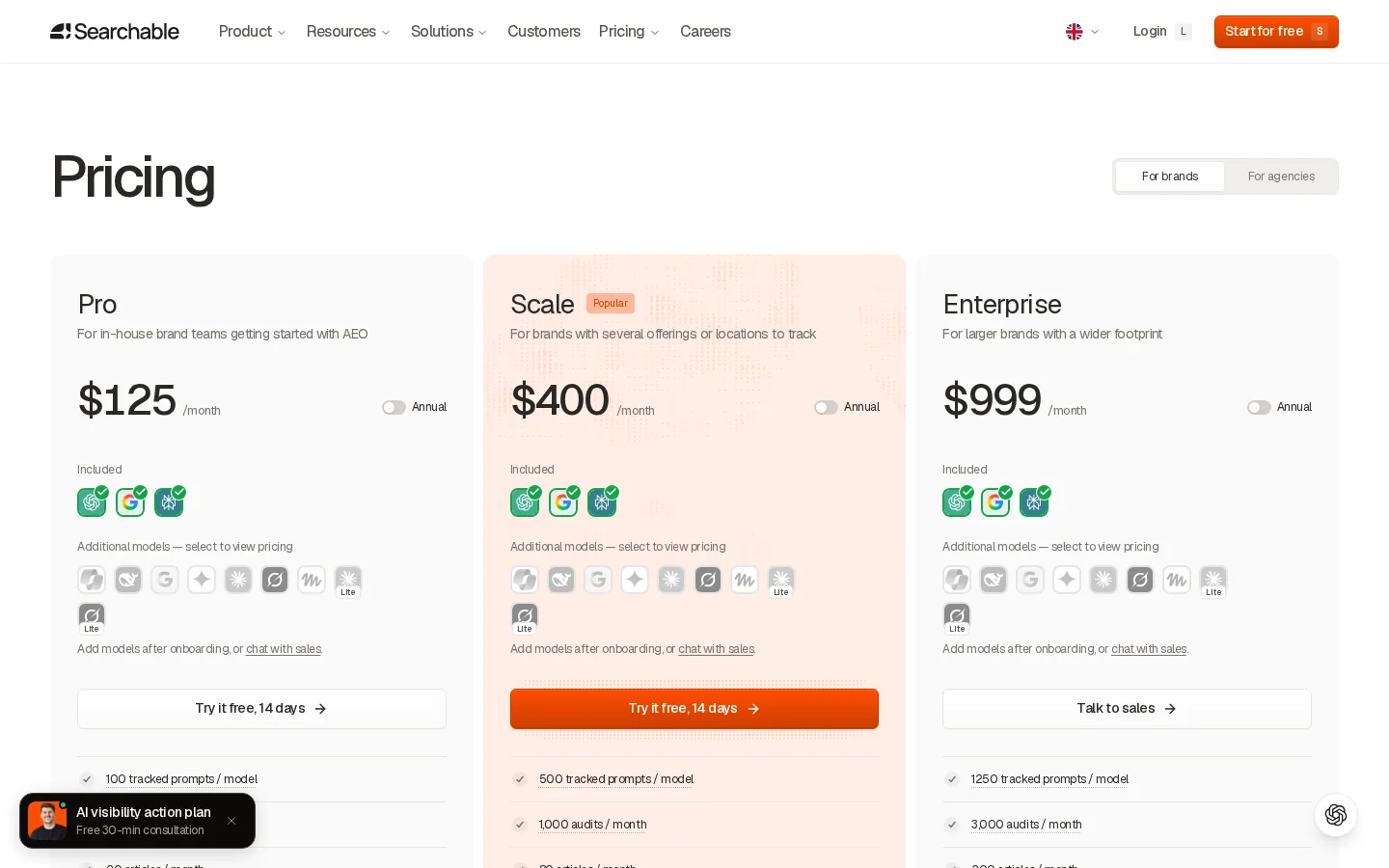
Searchable publishes its prices, and Profound does not. Searchable lists three monthly plans and a custom tier: Pro at $125 per month, Scale at $400 per month and Enterprise from $999 per month. Pro and Scale include a 14-day free trial. Annual billing saves 20%, which brings Pro to $100 per month when you pay for a year up front. Model add-ons are not discounted.
Profound's homepage shows no price list and sends buyers to a demo request. It links to a pricing page, but no prices appeared in what we could read. Rival comparison pages fill the gap. One quotes Profound's Starter plan at $99 per month, covering only ChatGPT with 50 prompts, and its Growth plan at $399 per month, covering three platforms with 100 prompts. Another rival page quotes the same two entry prices and says enterprise is a custom quote on a 12-month contract. Neither figure appears on Profound's own site, so treat them as leads to confirm on a sales call, not as facts.
Warning
A comparison page written by a rival is built to make the rival look good. Searchable's own comparison page says Profound is three to four times more expensive for comparable monitoring. Use these pages to write your list of questions for a vendor, not as a price sheet.
A plan price tells you little until you know how many answers it buys. Searchable's Pro plan includes 100 tracked prompts per model. If you use the three engines included on every Searchable plan, that is 300 prompt and engine pairs per run. Run monthly, and $125 divided by 300 comes to about $0.42 per answer. Scale at $400 with 500 prompts per model and the same three engines comes to about $0.27 per answer, if you use all 500 prompts.
Profound's Growth plan is harder to convert, because the rival page says "100 prompts" across three platforms. That could mean 100 prompts on each platform, which gives 300 answers and about $1.33 per answer at $399. It could also mean 100 prompts in total, which gives $3.99 per answer. Ask the sales team which one they mean before you compare, because the answer changes your cost by a factor of three.
cost per answer = monthly price / (tracked prompts x engines covered x checks per month)Use this formula for every tool in your shortlist, and fill in the same three values from each vendor's written quote. Most monthly plans run one check per month. Searchable reserves daily or weekly tracking for its Custom tier, so if your team needs faster alerts, price that tier separately.

Engine coverage decides whether a tool can measure your buyers at all. If your buyers use Claude or Gemini and the tool does not track them, the visibility score looks better than the reality. Read the engine list before you read the price, and ask for it in writing.
Searchable includes ChatGPT, Google AI Overviews and Perplexity on every plan. Claude, Copilot, DeepSeek, Gemini, Google AI Mode, Grok and Meta are sold as separate add-ons, and the pricing page does not show their prices until you select each one. A team that buys Pro and then adds Claude and Gemini should see the full monthly total before the trial ends.
Profound's homepage names ChatGPT, Perplexity, Claude, Gemini and Google AI Overviews as the engines it covers. The homepage does not say which engines come with each tier, and it does not list Grok or Google AI Mode. Ask for both lists before you sign.
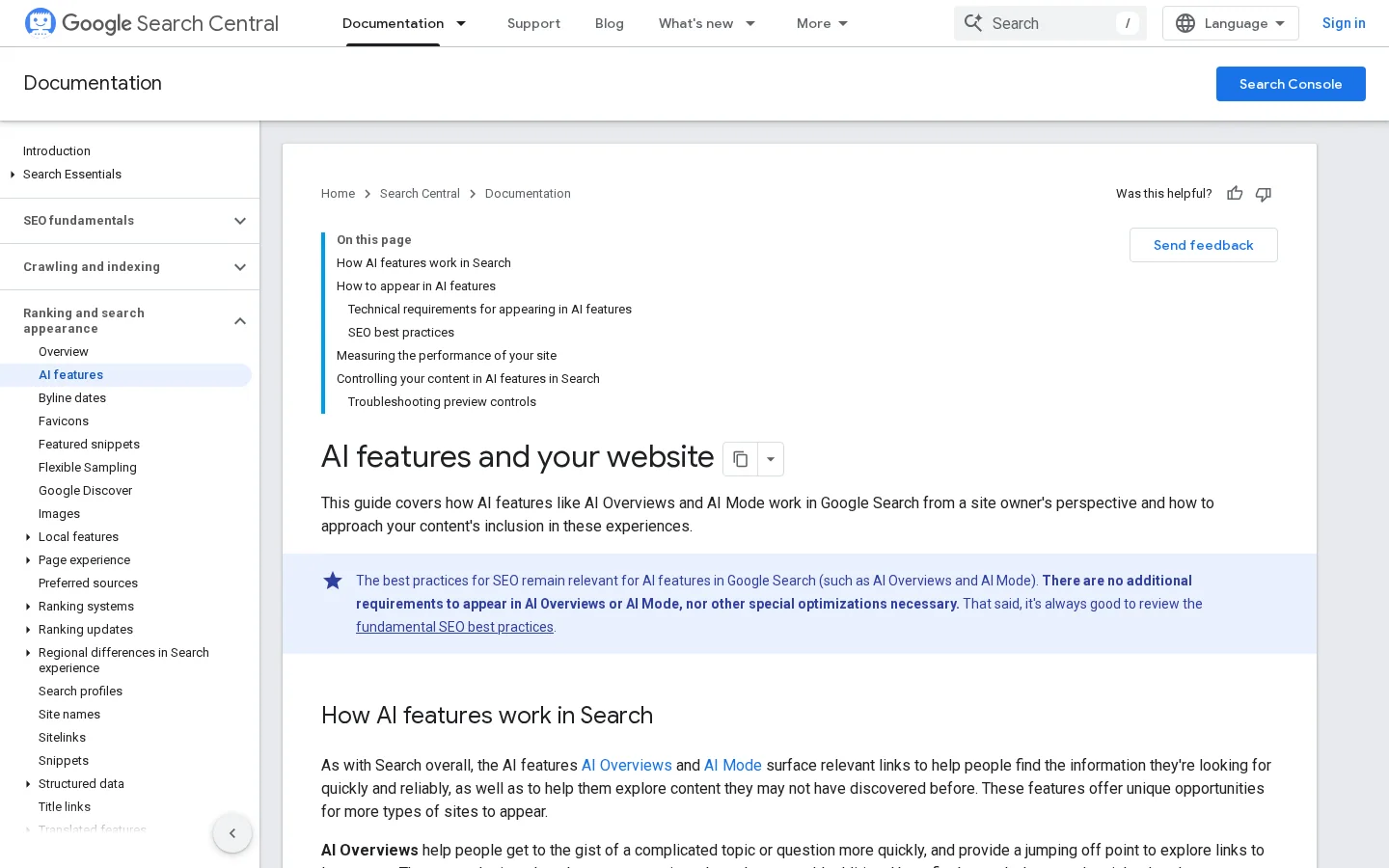
Google is a special case. Google's Search Central documentation on AI features, checked in November 2026, says there are "no additional requirements to appear in AI Overviews or AI Mode" and no need for new machine-readable files or special schema.org markup. The same SEO basics serve Google's AI features as serve the regular results. Be skeptical of any tool that sells a special file or markup for Google's AI features, because Google says none is needed.
| Engine | Searchable | Profound (homepage) |
|---|---|---|
| ChatGPT | Included on every plan | Listed |
| Google AI Overviews | Included on every plan | Listed |
| Perplexity | Included on every plan | Listed |
| Claude | Paid add-on | Listed |
| Gemini | Paid add-on | Listed |
| Grok | Paid add-on | Not listed |
| Google AI Mode | Paid add-on | Not listed |
The table shows what each vendor publishes, not what each plan includes. For Profound, the homepage lists engines but not tiers, so the Profound column tells you what to ask, not what you will get.
A visibility report is only as good as its prompt list and the number of times each prompt is run. Both tools track a set of prompts, so your own prompt design matters more than any dashboard feature. Choose prompts across three intents: understanding ("what is a visibility tracker"), comparison ("Profound vs Searchable") and selection ("best AI visibility tool for a small agency"). Sorank's AI mention tracking uses the same intent labels, and the template works in any tool.
AI answers vary from run to run. The same question can name three brands on Monday and five on Tuesday, and the answer can change with the model version, the location and whether the engine searched the web for that query. A single check gives you an anecdote. Run each prompt at least three times on each engine within the same week, then report the average visibility rate and the spread between runs.
Visibility rate is the number of answers that name your brand divided by the total number of answers. If you ask 10 prompts on 3 engines, you collect 30 answers. If 9 of those answers name your brand, your visibility rate is 30%. Keep the denominator the same from one month to the next, or the trend tells you nothing about your brand. The concept also appears in our AI share of voice entry, which covers the competitor side of the same math.
From answers collected to visibility rate (worked example)
Worked example, not a measured result
Prompts written to flatter your brand produce a high visibility rate that no buyer ever sees. Build the list from real sources: queries in Search Console, the questions your sales team hears on calls, support tickets and the threads in forums where your buyers ask for advice. Ten prompts from real conversations tell you more than fifty prompts you wrote in one afternoon.
Visibility data is useful only when it sits next to traffic and pipeline. Searchable's comparison page says it connects to Google Analytics, Google Search Console, HubSpot and Salesforce, and its pricing page lists Looker Studio on the Scale and Enterprise plans. Profound's homepage lists more than 200 integrations and enterprise controls such as SCIM, role-based access and SOC 2.
Check three things before you pay. First, whether the export reaches your data warehouse or Looker Studio without manual copying. Second, who can see the data, whether one login or team roles with separate permissions. Third, what happens to your history when you change plan. A small team rarely needs SCIM provisioning, but it does need a shared view that the whole marketing team can open.
Report four numbers each month: visibility rate per engine, your share of voice against the competitors you track, the number of answers that cite one of your URLs, and the AI referral sessions in GA4. Those four numbers show whether AI engines name you, whether they link to you, and whether the visits arrive.
Note
AI assistants often send visits without a clear referrer, so some AI traffic lands in direct traffic. Read the AI dark traffic entry before you trust a referral report, and do not treat the referral line as the full value of AI visibility.
You can measure AI visibility by hand, with a tracking tool such as Profound or Searchable, or with your own script that calls the engines directly. Each one is correct for a different team size, and each one is wrong in a different way. Pick the method that you can repeat every month, because a number you cannot repeat cannot show a trend.
A manual check means a person opens ChatGPT, Gemini, Claude and Perplexity, types the same prompts, and writes down what each answer says. It can take an afternoon for 10 prompts across four engines, and it is the best way to learn how the answers read. Its weakness is repeatability: two people get different answers, and a person forgets to run the same prompt three times. Use manual checks in the first week to build your prompt list, then move to a tool. Our guide on tracking brand mentions in ChatGPT, Claude, Gemini and Perplexity shows the manual version step by step.
A tracking tool runs your prompt list on a schedule, stores every answer and calculates the visibility rate for you. It is the right choice when you need a monthly number for a report and you have no engineering time. Its weakness is that you depend on the vendor's engine list, its prompt limits and its definition of a mention. If the tool stores only the summary, you cannot audit it later, so check that you can export the raw answers.
A script sends the same prompts to each engine's API, records the answer and the cited URLs, and writes a row to a table. It gives you full control and a low cost per call, and it runs as often as you want. Its weakness is that API answers can differ from the consumer app, because of web search settings, personalization and model versions. Label the script output as API data in your report, and spot check a few prompts in the consumer app each month.
| Method | Cost | Repeatable | Best for | Main risk |
|---|---|---|---|---|
| Manual spot checks | Staff time only | Low | Building the prompt list | Inconsistent results |
| Tracking tool | Monthly subscription | High | Monthly reporting without engineers | Vendor limits and definitions |
| Own script | Engineering time plus API calls | High | Teams with developers and custom needs | API answers differ from the app |
For most small teams, the right order is manual checks first, then a tool trial, then a script only if the tool becomes too limited. Skipping the manual step is the common reason teams buy a tool and cannot explain its numbers.
The trial is the cheapest evidence you will get, so run a controlled test instead of clicking around the dashboard. Use the same 30 prompts in both tools, the same engines and the same week. Then compare the visibility rate, the cost per answer and the quality of the export, not the design of the dashboard.
A five-step test for both trials
Create one sheet with one row per answer. Use the same columns for both tools so that the results can be compared directly. The header below is enough for a monthly test.
date,tool,engine,prompt,run,brand_mentioned,position,cited_urls,competitor_namedWith that layout, the visibility rate for Claude in one tool is a single formula. Change the engine name to check another engine.
=COUNTIFS(C:C,"Claude",F:F,"yes")/COUNTIF(C:C,"Claude")Tip
Before you spend anything on a trial, run the free LLM citation checker to see how often AI models cite your domain. It gives you a baseline to compare against once the trial starts.
Example
A 30-prompt test with three runs gives 90 answers per engine. If your brand appears in 27 of Claude's 90 answers, the visibility rate is 30%. If the second tool reports 18 mentions across its 90 answers, the rate is 20%, a gap of 10 points. Open the answers behind both numbers before you decide, because a gap that size can come from prompt wording or from how each tool counts a mention.
If the visibility rates are within a few points of each other, decide on cost per answer and export quality. If one tool misses an engine your buyers use, that tool loses the decision whatever its price. A cheap tool that cannot see Claude is more expensive than it looks.
The most common mistakes are trusting a rival's comparison, comparing plan prices instead of cost per answer, testing with one run, blocking the wrong crawler and confusing mentions with citations. Each one wastes a trial or leads to a wrong fix. Here is how to spot each mistake and how to correct it.
What it is: You read a comparison page that another vendor wrote and treat its claims as neutral. How to spot it: The page names only the weaknesses of the other tool, cites unnamed analysts or reviewers, and has no date. How to fix it: Pull each claim you care about and check it on the vendor's own pricing or feature page. If you cannot find it there, ask the vendor in writing before you use the claim in a budget.
What it is: You pick the cheaper plan because its monthly price is lower, without checking how many prompts and engines it covers. How to spot it: The two plans cover different numbers of prompts per model or different sets of engines. How to fix it: Use the cost per answer formula from the pricing section, with the same engines in both columns, and rank the tools on that number.
What it is: You run each prompt once and call the result a visibility rate. How to spot it: The rate jumps by 20 points the next week with no change to your content. How to fix it: Run each prompt at least three times on each engine in the same week, and report the average with the spread. A single result is a sample of one.
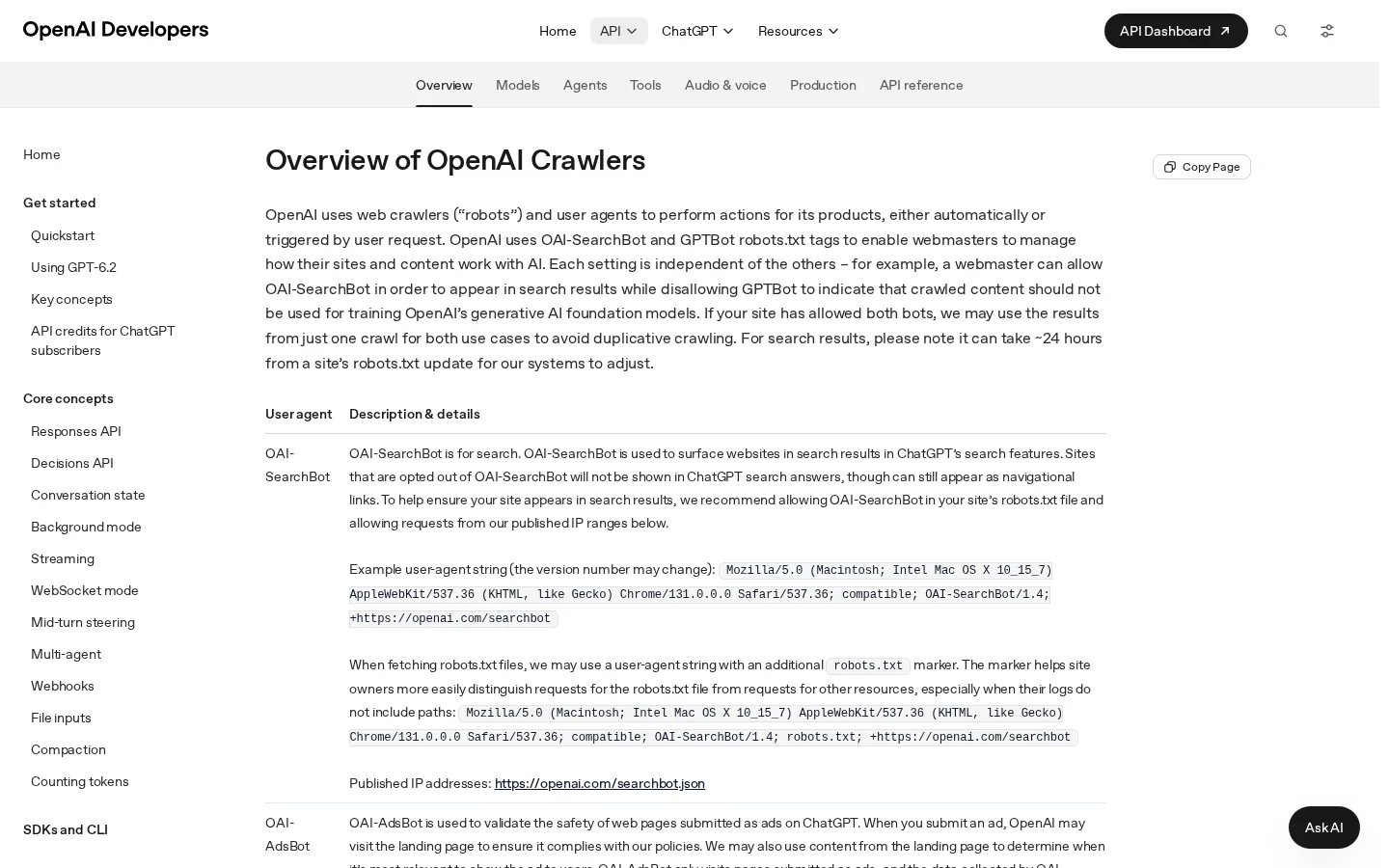
What it is: You block GPTBot in robots.txt to stop training, and you also remove yourself from ChatGPT search without meaning to. OpenAI's crawler documentation separates the two. OAI-SearchBot is used for search and is controlled by robots.txt, and GPTBot is used to crawl content for training. The docs say each setting is independent of the others. How to spot it: Your robots.txt has a blanket rule for GPTBot, and the tool shows your brand disappearing from ChatGPT results. How to fix it: Block the training crawler and allow the search crawler, as in the block below.
User-agent: GPTBot
Disallow: /

User-agent: OAI-SearchBot
Allow: /
The OpenAI docs also say that ChatGPT-User, which fetches pages when a user asks a question, may not respect robots.txt because the request comes from a user. Perplexity's bot documentation makes a similar point for Perplexity-User, which generally ignores robots.txt. Robots.txt controls crawling, not every fetch an assistant makes on a user's behalf, so do not rely on it to hide a page.
Warning
After any robots.txt change, check the live file rather than your editor. OpenAI's docs say search changes can take about 24 hours to take effect after an update, so wait a day before you read a visibility change as a result of the edit.
What it is: You count a brand name in an answer as a citation, or you count a link to your page as a mention of the brand. How to spot it: Your report has one number for "visibility" and no column for the cited URL. How to fix it: Track both. A mention is the brand name in the answer. A citation is a link to one of your pages. The two can differ, and the difference tells you which content to fix. See AI citations versus mentions for the full difference.
Profound fits a large marketing group that needs enterprise controls and can accept a demo-led sale. Searchable fits a small team or an agency that wants published prices, a trial and a cheaper entry point. Choose by your situation first, then test the one that fits.
| Your situation | Start with | Why |
|---|---|---|
| Large team that needs SCIM, role-based access and SOC 2 | Profound | Its homepage lists these enterprise controls |
| Small team with a fixed monthly budget | Searchable | Published plans and a 14-day trial on Pro and Scale |
| Agency with many client domains | Searchable | Its comparison page says unlimited domains come with Pro, check this in writing |
| Buyers who use Claude or Gemini every day | Either, after a coverage check | Both need their engines confirmed in the plan you buy |
| No budget yet, one person on marketing | Manual checks, then a free trial | Build the prompt list before you pay for a tool |
Before you sign with either tool
Sorank is also a GEO tool, so read this section knowing that. Our mention tracking feature sends a fixed list of your questions to AI assistants each month and records whether your brand appears in each answer, with the sources and searches behind it. It also shows the prompts where an assistant recommends someone else, which is the list you need when you plan new content.
The engines depend on your plan. The feature page lists ChatGPT, Claude, Gemini and Grok, with the exact set depending on the plan you choose, so run the coverage check described above before you buy. If you want the AI visibility data next to your Google traffic in one place, the GEO and SEO dashboard shows both.
If you need enterprise controls and can work with a sales-led process, put Profound on the shortlist. If you need published prices, a trial and a lower entry cost, start with Searchable. In both cases, run the same 30-prompt test, get the engine list in writing and keep the raw answers in a sheet your team owns. The tool you pick should be the one that measures the engines your buyers use, at a cost per answer you can repeat every month.
Neither tool is better for every team. Profound targets large marketing groups with enterprise controls and sells through demos, while Searchable publishes its prices and offers a 14-day trial on its Pro and Scale plans. Test both on your own prompts before you decide.
Profound does not publish prices on its homepage, and its enterprise plans are quoted after a demo. Rival comparison pages quote $99 per month for a ChatGPT-only starter plan and $399 per month for a multi-platform Growth plan, so confirm the current figures in writing before you budget.
Often, but the engine list depends on your plan. Searchable includes ChatGPT, Google AI Overviews and Perplexity on every plan and sells Claude and Gemini as add-ons, so check the full monthly total before you assume all three are covered.
We analyse your competitors, your website and your AI visibility to create a tailored content plan for free.
 Duplicate Content Checker
 Mobile-Friendly Test
 Website Speed Test
 Subdomain Finder
 Domain Age Checker
 CMS Detector
 Googlebot Simulator
 Nofollow Link Checker
 Meta Tag Checker
 Keyword Cannibalization Checker
 Keyword Intent Checker
 Keyword Extractor
 Google Ads Cost Calculator
 CPC Calculator
 Local Citation Finder
 Reddit Threads Finder
 Disavow File Generator
 Redirect Generator
 Canonical Tag Generator
 Passive Voice Checker
 Google Location Changer
 Google Review Calculator
 Google Review Link Generator
 Keyword Combiner
 Podcast Show Notes Generator
 AI Content Rewriter
 AI Text Humanizer
 ChatGPT Prompt Generator
 Twitter Thread Generator
 Tweet Generator
 Landing Page Copy Generator
 Google Ads Copy Generator
 Pinterest Pin Description Generator
 Anchor Text Generator
 Social Media Post Generator
 LinkedIn Post Generator
 Free AI Writer
 Review Response Generator
 LSI Keyword Generator
 YouTube Video Ideas Generator
 YouTube Tag Generator
 YouTube Description Generator
 Product Description Generator
 CTA Generator
 Blog Introduction Generator
 Conclusion Generator
 Hook Generator
 AI Content Brief Generator
 FAQ Schema Generator
 AI Blog Post Ideas Generator
 Structured Data Validator (Schema Validator)
 Alt Text Checker
 Internal Link Analyzer
 Backlink Challenge
 AI Meta Description Generator
 AI Blog Title Generator
 Google Indexability Checker
 AI Blog Outline Generator
 UTM Link Builder
 Keyword Clustering Tool
 Canonical Tag Checker
 XML Sitemap Generator
 Broken Link Checker
 AI SEO Title Generator
 Headline Analyzer
 SERP Preview Tool
 Redirect Checker
 Hreflang Tag Generator
 Heading Structure Analyzer
 HTTP Headers Checker
 Favicon Extractor
 SERP CTR Calculator
 SEO vs Paid Search Savings Calculator
 SEO Share of Voice Calculator
 SEO ROI Calculator
 SEO Traffic and Revenue Forecast Calculator
 SEO Budget Calculator
 SEO Break-Even Calculator
 SaaS SEO ROI Calculator
 ROAS Calculator
 Reading Time Calculator
 Ranking Gain Simulator
 Organic Traffic Value Calculator
 Organic Traffic Estimator and Website Traffic Checker
 LTV to CAC Ratio Calculator
 Local SEO ROI Calculator
 Link Building Cost Calculator
 Keyword Value Calculator
 Keyword Opportunity Score Calculator
 Keyword Density Calculator
 GEO ROI Calculator
 GEO Content Investment Calculator
 Ecommerce SEO ROI Calculator
 Customer Lifetime Value Calculator
 Customer Acquisition Cost Calculator
 CTR Calculator
 Cost Per Article Calculator
 Conversion Rate Calculator
 Content Marketing ROI Calculator
 ChatGPT Referral Traffic Estimator
 Bounce Rate Calculator
 Backlink ROI Calculator
 AI Visibility Score Calculator
 AI Traffic Value Calculator
 AI Share of Voice Calculator
 Cost of AI Invisibility Calculator
 AI Citation Rate Calculator
 llms.txt Validator
 AI Overview Checker and AI Overviews Rank Checker
 Robots.txt Checker
 AI SEO Audit
 LLM Readability Checker
 SearchGPT Readiness Checker
 Structured Data LLM Audit
 Website Crawlability AI Audit
 Why ChatGPT Is Not Recommending My Website
 Gemini Ranking Tool
 Perplexity Ranking Checker
 LLM Citation Checker
 Answer Engine Optimization Audit
 GEO Audit
 AI Search Visibility Test
 ChatGPT Visibility Checker
 llms.txt Generator
 URL Extractor
 Webpage to Markdown
 Sitemap Checker
 SERP Volatility Sensor
 Page Size Checker
 Word Counter
 Slug Generator
 Schema Generator
 Robots Generator
 OG Preview
 Meta Tags Generator
 Image Compressor
 Favicon Generator
 On-Page SEO Audit: SEO Checker and SEO Analyzer
 Backlink Analysis Tool
 Keyword Research Tool
 Domain Authority Checker
 “I tested Sorank on a real client site and it's insane. It does everything an agency would bill you $1500 a month for. It's going into production on that client now.”

 Guillaume Guersanguersanguillaume.com“We are an Ads agency and we wanted to get our SEO back on track once and for all. Sorank gave us a clear view of our site, helped us prioritize optimizations, and properly structure our content. The tool is easy to use, well designed for a team, and very practical for centralizing tracking without having to juggle multiple platforms. A very solid foundation to start fresh with our SEO.”
 Gaspard MadouiAds Agency
 “I just let the Sorank software do its thing, and now my DR is 25 and my page is ranking higher.”
 Lucas Flandrefoundertrace.fr“I specialized in GEO thanks to Sorank. The GEO Leaderboard allows me to show my clients their position vs competitors on ChatGPT. It’s a real commercial differentiator.”
 MélanieSEO Freelance“Great service, works well for our website and helps us understand how to improve it to rank better on Google and elsewhere. Congrats, keep going, I recommend it.”
 Hugo T.E-commerce merchant