Preferences
Privacy is important to us, so you have the option of disabling certain types of storage that may not be necessary for the basic functioning of the website. Blocking categories may impact your experience on the website. More information
Privacy is important to us, so you have the option of disabling certain types of storage that may not be necessary for the basic functioning of the website. Blocking categories may impact your experience on the website. More information

Copy.ai vs Jasper compared on verified plan prices, SEO features and a real one-brief test, plus the Google rules for AI-written articles you publish.
In short
Copy.ai and Jasper are AI writing platforms, but they aim at different buyers. Jasper sells content production with brand voice and SEO agents, while Copy.ai sells go-to-market workflows that include content. On price, Jasper Pro starts at $69 per seat per month and Copy.ai Chat at $29, but the plans do different jobs. Test both on one brief before paying.
Want to go further? Ask
Quick quiz
How should you use AI in your marketing?
Sorank matches your answers


Test it for 3 days on your own site and see where you stand on Google, ChatGPT and the other AIs.
Start 3-day free trial3 days free, then stop whenever you want. 90-day results guarantee, conditions apply.
Jasper is an AI platform built for marketing content. Copy.ai now describes itself as a go-to-market platform for sales and marketing teams. Both can produce an SEO article, but they were designed around different jobs, so the right choice depends on which job you have.
Jasper's homepage opens with the headline "Applied AI for Enterprise Marketing." Its product is split into parts. Brand Voice stores your tone rules so they apply to every output. Knowledge holds the source material the AI writes from, including uploaded audio and video. Agents are built for jobs such as SEO and GEO content, campaigns, email and social posts. GEO Hub tracks how your brand appears in AI answer engines and links those signals to content work. For an SEO writer, the first three parts and GEO Hub matter most.
Copy.ai's homepage headline is "The First AI-Native GTM Platform," set against "AI copilots" and "point solutions." Its building blocks are Workflows, which turn a team's sales and marketing processes into repeatable automations, Agents for narrow tasks, Tables as a queryable data layer, Chat for one-off prompts, Infobase for company knowledge and Brand Voice for consistent output. The page also lists more than 2000 integrations. Content is one use among several. On those pages, sales and revenue teams come first and content second.
Two products, two buyers
Source: jasper.ai and copy.ai homepages and pricing pages, checked November 2026
The practical difference is this. If your bottleneck is writing, Jasper's product is closer to the job. If your bottleneck is a sales process that also needs content, Copy.ai's workflow model is the better frame. This article takes the content view, because that is what SEO writers buy these tools for. If you want a comparison with a different pair, read our Writesonic vs Jasper comparison, which covers Jasper against another AI writer.
Jasper Pro costs $69 per seat per month when billed monthly, or $59 per seat when billed yearly. Copy.ai Chat costs $29 per month billed monthly, or $24 per month billed yearly for five seats. Those are the cheapest paid plans on each page. The seat count matters as much as the price, so read both numbers before you compare.
Jasper's pricing page lists two plans. Pro has a 7-day free trial, one seat included and more seats added through sales, according to the page's FAQ. It also includes two Brand Voices, five Knowledge assets and three Audiences. Monthly billing has no long commitment. Annual billing is paid up front on a 12-month commitment and the page says it saves about 20 percent. Business has no public price. The page says it starts with a 12-month commitment. The page does not list a Creator plan.
Note
Older comparisons still quote a $49 Creator plan for Jasper and a $49 Pro plan for Copy.ai. Those figures come from earlier price lists. Treat any price without a date as unverified.
Copy.ai's pricing page lists Chat, Growth, Expansion, Scale and Enterprise. Chat is $29 per month billed monthly, or $24 per month billed yearly ($288 per year), for five seats, with unlimited words and projects in chat. Growth is $1000 per month billed yearly ($12000 per year), with 75 seats and 20000 workflow credits each month. Expansion and Scale go up to $2000 and $3000 per month on the same yearly basis, with more seats and credits. Enterprise has no public price and starts with a custom demo. The page has a "Try for free" button, but it does not show the limits of a free plan, so do not plan around a permanent free tier.
Price comparison sites often copy each other and fall behind. Some still show older Copy.ai plans at $49. Others list Jasper Creator at $39 or $49 a month. Those numbers may have been right once, but the vendor page is the reference. Write the date next to every price in your notes, and check the page again on the day you buy.
Warning
Plan names and prices change often on both sites. A figure you copy today can be out of date next quarter, so check the page again before you sign a contract.

An AI writer can help you produce SEO articles in three ways: prompt by prompt in a chat, through saved workflows that repeat the same steps, or through a platform that picks the topics, writes the article and publishes it. Each way trades control for time, so choose the one that matches your volume. For the craft behind all three, read our AI copywriting guide.
You write a prompt, read the answer and edit it. Most people start here. Copy.ai Chat and Jasper's Chat both follow this model. It is the cheapest way to try a tool and it suits one-off pieces. Its weak point is consistency. Each article starts from your prompt, so tone, facts and links drift unless you repeat the same instructions every time. If you publish ten articles a month, the repeated typing becomes the real cost.
You build a sequence once: research, outline, draft, edit, check. Copy.ai Workflows and Jasper's Agents and Campaigns follow this model. Use it when you publish the same type of article often, such as product comparisons or glossary entries. The advantage is repeatability. The limit is setup time. A workflow you never tuned will produce the same weak draft, only faster. Credits also set the cost, so count the runs before you build.
The platform chooses the keywords, plans the topics, writes and illustrates each article, publishes it to your CMS and tracks the results in Google and in AI answers. This is the model Sorank uses. Its blog article generator writes, illustrates and publishes SEO and GEO articles on your CMS, with internal links. You give up some hand control, so the checks in this article still apply. Read every draft for facts, and check that the topics fit your business.
| Method | How it works | Best when | Control you keep | Main limit |
|---|---|---|---|---|
| Chat-first (Copy.ai Chat, Jasper Chat) | One prompt at a time, you edit each draft | One-off pieces, small volume, testing a tool | High | Consistency depends on you |
| Workflow-first (Copy.ai Workflows, Jasper Agents) | Saved steps that repeat for each article | The same article type, published often | Medium, set in the workflow | Setup time and credit use |
| Platform-first (Sorank and similar SEO platforms) | Topics, writing, publishing and tracking in one system | You want the whole chain handled | Lower, review each output | Less hand control over topics and tone |
For SEO writing, three features matter most: a brand voice you store once, a place for your own facts, and a research step that shows what people ask. Both products offer the first two. Neither product page lists classic keyword research, although Jasper's GEO Hub covers visibility in AI answers, which is a different job.
Both products have a Brand Voice feature. Jasper keeps its tone rules under Brand IQ, and Copy.ai lists Brand Voice next to Infobase. Set it up with real samples, not adjectives. Take three to five of your best articles and write down what you always do: sentence length, how you address the reader and what you never say. Then test the output against one of those samples. If the draft reads like a generic blog post, the rules are too vague.
An SEO article needs facts a model cannot know, such as your prices, your customer results and your product rules. Jasper's Knowledge holds source material, including audio and video uploads. Copy.ai's Infobase stores company information for content generation. Before you generate, load the pricing page, your product notes and two or three sources you trust. Then ask the tool to use only those files for figures. Any number in the draft that did not come from your files gets checked by hand.
Research decides what you write, so it matters more than the writing tool. The Copy.ai pages we read do not list keyword research, rank tracking or a site audit. Jasper's GEO Hub tracks brand presence across AI answer engines and connects those signals to content actions. That helps with AI visibility, but it does not replace a keyword step. Pair any writer with a research tool, or use a platform that does both, such as the automated keyword research described on our site.
Check these before you buy
Run the same brief through both tools, score the two drafts on the same five criteria and time your edit. A one-afternoon test shows which tool fits your team better than any feature table.
The one-afternoon test
Send the same brief to both tools. A brief a model can act on has five parts: the reader, the search intent, the facts that must appear, the length and the links you need. Keep it in one place so you can reuse it next month.
Keyword: copy ai vs jasper | Reader: marketing lead at a 20 person agency | Must include: Jasper Pro $69 monthly, Copy.ai Chat $29 monthly, check date | Length: 1500 words | Links: 5 internal, 2 external | Voice: attached sample articleUse the same five criteria for both drafts, and write the score next to the line that caused it. A score alone does not tell you what to fix.
| Criterion | A score of 5 looks like | A score of 1 looks like |
|---|---|---|
| Accuracy | Every figure traces to a file you supplied | Invented or outdated figures |
| Specificity | Examples and steps your reader can act on | Advice anyone could write |
| Voice | Sounds like your best sample article | Generic blog tone |
| Structure | Headings answer questions, lists used where they help | One long block of text |
| Edit time | Publishable with light edits | A rewrite from scratch |
If one draft needs twice the edit time, the cheaper plan may still cost more. Add up the minutes first, then compare the price. The next section shows how to turn both numbers into one figure.
The cost of one article is the monthly plan price divided by the articles you publish, plus the hours you spend editing at your hourly rate. Editing usually costs more than the subscription, so the cheapest plan is not always the cheapest article.
cost per article = (monthly plan price / articles per month) + (edit hours x hourly rate)The first part is the subscription share. The second part is your labor. Use the monthly price for the plan you would actually buy, and count only the articles that go live, not the drafts you throw away.
Assume a $29 Chat plan, ten articles a month and 45 minutes of editing at $40 an hour. The plan adds $2.90 per article and editing adds $30, for about $32.90 per article. Now take Jasper Pro at $69 per month, eight articles and 20 minutes of editing. The plan adds $8.63 and editing adds $13.33, for about $21.96. In this example the more expensive tool wins, because it saves editing time. These inputs are assumptions, not measured results, so replace them with your own numbers.
Tip
Plug your own plan price, article count and editing time into the Cost Per Article Calculator. It is free and takes about a minute, which is quicker than doing the division by hand each month.
Copy.ai Growth plan, as listed
Source: copy.ai/prices, checked November 2026
A plan like Growth only makes sense when the workflow volume and the team size justify it. For most solo writers and small content teams, the formula above will point you to a chat plan or a single seat instead.
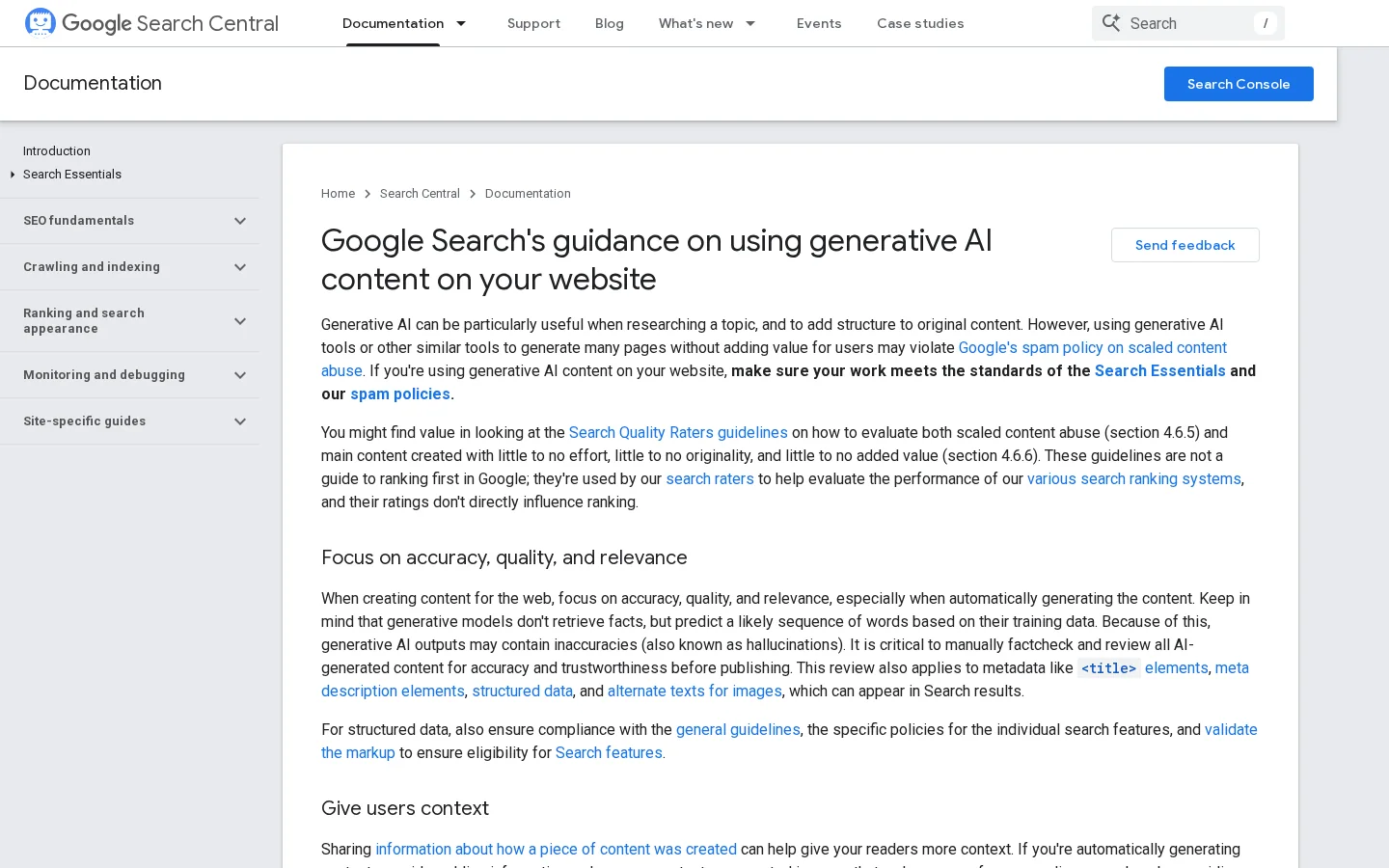
Google does not ban AI-written content. Its guidance says generative AI can help with researching a topic and structuring original content. It also warns that generating many pages with AI tools, without adding value for users, can break its spam policy on scaled content abuse.
Google's guidance on using generative AI content says AI-assisted content must still meet Search Essentials and the spam policies. The page has no visible update date, so check it on the day you read this. Google's spam policies define scaled content abuse as generating many pages mainly to manipulate rankings and not to help users. The policy lists using generative AI tools to generate many pages without adding value for users as one example.
Warning
Sharing how a page was made can help readers, but a disclosure does not replace value. The test is simple: does a reader get something they cannot get from the first page of results?
Watch for the same template across many pages, pages that differ only by a city or a keyword, figures with no source, and text that reads well but says nothing new. The fix is to tie each page to a real question, add one fact only you have, and remove pages that no reader would miss. For the full debate, read our article on AI content for SEO, and for the term itself, the glossary entry on AI content generation.
Most wasted AI writer budgets come from six mistakes: comparing list prices alone, buying the wrong category, writing vague briefs, skipping fact checks, setting up no brand voice and missing the trial deadline. Each one leaves a sign you can spot within the first week.
The same article, two briefs
What it is: you put $29 next to $69 and forget that the first covers five seats and the second covers one. How to spot it: your team size does not match the seat count on the plan. How to fix it: divide the price by the people who will use the tool and by the articles you publish, then compare the results.
What it is: you buy a go-to-market system because the demo was strong. How to spot it: most of the features you use are not content features, and the contract is annual. How to fix it: list the five jobs you need done this month. If content is only one of them, a content-first tool or a platform fits better.
What it is: prompts such as "write about this topic." How to spot it: drafts that match the top ten results almost line by line. How to fix it: state the reader, the search intent, three facts that must appear, one example and the links you need. The brief in the test section does this in one line.
What it is: figures and claims from the model go live unchecked. How to spot it: numbers with no source, prices without dates, and feature claims that changed. How to fix it: keep a list of sources, check each figure against the vendor page and date every price in your notes.
What it is: each article sounds like a different writer. How to spot it: an editor cannot tell that two posts come from the same site. How to fix it: store three to five real samples and a short list of rules, then reuse them in every workflow and chat project.
What it is: you let a trial run out before you test anything. How to spot it: there is no test draft in your files after the first three days. How to fix it: write the end date in your calendar when you sign up, and run the one-brief test in the first two days. Jasper's Pro trial is 7 days. The Copy.ai page does not state the length of its free option, so note what the signup screen shows.
Choose Jasper if long-form content and brand consistency are your main job. Choose Copy.ai if you want one system for sales, marketing and operations, with content as one use among many. Choose a platform if you want keywords, articles, publishing and tracking in one place.
| Criterion | Jasper | Copy.ai |
|---|---|---|
| Main focus | Marketing content | Go-to-market workflows |
| Entry paid plan, billed monthly | Pro, $69 per seat | Chat, $29 for 5 seats |
| Entry paid plan, billed yearly | Pro, $59 per seat | Chat, $24 for 5 seats |
| Free trial | 7 days on Pro | "Try for free" button, limits not shown |
| Brand voice | Yes, Brand Voice | Yes, Brand Voice |
| Your own source material | Knowledge | Infobase and Tables |
| Tracking in AI answers | GEO Hub | Not listed on the page read |
| Keyword research | Not listed on the page read | Not listed on the page read |
| Top tier | Business, priced on request | Enterprise, priced on request |
Start with Jasper, then test it on your hardest article type. Brand Voice and Knowledge are the features that pay off when several writers share one tone. Check the seat count before you buy, because more seats go through sales.
Start with Copy.ai, and test its Workflows on one process that already exists, such as lead handling. Content is easier to add once the workflow runs. Expect a sales conversation before the Growth tier or above.
Begin with a single chat plan and the one-brief test. If the draft needs little editing, the cost formula will confirm it. If you find yourself writing the keyword research and the publishing steps by hand, a platform saves more time than a chat tool. For more options, see our ranking of AI copywriting tools.
Write down the two current prices with their check date, run the one-brief test this week and choose by cost per article, not by the logo. Keep the test notes. When prices change next quarter, you will know which numbers to trust.
This week
If you want the whole chain handled in one place, from keywords to published articles, our article generator follows the platform-first model described above. Run the same one-brief test on it before you decide.
Jasper's product pages focus on marketing content, with Brand Voice, Knowledge and SEO and GEO agents. Copy.ai's pages focus on go-to-market workflows for sales and marketing teams, with content as one use. Run the same brief through both before you decide, because the better fit depends on your job.
The Jasper pricing page checked in November 2026 lists Pro at $69 per seat per month billed monthly, or $59 per seat billed yearly, with a 7-day free trial. Business is priced on request with a 12-month commitment. Older comparisons still quote a $49 Creator plan, which the page no longer lists.
The Copy.ai pricing page shows a Try for free button but does not state the limits of a free plan, so do not plan on a permanent free tier. Its cheapest listed paid plan, Chat, costs $29 per month billed monthly, or $24 per month billed yearly for five seats.
We analyse your competitors, your website and your AI visibility to create a tailored content plan for free.
 Duplicate Content Checker
 Mobile-Friendly Test
 Website Speed Test
 Subdomain Finder
 Domain Age Checker
 CMS Detector
 Googlebot Simulator
 Nofollow Link Checker
 Meta Tag Checker
 Keyword Cannibalization Checker
 Keyword Intent Checker
 Keyword Extractor
 Google Ads Cost Calculator
 CPC Calculator
 Local Citation Finder
 Reddit Threads Finder
 Disavow File Generator
 Redirect Generator
 Canonical Tag Generator
 Passive Voice Checker
 Google Location Changer
 Google Review Calculator
 Google Review Link Generator
 Keyword Combiner
 Podcast Show Notes Generator
 AI Content Rewriter
 AI Text Humanizer
 ChatGPT Prompt Generator
 Twitter Thread Generator
 Tweet Generator
 Landing Page Copy Generator
 Google Ads Copy Generator
 Pinterest Pin Description Generator
 Anchor Text Generator
 Social Media Post Generator
 LinkedIn Post Generator
 Free AI Writer
 Review Response Generator
 LSI Keyword Generator
 YouTube Video Ideas Generator
 YouTube Tag Generator
 YouTube Description Generator
 Product Description Generator
 CTA Generator
 Blog Introduction Generator
 Conclusion Generator
 Hook Generator
 AI Content Brief Generator
 FAQ Schema Generator
 AI Blog Post Ideas Generator
 Structured Data Validator (Schema Validator)
 Alt Text Checker
 Internal Link Analyzer
 Backlink Challenge
 AI Meta Description Generator
 AI Blog Title Generator
 Google Indexability Checker
 AI Blog Outline Generator
 UTM Link Builder
 Keyword Clustering Tool
 Canonical Tag Checker
 XML Sitemap Generator
 Broken Link Checker
 AI SEO Title Generator
 Headline Analyzer
 SERP Preview Tool
 Redirect Checker
 Hreflang Tag Generator
 Heading Structure Analyzer
 HTTP Headers Checker
 Favicon Extractor
 SERP CTR Calculator
 SEO vs Paid Search Savings Calculator
 SEO Share of Voice Calculator
 SEO ROI Calculator
 SEO Traffic and Revenue Forecast Calculator
 SEO Budget Calculator
 SEO Break-Even Calculator
 SaaS SEO ROI Calculator
 ROAS Calculator
 Reading Time Calculator
 Ranking Gain Simulator
 Organic Traffic Value Calculator
 Organic Traffic Estimator and Website Traffic Checker
 LTV to CAC Ratio Calculator
 Local SEO ROI Calculator
 Link Building Cost Calculator
 Keyword Value Calculator
 Keyword Opportunity Score Calculator
 Keyword Density Calculator
 GEO ROI Calculator
 GEO Content Investment Calculator
 Ecommerce SEO ROI Calculator
 Customer Lifetime Value Calculator
 Customer Acquisition Cost Calculator
 CTR Calculator
 Cost Per Article Calculator
 Conversion Rate Calculator
 Content Marketing ROI Calculator
 ChatGPT Referral Traffic Estimator
 Bounce Rate Calculator
 Backlink ROI Calculator
 AI Visibility Score Calculator
 AI Traffic Value Calculator
 AI Share of Voice Calculator
 Cost of AI Invisibility Calculator
 AI Citation Rate Calculator
 llms.txt Validator
 AI Overview Checker and AI Overviews Rank Checker
 Robots.txt Checker
 AI SEO Audit
 LLM Readability Checker
 SearchGPT Readiness Checker
 Structured Data LLM Audit
 Website Crawlability AI Audit
 Why ChatGPT Is Not Recommending My Website
 Gemini Ranking Tool
 Perplexity Ranking Checker
 LLM Citation Checker
 Answer Engine Optimization Audit
 GEO Audit
 AI Search Visibility Test
 ChatGPT Visibility Checker
 llms.txt Generator
 URL Extractor
 Webpage to Markdown
 Sitemap Checker
 SERP Volatility Sensor
 Page Size Checker
 Word Counter
 Slug Generator
 Schema Generator
 Robots Generator
 OG Preview
 Meta Tags Generator
 Image Compressor
 Favicon Generator
 On-Page SEO Audit: SEO Checker and SEO Analyzer
 Backlink Analysis Tool
 Keyword Research Tool
 Domain Authority Checker
 “I tested Sorank on a real client site and it's insane. It does everything an agency would bill you $1500 a month for. It's going into production on that client now.”

 Guillaume Guersanguersanguillaume.com“We are an Ads agency and we wanted to get our SEO back on track once and for all. Sorank gave us a clear view of our site, helped us prioritize optimizations, and properly structure our content. The tool is easy to use, well designed for a team, and very practical for centralizing tracking without having to juggle multiple platforms. A very solid foundation to start fresh with our SEO.”
 Gaspard MadouiAds Agency
 “I just let the Sorank software do its thing, and now my DR is 25 and my page is ranking higher.”
 Lucas Flandrefoundertrace.fr“I specialized in GEO thanks to Sorank. The GEO Leaderboard allows me to show my clients their position vs competitors on ChatGPT. It’s a real commercial differentiator.”
 MélanieSEO Freelance“Great service, works well for our website and helps us understand how to improve it to rank better on Google and elsewhere. Congrats, keep going, I recommend it.”
 Hugo T.E-commerce merchant