Preferences
Privacy is important to us, so you have the option of disabling certain types of storage that may not be necessary for the basic functioning of the website. Blocking categories may impact your experience on the website. More information
Privacy is important to us, so you have the option of disabling certain types of storage that may not be necessary for the basic functioning of the website. Blocking categories may impact your experience on the website. More information

Link building for lawyers: which methods earn trusted links, which ones get firms penalized, and a step-by-step plan to earn links from local and legal sites.
In short
Link building for lawyers means earning links from sites your clients, reporters and fellow lawyers already read. Aim for links that describe real work: a bar listing, a guide you keep updated, a quote you gave a reporter, a local event you sponsored. Avoid links you buy without a disclosure and swaps arranged to lift rankings. A realistic plan adds a few strong, relevant links each quarter, and every link should point to the page a reader actually needs.
Want to go further? Ask
Quick quiz
How should you get links from other websites?
Sorank matches your answers


Test it for 3 days on your own site and see where you stand on Google, ChatGPT and the other AIs.
Start 3-day free trial3 days free, then stop whenever you want. 90-day results guarantee, conditions apply.
Google looks at many signals before it decides which pages to show. Links from other sites are among the clearest, because they say that someone outside your firm thought a page was worth a click. Legal search is crowded, and most firms in your city use the same few directories. A link from a local news story, a bar association page or a university resource can set your site apart from the rest.
A link does two jobs. The first is ranking: Google finds your pages through links and weighs them partly by who points to them. The second is referral: a link on a page people read sends visitors straight to you. A link from a local community site may bring only a few visitors, but they are often exactly the people looking for your practice area. Good link building serves both jobs. A plan that chases only one usually runs out of steam.
For each link you request, ask two questions. Does it help a reader find you today? Does it help Google understand which pages on your site matter? A link that does both is worth more of your time than one that does only one.
Two links, two different jobs
Legal topics carry rules about advertising and referrals, so tactics that work for a retailer can put a lawyer in trouble. Many bar associations restrict what a lawyer may pay for, and the rules differ between countries and between states. Competition for legal keywords is intense, and clients often compare several firms before they call. Your link profile should look like the profile of a respected local practice, not a directory farm.
Run three tests before you ask for any link: relevance, readers and naturalness. Relevance asks whether the linking page is about your practice area or your community. Readers asks whether real people visit the page. Naturalness asks whether the link would exist if nobody had asked for it or paid for it. A link that fails one test can still be fine. A link that fails two is rarely worth the effort.
SEO tools sell scores that estimate how strong a site is. Use them to filter out junk, not as the target. A family law page that links to your divorce practice page from a local parenting site is worth more than a high-scoring business blog that has nothing to do with your city or your work. Ask yourself whether a client of your firm would find the linking page useful.
A link inside a paragraph, next to the sentence that explains why it matters, carries context. A name in a sidebar, a footer or a list of partners carries very little. When you request a link, ask for it inside an article or an update, and offer the sentence you want placed around it.
Most law firm links point at the homepage, which is the page least likely to match a search. Send links to the page that answers the question: a practice-area page, a guide or a local page. If you run a firm and want each practice area to be found on its own, our page for lawyers explains how to set that structure up, and that structure is what your link requests should point to.

Seven approaches cover most of what works for law firms. Each one below has a principle, the situations where it fits, its benefits, its limits and an example. The table at the end compares them side by side. None works well alone. The best plans mix a few of them, chosen for your practice areas and your city.
Principle: claim the profiles you are entitled to hold: your bar association listing, your Google Business Profile and the legal directories where you are licensed and practice.
When it fits: first, and once. It is the foundation, and it takes an afternoon.
Benefits: the listings are quick to get, they confirm your identity to clients and they keep your name, address and phone number consistent across the web.
Limits: many directory links are nofollow or carry little ranking weight, and a stack of identical profiles looks like spam. A short list you keep accurate beats fifty you forget.
Example: a two-partner firm claims its bar listing, its Google Business Profile and two legal directories, all with the same firm name, address and phone number. Then it maintains them once a year.
Principle: make something other lawyers, journalists and teachers can cite on their own: a state-specific guide, a fee or damages calculator, a glossary of local legal terms, or a summary of public court data you have compiled and checked.
When it fits: when you explain the same expertise to clients every week and you have the time to keep it current.
Benefits: links arrive over months and years, and the same guide can feed the answers AI tools give about your practice area.
Limits: content rarely earns links on its own, so you still have to tell the right people it exists. Outdated legal content does more harm than none, so put a review date on every guide.
Example: a firm publishes a guide to the filing deadlines after a car accident in its state, cites the statute it relies on, and updates the page when the law changes. Two local reporters who cover traffic and insurance get a short note on the day it goes live. Our guide to linkable assets lists the types that earn links.
Principle: answer specific reporter requests with a useful, attributable quote from a lawyer who has the experience to back it up. Speed and relevance matter more than volume.
When it fits: when a legal news story touches your practice, such as a change in a statute or a court ruling you deal with often.
Benefits: a single quote in a regional paper can bring local authority and, sometimes, a link to your site.
Limits: many mentions carry no link, and the query services change often. Answering every request dilutes your name, so reply only where you have something real to add.
Example: a reporter asks what changes for workers after a new rule on non-compete clauses. An employment lawyer replies within the hour with three points, names the rule and links to the firm's employment page. The article quotes her and links to that page.
Principle: write for a site your clients or peers read, with one link to the page that matches the topic and a clear author bio.
When it fits: when an editor needs a real practitioner and the topic is one you can explain well.
Benefits: editorial links in context, placed on sites with a review process.
Limits: editors reject thin pitches, and the same pitch sent to twenty blogs is spam. Google's spam policies name optimized anchor text in guest posts as link spam, so use your firm name or a plain phrase as the anchor.
Example: an immigration lawyer writes an explainer on how visa appointments work for a trade magazine, and links the words "our firm" to her visa practice page.
Principle: take part in local life through things you would do anyway: a youth sports team, a legal aid clinic, a talk for the chamber of commerce, a session for a bar section.
When it fits: local firms, especially those serving one city or one county.
Benefits: event pages, local news and association sites often name their participants, and the relationships last longer than any link.
Limits: a sponsorship with a logo link is a paid placement, so it must be marked as sponsored. Some listing pages also use nofollow.
Example: a family law firm sponsors a school fundraiser and asks the school to list the sponsor by firm name on its event page.
Principle: find the places that already mention your firm or your lawyers without a link, or that link to a page you have moved, and ask for the fix.
When it fits: once you have any press, directory presence or past content.
Benefits: the fastest route to a link, from sites that already like you.
Limits: some publishers never edit an article, and a request sent to the wrong person goes nowhere. Keep the request short and polite.
Example: a local paper covers a jury verdict, names the firm and does not link to it. The firm emails the reporter with the correct page URL and one sentence on why the link helps readers.
Principle: buy a placement, or agree with another firm to link to each other. Google treats buying links for ranking purposes, and excessive exchanges, as link spam.
When it fits: only as clearly labeled advertising, marked as sponsored.
Benefits: visibility and sometimes a few referral visits.
Limits: the ranking value is uncertain at best, the penalty risk is real, and some bar rules restrict paying for referrals. The details follow in their own section below.
Example: two firms agree to link to each other from every blog post. That is an excessive exchange, even when both firms are real and relevant.
The ratings below are our judgment, not measured data. Use them to choose where to start, then test your own results.
| Method | Effort | Ranking value | Risk | First step |
|---|---|---|---|---|
| Directory and profile listings | Low | Modest | Low | Claim your bar listing |
| Linkable assets | High | High over time | Low | Publish one state guide |
| Journalist requests | Medium | Varies | Low | Set up query alerts |
| Guest articles | Medium | Good when editorial | Low | Pitch one editor |
| Local sponsorships | Medium | Modest | Low when disclosed | Pick one local event |
| Reclaiming mentions | Low | Good | Low | Search for unlinked mentions |
| Paid placements and exchanges | Low | Uncertain | High | Avoid |
Most law firms get this wrong in one of two ways. They skip it, or they submit to every directory they can find. The method below gets the listings right without creating noise.
Five steps to clean directory listings
The directories most guides name are the same: Justia, FindLaw, Avvo, Nolo and Super Lawyers, plus your bar association. Their links help people find you and confirm that you are real, but do not expect them to carry your rankings alone.
Open the directory's page for your city and practice area, and look at who else is listed there. A page full of firms with no connection to your market tells you the directory has little local weight. Checking a page's links by hand takes a long time, so start with the tool below.
Tip
Use our free URL Extractor to list every link on a directory page at once, then compare that list with the firms in your city.
Content and digital PR are the slowest methods and often the ones that pay off most. The steps below turn expertise you already have into something other people link to.
Your intake calls and consultation notes contain the questions other people search for. Write down the ten you hear most, then group them by practice area. A question asked every week in your office is a stronger topic than anything a keyword tool suggests.
Search for pages that already answer the question, then see which sites link to them. Search operators narrow the results. These patterns are examples you can adapt to your topic:
"car accident" "statute of limitations" "your state" site:.edu"workers compensation" "resources" site:.gov"divorce" "guide" "law library" site:.eduGovernment and university pages often list useful resources, and a clear guide can be added to them when the owner agrees. Do not ask for a link where the page has no reason to point to you.
A guide earns links when it is specific: the statute names, the deadlines, the forms, a dated summary of recent changes and a named author. Give the lawyer's name and bar admission. Add a review date. Link to your sources, because a reporter who checks a claim trusts a page that shows its work.
A pitch should be short enough to read on a phone. Name the story or the gap, name the expert, and give the single reason the page helps the reader.
A pitch to a reporter
Citation link building means making sure every listing of your firm carries the same name, address and phone number, then earning links only from the listings that carry local trust. A citation is a mention of your firm on another site, and it may or may not include a link. Its value comes from consistency: search engines and clients compare your details across the web, and a mismatch makes your firm harder to trust.
Start by comparing your listings with those of the firms that already rank in your city. Note the sources they appear on and you do not. Our guide to citation gaps explains how to close those differences one source at a time.
| Source type | Usually gives | Check first |
|---|---|---|
| Bar association directory | A listing, sometimes a link | Your bar number and practice areas |
| Legal directories | A profile, often nofollow | The same firm name and suite number |
| Chamber of commerce | A member listing, sometimes with a link | The address matches your office |
| Local news and event pages | A name, sometimes a link | The phone number and the spelling |
| Map profiles | A link to your website | The category and the website field |
Write your firm name, address and phone number once, in one format, and copy it exactly everywhere. "Suite 4" on one site and "#4" on another looks like a small change to you, but it is two versions to a search engine. If your office moves, update every listing in the same week.
Tip
Store the master version in one shared document, with the date you last checked it. Review it when a listing changes and at least once a year.
Advanced citation work means fewer, better sources, not more. Three habits cause most of the trouble:
Local context decides which citations matter. The sources that count in one city are the ones your clients already use. Our guide to business directories covers which listings still matter, and our guide to local link building covers the sources for a single market.
Reclaiming is one of the cheapest methods in this guide, and many firms skip it. It works because the sites involved already know you.
Three steps to reclaim a link
Set an alert for your firm name, each partner's name and your main practice areas. Then search for the exact name in quotation marks, excluding your own website. Replace the example with your firm name.
"Smith and Jones LLP" -site:smithjones.comLinks to pages you moved, renamed or deleted lose their value. Google Search Console shows which of your pages Google can index and which return errors. Redirect each old address to the closest current page. If a real article links to the old address, ask its author to update the link.
Keep the request to four sentences: thank the author for the mention, give the correct page, say why it helps the reader, and ask once. A single reminder after a few weeks is fair. A third message usually is not.
Criminal defense firms earn links mostly from plain explanations of the process: what happens at an arraignment, how bail works and what to do after an arrest. Legal aid programs, community colleges and reporters who cover courts link to pages that cite the statute or court rule behind each step. Write for the person who has just been arrested, and tie every claim to a source.
Criminal defense content sits close to advertising and confidentiality rules. Before you publish or pitch, check your state's rules on advertising, client confidentiality and case results. No link is worth a breach, even from a strong site. Keep examples general and hypothetical, not drawn from your own cases.
| Content | Who links to it | What makes it citable |
|---|---|---|
| Arrest and booking explainer | Legal aid clinics and community resource pages | The statute cited and a review date |
| Bail and release guide | Court self-help pages and local reporters | The local bail rules, updated when they change |
| Glossary of criminal terms | Paralegal and criminal justice course pages | Plain definitions with no sales copy |
| Hearing process for one county | Local news and county resource pages | The name of the local court and its current procedure |
Build one of these well before you build the next. One accurate guide tends to earn more links than four thin pages. Our guide to linkable assets lists the formats that earn links most often.
When a court story breaks, a reporter needs a source who can explain the procedure in a sentence or two. Offer your explainer, not a comment on a pending case. Our guide to digital PR covers how to pitch so that editors read past the first line.
Warning
A page about a real client's case can expose that client, even without a name. Leave case stories out of link content, and do not promise results in an article or in anchor text.
Show who wrote each page, which bar admission backs them, and where the information comes from. Then send each link to the practice page that matches the question. Our page for lawyers explains how to structure each practice area so that links land on the right page.
Google's spam policies define link spam as creating links to or from a site primarily to manipulate search rankings. For a law firm, three patterns carry most of the risk:
Sites that break these rules may rank lower or disappear from results. Paid links are allowed when they are marked. Google asks site owners to flag paid links with the sponsored value, and to mark user-generated links such as comments with ugc. Google's guidance on qualifying outbound links covers the values in detail. A sponsored link looks like this in your markup:
<a href="https://example.com/" rel="sponsored">Partner name</a>Marking a link does not make a bad placement good. A sponsored link from an unrelated site is still a poor use of money.
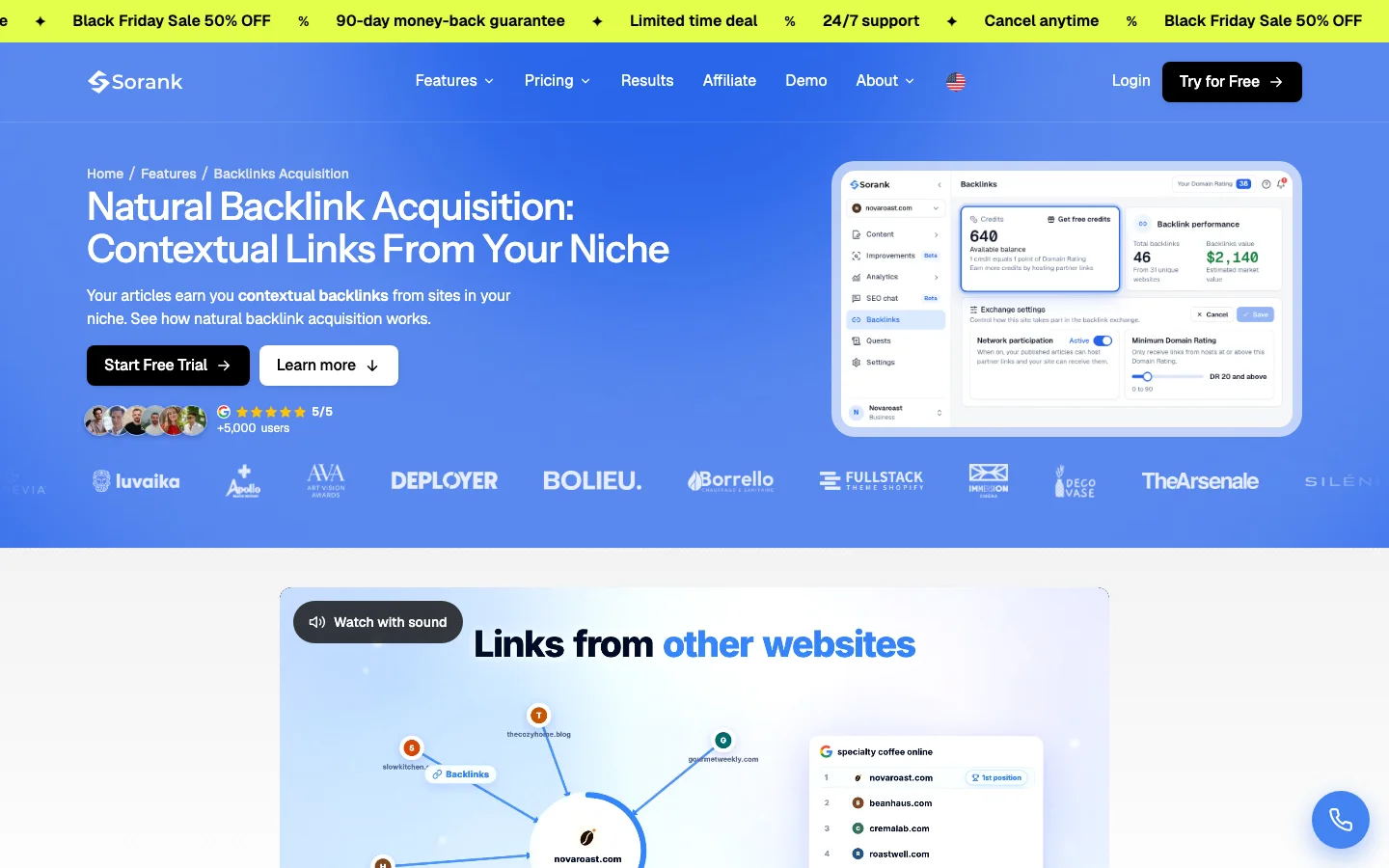
Sorank has a backlinks feature in this same space, so the honest answer belongs here. It matches your site with sites in your niche. You earn credits by hosting a partner's link in one of your published articles, and you spend credits to receive links on other sites. That is an exchange: a link out for a link in. The feature page explains its safeguards, such as avoiding reciprocal links and a daily spending cap, and it says plainly that no link method is risk-free.
Warning
A swap is still a swap when both sites are relevant. Exchanges become spam in Google's eyes when they are excessive or arranged to lift rankings, so keep the volume low and use them only where a link would make sense without the trade.
Note
Paying for referrals can break your bar's rules even when Google is fine with the link. Check your own jurisdiction before any paid arrangement with a lead service, a directory that sells referrals or another firm.
If you read about backlink acquisition with Sorank, read it next to our explanation of backlink exchange, and decide for yourself whether the trade fits your firm.
Each mistake below has three parts: what it is, how to spot it in your own data, and how to fix it. Work through them once a year.
What it is: most links to your site use the same keyword phrase, such as "personal injury lawyer", across dozens of sites.
How to spot it: in your backlink report, sort the anchor texts by frequency. If one phrase makes up most of the list, you have a pattern that looks engineered.
How to fix it: ask for your firm name, the page title or a plain phrase such as "this guide" as the anchor. Our guide to anchor text optimization explains how to audit and balance the list.
What it is: the homepage gets nearly all the links, and the practice pages get none.
How to spot it: check the landing pages in your backlink tool. If the homepage receives almost everything, your practice pages are invisible to the links that matter.
How to fix it: ask for links to practice pages and guides, and link from your homepage to those pages. Our notes on internal linking strategy cover how to pass that attention across your site.
What it is: a burst of new profiles in one month, all with the same description.
How to spot it: your directory list grew by a dozen profiles at once, and the descriptions are copies.
How to fix it: keep the short list from the directory section, and delete the rest. Our guide to local link building covers the sources that matter for a single city.
What it is: refusing a local link because the site scores low, while accepting a high-scoring site about another city.
How to spot it: your target list is sorted by score, not by who reads the page.
How to fix it: score each link by relevance and readers. A low-scoring local page that clients actually read is worth more than a high-scoring page about a different market.
What it is: a redesign or a move changes your URLs, and the links from other sites stop pointing to live pages.
How to spot it: referral visits from a linked page fall to zero after the change.
How to fix it: map every old URL to its new page before launch, and keep those redirects as long as other sites link to the old addresses.
Clean-up checklist for this year
A link is only useful if it changes something you can see. For each linked page, track three things: referral visits, the calls or contact forms that started on that page, and how the page ranks for its main question. Compare the linked pages with the ones that have no links, so you can tell whether the work moved anything.
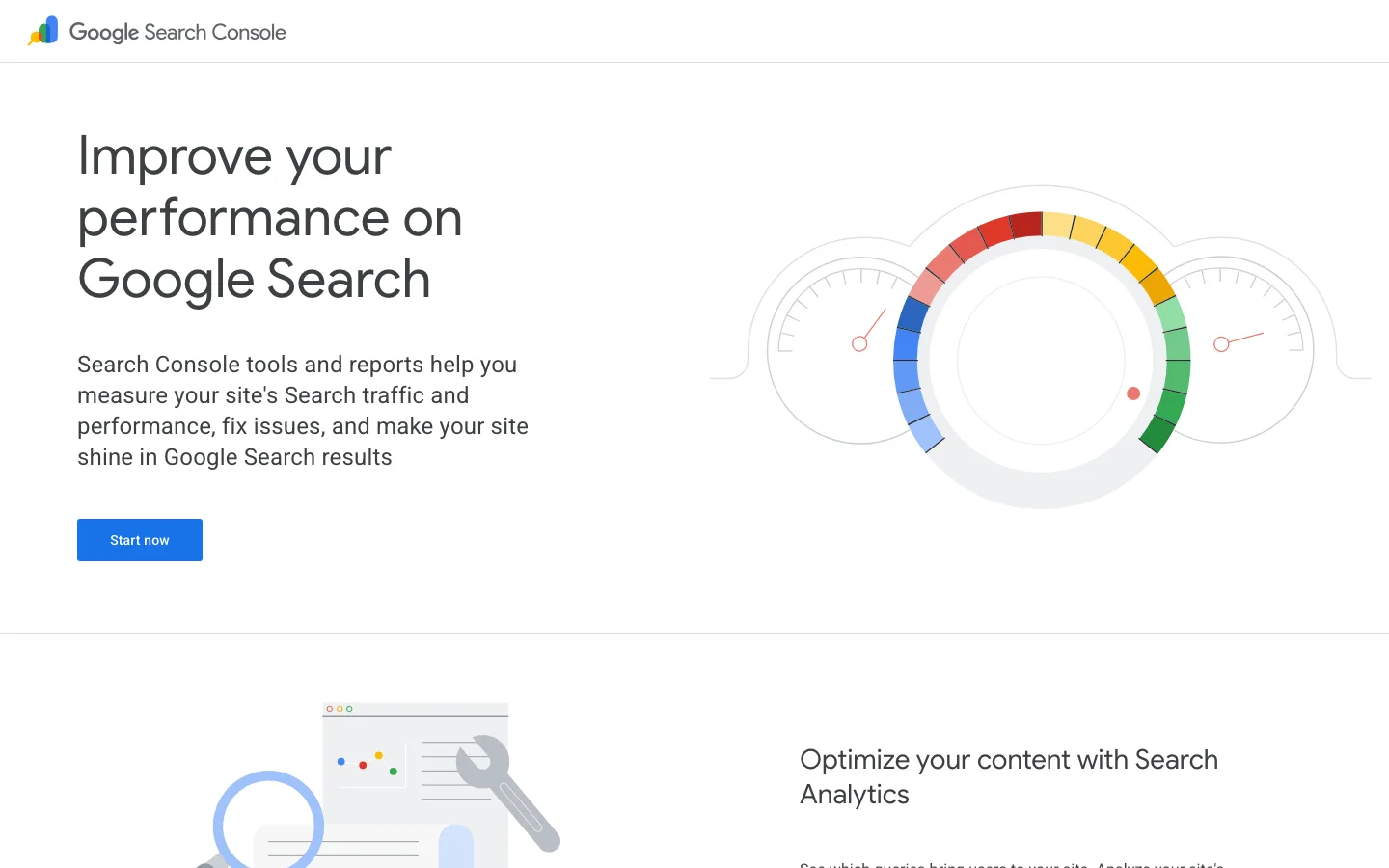
Google Search Console is free and covers the search side. Its performance reports show which queries bring visitors to each page, and its indexing reports show whether Google can see the page at all. Check both once a month, and note the date of every link you won or lost.
A link plan across one year
Family law firms earn links from pages that walk people through a process: divorce paperwork, custody schedules, child support worksheets and mediation. Court self-help centers, bar association family law sections and parent resource pages are the sources that link most often. Choose the process your clients ask about every week, and build the clearest page on it for your state.
Intake calls show what worries families most: how long a divorce takes, what happens to the house, how custody gets decided. Write down the three questions you hear most. Each one is a candidate guide, and each guide should name the state, the statute and the forms involved.
| Source | Why it links | How to ask |
|---|---|---|
| Court self-help centers | They list plain-language guides for the public | Offer a guide with a review date |
| Bar association family law sections | They share practice resources with members | Offer a short article for their newsletter |
| Mediation and co-parenting programs | They recommend reading to participants | Send a one-page summary |
| School and parent resource pages | They support families going through a separation | Offer a sourced guide with no sales copy |
| Local parenting blogs | Readers want practical steps | Pitch one guest article with one link |
Family resource pages go out of date quickly. When a resource page links to a guide that no longer works, offer your updated page as the replacement. Our guide to broken link building includes email templates you can adapt, and a free broken link checker finds the dead links on a page in seconds.
Custody and support rules differ by state, so put the state in the page title and cite the law in the body. For the sources that matter in one city, see our guide to local link building.
Note
Family law content deals with children and money under stress. Avoid promises about custody or property outcomes, and check your bar's rules on testimonials and case results before you publish.
Often yes, if you focus on the methods that fit a small practice: listings, reclaimed mentions and one or two local relationships. Expect months, not weeks, before the links show up in your data.
Yes, for listings, reclaimed mentions and local work, which take a few hours a month. If you hire help for writing and outreach, ask exactly how the provider gets its links. Avoid any provider that promises a set number of links on a fixed schedule.
It may move rankings for a short time, but it puts the site at risk under Google's spam policies. For a law firm, a penalty also damages the trust clients place in you, and some bar rules restrict paying for referrals.
If you do one thing this week, claim the listings you are certain of, then choose the question your clients ask most often and make your page the clearest local answer to it. The rest of the plan grows from that page.
Yes, when the links are earned or clearly disclosed. Google's spam policies treat buying links to manipulate rankings as link spam, and paid links are allowed when they are marked as sponsored. Check your own bar's rules too, because paying for referrals is restricted in many places.
There is no fixed number. A few links from relevant local sources can matter more than dozens of directory profiles, and a link profile that grows slowly over time looks natural. Focus on the pages your clients need to find.
Yes, for directory listings, reclaimed mentions and local sponsorships, which take a few hours a month. Hire help only for writing and outreach, and ask the provider exactly how it gets its links before you agree.
We analyse your competitors, your website and your AI visibility to create a tailored content plan for free.
 AI Content Brief Generator
 FAQ Schema Generator
 AI Blog Post Ideas Generator
 Structured Data Validator (Schema Validator)
 Alt Text Checker
 Internal Link Analyzer
 Backlink Challenge
 AI Meta Description Generator
 AI Blog Title Generator
 Google Indexability Checker
 AI Blog Outline Generator
 UTM Link Builder
 Keyword Clustering Tool
 Canonical Tag Checker
 XML Sitemap Generator
 Broken Link Checker
 AI SEO Title Generator
 Headline Analyzer
 SERP Preview Tool
 Redirect Checker
 Hreflang Tag Generator
 Heading Structure Analyzer
 HTTP Headers Checker
 Favicon Extractor
 SERP CTR Calculator
 SEO vs Paid Search Savings Calculator
 SEO Share of Voice Calculator
 SEO ROI Calculator
 SEO Traffic and Revenue Forecast Calculator
 SEO Budget Calculator
 SEO Break-Even Calculator
 SaaS SEO ROI Calculator
 ROAS Calculator
 Reading Time Calculator
 Ranking Gain Simulator
 Organic Traffic Value Calculator
 Organic Traffic Estimator and Website Traffic Checker
 LTV to CAC Ratio Calculator
 Local SEO ROI Calculator
 Link Building Cost Calculator
 Keyword Value Calculator
 Keyword Opportunity Score Calculator
 Keyword Density Calculator
 GEO ROI Calculator
 GEO Content Investment Calculator
 Ecommerce SEO ROI Calculator
 Customer Lifetime Value Calculator
 Customer Acquisition Cost Calculator
 CTR Calculator
 Cost Per Article Calculator
 Conversion Rate Calculator
 Content Marketing ROI Calculator
 ChatGPT Referral Traffic Estimator
 Bounce Rate Calculator
 Backlink ROI Calculator
 AI Visibility Score Calculator
 AI Traffic Value Calculator
 AI Share of Voice Calculator
 Cost of AI Invisibility Calculator
 AI Citation Rate Calculator
 llms.txt Validator
 AI Overview Checker and AI Overviews Rank Checker
 Robots.txt Checker
 AI SEO Audit
 LLM Readability Checker
 SearchGPT Readiness Checker
 Structured Data LLM Audit
 Website Crawlability AI Audit
 Why ChatGPT Is Not Recommending My Website
 Gemini Ranking Tool
 Perplexity Ranking Checker
 LLM Citation Checker
 Answer Engine Optimization Audit
 GEO Audit
 AI Search Visibility Test
 ChatGPT Visibility Checker
 llms.txt Generator
 URL Extractor
 Webpage to Markdown
 Sitemap Checker
 SERP Volatility Sensor
 Page Size Checker
 Word Counter
 Slug Generator
 Schema Generator
 Robots Generator
 OG Preview
 Meta Tags Generator
 Image Compressor
 Favicon Generator
 On-Page SEO Audit: SEO Checker and SEO Analyzer
 Backlink Analysis Tool
 Keyword Research Tool
 Domain Authority Checker
 “I tested Sorank on a real client site and it's insane. It does everything an agency would bill you $1500 a month for. It's going into production on that client now.”

 Guillaume Guersanguersanguillaume.com“We are an Ads agency and we wanted to get our SEO back on track once and for all. Sorank gave us a clear view of our site, helped us prioritize optimizations, and properly structure our content. The tool is easy to use, well designed for a team, and very practical for centralizing tracking without having to juggle multiple platforms. A very solid foundation to start fresh with our SEO.”
 Gaspard MadouiAds Agency
 “I just let the Sorank software do its thing, and now my DR is 25 and my page is ranking higher.”
 Lucas Flandrefoundertrace.fr“I specialized in GEO thanks to Sorank. The GEO Leaderboard allows me to show my clients their position vs competitors on ChatGPT. It’s a real commercial differentiator.”
 MélanieSEO Freelance“Great service, works well for our website and helps us understand how to improve it to rank better on Google and elsewhere. Congrats, keep going, I recommend it.”
 Hugo T.E-commerce merchant