Preferences
Privacy is important to us, so you have the option of disabling certain types of storage that may not be necessary for the basic functioning of the website. Blocking categories may impact your experience on the website. More information
Privacy is important to us, so you have the option of disabling certain types of storage that may not be necessary for the basic functioning of the website. Blocking categories may impact your experience on the website. More information

Optimize anchor text for backlinks and internal links: anchor types, safe distributions, a step-by-step audit with formulas and fixes for over-optimization.

Tools

In short
Anchor text optimization means choosing the clickable words of your links so that people and Google understand what the target page is about, without a pattern that looks engineered. In practice: control your internal anchors closely (descriptive, varied, one topic per target page), let most backlink anchors stay branded or natural, and keep exact-match anchors to the few links where the sentence really calls for them. Measure per page, compare with the pages that already rank, and fix the outliers first.
Want to go further? Ask
Quick quiz
Which way of finding customers online fits you best?
Sorank matches your answers


Test it for 3 days on your own site and see where you stand on Google, ChatGPT and the other AIs.
Start 3-day free trial3 days free, then stop whenever you want. 90-day results guarantee, conditions apply.
This guide goes further than the definition. If you only need the basics (what an anchor is, the main types), start with our anchor text glossary entry. Here you get the decision rules, the audit method with copy-ready formulas, the four ways to set a target distribution, and the mistakes that cost rankings.
The anchor text is the visible, clickable text inside an <a href> element. Search engines read it as a short label for the destination page. When dozens of pages describe a URL with similar words, that label becomes a strong hint about the page's topic.
Optimization is not "put the keyword in the link". It is managing three things at once: what the anchor says, how the anchors pointing to one page add up, and whether the pattern looks like it came from real editors.
<a> and </a>. For an image link, the image's alt attribute plays this role.Google's documentation on making links crawlable (Google Search Central) gives the official rule: good anchor text is "descriptive, reasonably concise, and relevant to the page that it's on and to the page it links to". It also suggests a simple test: read only the anchor text, out of context, and check that it still makes sense. The same page flags "click here" and "read more" as too generic, and warns against cramming every keyword into the link.
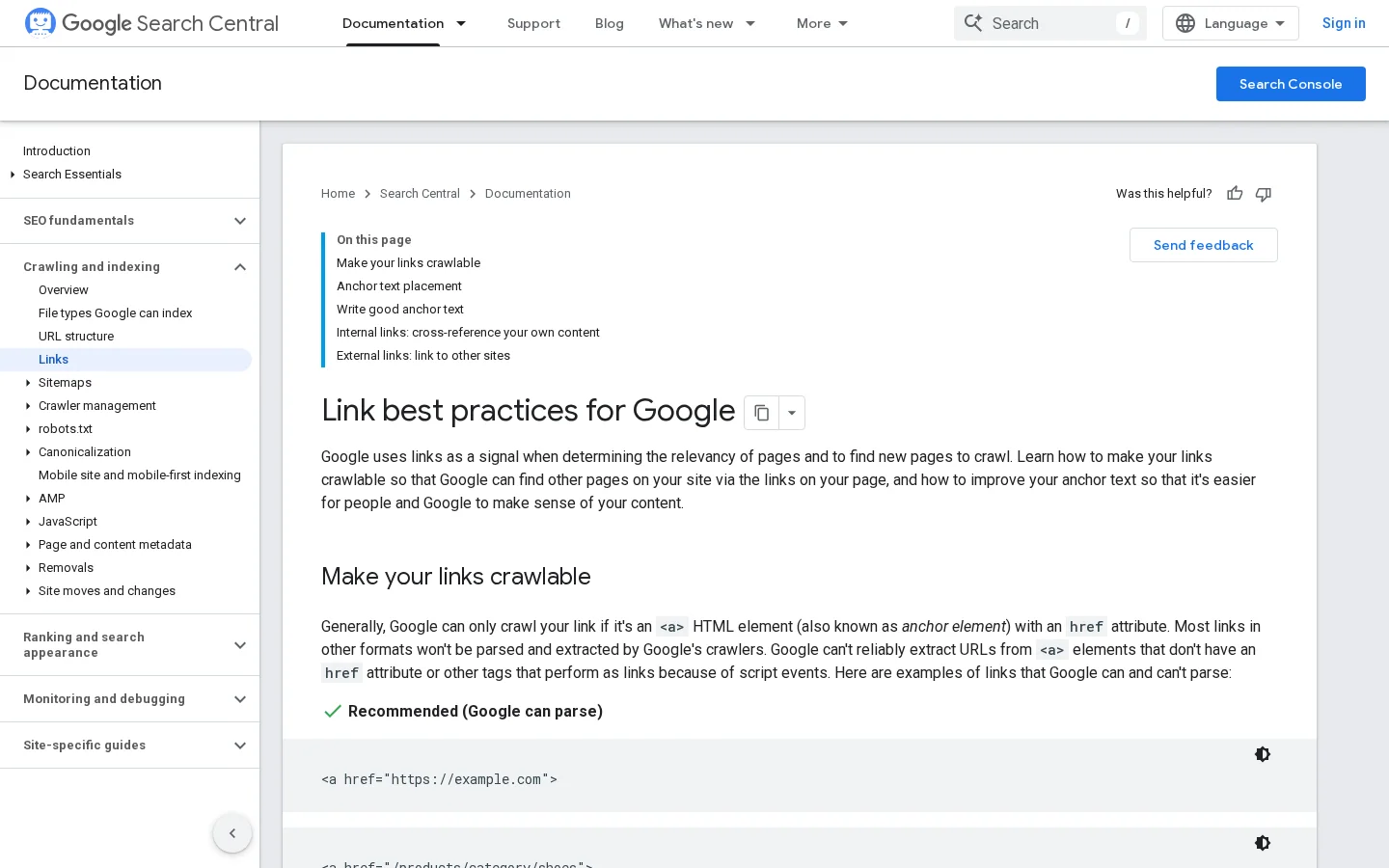
The other side of the rule sits in Google's spam policies, which list as link spam "links with optimized anchor text in articles, guest posts, or press releases distributed on other sites". Read both together: descriptive anchors are encouraged, manufactured keyword anchors on links you placed yourself are not.
Descriptive anchor vs manufactured anchor
Every audit starts with a classification. The usual lists stop at five or six types. In practice you need ten, because "partial match" and "branded" hide very different cases. Take an example target page: sorank.com/seo-tool/backlink-analysis, a free backlink checker, with the target keyword "backlink checker".
| Type | Example for the target page | Where it is natural | Risk if overused |
|---|---|---|---|
| Exact match | backlink checker | Internal links, a few editorial backlinks | High on backlinks, low on internal links |
| Phrase match | free backlink checker tool | Internal links, reviews, tool lists | Medium |
| Partial match | check the backlinks of any domain | Everywhere, the most natural editorial form | Low |
| Topical (entity) | referring domains and link profile | Contextual mentions in related articles | Very low |
| Branded | Sorank | Press, partners, directories, reviews | None |
| Brand + keyword | Sorank's backlink checker | Reviews, comparisons, guest content | Low |
| Naked URL | sorank.com/seo-tool/backlink-analysis | Forums, citations, resource lists | None |
| Generic | this tool, here, read more | Occasional backlinks | None for Google, poor for users |
| Long-tail sentence | a free tool that lists every link pointing to your site | Editorial articles, documentation | Very low |
| Image or empty | alt="Backlink checker results" | Logos, buttons, cards | None, but no text signal if alt is empty |
The single most useful distinction in this topic: you write 100% of your internal anchors, but you only influence a small share of your backlink anchors. Google treats links you control on your own site as navigation. It treats keyword anchors on links you placed on other sites as a possible manipulation. So the rules are opposite:
For the full method on the internal side (priority pages, link depth, hubs), see our internal linking strategy guide. And do not confuse anchor text with anchor links, which are jump links to a section of the same page.
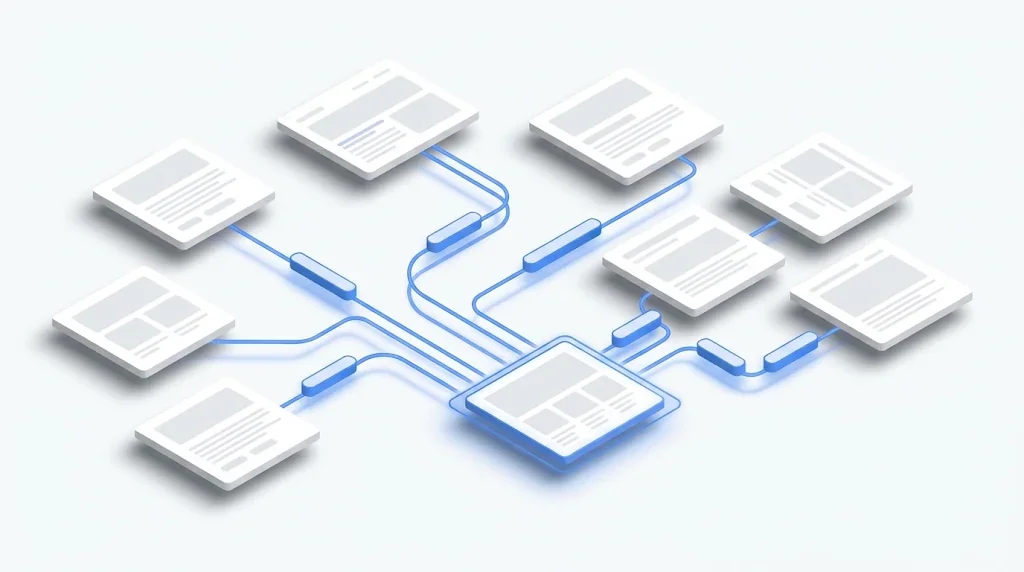
Most "ideal ratio" tables you will find online come from no study at all. Two public datasets are worth knowing, one on backlinks and one on internal links. Both are correlational, which means they show what ranking pages have in common, not proof of cause.
The anchor text study by Joshua Hardwick at Ahrefs (updated April 3, 2020) looked at the top 20 results for 19840 keywords, or 384614 pages. It chose keywords where the top 10 pages had similar URL Rating, to isolate the anchor variable. Result: exact-match anchors had a "relatively weak correlation" with rankings, partial and phrase matches a "very weak" one, and random anchors "effectively no correlation". The author also notes that the exact-match median across positions is zero: many top pages have no exact-match backlinks at all.
How to read it: relevant anchors help a little, but a page can rank without a single exact-match backlink. That is the data behind the advice "do not chase keyword anchors on backlinks".
The internal link side is more striking. Cyrus Shepard's 23 million internal links study (Zyppy, updated February 23, 2026) matched 23 million internal links on 1800 sites with Google Search Console clicks. The strongest finding: the more anchor text variations a URL receives from internal links, the more Google clicks it gets. Pages with at least one exact-match internal anchor had "at least five times more traffic" than pages without, and pages with a URL anchor saw "almost 50% more traffic".
Internal anchors: what 23 million links show
Source: Cyrus Shepard, Zyppy, 23 Million Internal Links SEO Case Study, 1800 sites, updated February 2026
The same study saw traffic start to decline beyond roughly 45 to 50 internal links per URL, which the author attributes mostly to sitewide navigation links pointing to weaker pages. Practical takeaway: more varied, contextual internal anchors on a page you care about, not more menu links.
How Google's treatment of anchor manipulation evolved
The 2016 change matters for anchor optimization. In Gary Illyes' announcement of real-time Penguin (Google Search Central, September 23, 2016), Google says Penguin "now devalues spam by adjusting ranking based on spam signals, rather than affecting ranking of the whole site". In plain words: a manipulative anchor pattern today mostly means your links stop counting. Manual actions still exist for blatant schemes, but the common outcome is a page that stops progressing despite new links.
There is no official ratio. There are four methods to decide what "normal" looks like for a given page, each with its own logic. Pick one deliberately instead of copying a percentage table.
Principle: you apply a preset split, for example a majority of branded and URL anchors, a minority of partial match and a small slice of exact match. When to use it: a new site with almost no links, where you need a simple rule for every campaign. Advantages: easy to brief to a team or a provider. Limits: the numbers come from habit, not data, and they ignore your niche. A local plumber and a SaaS do not get the same anchors naturally. Example: a brief that says "no more than one keyword anchor out of ten new backlinks on any commercial page".
Principle: for one target keyword, you export the anchors of the pages ranking in the top 10, classify them, and take the median share of each type as your guardrail. When to use it: competitive keywords where you have budget for analysis. Advantages: grounded in what Google already rewards for that query. Limits: takes time, and competitors may themselves be over-optimized and about to drop. Use the median, never the most aggressive competitor. Example: if 8 of 10 ranking pages have under 5% exact-match anchors, a page at 30% is the outlier to fix.
Principle: you never request an anchor. You earn links with content and digital PR and accept whatever editors write. When to use it: brands with strong content and PR, or after a period of over-optimization. Advantages: the most natural profile possible, zero risk. Limits: you lose a lever. Many editors default to your brand name or "this study", so the target page gets few topical signals from backlinks and must rely on internal links. Example: a data study picked up by 40 media sites, almost all linking with the brand or the study's title.
Principle: instead of one keyword, you build a vocabulary of the topic (synonyms, sub-topics, entities, questions) and spread it across anchors. When to use it: internal linking at scale, and the anchors you suggest to partners. Advantages: matches what the Zyppy data rewards (variety), covers long-tail queries, reads naturally. Limits: needs a real topic map, otherwise you drift into vague anchors. Example: for a backlink checker page, anchors like "see who links to a site", "referring domains report", "audit your link profile", "free backlink checker".
| Method | Best for | Effort | Risk of over-optimization | Topical signal |
|---|---|---|---|---|
| Fixed ratio grid | New sites, simple briefs | Low | Medium (ratios can be wrong for the niche) | Medium |
| Competitor benchmark | Competitive money pages | High | Low if you use the median | Medium to high |
| Editorial-first | Strong brands, recovery periods | Low on anchors, high on content | Very low | Low from backlinks |
| Topical / entity anchors | Internal links, partner content | Medium | Low | High |
Our recommendation: combine 4 for internal links, 3 or 4 for backlinks, and keep 2 as a check on your most valuable pages.
This is the method we use on a site, from export to fixes. Plan two to four hours for a site of a few hundred pages.
The 7-step anchor text audit
Google Search Console gives a free starting point. In the Links report, the "Top linking text" table shows the link text used in backlinks to your site, grouped and sorted by count. Links without text, such as image links, appear as "(empty)". Tables stop at 1000 rows, and the Export button downloads up to 100000 rows of link data.
Search Console aggregates anchors at site level, so you also need a URL-level export from a backlink tool. Our free backlink checker lists the links pointing to any domain with their anchors.
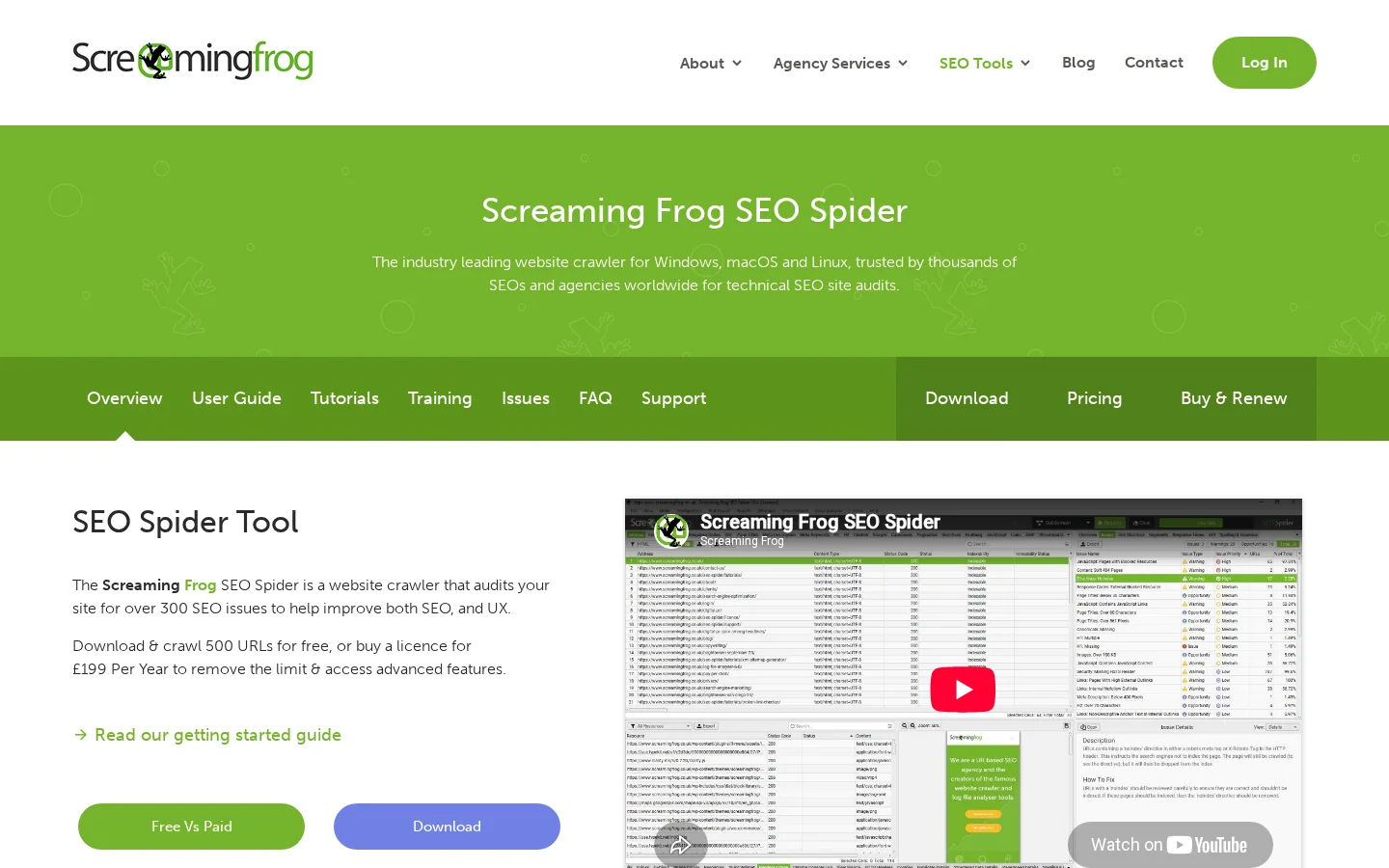
Run a crawler on the site and export every internal link with three columns: source URL, target URL, anchor (or alt text for images). The free version of Screaming Frog crawls up to 500 URLs and shows the aggregated and per-link anchor text of all links.
Tip
For a quick check of one page, paste its URL into our free internal link analyzer: it lists every internal link on the page with its anchor, so you spot "click here" and duplicate anchors in seconds.
Do it per target page, because "exact match" depends on that page's keyword. In Google Sheets, with the anchor in column C, the brand in cell $H$1 and the target keyword in $H$2, this formula labels each row:
=IFS(
  C2="", "Empty / image",
  REGEXMATCH(LOWER(C2), "^https?://|^www\.|\.(com|fr|io|net|org)"), "Naked URL",
  REGEXMATCH(LOWER(C2), "^(click here|here|read more|learn more|this|website|link|source)$"), "Generic",
  AND(REGEXMATCH(LOWER(C2), LOWER($H$1)), REGEXMATCH(LOWER(C2), LOWER($H$2))), "Brand + keyword",
  REGEXMATCH(LOWER(C2), LOWER($H$1)), "Branded",
  LOWER(TRIM(C2))=LOWER($H$2), "Exact match",
  REGEXMATCH(LOWER(C2), LOWER($H$2)), "Phrase match",
  TRUE, "Partial / other"
)
Then review the "Partial / other" rows by hand: that is where you separate true partial matches (some keyword words) from topical anchors and long sentences. For large exports, the same logic in Python:
import re
import pandas as pd

BRAND = "sorank"
KEYWORD = "backlink checker"
GENERIC = {"click here", "here", "read more", "learn more", "this", "website", "link", "source"}

def classify(anchor: str) -> str:
    a = (anchor or "").strip().lower()
    if not a:
        return "Empty / image"
    if re.match(r"^(https?://|www\.)", a) or re.search(r"\.(com|fr|io|net|org)\b", a):
        return "Naked URL"
    if a in GENERIC:
        return "Generic"
    has_brand, has_kw = BRAND in a, KEYWORD in a
    if has_brand and has_kw:
        return "Brand + keyword"
    if has_brand:
        return "Branded"
    if a == KEYWORD:
        return "Exact match"
    if has_kw:
        return "Phrase match"
    kw_words = set(KEYWORD.split())
    if kw_words & set(a.split()):
        return "Partial match"
    return "Topical / other"

df = pd.read_csv("anchors.csv")  # columns: source, target, anchor
df["type"] = df["anchor"].fillna("").map(classify)
split = (df.groupby(["target", "type"]).size()
           .groupby(level=0).apply(lambda s: (s / s.sum() * 100).round(1)))
print(split)A domain-wide distribution is almost useless: the homepage collects branded anchors and drowns the signal of the commercial pages. Build one pivot table per priority URL, with the count and the share of each type. Flag any page where one non-branded anchor, word for word, represents a large share of all backlinks to that page. That repetition, more than the keyword itself, is what looks engineered.
For your three to five most valuable pages, export the anchors of the top 10 results for the target keyword and run the same classification. Note the median share of exact and phrase match. If your page is far above it, you have found your problem. If it is far below and you rank on page 2, your internal anchors are probably too vague.
This is where you get results without asking anyone. Rewrite the links you control so that each priority page receives several descriptive variants, from different source pages, inside the body text. Example of a rewrite in HTML:
<!-- Before: generic, no topical signal -->
<p>To check your links, <a href="/seo-tool/backlink-analysis">click here</a>.</p>

<!-- After: descriptive, readable out of context -->
<p>Start with a <a href="/seo-tool/backlink-analysis">free backlink checker</a> to list the domains that link to you.</p>

<!-- Image link: the alt text is the anchor -->
<a href="/seo-tool/backlink-analysis"><img src="/img/checker.png" alt="Backlink checker report"></a>
Internal anchors pointing to one page, before and after
Do not mass-email old linkers to change their anchors: it is time-consuming, and an editor suddenly switching a branded link to a keyword link is exactly the kind of change you want to avoid. Instead, brief future partners: brand name, page title or a natural phrase, and let them choose. Re-run the classification every month on your priority pages and log the changes. Sorank's natural backlink acquisition follows the same logic: links are placed inside articles from sites in your niche, never a direct competitor, the dashboard shows each link's anchor, and anchors vary from brand names to natural phrases.
Ratios matter less than the quality of each anchor. Here are the rules we apply when we write or review a link.
| Weak anchor | Why it fails | Better anchor |
|---|---|---|
| click here | Says nothing about the destination | free backlink checker |
| SEO | Too broad, could be any page | on-page SEO audit |
| best cheap SEO backlink checker tool free online | Stuffed, unreadable | backlink checker |
| our article about how internal links can help your rankings in many ways | Whole clause, no focus | internal linking strategy |
| pricing (pointing to a features page) | Broken promise | product features |
Aim for two to six words, the shortest phrase that still names the destination. One noun phrase is ideal: "keyword clustering tool", "list of cheese types". If you need a full clause to make sense, link the key part of it, not the whole sentence. Google itself shows a "weirdly long" anchor as a bad example.
The anchor is a promise. If it says "pricing" and lands on a features page, users bounce and the label teaches Google the wrong thing. Before saving a link, open the target and check that its title and first paragraph answer the anchor.
Never use the same anchor for two different pages of your site. If "backlink audit" points to a guide in one article and to a tool in another, you send two conflicting labels for the same words, a form of keyword cannibalization at link level. Keep a simple sheet: anchor phrase, target URL.
The sentence around the link carries context too. A partial-match anchor in a precise sentence ("compare the types of backlinks by value and risk") is often better than an exact match in a vague one. Write the sentence first, then choose the anchor inside it.
Note
Links must be crawlable for any of this to count. Google follows <a> elements with an href. A <span onclick> or a link built only in JavaScript without a real href carries no anchor signal.
<!-- Crawlable -->
<a href="/seo-tool/keyword-clustering-tool">keyword clustering tool</a>

<!-- Not reliably crawlable: no href -->
<span onclick="goTo('/seo-tool/keyword-clustering-tool')">keyword clustering tool</span>
<a onclick="goTo('/seo-tool/keyword-clustering-tool')">keyword clustering tool</a>These are the errors we see most often in audits, from the most expensive to the most frequent.
What it is: a commercial page whose backlinks mostly repeat the target keyword, usually because the links were bought, swapped or placed through guest posts with imposed anchors. How to spot it: in your per-URL split, one keyword anchor stands far above the competitor median, and the page stalls despite new links. How to fix it: stop the source of these links, build new links with branded and natural anchors, and strengthen the page through internal links. If some links come from obvious networks, review them as described in our guide to toxic backlinks, and reserve the disavow file for real manual-action risk.
What it is: concluding "my profile is 60% branded, all good" while one product page is entirely keyword anchors. How to spot it: you only have one distribution chart for the whole site. How to fix it: recompute per target URL, starting with the pages that bring revenue.
What it is: "click here", "read more", "this article" in your own content. How to spot it: filter the crawl export on the generic list from the formula above. How to fix it: rewrite each one with the destination's topic. It is the fastest win of the whole audit, since you control every link.
What it is: one phrase linking to different URLs across the site. How to spot it: in the crawl export, group by anchor and count distinct targets. Any anchor with two or more targets is a conflict. How to fix it: decide which page owns the phrase, repoint the links, and give the other page its own vocabulary.
=QUERY(A:C, "select C, count(B) where C is not null group by C label count(B) 'links'", 1)
-- then, for distinct targets per anchor, in a pivot table:
-- Rows: anchor (column C) | Values: COUNTUNIQUE of target (column B) | Filter: value > 1What it is: the only links to an important page come from the menu or footer, with a one-word label like "Tools". How to spot it: the page has hundreds of inlinks but only one or two distinct anchors. How to fix it: add contextual links from relevant articles, each with a different descriptive anchor. The Zyppy data ties variety, not volume, to clicks.
What it is: image links, logos and card links with no text and no alt. How to spot it: "(empty)" in Search Console, empty anchor cells in the crawl. How to fix it: write a short descriptive alt on linked images, or wrap the card title in the link.
What it is: anchors like "best cheap SEO backlink checker tool free online 2026". How to spot it: sort anchors by length; anything over eight words deserves a look. How to fix it: keep the core noun phrase, move the rest to the sentence.
What it is: asking every site that links with your brand to switch to a keyword. How to spot it: an outreach campaign whose only goal is anchors. How to fix it: drop it. Only request an edit when an anchor is factually wrong or points to a dead page, which is a link reclamation task, not an optimization one.
Anchor text checklist before you publish
| Situation | Main risk | Priority action |
|---|---|---|
| New site, under 50 backlinks | Each keyword anchor weighs heavily | Branded and URL backlinks, topical internal links |
| Ecommerce categories | One short label from menus and filters | Descriptive links from guides and posts |
| Multilingual site | Anchors in the wrong language | Translate anchors with the content, check hreflang targets |
| Over-optimized profile | Links devalued, page stalls | Stop the source, dilute with natural links, fix internal anchors |
With 10 or 20 backlinks, each one weighs heavily in the split. Two keyword anchors already make a visible pattern. Keep early links branded or URL-based, and put your topical effort into internal links and content.
Category pages often receive anchors from filters, breadcrumbs and menus, all with the same short label. Add descriptive links from buying guides and blog posts ("waterproof hiking boots for women") so each category has a vocabulary, not one word.
Anchors must be in the language of the page that holds the link. A French article linking to a French page with an English anchor sends a weak signal. When you translate content, translate the anchors too, and check that they point to the matching language version.
Since Penguin runs in real time and devalues rather than demotes, recovery is mostly about dilution and rebuilding trust: stop the manipulative links, earn new natural ones, and strengthen internal anchors. There is no instant switch, but there is no fixed waiting period either.
Warning
Swapping links to get keyword anchors is a link scheme in Google's eyes. If you are tempted, read why in our article on backlink exchange before you start.
AI assistants that browse the web, and the crawlers that feed them, read links too. A descriptive anchor tells any reader, human or machine, what the destination contains before it is fetched. Generic anchors give no such hint. The practical consequence is simple: the rules that serve Google (descriptive, concise, consistent per page) also make your site easier to map for AI systems. There is no separate "AI anchor strategy" to build.
| Link as written | What a reader or crawler knows before following it |
|---|---|
| Read more | Nothing, except that the page continues somewhere |
| this tool | That the target is a tool, not which one |
| free internal link analyzer | The type of tool, its function and that it is free |
| sorank.com/seo-tool/internal-link-analyzer | The site, the section and the tool name from the URL |
What changes is the weight of your own site's structure. Clear internal anchors around a topic help show that your site covers it in depth, which is the kind of signal a topic cluster is built on. If you plan clusters, our topic cluster generator groups pages by topic and flags overlaps, which makes the "one anchor, one destination" rule easier to keep.
You do not need a full audit to start. Here is the shortest path to results:
From the whole site to the links that matter this week
Anchor text optimization is less about the perfect ratio than about consistency: every link should say clearly where it goes, and the sum of your links should look like what editors would write anyway. Control what you own, stay natural on what you don't, and measure page by page.
Google publishes no official ratio, and the percentage tables found online are habits, not study results. A safe rule is to keep backlinks mostly branded, URL or natural sentence anchors, with only a few exact-match anchors per page. The most reliable benchmark is the median anchor split of the pages already ranking for your keyword, measured page by page.
On internal links, exact-match anchors are normal and even correlate with more traffic. On backlinks, a pattern of keyword anchors you placed yourself is named as link spam in Google's spam policies, and Penguin now devalues those links in real time. The usual result is a page that stops progressing rather than a sitewide penalty.
Yes. You control every internal anchor, so make them descriptive, varied and specific, with each phrase pointing to one page only. Backlink anchors should look like what real editors write, which is mostly your brand, the page title or a natural phrase.
We analyse your competitors, your website and your AI visibility to create a tailored content plan for free.
 AI Content Brief Generator
 FAQ Schema Generator
 AI Blog Post Ideas Generator
 Structured Data Validator (Schema Validator)
 Alt Text Checker
 Internal Link Analyzer
 Backlink Challenge
 AI Meta Description Generator
 AI Blog Title Generator
 Google Indexability Checker
 AI Blog Outline Generator
 UTM Link Builder
 Keyword Clustering Tool
 Canonical Tag Checker
 XML Sitemap Generator
 Broken Link Checker
 AI SEO Title Generator
 Headline Analyzer
 SERP Preview Tool
 Redirect Checker
 Hreflang Tag Generator
 Heading Structure Analyzer
 HTTP Headers Checker
 Favicon Extractor
 SERP CTR Calculator
 SEO vs Paid Search Savings Calculator
 SEO Share of Voice Calculator
 SEO ROI Calculator
 SEO Traffic and Revenue Forecast Calculator
 SEO Budget Calculator
 SEO Break-Even Calculator
 SaaS SEO ROI Calculator
 ROAS Calculator
 Reading Time Calculator
 Ranking Gain Simulator
 Organic Traffic Value Calculator
 Organic Traffic Estimator and Website Traffic Checker
 LTV to CAC Ratio Calculator
 Local SEO ROI Calculator
 Link Building Cost Calculator
 Keyword Value Calculator
 Keyword Opportunity Score Calculator
 Keyword Density Calculator
 GEO ROI Calculator
 GEO Content Investment Calculator
 Ecommerce SEO ROI Calculator
 Customer Lifetime Value Calculator
 Customer Acquisition Cost Calculator
 CTR Calculator
 Cost Per Article Calculator
 Conversion Rate Calculator
 Content Marketing ROI Calculator
 ChatGPT Referral Traffic Estimator
 Bounce Rate Calculator
 Backlink ROI Calculator
 AI Visibility Score Calculator
 AI Traffic Value Calculator
 AI Share of Voice Calculator
 Cost of AI Invisibility Calculator
 AI Citation Rate Calculator
 llms.txt Validator
 AI Overview Checker and AI Overviews Rank Checker
 Robots.txt Checker
 AI SEO Audit
 LLM Readability Checker
 SearchGPT Readiness Checker
 Structured Data LLM Audit
 Website Crawlability AI Audit
 Why ChatGPT Is Not Recommending My Website
 Gemini Ranking Tool
 Perplexity Ranking Checker
 LLM Citation Checker
 Answer Engine Optimization Audit
 GEO Audit
 AI Search Visibility Test
 ChatGPT Visibility Checker
 llms.txt Generator
 URL Extractor
 Webpage to Markdown
 Sitemap Checker
 SERP Volatility Sensor
 Page Size Checker
 Word Counter
 Slug Generator
 Schema Generator
 Robots Generator
 OG Preview
 Meta Tags Generator
 Image Compressor
 Favicon Generator
 On-Page SEO Audit: SEO Checker and SEO Analyzer
 Backlink Analysis Tool
 Keyword Research Tool
 Domain Authority Checker
5/5 from 5 reviews
 “I tested Sorank on a real client site and it's insane. It does everything an agency would bill you $1500 a month for. It's going into production on that client now.”

 Guillaume Guersanguersanguillaume.com“We are an Ads agency and we wanted to get our SEO back on track once and for all. Sorank gave us a clear view of our site, helped us prioritize optimizations, and properly structure our content. The tool is easy to use, well designed for a team, and very practical for centralizing tracking without having to juggle multiple platforms. A very solid foundation to start fresh with our SEO.”
 Gaspard MadouiAds Agency
 “I just let the Sorank software do its thing, and now my DR is 25 and my page is ranking higher.”
 Lucas Flandrefoundertrace.fr“I specialized in GEO thanks to Sorank. The GEO Leaderboard allows me to show my clients their position vs competitors on ChatGPT. It’s a real commercial differentiator.”
 MélanieSEO Freelance“Great service, works well for our website and helps us understand how to improve it to rank better on Google and elsewhere. Congrats, keep going, I recommend it.”
 Hugo T.E-commerce merchant