Preferences
Privacy is important to us, so you have the option of disabling certain types of storage that may not be necessary for the basic functioning of the website. Blocking categories may impact your experience on the website. More information
Privacy is important to us, so you have the option of disabling certain types of storage that may not be necessary for the basic functioning of the website. Blocking categories may impact your experience on the website. More information

Learn how backlinks affect  ChatGPT,
 Gemini and
 Perplexity citations, what the 2025 studies show, and the link methods that stay within Google's rules.

Tools

In short
Backlinks still matter for AI search, but as a sign of trust and of being talked about, not as a switch that makes ChatGPT or Gemini cite you. The 2025 studies show a moderate link between site authority and AI mentions, and a weak link between domain-level link counts and AI brand mentions. Earn links from sites your buyers read, get your brand named online even without a link, and make your pages worth citing.
Want to go further? Ask
Quick quiz
How should you get mentioned by ChatGPT and other AI assistants?
Sorank matches your answers


Test it for 3 days on your own site and see where you stand on Google, ChatGPT and the other AIs.
Start 3-day free trial3 days free, then stop whenever you want. 90-day results guarantee, conditions apply.
Some AI assistants answer from what they learned in training. Others run a live web search, read a few pages and cite the ones they used. Links matter most in the second case, because they help a system judge which sources are trusted and which sites other people point to. Links were the core of Google's ranking for years. Some AI tools use search results as input, so the signal carries over, but only in part.
The catch is that AI tools do not rank pages the way Google does. The Ahrefs authors attribute much of the gap to query fan-out, where an assistant searches several variations of a prompt instead of the exact question you typed. A page can be cited for a question you never targeted, and a page that ranks first on Google can be missing from the answer.
Three numbers to keep in mind
Sources: Semrush, October 16 2025; Ahrefs, August 11 2025
Read those numbers with care. A correlation shows that two things move together. It does not show that one causes the other. Strong authority often comes with good content, a known brand and good distribution, and any of those may drive citations on their own.
A backlink can get a page found, add to the trust a system places in your domain, and tie your name to a topic on a site that already has authority. It cannot make a vague page citable. If the page does not answer the question clearly, with a date, a source and a plain claim, the link buys you little.
Semrush's October 2025 study reports that regular ChatGPT, with search turned off, shows the strongest link between authority and mentions. ChatGPT with search and Perplexity weigh link quality the least. A link profile that helps in one tool may do little in another, so test each assistant you care about.
Three public studies cover this question. Each one asks a different thing, so they do not agree on every point, and none of them proves cause and effect.
Three studies, three questions
Ahrefs' June 2025 test compared the top 50 domains in its Brand Radar with their Ahrefs Rank, which measures the size and quality of followed referring domains. Its August test ran 15000 long-tail prompts through Google and Bing, then through AI assistants. Semrush's test covered 1000 randomly selected domains and was written by Margarita Loktionova with Kevin Indig.
The overlap test is the one that should change your plan. Ahrefs' August 2025 overlap study found that "only 12% of links cited by ChatGPT, Gemini, and Copilot appear in Google's top 10 results for the same prompt." Perplexity sits closest to Google, with 28.6% of its cited URLs in Google's top 10. ChatGPT is far lower, at 8.00% of its in-text citations. A strong Google position helps with some assistants, but it is not a shortcut into AI answers.
Semrush's Authority Score has a Pearson correlation of 0.65 with AI mentions and a Spearman correlation of 0.57. The authors call the overall effect a "moderate overall influence," and they say real gains appear only past certain authority levels. They also write that "incremental backlink improvements won't move the needle much" for a site still at a low level. If your site is young, the study suggests that a handful of extra links will not change much. Build authority in steps, with links from sites that are relevant and respected.
In the Semrush data, follow links correlated with AI mentions at 0.334 (Pearson) and 0.504 (Spearman). Nofollow links came in at 0.340 and 0.509. Image links did a little better than text links, at 0.415 and 0.538 against 0.334 and 0.472. Semrush's authors say Gemini and ChatGPT slightly favor nofollow links, while Google AI Overviews and Perplexity lean toward follow links. Do not chase only dofollow links. A nofollow mention on a respected site still puts your name in front of readers and systems. Google's rules on paid links still apply, and section 7 covers them.
Ahrefs' top 50 test looked at the domains AI systems mention most. It compared each domain's mention share with its Ahrefs Rank. The results are below.
| AI system | Spearman correlation | Ahrefs' label |
|---|---|---|
| Google AI Overviews | -0.12 | Very weak |
| ChatGPT | 0.01 | No relationship |
| Perplexity | -0.34 | Weak |
Ahrefs' text calls the Perplexity result "moderate," while its table labels the same figure weak. The sample is only 50 domains, and the authors plan a larger study with page-level metrics. They suspect page-level signals matter more than domain totals. They also note that some platforms over-index on user-generated content such as YouTube, Reddit and Quora, and on encyclopedic sites such as Wikipedia. Those are places where you can earn a mention without owning the page.
Note
A link on a strong, relevant page may matter more than the size of the domain that hosts it. Test that on your own prompts before you change your budget.
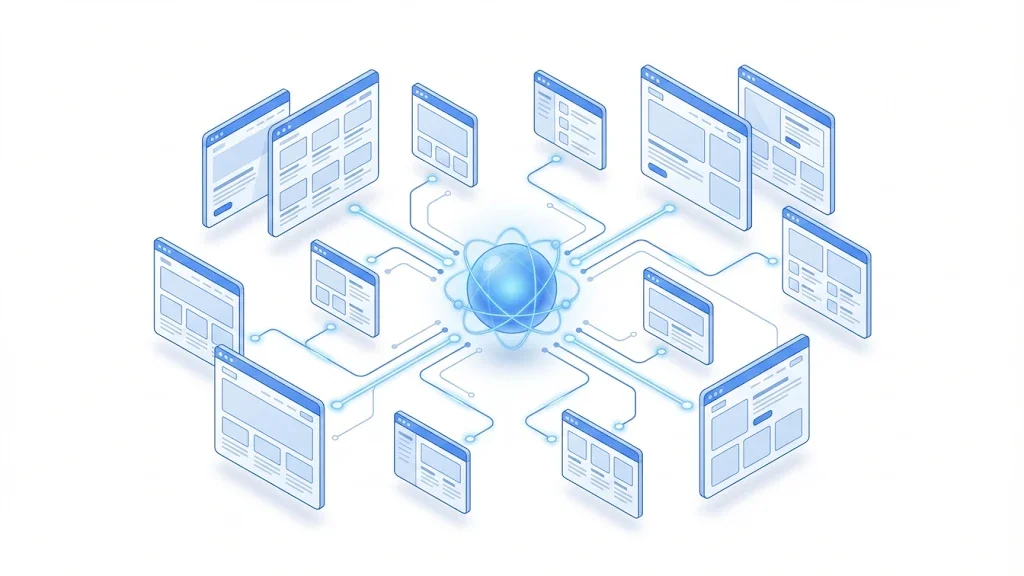
Links are one kind of signal. AI tools also read brand mentions in reviews, comparison posts, forum threads and video descriptions, and some of those mentions carry no link at all. The comparison below sets the two main kinds of links side by side.
Earned links vs paid links
A brand named in a review, a Reddit thread or a YouTube description gives an AI tool a text signal, even with no link. Several vendors say brand mentions predict AI visibility better than links do. Those claims come from companies that sell mention tracking, so treat them as a hypothesis to test on your own prompts, not as a rule.
Forums and communities punish sales pitches. Answer real questions in the place where people ask them. Say who you work for when you mention your product. Most communities have clear rules on self-promotion, and breaking them removes the mention you wanted. A useful answer that names a tool, with a disclosure, earns more trust than a link dropped into a thread.
Eight methods work for AI search, and each has a different effort and risk. Use the same test for all of them: would a reader of the source site find the link useful if they knew nothing about your business? If yes, the method is probably sound. If the link exists only because you paid or swapped, it is not.
Principle: publish a study, survey or dataset that nobody else has. Writers cite primary data, so they link to the source.
When to use it: when you have customer data, product usage data or a survey you can run with a clear method.
Advantages: the links last, and the study gives AI tools a specific, dated fact to cite.
Limits: it takes real time, and a weak dataset gets ignored.
Example: a project tool publishes how its users schedule recurring tasks, explains the method in full, and offers the summary as a download.
Principle: answer requests from journalists and bloggers with a sourced comment from a named expert.
When to use it: when someone on your team knows the topic well enough to be quoted.
Advantages: fast to start, and links often come from large news sites.
Limits: the hit rate varies, quotes get trimmed, and you cannot choose the anchor text.
Example: a consultant sends a two-sentence comment to a trade article about AI referral traffic, with a link to a study they already published.
Principle: find dead links on pages in your niche and offer your page as the replacement. The full steps are in our broken link building guide.
When to use it: when peers or competitors maintain resource pages that contain dead links.
Advantages: you help the site owner fix a problem, so replies come more often than to a cold pitch.
Limits: the supply of good replacements is small, and you need a close topic match.
Example: a resource page lists a tool that has closed. You offer a guide that covers the same job, and name the dead link in your email.
Principle: find places where your brand is named without a link, then ask for one politely. Set alerts for your brand and product names.
When to use it: when people already talk about you or your category.
Advantages: the mentions are easy to find, and a short, friendly request is a small step.
Limits: many communities ban self-promotion, and link requests inside forum threads can backfire.
Example: a customer mentions your product in a comparison post with no link. You send a short thank-you and ask whether a link to your guide would help readers.
Principle: write a real article for a site that serves its own readers, with one natural link.
When to use it: when the site has a real audience in your niche and an editor who checks content.
Advantages: builds author recognition and a working relationship with the editor.
Limits: Google's spam policies name guest posts with optimized anchor text among link schemes. Paid guest posts with commercial anchors carry the most risk.
Example: a payments expert writes a guide for a finance blog and links once to their own calculator, using a plain anchor with the calculator's name.
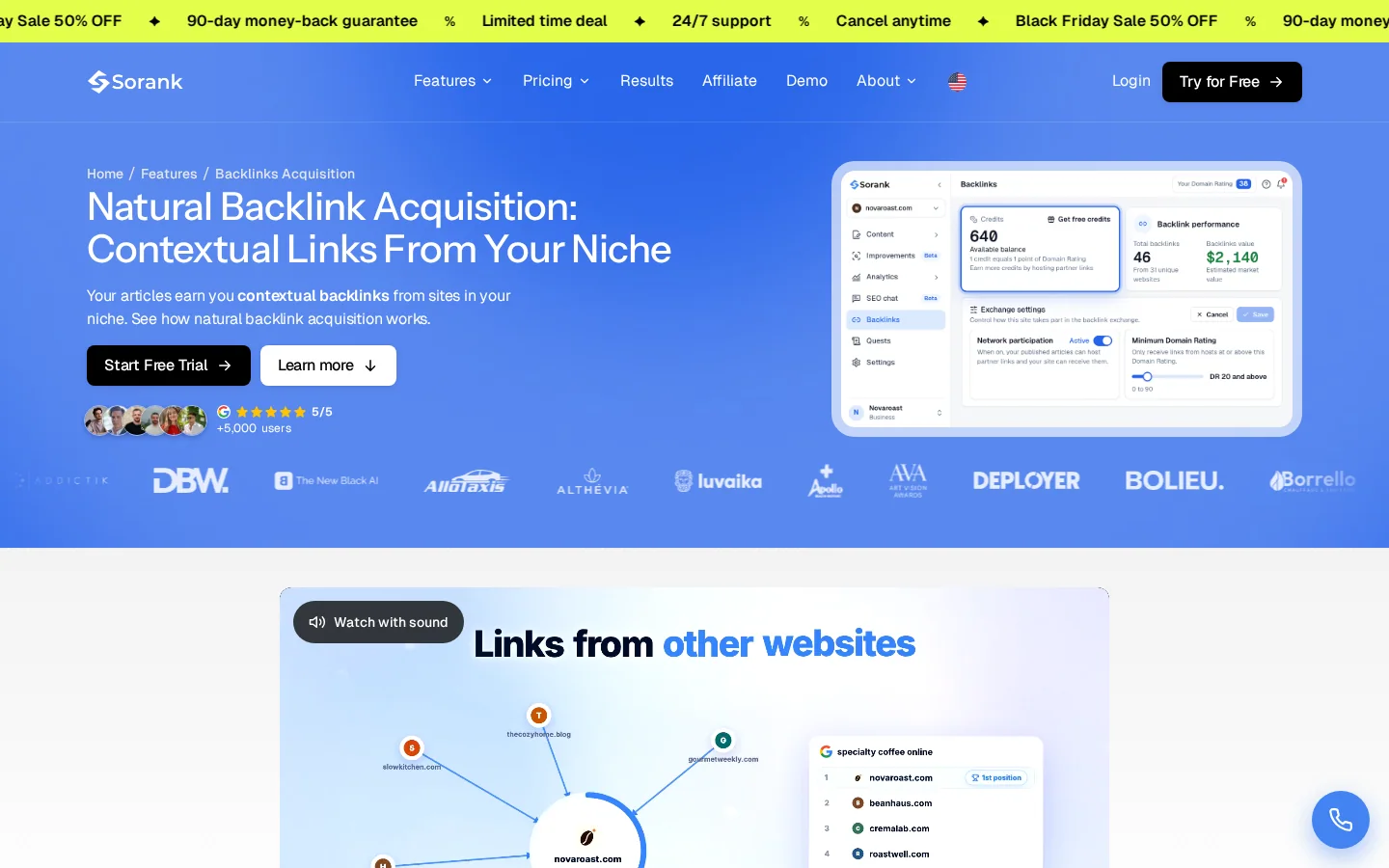
Principle: contextual links placed inside articles on sites in your niche, often through a network. Sorank's backlinks feature works this way. It places each link inside a published article, matches you only with sites in your niche, and states that the site linking to you is never the site you link out to. Its own page also says that "No link building method is risk-free."
When to use it: when you need steady volume in your niche and can review each placement.
Advantages: links sit in context, and a strict relevance rule keeps them on topic.
Limits: quality depends on the network's rules, and excessive exchanges fall under Google's link scheme rules.
Example: a cooking app hosts a partner link in one of its own articles, earns credit for it, and spends that credit on a link inside a recipe article on a niche food site.
Principle: claim and complete the listings that matter in your market, with the same name, address and phone number everywhere. Start with the directories that still matter for local SEO and AI visibility.
When to use it: for local businesses and products that buyers search by place or by brand.
Advantages: often free, and listings support brand and local queries.
Limits: low-quality directories add little and can look spammy.
Example: a dental clinic completes its profile on the main local directories, with identical details on each.
Principle: buy a sponsored article, banner or newsletter slot that is clearly labeled, with a link marked rel=sponsored.
When to use it: when you need a specific audience quickly and the publisher discloses the sponsorship.
Advantages: predictable timing and reach.
Limits: it does not build a lasting editorial profile, and unlabeled paid links break Google's rules.
Example: a newsletter sponsorship, labeled as sponsored, with a link that carries the sponsored attribute.
| Method | Effort | Risk if done badly | Best for | Main limit |
|---|---|---|---|---|
| Original data | High | Low | Durable editorial links | Needs real data |
| Expert sources | Low | Low | Quick mentions in news | Little control |
| Broken link building | Medium | Low | Niche resource pages | Few matches |
| Unlinked mentions | Low | Low | Turning mentions into links | Many communities ban asks |
| Guest contributions | High | Medium | Authorship and reach | Anchor text rules |
| Niche partner placements | Low | Medium | Steady niche volume | Network quality |
| Listings and directories | Low | Low | Local and brand queries | Low-value directories |
| Paid sponsored placements | Low | Medium | Fast, targeted reach | No lasting profile |
Note
Pick two or three methods, not all eight. Choose the ones your team can repeat every month. A method you run for one month and drop does less than one you run all year.
The first pass takes about a week. After that, the plan needs about an hour a month. The six steps are below, and each has more detail after.
The six-step link plan
Write 20 to 30 questions that buyers ask about your category, in the words they type, not in your sales language. Run each question in the assistants your buyers use, and record every cited domain and page. The LLM citation checker helps you count how often your domain appears. The AI visibility audit guide explains the manual version.
Answers change between runs. Run each prompt three times and keep the sources that appear most often. Expect the list to shift from week to week, which is why the monthly review matters more than a single snapshot. The AI search volatility guide explains why answers move.
Sort the cited sources by type. Then look for sources cited for your prompts that do not mention you. Those are your gaps. The citation gap article explains how to close them, and the AI citation source audit page covers how to map which sources the assistants cite.
Score each gap with three questions. Is the source cited for a prompt that matters to revenue? Does it accept outside contributions? Would an editor have a reason to link to you? A source that scores on all three goes to the top. Keep the list to 10 to 20 targets, so you can pitch every one of them properly.
Tip
Before you pitch a site, check its link profile with Sorank's free backlink checker. It takes a minute and stops you from pitching a site whose links already look like a network.
A pitch works when it gives the editor a reason to link, not a reason to like you. Name the page, the gap it fills and the exact sentence that would change. Keep it to five or six lines. Send it once, follow up once after a week, and log every reply. Log every citation change too, so you can see which pitches led to results.
Some teams automate parts of this work. Sorank's backlinks feature places contextual links inside published articles, from sites in your niche. Read its terms, and check it against the rules in section 7, before you rely on it for volume.
Record each link with its target page, its anchor text and the prompts it could affect. Expect a lag between a new link and a new citation, so judge the plan over months, not weeks. The backlink monitoring guide lists what to track and what to do with lost links.
Editors link to pages that give them something to quote. AI tools cite pages that answer a question directly and show where the facts come from. The same page can serve both, so build pages with both readers in mind.
| Asset | What it earns | Effort | Why it works |
|---|---|---|---|
| Original survey or dataset | Editorial links and quotes | High | A specific, dated fact a writer can cite |
| Free calculator or tool | Tool roundups and resource links | High | A clear output that answers one question |
| Glossary or definition page | Links from learning sites | Medium | A short, direct answer that is easy to extract |
| Comparison table with sources | Links from roundups and review sites | Medium | Structured facts in one place |
| Template or checklist | Links from how-to articles | Low | Steps the reader can copy |
Put the answer first. Open each section with the direct answer, then add the detail. Use headings that match real questions. Give every number a source and a date. Use real table headers, so a system can read the rows. A page built this way is easier to extract, and an editor can quote it without rewriting it.
A link helps AI tools find and trust your page, but being named inside an answer is a separate job. The AI citations glossary page covers how to get mentioned by ChatGPT and Claude, a different goal from link building.
Google's spam policies define link spam as "creating links to or from a site primarily for the purpose of manipulating search rankings." The policy lists the practices that break this rule. They include buying or selling links for ranking, exchanging goods or services for links, excessive link exchanges, and guest posts or press releases with optimized anchor text.
Paid links are not automatically a violation. Google says buying and selling links is acceptable "as long as they are qualified with a rel="nofollow" or rel="sponsored" attribute value to the <a> tag." Mark a paid link like this:
<a href="https://developers.google.com/search/docs/essentials/spam-policies" rel="sponsored">Read the guide</a>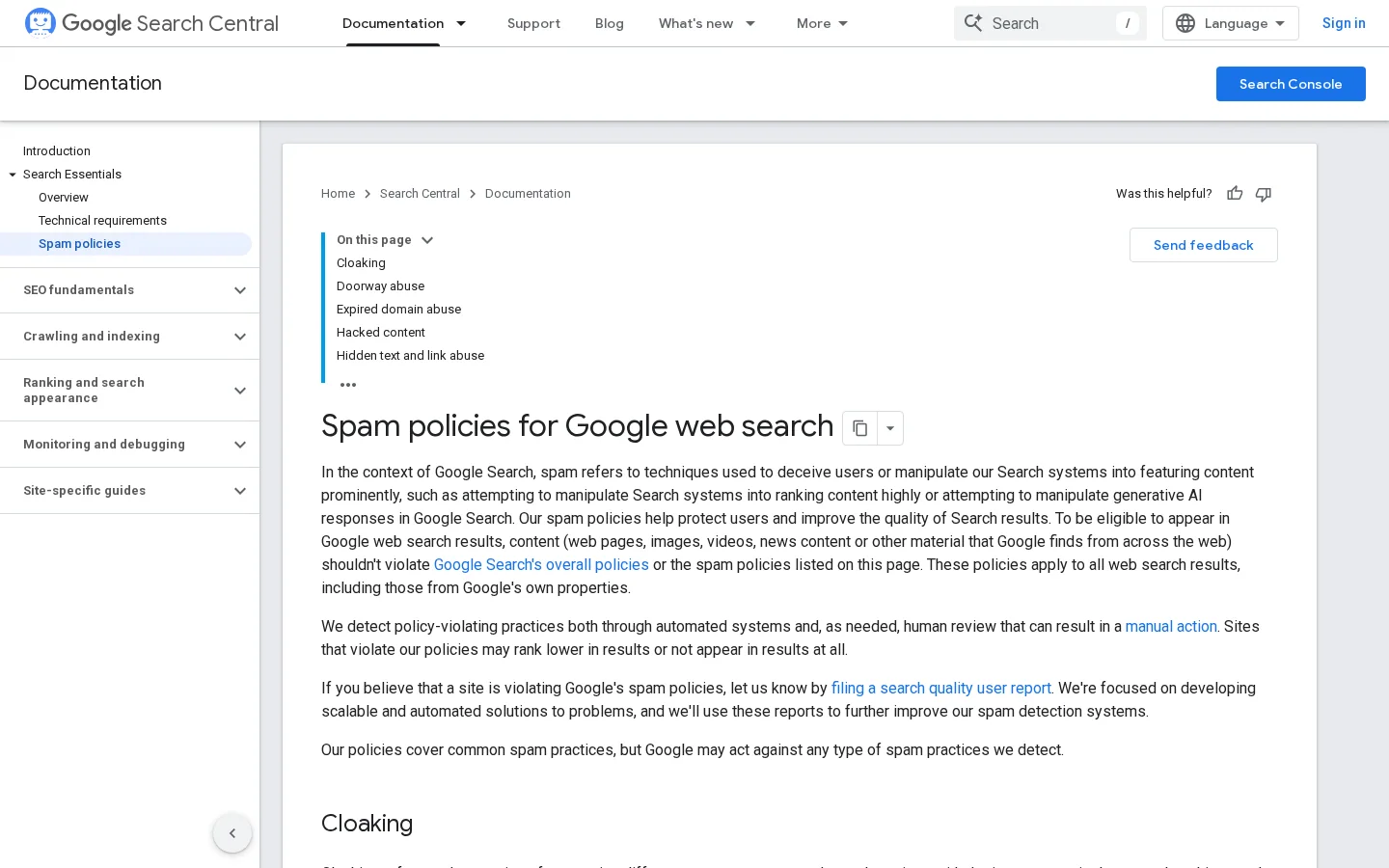
Use the attribute on every paid or affiliate link. The label does not cover everything, though. The policy also lists excessive link exchanges, so check how much of your link profile comes from one arrangement. The buy backlinks guide and the backlink exchange guide go deeper into the risks.
Warning
Sorank's backlinks feature uses credits, not direct swaps, and says the site linking to you is never the one you link out to. That avoids the simplest reciprocal pattern. Google still judges the whole pattern, so keep track of how much of your profile comes from any single network, Sorank's included.
Most link problems come from a small set of habits. Each mistake below has three parts: what it is, how to spot it, and how to fix it. Check your own profile against this list before you change anything.
Your link profile, before and after the fixes
What it is: a package of links from a vendor, delivered on a schedule, with no editorial reason behind them.
How to spot it: the links arrive in batches, come from unrelated sites and carry anchor text you did not write.
How to fix it: stop the orders and list the links you already have. Remove what you can, and use Google's disavow tool only for links you cannot get removed. Replace the volume with a few earned links from sites your buyers read.
What it is: choosing link targets by one authority score and ignoring relevance.
How to spot it: your links come from high-score sites in unrelated topics, and none of those sites appear among the sources cited for your prompts.
How to fix it: rank targets by relevance to the prompts you track first, then by authority. Ahrefs' test found domain-level link metrics were poor predictors of mentions, so relevance is the safer first filter.
What it is: the same keyword as the anchor text on most links to a page.
How to spot it: open your link report and sort by anchor text. If one phrase makes up most of the list, you have a pattern a reviewer will notice. The anchor text optimization guide shows how to audit the mix.
How to fix it: ask for brand names, page titles and plain descriptions as anchors. Let editors write the anchor when they can. Check the mix every quarter.
What it is: you link to a site, and it links back, as a deal.
How to spot it: the same domains link to you that you link to, in a repeating pattern.
How to fix it: keep swaps rare and editorial. If you join a network, read how its credit model works, and keep exchanged links a small part of your profile.
What it is: articles placed on sites that publish almost anything, with a commercial link in the body.
How to spot it: the site has no real audience and no named editors, and it posts on unrelated topics. Its articles read like filler.
How to fix it: pitch only sites your buyers read. Drop any guest post whose only purpose is the link.
What it is: building links for months without recording what AI tools cite before you started.
How to spot it: you cannot say whether anything changed, so every result is an opinion.
How to fix it: run your prompt list before the first link, save the sources, and repeat the run each month. Answers vary, so run each prompt several times.
What it is: spending outreach time on new sites while mentions of your brand, already published, go unclaimed.
How to spot it: search your brand name across the web and count the pages that mention you without a link.
How to fix it: start with those. A polite request to a site that already mentions you is often the fastest link you will earn.
Track the metrics below in the same sheet each month, using the same prompt list. One month can mislead, because answers change from run to run. Look for trends over three months, not one.
| Metric | What to record | Why it matters |
|---|---|---|
| AI citations per prompt | Count across your prompt list, averaged over several runs | Shows whether your pages enter answers |
| Cited domains | New domains that appear in answers for your prompts | Shows whether you enter the sources AI uses |
| Mentions with and without links | Count both, by platform | Captures brand signals that links miss |
| Referring domains from relevant sites | New domains per month, with their topic | Shows the health of your link profile |
| Lost links | Links removed or broken | Protects the gains you already have |
The backlink monitoring guide covers the tools for these checks. To set a budget against the traffic you expect, the backlink ROI calculator helps you estimate the return.
Start with the work that needs no budget. Decide later whether to add a paid or network-based method.
Your next seven days
Keep the list short. The goal for the first week is a baseline and two pitches, not a full campaign. Next month, repeat the review and add one method at a time, so you can tell what works.
Sometimes. The 2025 studies found a moderate link between site authority and AI mentions, but links alone do not decide citations. Clear, sourced and easy-to-extract content matters too.
The policy covers Google Search, not AI assistants. It still shows which link patterns Google treats as manipulation, so most teams use it as the baseline for every link they earn.
Not in bulk. Google calls buying links for ranking purposes link spam, unless the links carry rel=nofollow or rel=sponsored. Earn links from sites your buyers read instead.
We analyse your competitors, your website and your AI visibility to create a tailored content plan for free.
 AI Content Brief Generator
 FAQ Schema Generator
 AI Blog Post Ideas Generator
 Structured Data Validator (Schema Validator)
 Alt Text Checker
 Internal Link Analyzer
 Backlink Challenge
 AI Meta Description Generator
 AI Blog Title Generator
 Google Indexability Checker
 AI Blog Outline Generator
 UTM Link Builder
 Keyword Clustering Tool
 Canonical Tag Checker
 XML Sitemap Generator
 Broken Link Checker
 AI SEO Title Generator
 Headline Analyzer
 SERP Preview Tool
 Redirect Checker
 Hreflang Tag Generator
 Heading Structure Analyzer
 HTTP Headers Checker
 Favicon Extractor
 SERP CTR Calculator
 SEO vs Paid Search Savings Calculator
 SEO Share of Voice Calculator
 SEO ROI Calculator
 SEO Traffic and Revenue Forecast Calculator
 SEO Budget Calculator
 SEO Break-Even Calculator
 SaaS SEO ROI Calculator
 ROAS Calculator
 Reading Time Calculator
 Ranking Gain Simulator
 Organic Traffic Value Calculator
 Organic Traffic Estimator and Website Traffic Checker
 LTV to CAC Ratio Calculator
 Local SEO ROI Calculator
 Link Building Cost Calculator
 Keyword Value Calculator
 Keyword Opportunity Score Calculator
 Keyword Density Calculator
 GEO ROI Calculator
 GEO Content Investment Calculator
 Ecommerce SEO ROI Calculator
 Customer Lifetime Value Calculator
 Customer Acquisition Cost Calculator
 CTR Calculator
 Cost Per Article Calculator
 Conversion Rate Calculator
 Content Marketing ROI Calculator
 ChatGPT Referral Traffic Estimator
 Bounce Rate Calculator
 Backlink ROI Calculator
 AI Visibility Score Calculator
 AI Traffic Value Calculator
 AI Share of Voice Calculator
 Cost of AI Invisibility Calculator
 AI Citation Rate Calculator
 llms.txt Validator
 AI Overview Checker and AI Overviews Rank Checker
 Robots.txt Checker
 AI SEO Audit
 LLM Readability Checker
 SearchGPT Readiness Checker
 Structured Data LLM Audit
 Website Crawlability AI Audit
 Why ChatGPT Is Not Recommending My Website
 Gemini Ranking Tool
 Perplexity Ranking Checker
 LLM Citation Checker
 Answer Engine Optimization Audit
 GEO Audit
 AI Search Visibility Test
 ChatGPT Visibility Checker
 llms.txt Generator
 URL Extractor
 Webpage to Markdown
 Sitemap Checker
 SERP Volatility Sensor
 Page Size Checker
 Word Counter
 Slug Generator
 Schema Generator
 Robots Generator
 OG Preview
 Meta Tags Generator
 Image Compressor
 Favicon Generator
 On-Page SEO Audit: SEO Checker and SEO Analyzer
 Backlink Analysis Tool
 Keyword Research Tool
 Domain Authority Checker
 “I tested Sorank on a real client site and it's insane. It does everything an agency would bill you $1500 a month for. It's going into production on that client now.”

 Guillaume Guersanguersanguillaume.com“We are an Ads agency and we wanted to get our SEO back on track once and for all. Sorank gave us a clear view of our site, helped us prioritize optimizations, and properly structure our content. The tool is easy to use, well designed for a team, and very practical for centralizing tracking without having to juggle multiple platforms. A very solid foundation to start fresh with our SEO.”
 Gaspard MadouiAds Agency
 “I just let the Sorank software do its thing, and now my DR is 25 and my page is ranking higher.”
 Lucas Flandrefoundertrace.fr“I specialized in GEO thanks to Sorank. The GEO Leaderboard allows me to show my clients their position vs competitors on ChatGPT. It’s a real commercial differentiator.”
 MélanieSEO Freelance“Great service, works well for our website and helps us understand how to improve it to rank better on Google and elsewhere. Congrats, keep going, I recommend it.”
 Hugo T.E-commerce merchant