Preferences
Privacy is important to us, so you have the option of disabling certain types of storage that may not be necessary for the basic functioning of the website. Blocking categories may impact your experience on the website. More information

Privacy is important to us, so you have the option of disabling certain types of storage that may not be necessary for the basic functioning of the website. Blocking categories may impact your experience on the website. More information

AI citations are mentions of your content by ChatGPT, Claude, Gemini, and Perplexity. Learn how to optimize for citations and track AI-driven traffic.






Tools


Founder of Sorank, 7+ years of experience in SEO, GEO enthusiast.
Summary
AI citations are mentions of your content by ChatGPT, Claude, Gemini, and Perplexity in their synthesized answers. They drive traffic, boost authority, and are becoming a key metric for content success.
Want to go further? Ask
For decades, backlinks were the currency of SEO. A backlink from an authoritative site meant a vote of confidence that boosted your rankings. Today, a new form of currency is emerging: AI citations. When ChatGPT synthesizes an answer to a user's query, it selects and cites sources. Being chosen as a source is an AI citation. These citations are becoming as important as traditional backlinks because they represent algorithmic votes of confidence from the fastest-growing discovery mechanisms on the internet.
AI citations are different from backlinks in important ways. A backlink is a static, persistent link from one page to another. An AI citation is a dynamic mention of your content by an AI system in response to a specific query. One page might be cited hundreds of times in response to different questions. A single page might generate thousands of citations monthly from Perplexity, ChatGPT, and other AI systems. Unlike Google rankings, which are individual page metrics, AI citations are a network effect: your authority compounds as more AI systems recognize and cite you.
ChatGPT cites sources when search is enabled. Claude can cite sources when it has access to web content. Gemini synthesizes Google AI Overviews and cites sources. Perplexity cites sources for every answer. Each system has different citation patterns, algorithms, and user behaviors. A comprehensive AI citation strategy involves optimizing for all of them, even though each requires slightly different optimization approaches.
The good news: content that performs well across multiple AI systems shares common characteristics. Clear structure, topical authority, source quality, and factual accuracy are valued by all systems. So optimizing for one system often improves your performance across others. A rising tide lifts all boats.
AI citations drive high-quality referral traffic. When a ChatGPT user reads an answer and sees your site cited, they often click to learn more. This is intentional discovery: the user was interested in the topic and clicked your source to deepen their knowledge. This traffic converts well because it's high-intent. Unlike social media referral traffic, which can be noisy and low-intent, AI citation traffic is typically engaged and qualified.
Additionally, AI citations are an authority signal. Google and other systems recognize when you're cited by major AI assistants as a sign of authority. Being frequently cited by ChatGPT and Perplexity increases your domain authority in the eyes of traditional search engines. This creates a virtuous cycle: AI citations boost authority, which improves traditional rankings, which leads to more AI citations.
Finally, AI citations are a competitive advantage signal. Sites that are cited frequently in AI search are establishing themselves as authorities in their domains. As more users shift to AI search for answers, being cited in AI systems is becoming as important as ranking on Google. Sites that ignore AI citations will find themselves outcompeted by sites optimizing across all discovery channels.
There's a strong correlation between Google rankings and AI citations. Pages that rank in the top 10 for a keyword are more likely to be in the retrieval pool for AI systems. AI systems often read high-ranking Google results when synthesizing answers. So your first step to improving AI citations is improving your traditional Google rankings.
This means the foundations are the same: target keywords, create comprehensive content, build topical authority, acquire backlinks. Once you're ranking well in Google for your target keywords, you're automatically in the citation contention pool for related AI queries. From there, content optimization (clarity, structure, sourcing) determines whether you're actually cited.
Authority comes from multiple signals: backlinks, topical depth, citation count, and domain history. To build authority, acquire links from relevant, authoritative sources. Write comprehensive content on core topics. Build topic clusters. Maintain your content for accuracy and freshness, ensuring AI systems see your site as a current, trustworthy resource. Over time, these signals compound into high domain authority.
Additionally, get cited by other high-authority sites. If authoritative sites cite you as a source, AI systems see you as trusted. This creates a positive feedback loop: strong content attracts citations, citations increase authority, authority increases AI citations. The cycle builds on itself. Use structured data to make your expertise explicit to AI systems, helping them understand your topical authority.
Finally, publish original research and data. Sites with unique, valuable data are cited more frequently because they're sources for novel information. Run surveys. Publish benchmark analyses. Compile industry reports. When you have data no one else has, you become a necessary citation for anyone writing about your topic.
Clarity is non-negotiable. AI systems extract answers from pages with clear, direct responses. If your content is ambiguous or vague, the AI may miss your answer or rate it as low-quality. Answer the main question directly in your opening paragraph. Use clear heading hierarchies. Break complex ideas into digestible sections.
Comprehensive coverage is rewarded. Pages that answer a question deeply and completely are cited more frequently. If you're explaining a concept, cover it from multiple angles. Include definitions, examples, and applications. If you're providing guidance, cover not just the happy path but edge cases and gotchas. Comprehensive content is seen as authoritative.
Structure matters. Use heading hierarchies, bullet points, and lists. AI systems parse structure to extract relevant information. Clean, structured content is easier for AI to parse and cite accurately. When Perplexity synthesizes an answer, it likely extracts your best-structured section and cites you. Well-formatted content gets cited more.
The quality of your citations affects your own authority. If you cite only low-authority sources, AI systems infer that your research is low-quality. If you cite authoritative, peer-reviewed, or official sources, AI systems infer that you've done rigorous research. Use schema.org markup to clarify your sources, making them machine-readable and verifiable.
Additionally, cite diverse sources. If you cite ten different authoritative sources, you demonstrate broad research. If you cite the same source repeatedly, you look narrow. Diverse sourcing signals comprehensive understanding. AI systems recognize and reward this diversity with higher authority scoring.
AI citations compound when you have strong topical clusters. A site with 50 articles on machine learning is more likely to get citations across machine learning queries than a site with five. Each article in your cluster can be cited independently. Over time, you might accumulate hundreds of citations monthly from a well-built topic cluster.
Build clusters strategically. Identify your core topics. Create comprehensive pillar guides. Write focused articles on subtopics. Link them together. When AI systems encounter your cluster, they recognize your authority and cite you across related queries. The cluster effect is powerful: citations grow non-linearly as your topical depth increases.
AI systems prefer current, accurate information. If your article contradicts newer research or contains outdated data, AI will deprioritize it. Maintain your content actively. Set calendar reminders to audit your top-performing articles quarterly. Update figures, facts, and advice. Revise outdated information. Add recency signals like updated timestamps.
Additionally, prioritize accuracy. AI systems can detect misinformation or unsupported claims. If your content contains errors that contradict widely-accepted facts, AI will avoid citing it. Fact-check thoroughly. Cite your sources. Be honest about uncertainty. Accurate, well-sourced content is cited more consistently than content with errors or unsupported claims.
Use AI mention tracking tools to monitor citations across ChatGPT, Claude, Gemini, and Perplexity. Track which articles are cited most frequently. For which queries? Track citation growth over time. Identify trends. Which topics are you being cited for? Double down on those topics.
Additionally, measure traffic impact. Set up analytics to capture AI referral traffic separately. Track conversion rates. AI-driven traffic often has high conversion potential. If you see strong referral volume but low conversions, investigate. It might be a product-market fit issue. If you see strong referral volume and strong conversions, double down on that topic.
AI citation optimization is still new. Many sites haven't even heard of AI citations, let alone optimized for them. Sites that build authority and optimize content for AI systems now will have a competitive advantage as AI search traffic accelerates. This is a window of opportunity to gain market share before the market matures.
If your competitors are still focused purely on Google rankings, you can outmaneuver them by optimizing for both traditional search and AI search. Build topical authority. Optimize content clarity. Measure AI citations. Iterate on what works. Over time, you'll capture disproportionate traffic from all discovery channels.
AI citation tracking means re-running a fixed set of prompts in AI assistants and recording, for each answer, which URLs are cited as sources, whether one of them is yours, and which competitor pages appear. Over time, it shows which of your pages the AIs rely on, and for which questions.
| Field | Why it matters |
|---|---|
| Prompt and assistant | Citations differ from one assistant to another for the same question. |
| Cited URLs | Shows the exact page chosen, not only the domain. |
| Brand named in the text | A mention without a link still shapes how the answer presents you. |
| Competitor URLs | Reveals the pages you need to outperform. |
| Date | Connects a new citation with a page you published or updated. |
The share of answers that cite one of your URLs is the cited URL rate, a more demanding signal than a simple mention. In Sorank, AI mention tracking lists mentions, cited sources and cited competitors for each tracked prompt, and the GEO Leaderboard ranks your brand against competitors on the same prompts.
AI citations are becoming as important as traditional backlinks for modern SEO success. They drive high-quality referral traffic, boost your authority signal, and compound as you build topical clusters. To optimize for AI citations, start with traditional SEO fundamentals: target keywords, create comprehensive content, build topical authority. Then add AI-specific optimizations: clarity, structure, sourcing, and accuracy. Measure citations across all major AI systems. Iterate on what drives the most traffic and authority. The sites that master both traditional SEO and AI citation optimization will dominate discovery across all channels. Start tracking AI citations today and unlock a powerful new growth channel.
Sources

AI citations are mentions of your content by large language models when they answer user questions. When ChatGPT, Claude, Gemini, or Perplexity provides an answer with sources, those sources are citations. Citations matter because they drive referral traffic, boost your authority signal, and increase brand awareness. Unlike Google search rankings, which are individual page metrics, AI citations measure how often your content is seen as authoritative enough to cite across multiple AI systems.
Backlinks are votes for your page from other websites. AI citations are selections of your content by AI as credible sources for answers. Backlinks are static (they stay in place). Citations are dynamic (they appear in answers to different queries daily). Backlinks affect your domain authority metric. Citations affect how often your content is retrieved and synthesized. The two signals are complementary: strong backlinks correlate with higher domain authority, which increases citation likelihood. But a new page with exceptional content can be cited frequently even without many backlinks.
Not really. AI citations are based on content quality, authority, and relevance. You can't buy citations or spam your way to them. The best strategy is to create comprehensive, authoritative, well-sourced content. Build topical authority. Acquire backlinks naturally. Maintain accuracy and freshness. Over time, AI systems will recognize your authority and cite you frequently. There's no shortcut, but the effort pays off: citations are durable and compound over time.
THEY TRIED SORANK BEFORE YOU
 “I tested Sorank on a real client site and it's insane. It does everything an agency would bill you $1500 a month for. It's going into production on that client now.”
 Guillaume Guersanguersanguillaume.com“We are an Ads agency and we wanted to get our SEO back on track once and for all. Sorank gave us a clear view of our site, helped us prioritize optimizations, and properly structure our content. The tool is easy to use, well designed for a team, and very practical for centralizing tracking without having to juggle multiple platforms. A very solid foundation to start fresh with our SEO.”
 Gaspard MadouiAds Agency
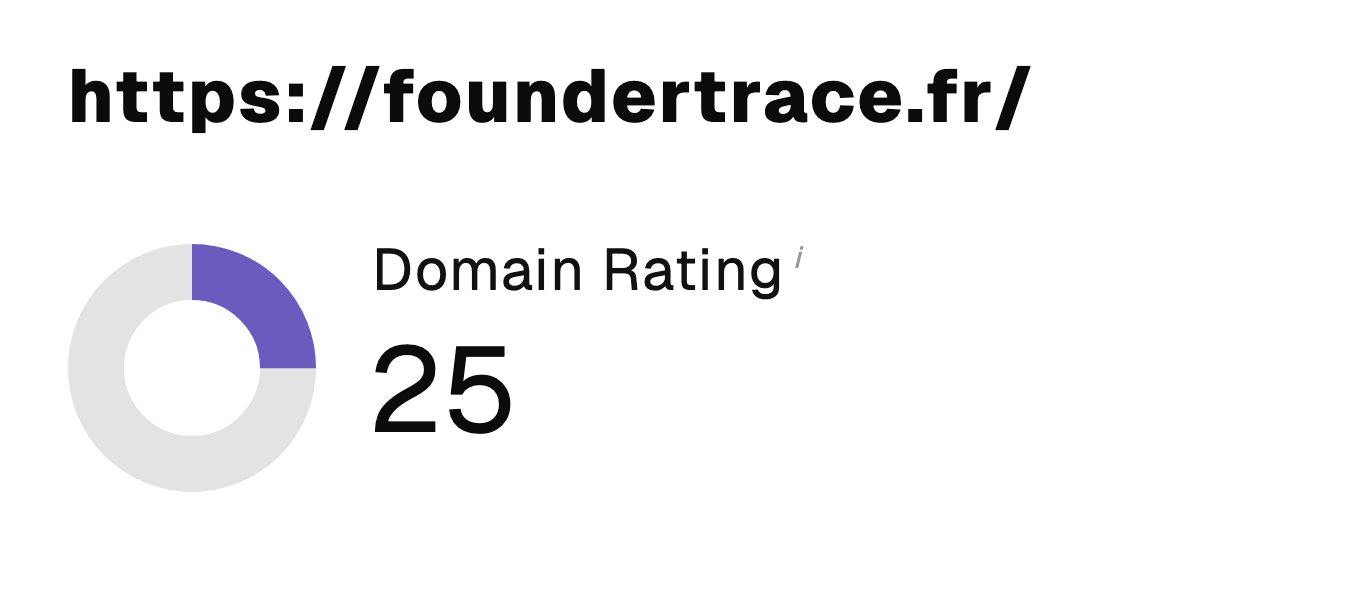 “I just let the Sorank software do its thing, and now my DR is 25 and my page is ranking higher.”
 Lucas Flandrefoundertrace.fr“I specialized in GEO thanks to Sorank. The GEO Leaderboard allows me to show my clients their position vs competitors on ChatGPT. It’s a real commercial differentiator.”
 MélanieSEO Freelance“Great service, works well for our website and helps us understand how to improve it to rank better on Google and elsewhere. Congrats, keep going, I recommend it.”
 Hugo T.E-commerce merchant