Preferences
Privacy is important to us, so you have the option of disabling certain types of storage that may not be necessary for the basic functioning of the website. Blocking categories may impact your experience on the website. More information
Privacy is important to us, so you have the option of disabling certain types of storage that may not be necessary for the basic functioning of the website. Blocking categories may impact your experience on the website. More information

Learn how to build an ideal customer profile from your best customers, score fit, set tiers, and validate it with closed deals. Step by step.

In short
An ideal customer profile (ICP) describes the type of company that gets the most value from what you sell, buys faster, and stays longer. Build it from your best existing customers, not from guesses. Then test it against closed deals, and use it to choose keywords, pages, and lead lists.
Want to go further? Ask
Quick quiz
Which way of finding customers online fits you best?
Sorank matches your answers


Test it for 3 days on your own site and see where you stand on Google, ChatGPT and the other AIs.
Start 3-day free trial3 days free, then stop whenever you want. 90-day results guarantee, conditions apply.
An ideal customer profile is a short description of the companies you want to win. It describes the company, not the person. A good ICP says which industry the company is in, how big it is, which tools it uses, which problem it has, and why it would pay you now.
Take a simple case. You sell an invoicing tool. Your best customers are small design studios with 2 to 10 people, who send 20 or more invoices a month and already use an online payment provider. That is a profile you can act on. "Small businesses" is not, because it covers too much to target anything.
The ICP works as a filter. Every decision after it gets faster: which accounts a sales rep calls, which keywords a content team targets, which ads you run, and which leads go to which person. Without an ICP, teams guess, and their guesses drift apart over time.
An ICP is not a segment you invent for a new product. It is a pattern you find in real revenue. That is why most of this guide starts with your data, not with a template.
An ICP and a buyer persona are two layers, not two names for one thing
Search engines and AI assistants answer specific questions. When your page names the segment it serves, it matches the question. "Invoicing for freelance designers" gives a clear answer to a clear query. "Invoicing for everyone" gives a vague answer to everyone, and it rarely ranks for anything in particular.
The ICP also tells you which questions to research. Your customers rarely search with your product names. They search with their problem, their role, and the tools they already use. An ICP gives you that vocabulary, and the vocabulary is the raw material for keywords and for the prompts people type into AI assistants.
There is a second benefit. A narrow profile lets you write pages that are really for someone. A page written for one type of buyer can answer their objections in detail, with their numbers and their tools. Specific pages are easier to make useful, and useful pages are the ones people read to the end and share.
If you have not written buyer personas yet, read the buyer personas guide next. The ICP picks the companies. The persona describes the people inside them. You need both before your content plan makes sense.
Signs you need an ICP before you write more content

There are three main ways to build an ICP. Each one answers a different question. The data method shows what your revenue says. The interview method shows what your customers say and why. The market method shows what the wider market contains. Most teams need a mix of the three, and the rest of this section explains when each one matters.
The principle. You look at the accounts that already paid you and find what they share. You export closed-won deals from your CRM, add firmographic fields such as industry and size, add product usage, and then look for patterns.
When to use it. You have at least a year of closed deals and a CRM that stores company data. This is the strongest method when you have enough customers to see patterns.
Advantages. It uses real revenue, it costs almost nothing beyond the time to clean your data, and it shows which segments stay. Churned accounts are part of the data too, so you learn what to avoid, not only what to chase.
Limits. It only describes the market you have already sold to. If your early customers came from your founder's network, the ICP will describe that network, not your real market. Small samples also mislead. A pattern that appears in 9 customers may be noise.
Example. A team finds that most of its best accounts use the same accounting software and have between 10 and 50 staff. Those accounts renew more often than the rest. The team now has a candidate profile to test, not a conclusion yet.
The principle. You talk to customers and ask three questions: why did you buy, why did you stay, and why did you leave. Calls give you the best answers. Short surveys work when you cannot book calls.
When to use it. You have few customers, you have a new product, or you do not know why people leave. Interviews also help when the data is messy because the CRM was never kept up.
Advantages. Interviews reveal the words customers use and the trigger that made them act. Those words become keywords, headlines, and the questions your sales page must answer.
Limits. People describe what they think happened, not always what happened. Happy customers are easy to find and eager to talk, so the sample tilts toward them. Include churned customers on purpose, even if the conversation is harder.
Example. Three customers say they switched from a shared spreadsheet after a client complained about a late invoice. That trigger, not the company size, is the attribute you need to write down. It tells you when to contact a prospect and what to say first.
The principle. You use firmographic and technographic data from data providers to find companies that match your ICP and are not customers yet. Firmographic data covers industry, size, and location. Technographic data covers the software and tools a company runs. The best B2B data enrichment tools guide compares the main options.
When to use it. You already have a written ICP and you need lists of companies to contact or to target with content.
Advantages. It scales. It fills prospect lists, and it gives you a rough count of how many companies match, which you need for the market size check later.
Limits. The data is only as good as the profile behind it. A weak ICP applied at scale means you contact the wrong companies faster. Provider data also goes stale, so verify a sample before you buy a list.
Example. Your ICP says "ecommerce brands on Shopify with 10 to 50 staff." A data tool can list the companies that match, with staff counts and the tools they run, so you can split them into segments for outreach.
| Method | Best when | Main input | Main risk |
|---|---|---|---|
| Data (closed deals) | You have a year or more of closed deals | CRM exports with company fields | Describes only the market you already sold to |
| Interview (customers) | Few customers, a new product, or unclear churn | Calls and short surveys | Customers describe what they think happened |
| Market (external data) | You need prospect lists and a market count | Firmographic and technographic databases | A weak ICP scales bad targeting |
Use the data method to draft the profile, the interview method to explain the "why," and the market method to fill your lists and count the market.
This is the practical method. It takes a few hours if your CRM is clean and a few days if it is not. Each step produces something you can check, so you never have to trust a feeling. The sequence follows Pedowitz Group's ICP guide, which starts from 12 to 24 months of closed-won, churned, and expanded accounts, segments them, and then ranks the segments by propensity to buy and profitability.
Five steps from closed deals to a written ICP
Put everything in one sheet with one row per account. The fields below are a good start. Add anything your business depends on, such as a regulated sector or a required integration.
account,domain,industry,employees,country,tools,buyer_role,problem,deal_value,cycle_days,status,renewed,expandedTwo fields are often missing and matter most. The first is the problem, written in the customer's words, not yours. The second is the trigger, the event that started the search, such as a new client, a missed deadline, or a new hire who owns the budget. Tag them by hand for your best 30 accounts if you have to. The pattern is easier to see once they are in the sheet.
Group the accounts by one attribute at a time, then compare the groups on value and renewal. A pivot table is enough. Look for groups where the top accounts are over-represented, not just groups that are large.
Imagine 40 closed-won accounts (hypothetical numbers, for illustration). Twenty-two are ecommerce brands with 10 to 50 staff. Six are agencies. The rest are spread across many industries with no clear pattern. Among the ecommerce brands, renewal is clearly higher. That is a strong candidate. It is still not proof, because you have not yet tested it against lost deals or other segments.
Note
Write down every cut you try. If you test 15 segments, one will look like a winner by chance alone. The list of cuts you tried is the honest record of how strong the pattern really is.
Once the pattern holds, write the ICP as one paragraph. A simple template keeps it short and specific.
We help [industry] companies with [size range] that use [tool set] and struggle with [problem]. They buy when [trigger], and they stay when [result they get].Here is a filled example: "We help ecommerce brands with 10 to 50 staff that run Shopify and a separate accounting tool and struggle with monthly reporting across both. They buy after a late reporting cycle and stay when they can close the month in two days." Notice that the example uses the customer's words for the problem and the trigger. A sales rep can repeat that sentence on a call without notes.
Attributes group into five families. Each family answers a different question about fit. Use the table as a checklist, then fill each family with data from your closed deals.
| Family | Examples | Why it matters |
|---|---|---|
| Firmographic | Industry, employee count, revenue band, country | Shows who can pay and whom you can serve |
| Technographic | CMS, CRM, ecommerce platform, ad accounts | Shows which integrations and skills they need |
| Problem and trigger | The pain they describe, the event that started the search | Drives urgency and the words you use |
| Buying context | Decision makers, approval steps, budget owner | Shapes the sales path and the content they need |
| Unit economics | Deal value, margin, churn, expansion | Tells you which segments are worth the effort |
Industry and size are the first filter for most teams, and they are often defined too loosely. "Mid-market" can mean 50 staff or 500, and those companies buy in very different ways. Use size bands that match the product. If your onboarding needs a dedicated contact, a band of 10 to 50 staff may be right. If onboarding is self-serve, a band of 1 to 10 may convert better. Decide the band from your data, not from the size of the companies you find most interesting.
Tools are powerful attributes because they reveal skills, budget, and integration needs. A company that already runs a CRM can connect your product in an afternoon. A company with no CRM may need a longer onboarding. Be careful with tools as proxies. A tool may signal budget, but it may also signal a team that has already tried and dropped a competitor. Check the churn data for each tool before you rely on it.
The problem tells you the pain. The trigger tells you the moment the pain becomes urgent. Common triggers include a new client with strict reporting, a hire who owns the budget, a site migration, a sudden drop in leads, or a new ad account. A trigger often matters more than size, because it explains timing. Write triggers as observable events, so a sales team can detect them in a news alert, a job post, or a CRM field.
Some companies need four approvals and a security review before they sign. Others decide in one call. Record the number of decision makers and the approval steps for your best accounts. Long approval chains are not always bad, but they change the content you need, the time you should plan for, and the size of deal that makes the work worth it.
Unit economics tell you which segments pay back. Track deal value, gross margin where you have it, churn, and expansion revenue by segment. A segment that wins large deals but churns within a year is not an ideal customer. It is an expensive lesson.
The negative ICP lists the segments you exclude on purpose. It is as useful as the positive profile. Typical exclusions are companies too small to pay for the product, companies that need features you do not offer, and segments with high churn in your data.
Warning
Do not exclude a segment because it is hard to reach or because a sales rep dislikes it. Exclude it only when the data shows it does not stay or does not pay. Otherwise you cut good customers for the wrong reason.
Once the attributes are defined, you can score each account. A score turns a list of traits into a decision. It tells a rep which leads deserve a call this week and which deserve a newsletter.
Start with a simple formula. Give points for each attribute that matches, subtract points for negative matches, and keep the weights small enough to read at a glance.
fit score = 2 x (industry match) + 2 x (size in range) + 1 x (uses target tool) + 1 x (trigger present) - 3 x (negative ICP match)Start with equal weights if you have no data. Then adjust them using your closed deals. If industry predicts renewal far better than tools do, raise the industry weight. A weight is a hypothesis, so the validation step later will show whether it holds. Do not tune weights until the score looks right to you. That is how a score ends up measuring your opinions.
Tiers turn the score into action. A simple setup has three levels. Tier 1 accounts fit the main attributes and show a trigger, so they get a named rep and a tailored page or offer. Tier 2 accounts fit partly, so they get a nurture sequence and content that teaches them about the problem. Tier 3 accounts fit weakly, so they follow the standard path with no extra effort. Accounts that match the negative ICP are excluded from paid outreach.
The same list of leads, worked in two ways
Example
Take an account in a target industry (2 points), with 25 staff (2 points), that uses the target tool (1 point), and shows no trigger (0 points). It is not on the negative list. The score is 5. If Tier 1 starts at 6 and Tier 2 starts at 4, this account is Tier 2. It gets nurture content now and moves to Tier 1 if a trigger appears. The thresholds are examples. Set yours from the distribution of your own accounts.
An ICP is a hypothesis until it predicts outcomes. The test is simple to state. Accounts that fit the profile should win more often, close faster, pay more, and stay longer than accounts that do not fit. If they do not, the profile is wrong, however well it reads.
The validation method below follows the approach of Pedowitz Group's guide to validating an ICP with data. It is one of the more concrete practitioner guides on the subject.
Use 12 to 24 months of closed deals. Include both closed-won and closed-lost opportunities, because a profile that only looks at winners cannot show you what fails. Split new-logo deals from expansion deals. The ICP can differ between the two. If your product or region changes the buyer, split by region or product too.
Compare the accounts that match the profile with the ones that do not. Use the same metrics for both groups, and decide on the bar before you look at the results.
| Metric | What to look for | Why it matters |
|---|---|---|
| Win rate | Higher for ICP accounts | Shows the profile helps the sales team close |
| Deal size (ACV) | Higher or stable | Shows the segment pays for the value |
| Sales cycle length | Shorter for ICP accounts | Less time spent per deal |
| CAC payback period | Shorter for ICP accounts | Shows how fast acquisition spend comes back |
| Net revenue retention | Higher for ICP accounts | Shows customers grow and stay |
| Churn | Lower for ICP accounts | Tests whether fit predicts staying |
Pedowitz Group suggests a sample of at least 300 to 500 opportunities, and confidence intervals when the sample is smaller. Most small companies will not reach that size quickly. If you have fewer deals, treat the results as directional and keep testing as new deals close. The guide also gives no fixed threshold for how big the lift must be, so set your own bar in advance. A useful rule is to decide, before you look, that the ICP must beat the non-fit group on at least two of the six metrics, and must not lose badly on churn.
Markets, prices, and products change. A profile that fit last year may attract the wrong buyers today. Review the ICP every quarter if your market moves fast, and every six months if it moves slowly. Each review should rerun the comparison, check the negative ICP, and check whether new customers still match the profile.
The ICP becomes useful when it changes what you publish and who you contact. Three areas benefit most: keywords, pages, and prompts.
For keywords, take each Tier 1 segment and list the problems and tools in the words your customers use. Then group similar terms so that each page targets one clear intent. The keyword clustering guide explains how to group terms into pages. If you want a quick start, the free keyword clustering tool groups a list of terms in one pass.
Tip
Paste your segment keywords into the free keyword clustering tool before you plan pages. You will see which terms belong on one page and which need their own.
For pages, write one page per segment only when you have real content for it. A page that repeats the same paragraph with a different industry name is thin, and it can compete with your other pages. For smaller segments, use one section on a shared page. The content mapping guide shows how to assign each page to a persona and a stage of the journey.
For AI prompts, your ICP tells you what your buyers ask an assistant. Write the question the way a person in that role would type it, with their industry, their size, and their tool in the question. Test whether AI assistants name your brand for that question. The answers show you where your content does not yet match the buyer.
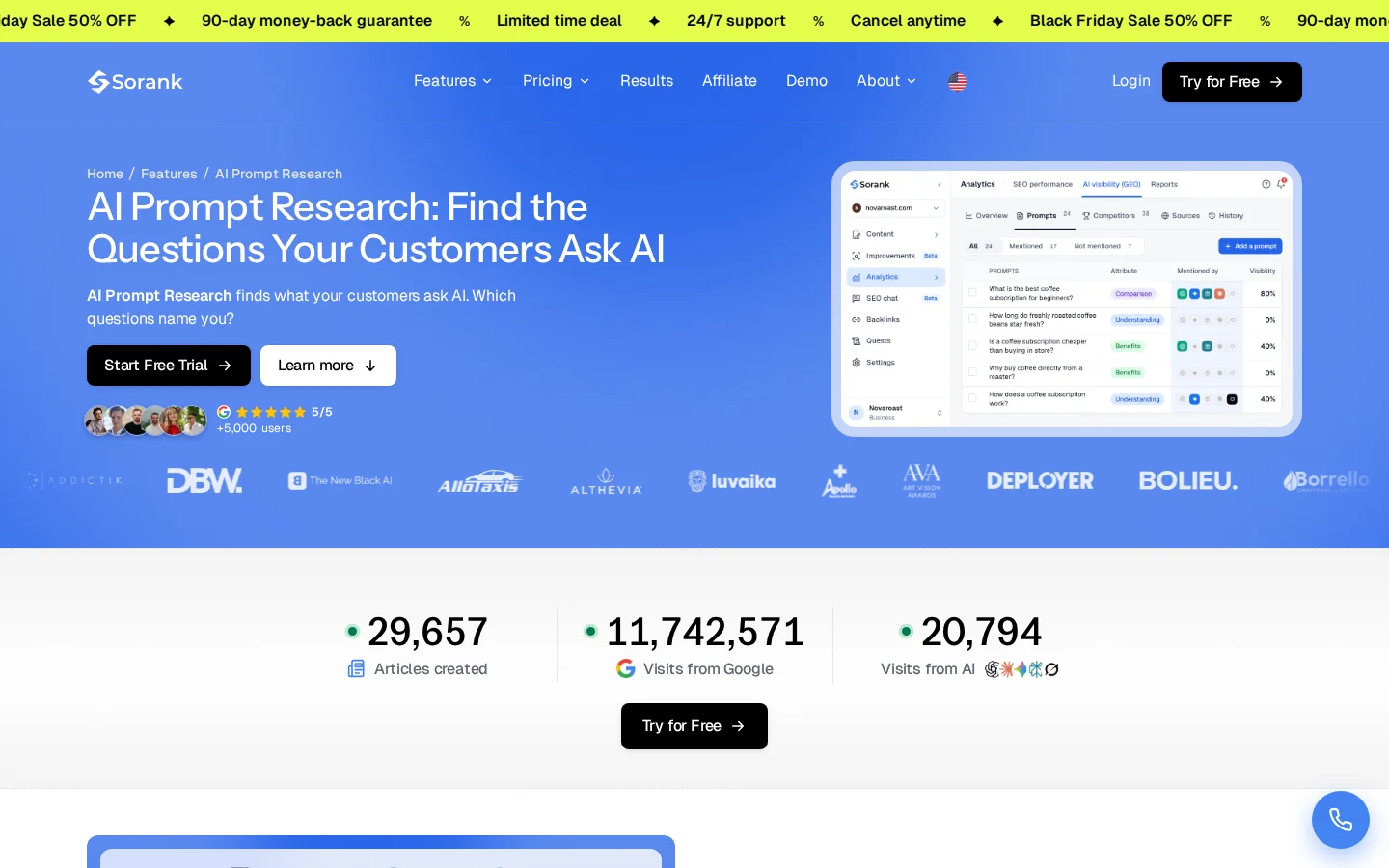
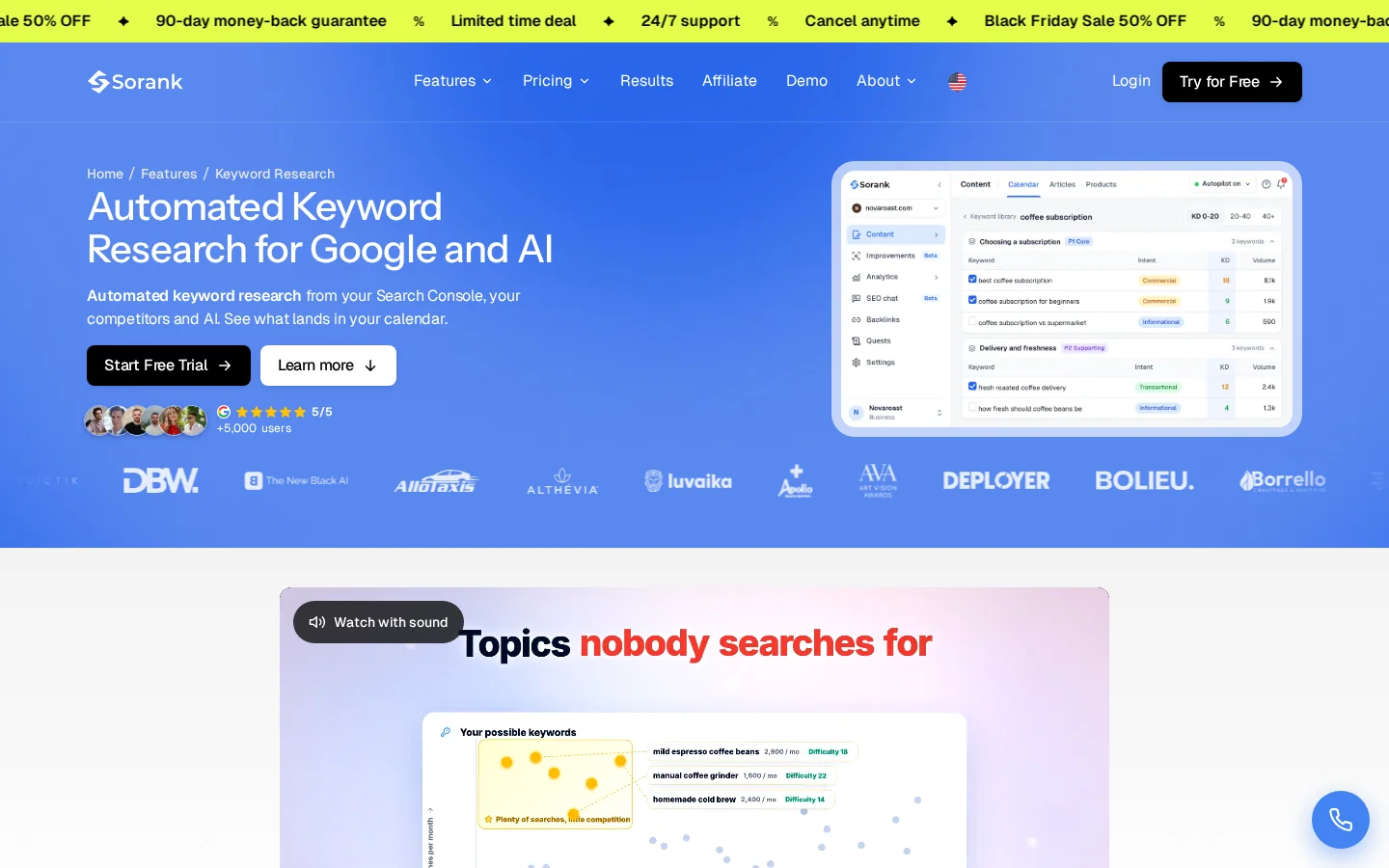
Sorank can help with the keyword side and the prompt side. The automated keyword research feature builds keyword ideas from your Search Console data, your competitors, and AI queries, then scores them. AI prompt research writes the questions a buyer in your market might ask AI assistants. Use either to test the words in your segment. Then check every result against your ICP, because a tool cannot see your margin, your churn, or your sales notes.
When the ICP is narrow enough, it also supports account-based marketing. A short list of named companies, each with its own plan, is a practical way to spend effort on your best fits. The account-based marketing guide explains how to run that list. The same ICP works for the B2B SEO strategy, where keywords follow the buying stage of each segment.
Most ICPs fail in a few predictable ways. Each mistake below has a symptom you can see and a fix you can apply in a day.
What it is. A profile such as "tech companies that need growth." It sounds specific, but it fits most companies a sales rep has ever met.
How to spot it. If you read the profile and cannot name three companies that clearly fail it, the profile is too broad. Another sign is a sales team that says "anyone can buy."
How to fix it. Add a trigger and one more constraint, such as a size band or a required tool. Then check that a sales rep can name the segment in one sentence.
What it is. A profile based on the founder's favorite customer, or on the company that wrote the biggest check last year.
How to spot it. There is no query behind the profile. Nobody can say which fields were used or which deals were compared.
How to fix it. Rerun the data method from the export step. If the favorite customer is an outlier, say so in the ICP document and keep the profile based on the pattern.
What it is. A profile that lists job titles only, such as "marketing director, head of growth." That describes a person, not a company.
How to spot it. The profile has no industry, size, or tools. Sales reps ask "which company?" and get no answer.
How to fix it. Move the titles into a persona document, and keep the ICP focused on the company. The two documents can link to each other, which keeps both short.
What it is. A profile built only from wins, with no record of which segments churn.
How to spot it. Tier 1 includes accounts that cancelled within a year. Nobody has a list of segments to avoid.
How to fix it. Add churn as an attribute, compare lost and churned accounts with wins, and write the negative ICP down. Review it at each quarterly check.
What it is. A precise profile that matches only a few dozen companies in your country, which cannot support your revenue goal.
How to spot it. You can list the companies that match the profile by hand. A data tool returns a count that is smaller than your sales target needs.
How to fix it. An ICP does not measure market size, so check it separately. Count the companies that match, and compare that count with the number of deals your revenue goal requires. Search volume for the problem gives a rough signal of how many buyers look for a solution. Sorank's keyword research page shows the keyword side of that check.
What it is. An ICP written at launch and never reviewed.
How to spot it. The document is older than your last pricing change or your last product release.
How to fix it. Put a quarterly review in the calendar. Rerun the comparison, update the attributes, and retire any segment that no longer wins.
You do not need a perfect ICP to start. You need a written one that the team uses. The checklist below turns this guide into a week of work.
Your first week
Keep the first version small. A short ICP that people use beats a perfect one in a shared drive. If you run an agency and serve clients in one niche, the same method works on your client list, and the agency guide covers how to apply it to your own positioning.
Write the paragraph today. Then test it on the next 20 leads, and fix what the data tells you to fix.
An ideal customer profile (ICP) describes the type of company that gets the most value from your product, buys it, and stays. It is built from your best existing customers, not from your wishes. It sits above buyer personas, which describe the people inside those companies.
An ICP describes the company: industry, size, tools, and problem. A buyer persona describes the person who evaluates and buys, such as a marketing director with a budget and goals. You need both, because the ICP chooses the accounts and the personas shape how you talk to them.
Compare won and lost deals that fit the profile with those that do not, over 12 to 24 months of closed deals. If fit deals win more often, close faster, and renew more, the profile works. If not, adjust the attributes and test again.
We analyse your competitors, your website and your AI visibility to create a tailored content plan for free.
 AI Content Brief Generator
 FAQ Schema Generator
 AI Blog Post Ideas Generator
 Structured Data Validator (Schema Validator)
 Alt Text Checker
 Internal Link Analyzer
 Backlink Challenge
 AI Meta Description Generator
 AI Blog Title Generator
 Google Indexability Checker
 AI Blog Outline Generator
 UTM Link Builder
 Keyword Clustering Tool
 Canonical Tag Checker
 XML Sitemap Generator
 Broken Link Checker
 AI SEO Title Generator
 Headline Analyzer
 SERP Preview Tool
 Redirect Checker
 Hreflang Tag Generator
 Heading Structure Analyzer
 HTTP Headers Checker
 Favicon Extractor
 SERP CTR Calculator
 SEO vs Paid Search Savings Calculator
 SEO Share of Voice Calculator
 SEO ROI Calculator
 SEO Traffic and Revenue Forecast Calculator
 SEO Budget Calculator
 SEO Break-Even Calculator
 SaaS SEO ROI Calculator
 ROAS Calculator
 Reading Time Calculator
 Ranking Gain Simulator
 Organic Traffic Value Calculator
 Organic Traffic Estimator and Website Traffic Checker
 LTV to CAC Ratio Calculator
 Local SEO ROI Calculator
 Link Building Cost Calculator
 Keyword Value Calculator
 Keyword Opportunity Score Calculator
 Keyword Density Calculator
 GEO ROI Calculator
 GEO Content Investment Calculator
 Ecommerce SEO ROI Calculator
 Customer Lifetime Value Calculator
 Customer Acquisition Cost Calculator
 CTR Calculator
 Cost Per Article Calculator
 Conversion Rate Calculator
 Content Marketing ROI Calculator
 ChatGPT Referral Traffic Estimator
 Bounce Rate Calculator
 Backlink ROI Calculator
 AI Visibility Score Calculator
 AI Traffic Value Calculator
 AI Share of Voice Calculator
 Cost of AI Invisibility Calculator
 AI Citation Rate Calculator
 llms.txt Validator
 AI Overview Checker and AI Overviews Rank Checker
 Robots.txt Checker
 AI SEO Audit
 LLM Readability Checker
 SearchGPT Readiness Checker
 Structured Data LLM Audit
 Website Crawlability AI Audit
 Why ChatGPT Is Not Recommending My Website
 Gemini Ranking Tool
 Perplexity Ranking Checker
 LLM Citation Checker
 Answer Engine Optimization Audit
 GEO Audit
 AI Search Visibility Test
 ChatGPT Visibility Checker
 llms.txt Generator
 URL Extractor
 Webpage to Markdown
 Sitemap Checker
 SERP Volatility Sensor
 Page Size Checker
 Word Counter
 Slug Generator
 Schema Generator
 Robots Generator
 OG Preview
 Meta Tags Generator
 Image Compressor
 Favicon Generator
 On-Page SEO Audit: SEO Checker and SEO Analyzer
 Backlink Analysis Tool
 Keyword Research Tool
 Domain Authority Checker
 “I tested Sorank on a real client site and it's insane. It does everything an agency would bill you $1500 a month for. It's going into production on that client now.”

 Guillaume Guersanguersanguillaume.com“We are an Ads agency and we wanted to get our SEO back on track once and for all. Sorank gave us a clear view of our site, helped us prioritize optimizations, and properly structure our content. The tool is easy to use, well designed for a team, and very practical for centralizing tracking without having to juggle multiple platforms. A very solid foundation to start fresh with our SEO.”
 Gaspard MadouiAds Agency
 “I just let the Sorank software do its thing, and now my DR is 25 and my page is ranking higher.”
 Lucas Flandrefoundertrace.fr“I specialized in GEO thanks to Sorank. The GEO Leaderboard allows me to show my clients their position vs competitors on ChatGPT. It’s a real commercial differentiator.”
 MélanieSEO Freelance“Great service, works well for our website and helps us understand how to improve it to rank better on Google and elsewhere. Congrats, keep going, I recommend it.”
 Hugo T.E-commerce merchant