Preferences
Privacy is important to us, so you have the option of disabling certain types of storage that may not be necessary for the basic functioning of the website. Blocking categories may impact your experience on the website. More information
Privacy is important to us, so you have the option of disabling certain types of storage that may not be necessary for the basic functioning of the website. Blocking categories may impact your experience on the website. More information

Why AI assistants cite third-party sources like reviews, forums and news over your site, what the research shows, and how to earn a place on them.
In short
Third-party sources are pages that AI assistants find on domains you do not own, such as review platforms, forums, news articles, encyclopedias and directories. They get cited because a claim backed by several independent sites is easier to verify than a claim a company makes about itself. Your own site still matters for facts only you can state.
Want to go further? Ask
Quick quiz
How should you use AI in your marketing?
Sorank matches your answers


Test it for 3 days on your own site and see where you stand on Google, ChatGPT and the other AIs.
Start 3-day free trial3 days free, then stop whenever you want. 90-day results guarantee, conditions apply.
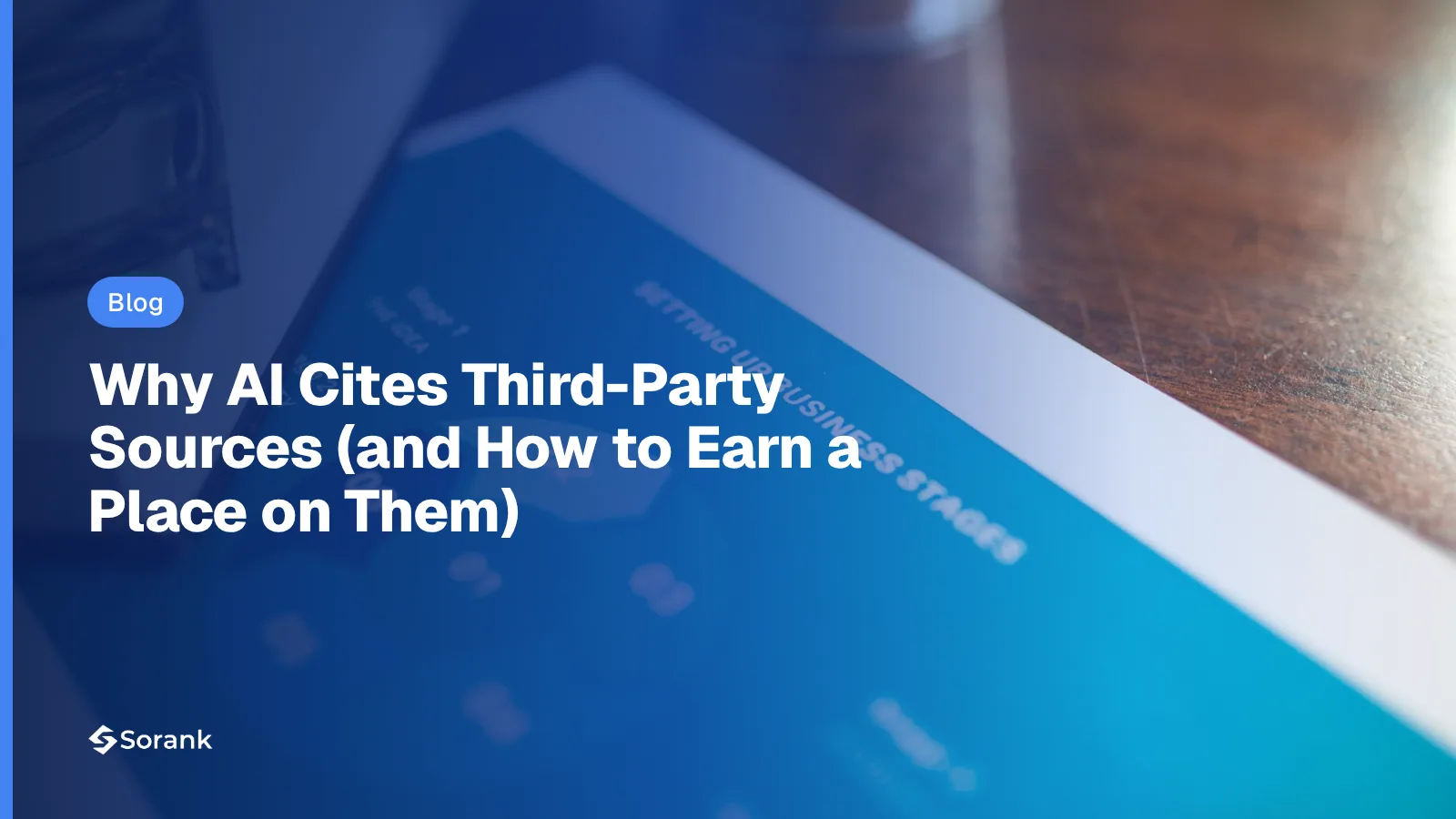
AI assistants cite third-party sources because an answer has to hold up. When someone asks which accounting software suits freelancers, a page where the vendor praises its own product is a weak basis for that answer. An independent review, a forum thread where users compare tools, or a news article that tests them gives the model a claim it can quote without relying on the company's word.
The pattern shows up in measurements. In its summit recap, Muck Rack reports figures from the second edition of its What Is AI Reading? study: 94% of citations come from non-paid sources, and 82% are earned media, meaning coverage by outside publishers rather than material a brand buys or publishes itself. The category has boundaries that Muck Rack sets, so treat these numbers as a direction, not as an exact share of every AI answer. (Muck Rack, Generative Pulse summit recap)
Where AI citations come from
Source: Muck Rack, What Is AI Reading? second edition, as summarized in its summit recap
Two things follow. The question is rarely whether an AI cites other sites, because it almost always does. The question is which outside sites it picks on your topic, and whether your own pages are one of the sources next to them.
How the engines choose sources is covered in our guide to how AI assistants choose their sources. This article goes one step further: why the outside sites win so often, what you can do about it, and where your own site still has to do the work.
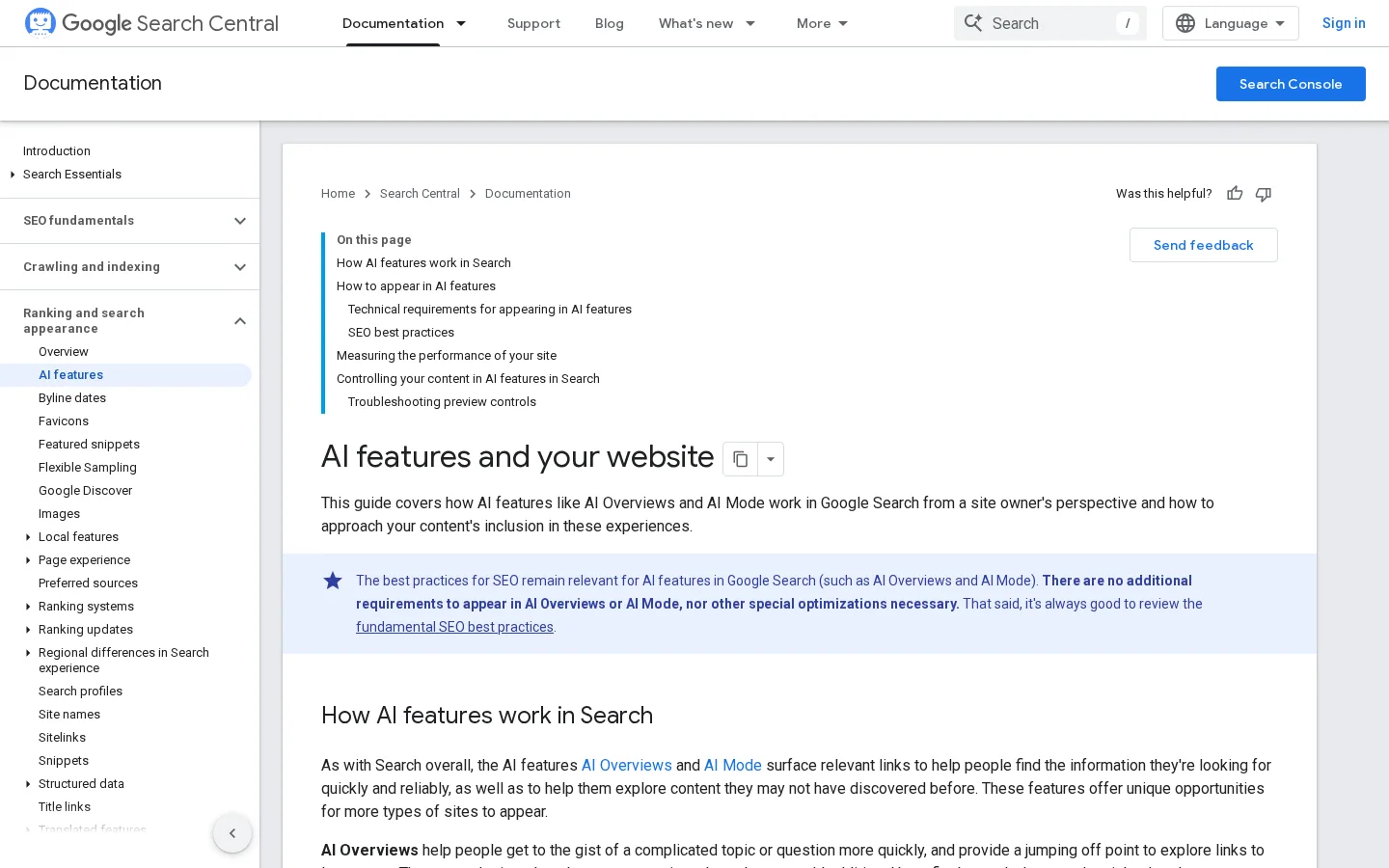
Google says you need nothing special to appear in its AI features. A page has to be indexed and eligible to show with a snippet, and that is the whole technical requirement. Google's AI features documentation puts it directly: "There are no additional requirements to appear in AI Overviews or AI Mode, nor other special optimizations necessary." It also says you do not need to create new machine-readable files, AI text files or markup to appear in these features, which settles a lot of the noise about special AI files.
Other assistants work differently in the details. Anthropic's web search tool documentation says that Claude's web search returns citations for the sources it draws from. Each search result carries a URL, a title and a page_age field, which the documentation describes as when the site was last updated. The shape of one result looks like this, trimmed to the fields that matter here:
{
  "type": "web_search_result",
  "url": "https://en.wikipedia.org/wiki/Claude_Shannon",
  "title": "Claude Shannon - Wikipedia",
  "page_age": "April 30, 2025"
}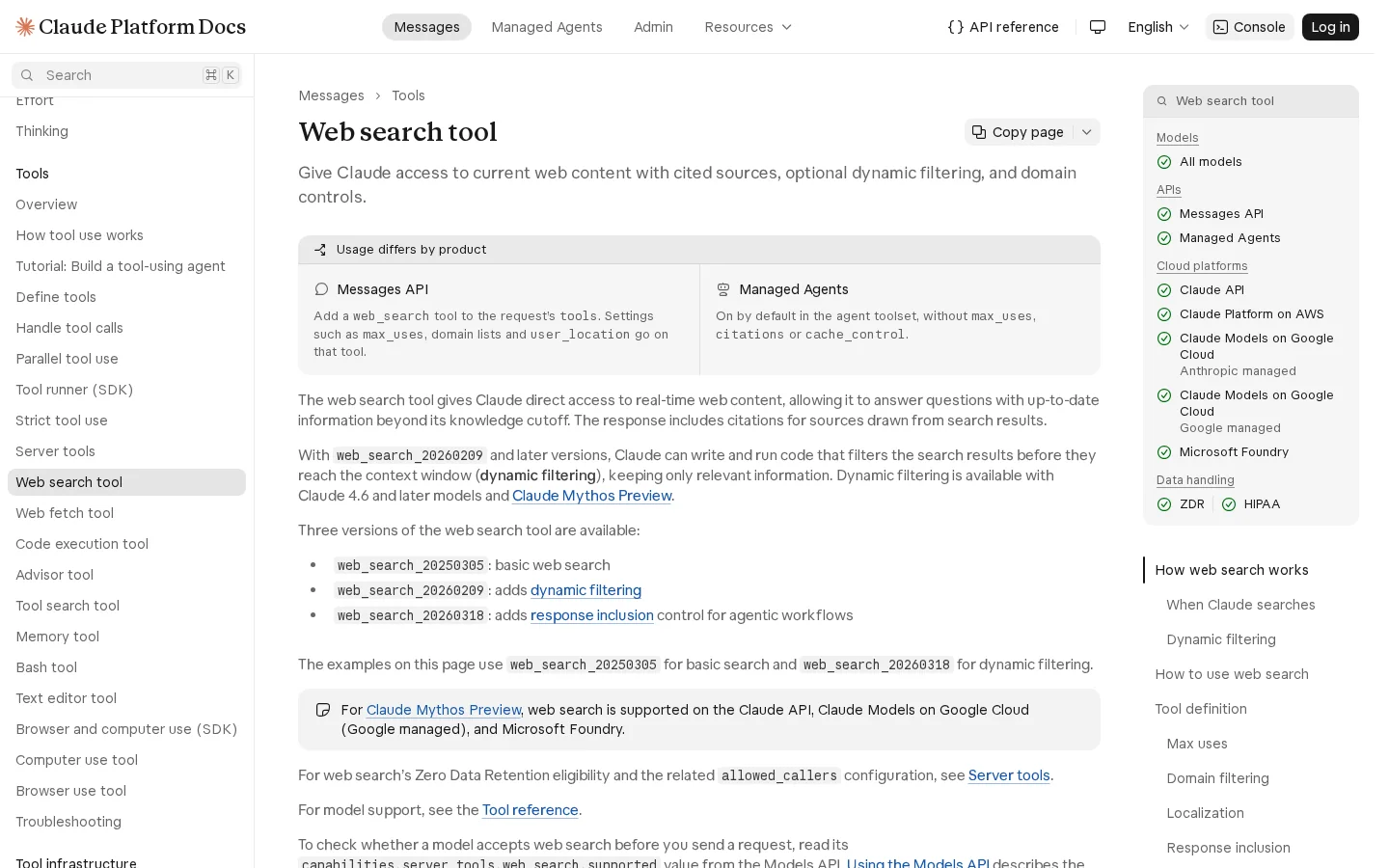
The age field is there for a reason: the model can see how old a page is. Put that next to the first point and the picture is clear. Your page can be indexed, eligible and well built, yet still lose the answer to a page that is recent and that other sites back up.
Use this comparison to decide what each kind of page is for. Your own page is the place for facts only you can state. An independent page is where an outside judgment on the same products comes from.
Your own page or an independent page: what each one gives an answer

Four reasons explain most of the pattern. A claim repeated by several sites is easier to trust. An outside source has less reason to tilt toward a product. Comparison questions need many options in one place. And fresh pages reflect the current market. Access also plays a part, and we cover it at the end of this section.
A model that writes "this tool supports multi-currency invoicing" wants more than one page saying so. Suppose three independent sites describe the same feature. The claim is easier to stand behind, because the model can check it against two other pages. Your site can say the same thing, but nothing outside it confirms the claim until others repeat it too.
In practice, look at the claims in your category. Which ones appear on your site alone? Those are the claims an assistant has the least reason to repeat. Which ones appear on a review, a forum and a comparison page? Those are the ones it will repeat, sometimes with the name of the site that said them.
On comparison questions, a source that has something to sell is a weaker witness than one that does not. This is a judgment about how a careful reader weighs a claim, not a published rule about how any specific engine works. You can test it with your own reading. A vendor's "best tool" page and an independent comparison that ranks several tools do not carry the same weight, and an assistant reading both may well lean on the second.
The test is simple. For each source in an AI answer, ask who gains if you buy. If the answer is the source's own owner, that source will rarely carry the whole answer on its own.
Some pages collect many products in one place: best-of lists, comparison tables and roundups of user reviews. For a question such as "best CRM for a five-person agency", the model needs a source that already compares options. A roundup does that work in a single read. Your product page answers only one row of the comparison.
The fix is not a bigger homepage. You have two options. Publish a comparison page on your site that treats competitors fairly and says where you are not the best fit. Or earn a place on the roundups that already exist in your niche, which is the subject of the methods section below.
Community and review sites change all the time, with new posts and new reviews every week. A product page last updated a year ago looks stale next to them. This is why the page_age field matters: the age of a page is information the model can use.
Keep dates on your pages. Update prices and feature lists when they change, and write "last updated" only when it is true. A date that moves without any change in the content is the kind of thing readers notice, and it costs you their trust.
Some outside sites are easier for AI systems to use because of agreements between platforms and AI companies. On February 22, 2024, Google announced an expanded partnership with Reddit. It gives Google access to Reddit's Data API, which Google describes as giving it "real-time, structured, unique content" that it can display and use in its products. The announcement also says this does not change how Google handles publicly available pages its crawlers can access. (Google, expanded Reddit partnership, February 22, 2024)
The practical lesson for a brand is twofold. First, check that the crawlers you care about can read your pages, because a page no crawler can reach is a page no assistant can cite. Second, treat platforms like Reddit as a separate channel to earn a presence on, not as a shortcut that replaces your own pages.
Six kinds of outside source are worth knowing, because each does a different job inside an answer. Review and comparison platforms supply ratings and side-by-side features. Forums supply first-hand experience. Journalism supplies dated, reported facts. Reference sites supply definitions and background. Directories and listings confirm who you are. Academic and government pages supply statistics and rules.
| Source type | What it gives an answer | Typical example | What you can do |
|---|---|---|---|
| Review and comparison platforms | Ratings, feature comparisons, pricing side by side | Software review sites, marketplace reviews | Keep your listing accurate and ask real customers for reviews |
| Community forums and Q&A | First-hand experience and answers to specific problems | Reddit threads, Stack Exchange, niche forums | Answer questions under a real identity, and disclose any affiliation |
| News and trade press | Reported, dated facts and independent tests | Trade magazines, industry newsletters, local press | Pitch original data or a real test to journalists |
| Reference and encyclopedic sites | Definitions, background and context | Encyclopedias, glossaries, industry wikis | Make sure the facts about you are accurate; let independent editors write about you |
| Directories and local listings | Confirmation of identity: name, address, category, phone | Google Business Profile, Bing Places, Apple Business Connect | Keep name, address and phone identical on every listing |
| Academic and government pages | Statistics, rules and official definitions | University studies, regulators, statistics offices | Cite them accurately, with the year and the publisher |
Start with the types your own assistants cite. A category question leans on review platforms and roundups. A problem question leans on forums and how-to pages. A news question leans on journalism. You cannot pick the type in advance, so you have to look at the answers. The step-by-step section below shows how.
For directories specifically, one common gap is a listing that spells the business name differently from the website. Our guide to Bing Places for Business walks through the setup, and the same logic applies to every listing you control.
Five methods get a brand onto outside sites: digital PR with original data, reviews and listings, honest participation in communities, turning existing mentions into links, and contextual links from sites in your niche. Each takes a different kind of effort, so the right starting point depends on what you already have.
Principle. Publish something a journalist can cite: a survey, a dataset, or a test that you ran on a real question. An outside writer quotes the data, names you, and often links to you.
When to use it. You have data you can share, or you can run a fair test in a few weeks. It fits brands with real operational knowledge and fits poorly with pure opinion.
Benefits. A single well-chosen piece can produce coverage that stays online for years, and some of that coverage will name you without linking, which still counts as a mention. Our guide to digital PR covers the campaign side.
Limits. It is slow and not guaranteed. A dataset nobody finds interesting produces nothing, and a weak test can damage your credibility.
Example. A software team runs the same task through ten tools, records the results, and publishes the method with the raw data. Trade writers cite the table, and the article names the team as the source.
Principle. Keep accurate, recent profiles on the platforms your buyers already use, and collect honest reviews from real customers.
When to use it. Almost always. Buyers consult review sites, and local businesses rely on directories. This is the cheapest method to start with.
Benefits. These pages are repeatedly refreshed by their platforms and by customers, so they carry the freshness signal discussed above. A consistent listing also helps the model connect your site to your brand name.
Limits. You cannot fake reviews, and review platforms enforce their own rules. The work is continuous: a listing left alone drifts out of date.
Example. A local firm asks each client for a review a few days after the job is done, using a link that goes directly to its profile, and updates its opening hours the moment they change.
Principle. Answer real questions where your buyers ask them, under a real identity, and say when you work for the company you mention.
When to use it. Your category has active forums or Q&A sites, and you have people who know the product well enough to help without selling.
Benefits. A helpful answer can stay online for years, and it reaches people at the moment they are deciding. Our glossary entry on UGC citations explains why forums and Reddit keep appearing in answers.
Limits. It is slow, and moderators remove promotion quickly. A thread with a single self-promotional reply is worse than no thread at all.
Example. A support engineer answers a configuration question in a forum, shows the fix, and mentions that they work for the vendor when the question is about the vendor's own product.
Principle. Find pages that already name your brand without linking to it, and ask the author for a link.
When to use it. You already have coverage, and you want the mention to count as a link too. This is the fastest method when the mentions exist.
Benefits. The source already exists and already names you, so the request is easy to make and easy to say yes to. Our guide to unlinked brand mentions covers how to find them.
Limits. The pool is usually small, and not every author will change a sentence for you.
Example. A journalist wrote about your product last spring without a link. You send a short note thanking them for the coverage and pointing to the page they would link to.
Principle. Earn links placed inside articles on related sites, where the surrounding text matches your topic.
When to use it. You need links, not only mentions, and you want them to sit in context rather than in a footer or a sidebar.
Benefits. A link inside a relevant article is more useful than a footer link, because the sentences around it say what the page is about. Our guide to the types of websites where you can earn links lists the sources worth targeting.
Limits. No link method is risk-free. Reciprocal swaps and link loops are the usual trap, as covered in the mistakes section below.
Example. Sorank's natural backlink acquisition is one way to do this. It matches your site with other Sorank users in your niche, places each link inside a published article, and runs one way. Links are not swapped back, you earn credits by hosting partner links, and you can refuse any partner link placed in your own articles.
The table below puts the five methods side by side. Speed and effort are relative, not measured.
| Method | Speed | Effort | Main risk | Best when |
|---|---|---|---|---|
| Digital PR with original data | Slow | High | A weak dataset gets ignored | You have data or a real test |
| Reviews and business listings | Medium | Low to medium | Listings drift out of date | You sell to buyers who check reviews |
| Community participation | Slow | Medium | Self-promotion gets removed | Your category has active forums |
| Unlinked mentions to links | Fast | Low | Few mentions to work with | Coverage already exists |
| Contextual links from niche sites | Medium | Low to medium | Link loops and swaps | You need links, not only mentions |
Pick ten to twenty questions your buyers ask. Put each one to the main AI assistants with web search on, log every cited URL, and group the domains by type. The gaps show where competitors are cited and you are not, and each gap points to one of the methods above.
Use the words buyers use, not your internal keyword list. Mix three kinds of question: category questions ("best X for Y"), problem questions ("how do I stop Z") and comparison questions ("X or Y for a small team"). Ten questions are enough to see a pattern, while one question is only an anecdote. Keep the list fixed, so that you can repeat the test next month and compare.
Ask each assistant in the language your customers use, and note the cited URLs and the brands named in the text. Put everything in one table, so you can sort and count later. This header keeps the columns that matter:
question,engine,date,cited_url,domain,domain_type,brand_named,brand_rankRecord the domain_type using the table in the previous section. That single column is what turns a list of links into a plan.
Once the log is full, count the domains by type. Then compare your brand with two or three competitors. The most useful rows are the domains cited for competitors' brands that never cite you. Each of those rows is a candidate for one of the five methods. Work on two or three per month rather than all at once.
The audit in six steps
Tip
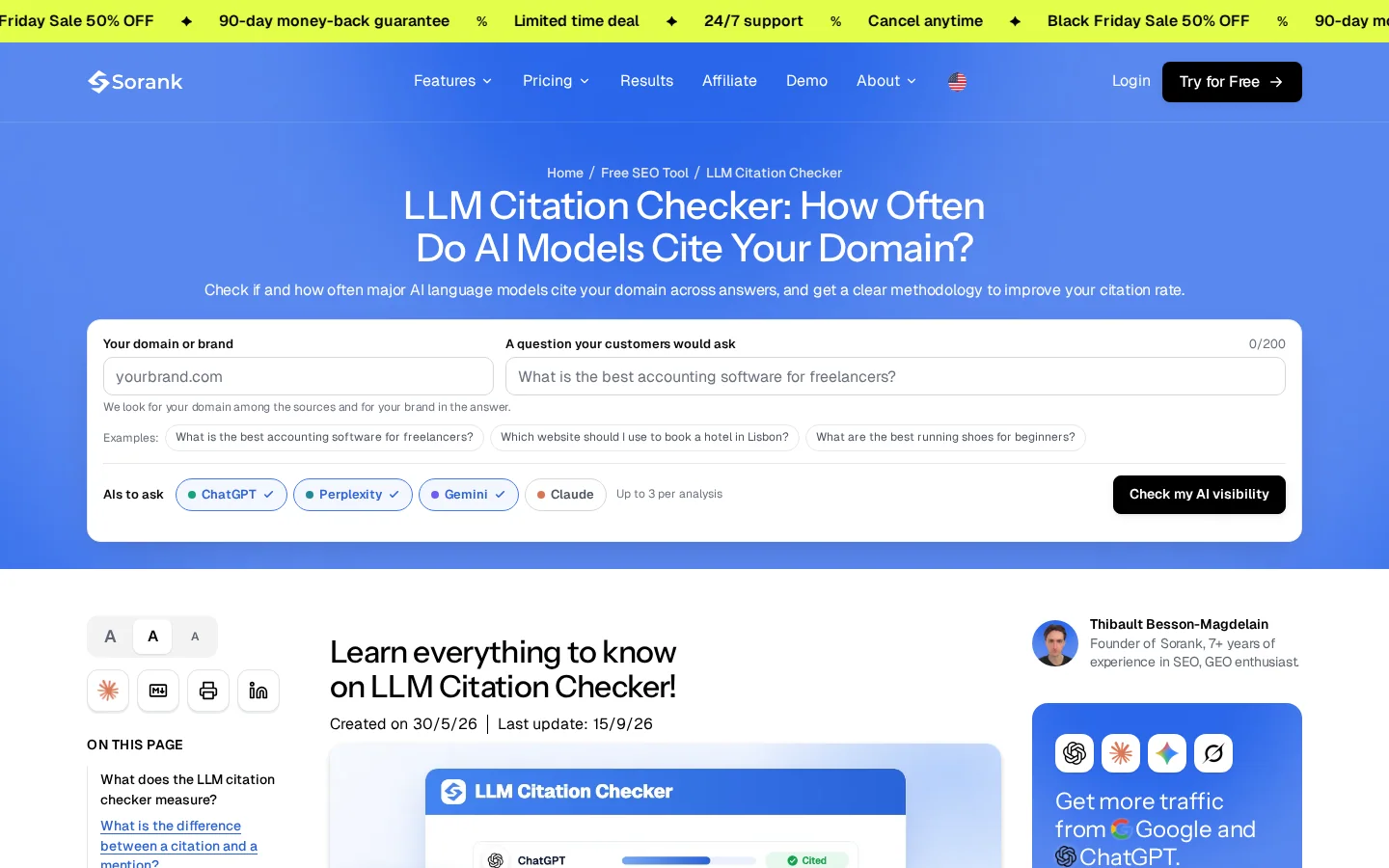
For a first reading before you build a log, the free LLM citation checker asks ChatGPT, Perplexity, Gemini or Claude one question you choose. It tells you whether your domain is cited as a source, whether your brand is named, and which domains the answer relied on.
Keep on your own site the facts only you can state, such as prices, specifications, policies and your own measurements. Then write them so that another page can quote them cleanly. The research supports that approach, with one caveat about what it measured.
Aggarwal and colleagues, in the GEO paper accepted at KDD 2024, tested content changes on a benchmark of queries they call GEO-bench. They measured how much each change raised a source's visibility in generative answers. Adding quotations, adding statistics and citing sources were the strongest methods, with relative gains of 30 to 40% on their Position-Adjusted Word Count metric. Keyword stuffing gave little to no improvement. (Aggarwal et al., GEO: Generative Engine Optimization) This is a benchmark, not a live measurement of ChatGPT or Gemini, so treat it as guidance for how to write, not as a guaranteed result.
What helps content get used in generative answers
Source: Aggarwal et al., GEO: Generative Engine Optimization, KDD 2024 (benchmark results)
From that research and the earlier sections, four habits follow for your own pages:
The underlying idea is covered in our glossary entry on source citation, which explains how answers reference the pages they draw from.
The most common mistakes are trading links in loops, posting as a fake customer, trusting one AI answer, repeating an unsourced number, and letting the brand name drift across listings. Each one is easy to spot once you know the pattern.
What it is. Paying for placements, or agreeing to link back and forth with other sites, so that the links exist to move rankings rather than to help readers.
How to spot it. Your link profile contains many reciprocal pairs, links on sites unrelated to your topic, or links that appear in a burst and then vanish. Google treats link schemes as spam, and a reciprocal exchange is the easiest form to recognize. Our guide to why Google calls backlink exchange a link scheme explains the difference.
How to fix it. Stop the swaps, keep the links an editor chose for their readers, and replace paid placements with contextual links you can justify.
What it is. Staff or paid accounts writing praise in forums, review sites or Q&A threads, without saying who they work for.
How to spot it. New accounts that mention only one brand, reviews that copy each other's wording, or threads where the poster answers only their own questions. Readers and moderators notice these patterns quickly, and so do the platforms.
How to fix it. Answer under a real identity, disclose any affiliation, help before you promote, and ask real customers to leave their own reviews.
What it is. Reading one assistant's answer as the state of the market, or building a report on a single screenshot.
How to spot it. The analysis rests on one question, one run and one assistant. Answers change between runs, and the sources can change with them.
How to fix it. Ask five to ten questions, repeat them over a few days, and look at the pattern. The AI citation source audit is built for this kind of repeated reading.
What it is. A statistic on your page with no origin, often copied from a blog that also cites nothing.
How to spot it. You cannot trace the figure to a dated, primary page written by the people who measured it.
How to fix it. Link the original study or the official page, state its year and publisher in the sentence, and delete the figure if you cannot find where it came from. A missing number costs less than a wrong one that an assistant repeats.
What it is. The same company written three different ways across its site, directories, social profiles and review pages, with different phone numbers or addresses.
How to spot it. Search your brand name and compare the business name, address and phone on each listing you find. Any mismatch is a signal the model has to resolve on its own.
How to fix it. Choose one canonical version, write it the same on your site and in every profile, and update the outdated listings. Start with the directories you already control.
Measure three things each month on the same questions: whether your domain is cited, whether your brand is named, and at which rank. The numbers move between runs, so judge the trend across several months, not one result.
Doing this by hand is slow, which is why many teams automate it. AI mention tracking runs a set of prompts across ChatGPT, Claude and Gemini, and records the citations, mentions and competitors each time. A tracker tells you what happened. It does not tell you why, so the gap analysis from the audit is still your job.
Three limits apply to any measurement. Answers vary from one run to the next. A narrow question may name nobody, while a broad one may name only the market leaders. And the results change with the country and the language of the question. Keep those limits in mind before you report a change to anyone.
Checklist for your next review
Start with one question from your list. Run it in the main assistants, record the domains they cite, and pick one gap to work on this month. If that gap is a missing link, one option is contextual backlinks from sites in your niche, through the niche link matching that Sorank offers. Reviews, listings and original data still need your own work, and no tool replaces them.
ChatGPT and other assistants pick the sources that best back up an answer. For comparison questions, that often means independent reviews, roundups and forum threads rather than a brand's own page, because a company's claim about itself is hard to verify. Your site still helps when it holds facts only you can state, such as prices and policies.
No. Google's documentation says there are no additional requirements to appear in AI Overviews or AI Mode, nor special optimizations. Your page must be indexed and eligible to show with a snippet, and you do not need to create new machine-readable files or AI text files.
Find which outside domains the AIs cite for your buyer questions, then choose the method that fits each gap: digital PR with original data, accurate listings and reviews, honest community answers, or contextual links from niche sites. Repeat the same questions every month to measure the result.
We analyse your competitors, your website and your AI visibility to create a tailored content plan for free.
 AI Content Brief Generator
 FAQ Schema Generator
 AI Blog Post Ideas Generator
 Structured Data Validator (Schema Validator)
 Alt Text Checker
 Internal Link Analyzer
 Backlink Challenge
 AI Meta Description Generator
 AI Blog Title Generator
 Google Indexability Checker
 AI Blog Outline Generator
 UTM Link Builder
 Keyword Clustering Tool
 Canonical Tag Checker
 XML Sitemap Generator
 Broken Link Checker
 AI SEO Title Generator
 Headline Analyzer
 SERP Preview Tool
 Redirect Checker
 Hreflang Tag Generator
 Heading Structure Analyzer
 HTTP Headers Checker
 Favicon Extractor
 SERP CTR Calculator
 SEO vs Paid Search Savings Calculator
 SEO Share of Voice Calculator
 SEO ROI Calculator
 SEO Traffic and Revenue Forecast Calculator
 SEO Budget Calculator
 SEO Break-Even Calculator
 SaaS SEO ROI Calculator
 ROAS Calculator
 Reading Time Calculator
 Ranking Gain Simulator
 Organic Traffic Value Calculator
 Organic Traffic Estimator and Website Traffic Checker
 LTV to CAC Ratio Calculator
 Local SEO ROI Calculator
 Link Building Cost Calculator
 Keyword Value Calculator
 Keyword Opportunity Score Calculator
 Keyword Density Calculator
 GEO ROI Calculator
 GEO Content Investment Calculator
 Ecommerce SEO ROI Calculator
 Customer Lifetime Value Calculator
 Customer Acquisition Cost Calculator
 CTR Calculator
 Cost Per Article Calculator
 Conversion Rate Calculator
 Content Marketing ROI Calculator
 ChatGPT Referral Traffic Estimator
 Bounce Rate Calculator
 Backlink ROI Calculator
 AI Visibility Score Calculator
 AI Traffic Value Calculator
 AI Share of Voice Calculator
 Cost of AI Invisibility Calculator
 AI Citation Rate Calculator
 llms.txt Validator
 AI Overview Checker and AI Overviews Rank Checker
 Robots.txt Checker
 AI SEO Audit
 LLM Readability Checker
 SearchGPT Readiness Checker
 Structured Data LLM Audit
 Website Crawlability AI Audit
 Why ChatGPT Is Not Recommending My Website
 Gemini Ranking Tool
 Perplexity Ranking Checker
 LLM Citation Checker
 Answer Engine Optimization Audit
 GEO Audit
 AI Search Visibility Test
 ChatGPT Visibility Checker
 llms.txt Generator
 URL Extractor
 Webpage to Markdown
 Sitemap Checker
 SERP Volatility Sensor
 Page Size Checker
 Word Counter
 Slug Generator
 Schema Generator
 Robots Generator
 OG Preview
 Meta Tags Generator
 Image Compressor
 Favicon Generator
 On-Page SEO Audit: SEO Checker and SEO Analyzer
 Backlink Analysis Tool
 Keyword Research Tool
 Domain Authority Checker
 “I tested Sorank on a real client site and it's insane. It does everything an agency would bill you $1500 a month for. It's going into production on that client now.”

 Guillaume Guersanguersanguillaume.com“We are an Ads agency and we wanted to get our SEO back on track once and for all. Sorank gave us a clear view of our site, helped us prioritize optimizations, and properly structure our content. The tool is easy to use, well designed for a team, and very practical for centralizing tracking without having to juggle multiple platforms. A very solid foundation to start fresh with our SEO.”
 Gaspard MadouiAds Agency
 “I just let the Sorank software do its thing, and now my DR is 25 and my page is ranking higher.”
 Lucas Flandrefoundertrace.fr“I specialized in GEO thanks to Sorank. The GEO Leaderboard allows me to show my clients their position vs competitors on ChatGPT. It’s a real commercial differentiator.”
 MélanieSEO Freelance“Great service, works well for our website and helps us understand how to improve it to rank better on Google and elsewhere. Congrats, keep going, I recommend it.”
 Hugo T.E-commerce merchant