Preferences
Privacy is important to us, so you have the option of disabling certain types of storage that may not be necessary for the basic functioning of the website. Blocking categories may impact your experience on the website. More information
Privacy is important to us, so you have the option of disabling certain types of storage that may not be necessary for the basic functioning of the website. Blocking categories may impact your experience on the website. More information

 Gemini and Alexa+
Verified voice search statistics with their sources, the myths to stop quoting, the Gemini and Alexa+ shift, and a 6-step plan to win spoken answers.

In short
Voice is now a stable, mainstream habit rather than a fast-growing one: about 35% of Americans aged 12 and older own a smart speaker (Edison Research, 2025), and 32% of consumers worldwide used a voice assistant in the past week (GWI). The real change in 2025 and 2026 is who answers: Gemini replaced Google Assistant on Android and Alexa+ runs on a large language model, so voice queries now get generated answers, not just a read-aloud featured snippet. Use the statistics below to size the channel honestly, then optimize for the answer engines behind the microphone.
Want to go further? Ask
Quick quiz
Which way of finding customers online fits you best?
Sorank matches your answers


Test it for 3 days on your own site and see where you stand on Google, ChatGPT and the other AIs.
Start 3-day free trial3 days free, then stop whenever you want. 90-day results guarantee, conditions apply.
Search "voice search statistics" and you get pages with 50, 80 or 100 figures. Most of them copy each other. Trace a number back and you often land on a survey from 2018, a vendor press release with no sample size, or a forecast that never came true.
The best known example is the claim that half of all searches would be done by voice by 2020. It circulated for years, was attributed to several companies, and never matched any measured data. It still appears in articles published this year.
Before you quote a figure, put it in one of three boxes:
Most articles mix the three. "62% of adults use a voice assistant" becomes "62% of people search by voice", which is a different claim.
A number you can put in a board deck has five things: a named publisher, a fieldwork date, a sample size and population (adults 18+, people 12+, smartphone owners), a clear question wording, and a country. If one of the five is missing, use the number as a signal, not as a fact.
Before you quote a voice statistic
Here are the figures we verified on the publisher's own page, with what they actually measure.
Voice in four verified numbers
Sources: Edison Research Infinite Dial 2025 via National Public Media; GWI 2026; Amazon, 2026
The Infinite Dial study by Edison Research is the longest running measurement of audio habits in the United States. Its 2025 edition, summarized by National Public Media in April 2025, puts smart speaker ownership at 35% of Americans 12 and older, about 101 million people. Of those owners, 69% use the device to listen to audio.
Read that second figure carefully: the main job of a smart speaker is music, podcasts and radio. Search is a side use. For a brand, a smart speaker is first an audio channel, then a search channel.
The research firm GWI, in its March 2026 voice search trends article, reports that 32% of consumers globally used a voice assistant in the past week. It splits usage into two jobs: 21% use an assistant weekly to find information, 20% to complete an action.
Source: GWI, 4 voice search trends and statistics, March 2026
The 21% is the number that matters for SEO. It is the share of people who use their voice, at least once a week, to get information that a website could provide.
GWI also tracks monthly use by assistant in the US between 2020 and 2024: Google Assistant grew 46%, Siri 40% and Alexa 26%. Growth is real but slow, and the phone assistants grew faster than the speaker assistant.
Growth in US monthly use, 2020 to 2024
Source: GWI, March 2026
The same GWI article notes that nearly one voice assistant user in three used ChatGPT in the past month. Voice users are not a separate audience: they are the same people who type questions into AI chatbots, and they increasingly speak to those chatbots too.
If you want the wider context on typed search, our Google search statistics and GEO statistics pages use the same sourcing rules.
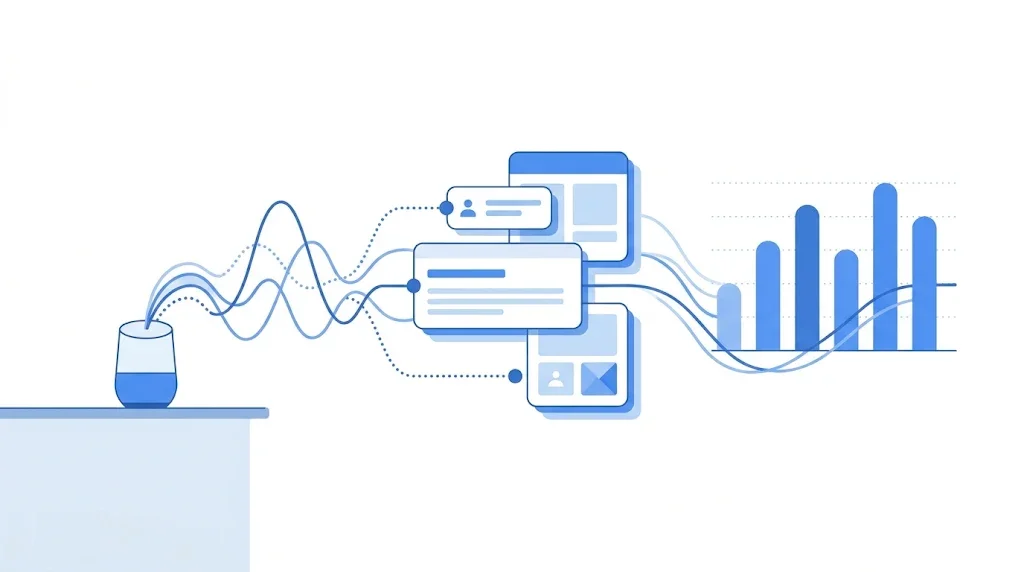
Ownership numbers barely moved. What moved is the software inside the devices. In 18 months, the three largest assistants changed engine.
How the assistants changed
According to Amazon's Alexa+ announcement, first published in February 2025 and updated in July 2026, Alexa+ runs on large language models available through Amazon Bedrock. It costs $19.99 per month, and is free for Prime members. Amazon says more than 600 million Alexa devices are in use. Alexa+ can complete web tasks on the user's behalf, such as booking a repair, and continues a conversation across phone, car and computer.
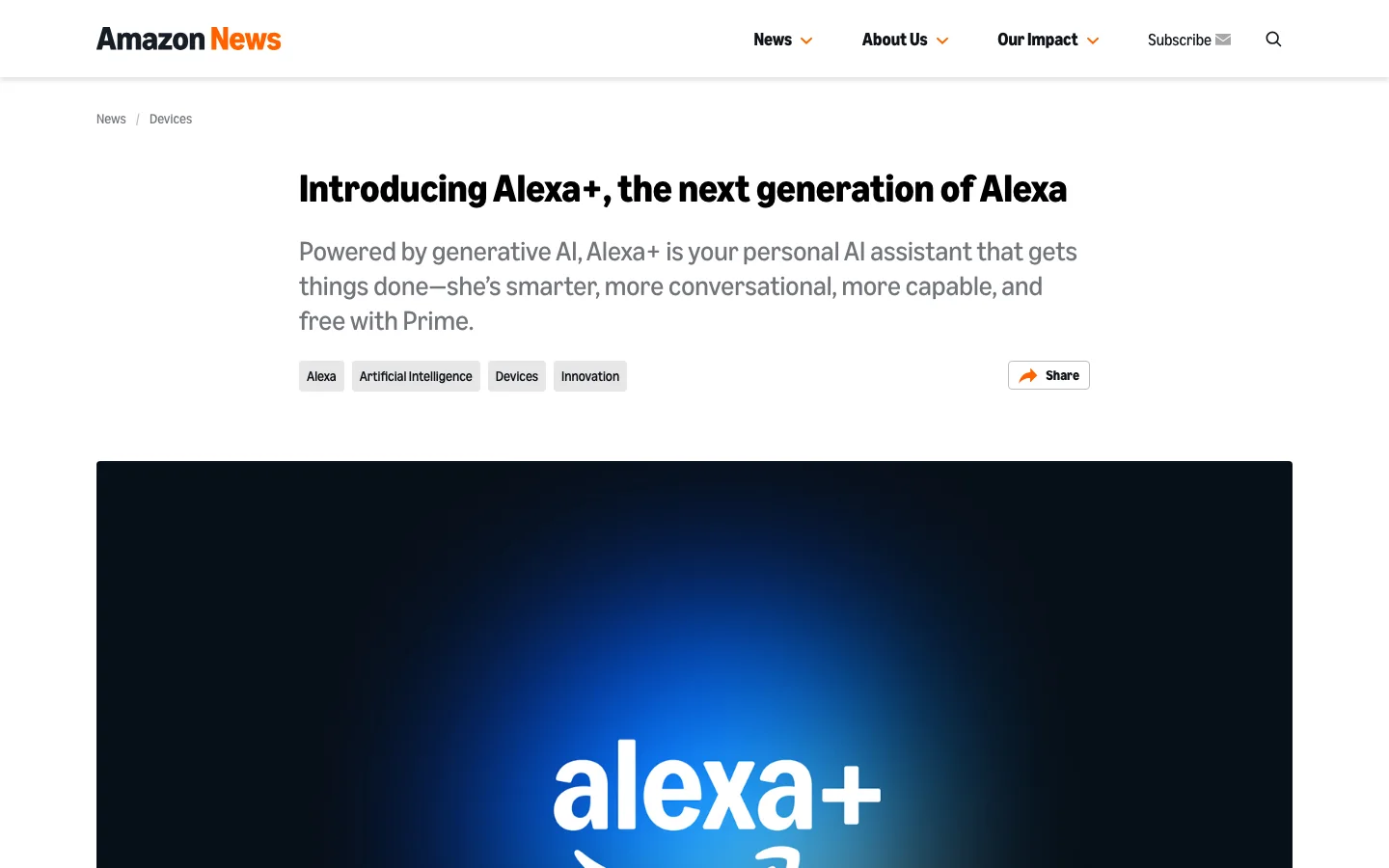
For a business, that changes the question. The old Alexa needed a "skill" to talk about your brand. Alexa+ can go and find information or act on a site directly. Your pages become the raw material of an agent.
Abner Li at 9to5Google reported on September 28, 2026 that the Google Assistant shutdown on mobile, which began in early September, was widely rolled out: on the devices checked in the US and Europe, Assistant was gone and users could not switch back. Google Nest and Home speakers were not affected at that date.
Practical consequence: when someone long-presses the power button on an Android phone and asks a question, a generative model answers. It can summarize several sources, compare options and cite pages, instead of reading one featured snippet.
Classic assistant vs generative assistant
Statistics on volume are weak. Patterns of behavior are much more useful, because you can verify them yourself in your own data.
People speak in full sentences. "Best running shoes flat feet" typed becomes "what are the best running shoes if I have flat feet" spoken. Voice queries start with who, what, where, when, how, can, should, and often contain a constraint (price, distance, time).
That is why voice work overlaps with question keyword research: the same questions people speak are the ones they type into AI chatbots.
Classic voice search was dominated by local intent: opening hours, directions, "near me", calling a business. That intent has not disappeared with generative assistants. It still runs on the same data: your Google Business Profile, Apple Maps listing, reviews and the consistency of your name, address and phone number across directories.
GWI's split (21% find information, 20% complete an action) shows that half of voice use is about doing something. With agents like Alexa+, "doing" now includes actions on third party sites. Pages that state prices, availability, booking rules and policies in plain text are easier for an agent to use.
Google Search Console does not label voice queries. You can still isolate the conversational ones with a regex filter on the Queries report (Performance, then Query, then Custom regex):
^(who|what|where|when|why|how|which|can|should|is|are|does|do)\b.*\s.*\s.*\s.*This keeps queries that start with a question word and contain at least five words. Export the list, sort by impressions, and you have your conversational demand, voice and typed together. Add a second filter for local intent:
(near me|open now|opening hours|closest|nearby|directions to)Tip
Compare the click-through rate of these question queries with your site average. A high impression count with a low CTR usually means an answer box or an AI answer already responds to the question. That is exactly the content to rework for spoken and generated answers.
Here is a quick reading grid for the numbers you will meet most often, including those cited by top ranking articles on this topic.
| Claim you will see | What it really measures | Verdict |
|---|---|---|
| 35% of Americans 12+ own a smart speaker (Edison, 2025) | Device ownership, US, people 12+ | Reliable, long running series |
| 32% used a voice assistant in the past week (GWI) | Assistant use, global consumers | Reliable as a signal, survey details not published in the article |
| 600 million Alexa devices in use (Amazon) | Installed base, company figure | Reliable as a company statement, not usage |
| "50% of US consumers use voice search daily" | Vendor survey from 2022, small panel | Use with care, predates generative assistants |
| "90% of voice queries are in English" | No public method | Do not quote |
| "Half of all searches will be voice by 2020" | An old forecast that never came true | Myth, do not quote |
There is no single "voice SEO". There are five approaches, each tied to a type of assistant and a type of query. Most sites need two or three of them.
Principle: put a direct 40 to 60 word answer right under a question heading, so a classic assistant can read it and a generative one can lift it. When to use it: informational pages, how-to content, definitions. Advantages: also helps typed search and AI answers. Limits: you depend on Google choosing your snippet. Example: a plumbing site adds "How long does a water heater last? Most tank water heaters last 8 to 12 years..." as the first lines under an H2. See our guide to featured snippets.
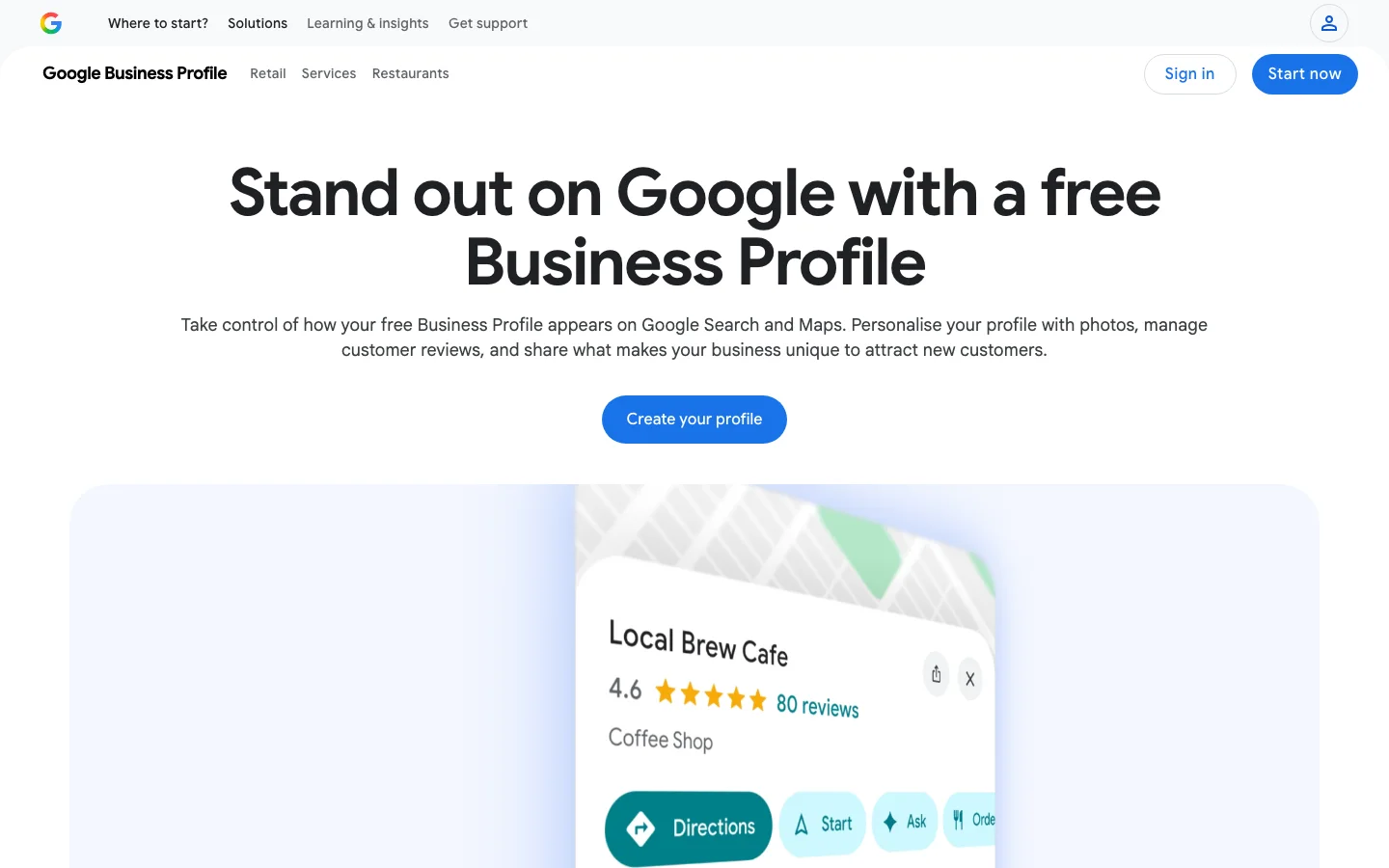
Principle: make your business data complete and identical everywhere assistants look: Google Business Profile, Apple Business Connect, Bing Places, Yelp, review platforms. When to use it: any business with a physical location or service area. Advantages: the highest converting voice queries are local. Limits: no help for national or online only brands. Example: a restaurant fixes holiday hours on all platforms before December. Our local SEO checklist covers the 30 points.
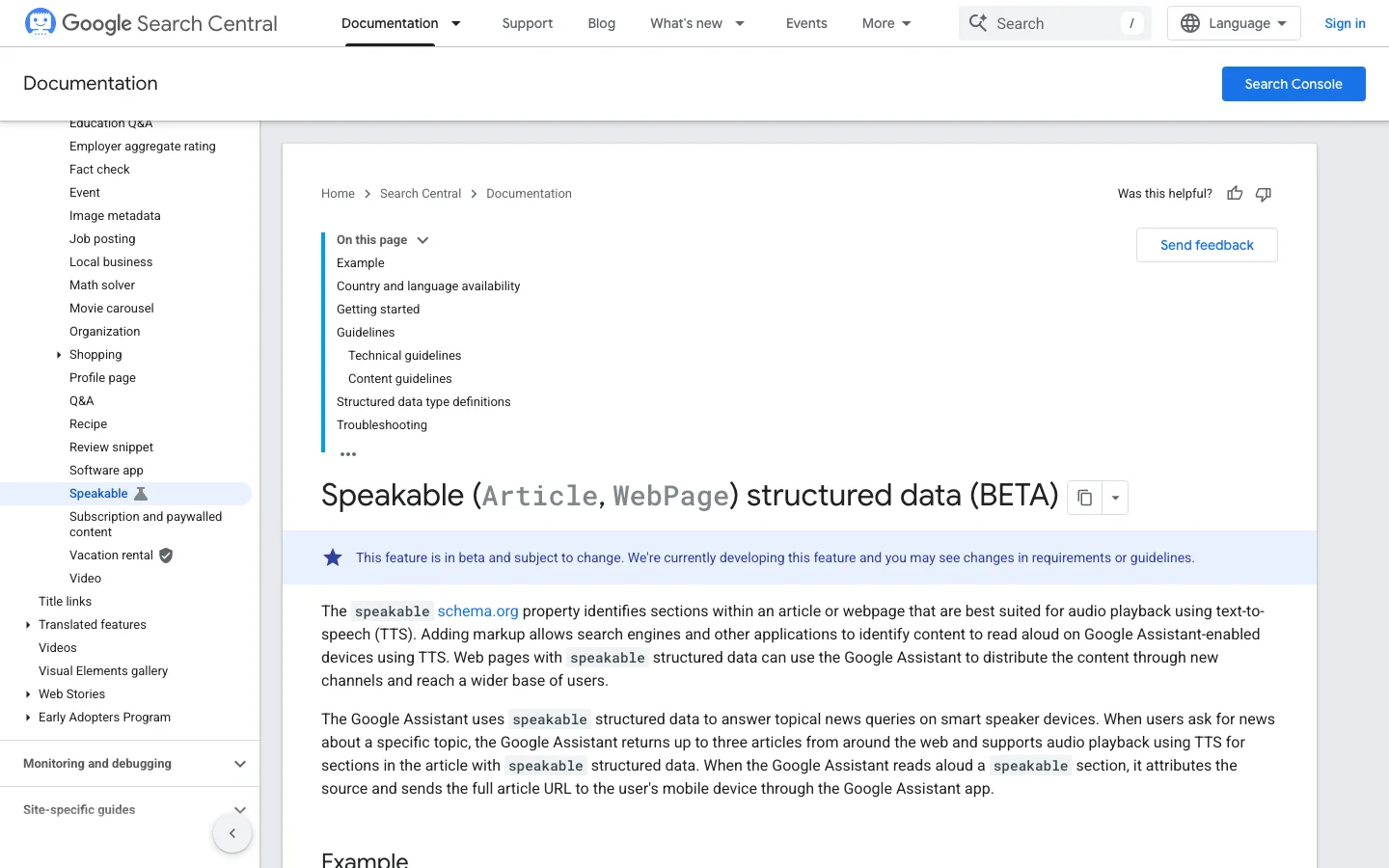
Principle: mark the sections of a page that suit text to speech. When to use it: news publishers. Advantages: tells Google Assistant which part to read. Limits: Google's speakable documentation lists it as beta, English only, for US users with Google Home devices, and aimed at news content. Do not expect results outside that frame. Our speakable glossary page explains the setup in detail.
<script type="application/ld+json">
{
  "@context": "https://schema.org/",
  "@type": "WebPage",
  "name": "How long does a water heater last?",
  "speakable": {
    "@type": "SpeakableSpecification",
    "cssSelector": [".summary", ".answer-1"]
  },
  "url": "https://www.example.com/water-heater-lifespan"
}
</script>
Google recommends about 20 to 30 seconds of audio per marked section, roughly two to three sentences, and advises against marking up datelines, captions or source credits.
Principle: collect the real spoken questions about your offer and answer each one in two to three plain sentences. When to use it: product, service and pricing pages. Advantages: feeds generative assistants with clean question and answer pairs, and covers long tail queries. Limits: Google shows FAQ rich results for very few sites now, so the value is in the content, not the markup. Our FAQ schema guide explains what changed.
Free tool
Need clean FAQPage JSON-LD for your question blocks? Generate it in seconds with the free FAQ schema generator.
Principle: make your brand the one that Gemini, Alexa+, ChatGPT voice mode and Perplexity name and cite. When to use it: every brand whose buyers ask comparison or recommendation questions. Advantages: follows the 2026 shift described above, works for voice and typed AI answers. Limits: harder to measure, needs third party mentions and not only your own pages. Example: a software company tracks the prompt "what is the best invoicing tool for freelancers" every month in four AI assistants.
This is where Sorank's AI mention tracking helps: it checks whether ChatGPT, Gemini, Claude and Perplexity cite your brand on the questions your customers ask, which is the closest proxy you have for generative voice answers.
| Strategy | Best for | Assistant type | Effort | Measurable with |
|---|---|---|---|---|
| Answer-first writing | Informational content | Classic and generative | Low | Search Console, snippet tracking |
| Local data hygiene | Local businesses | Classic and generative | Medium | Business Profile insights, calls |
| Speakable markup | News publishers, US English | Google Assistant on speakers | Low | Hard to measure |
| Conversational FAQ | Product and service pages | Mostly generative | Medium | Long tail impressions |
| Generative engine optimization | Comparison and recommendation queries | Generative | High | AI mention tracking |
You can run this plan in about a week on a small site, two to three weeks on a large one.
The 6-step voice readiness plan
Search Console gives you what you already rank for. To find what you do not rank for yet, add three sources: the "People also ask" boxes on your main keywords, your support tickets and sales call notes, and the prompts people ask AI assistants. Sorank's AI prompt research lists the questions customers put to AI assistants in your market, which is a good proxy for how they phrase spoken questions.
Read your answer out loud. If you run out of breath, it is too long. Rules that work for text to speech and for generative extraction:
Assistants personalize answers by location and history. To compare month to month, keep the same device, the same location and the same wording. Write down: the assistant, the exact question, whether a source is named, which brand is recommended. Ten questions times five assistants gives you 50 data points a month, enough to see a trend.
What it is: citing "X% of people search by voice" with no year. How to spot it: follow the link; if the original survey predates 2022, it measured assistants that no longer exist in that form. How to fix it: always write the publisher and the year in the sentence, and replace any pre-2022 figure with a recent one or remove it.
What it is: using "35% own a smart speaker" to argue that a third of searches are spoken. How to spot it: the statistic talks about devices, owners or households, not queries. How to fix it: use ownership only to size the audience, and use usage data (such as GWI's 21% weekly information use) to size search demand.
What it is: creating pages like "/voice-search-answers" stuffed with spoken style questions. How to spot it: thin pages with dozens of questions and one line answers, low traffic, sometimes cannibalizing your real pages. How to fix it: move each answer to the page where the topic lives, and redirect the voice page.
What it is: adding speakable markup to an e-commerce or service site in French or German and waiting for results. How to spot it: no change in anything after months. How to fix it: keep speakable for English news content aimed at the US, as Google documents, and put your effort into answer-first writing instead.
What it is: optimizing only for "position zero" while Android users now get Gemini answers. How to spot it: you rank in the featured snippet but assistants name a competitor when you ask them aloud. How to fix it: add the step 5 test protocol to your monthly reporting and work on third party mentions (reviews, comparisons, directories) that generative assistants rely on.
What it is: different hours, phone numbers or business names across listings. How to spot it: ask "is [business] open now" to two assistants and get two answers. How to fix it: pick one master record, update every listing from it, and check again after each change of hours. Our hyperlocal SEO guide shows how to handle "near me" queries.
Warning
Do not buy "voice search optimization" packages that promise a guaranteed spoken answer. No one controls which source an assistant chooses, and generative assistants change their sources from one day to the next.
No tool reports voice traffic directly. You combine several partial views.
| Tool | What it shows | Voice relevance |
|---|---|---|
| Google Search Console | Question queries, impressions, CTR | Conversational demand, voice and typed mixed |
| Google Business Profile insights | Calls, direction requests, searches | Local voice actions |
| Rank trackers with SERP features | Featured snippet ownership | Classic assistant answers |
| AI mention tracking | Brand citations in AI answers | Generative assistant answers |
| Manual test protocol | What each assistant says aloud | Ground truth, small sample |
For a longer list of tools and their features, see our comparison of voice SEO software, and the definition page on voice search optimization.
Voice is not the next big channel that statistics promised in 2018. It is a steady habit of about a third of consumers each week, mostly local and task oriented. The real news is that the assistants behind the microphone now generate answers. That brings voice SEO and generative engine optimization together: the same answer-first pages, clean local data and third party mentions serve both.
Start today with the two Search Console filters. In one hour you will know how many conversational questions your site already answers, and which ones a competitor answers for you.
About 35% of Americans aged 12 and older own a smart speaker, according to Edison Research's Infinite Dial 2025. Globally, GWI reports that 32% of consumers used a voice assistant in the past week, and 21% use one weekly to find information.
Device ownership has plateaued around one American in three, and assistant use grows slowly. The big change is qualitative: Gemini replaced Google Assistant on Android in 2026 and Alexa+ runs on large language models, so spoken questions now get generated answers.
Write a short, direct answer under each question heading, keep your local listings identical everywhere, and answer real customer questions on the pages where the topic lives. Then test your top questions in Gemini, Siri, Alexa and ChatGPT every month to see who gets cited.
We analyse your competitors, your website and your AI visibility to create a tailored content plan for free.
 AI Content Brief Generator
 FAQ Schema Generator
 AI Blog Post Ideas Generator
 Structured Data Validator (Schema Validator)
 Alt Text Checker
 Internal Link Analyzer
 Backlink Challenge
 AI Meta Description Generator
 AI Blog Title Generator
 Google Indexability Checker
 AI Blog Outline Generator
 UTM Link Builder
 Keyword Clustering Tool
 Canonical Tag Checker
 XML Sitemap Generator
 Broken Link Checker
 AI SEO Title Generator
 Headline Analyzer
 SERP Preview Tool
 Redirect Checker
 Hreflang Tag Generator
 Heading Structure Analyzer
 HTTP Headers Checker
 Favicon Extractor
 SERP CTR Calculator
 SEO vs Paid Search Savings Calculator
 SEO Share of Voice Calculator
 SEO ROI Calculator
 SEO Traffic and Revenue Forecast Calculator
 SEO Budget Calculator
 SEO Break-Even Calculator
 SaaS SEO ROI Calculator
 ROAS Calculator
 Reading Time Calculator
 Ranking Gain Simulator
 Organic Traffic Value Calculator
 Organic Traffic Estimator and Website Traffic Checker
 LTV to CAC Ratio Calculator
 Local SEO ROI Calculator
 Link Building Cost Calculator
 Keyword Value Calculator
 Keyword Opportunity Score Calculator
 Keyword Density Calculator
 GEO ROI Calculator
 GEO Content Investment Calculator
 Ecommerce SEO ROI Calculator
 Customer Lifetime Value Calculator
 Customer Acquisition Cost Calculator
 CTR Calculator
 Cost Per Article Calculator
 Conversion Rate Calculator
 Content Marketing ROI Calculator
 ChatGPT Referral Traffic Estimator
 Bounce Rate Calculator
 Backlink ROI Calculator
 AI Visibility Score Calculator
 AI Traffic Value Calculator
 AI Share of Voice Calculator
 Cost of AI Invisibility Calculator
 AI Citation Rate Calculator
 llms.txt Validator
 AI Overview Checker and AI Overviews Rank Checker
 Robots.txt Checker
 AI SEO Audit
 LLM Readability Checker
 SearchGPT Readiness Checker
 Structured Data LLM Audit
 Website Crawlability AI Audit
 Why ChatGPT Is Not Recommending My Website
 Gemini Ranking Tool
 Perplexity Ranking Checker
 LLM Citation Checker
 Answer Engine Optimization Audit
 GEO Audit
 AI Search Visibility Test
 ChatGPT Visibility Checker
 llms.txt Generator
 URL Extractor
 Webpage to Markdown
 Sitemap Checker
 SERP Volatility Sensor
 Page Size Checker
 Word Counter
 Slug Generator
 Schema Generator
 Robots Generator
 OG Preview
 Meta Tags Generator
 Image Compressor
 Favicon Generator
 On-Page SEO Audit: SEO Checker and SEO Analyzer
 Backlink Analysis Tool
 Keyword Research Tool
 Domain Authority Checker
 “I tested Sorank on a real client site and it's insane. It does everything an agency would bill you $1500 a month for. It's going into production on that client now.”

 Guillaume Guersanguersanguillaume.com“We are an Ads agency and we wanted to get our SEO back on track once and for all. Sorank gave us a clear view of our site, helped us prioritize optimizations, and properly structure our content. The tool is easy to use, well designed for a team, and very practical for centralizing tracking without having to juggle multiple platforms. A very solid foundation to start fresh with our SEO.”
 Gaspard MadouiAds Agency
 “I just let the Sorank software do its thing, and now my DR is 25 and my page is ranking higher.”
 Lucas Flandrefoundertrace.fr“I specialized in GEO thanks to Sorank. The GEO Leaderboard allows me to show my clients their position vs competitors on ChatGPT. It’s a real commercial differentiator.”
 MélanieSEO Freelance“Great service, works well for our website and helps us understand how to improve it to rank better on Google and elsewhere. Congrats, keep going, I recommend it.”
 Hugo T.E-commerce merchant