
Preferences
Privacy is important to us, so you have the option of disabling certain types of storage that may not be necessary for the basic functioning of the website. Blocking categories may impact your experience on the website. More information

Privacy is important to us, so you have the option of disabling certain types of storage that may not be necessary for the basic functioning of the website. Blocking categories may impact your experience on the website. More information
Master featured snippets (position zero) to dominate Google SERPs. Learn snippet types, optimization tactics, and how to steal rankings from competitors.
.webp)
.webp)




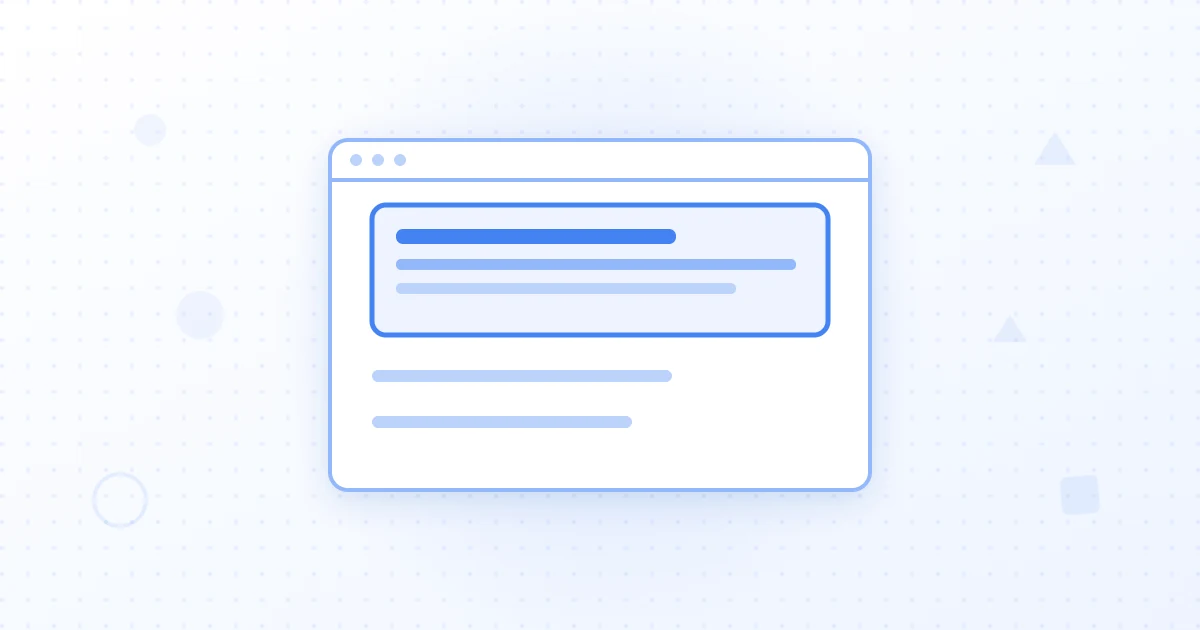

Google's featured snippets are the most valuable real estate on search results pages. They appear at the top, above the first organic result, and contain a direct answer to the user's query. Because of that prime placement, featured snippets capture significantly more clicks and visibility than position #1 without a snippet. Winning position zero is often more valuable than winning first place in traditional rankings.
Featured snippets aren't a separate ranking achievement. They're pulled from pages that already rank on the first page for that keyword. Google's algorithm scans the top 10 results, identifies pages with well-formatted answers, and promotes those answers to the featured snippet box. To win a featured snippet, you must first rank in the top 10, then optimize your content's format and structure to match Google's snippet selection criteria.
Position zero, or featured snippet, is Google's term for answers that appear in a special box above the organic results. The box typically includes a title (linked to the source page), a brief excerpt (usually 40-60 words), and the source URL. Featured snippets make up roughly 12-15% of all Google search results, meaning they appear on about one in seven SERPs.
The importance of featured snippets lies in their placement and formatting. Users see the snippet before they click any link. For informational queries (how-to, definitions, comparisons), the featured snippet provides an immediate answer, reducing the need to click. Yet even when the snippet answers the question, many users still click through to read the full article. Google's Search documentation explains that featured snippets are designed to help users find information quickly.
Winning a featured snippet boosts brand visibility and establishes authority. When Google surfaces your answer in position zero, it signals to users that your content is authoritative and well-structured. That visibility often translates into brand recognition and traffic, even when the user doesn't click.
Google displays featured snippets in several formats, each optimized for different query types. Understanding the format is critical because you have to match Google's preferred format for your query to win the snippet.
Paragraph snippets are the most common type. They contain a short text answer, typically 40-60 words pulled from a paragraph on your page. These snippets typically answer "what," "why," and definitional queries. To optimize for paragraph snippets, write clear, concise paragraphs that answer the question directly in the first 1-2 sentences. Avoid burying the answer in middle paragraphs.
List snippets show bullet points or numbered steps. They appear for how-to queries and process-based questions. Google extracts bullets or list items directly from your content. To optimize for list snippets, format your how-to steps as a bulleted or numbered list with 4-7 items. Each step should be clear and self-contained.
Table snippets show data in structured rows and columns. They appear for comparison queries (e.g., "vs" questions) and data-heavy topics. To optimize for table snippets, build a real HTML table or clearly structured data. Avoid CSS-based layout hacks; Google prefers semantic HTML tables.
Video snippets embed YouTube or other video platform content. They appear for tutorial and visual queries. To win a video snippet, upload your content to YouTube, mark it up with the right schema, and make sure the video answers the query directly. Video snippets often drive more clicks than text snippets.
Winning a featured snippet requires strategic content optimization. Start by identifying target keywords that already have featured snippets. If a keyword doesn't have a snippet yet, optimizing for one can take longer. Search your target keyword on Google and look for the snippet box. If one exists, you have a playbook: analyze the snippet's format and match it.
Next, audit your current ranking for that keyword. If you rank outside the top 10, focus on improving your baseline ranking through link building and on-page optimization before optimizing for the snippet. Featured snippets are pulled from existing rankings; there are no exceptions. Snippet optimization is a second-tier tactic that works only after first-page ranking is secured.
Once you rank in the top 10, rewrite or restructure your relevant section to match the snippet format. If the snippet is a paragraph snippet, move your best answer to the first paragraph beneath a clear, keyword-rich heading. If the snippet is a list, convert your content into a bulleted or numbered list. If the snippet is a table, build a simple HTML table with clear headers and data.
Format specificity matters. Google prefers semantic HTML elements (proper lists, table tags) over styled divs. Bold key terms inside the snippet text. Include the target keyword at least once inside your snippet section. Use short sentences and avoid jargon.
Content length should target 40-60 words for paragraph snippets and 5-9 items for list or table snippets. Snippets that are too long get truncated; snippets that are too short may not be selected. Test your content by searching the keyword on Google and comparing your format to the existing snippet.
Although not required to win a featured snippet, schema.org structured data increases your chances of being selected. Schema markup helps Google understand the content type and data relationships. For how-to content, use HowTo schema. For FAQs, use FAQPage schema. For articles with a specific structure, use Article schema.
Google's structured data guide explains how to implement schema.org markup correctly. Valid, well-formed schema increases your eligibility for rich results and featured snippets. Invalid schema can hurt your SERP appearance.
Test your schema using Google's Rich Results Test tool. The tool validates your schema markup and shows how Google will interpret your structured data. Fix every error before publishing.
Featured snippets appear above the first organic result, but they don't guarantee more clicks than position #1 without a snippet. Click-through rate (CTR) depends on the query intent and snippet format. Informational queries with paragraph snippets often show high CTR because users want to learn more. How-to queries with list snippets also show strong CTR because users want the full guide. Definition snippets may show lower CTR if they fully answer the question on the SERP itself.
The snippet's meta description also affects CTR. A snippet with a clear, compelling title and URL excerpt drives more clicks. Optimize your title tag and meta description for the featured snippet target keyword, not just for search visibility.
Featured snippets are most valuable for mid-funnel content. Top-of-funnel awareness content may not see high CTR from snippets because the user is just gathering information. Bottom-of-funnel commercial content benefits more from snippet placement because the user is closer to a buying decision.
Featured snippets are dynamic. Google re-evaluates snippet ownership regularly, especially when new content is published. If a competitor publishes better-formatted content on the same topic, Google can shift the snippet to their page. Monitoring and maintaining your snippet position is ongoing work.
To steal a snippet from a competitor, analyze their format and improve on it. If their snippet is a paragraph snippet, create a more concise, direct paragraph. If theirs is a list, create a more comprehensive list with better explanations. If theirs is a table, build a cleaner, better-organized table. Make your version more useful, more authoritative, and better-formatted.
Publish your improved content and submit it to Google Search Console. Request indexing via the "Inspect URL" tool. If your content is stronger and better-formatted, Google often switches the snippet within 1-4 weeks.
Mistake 1: Optimizing before first-page ranking. Featured snippets cannot be won from page 2. If you don't rank in the top 10, focus on ranking first before optimizing for snippets.
Mistake 2: Excessive keyword stuffing. Snippets need to read naturally. Keyword stuffing makes content unreadable and reduces Google's willingness to select your snippet.
Mistake 3: Ignoring the snippet format. If the current snippet is a list, don't submit a paragraph. Match the format or Google won't select your content.
Mistake 4: Making snippets too long or too short. Keep paragraph snippets at 40-60 words. Lists should have 5-9 items. Too much content gets truncated; too little gets skipped.
Mistake 5: Failing to refresh snippets regularly. Snippets need maintenance. If your information goes stale or a competitor publishes fresher content, your snippet can be lost.
Track featured snippet performance in Google Search Console. Filter impressions and CTR by your target keywords. Featured snippet positions show higher impression counts because the snippet appears to more searchers. Monitor CTR to see whether clicks rise. Successful snippet optimization should show a 20-40% traffic increase to that page within 4-8 weeks.
Use tools to monitor snippet changes. Set up alerts for your target keywords so you know immediately when you lose a snippet or gain one. Take monthly snapshots of your snippet to catch changes before they impact traffic.
Featured snippets (position zero) are among the most valuable SERP real estate because they appear above the first organic result and drive both clicks and brand visibility. Winning a featured snippet requires matching Google's preferred format, clear content structure, and authoritative information. Unlike traditional ranking, snippet ownership requires constant monitoring and maintenance.
Start by identifying keywords in your industry that already have featured snippets. Audit your current ranking for those keywords. If you rank in the top 10, immediately optimize your content format to match the snippet. If you rank lower, build backlinks and improve on-page SEO first, then optimize for the snippet. Use our SEO competitor spy tool to track snippet ownership and identify opportunities to claim position zero.

Yes. Google can pull a featured snippet from any page on the first SERP, not just the top-ranked result. Sometimes the page ranking #2 or #3 offers a better-formatted answer and wins the snippet. Your ranking position and snippet ownership are independent. You have to optimize content quality and formatting.
Studies suggest featured snippets increase traffic by 20-40% for the winning page, though this varies by query type and industry. Informational queries with snippets often show higher traffic gains because the snippet itself can drive clicks. Queries where the snippet fully answers the question may show lower CTR.
Usually 1-4 weeks if you already rank in the top 10 for that keyword. If you're on page 2 or lower, improve your baseline first-page ranking before optimizing for the snippet. New domains may take 4-8 weeks depending on domain authority and backlink profile.











.svg)
.svg)