Preferences
Privacy is important to us, so you have the option of disabling certain types of storage that may not be necessary for the basic functioning of the website. Blocking categories may impact your experience on the website. More information
Privacy is important to us, so you have the option of disabling certain types of storage that may not be necessary for the basic functioning of the website. Blocking categories may impact your experience on the website. More information

Learn how to use AI marketing in a startup: 8 use cases, 5 ways to organize it, a lean tool stack, legal rules and a 30-day plan to start with one channel.
In short
AI marketing for startups is the use of AI models and AI tools to do the marketing work of a full team with one or two people: research, content, SEO, emails, support and reporting. Start with one channel tied to revenue, give the AI your real customer context, and keep a human check on everything it publishes.
Want to go further? Ask
Quick quiz
How should you use AI in your marketing?
Sorank matches your answers


Test it for 3 days on your own site and see where you stand on Google, ChatGPT and the other AIs.
Start 3-day free trial3 days free, then stop whenever you want. 90-day results guarantee, conditions apply.
AI marketing for a startup means one thing: a founder or a first marketer uses AI to produce, publish and measure work that used to need several specialists. It is not a strategy by itself. AI speeds up execution. It does not tell you who your buyer is or why they should pick you over the incumbent.
The big companies use AI to squeeze a few points of efficiency out of large teams. A startup uses it for a different reason: there is no team. The question is not "how do we save 10% of our content budget" but "how do we publish, send, answer and measure at all, with 6 hours a week and no budget line for marketing". If you want the general picture first, our guide to what AI does well and badly in marketing covers it. This article stays on the startup case: little time, little money, a product that may still change, and the need for results in weeks, not quarters.
Every AI marketing setup is built from three layers. Knowing which layer you are buying saves money and frustration.
Most startups should combine the first layer for thinking and the third layer for one repetitive channel. The middle layer is where tool bills pile up.
Four things never leave the founder's hands, whatever the tool: positioning (who you are for and against whom), customer conversations, the final say on claims and prices, and the relationships with partners, investors and early customers. An AI can draft an interview guide; it cannot sit in the call and hear the hesitation in a buyer's voice.
AI is now the baseline in small business marketing
Sources: U.S. Chamber of Commerce, Empowering Small Business Report, August 2025; HubSpot, State of AI in Marketing, 2026
AI changes the math because the cost of a first draft has dropped close to zero, so the bottleneck moves from production to judgment. A founder who used to choose between writing a blog post and answering support tickets can now do a reviewed version of both in the same afternoon.
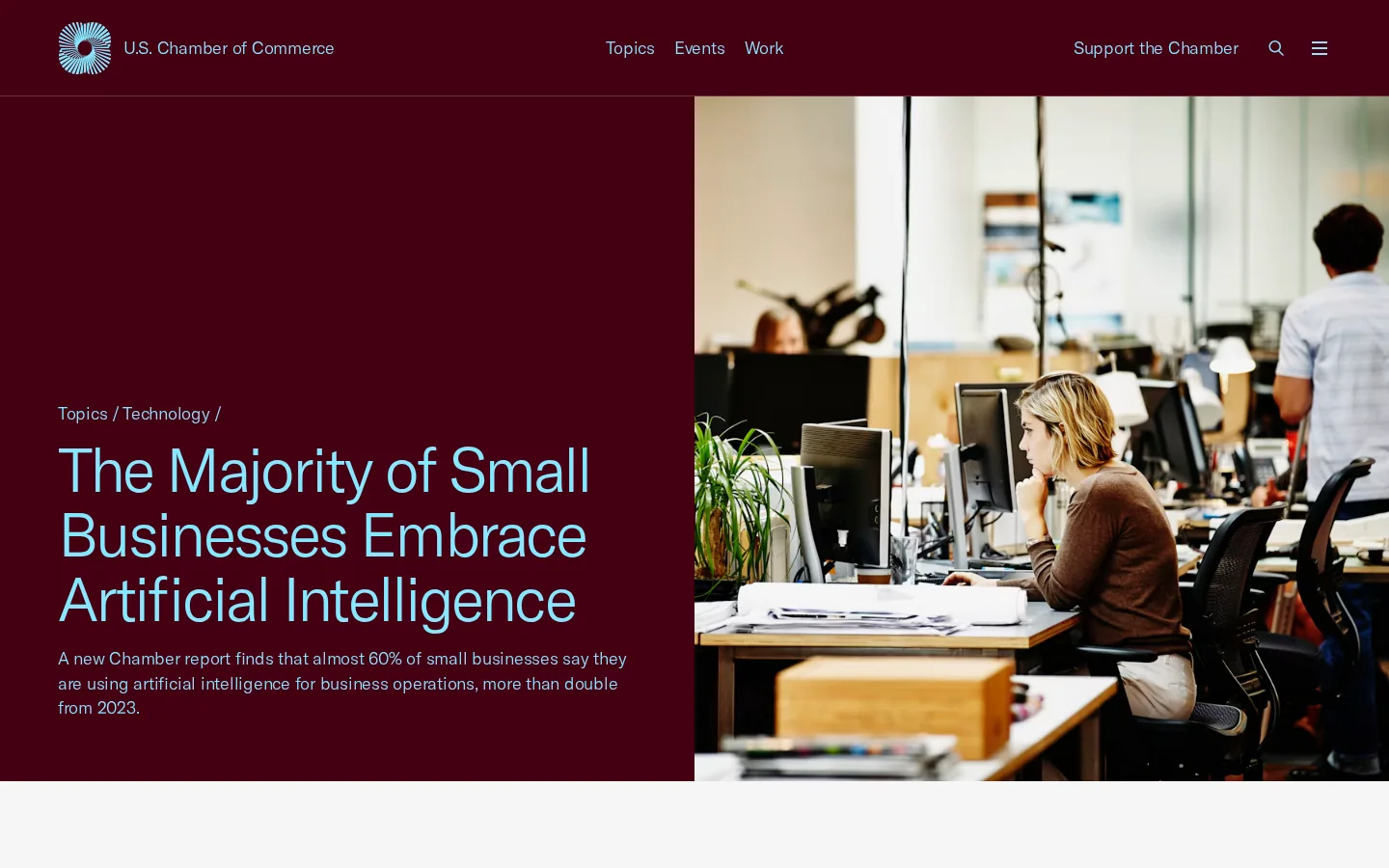
Adoption has moved fast. The U.S. Chamber of Commerce 2025 Empowering Small Business Report (August 2025) found that 58% of small businesses self-identify as using generative AI, up from 40% in 2024 and 23% in 2023. Your competitors are already using it. Using AI is no longer an edge; using it well is.
US small businesses using generative AI
Source: U.S. Chamber of Commerce, Empowering Small Business Report, August 2025
HubSpot's State of AI in Marketing report (survey of 1754 marketers, article by Ramona Sukhraj, updated October 2026) shows content creation far ahead of every other use. Analysis and personalization come much lower. That gap is an opportunity for a startup: everyone uses AI to write, few use it to understand their buyers.
Source: HubSpot, State of AI in Marketing, 2026
The same HubSpot data has a warning. 52% of marketers believe AI has made content so easy to create that it is less effective overall, and 53% struggle to stand out in a market full of AI content. For a startup, this means volume alone wins nothing. The content that works carries something the AI could not invent: your data, your customer quotes, your opinions, your screenshots.

The use cases that pay off first are the ones where the work is repetitive, the input is text you already own, and a mistake is cheap to catch before it goes out. Here are the eight that fit most startups, with what the AI does, what you keep, and the technical detail that makes the difference.
| Use case | What AI does | What you keep | Time to first result |
|---|---|---|---|
| Customer research | Summarizes interviews, reviews and support tickets into pains and words | The interviews themselves | Days |
| SEO content | Finds keywords, writes and updates articles | Expertise, data, final review | 2 to 6 months |
| AI search visibility | Tracks whether ChatGPT, Claude and Gemini cite you | Fixing what the answers get wrong | Weeks |
| Drafts sequences, subject lines, segments | Offer, consent, sending decision | Days | |
| Chatbot and support | Answers common questions from your docs | Refunds, edge cases, angry customers | Days |
| Social media | Turns one long piece into many short posts | Your voice and opinions | Days |
| Ads | Generates copy and visual variations to test | Budget, targeting, claims | Weeks |
| Analytics | Reads exports, finds patterns, writes the weekly report | The decisions | Days |
Start here, even before content. Paste 10 interview transcripts, your G2 or app store reviews, or 50 support tickets into Claude or ChatGPT and ask for the recurring problems, the exact words customers use, and the alternatives they mention. Ask the model to quote the source line for each finding, so you can check that it did not make one up. The output becomes the input of every other use case: keywords, email angles, ad hooks.
Technical detail: anonymize before you paste. Remove names, emails and company names, and check your plan's data settings (business plans of the major AI models do not train on your inputs by default; free consumer plans may). For European customers, personal data in a prompt is still personal data under GDPR.
Search is the channel where AI gives a startup the most leverage, because content compounds: an article written in March still brings visitors in December. AI handles keyword research, briefs, drafts and updates. You bring what Google rewards: experience and original information. Google's position has been stable since its February 2023 post: AI-generated content is fine when it is helpful, and using AI to mass-produce pages mainly to manipulate rankings breaks its spam policies.
A practical loop: find 20 keywords your buyers type with a free keyword research tool, group them by intent, write one strong page per group, then check Search Console every two weeks to see which queries each page gets. Our content plan for each startup stage details what to publish first. If you want this loop to run on its own, Sorank's AI article generator for Google and AI search plans, writes and publishes articles from your keyword research, in your brand voice.
Your buyers now ask ChatGPT, Claude and Gemini "what is the best tool for X". If your startup is not in the answer, you are not on the shortlist. Optimizing for this is called generative engine optimization (GEO). The work: be mentioned on pages AI models read (comparisons, directories, forums, partner blogs), publish clear pages that answer buyer questions directly, and track the answers over time. Test where you stand today with the free ChatGPT visibility checker, then track it every week with AI mention tracking.
AI is very good at the parts of email that founders skip: onboarding sequences, win-back emails, subject line variations, and segmenting a list by behavior. Give it your customer research and one goal per email. Keep three things human: the offer, the consent of the people on your list, and the decision to send. For the workflows themselves (welcome, trial ending, inactive user), see our guide to email marketing automation workflows.
A chatbot trained on your help center can answer the same 20 questions that fill your inbox, at night and on weekends. The technical key is grounding: the bot must answer only from your documents, say "I don't know" otherwise, and hand over to a human for refunds, billing disputes and anything legal. Feed it a clean FAQ first. A bot built on a messy help center repeats the mess, faster. Our comparison of chatbot software lists the options.
Do not ask AI to "write 30 LinkedIn posts". Give it one strong source (a customer call, an article, a product update) and ask for 5 posts that each make one point from it. The source carries the substance; the AI carries the formatting for each network. Rewrite the first line yourself: the hook is where your voice shows most.
AI cuts the cost of creative testing. Generate 10 headlines and 5 visual concepts from your customer words, launch 3 or 4, kill the losers fast. The risk is in claims: an AI will happily write "the #1 tool" or "results in 7 days". Every claim in an ad must be one you can prove.
Export your analytics, ad and CRM data to CSV and ask the model to compare this month with last month, list the 3 biggest changes and suggest causes. Always ask it to show the calculation. Models are good at spotting patterns and still make arithmetic slips on large tables; when the number matters, recompute it in a spreadsheet.
There are five ways to organize AI marketing, from "one chat window" to "one system that runs a channel on its own". The right one depends on your time, your budget and how repetitive the channel is. Most startups move from the first to a mix of the first and the fourth as they grow.
Principle: one general AI model, used ad hoc for each task. When to use it: before product-market fit, when everything changes weekly. Advantages: almost free, flexible, nothing to set up. Limits: nothing runs without you, context is lost between sessions, quality depends on your prompts. Example: a founder drafts a launch email, a landing page and an investor update in one afternoon with Claude. Improve it with a saved context file (see the step-by-step section) and solid prompt engineering basics.
Principle: one specialized AI tool per job (email writer, ad generator, transcription, keyword tool). When to use it: when you have a marketer who enjoys tools. Advantages: each tool is good at its job. Limits: subscriptions add up, data lives in five places, someone has to connect everything. Example: a seed-stage team pays for six tools and uses two of them.
Principle: a CRM or marketing platform with AI built into every module. When to use it: once you have a sales process and a list worth segmenting. Advantages: one database, AI that knows your contacts. Limits: often priced per contact or per seat, and the AI features are rarely the best of each category. Example: a B2B startup runs emails, forms, chat and reporting in one CRM.
Principle: a system that runs one repetitive channel end to end, with your review. When to use it: when one channel is clearly worth it but you lack the hours to feed it. Search and AI visibility are the classic case, because they need steady publishing for months. Advantages: the work happens even in a busy week; results compound. Limits: you must set the rules well (brand voice, topics to avoid) and review regularly. Example: a SaaS founder sets up an SEO and GEO autopilot once, then spends 30 minutes a week reviewing articles and AI visibility reports.
Principle: a human expert who uses AI to deliver faster. When to use it: for a launch, a rebrand or a channel you know nothing about. Advantages: judgment and experience included. Limits: the most expensive option, and knowledge leaves with the contract. Example: a startup hires a freelancer for a 6-week paid ads test, then keeps the winning campaigns in-house.
| Approach | Setup time | Weekly founder time | Cost level | Best stage |
|---|---|---|---|---|
| Prompt-by-prompt | None | High | Very low | Pre-product-market fit |
| Point-tool stack | Days | Medium | Medium, grows with each tool | Teams with a marketer |
| All-in-one suite | Weeks | Medium | Medium to high | After first sales process |
| Autopilot for one channel | Hours | Low | Low to medium | As soon as one channel is proven |
| Freelancer or agency plus AI | Days | Low | High | Launches and new channels |
Point-tool stack vs autopilot for one channel
Start with the use case closest to revenue at your current stage. Before you have customers, that is research. With your first customers, it is the channel that brought them. After product-market fit, it is the channel that scales without hiring.
| Stage | Main question | First AI use case | Second AI use case | Skip for now |
|---|---|---|---|---|
| Pre-launch | Does anyone want this? | Customer research and positioning | Landing page copy and tests | Chatbot, large content plans |
| First 10 to 100 customers | Where do buyers come from? | Email onboarding and follow-up | SEO on bottom-of-funnel keywords | Big ad budgets |
| Product-market fit | How do we grow without hiring? | SEO and AI visibility on autopilot | Support chatbot | New channels without data |
| Scaling | Which channel gives the best return? | Analytics and attribution | Ads creative testing | Tools nobody owns |
Bottom-of-funnel keywords are searches made by people ready to buy: "[your category] software for [segment]", "[competitor] alternative", "[problem] tool". They have small volume and high value, which is exactly what a young site can win. For a startup-focused overview of how search fits each stage, see Sorank for startups, and for the tools themselves, our list of SEO tools for startups by stage and budget.
Tip
Before choosing a channel, calculate what a customer costs you today. The free customer acquisition cost calculator gives you the number to beat with each new AI-powered channel.
Your first 30 days should produce one working channel, not ten experiments. Here is the method we recommend: build the context once, pick one channel, ship, measure, then automate what worked.
The 30-day AI marketing plan for a startup
The single biggest quality jump in AI marketing comes from context. A model that knows your buyer, your proof and your tone writes like a colleague; a model without it writes like everyone else. Write it once, save it, and paste it at the start of every session (or into the "project" or "custom instructions" feature of your AI model).
COMPANY CONTEXT (paste before every marketing task)
Product: [what it does in one sentence]
Buyer: [job title, company size, industry]
Main pain: [in the buyer's own words, quoted from interviews]
Alternatives they use today: [spreadsheet, agency, competitor X]
Why us: [3 provable differences, each with its proof]
Proof we can cite: [numbers we are allowed to publish, customer quotes with consent]
Tone: [e.g. direct, plain words, no hype, "you" not "we"]
Never say: [claims we cannot prove, banned words, competitor names]
Goal of this task: [one goal, one action for the reader]
Keep the "Never say" line. It stops the classic AI slips: invented statistics, "industry-leading", promises you cannot keep.
Use a prompt that forces the model to stay on your data:
Here are 12 anonymized customer interview transcripts.
1. List the 5 most frequent problems, ranked by how many transcripts mention them.
2. For each problem, quote 2 exact sentences from the transcripts.
3. List every alternative or competitor mentioned.
Only use the transcripts. If something is not in them, write "not found".Write the number down: trial signups from organic search, replies to the onboarding email, tickets closed by the bot. One channel, one number, 30 days. Everything else waits.
Every piece goes through the same 3 checks before publishing: are the facts true (each number has a source), does it sound like us (read it aloud), would a customer learn something new. Our method to fact-check AI content before you publish it turns the first check into a 10-minute routine.
Tag every link you share in emails, social posts and ads so your analytics can tell the channels apart. A consistent pattern:
https://yourstartup.com/pricing?utm_source=newsletter&utm_medium=email&utm_campaign=onboarding-day3Build them without typos using the free UTM link builder. Visitors from AI models usually arrive without tags. In Google Analytics 4, create a custom channel group named "AI referral" with this condition on the session source, placed above the "Referral" channel so it catches these visits first:
^(.*\.)?(chatgpt\.com|chat\.openai\.com|gemini\.google\.com|claude\.ai|copilot\.microsoft\.com)$This shows only the visits where the AI model passes a referrer; part of AI traffic still lands in "Direct". For the limits of each attribution model, read our guide to crediting traffic from AI answers.
Once a routine has worked for 4 weeks, automate it. A weekly email that converts becomes a triggered sequence. A blog routine that brings signups becomes an autopilot. The founder's time moves from producing to reviewing.
A startup needs four or five tools, not fifteen: one general AI model, free Google tools for data, one email platform, one design tool, and one system for the channel you scale. Start with free tiers and pay only when a tool removes a task you do every week.
| Job | Free or low-cost starting point | Upgrade when |
|---|---|---|
| Thinking, drafting, analysis | ChatGPT, Claude or Gemini (free plans) | You hit usage limits weekly or need business data privacy |
| Search data | Google Search Console, Google Analytics 4 | Never needed to pay here at the start |
| Keyword ideas | Free keyword tools, Search Console queries | You publish more than 4 pages a month |
| Free tier of an email platform (Brevo, Mailchimp) | Your list passes the free contact limit | |
| Visuals | Canva, image generation in your AI model | You run ads every week |
| CRM | Free CRM tier or a shared spreadsheet | More than one person sells |
| SEO and AI visibility on autopilot | Sorank | As soon as search is your chosen channel |
For a longer comparison by job, see our ranking of the best AI marketing tools. One rule from experience: before adding a tool, write down which weekly task it removes. If you cannot name the task, do not buy it.
Tip
Need a brief for your first article without paying for a tool? The free AI content brief generator gives you the outline, questions to answer and keywords to cover in seconds.
AI does not change marketing law: you remain responsible for every email, claim and chatbot answer, whoever wrote it. Three sets of rules matter most for a startup selling in the US and Europe.
In the US, the CAN-SPAM Act (15 U.S.C. 7704, Cornell Law School) requires a valid physical postal address, a clear way to opt out, no misleading subject lines, and that you stop sending within 10 business days of an opt-out request. An AI writing your subject lines does not know this; your template must. In the EU, GDPR adds consent rules on top: in most countries, no marketing email to a private person without prior opt-in.
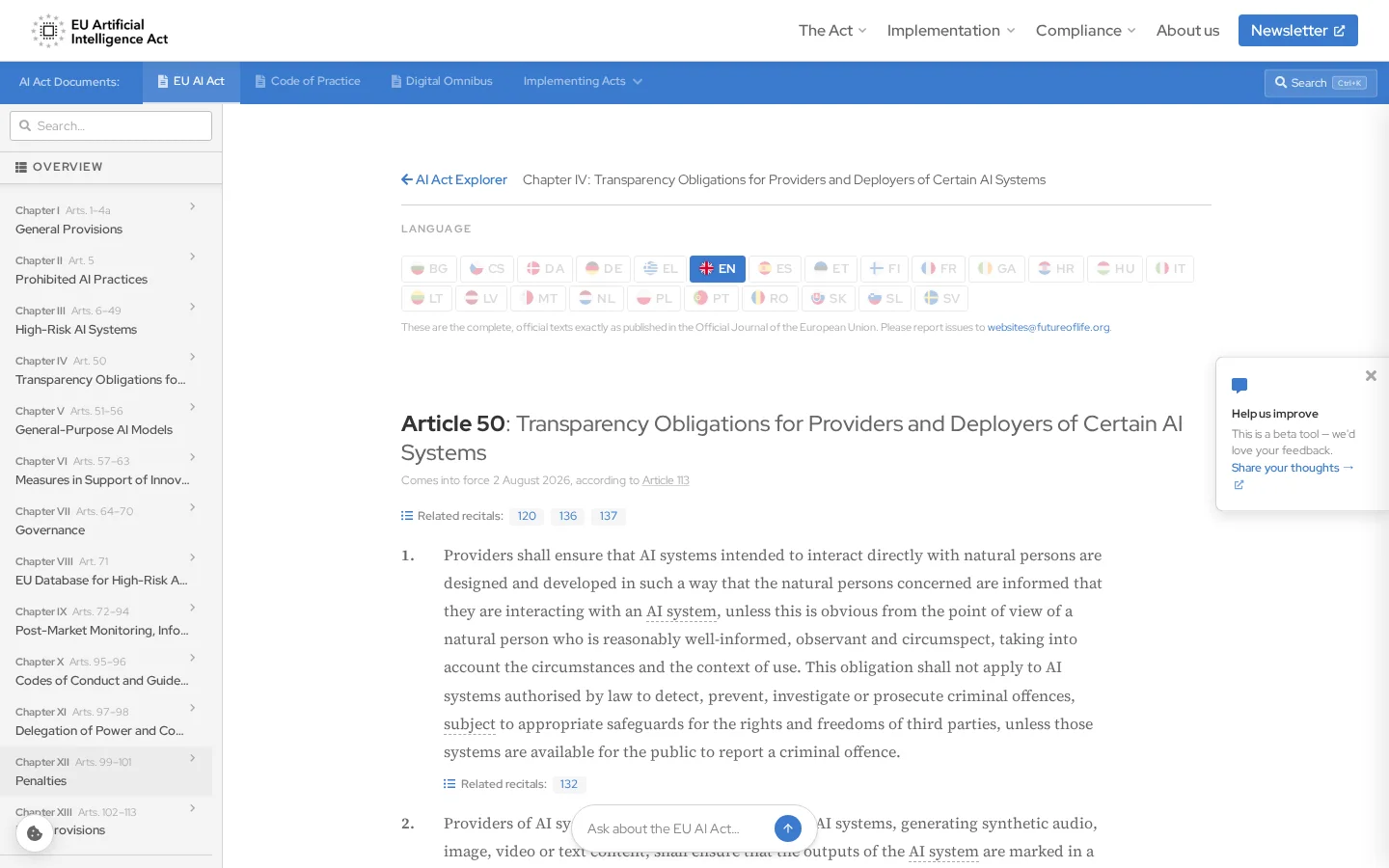
Article 50 of the EU AI Act, which applies from 2 August 2026, requires that people be told when they interact with an AI system, unless it is obvious. Deepfake images, audio and video must be disclosed as AI-generated. For your startup: label the chatbot clearly ("AI chatbot, a human can take over"), and never use AI-generated faces or voices that pass as real customers.
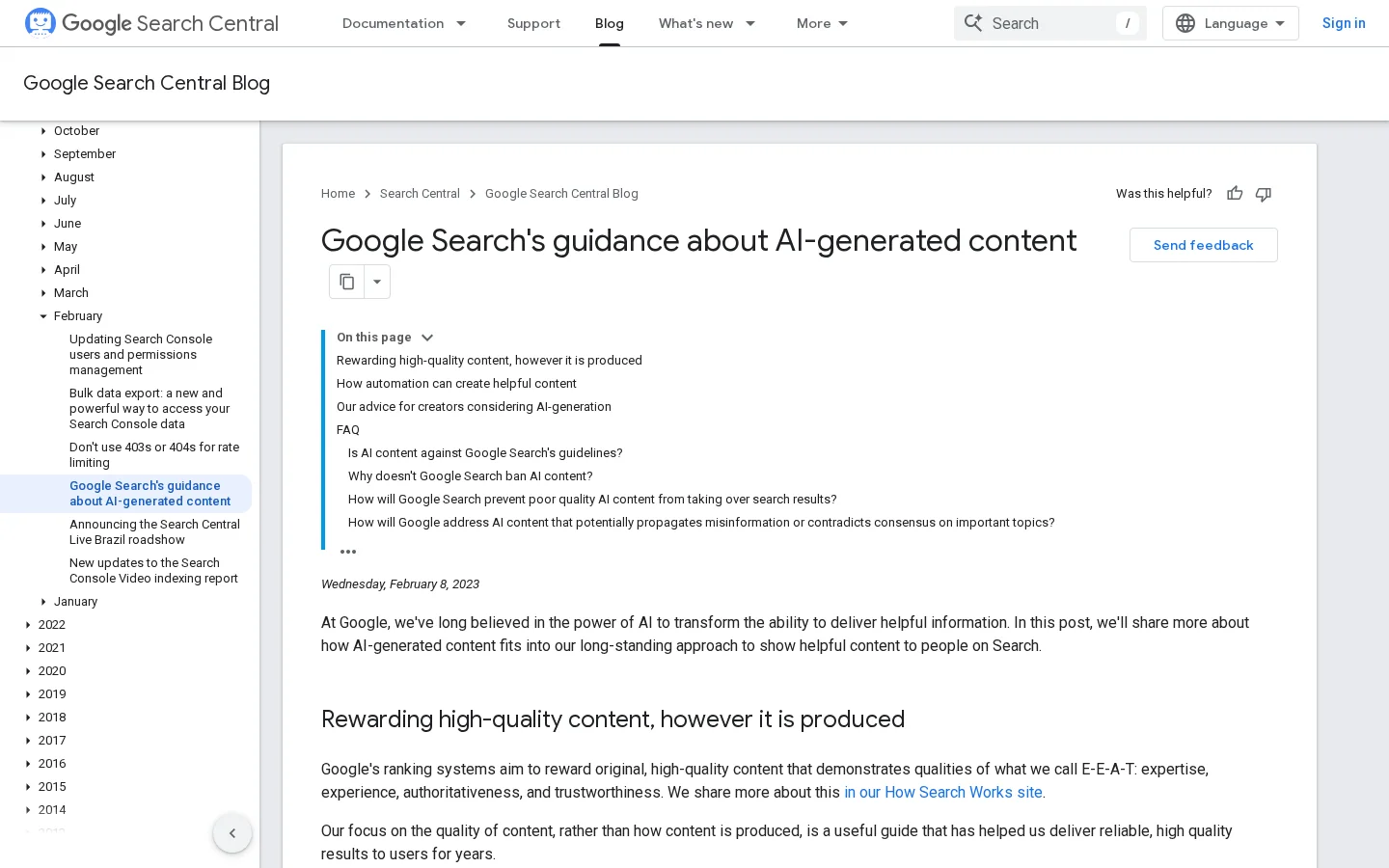
Google judges content on quality, not on how it was made. But its spam policies list "using generative AI tools or other similar tools to generate many pages without adding value for users" as scaled content abuse. The safe pattern: fewer pages, each with real information, a named author and a human review.
Compliance checklist before you publish AI marketing
The most common mistake is using AI to do more of the wrong thing faster. Here are the seven we see most, how to spot each one and how to fix it.
What it is: asking "write a blog post about X" with no information about your product or buyer. How to spot it: your content could be signed by any competitor; swap the brand name and nothing changes. How to fix it: use the context file from step 1 and add one element only you have in every piece: a customer quote, a number from your product, a screenshot.
What it is: blog, LinkedIn, TikTok, newsletter, ads, all launched the same month because AI makes it "easy". How to spot it: after 60 days, no channel has a clear number going up. How to fix it: stop everything except the channel closest to revenue, and give it 30 days with one number.
What it is: publishing statistics or calculations from a model without checking them. How to spot it: ask the model for the source URL; if it cannot give one, or the page does not contain the number, it was invented. How to fix it: every figure gets a link you opened yourself, and every calculation gets recomputed in a spreadsheet.
What it is: generating hundreds of near-identical pages ("[service] in [city]") to catch long-tail traffic. How to spot it: Search Console shows many pages "Crawled, currently not indexed", or impressions drop after a core update. How to fix it: merge thin pages into fewer strong ones, add real local or product information, and redirect the rest.
What it is: a bot that loops on generic answers and never reaches a human. How to spot it: read 20 conversations a week; look for repeated questions, "human" or "agent" typed by users, and abandoned chats. How to fix it: limit the bot to your documented answers, add a visible human handoff, and route billing and refund questions to a person.
What it is: optimizing for Google while ChatGPT, Claude and Gemini describe your product wrongly or recommend a competitor. How to spot it: ask each model the 10 questions your buyers ask before buying, and note who gets named. How to fix it: publish clear pages that answer those questions, get mentioned on the comparison pages the models cite, and track the answers monthly.
What it is: paying for an AI tool because a demo looked good. How to spot it: you have logins you have not used in 30 days. How to fix it: list your subscriptions, keep only those tied to a weekly task, and run new tools on a free trial against one precise job.
AI marketing done badly vs done well
Measure AI marketing the same way as any marketing: by what it brings in, not by how much it produced. Number of posts or articles is an activity metric. Signups, demos, revenue and cost per customer are results.
| Use case | Activity metric (watch) | Result metric (decide on) | Where to find it |
|---|---|---|---|
| SEO content | Pages published, impressions | Organic signups, clicks on money pages | Search Console, GA4 |
| AI visibility | Prompts tracked | Share of AI answers naming you, AI referral visits | AI tracking tool, GA4 channel group |
| Open rate | Click rate, trial to paid conversion | Email platform, CRM | |
| Chatbot | Conversations | Share resolved without a human, satisfaction | Chatbot dashboard |
| Ads | Variations tested | Cost per acquisition, return on ad spend | Ad platform, CRM |
For a founder, hours are the scarcest resource. Track them simply: note how long a task took before AI and after, for 4 weeks. HubSpot's report found that about a third of marketing teams save 10 to 14 hours a week with AI and another third save more than 15. If your number is far below, the setup (context, review, automation) is the problem, not the tool.
Email and ads show results in days. Search and AI visibility need months, because pages must be crawled, indexed and trusted. Judge them on leading signals first (impressions in Search Console, first mentions in AI answers), then on signups after 3 to 6 months.
You can start AI marketing in one hour today: write your context file, paste 10 customer messages into an AI model, and extract the top 3 pains in your buyers' own words. That page will improve every email, article and ad you produce from now on.
Then pick the one channel closest to revenue at your stage and give it 30 days. If that channel is search and AI answers, let a system do the repetitive part: Sorank finds your keywords, writes and publishes articles in your brand voice, gets you links from sites in your niche and tracks whether ChatGPT, Claude and Gemini cite you. You keep what AI cannot do: talking to customers and deciding where the company goes.
Start with the free plan of a general AI model such as ChatGPT, Claude or Gemini, plus Google Search Console and Google Analytics 4. Write a one-page context file about your product and buyer, then use it to mine customer feedback and draft emails or articles for one channel. Pay for a tool only when it removes a task you do every week.
Automate the repetitive task closest to revenue at your stage. Before launch, that is customer research; with first customers, onboarding emails; after product-market fit, SEO and visibility in AI answers, because they need steady publishing for months. Run it by hand for 30 days first, then automate the routine that worked.
No, Google judges content on quality, not on how it was made, as it explained in February 2023. What its spam policies forbid is generating many pages without adding value for users, called scaled content abuse. Publish fewer pages, each with real information, a named author and a human review.
We analyse your competitors, your website and your AI visibility to create a tailored content plan for free.
 AI Content Brief Generator
 FAQ Schema Generator
 AI Blog Post Ideas Generator
 Structured Data Validator (Schema Validator)
 Alt Text Checker
 Internal Link Analyzer
 Backlink Challenge
 AI Meta Description Generator
 AI Blog Title Generator
 Google Indexability Checker
 AI Blog Outline Generator
 UTM Link Builder
 Keyword Clustering Tool
 Canonical Tag Checker
 XML Sitemap Generator
 Broken Link Checker
 AI SEO Title Generator
 Headline Analyzer
 SERP Preview Tool
 Redirect Checker
 Hreflang Tag Generator
 Heading Structure Analyzer
 HTTP Headers Checker
 Favicon Extractor
 SERP CTR Calculator
 SEO vs Paid Search Savings Calculator
 SEO Share of Voice Calculator
 SEO ROI Calculator
 SEO Traffic and Revenue Forecast Calculator
 SEO Budget Calculator
 SEO Break-Even Calculator
 SaaS SEO ROI Calculator
 ROAS Calculator
 Reading Time Calculator
 Ranking Gain Simulator
 Organic Traffic Value Calculator
 Organic Traffic Estimator and Website Traffic Checker
 LTV to CAC Ratio Calculator
 Local SEO ROI Calculator
 Link Building Cost Calculator
 Keyword Value Calculator
 Keyword Opportunity Score Calculator
 Keyword Density Calculator
 GEO ROI Calculator
 GEO Content Investment Calculator
 Ecommerce SEO ROI Calculator
 Customer Lifetime Value Calculator
 Customer Acquisition Cost Calculator
 CTR Calculator
 Cost Per Article Calculator
 Conversion Rate Calculator
 Content Marketing ROI Calculator
 ChatGPT Referral Traffic Estimator
 Bounce Rate Calculator
 Backlink ROI Calculator
 AI Visibility Score Calculator
 AI Traffic Value Calculator
 AI Share of Voice Calculator
 Cost of AI Invisibility Calculator
 AI Citation Rate Calculator
 llms.txt Validator
 AI Overview Checker and AI Overviews Rank Checker
 Robots.txt Checker
 AI SEO Audit
 LLM Readability Checker
 SearchGPT Readiness Checker
 Structured Data LLM Audit
 Website Crawlability AI Audit
 Why ChatGPT Is Not Recommending My Website
 Gemini Ranking Tool
 Perplexity Ranking Checker
 LLM Citation Checker
 Answer Engine Optimization Audit
 GEO Audit
 AI Search Visibility Test
 ChatGPT Visibility Checker
 llms.txt Generator
 URL Extractor
 Webpage to Markdown
 Sitemap Checker
 SERP Volatility Sensor
 Page Size Checker
 Word Counter
 Slug Generator
 Schema Generator
 Robots Generator
 OG Preview
 Meta Tags Generator
 Image Compressor
 Favicon Generator
 On-Page SEO Audit: SEO Checker and SEO Analyzer
 Backlink Analysis Tool
 Keyword Research Tool
 Domain Authority Checker
 “I tested Sorank on a real client site and it's insane. It does everything an agency would bill you $1500 a month for. It's going into production on that client now.”

 Guillaume Guersanguersanguillaume.com“We are an Ads agency and we wanted to get our SEO back on track once and for all. Sorank gave us a clear view of our site, helped us prioritize optimizations, and properly structure our content. The tool is easy to use, well designed for a team, and very practical for centralizing tracking without having to juggle multiple platforms. A very solid foundation to start fresh with our SEO.”
 Gaspard MadouiAds Agency
 “I just let the Sorank software do its thing, and now my DR is 25 and my page is ranking higher.”
 Lucas Flandrefoundertrace.fr“I specialized in GEO thanks to Sorank. The GEO Leaderboard allows me to show my clients their position vs competitors on ChatGPT. It’s a real commercial differentiator.”
 MélanieSEO Freelance“Great service, works well for our website and helps us understand how to improve it to rank better on Google and elsewhere. Congrats, keep going, I recommend it.”
 Hugo T.E-commerce merchant