Preferences
Privacy is important to us, so you have the option of disabling certain types of storage that may not be necessary for the basic functioning of the website. Blocking categories may impact your experience on the website. More information

Privacy is important to us, so you have the option of disabling certain types of storage that may not be necessary for the basic functioning of the website. Blocking categories may impact your experience on the website. More information

Link building for ecommerce websites: which pages to target, 8 store-specific strategies (suppliers, PR, reviews, dead URLs) and the tactics Google penalizes.

Tools

In short
link building for an ecommerce website means earning links from other sites to the pages that sell, mostly the homepage, category pages and buying guides, because few sites link to a product page on their own. The tactics that work best for stores are store-specific: links from suppliers and brands you stock, converting unlinked mentions, reclaiming links that point to discontinued products, buying guides and data that journalists cite, and product reviews with the right link attributes. Bought links and mass link swaps break Google's spam policies and can cancel the effort.
Want to go further? Ask
Quick quiz
How should you get links from other websites?
Sorank matches your answers


Test it for 3 days on your own site and see where you stand on Google, ChatGPT and the other AIs.
Start 3-day free trial3 days free, then stop whenever you want. 90-day results-or-refund guarantee.
Link building for ecommerce websites follows the same principle as any link building: a link from a relevant, trusted site tells Google that your page deserves to rank. What changes is the raw material. An online store has hundreds or thousands of commercial pages, products that appear and disappear, and very little content that a blogger would cite spontaneously. Google lists what it treats as manipulation in its spam policies (checked October 2026); this guide covers what remains, tactic by tactic, for a store.
Three features of online stores shape the strategy.
The consequence: an ecommerce link strategy combines a few pages built to earn links with a clean internal linking structure that passes their authority to categories and products. Google's ecommerce documentation recommends designing the navigation and linking between pages so that Google understands which pages matter most.
Each type of page plays a different role. The table shows where links come from naturally and where they help most.
| Page type | Natural link potential | Role in the strategy |
|---|---|---|
| Homepage | High (brand mentions, suppliers, press) | Receives brand links, passes authority to the main categories through the menu |
| Category pages | Medium (gift guides, comparisons, local press) | Main target: they rank for revenue keywords |
| Buying guides and blog articles | High (bloggers, forums, journalists) | Earn links, then pass authority with contextual internal links |
| Product pages | Low, except unique or reviewed products | Benefit from internal links; external links mainly via reviews |
| Data pages, tools, size guides | High when the data is original | Linkable assets for digital PR |
Aim for a mix: most links will land on the homepage and the content, and a meaningful share should reach category pages directly, with descriptive anchors such as the category name rather than "click here", as Google's link best practices recommend. Then check that every guide links to the relevant categories and product pages: this internal step is where external authority becomes sales.
The eight strategies below are ordered from the quickest wins to the most demanding projects.
Many manufacturers and brands publish a list of authorized retailers or stockists. If you sell their products, ask to be listed with a link. These are some of the most relevant links a store can get: same niche, trusted domain, and often a direct path to buyers. Start with the brands that represent the largest share of your sales, and check the request process (a form in the brand's retailer area is common).
Tip
Ask for a link to the category page that lists the brand's products on your store (for example, your "Brand X" collection) rather than the homepage. The anchor will naturally be the brand name, which matches what shoppers search.
Once a store has some visibility, it gets cited in gift guides, forum threads, local press and reviews, often without a link. A short, polite message to the author asking to add a link converts a fair share of these mentions, because the editor already chose to talk about you. Our method for finding unlinked brand mentions covers the search operators and the message to send.
When a product is discontinued or a collection is renamed, the external links pointing to it now lead to a 404 page. Find these pages (the Links report in Search Console and a broken link checker help) and redirect each one with a permanent 301 redirect to the closest equivalent: the replacement product, or the parent category. Google treats a permanent redirect as a signal that the target should be the canonical page, according to its redirect documentation.
Example
A store stops selling the "Model 2024" of a backpack that a travel blog had reviewed and linked. Redirecting the old URL to the "Model 2026" page, or to the "Travel backpacks" category, keeps the value of that link instead of losing it to a 404 page.
"How to choose a road bike size", "Which espresso grind for a moka pot": buying guides earn links from forums, bloggers and Q&A sites because they answer a question once and well. Each guide links to the matching categories and products, which passes on the authority it collects. A store that publishes regularly builds a stock of linkable pages without outreach for every link. If you lack time to write, an article generator can produce the guides from your keywords.
A store holds data nobody else has: best-selling sizes by region, seasonal demand peaks, the share of returns by reason, price changes over a year. Turned into a short study with a chart and a clear finding, this data gives journalists and bloggers a reason to cite you. One solid study can bring links from media that would never link to a product page. See our guide to digital PR for the campaign steps.
Sending products to bloggers, creators or specialist sites builds awareness and reviews. Google's position is explicit: links that pass ranking credit in exchange for goods are against its guidelines. In its best practices for bloggers reviewing products (Search Central blog, March 2016), Google asks bloggers to use nofollow on these links and to disclose the relationship. Treat reviews as a source of traffic, trust and brand mentions, and expect qualified links (rel="sponsored" or rel="nofollow").
Watch out
Never make a free product conditional on a followed link to your store. A gifted product is a form of payment, and an unqualified link in exchange for it falls under link spam in Google's eyes.
Sites that link to several stores in your niche (comparison articles, gift guides, specialist directories, partner blogs) are your warmest prospects: they cover the topic and they link out. List the referring domains of three to five competitors with a free backlink analysis, keep the ones that link to several of them, and offer something more useful than what they cite. Our method to find competitor backlinks details each step.
A store with a showroom, a warehouse or local roots can earn links from its city: local press, events, clubs, trade associations, neighbouring businesses. Complementary brands (a coffee roaster and a grinder shop, for instance) can also co-create content or a joint offer that both sites present. Our guide to local link building lists the sources. If a partnership involves payment, such as a paid event sponsorship, the link should be marked rel="sponsored".
| Strategy | Best target page | Effort | Typical link |
|---|---|---|---|
| Supplier "where to buy" pages | Brand collection or homepage | Low | Followed, editorial |
| Unlinked mentions | Homepage or mentioned page | Low | Followed, editorial |
| Dead URL reclamation | Replacement product or category | Low | Existing link recovered |
| Buying guides | Guide, then categories via internal links | Medium | Followed, editorial |
| Digital PR with store data | Study page | High | Followed, media |
| Product reviews | Product page | Medium | Sponsored or nofollow |
| Competitor link gap | Guides and categories | Medium | Followed, editorial |
| Local and partner links | Homepage or store page | Medium | Followed, or sponsored if paid |
Google's spam policies define link spam as creating links primarily to manipulate rankings. For a store, the common traps are:
The cost of these shortcuts goes beyond a possible manual action: Google can simply ignore unnatural links, so the budget spent brings nothing.
Track a few indicators each month rather than the raw number of backlinks:
Links act with a delay: expect several weeks before a new link shows an effect, and several months before a category moves on a competitive keyword. The most useful comparison is the trend over a quarter.
ChatGPT, Gemini, Perplexity and Google's AI Overviews answer more and more shopping questions ("best waterproof hiking boots under 150", "where to buy organic bed linen"). To build these answers, they draw on the pages that rank and on the sources they trust: comparison articles, reviews, forums and media. The same links and mentions that help on Google therefore increase the chances that an AI names your store. Our study of the platforms AI assistants cite most shows which types of sites weigh the most.
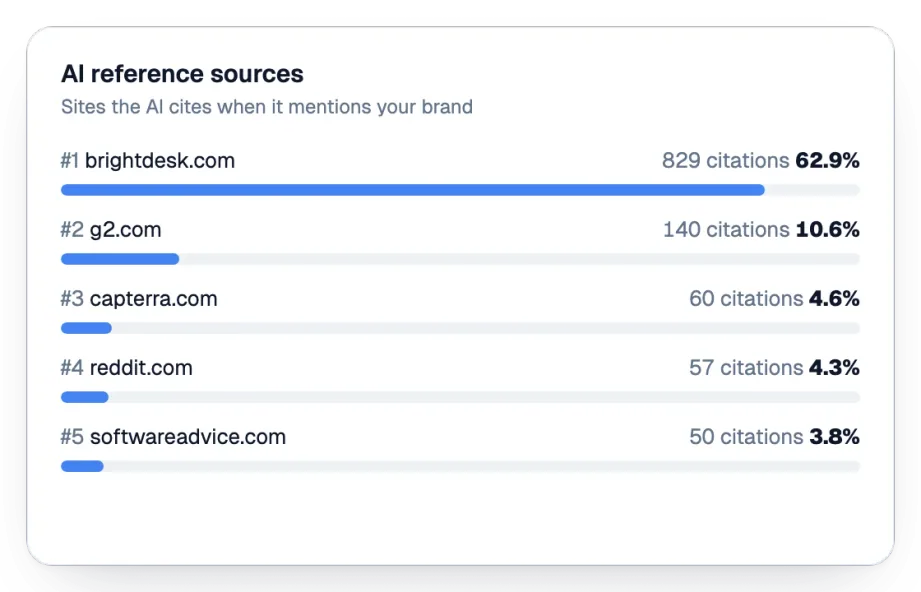
Two practical consequences for a store: aim for mentions in comparison and "best of" articles in your niche, even without a link, and keep your brand name, categories and product names consistent everywhere they appear.
Most stores do not have the time to run outreach every week. Prioritize the low-effort strategies (suppliers, mentions, dead URLs), publish a buying guide regularly, and plan one data study per year. For the steady flow of links, Sorank, our SEO and GEO software on autopilot, obtains natural backlinks automatically from the sites of its 5,000+ users, in addition to writing and publishing optimized articles for your store. It suits ecommerce sites that want links and content without managing outreach.
The links that work for an online store come from its suppliers, its content, its data and its reputation, and they pay off when internal links carry them to the category pages that sell. To start, check the Sorank plans: there is a 3-day free trial and a 90-day money-back guarantee.

Not always. Most product pages rank thanks to internal links from categories and guides that have earned external links themselves. Direct backlinks to a product page help mostly for unique products, reviewed items or very competitive product names.
There is no fixed number. Compare the referring domains of the stores ranking on your target category keywords: that gives a realistic range for your niche. The relevance and trust of each linking site matter more than the total count.
Affiliate links bring sales and visibility, and Google accepts them when they are qualified, for example with rel="sponsored". Qualified links are not meant to pass ranking credit, so treat an affiliate program as a sales channel and a source of brand mentions, not as a link building tactic.
We analyse your competitors, your website and your AI visibility to create a tailored content plan for free.
 AI Content Brief Generator
 FAQ Schema Generator
 AI Blog Post Ideas Generator
 Structured Data Validator (Schema Validator)
 Alt Text Checker
 Internal Link Analyzer
 Backlink Challenge
 AI Meta Description Generator
 AI Blog Title Generator
 Google Indexability Checker
 AI Blog Outline Generator
 UTM Link Builder
 Keyword Clustering Tool
 Canonical Tag Checker
 XML Sitemap Generator
 Broken Link Checker
 AI SEO Title Generator
 Headline Analyzer
 SERP Preview Tool
 Redirect Checker
 Hreflang Tag Generator
 Heading Structure Analyzer
 HTTP Headers Checker
 Favicon Extractor
 SERP CTR Calculator
 SEO vs Paid Search Savings Calculator
 SEO Share of Voice Calculator
 SEO ROI Calculator
 SEO Traffic and Revenue Forecast Calculator
 SEO Budget Calculator
 SEO Break-Even Calculator
 SaaS SEO ROI Calculator
 ROAS Calculator
 Reading Time Calculator
 Ranking Gain Simulator
 Organic Traffic Value Calculator
 Organic Traffic Estimator and Website Traffic Checker
 LTV to CAC Ratio Calculator
 Local SEO ROI Calculator
 Link Building Cost Calculator
 Keyword Value Calculator
 Keyword Opportunity Score Calculator
 Keyword Density Calculator
 GEO ROI Calculator
 GEO Content Investment Calculator
 Ecommerce SEO ROI Calculator
 Customer Lifetime Value Calculator
 Customer Acquisition Cost Calculator
 CTR Calculator
 Cost Per Article Calculator
 Conversion Rate Calculator
 Content Marketing ROI Calculator
 ChatGPT Referral Traffic Estimator
 Bounce Rate Calculator
 Backlink ROI Calculator
 AI Visibility Score Calculator
 AI Traffic Value Calculator
 AI Share of Voice Calculator
 Cost of AI Invisibility Calculator
 AI Citation Rate Calculator
 llms.txt Validator
 AI Overview Checker and AI Overviews Rank Checker
 Robots.txt Checker
 AI SEO Audit
 LLM Readability Checker
 SearchGPT Readiness Checker
 Structured Data LLM Audit
 Website Crawlability AI Audit
 Why ChatGPT Is Not Recommending My Website
 Gemini Ranking Tool
 Perplexity Ranking Checker
 LLM Citation Checker
 Answer Engine Optimization Audit
 GEO Audit
 AI Search Visibility Test
 ChatGPT Visibility Checker
 llms.txt Generator
 URL Extractor
 Webpage to Markdown
 Sitemap Checker
 SERP Volatility Sensor
 Page Size Checker
 Word Counter
 Slug Generator
 Schema Generator
 Robots Generator
 OG Preview
 Meta Tags Generator
 Image Compressor
 Favicon Generator
 On-Page SEO Audit: SEO Checker and SEO Analyzer
 Backlink Analysis Tool
 Keyword Research Tool
 Domain Authority Checker
THEY TRIED SORANK BEFORE YOU
 “I tested Sorank on a real client site and it's insane. It does everything an agency would bill you $1500 a month for. It's going into production on that client now.”

 Guillaume Guersanguersanguillaume.com“We are an Ads agency and we wanted to get our SEO back on track once and for all. Sorank gave us a clear view of our site, helped us prioritize optimizations, and properly structure our content. The tool is easy to use, well designed for a team, and very practical for centralizing tracking without having to juggle multiple platforms. A very solid foundation to start fresh with our SEO.”
 Gaspard MadouiAds Agency
 “I just let the Sorank software do its thing, and now my DR is 25 and my page is ranking higher.”
 Lucas Flandrefoundertrace.fr“I specialized in GEO thanks to Sorank. The GEO Leaderboard allows me to show my clients their position vs competitors on ChatGPT. It’s a real commercial differentiator.”
 MélanieSEO Freelance“Great service, works well for our website and helps us understand how to improve it to rank better on Google and elsewhere. Congrats, keep going, I recommend it.”
 Hugo T.E-commerce merchant