


 Content Harmony








Content Harmony is a popular choice for agencies and content teams that want a clear brief before a writer starts. Its keyword reports, search intent classification and Content Grader help teams plan pages in a consistent way. If the term is new to you, our guide to search intent classification explains how the sorting works.
But many teams outgrow a tool built around briefs and grades. If your work also includes tracking how AI assistants mention your brand, running automated SEO audits or publishing articles to your site, you need a platform that covers more of the job. That is the point of this list: to show where each alternative fits, and where it does not.
When you compare options, start with the task, not the feature count. Ask whether the tool only guides a writer or also drafts and publishes the page. Check whether it tracks AI search, and what the price looks like at your volume. Per-workflow plans can suit occasional use, while monthly plans suit teams that publish every week. Each entry below is based on what we could read on the official website of the tool, and we say where a price or feature is not published.
Top 10 Content Harmony Alternatives
1.  Sorank
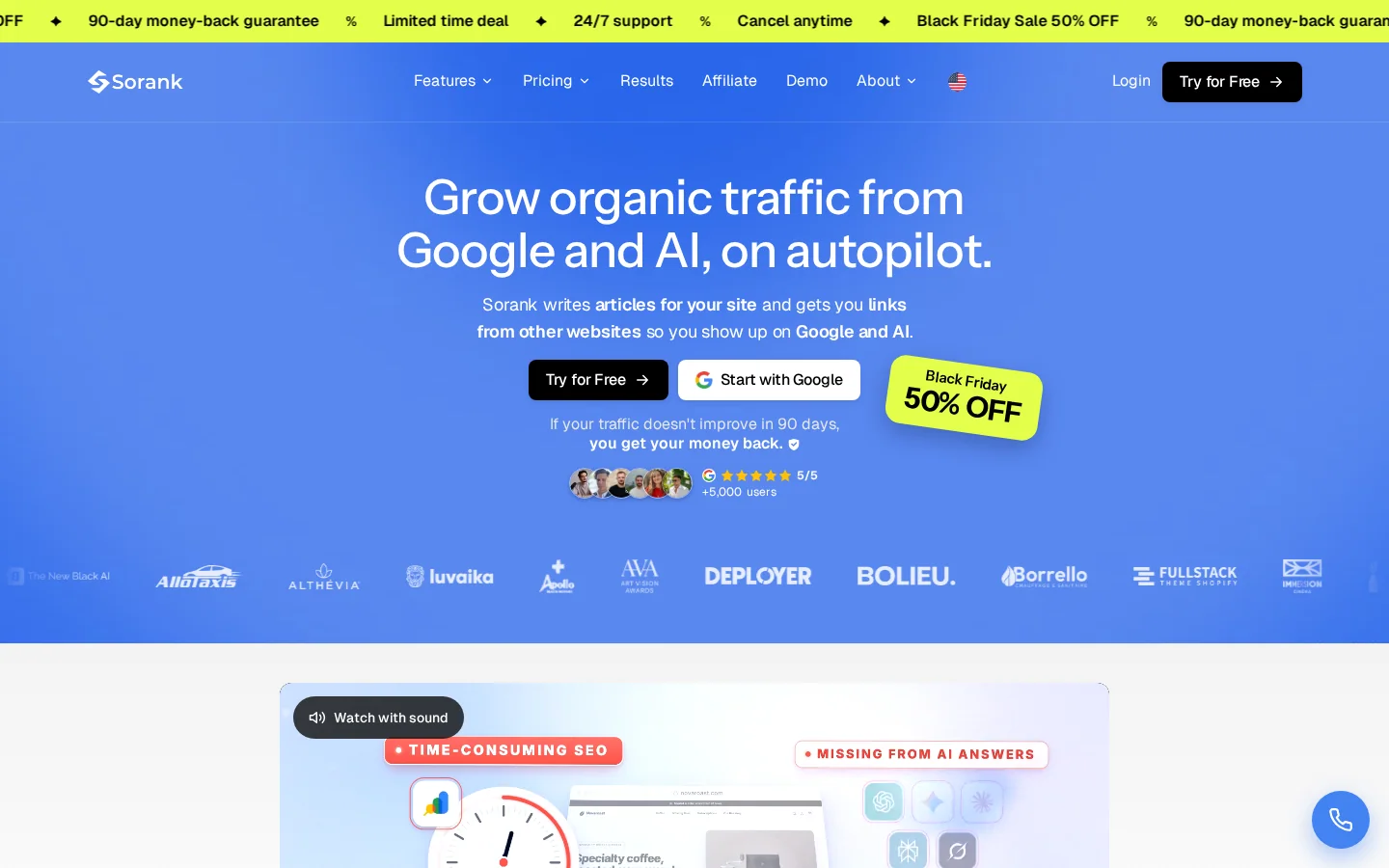
Sorank is an SEO and GEO platform that runs on autopilot for your website. It covers keyword research, article writing and publishing, backlink exchange, a monthly check of what ChatGPT, Claude and Gemini say about your brand, SEO audits, and a dashboard that puts these in one workspace. It suits small businesses, agencies and marketing teams that want research, content and AI visibility to stay connected instead of living in separate tools.
The main difference from Content Harmony is scope. Content Harmony stops at the brief and the grade, while Sorank covers the steps around them, including publishing and tracking after the article goes live. If you only need a brief generator and a content grader, Content Harmony is the more focused product. You can find Sorank's plans on its pricing page.
2.  Surfer
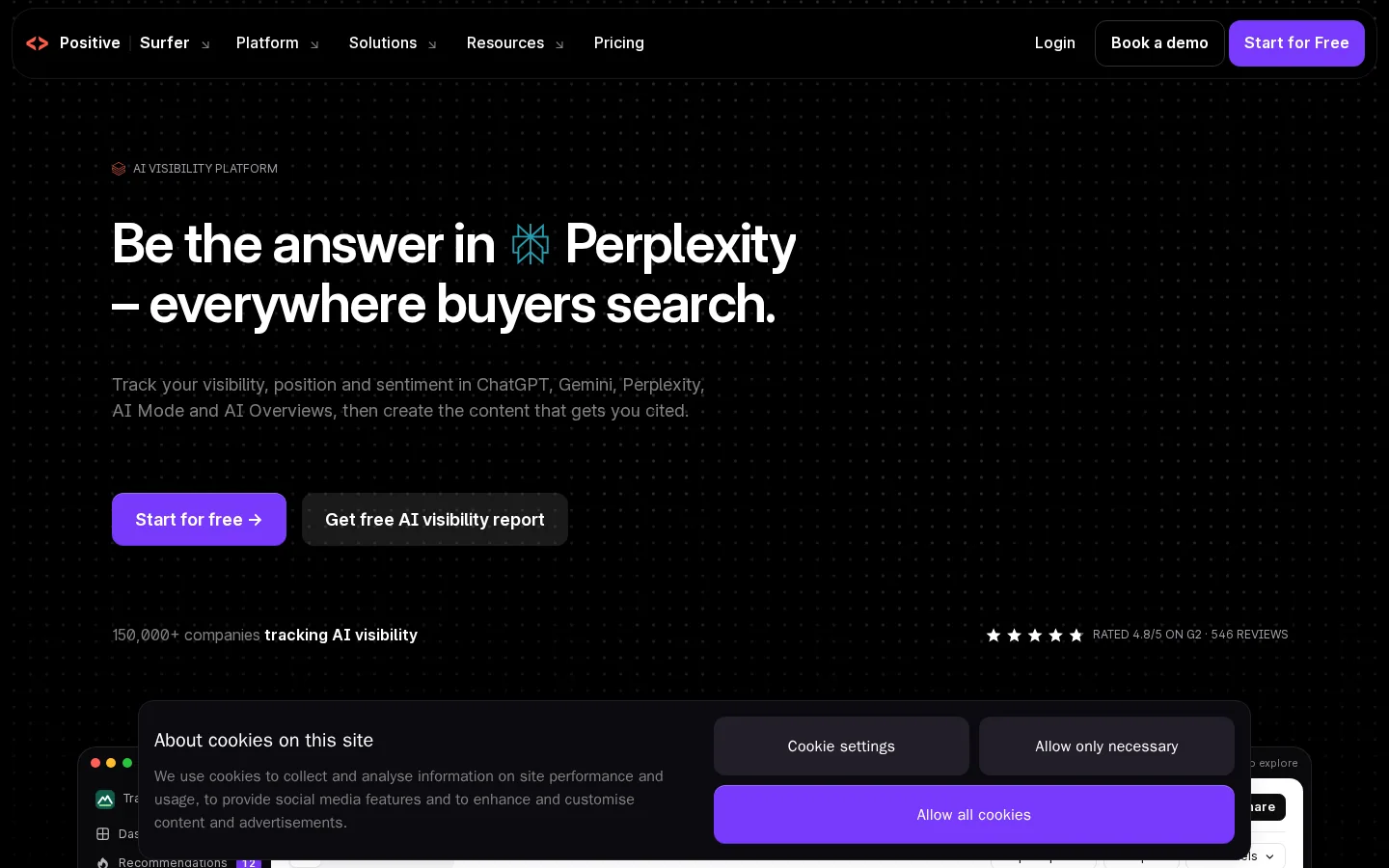
Surfer, the platform many people still know as Surfer SEO, helps teams write pages that rank on Google and get cited by AI search engines. Its Content Editor gives live guidelines while a writer drafts, its Content Audit finds weak pages and content gaps, and its AI tracker follows visibility in ChatGPT, Gemini, Perplexity, AI Mode and AI Overviews. It suits content and SEO teams that spend most of their week optimizing existing pages.
Surfer puts more weight on the editor and on AI tracking, while Content Harmony puts more weight on the brief and on intent classification. Its homepage quotes €82 per month billed yearly for one plan, but it does not show a full price table, so check which plan includes the features you need. The site has “Start for free” buttons, and it does not say whether they lead to a free plan or a trial.
3.  Clearscope
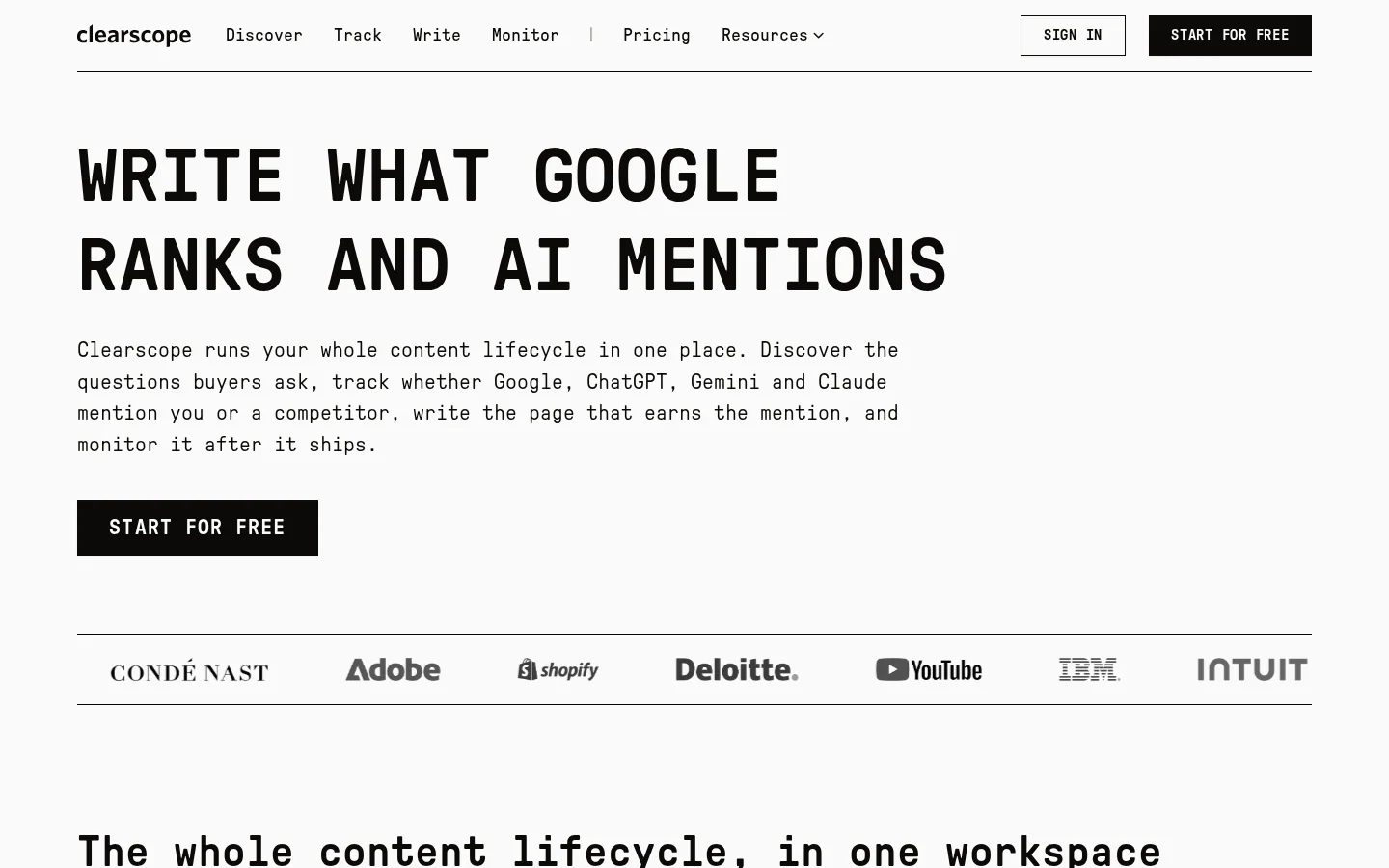
Clearscope is a content platform that covers finding questions, writing pages and monitoring them after publication. Its Discover tool returns the questions people ask with search volume and intent, its Write tool starts a draft from the query and your tone, and a live content grade checks the draft before it ships. The site says it serves everyone from solo creators to global content teams, and it names IBM, Adobe and Webflow among its customers.
Clearscope is one of the closer alternatives, because both tools grade content against a model of what ranks. The difference is that Clearscope also drafts the page, while Content Harmony focuses on the brief. Plans start at $129 per month, and the site offers a free trial with no contract. Its homepage does not describe a separate content brief product, so check that step during the trial.
4.  Frase
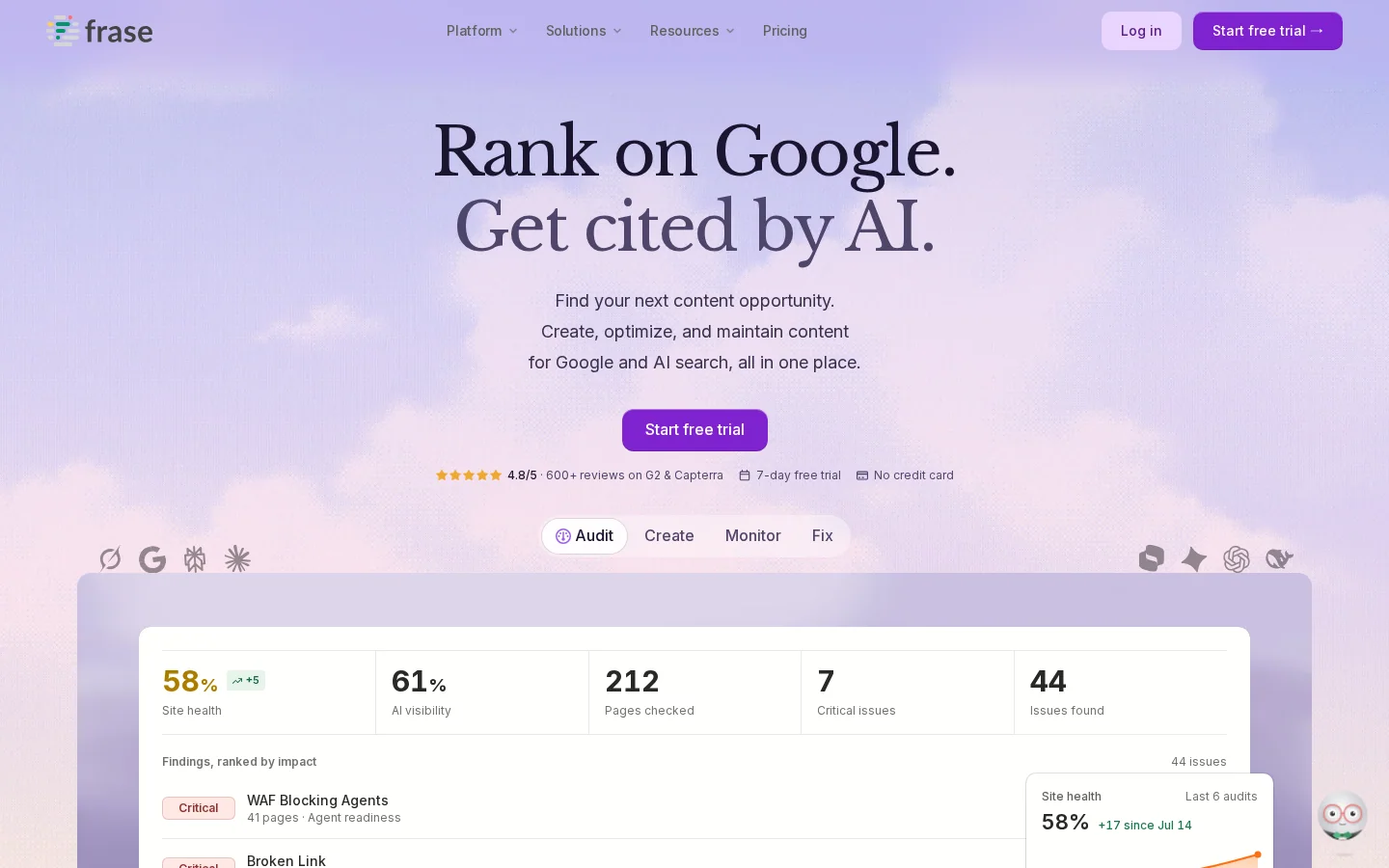
Frase calls itself the content operating system for AI search. It turns topic gaps into briefs, analyzes the pages that already rank for a topic, scores pages for search and AI readiness, and can draft content with its Frase Agent. Its AI Visibility feature tracks mentions across ChatGPT, Perplexity, Claude, Gemini and Google AI. It is built for content marketers, SEO teams and agencies.
Frase costs $49 per month on monthly billing, or $39 per month on yearly billing, for one site and one user. It offers a 7-day free trial with no credit card required. Compared with Content Harmony, Frase covers more of the workflow, from the brief to the draft to tracking how AI tools answer questions about your brand.
5.  Rankability
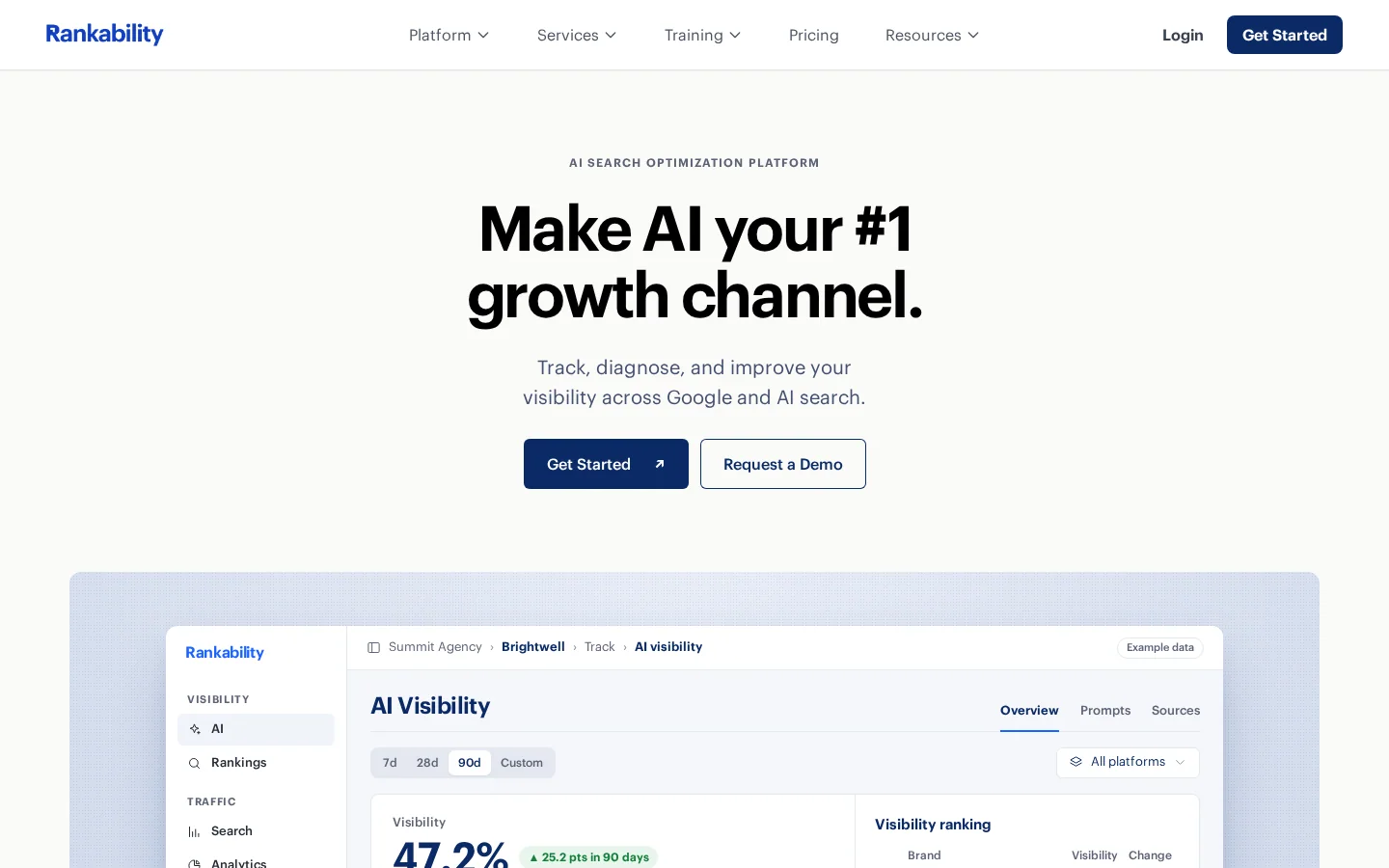
Rankability describes itself as an AI search optimization platform that helps you track, diagnose and improve your visibility across Google and AI search. Its Optimize product offers audits and content scores with a keyword checklist, and its Create product helps teams build and improve pages using their own business knowledge. It targets marketing teams, small businesses and agencies, and it also sells AEO agency services and training.
Rankability does not publish prices on its homepage, so you will need its pricing page or a demo to see the plans. The homepage also does not describe keyword research or content briefs in detail, so ask for those features during a demo before you switch. A demo is available through the “Request a Demo” link.
6.  NeuronWriter
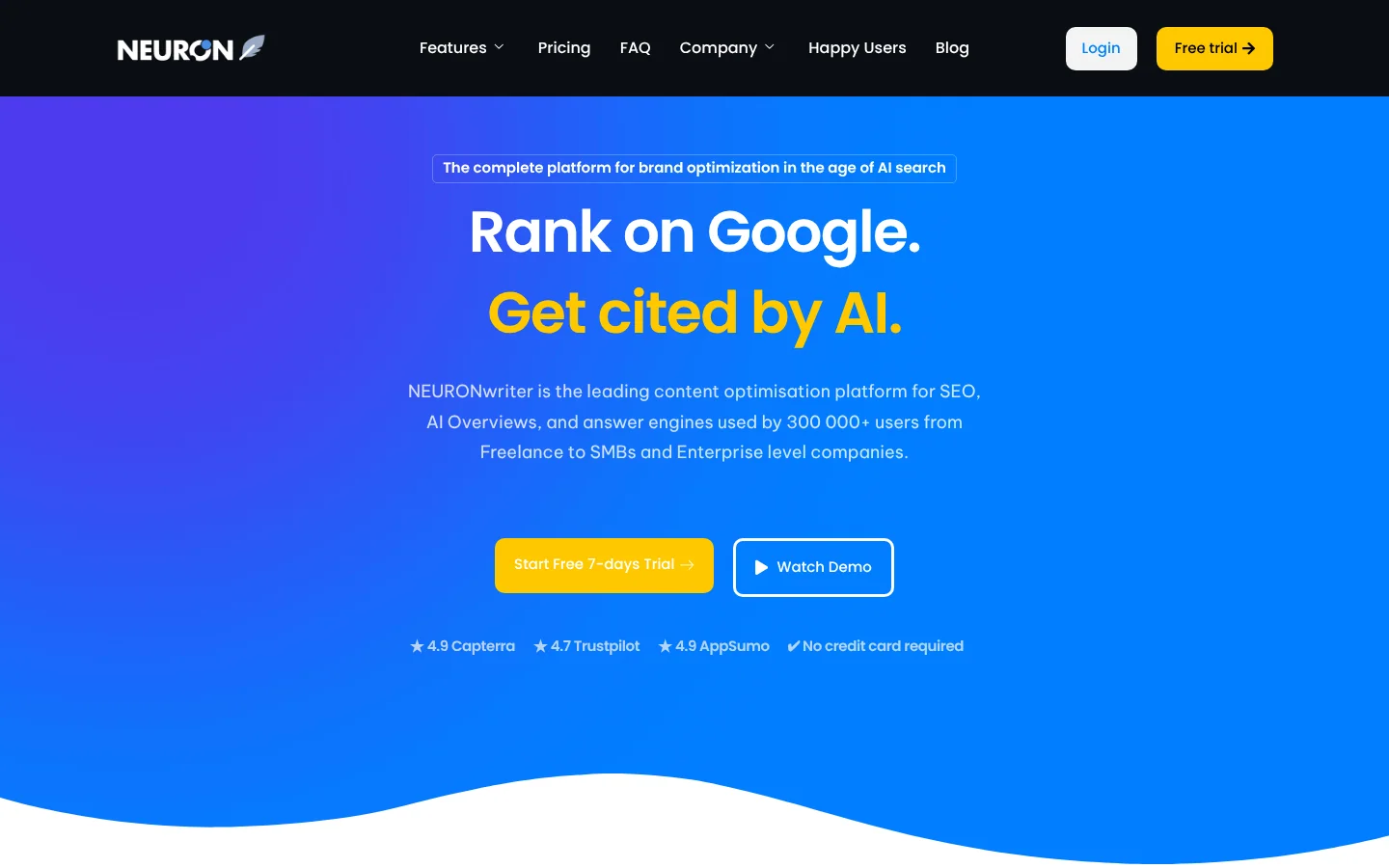
NeuronWriter is a content optimization platform for SEO, AI Overviews and answer engines. Its Content Writer scores your draft and suggests terms based on NLP analysis, its SERP analysis shows what competitors cover, and its Content Ideas feature suggests topics based on search intent. It also offers AI drafting, internal link suggestions and AI visibility tracking, and it serves freelancers, small businesses and enterprises.
The Bronze plan is $23 per month on monthly billing, or $230 per year. NeuronWriter offers a 7-day free trial with no credit card required, and its homepage lists no free plan. Compared with Content Harmony, it sits closer to a writing and optimization tool than to a brief tool, so it fits teams whose main bottleneck is the draft.
7.  Scalenut
 presents itself as a GEO platform backed by AI agents and a team of GEO experts. Its feature list includes an article writer, a content optimizer with a GEO score, a content audit, and AI visibility tracking that shows brand mentions, prompt coverage and competitor share. Its homepage also has a free tools section with AI-powered SEO and marketing tools. It suits marketers who want writing and AI visibility in one place.
Scalenut's homepage does not show a monthly price, so check its pricing page before you compare costs. Its keyword research is described only indirectly, and it does not list a standalone content brief feature, which makes it a different kind of tool from Content Harmony. Choose it when writing and AI tracking matter more to you than a dedicated brief.
8.  Search Atlas
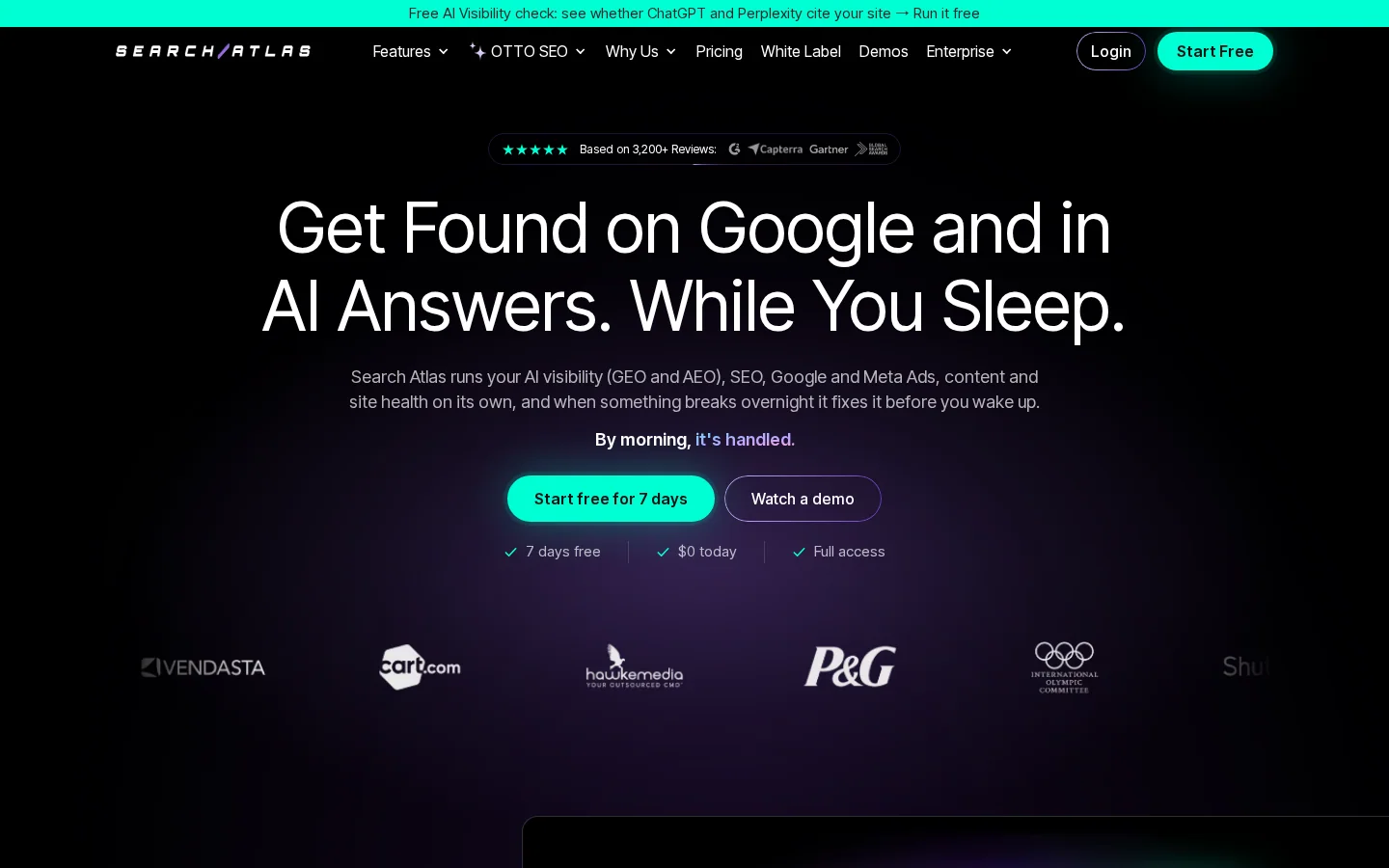
Search Atlas calls itself an agentic marketing platform. It combines an SEO suite for keyword and competitor research, rank tracking and backlink analysis, OTTO SEO audits that prepare fixes for you to approve, Content Genius for research-based content, and LLM Visibility for mentions and citations in ChatGPT, Perplexity and Google AI Mode. It suits SEO agencies, in-house teams and consultants who manage several sites.
The Starter plan is $99 per month billed monthly after a 7-day free trial. The trial asks for a card at signup, with $0 due today, and the FAQ notes that trial limits may apply to AI features. Its Starter plan costs more than Content Harmony's entry plan, but it covers a much wider set of tasks.
9.  Swiftbrief
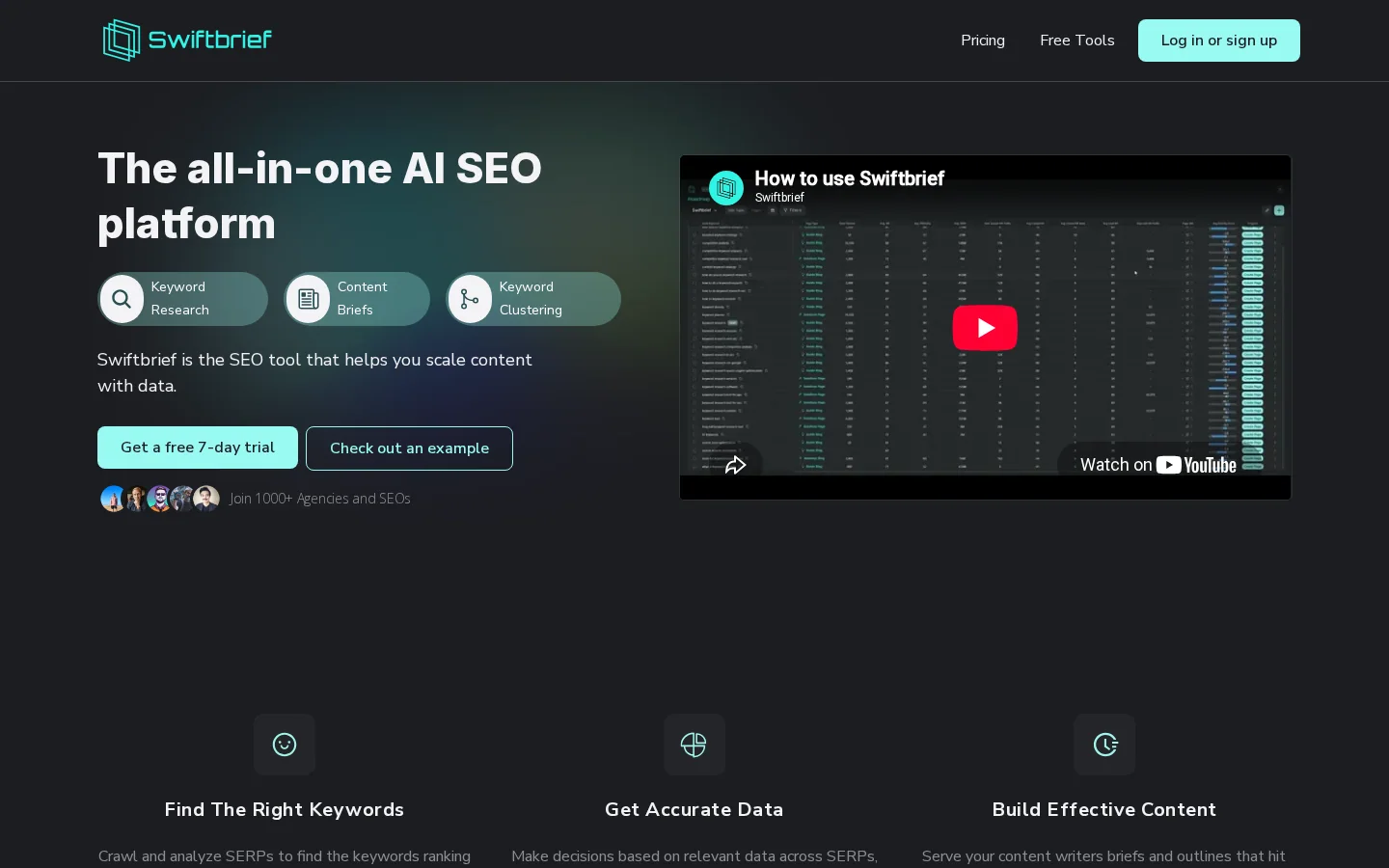
Swiftbrief calls itself an SEO tool for scaling content with data. It analyzes the top 20 results for a keyword, clusters related keywords into topics, and generates briefs with keyword mapping, content instructions, internal linking suggestions and structured tables. Its built-in AI Writer turns a finished brief into a draft that you can copy onto your site. It is aimed at marketers, editors, agencies and SEO specialists, and it lists several free tools, including a content brief generator.
The Starter plan is listed at $39 per month, and the site offers a free 7-day trial behind several “Try it free” buttons. Compared with Content Harmony, the brief generation and keyword clustering are close in purpose, so the choice often comes down to price, interface and whether you want a writer included. If you only need a quick brief, try the free tools first.
10.  Semji
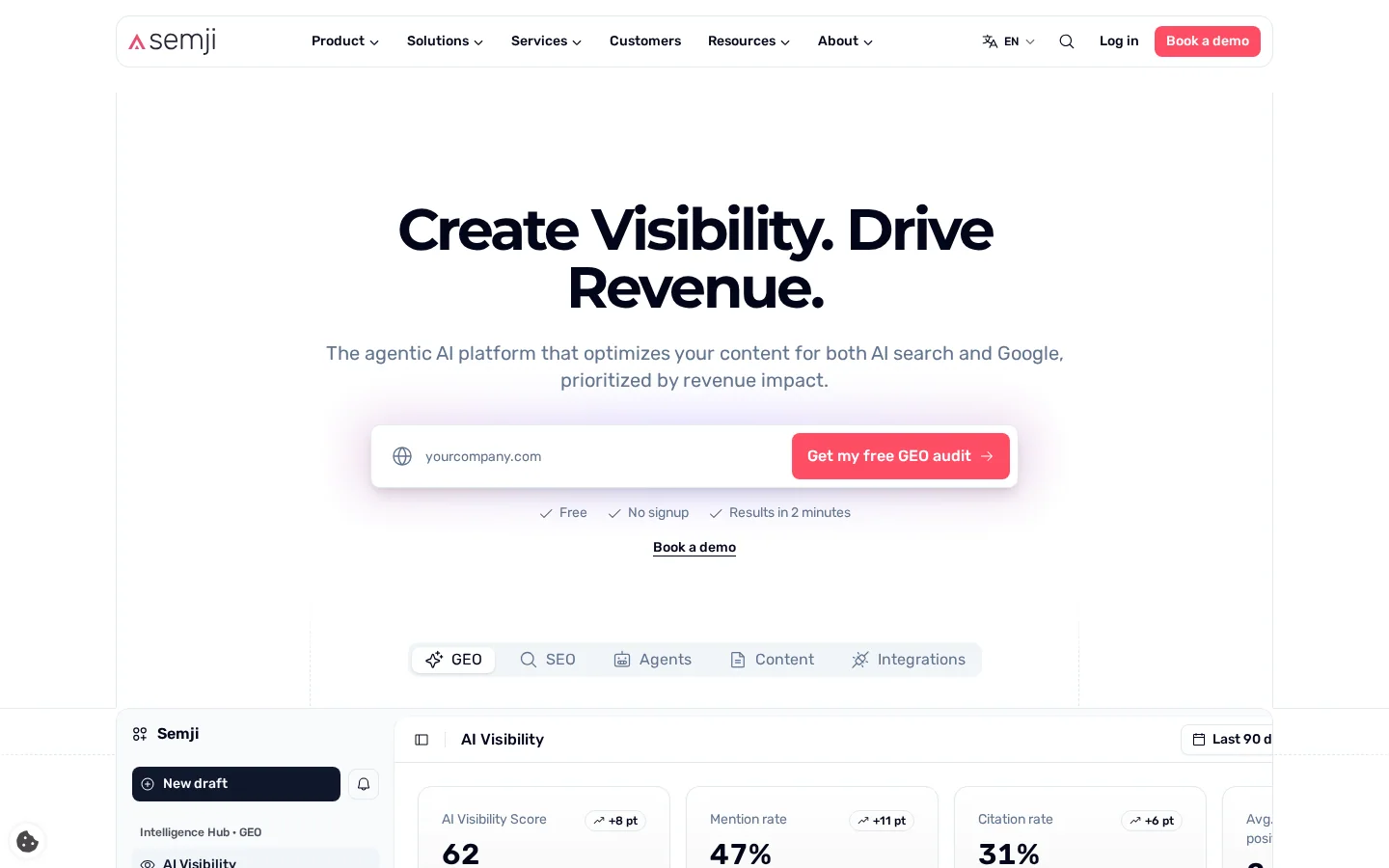
Semji describes itself as an agentic AI platform that optimizes content for both AI search and Google. It can turn a tracked opportunity into a brief in one click, scores content as SEO, readability and brand rules are met, and lets AI agents draft against your brand voice and knowledge base. Drafts can be sent to CMSs such as WordPress and Shopify, and the platform tracks AI mention and citation rates. It targets SEO managers, content managers and CMOs, especially at large international companies.
The homepage does not show a public monthly price, so you will need its pricing page or a demo to see plans. It offers a free GEO audit with no signup, with results in 2 minutes. Semji suits teams that already have a content workflow and want briefs, scoring, publishing and tracking connected. The homepage does not mention a free trial or a free plan.
How to Choose the Right Content Harmony Alternative
Start with the job the tool has to do. If you only need a brief and a grade, Content Harmony already covers that. If you also need drafts, AI answer tracking, audits or publishing, look for a tool that covers those steps. Check the free trial terms, because some tools ask for a card and others do not. Then compare the entry price with the number of pages you publish each month.
If you are not sure what a brief should contain, our content brief guide lists the sections to check. For a wider look at the market, read our roundup of content optimization tools. Book a demo when a homepage hides its prices, and ask for the plan that matches your volume.
| Tool | Ideal for | Entry price | Strength |
|---|---|---|---|
| Sorank | Teams that want SEO, GEO and content in one workspace | See pricing page | Research, writing, AI mention tracking and audits together |
| Surfer | Content teams that optimize pages | €82 per month billed yearly (one plan) | Live content editor and AI search tracking |
| Clearscope | Solo creators and global content teams | From $129 per month | Content grade and question discovery |
| Frase | Content marketers and agencies | $49 per month, or $39 yearly | Briefs, drafts and AI answer tracking |
| Rankability | Marketing teams and agencies | Not shown on homepage | Audits, content scores and AI search visibility |
| NeuronWriter | Freelancers and small businesses | $23 per month | NLP term guidance and SERP analysis |
| Scalenut | Marketers who want writing and AI tracking | Not shown on homepage | Article writer and AI visibility |
| Search Atlas | SEO agencies and multi-site teams | $99 per month | Wide SEO suite and LLM visibility |
| Swiftbrief | Agencies and SEO specialists | $39 per month | Keyword clustering and briefs |
| Semji | Larger content and SEO teams | Not shown on homepage | Briefs, scoring, CMS publishing and AI tracking |
Why Sorank Stands Out
Sorank is built for teams that want research, writing and AI visibility in one place. It covers keyword research, article writing and publishing, backlink exchange, a monthly check of what ChatGPT, Claude and Gemini say about your brand, SEO audits, a unified dashboard and free SEO tools. If your stack today is Content Harmony plus a tracker, a writing tool and an audit tool, consolidating can reduce the number of places you check each week.
Sorank does not try to be the most specialized tool in each category. Its value is the connection between the steps, so what you learn from AI mention tracking can inform the next article you plan. If you only need a brief generator and a grader, a focused tool like Content Harmony may be enough. Read the step-by-step keyword research guide if you want to see how the pieces fit before you choose.