Writer is built for large companies. Its platform runs AI agents for marketing and revenue teams, and it adds governance tools such as audit logs, role controls and spend alerts. Plenty of enterprise teams want exactly that control. Others need a lighter tool, a price they can see before a sales call, or a product that focuses on a narrower job.
Start with the job you need done. Some tools write ad copy and emails. Others check a finished draft against your brand rules. A few run whole campaigns from brief to report. The list below covers all three kinds, so you can match the tool to your team, not to a headline. If you want the basics first, our practical guide to AI copywriting that still sounds like you is a good place to begin.
Four criteria matter most. First, how the tool learns your brand voice. Second, how it handles approvals and compliance. Third, whether it connects to the apps your team already uses. Fourth, how clear the pricing is. Where a vendor publishes a price, we give it. Where it only offers a demo, we say so.
Top 10 Writer Alternatives
1.  Jasper
 calls itself an AI operating system for enterprise marketing teams. Its agents run campaign and content workflows from start to finish, and its brand feature, Jasper IQ, stores your voice, style guides and audience details so every output follows them. It also covers AI search monitoring, translation into 27 languages and API and MCP integrations. It is built for product, brand, content and performance marketers.
Jasper is the closest match to Writer on paper, since both sell to enterprise marketing teams and both lead with brand voice. The difference is in emphasis. Writer's public pages stress governance controls such as audit logs and data loss prevention, while Jasper leans toward ready-made marketing workflows. The Pro plan is listed at $69 per seat per month on monthly billing, or $59 per seat on yearly billing. A free trial is available, and the business tier is quoted through sales.
2.  Typeface
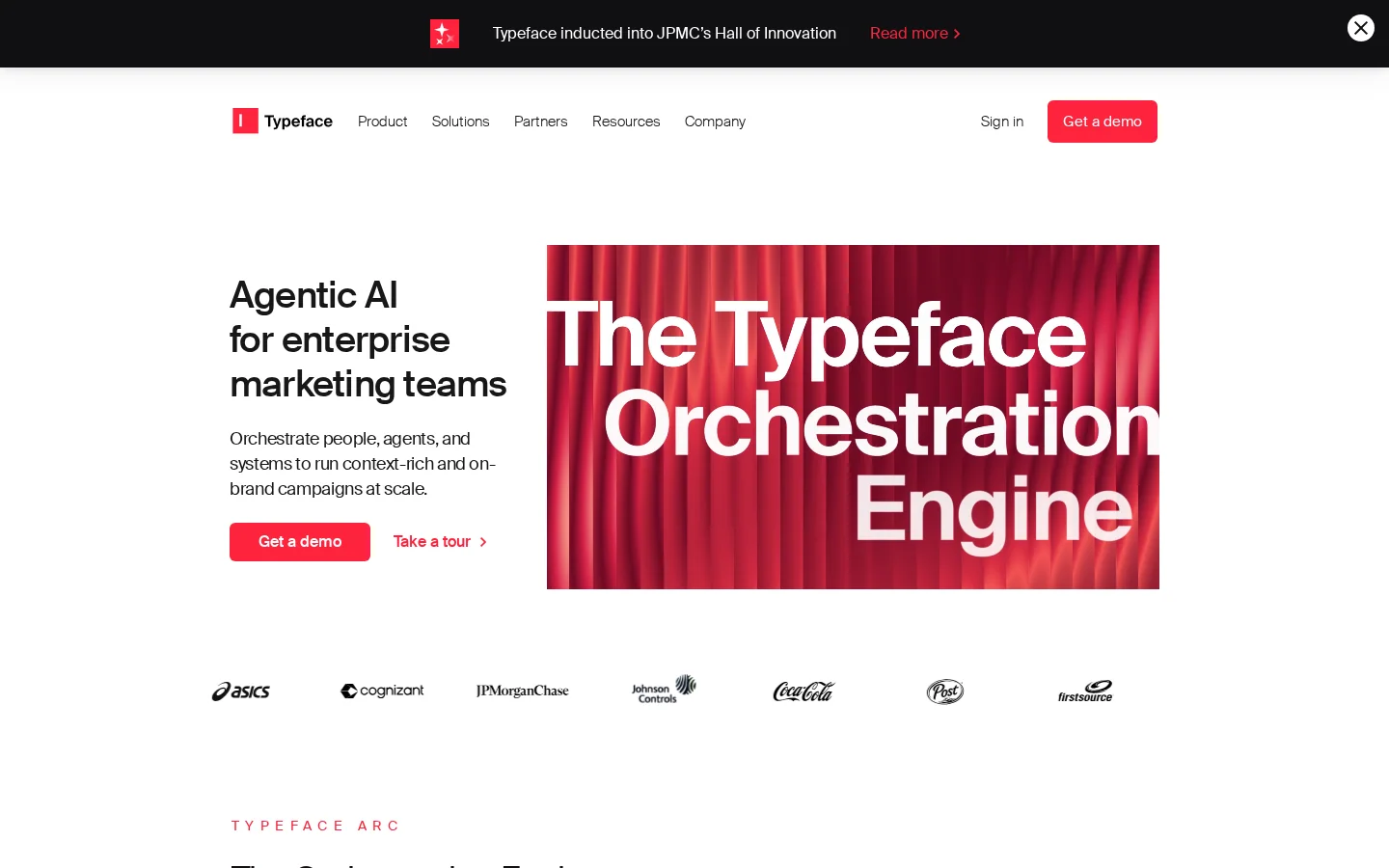
Typeface is an enterprise marketing AI platform that coordinates people, AI agents and existing systems to run campaigns. Its Arc Graph layer stores brand guidelines, audiences, assets and campaign learnings in a form that agents can use and enforce. It works with Figma, Photoshop and Illustrator, so creative teams can keep their usual tools. Its site names large brands such as ASICS, Coca-Cola, Google and Microsoft as customers.
Typeface is aimed at big brands with creative teams and a procurement process. It goes further than Writer into design and asset production, and its approach to brand control is just as strict. There is no public price. The calls to action are a demo, a tour and a conversation with the team. That makes it a poor fit for a small team that wants to see the cost before it starts.
3.  Persado
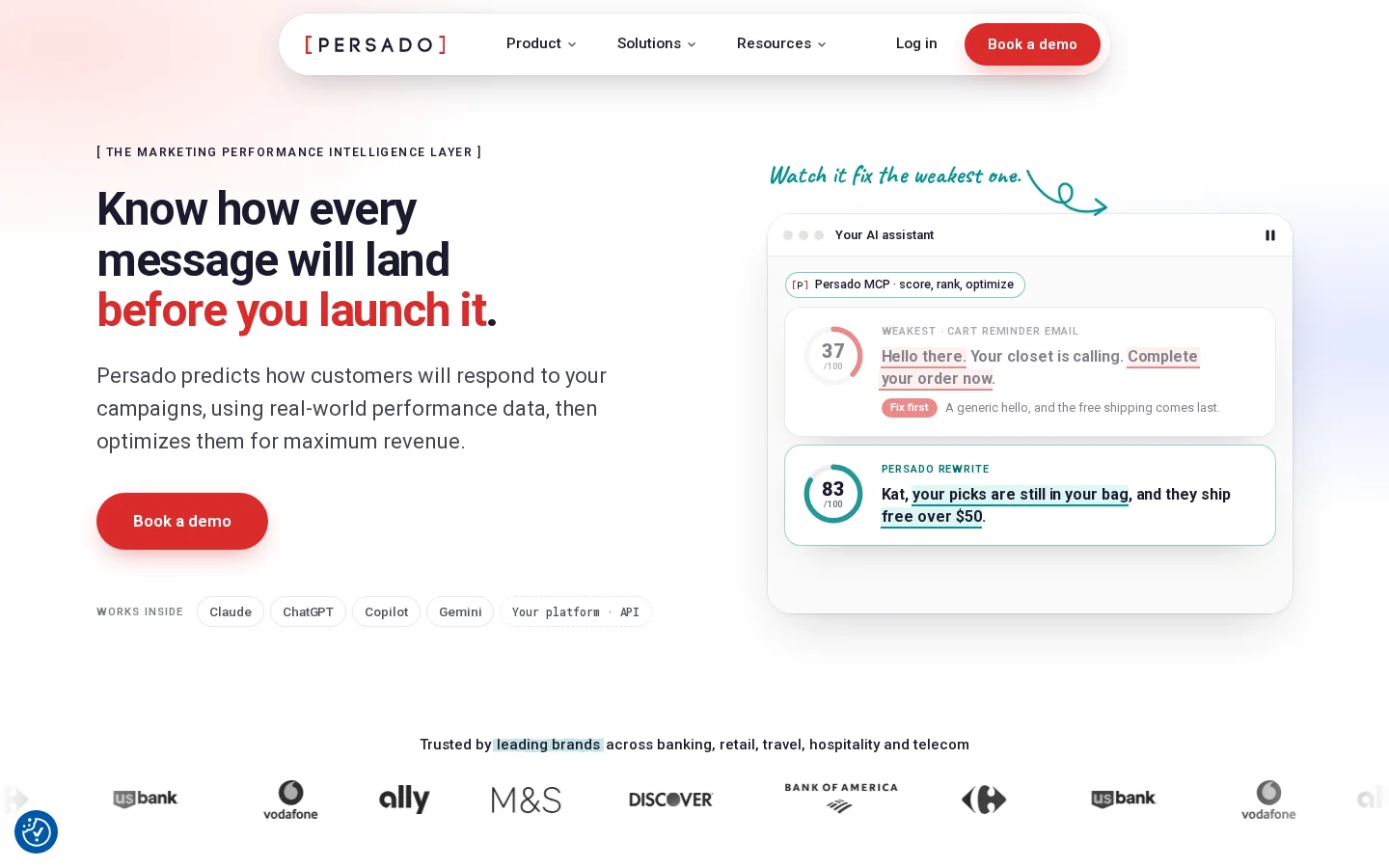
Persado is a marketing performance platform. It predicts how customers will respond to a piece of campaign content, scores each asset, and rewrites the weakest ones within your brand rules. Its enterprise product, Persado Studio, serves large marketing teams in banking, retail, travel, hospitality and telecom. A separate MCP offering brings Persado into AI assistants such as Claude, ChatGPT, Copilot and Gemini.
Persado is less a general writing tool than Writer and more a system for testing message performance. That suits teams that already measure campaigns closely and want to rank copy by predicted response. The company's performance figures come from its own data and have not been independently checked, so run your own tests. The MCP version has a free trial of 15 tool calls over 14 days, then costs from $49.99 a month. Enterprise pricing is available on request.
4.  Copy.ai
 presents itself as a go-to-market AI platform. It offers workflows for sales, marketing and operations, agents for repeat tasks, and a brand voice feature for consistent content. It connects to more than 2000 integrations and works with several model providers, including OpenAI, Anthropic and Gemini. Common uses include prospecting, content creation, inbound lead handling and account-based marketing.
Copy.ai is broader than Writer because it reaches into sales and operations as well as marketing. That makes it worth a look if your content and outbound work sit in the same team. The public site does not show a monthly price, so you will need to check its pricing page or start a trial to compare costs. Its own pitch is to replace several separate tools with one system, which suits teams that want fewer subscriptions.
5. Anyword
Anyword generates marketing copy for ads, social posts, blogs, emails and landing pages, then adds predicted performance data to each version. It applies your brand voice and messaging to what it writes, and it can score existing content against its own A/B test data to suggest improvements. The platform is built for demand generation, content, social, SEO and marketing operations teams.
Anyword puts performance data at the center of the product, so it suits teams that test copy often. Its Starter plan is listed at $49 per month on monthly billing, or $39 per month on yearly billing. The Data-Driven plan costs $99 per month on monthly billing, and larger teams are quoted on request. The vendor reports accuracy figures for its predictions, so treat them as a starting point and check them against your own results.
6.  Markup AI
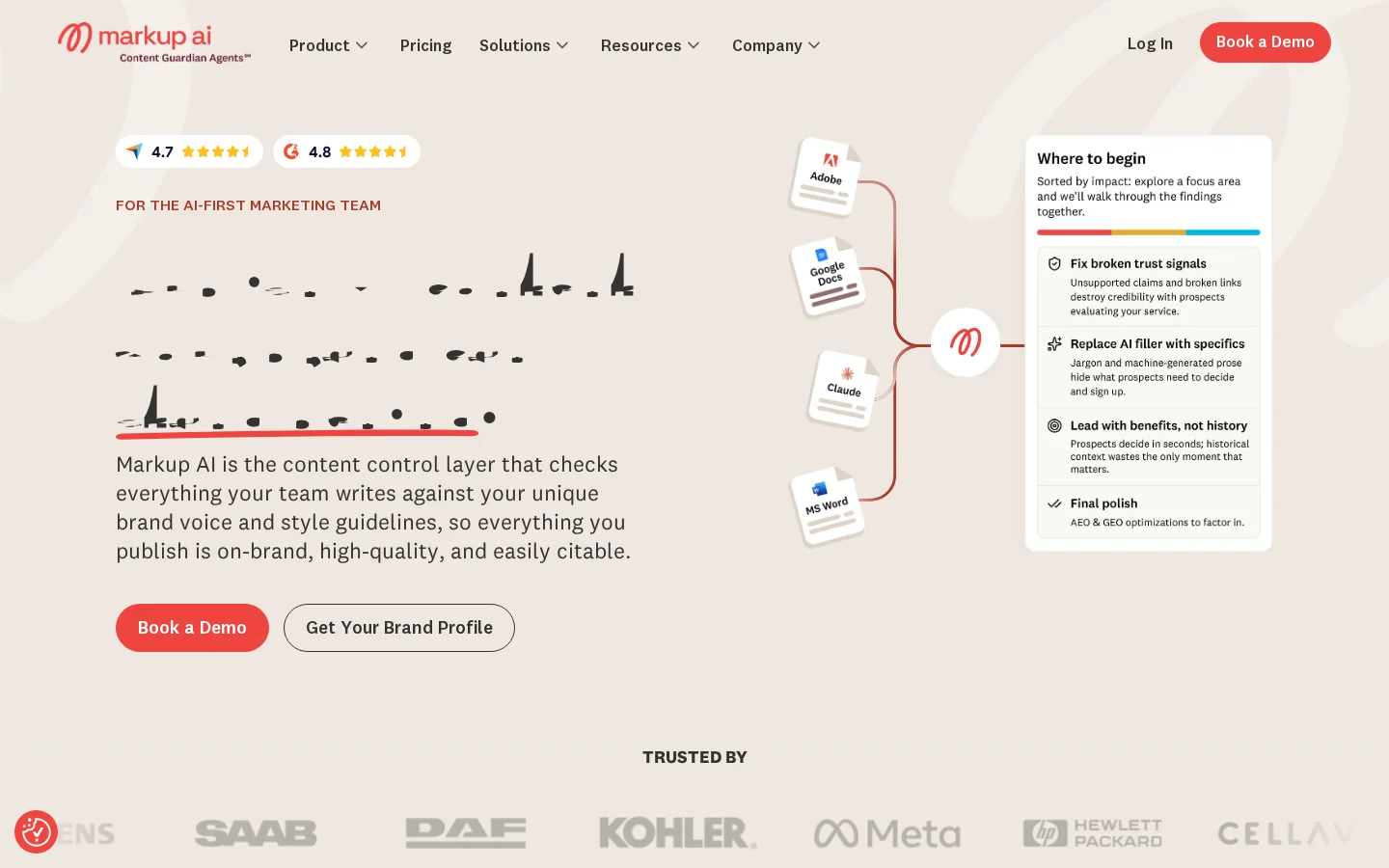
Markup AI, formerly known as Acrolinx, is a content control layer that checks writing against brand voice, terminology and style rules before it is published. It flags unsupported claims, broken links and mismatched links, and it can rewrite flagged passages in one step. It serves marketing teams publishing more AI-generated content, and technical documentation teams that need consistency across many writers.
Markup AI does not replace a drafting tool, so it works best next to one. It connects to Google Docs, GitHub and Zapier, and through MCP it can check content produced in Claude, ChatGPT or other models. The site shows no price and points to a demo, and it lists ISO 27001 and GDPR compliance. If your bigger question is how to structure pages so AI can quote them, our guide to structuring pages so AI can cite them covers that side.
7.  Grammarly Business
Grammarly Business is the team edition of the writing assistant. It checks grammar, clarity and tone in everyday apps such as Gmail, Outlook, Google Docs, Slack and Salesforce. Admins can upload a company style guide, and a brand tones feature turns your voice into a profile that guides suggestions. Generative AI drafts first versions and outlines, and the Enterprise tier adds SAML single sign-on and SCIM provisioning.
Grammarly suits companies where everyone writes, not just the marketing team. It helps people write consistently across tools, but it does not offer the agent workflows or campaign tooling that Writer is built around. The public page shows no per-user price, only a contact sales option and a plans link. Get a quote before you compare costs.
8.  Notion AI
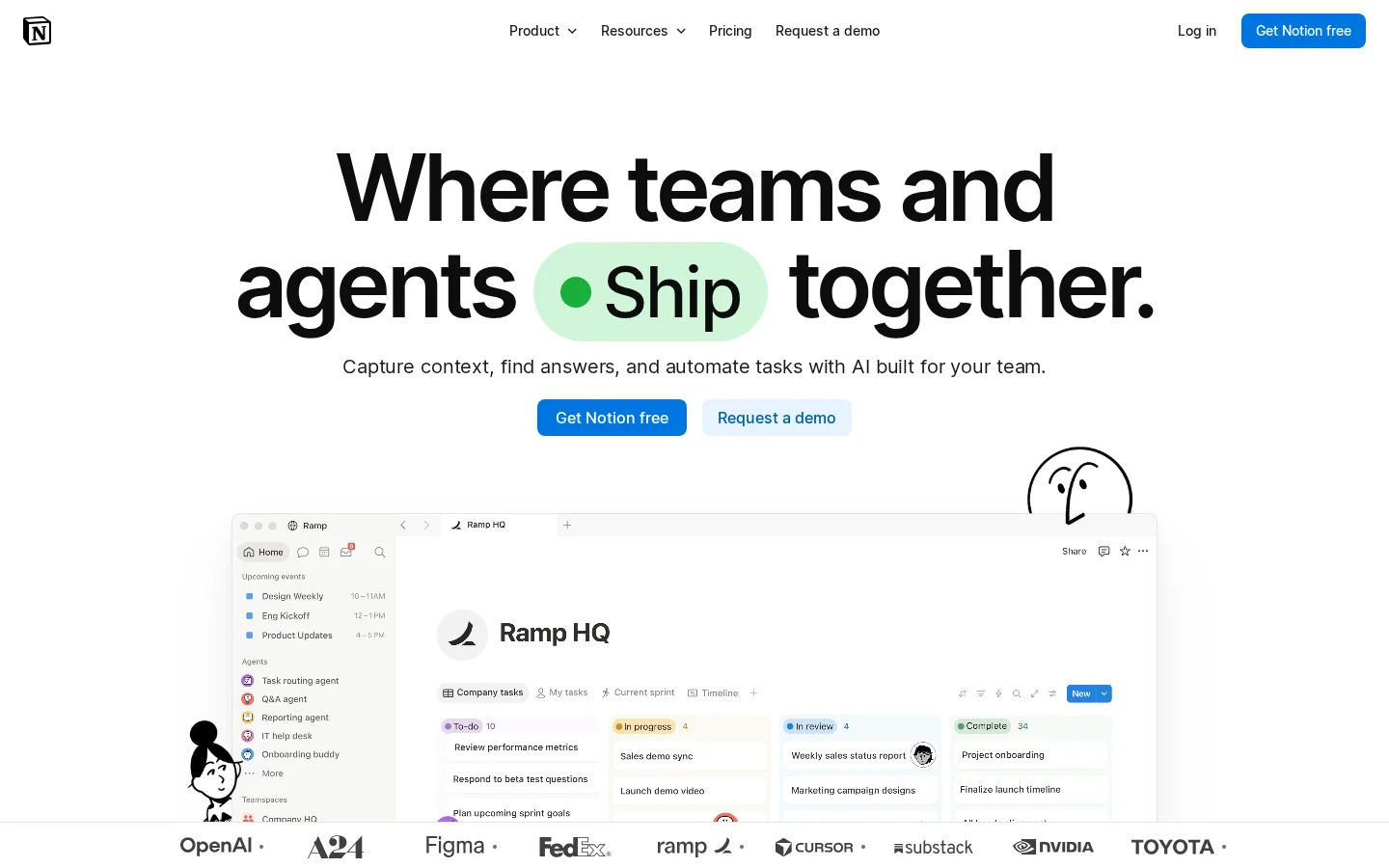
Notion AI is the assistant built into the Notion workspace. It improves writing and generates drafts inside pages, docs and databases, and it can use your connected apps when you enable them. Research Mode produces detailed reports and summaries, Custom Agents run recurring team work on a schedule, and AI Meeting Notes summarize key points from calls.
Notion AI fits teams that already plan and write in Notion, because the content sits next to the project. It is not a brand governance platform, so your team needs its own review steps for voice and compliance. Business plans include monthly AI credit allowances per seat. The product page does not show a price per user in dollars, so check the pricing page before you budget.
9.  ChatGPT Business
ChatGPT Business is OpenAI's plan for teams, sitting alongside ChatGPT Enterprise for larger organizations. It is a general assistant for writing, research and creating, and its marketing use cases include content generation, research and personalization for campaigns. Teams use it for first drafts, briefs and analysis.
ChatGPT is less specialized than Writer. The site does not describe a brand knowledge layer like Writer's Enterprise Brain, so your team supplies brand rules through its own instructions and review process. That flexibility suits teams that want one assistant for many jobs. The OpenAI page does not show a per-user monthly price for the business plans, so check the pricing page before you budget.
10.  Claude
Claude, made by Anthropic, is an AI assistant that works from your files and tools. Teams use it for first drafts and editing, briefs built from meeting notes, social posts based on brand guidelines, and on-brand slides and documents. Anthropic's site has pages for marketing, sales, finance, HR, legal and product teams, plus enterprise and developer offers.
Claude is a broader tool than Writer. The site does not describe a built-in brand layer or a governance dashboard for marketing, so your team sets up brand rules and review steps itself. It fits teams that want one capable assistant for writing and documents across departments. The site does not list a monthly price for Team or Pro plans, so check the pricing page for current figures.
How to Choose the Right Writer Alternative
Choose by the job first, then by the price you can verify. The table below sums up the ten tools, with prices only where the vendor shows them.
| Tool | Ideal for | Entry price | Main strength |
|---|---|---|---|
| Jasper | Enterprise marketing teams running campaigns | $69 per seat per month (monthly billing) | Ready-made marketing workflows and brand memory |
| Typeface | Large brands with creative teams | Not public, demo required | Brand guidelines enforced across campaigns |
| Persado | Teams that rank messages by predicted response | From $49.99 a month (MCP), enterprise on request | Performance scoring and rewriting |
| Copy.ai | Sales and marketing teams sharing one workflow | Not public | Workflows and more than 2000 integrations |
| Anyword | Teams that test copy often | $49 per month (monthly billing) | Predicted performance and A/B data |
| Markup AI | Teams checking drafts before they publish | Not public, demo required | Brand, claim and link checks |
| Grammarly Business | Companies where everyone writes | Not public, contact sales | Style guide and tone in everyday apps |
| Notion AI | Teams that already work in Notion | Per-seat credits, see pricing page | Drafting and research inside the workspace |
| ChatGPT Business | Teams that want one general assistant | Not public, see pricing page | Broad writing and research help |
| Claude | Teams that work from files and documents | Not public, see pricing page | Drafts, documents and slides from your files |
Conclusion
The right Writer alternative depends on the job. If brand control across campaigns matters most, start with Jasper, Typeface or Markup AI. If you want to rank copy by predicted response, test Persado and Anyword. If your team mainly needs one assistant for writing and documents, ChatGPT Business or Claude may cover most of it.
Whichever you pick, run a trial on one real campaign before you commit. Ask how each tool handles brand rules, approvals and data, and confirm the current price on the vendor's own site. For a wider comparison of writing tools by use case, see our ranking of the best AI copywriting tools, and for what AI writing tools save and where they fall short, read our overview of the benefits and limits of AI writing.